Garden Blog - Top Tropicals

Date: 7 Jul 2016

Growing fruit trees in containers

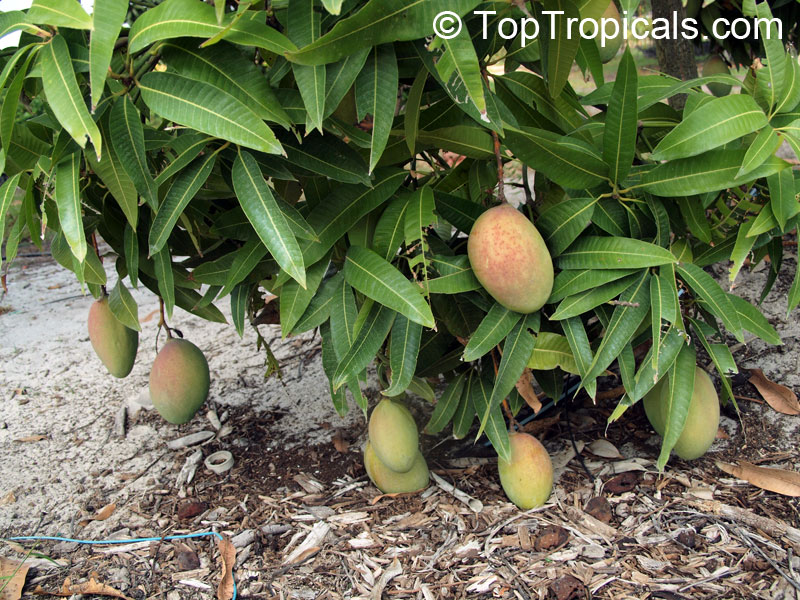
Will it fruit in a pot? YES! Many tropical fruit trees can be grown in a pot. We get many calls from customers in cooler climates asking if our tropical trees can grow and fruit in a pot. The answer is yes!

Several plants fruit well in pots. Blackberries and raspberries, barbados cherries, blueberries and many more start fruiting even in their 1 gallon containers. We are especially excited about our new Pixie grapes, which are heavily laden with grapes even at only a foot long!

While some plants are small and will fruit easily in a container, others are large trees. For the tree type fruits, we recommend growing only non-seedling plants for pot culture. We have cuttings, air layers and grafted plants that are great options. These have the ability to fruit right away, as they are the same age as the parent tree. Some horticulturists recommend removing the first year fruit to allow the plant to focus on growth and establishing. If the plant is being kept in a pot, this is not necessary.

We also have several dwarf varieties of fruit trees that will thrive in a pot. For avocados, we carry the Wurtz variety which is a dwarf tree... read more...

Date: 6 May 2016

Taking care of Soursop after shipping

Q: Since I have never grown a soursop tree before I need some pro help. My tree was delivered absolutely beautiful, leaves were a pretty green. I potted it and gave it a good drink of water and put it in a shaded area outside. Then the weather here became cool so I brought it in for a few days until the weather warmed, and it lost all the leaves. Is it in shock and will come around eventually? Will I be able to grow this tree indoors during winter?

A: Soursop - Annona muricata trees are very sensitive to temperature drops. This always causes leaf loss. You seem to be doing everything right. Do not water until soil gets slightly dry; keep it in bright shade. The weather should be good now with high temperatures and humidity rising. No fertilizer until the plant shows active new growth. Be patient with your plant, it should recover soon.

Soursop is an ultra-tropical tree and doesn't take any freeze. If you live in cooler climate, keep the plant in a pot (the good news is, Annonas in general have compact nature and are perfect for container culture). Bring the tree indoors during cold period, providing bright light.

We have very interesting article about growing and fruiting Soursop in apartment. Check out 4534 Tropical Treasures Magazine # 7.

Date: 9 Apr 2026

*️⃣ Stop Babysitting Your Trees - Grow Cold Hardy Avocados Instead

Smokey  the  black-and-white  cat  with  glasses  sits  on  a  patio  taking 
 notes  while  Sunshine,  a  fluffy  orange  cat  wearing  bunny  ears,  holds  a  small 
 potted  mango  tree  with  light  yellow  flowers.
Sunshine: I love these crazy guacamole donuts… but I’m tired babysitting trees during cold.

Smokey: Then stop planting trees that need babysitting. Plant cold hardy avocado.

Read more about Smokey & Sunshine

You always wanted an avocado tree. Not in Miami - right there in Central Florida, in your own yard. You planted one, it grew well for a few years, and it felt like you finally figured it out. Then 2026 hit. A few cold nights, temperatures dropped below what your area usually sees, and the tree was gone.

Here is the part most people miss: USDA zones are based on average minimums, not the worst freezes. One bad night can erase years of growth.

That does not mean avocado will not work. It means you planted the wrong variety. Cold hardy avocados are built for exactly this kind of surprise.

Florida  USDA  plant  hardiness  zone  map  showing  zones  8a  through  11a  with
    temperature  ranges

USDA zone map

This USDA Zone map makes one thing clear: all of Florida can grow avocado. The question is not if - it is which variety. From North Florida (8b) to South Florida (11a), there is always an option that fits your conditions.

If you are outside Florida - in Texas, Louisiana, California, or anywhere else - the same rule applies. Start with your USDA zone, then choose the right type of avocado for it. You can check your local zone here

So what does this mean for your yard? It is not about trying again and hoping for a warmer winter. It is about choosing a tree that actually matches your zone.

Cold Hardy Avocado Varieties for Reliable Harvests

Swipe left/right to see all data <->
🌡️ Threshold 🛡️ Resistance Profile Primary Varieties & Type Culinary Profile 📍 Geographic Best Fit
15°F+ High Resistance: Mexican-type selections. Short freezes near 15°F are survivable with minor leaf burn. Fantastic (A), Joey (B), Lila (A), Poncho (B) High Oil / Nutty USDA Zone 8b / 9a transition regions. Central/North Florida, Texas, Arizona
20°F+ Moderate: Brief freezes usually survivable. Full recovery may take an entire growing season. Bacon (B), Brogdon (B), Day (A), Fuerte (B), Mexicola Grande (A), Ulala "Super Hass" (A), Winter Mexican (B) Medium Oil / Creamy Coastal 9a. Inland Florida and colder microclimates.
25°F+ Light: Visible canopy damage and branch dieback are common. Survival depends on wind protection. Choquette (A), Oro Negro (B), Lula (A) Rich / "Black Gold" Zone 9b/10a. Coastal Central Florida and protected microclimates.
30°F+ Frost Tolerant Only: Even brief freezes cause rapid damage. Best for South Florida. Simmonds (A), Black Prince (A) Mild / Large Slicing USDA Zone 10a / 10b. S. Florida, Miami, Keys, Coast.
  Compact: Move inside during cold Dwarf Wurtz (A&B) and Fuerte (B) Rich / High Oil Patio Growers & Containers

See more varieties in our Master Avocado Varieties table

Microclimate matters more than your zone. The same yard can have warm and cold pockets. Plant near a south-facing wall, under light canopy, or in a spot protected from wind, and you gain a few critical degrees on cold nights.

Young avocado trees need protection during their first winters. They have not built enough wood or root strength yet, so even a short cold snap can damage them. Simple steps like frost cloth, wind protection, or temporary covers can make the difference between a setback and a loss.

You may see avocados labeled as Type A or Type B. This refers to how the flowers open, not cold hardiness. Some people mix both types to improve pollination, and while a single tree can still produce fruit, having two different types is beneficial and can increase your harvest.

Practical Planting Advice

  • Plant on a mound
    Raise the root zone 4-8 inches for fast drainage.
  • Avoid low spots
    Standing water is worse than drought for avocados.
  • Full sun
    Maximum light = stronger growth and better recovery.
  • Use microclimate
    South-facing wall, light canopy, or wind protection adds critical warmth.
  • Do not overwater
    Let the top layer dry slightly between watering.
  • Protect first winter
    Cover young trees during cold nights.

✅ Stop Guessing. Plant What Works.

Cold hardy avocados are not theory - they are proven to handle real conditions. Choose the right variety for your zone, plant it correctly, and you stop replacing trees after every cold snap.

🎥 Watch cold hardy avocado videos

✨ Grow More. Save More.

Get 10% off when you buy 2 or more 3 gal avocado trees. Mix varieties, combine Type A and Type B, and set yourself up for better pollination and bigger harvests.
Offer valid through 04/15/2026. No code needed - discount applied automatically at checkout.
Discount applies to 3 gal avocado plants only. Not valid on previous purchases and cannot be combined with other promotions or discounts. Offer subject to change without notice.
🛒 Shop cold hardy avocado

Avocado  tree  Joey,  Semi-Dwarf,  Cold  Hardy  (Persea  americana)  -  purple 
 and  green  fruit  on  a  branch

Joey is one of the most cold hardy Avocado trees with a compact habit and very pretty fruit. The flesh is nutty, smooth, and mildly sweet.

📚 Learn from our Blog:
Avocado for cold areas

Fuerte  avocado  tree  compact  dwarf  growth  with  green  fruit  in  garden 
 setting

Fuerte is very productive, cold hardy, and is one of very few dwarf avocado varieties that stay compact in the garden and easy to grow in container.

Date: 26 Sep 2025

Tequila Sunrise Hibiscus breaks the rules

Hibiscus El Capitolio Tequila Sunrise

Hibiscus El Capitolio Tequila Sunrise

Tuxedo cat Smoky and Orange Cat Sunshine enjoying Tequila Sunrise

Tuxedo cat Smoky and Orange Cat Sunshine enjoying Tequila Sunrise

🍸 Tequila Sunrise Hibiscus breaks the rules

  • 🌅 Hibiscus El Capitolio Tequila Sunrise is a cousin of Hibiscus El Capitolio Bloody Mary we introduced earlier. El Capitolio is an unusual type of Hibiscus with a graceful, fountain-like growth habit and unique pendant, double-skirted blooms
  • 🌅 Tequila Sunrise has warm peach-orange tones, often with soft pink highlights. The pom-pom-like flowers stand out against glossy green foliage, adding a bright, exotic touch to the garden.
  • 🌅 Blooming from summer through fall, this hardy hibiscus thrives in full sun to partial shade, tolerates heat, drought, salt, and even wet soils. A fast grower reaching 5-10 ft, it's perfect as a showy specimen, hedge, or container plant in USDA zones 9-11.


🛒 Shop Hibiscus plants

📚 Learn more from previous posts:


#Hedges_with_benefits

🟢 Join 👉 TopTropicals

Date: 7 Aug 2025

Randia  formosa  shrub  in  bloom  with  white  star-shaped  flowers,  close-up  of  single  bloom,  and  ripe  yellow  fruit  with  black  pulp  that  looks  like  blackberry  jam

Randia formosa - Blackberry Jam Fruit Tree with Flowers and Ripe Fruit

You know how some plants just surprise you?

That's Randia formosa - the Blackberry Jam Fruit Tree. At first, it just looks like a cute little gardenia-type shrub. Glossy leaves, sweet white flowers. Nice enough. But then the fruit shows up… and you crack one open and go, “Wait - this tastes like jam?!”

And not just any jam - like real, fresh blackberry jam. No sugar, no cooking. Just soft black pulp inside this golden little fruit. It's weirdly satisfying. One of those things you make everyone taste just to see their face.

What's even cooler is how easy it is. This thing starts blooming and fruiting when it's barely 2 feet tall. You can grow it in a pot on your porch, or even inside if it gets enough light. And while most of your other plants take the winter off, this one keeps going - flowers, fruit, the whole show.

If you've got a spot with filtered light and a little curiosity, it's absolutely worth a try. Honestly, it's just… fun.

This rare South American evergreen shrub checks all the boxes: fragrant, compact, easy, and edible.

✅ Grows in pots ✅ Indoors ✅ Small yards

Randia formosa – Blackberry Jam Fruit Tree – FAQ

What is Randia formosa?

Randia formosa, also known as Blackberry Jam Fruit or Jasmin de Rosa, is a compact tropical shrub that produces fragrant white flowers and small yellow fruits filled with soft, black pulp that tastes remarkably like blackberry jam. It belongs to the Rubiaceae family, the same as Gardenia and Coffea.

Why gardeners love Randia

  • Delicious jam-flavored fruit – no sugar needed.
  • Compact grower – perfect for patios and indoor spaces.
  • Fast results – blooms and fruits within 1–1.5 years.
  • Big yield in a small pot – 25–30 fruits at once!
  • Fall–Winter performer – keeps going when others stop.
  • Kid favorite – fun to grow, fun to eat.

What does the fruit taste like?

The pulp inside the fruit tastes just like fresh blackberry jam - sweet, tangy, and rich. It is edible fresh, without any processing or sweeteners, and is loved by both kids and adults.

How big does the plant get?

In the ground, Randia formosa typically reaches 4 to 5 feet tall. In containers, it usually stays smaller, around 3 to 4 feet, making it perfect for small gardens, patios, or indoor growing.

How soon will it fruit?

Very quickly! This is one of the fastest fruiting tropicals. Plants begin to flower and produce fruit within two years from seed. Еstablished plants in 3 gallon containers may begin fruiting at just 2 feet tall.

Does it need full sun?

No. It actually prefers filtered light or partial shade, especially in hot climates. Leaves tend to look healthier and greener when grown in dappled light.

Can I grow Randia formosa indoors?

Yes! Its compact size and shade tolerance make it an excellent choice for bright indoor spaces. Just be sure to provide good air circulation, high humidity if possible, and avoid cold drafts.

How cold-hardy is it?

Mature plants can tolerate temperatures down to about 26F for short period of time, but young plants are more sensitive and should be protected from frost. It is best grown outdoors in USDA zones 9b and up or kept as a container plant that can be brought indoors in winter.

What kind of soil does it need?

Randia formosa requires acidic, well-draining soil. Avoid alkaline soils, which may cause leaf chlorosis (yellowing with green veins).

How often should I water it?

Keep soil evenly moist but not soggy. It is sensitive to overwatering, especially in cooler weather. During winter, reduce watering. Underwatering may cause sudden leaf drop - but the plant usually recovers quickly once watered again.

What fertilizer does it need?

Yes. Use a slow-release fertilizer formulated for acid-loving plants. Regular applications of micronutrients (especially iron and magnesium) help prevent chlorosis. Foliar sprays can also be helpful. Apply Sunshine C-Cibus Booster or Green Magic controlled release fertilizer to keep your plant happy: Blackberry Jam Fruit is a heavy feeder!

When does it flower and fruit?

This plant can bloom and fruit for several months, often from summer through winter. It is known to bloom off-season, making it a fun and productive plant when others are dormant.

Are the flowers fragrant?

Yes, the white star-shaped tubular flowers have a light, sweet fragrance, similar to gardenias but less intense. The flowers open at night.

Is it self-pollinating?

Yes. A single plant can set fruit on its own, although insect activity can improve fruit set.

Are there any common problems?

The most common issue is chlorosis, which shows up as yellowing leaves with green veins - usually due to overwatering, poor drainage, or alkaline soil. It's fixable with acidification and micronutrients. The plant may also drop leaves suddenly if underwatered but tends to bounce back.

Is this plant related to Gardenia?

Yes. It is in the same plant family (Rubiaceae) as Gardenia and Coffee. That's why the flowers look similar and why it tolerates similar care needs.

Can it be used for bonsai or miniature tree styling?

Yes, due to its slow growth and branching habit, Randia formosa can be shaped into a miniature tree form and is quite attractive when trained.

Is it drought-tolerant?

Once established, it shows moderate drought tolerance. However, young plants need regular watering and are more vulnerable to drying out.

Read Garden Blog about Blackberry Jam Fruit

Get your Blackberry Jam Fruit