Garden Blog - Top Tropicals

Date: 21 Aug 2025

One bite, your whole day of vitamin C: Barbados Cherry that outdoes oranges!

Malpighia glabra - Barbados Cherry, Acerola

🍒 One bite, your whole day of vitamin C: Barbados Cherry that outdoes oranges!

  • 🍒 Malpighia glabra - Barbados Cherry, or Acerola has 65 times more vitamin C than an orange! Just a single berry-sized fruit can provide your entire daily vitamin C needs, along with vitamins A, B1, B2, B3, carotenoids, and bioflavonoids. In short, this little cherry is one of the most powerful antioxidant fruits in the world.
  • 🍒 But it isn’t just about nutrition. Barbados Cherry is a compact, fast-growing shrub or small tree that starts fruiting young, often within its first year. It produces crops several times a year, and the bright red cherries are as beautiful as they are useful. The fruit is tangy-sweet and makes excellent juices, smoothies, jams, and jellies. It also freezes well without losing its vitamin content.
  • 🍒 Gardeners love this plant not only for its fruit but also for how easy it is to grow. Unlike many tropicals, it tolerates alkaline soils, is drought-resistant once established, and can handle light freezes. That makes it a surprisingly tough choice for a tropical fruit tree. Birds enjoy the fruit too, so planting one is also a gift to your local wildlife.
  • 🍒 It's also a beauty in the garden, covered in pretty pink flowers and bright red fruit, often both at the same time.
  • 🍒 If you are short on space, the dwarf variety Nana is a perfect choice. With tiny leaves, compact growth, and smaller fruit, it works well in containers, borders, or even as a bonsai. It's both ornamental and productive.
  • 🍒 Whether you want a reliable vitamin boost, a wildlife-friendly garden addition, or just a cheerful little tree with bright red fruit, Barbados Cherry has you covered.


📚 Learn more from previous posts:

🛒 Add this vitamin C tree to your garden

#Food_Forest #Discover #Remedies

🔴 Join 👉 TopTropicals
Date: 22 Mar 2017

Condo Mango

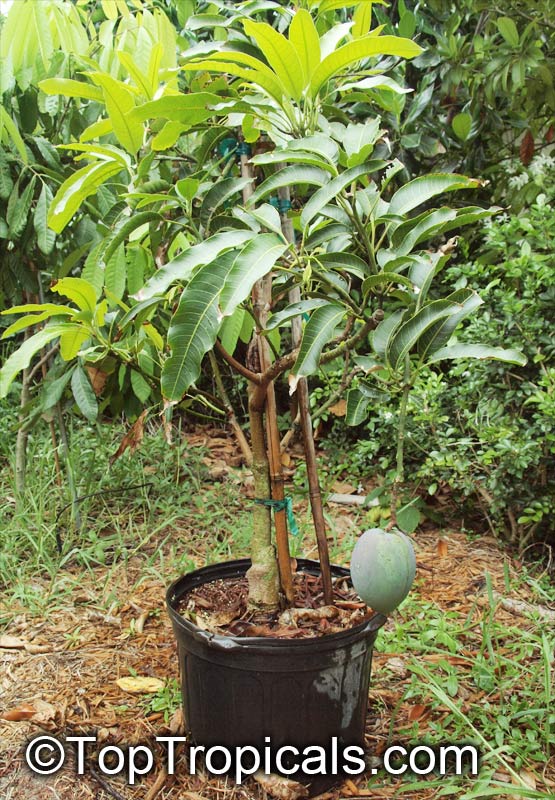
Q: I was curious about indoor fruiting mango trees. I live in upstate New York and was thinking about trying to grow an indoor tree for fruit. I have a small heated greenhouse. Is there a variety that can be grown from seed that would suit my purposes and if not what is the most economical way I could obtain a cutting or small grafted plant? I keep my greenhouse around 60F in the winter and have no supplemental lighting. Are there any varieties that may work in a sunroom or other well lit indoor location?

A: There are many dwarf varieties of mango suitable for container culture. They are called "condo mangoes".
The most popular condo varieties are: Carrie, Cogshall, Cushman, Fairchild, Graham, Ice Cream, Julie , Mallika, Nam Doc Mai, Pickering. You may read more about them in our online catalog. You may also look into variety Lancetilla which is also a compact tree, and produces one of the biggest size fruit, up to 5 pounds. If you want some rare variety that hardly anyone else has - try Baptiste, an exotic Haitian dessert mango.

Your greenhouse should work for the winter time. Mango trees can take as low as mid 40s during winter and even lower as long as that cold is occasional. If you keep the temperature around 60, this should work well for over wintering. Just make sure to reduce watering to a minimum, because cool temperatures, low light and wet soil - is a bad combination for tropical plants, especially for mango trees which prefer to be kept on a dry side.

Many indoor gardeners have fruiting mango trees in their collection. However, keep in mind that the most important requirement for a mango is full sun. While you may over winter the plant for a few months in a low light conditions, in order for it to flower and produce fruit it needs lots of light. If moving the tree into full sun your yard during the summer is possible, this would be the best solution.

We always recommend SUNSHINE boosters for both over wintering tropical plants in colder climates, and for indoor gardening. SUNSHINE applications will help your tree to cope with cool temperatures and low light conditions. This will also dramatically increase flowering and fruiting performance. Another important factor for keeping your container plant healthy is quality of your potting soil. We offer a special professional mix that contains lots of good stuff: coconut fiber, peat moss, pine bark, and perlite. Fertilizing potted plants is also very important during the warm season, because this is the only way for them to get nutrients (which in the ground can be reached by spreading root system).

As far as seedlings vs. grafting - the only way to have a nicely fruiting mango tree is to plant a grafted variety. Seedlings start producing only after 8-15 years, and the quality of such fruit may be questionable. Only grafted plants can guarantee the desired taste of a variety. Besides, grafted mangoes start producing immediately - you may see fruit forming on plants as small as 3 ft, in 3 gal containers. However, during the first 1-2 years you will need to remove extra fruit and leave only 1-2 fruit so the plant doesn't get exhausted and has enough energy to establish strong root system.

For fun stories about growing mango, check out our Radio Show recording YO Tango Mango!

Date: 9 Apr 2024

How to start a tropical garden?

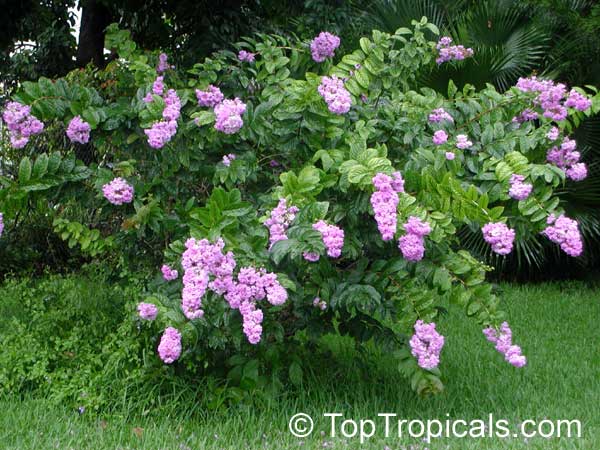
Lagerstroemia

Photo above: Lagerstroemia speciosa - Queen Crape Myrtle. Gorgeous flowering tree with cascades of lilac flowers. One of the most popular trees in Southern gardens.

Q: It's spring, finally! I can't wait to plant my paradise garden with lots of tropical flowers. We moved into a nice new house but the yard has nothing but grass. Where do I start?

A: When you start your garden from scratch, you need to plant your trees first. It's a perfect timing!
Getting tropical flowering trees now is really important for making your garden strong and beautiful. Trees are like the bones of your garden, giving it shape and shade. If you plant them in spring, they have enough time to grow strong roots before winter. This helps them survive better.
Trees also give shade to other plants so they can grow well too. It's like building a house - you need to start with the frame before adding other parts. So, it's a good idea to get those trees now before moving on to shrubs and vines.
Remember to provide regular fertilizing program which is the most important during season of active growth. The more food your tree gets, the stronger and faster it grows! For flowering trees, we recommend Sunshine Boosters Megaflor formula.

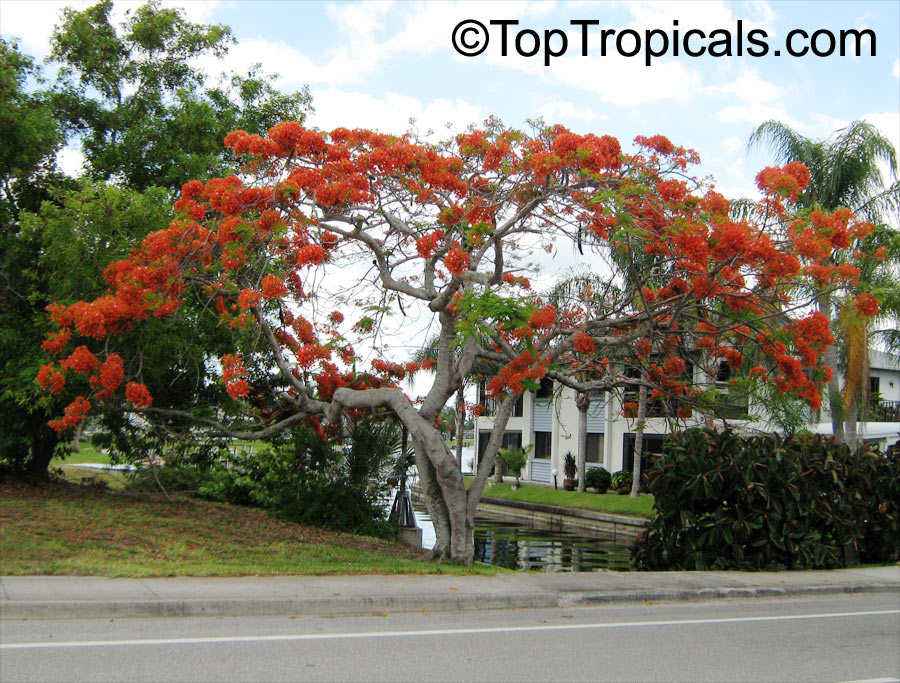
Royal  poinciana,  Flamboyant  tree,  Delonix  regia

Photo above: Royal poinciana, Flamboyant tree - Delonix regia."The Royal Poinciana is one of the most spectacular flowering trees in the USA, and probably among the top 10 on this planet. In full bloom, it is like a regal elephant caparisoned in red and yellow brilliance."(Larry M. Schokman, The Kampong, National Tropical Botanic Garden)

Date: 20 Jan 2024

Sunshine Boosters PRO - for Professionals

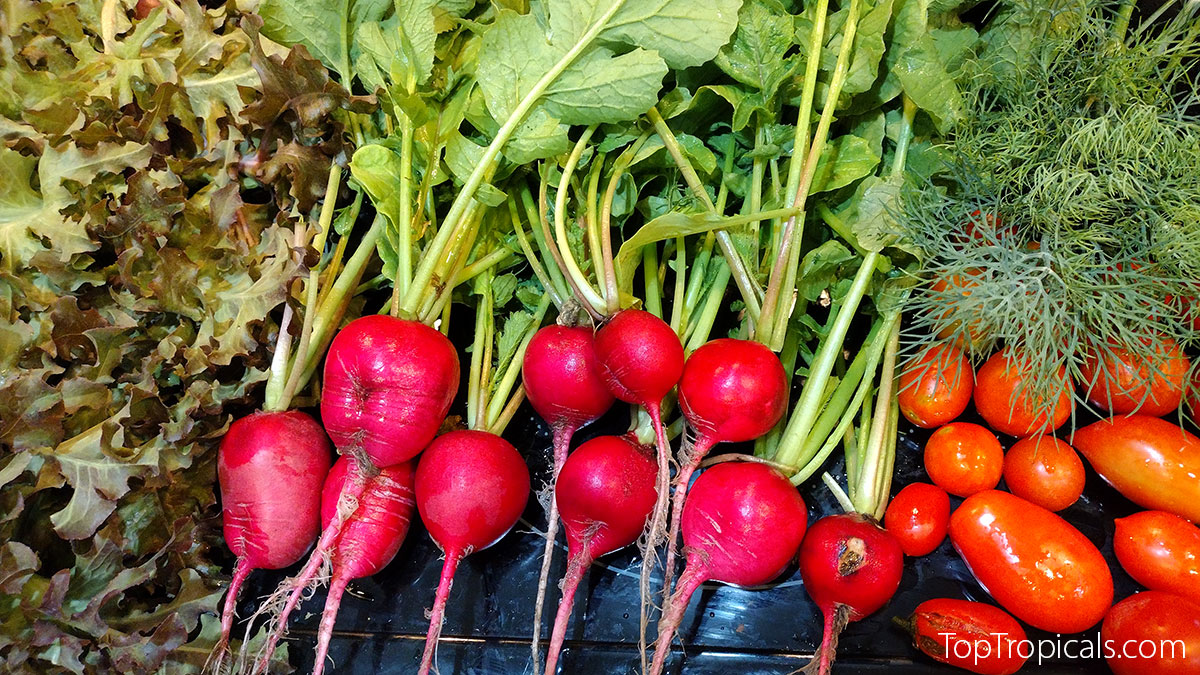
Vegetables  and  greens

Q: Winter marks the vegetable season in Florida, and my half-acre vegetable garden in Highlands County thrives during this time. I cultivate a variety of produce, including tomatoes, cucumbers, onions, beets, various lettuces, radishes, and beans. Despite the sandy and poor soils, I manage a bountiful harvest that not only sustains my extended family but also provides for friends throughout the winter. To combat our sandy soil challenges, I heavily rely on fertilizers.

Recently, I came across your Sunshine Boosters products, and the results on my tomatoes were astonishing. They grew twice as fast compared to those on a "manure" bed. What I appreciate most about your product is its natural composition, allowing me to use it on edibles. The convenience of easily integrating liquid fertilizer into our irrigation system is a game-changer.

I'm curious if you offer budget-friendly deals on your boosters for larger gardens?

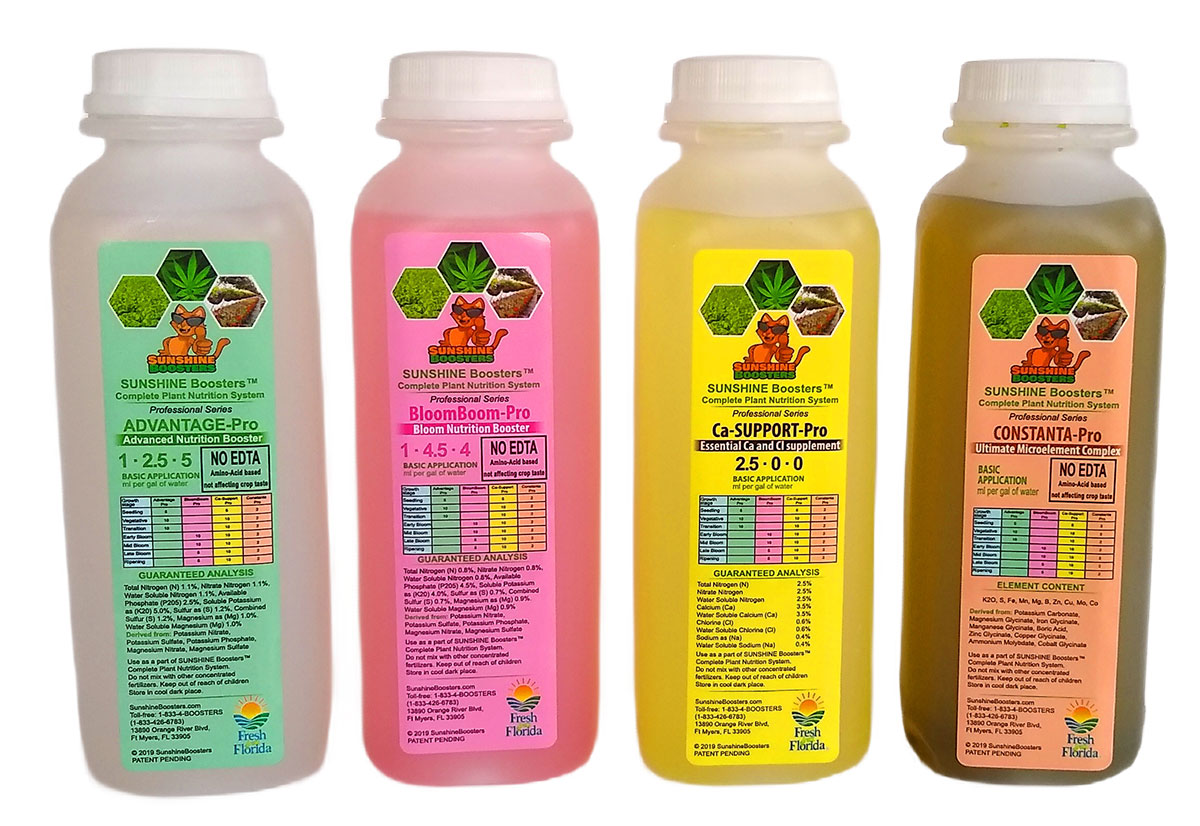
SUNSHINE  PRO  -  Complete  Nutrition  Booster  Kit  Pro,  fertilizer

ON SALE TODAY

A: Absolutely! We have just the solution you're looking for - our Professional Series of Sunshine Boosters is tailored for avid growers like you. Having catered to the needs of various crops, including tomato and hemp farms, our natural, amino acid-based professional formulas are the most economical choice for any scale of production.

Our professional series covers everything, from small backyard gardens to extensive greenhouses. The feeding process involves just three solutions mixed with water in your fertilizer tank: NPK (Advantage or BloomBoom, depending on the growth stage), Ca-Support (Calcium supplement), and Microelements (Constanta-Pro). This comprehensive nutrient package meets all your garden's needs. (See advanced info about Sunshine PRO products.)

Explore our professional solutions at the Top Tropicals Online Store. For larger quantities, you can directly order from the SunshineBooster.com professional selection or just contact us for a customized quote.

If you haven't implemented an injector system yet, consider the Robuster - an easy-to-install, care-free automatic system that takes care of all the work for you.

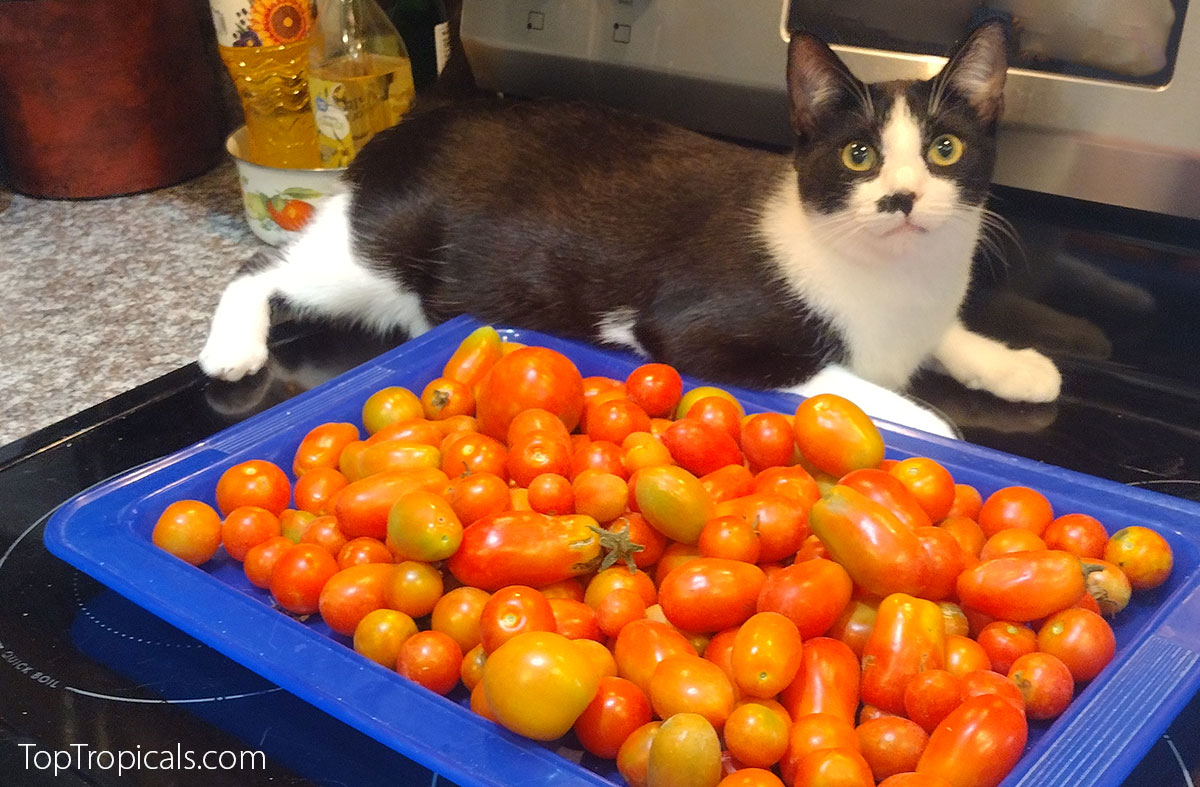
Cat  with  cherry  tomatoes

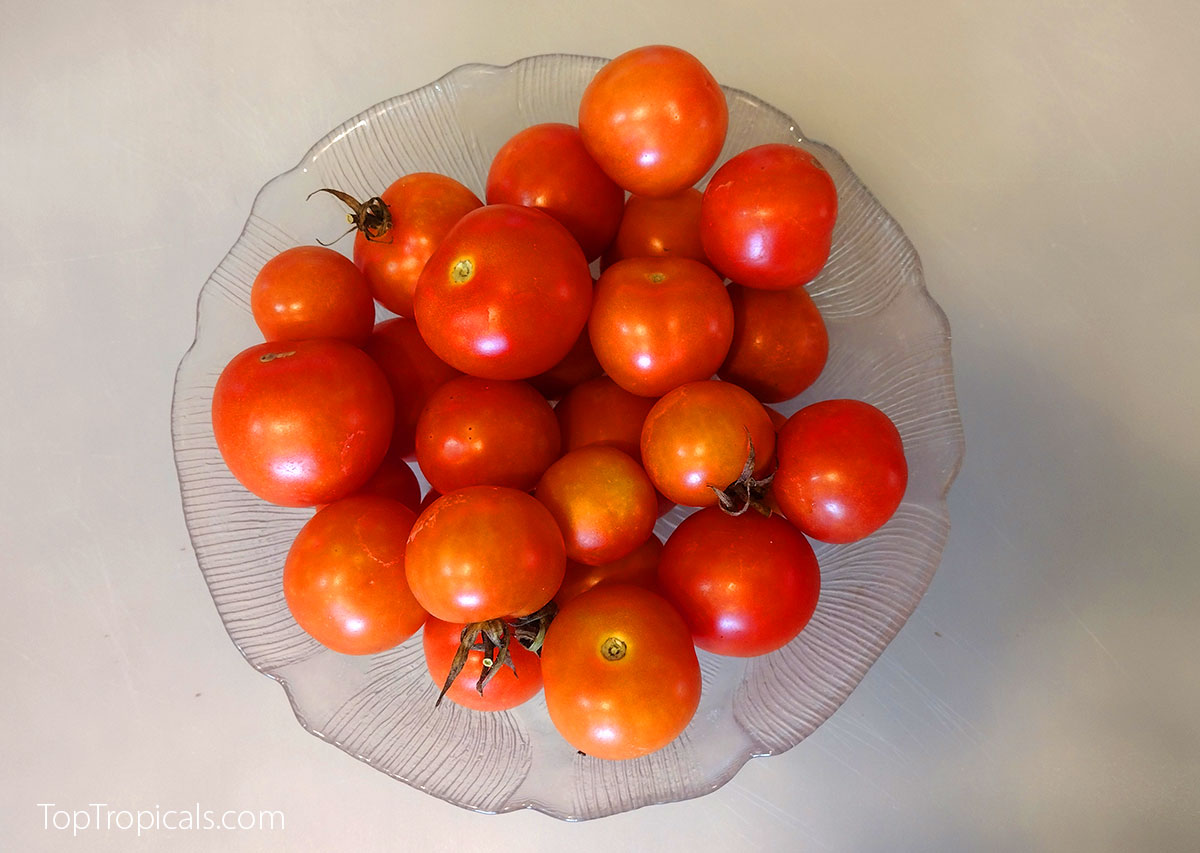
Cherry  tomatoes

Date: 28 Dec 2023

Blue Sage: Winter Wonder

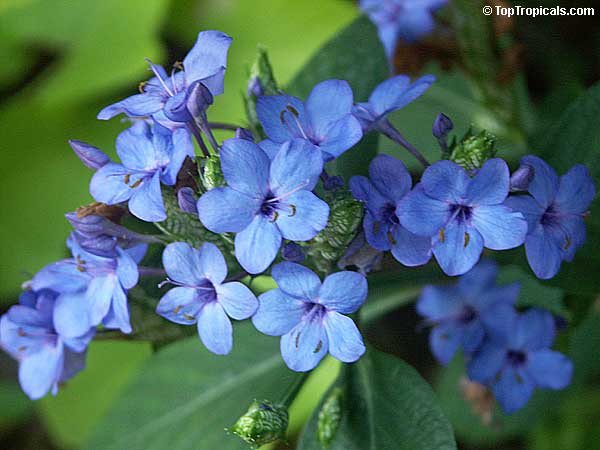
Eranthemum  pulchellum  -  Blue  Sage,  Lead  Flower

Q: I am looking for some interesting shrub that will flower in shade and doesn't grow too big. I am a snow bird, living in Florida during winter and will appreciate a winter bloomer.

A: In the shady corners of the tropical garden, the Eranthemum pulchellum, affectionately known as Blue Sage or Lead Flower, emerges as a vibrant winter surprise. Its petals boast a bright gentian blue hue, a hue so unusual in the tropics that it's as if the plant got a memo about standing out in a sea of green.

This botanical maverick flaunts its blossoms when the rest of the garden is caught napping, making it the prima donna of the winter bloomers. With a penchant for the shadows, the Blue Sage is the introvert of the garden, thriving in the cool embrace of shade. So, if your garden needs a touch of cool and a dash of mystery, invite the Blue Sage - the shade-loving sensation that's always fashionably late to the blooming party.

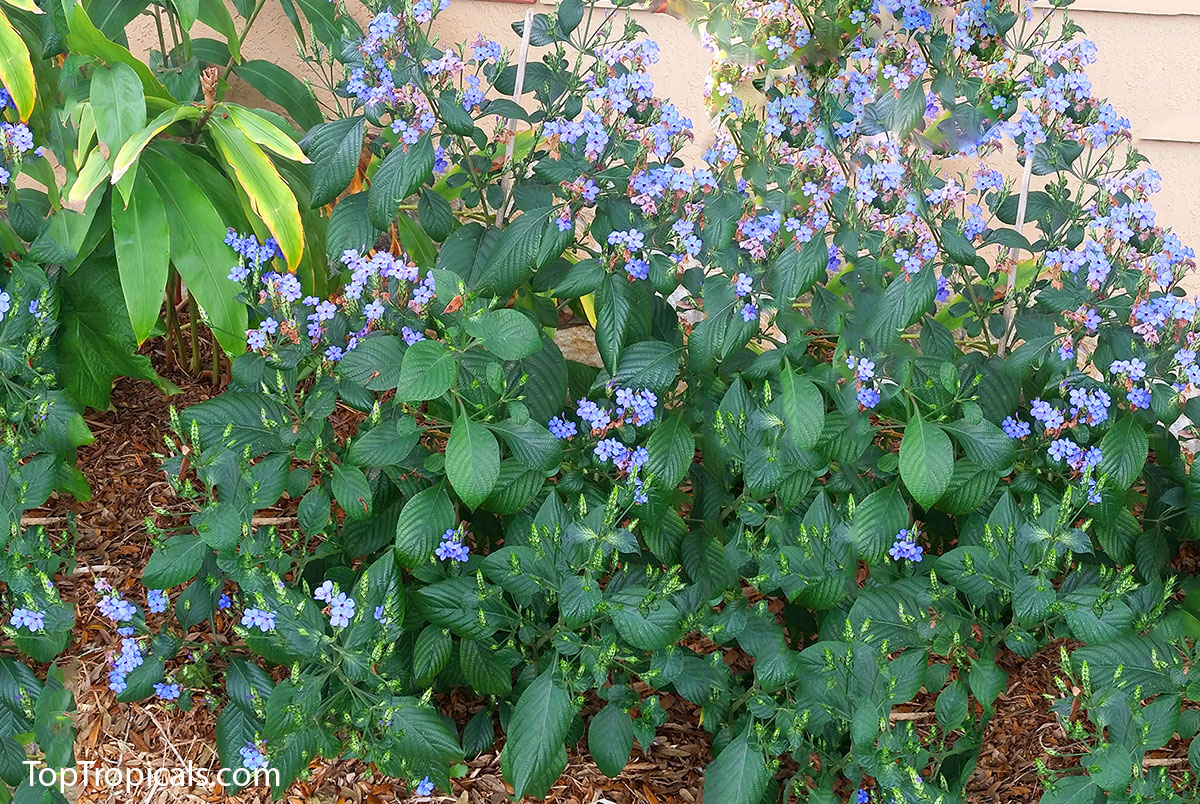
Blue Sage is an easygoing champ in your garden. You can trim it how you like, and guess what? The more you trim it, the bushier it becomes. This plant doesn't mind shade, and when winter hits, it shows off its bright flowers, making your garden extra pretty without any fuss. So, if you're all about simple gardening joy, the Blue Sage is your go-to pal that turns your garden into a happy, colorful spot.

Eranthemum  pulchellum  -  Blue  Sage,  Lead  Flower,  bush  size