Garden Blog - Top Tropicals

Date: 11 Jul 2024

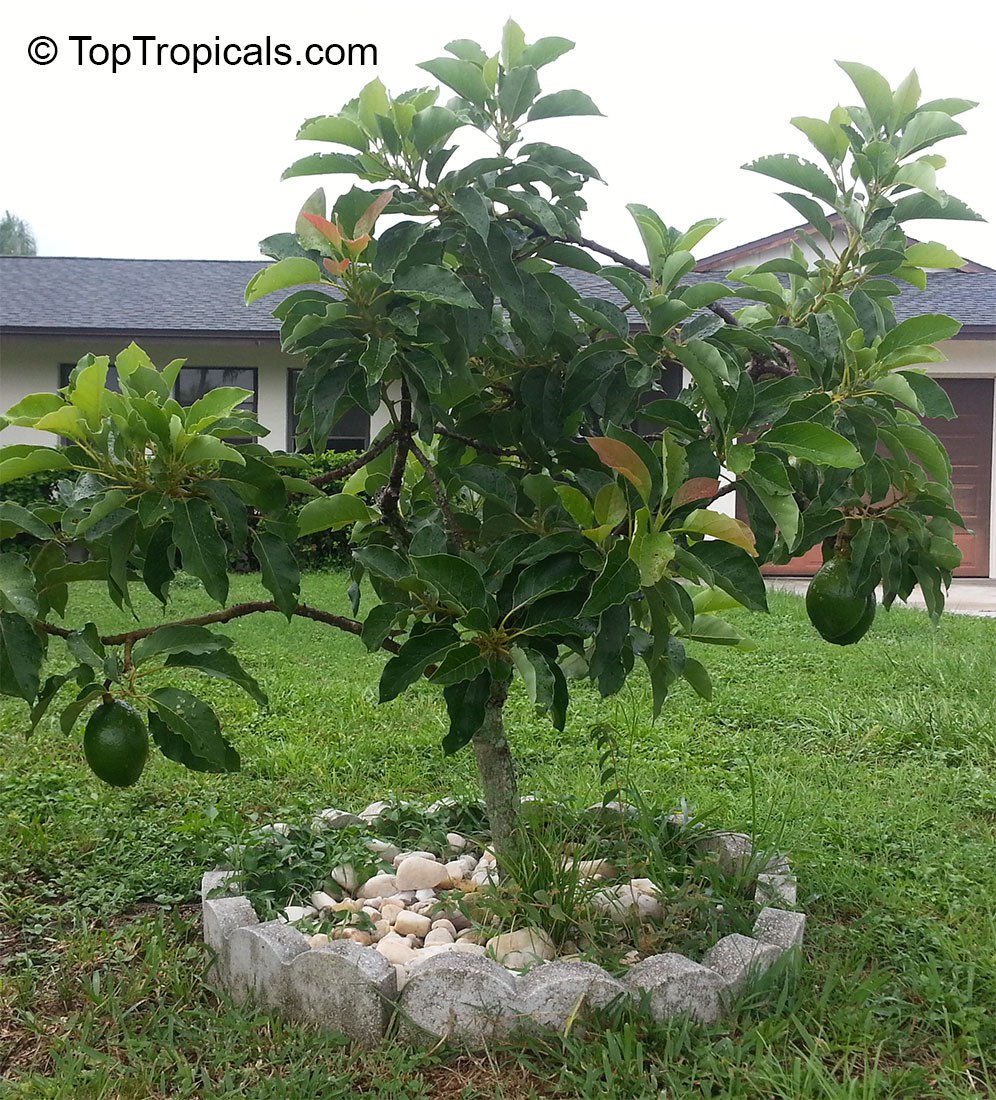
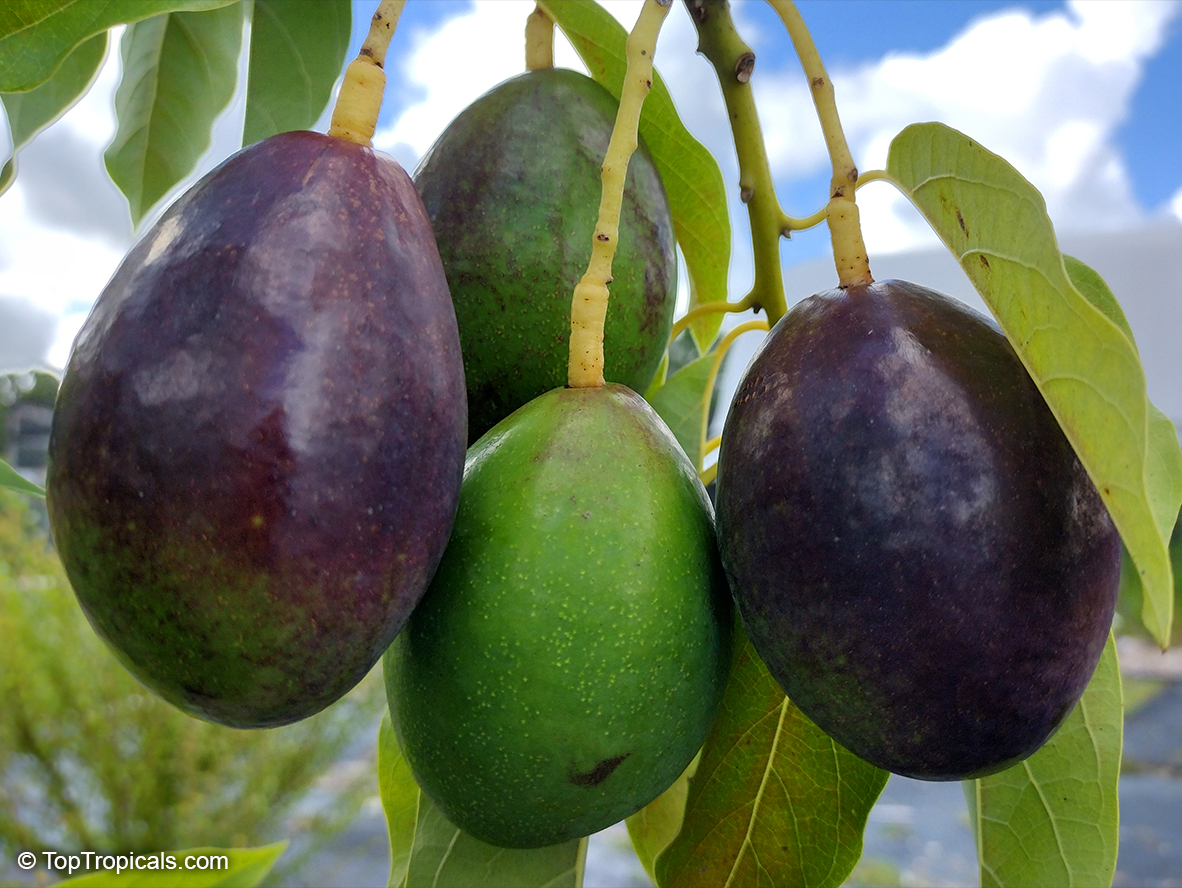
Avocado  fruit  on  a  tree

Five most popular Avocado varieties

Food Forest

"What is the best variety of Avocado?"
"Do you have the one with small black fruit and bumpy skin?"
"I have avocado with very large green fruit, what variety is it?"

These are frequently asked questions we get from our customers. This basic "classification" by black/green doesn't encompass all the wonderful qualities avocados have to offer. There are numerous hybrids in cultivation, and once you plant your first tree and taste the REAL fruit (not from the grocery store), you'll be eager to explore other varieties. While it's true that avocado fruit can vary in "butter" content, most superior varieties are equally delicious. First comes first -

The most popular Avocado varieties this year are:

1. Brogdon - red-purple pear-shaped fruit, 7-15 oz. Skin is very thin, yellow buttery flesh. Fruit ripens in late summer-fall. Very cold hardy.

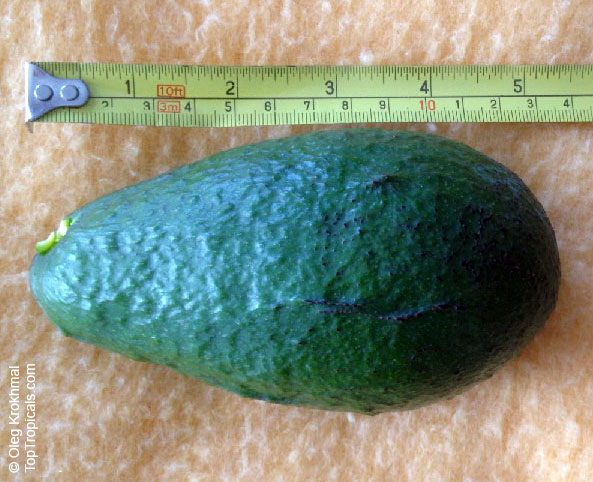
2. Hass - probably the most popular, but this tree prefers drier climate (Florida is humid, so we plant adaptable Florida Hass here). The fruit is dark-colored with a rough and bumpy skin, turns black when ripe.

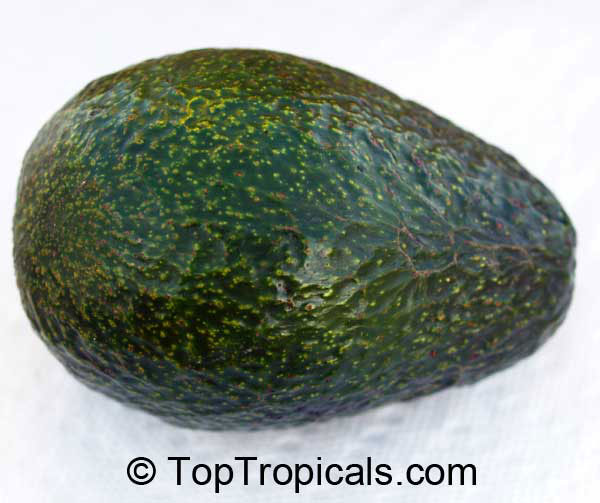
3. Fuerte - a dwarf and a very cold hardy variety. Everybody's favorite "Condo Avocado": perfect for container culture and small yards. The mature tree in the ground is under 15 ft; 6-7 ft in containers.

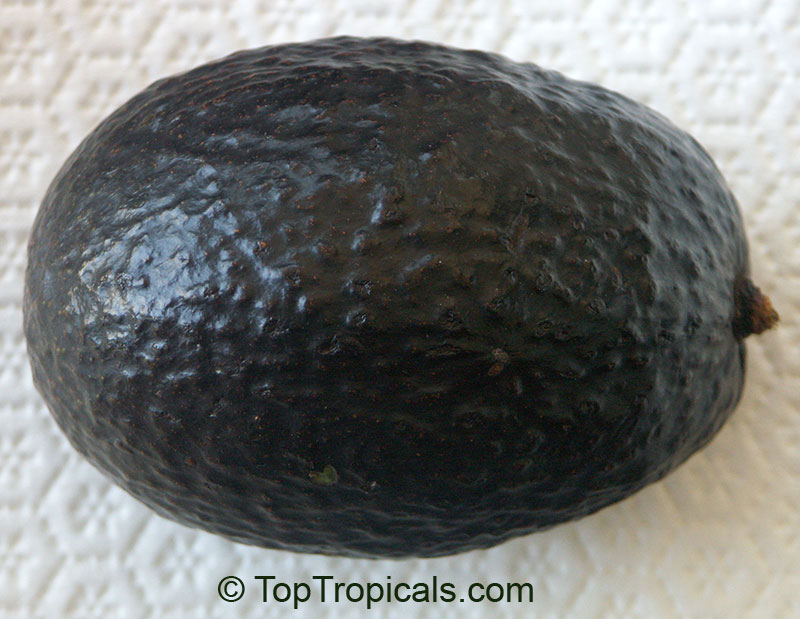
4. Oro Negro - Oro Negro means "black gold" in Spanish, which is an incredibly appropriate name for this fruit. This Monroe hybrid (with big size fruit) is crossed with a Mexican type which would explain the black skin. The flesh is rich and buttery with a creamy texture.

5. Winter Mexican - one of most cold hardy varieties, Guatemalan x Mexican origin. Mature trees may withstand temperatures in the mid 20s. Oblong fruit, 12-18 oz, thick green skin. Very vigorous tree, bears heavily and regularly in December-January.

Learn more: Avocado Variety Guide - check this out for interactive chart of Avocado varieties and sort them by flower type A or B, tree habit, fruit shape and quality, cold hardiness, origin, season and more!
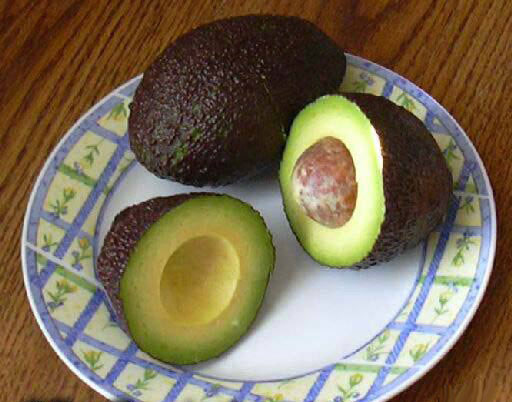
Avocado  Hass

Photo above: Avocado Hass

Avocado  Fuerte

Photo above: Avocado Fuerte

Avocado  Oro  Negro

Photo above: Avocado Oro-Negro

Avocado  Winter  Mexican

Photo above: Avocado Winter-Mexican

Date: 17 Dec 2025

What is so unique about Wurtz avocado?

Wurtz Avocado, Little Cado or Mexicola Dwarf, is special because it's a true dwarf tree.

Wurtz Avocado, Little Cado or Mexicola Dwarf, is special because it's a true dwarf tree.

🌳 What is so unique about Wurtz avocado?


Avocados come from three main regions, and each group has its own special look, taste, and growing habits. The three types are Mexican, Guatemalan, and West Indian. Many of today’s popular varieties are hybrids, mixing traits from these types as we mentioned in earlier post.
  • Wurtz Avocado, also known as Little Cado or Mexicola Dwarf, is special because it’s a true dwarf tree. That means it stays small, making it perfect for small gardens, patios, or containers. You can even grow it indoors in a sunny spot!
  • Wurtz is actually a Guatemalan-type avocado, not exactly a Florida or California type. It has a slightly different growth habit and pollination pattern than those two groups.
  • The fruit is small to medium in size, with smooth green skin and a rich, buttery flavor. Its flesh is creamy and full of healthy oils, much like the California (Hass-type) avocados.
  • In short: Wurtz is a compact, easy-to-grow avocado tree that produces delicious, buttery fruit. It’s perfect for gardeners who want a real avocado tree without needing a big yard.


✔️ Check out
Avocado Variety Guide interactive chart. Sort them by flower type A or B, tree habit, fruit shape and quality, cold hardiness, origin, season and more!

🛒  Plant Avocado Wurtz
Explore Avocado varieties and Dwarf Avocado

📖 Our Book: Avocado Variety Guide, Snack or Guacamole?

📚 Learn more:

Avocado Plant Facts

Persea americana, Persea gratissima
Avocado, Alligator Pear, Aguacate, Abacate
USDA Zone: 9-11
Large tree taller than 20 ftSmall tree 10-20 ftFull sunRegular waterEdible plantSubtropical plant. Mature plant cold hardy at least to 30s F for a short time


🎥 What is a Dwarf Condo Avocado that fruits at 3 ft tall? 📱

#Food_Forest #Avocado

🟢 Join 👉 TopTropicals

Date: 17 Jul 2025

Mango tasting table with Chiane and Ashley

🥭 Mango tasting table with Chiane and Ashley

📱

#Food_Forest #Mango #Mango_Rainbow

🟢 Join 👉 TopTropicals

Date: 30 Dec 2022

Cold protection for tropical plants

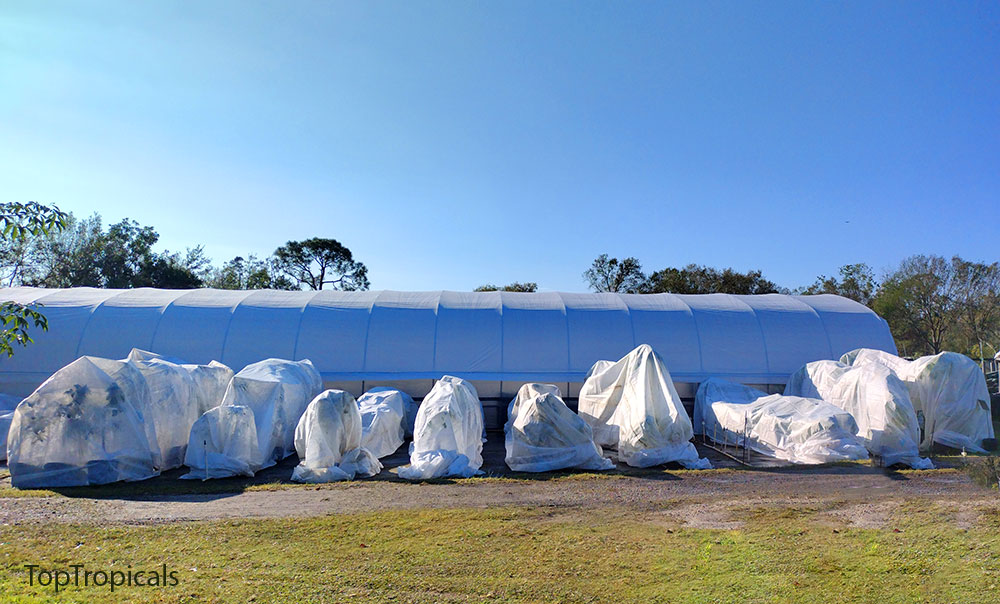
greenhouse  and  cold  protection  covers  on  tropical  plants

Pushing the limits of tropical gardening

The year is almost over but the winter is not. This Christmas weekend at our Sebring B-farm we had it down to 30F. As a tropical gardener, winter can be challenging, especially if you grow plants outside of tropical zones.

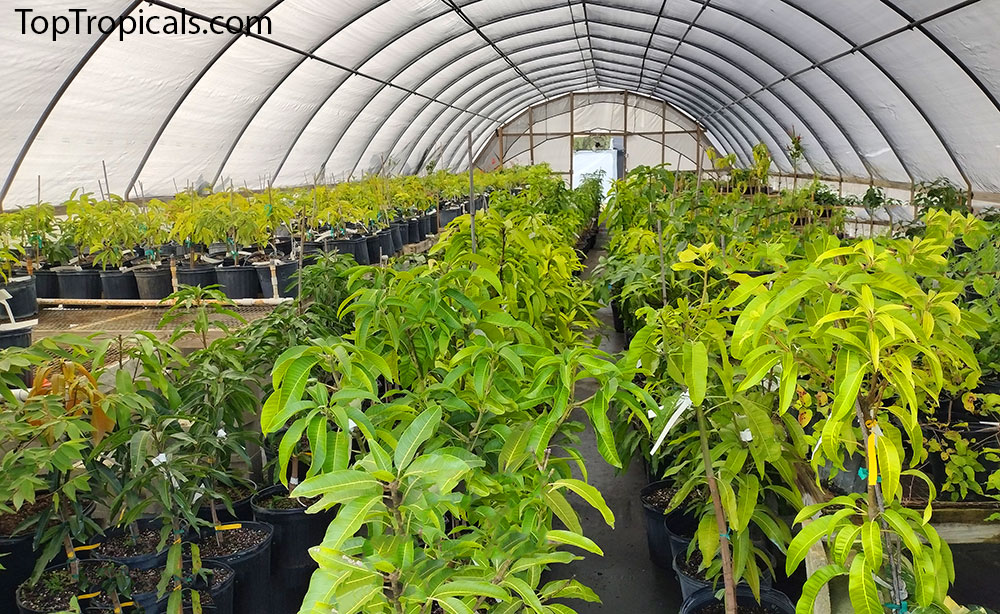
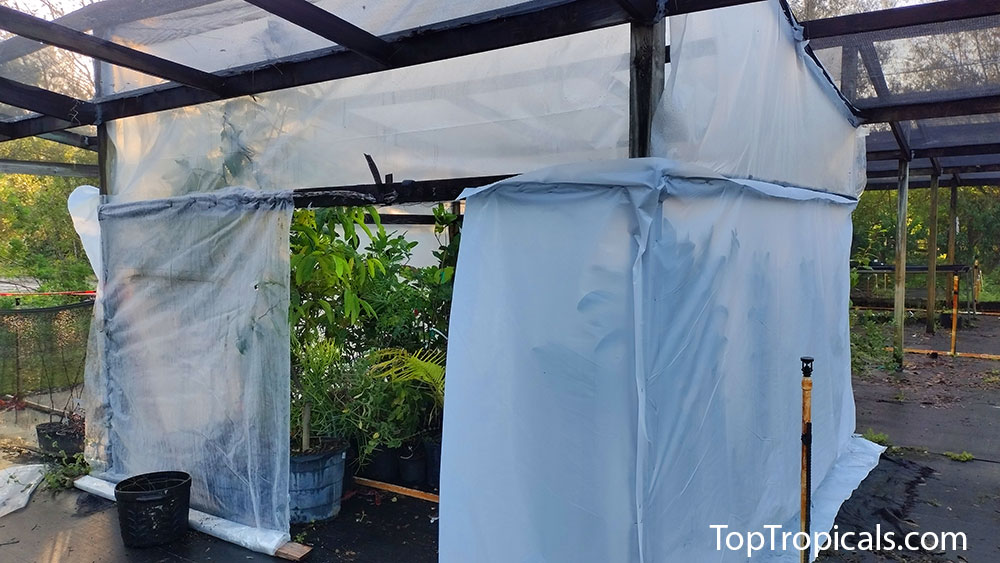
greenhouse  with  tropical  plants

To protect your garden from the cold, consider the following:

1. Monitor freeze watches and be prepared to take action if necessary.
2. Create temporary structures like mini-greenhouses using PVC pipes, carport frames, or bamboo sticks to support covers.
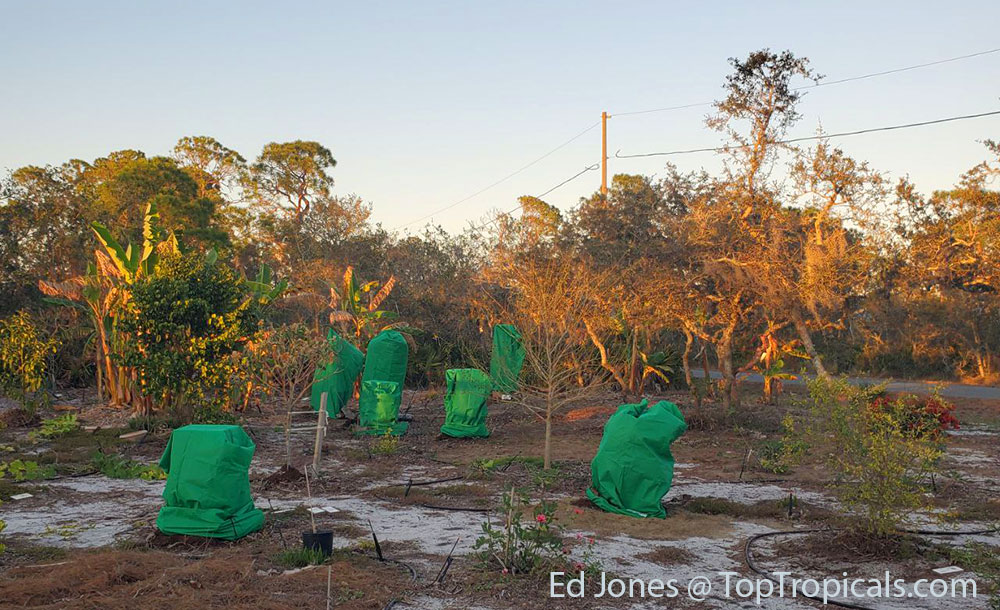
3. Use covers such as frost cloth, cardboard boxes, blankets, and bed sheets.
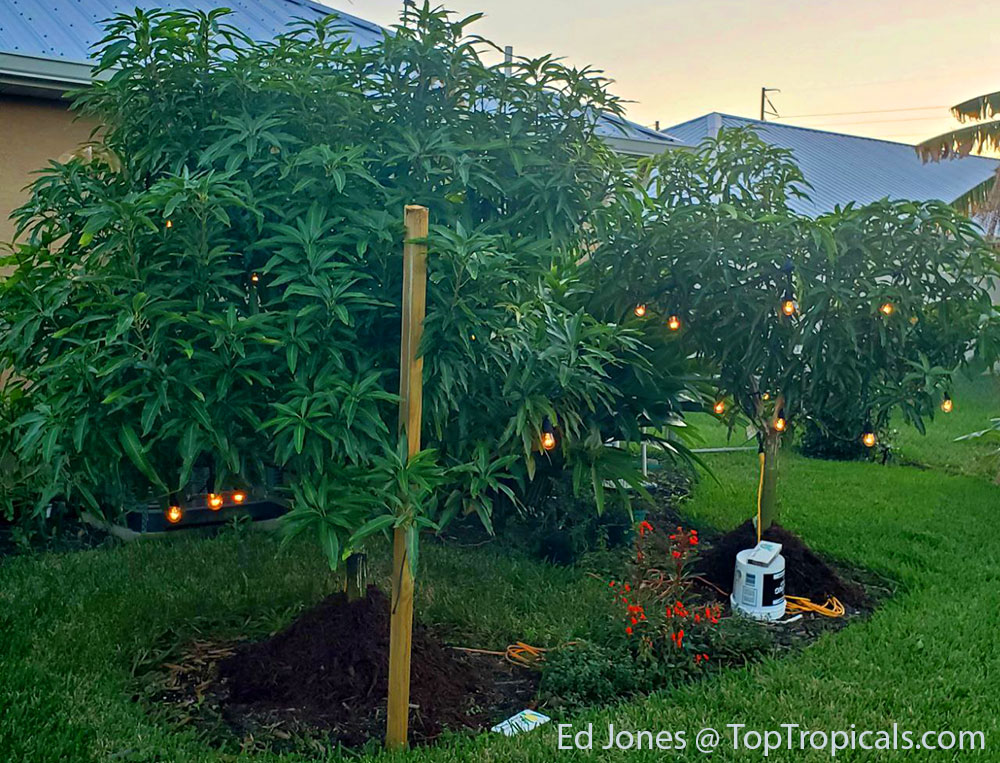
4. Use Christmas lights and other heating elements, including propane heaters, to keep plants warm.
5. Add a layer of heavy mulch around plant trunks to protect them from the cold.
6. Apply plant boosters that improve cold hardiness, such as Sunshine Epi, Sunshine-Si, and Sunshine Superfood.

At TopTropicals B-Farm, we sprayed our plants with a special cold hardiness treatment Sunshine-Si and covered and wrapped everything we could. We also moved cold sensitive species inside greenhouses. All of our plants are looking great and happy!

Mulching  mango  trunks  and  using  Christmas  lights  for  cold  protection

Photo above: Mulching mango trunks and using Christmas lights for cold protection

Read more about this special treatment plan: Cold Hardiness Improvement Kit.

Covering  plants  during  cold  night

Plastic  warm  house  wrapping

Photo above: Temporary wrapping of a section of a greenhouse with a plastic or frost cloth protects from a windchill. It may also win you a few degrees even without a heater. In this particular case, according to our temp sensors, it was 30F outside, and 41F inside this "dome", no heaters used.


Sunshine Boosters:

Last chance to stock up
at a lower price!

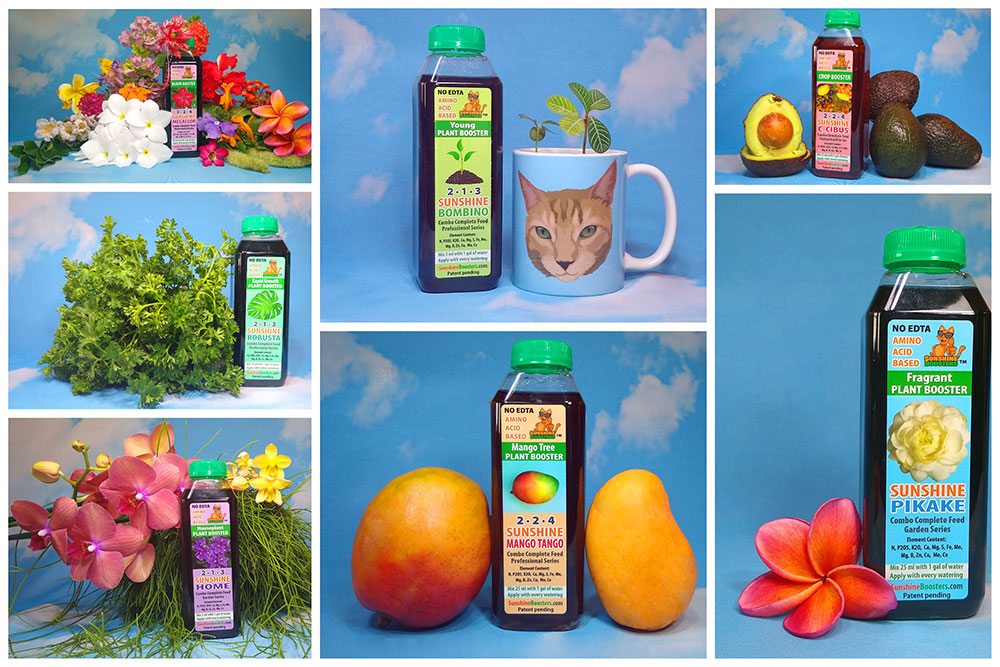
Sunshine Boosters are natural, amino acid-based liquid fertilizers made with only the highest quality ingredients. Starting in 2023, the pricing for Sunshine Boosters will be adjusting to reflect the increasing cost of supplies. This is your last chance to stock up on Sunshine Boosters before the end of the year! Sunshine Boosters are safe to use year around, with every watering.

Don't miss out on this opportunity to get the best value for your money!

Use discount for even better deal:

22FOR22
for 22% off orders $220+

Min order $220. Offer expires 12-31-22

Sunshine  boosters  for  different  plant  types

Date: 7 Aug 2020

Healthy Plant Food

Q&A from Mr Booster

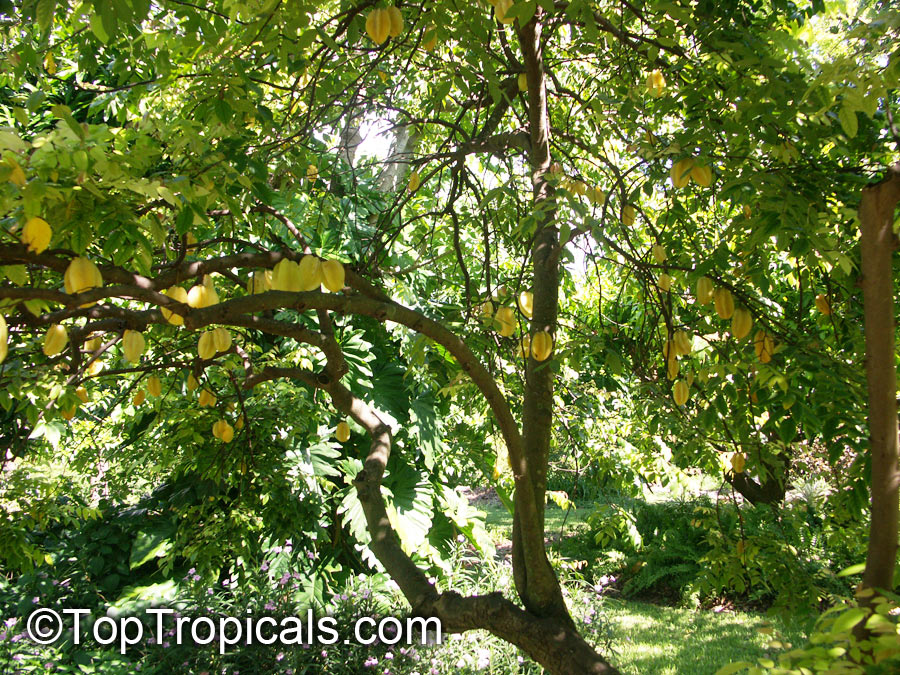
Plant food for a Star Fruit

Q: I have 2 Starfruit plants from you. One on the left is B10 has a lot of flowers but no fruit is developing. On the rite is Kenjeng. This one has no flowers at all. Both plants are growing very well. Plenty of sun and water. I am located in Boynton Beach Florida. So what to do?

A: Your trees on the pictures look very healthy, congratulations with a great care!
Starfruit, as well as other grafted fruit trees (like mango, avocado, etc) usually flower/fruit easily and readily while in pots in the nursery. Sometimes, once planted in the ground, they may reduce flowering or even stop flowering. What happened?
The answer is simple. In pots, we fertilize them on regular basis. In our nursery, we have fertilizer injector inline with irrigation system that dozes plant food with EVERY watering. In other nurseries, they may also use slow-release fertilizers, but it is still a regular routine to provide plant food to potted plants.
In the ground, especially in Florida poor soils, fruit trees may stop flowering or delay fruiting due to lack of nutrients, or dis-balance of elements in the ground. Without fertilizer, a tree may take extra time to develop bigger root system to reach out for necessary elements, and eventually will start fruiting anyway.
But we want it to fruit soon! The only way to fix the problem is to provide fertilizer on regular basis for a young tree. It is especially important during hot summer months when plant metabolism is fast due to high temperatures, plus nutrients may get washed away with frequent summer rains (like we have in Florida) even if you've added some fertilizer at time of planting.

You can use smart release fertilizer once a month during hot season, this one or similar:
Mango-Food - Smart Release Fruit Tree Booster.

But the most effective way to get a tropical tree to flowering and fruiting, is frequent applications of liquid fertilizer. We use Sunshine Boosters with every watering on our plants. They work great even on hard cases and weak plants, and you see the difference in a matter of weeks, sometimes even days.
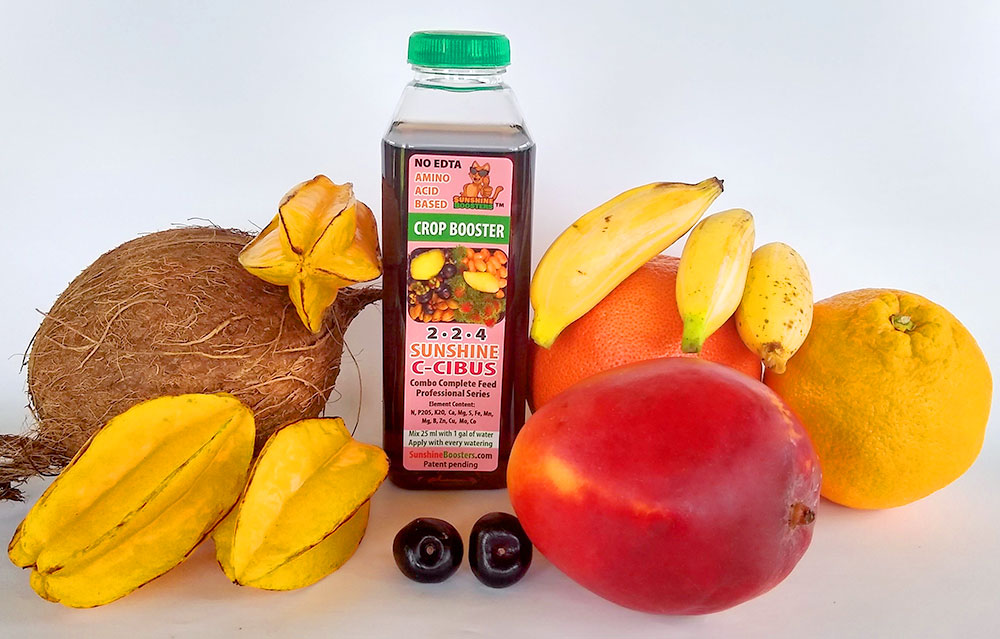
We recommend the following fertilizer that contains all necessary elements for young fruit trees: SUNSHINE C-Cibus - Crop Nutrition Booster

SUNSHINE C-Cibus - Crop Nutrition Booster from Garden Series, or Combo Total Feed Collection - all nutrients in just one bottle, for fruit trees and edibles.