Date: 26 Sep 2021
Edible Landscape: fruit bearing hedge
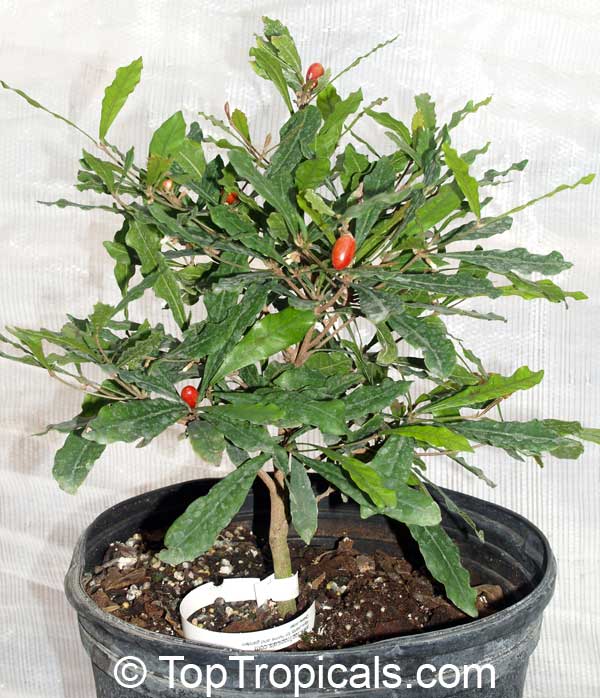
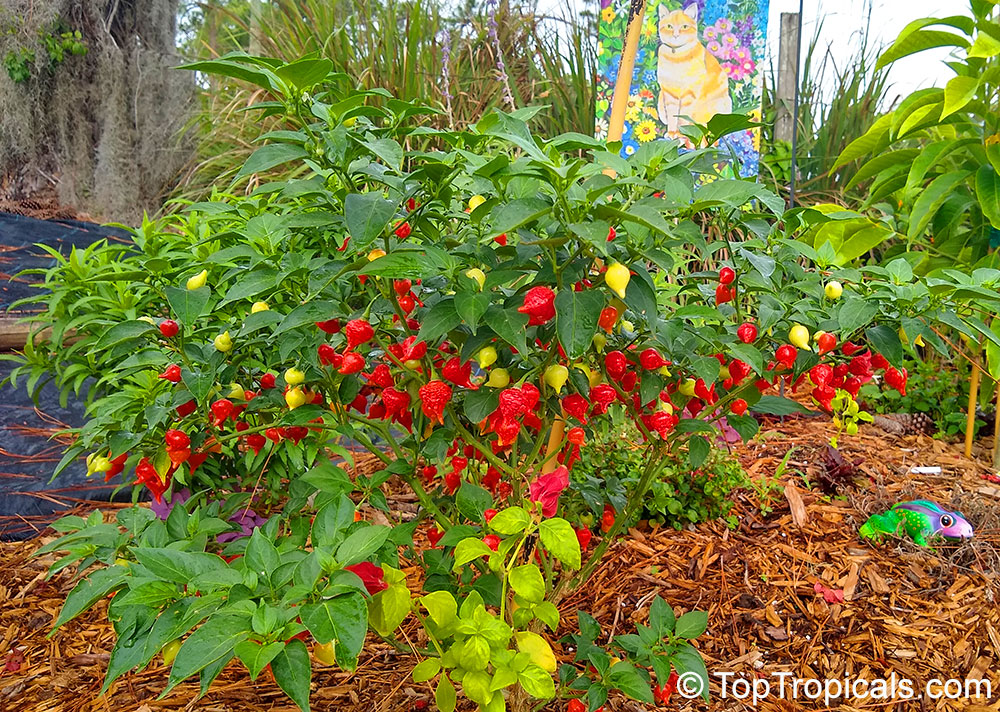
Photo above: Biquinho Pepper (2 months old plant)
Q: My mom had to remove a hedge for some renovations and after being heartbroken about losing my little bird haven, I've decided to plan on a fruit bearing hedge that offers some privacy and places for the little fledgling to wait for food. Any suggestions? I was thinking blueberries or citrus but open to any ideas.
A: Below are a few suggestions for a fruit bearing hedge planted with fast-growing, tropical species. They will contribute to a nice edible landscape for both your family and the birds - they will be very happy!
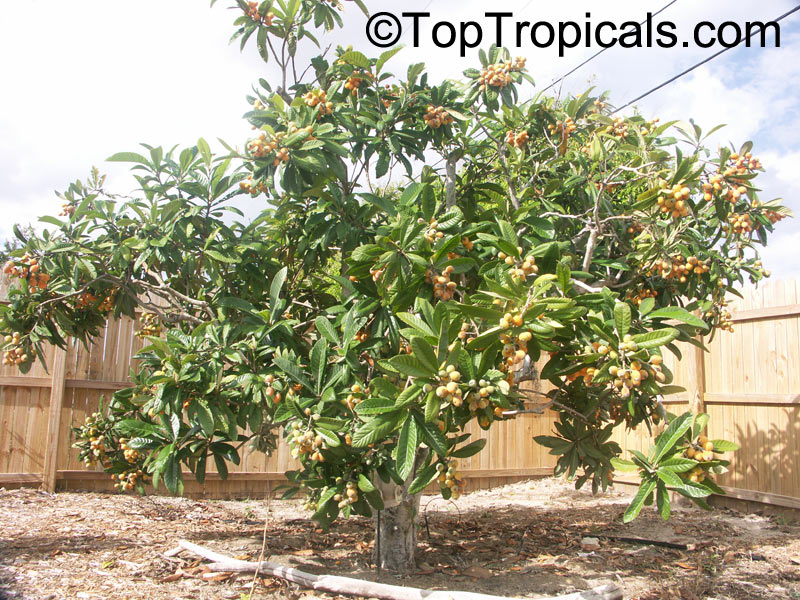
Larger size hedge (small trees), grows full-size within 1
season:
- Loquats
- Dwarf Mulberries (very cold hardy too) such as Dwarf Everbearing
Medium size hedge (shrubs or vines), 2-3 seasons to grow full
size:
-
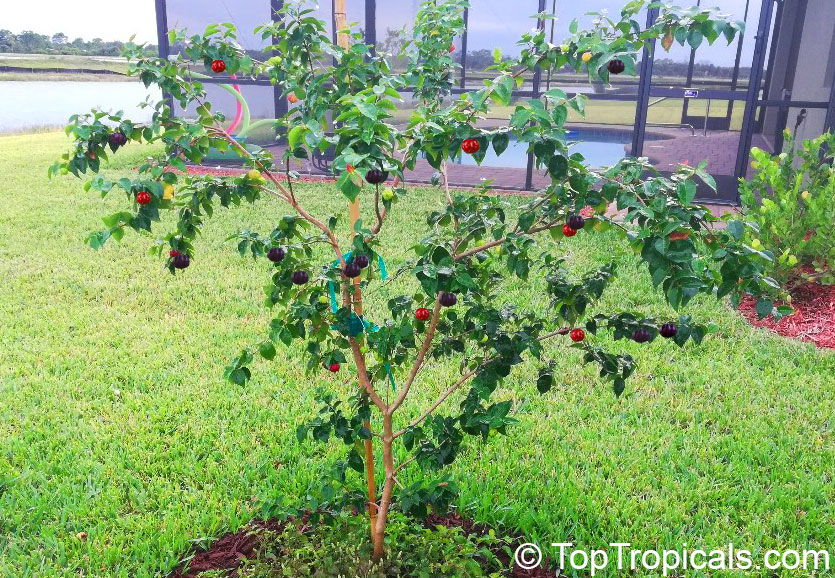
Black Surinam Cherry Lolita
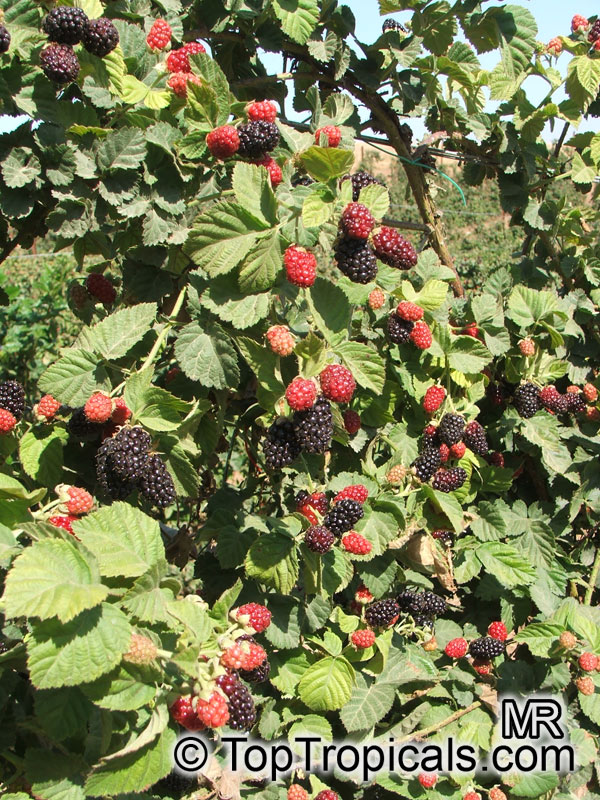
- Blackberries and raspberries
Low hedge (4-5 ft tall, 1 season, fast growing):
-
Biquinho Pepper
- Wiri
Wiri Pepper
Citrus is probably not a good idea, not bird's favorite, and blueberries require a special acidic soil here in Florida, so they will need extra maintenance, special soil, and heavy mulching.
Surinam Cherry Lolita, 2 year old plant
Date: 17 Sep 2021
Mango Talk: How to prune mango trees for best shape and production
by Ed Jones, the Booster Guy
...Why should you prune your mango trees? There are a few reasons.
First, a good foundation is the key to strong growth and a shapely tree.
Second, if you get your mango tree started off on the right foot with a
strong foundation, it becomes much easier to keep it shaped nicely.
And third - it will be forced to produce more branches allowing for more
places for fruit production...
...We received our Mango tree in late February of 2020 as a relatively
small plant in 3 gal pot...
...The opening photo was taken just last week and you can see that as she
grows, her shape is very nice...
...She is now about 7' tall and just as wide. She has a great foundation
and a lot of branches. We also have less grass to mow. She also got her very
own marker painted on a brick:
...We have also enlarged the circle of mulched area under the tree to allow it to be able to get nutrients from it's SUNSHINE Boosters Mango Tango without having to compete with the grass. This is one mistake that I see frequently in my neighborhood with all trees...
CONTINUE READING >>
Date: 8 Sep 2021
Fertilizer and the Fall Garden
by Ed Jones, the Booster Guy
...Well Labor Day has come and gone. Summer is winding down and depending on where you live, thoughts are now turning to pumpkin spice, witches, fall decor and gardening. Wait, did I just say gardening? Yes, if you live in the deep south, and I do, it is time to think about fall gardening and fertilizer. Even those of you in the north can put in a few quick crops now for fall. Think onions, radishes, lettuce and other greens and of course, garlic...
Next month, we can start putting out our plants that do better in cooler
weather. We will put out some beans and of course cabbage. We may do some
potatoes too. What do you like to grow?
But what about fertilizer? Glad you asked. Now, most of us have our
favorite brand of fertilizer. Some of us had some secret fertilzers that we used in
the past. For me it was composted alpaca manure. Yes, we raised alpacas in
the north, but that is another story for another day....
...Once the temperatures have begun to drop, it is better to use a good
liquid fertilizer. The one I will be using this year is SUNSHINE Robusta. SUNSHINE Robusta is an organic amino acid based
liquid fertilizer that is safe to use with every watering. It uses amino acids to
chelate (bind) micro-nutrients and makes it easier for plants to take them up
from the soil. Most fertilizers use EDTA to chelate their micro-nutrients
and plants must use about 4 times more energy to break them down than they do
with SUNSHINE Boosters. This means that your plants will have more energy to
put into growth. And isn't that what we are after?
With Special Seasonal price for 16 oz bottle reduced to only $19 with FREE
shipping, this is your best choice of organic, safe fertilizer for your
vegetable garden!..
CONTINUE READING >>
Date: 15 Aug 2021
How to grow Cerbera and make it flower
Q: I purchased Cerbera manghas - Enchanted Incense a year ago. As you see from the photo, it's doing great however, no blooms. I fertilize properly and very often and use worm castings for micronutrients. Yes it's not "your" fertilizer, but my plumerias, that are also in pots they are over 5 feet tall and blooming like crazy. I don't see any inflows coming on the Cerbera at all and it is hot and humid here in North Carolina, so it's happy but no sign of blooming. What is your advice?
A: Top Tropicals first brought Cerbera manghas into the US plant market a few years ago, it was recommended to us by our friend, plant taxonomist John Mood who visited Thailand, and among other exotic plants noted this fragrant beauty. Since then we've been successfully growing this plant, it has become one of everybody's favorites.
Generally speaking, Cerbera culture is very similar to Plumerias. These plants are closely related. So if you know how to grow Plumeria, you sure will succeed with Cerbera. Hot and sunny location, well-drained mix, moderate water and bloom boom fertilizer will do the trick. However, we have noticed a few distinctive features that make this plant somewhat challenging at times.
1) Flowers
For past years, we've been studying what triggers its flowering.
Sometimes these plants start flowering in 1 gal pot, 1 ft tall. Other times a large
developed tree 5-6 ft tall, in 5-7 gal pot, grows beautiful foliage with no
signs of flowers. Eventually all of them bloom, no matter how stubborn they
are, it's just some individual plants start flowering sooner than others, all
grown in the same conditions.
One of our plants in the ground, a well-branched tree, was covered with
flowers for a few months, but only on the 3d year after planting. Before that,
it only produced a few random blooms. Others bloomed in pots at very young
age.
The following factors benefit to Cerbera flowering:
- full sun at least 10 hours a day
- hot temperatures above 85F
- regular water but not heavy rains
- regular fertilizer - Bloom Booster type
- very good drainage and drying out before waterings. If root ball stays
moist, the plant may look healthy but won't set flower buds. Keeping on a dry
side will encourage flowering. Very similar to Jasmines: they bloom like crazy
in April while it's hot and dry in Florida, but once our summer rainy season
starts, they reduce blooming.
We highly recommend using Sunshine Megaflor bloom booster or SUNSHINE Pikake in combination with micro-element supplements Sunshine Honey (B-Mo) and Sunshine Superfood (complex micro) that induce flowering. Dry and granulated fertilizers may not supply exactly what a plant needs: certain elements that trigger flowering may be missing. Sunshine Boosters formulas are scientifically balanced, they contain precise amounts of nutrients needed for setting flowers. Besides, excessive salts from regular dry fertilizers create nutrient lock up that may retard plant metabolism; with liquid amino-acid based Sunshine boosters, plants consume the whole menu of elements without building them up in the soil.
2) Fruit
Fruit of Cerbera are very pretty and cover the tree after profuse flowering. To inexperienced eye they may look very much like small mango or avocado fruit - so make sure kids or visitors don't try to eat them! Cerbera seeds are extremely poisonous.
3) Leaves
If you ever grew Passiflora or Milkweed, you know how leaves can be
eaten by caterpillars overnight. This may happen to Cerbera too, as we
discovered. In Florida environment this exotic plant doesn't have natural predators for
protection from certain insect species that may feed on it. So watch out and
if noticed first signs of leaves damage - its time for insect control.
Other than that, Cerbera foliage is usually beautiful and colorful, here in
Florida it looks much healthier than that of Plumerias often affected with
rusty residue during high humidity months.
Hope this helps. The Cerbera fragrance is enchanting, it is worth the efforts and waiting!
Date: 25 Jun 2021
Kristi's Loquat Tropical BBQ sauce
Loquat trees are famous for their abundant fruit production. Many customers who purchased this tree from us, soon end up with some serious crops and start asking if we have any special recipes for loquat fruit - because you can only eat so much out of hand! Here is our manager Kristi's favorite Loquat recipe - not only delicious and tropically-aromatic, but also good for you. Happy Tropical Meal!
Ingredients
2 lbs loquat fruit
- cup soft brown sugar
- cups malt vinegar
1 onion chopped - cloves garlic
1/2 tsp salt
1/2 tsp black pepper
1/4 tsp cayenne pepper
6 cloves whole or 1/2 tsp ground cloves
Instructions
Wash the fruit, cut them in half and remove stones. The loquats will
lose about a third of their weight once stoned (3 lbs of whole fruit = 2 lbs of fruit, stones removed). Add loquats and all remaining
ingredients to a large saucepan. Bring to a low boil, then simmer for about an hour, stirring occasionally. The liquid will have reduced quite a bit and the fruit
will be collapsed and very soft. Allow to cool slightly, then liquidize the sauce in a blender or a food processor. Be careful, hot sauce really
burns!
This delicious tropical sauce is great for any BBQ - with meats or fish. Enjoy!