❣️ A leaf you grow, not a pill you buy: Insulin ginger - the plant people actually use
❣️ Costus igneus (Chamaecostus cuspidatus) - Insulin Ginger, Fiery Costus or Spiral Flag - I love this plant! And that’s not something I say lightly.
Insulin Plant Facts
Botanical name: Costus igneus, Chamaecostus cuspidatus Also known as: Insulin Plant, Fiery Costus, Spiral Flag
USDA Zone: 9 - 11
Highligths
❣️ Customers often ask me about medicinal plants that may help with diabetes, and Insulin Ginger always comes up - for a good reason. This is one of those plants people grow on purpose, not just because it looks nice. Imagine stepping into your garden and picking a leaf instead of opening a pill bottle. That idea alone makes people pause.
❣️ In everyday use, Insulin Ginger is valued for supporting healthy blood sugar and helping the body respond better to insulin. It’s also packed with antioxidants, which gardeners like to think of as quiet helpers for organs that get stressed when sugar balance is off. No lab talk, no big claims - just a plant people have trusted and used for a long time.
❣️ From a gardener’s point of view, it’s hard not to love. You can harvest leaves year-round, and the more you pick, the better it grows. One plant quickly turns into many, which means you’ll have enough for yourself and extras to share with friends and family.
❣️ It’s one of those plants people don’t regret planting. Easy to grow. Easy to share. Easy to use.
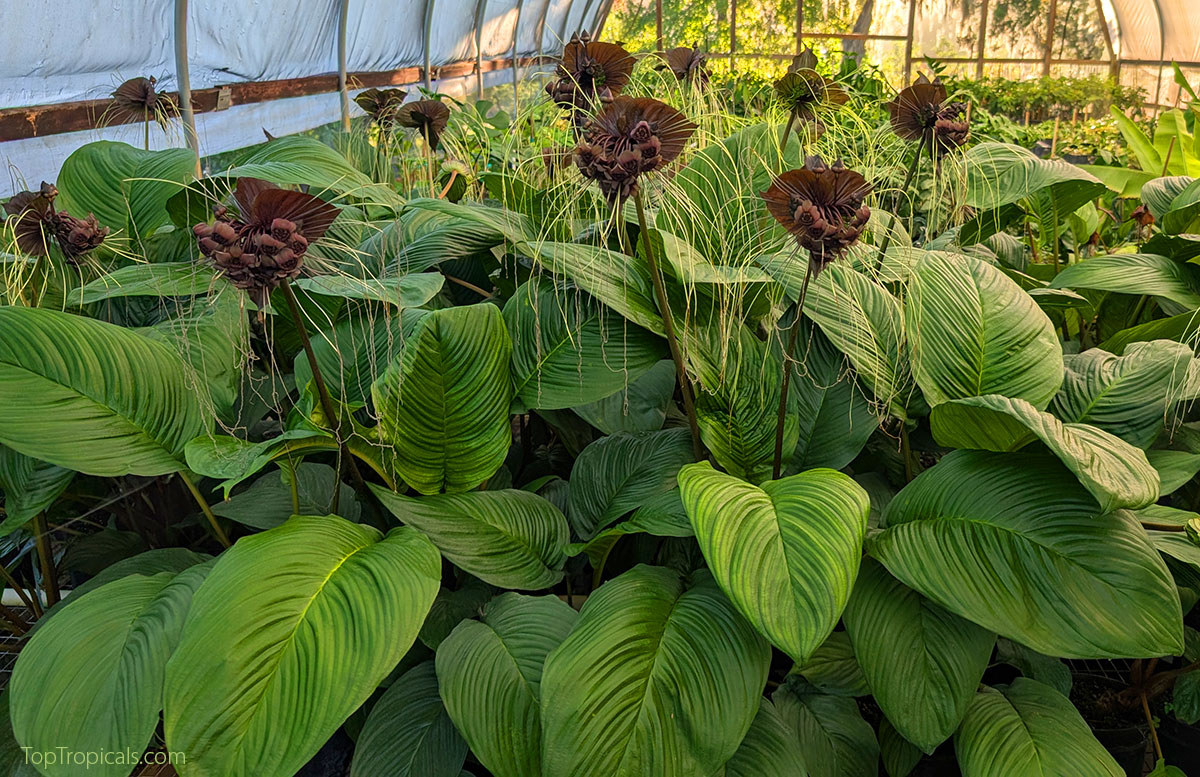
Every so often a plant blooms and the whole greenhouse seems to slow
down.
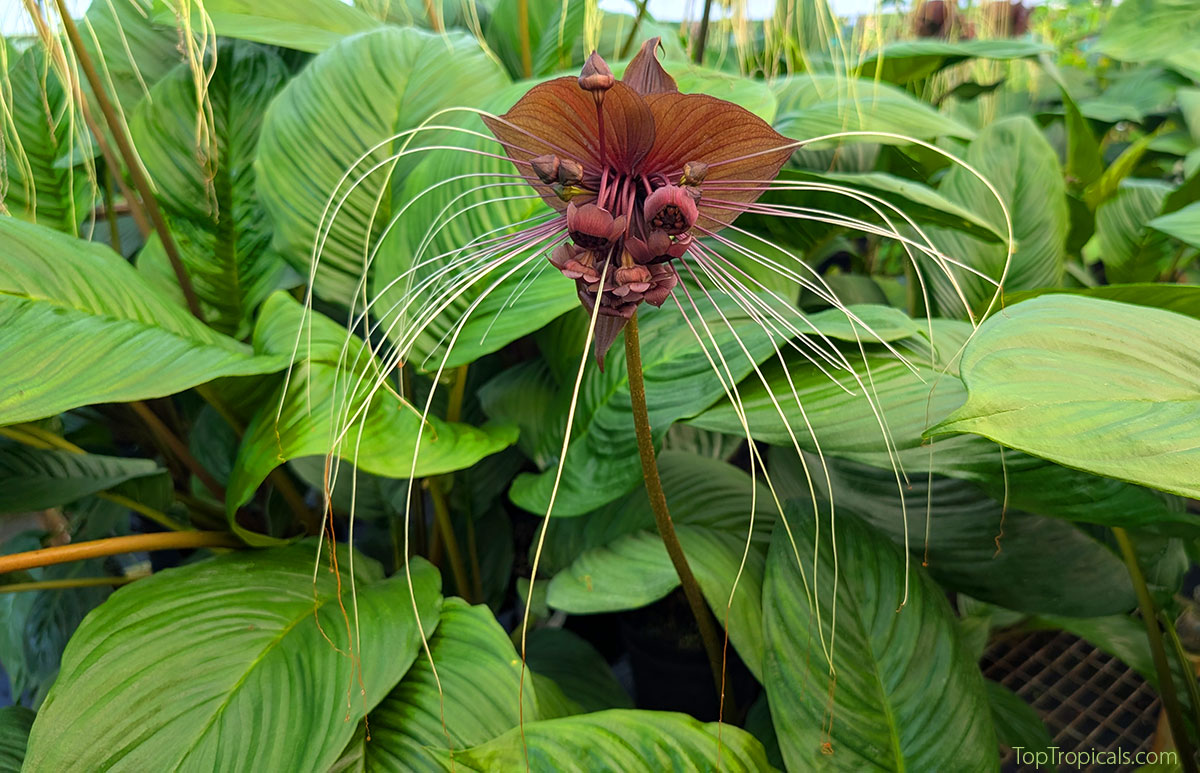
That is what happened this week with the Black Bat Lily, Tacca
chantrieri. We have grown Taccas for years, but
when the black ones open properly, it still feels special. The flowers are
dark and quiet, almost unreal up close. They do not shout for attention.
They make you lean in.
Bat Head Lily Plant Facts
Botanical name: Tacca chantrieri Also known as: Bat Head Lily, Bat Flower, Devil Flower, Black Tacca
USDA Zone: 9 - 11
Highligths
Right now, we have a lot of them blooming at the same time. If you have
never seen one in person, photos only get you part of the way there. The
wings are darker than you expect, and the whiskers seem to go on forever.
People walk into the greenhouse, stop, stare, and usually ask the same
question:
"Is that real?" - Yes. It is.
A quick honest note, because this matters. The blooms themselves are
delicate and may not travel well. That is just the nature of this plant. The
plants, however, are strong, well established. With the right conditions,
they bloom again. This is not a one-time trick.
Black Tacca is not a beginner houseplant, but it is also not impossible.
It likes filtered
light, steady warmth, and humidity. It does especially well in a greenhouse
or a
bright indoor spot where you already keep plants that enjoy moisture. It is
the kind of plant you keep
close, not one you forget in the corner.
We are offering them now simply because they are ready and looking their
best. If you have been waiting for one,
this is a good moment.
You can see the Black Bat Lily here:
https://toptropicals.com/store/item/2345.htm
Just wanted to share something we are enjoying in the greenhouse right
now. Some plants come and go. Some stay with you.
Tacca (Bat Lily) FAQ
What is Tacca?
Tacca, also known as Bat Lily or Devil Flower, is a tropical plant grown
for its unusual bat-shaped flowers with long whisker-like filaments. The
most popular species
is Tacca chantrieri, the Black Bat Lily.
Is Tacca hard to grow?
Tacca is not a beginner plant, but it is not impossible. It does best
with warmth, humidity, and filtered light. Gardeners who
already grow orchids, calatheas, or other humidity-loving plants usually do
well
with Tacca.
Does Tacca need a greenhouse?
A greenhouse is ideal, but not required. Tacca can be grown indoors in a
bright spot with indirect light and good humidity, such as near a humidifier
or in a bright bathroom with a window or skylight.
Will my Tacca arrive in bloom?
Plants may be blooming in the greenhouse, but flowers are often removed
before shipping because they are
delicate and do not travel well. The plants are well established and capable
of blooming again with proper care.
How often does Tacca bloom?
Tacca does not bloom constantly. It may take time to establish before
flowering, but once settled, it can bloom seasonally and may produce
multiple flowers
in warm, humid conditions.
Does Tacca grow from a bulb?
Tacca grows from a rhizome, not a bulb. The rhizome stores energy and
allows the plant to regrow and bloom again.
Why does Tacca have long whiskers?
The long filaments are thought to help attract pollinators such as flies
by mimicking the look of decaying organic matter. While unusual, this is
part of the plant's natural pollination strategy.
That’s probably the real evolutionary secret no botanist will admit! Those whiskers? Pure marketing genius from nature.
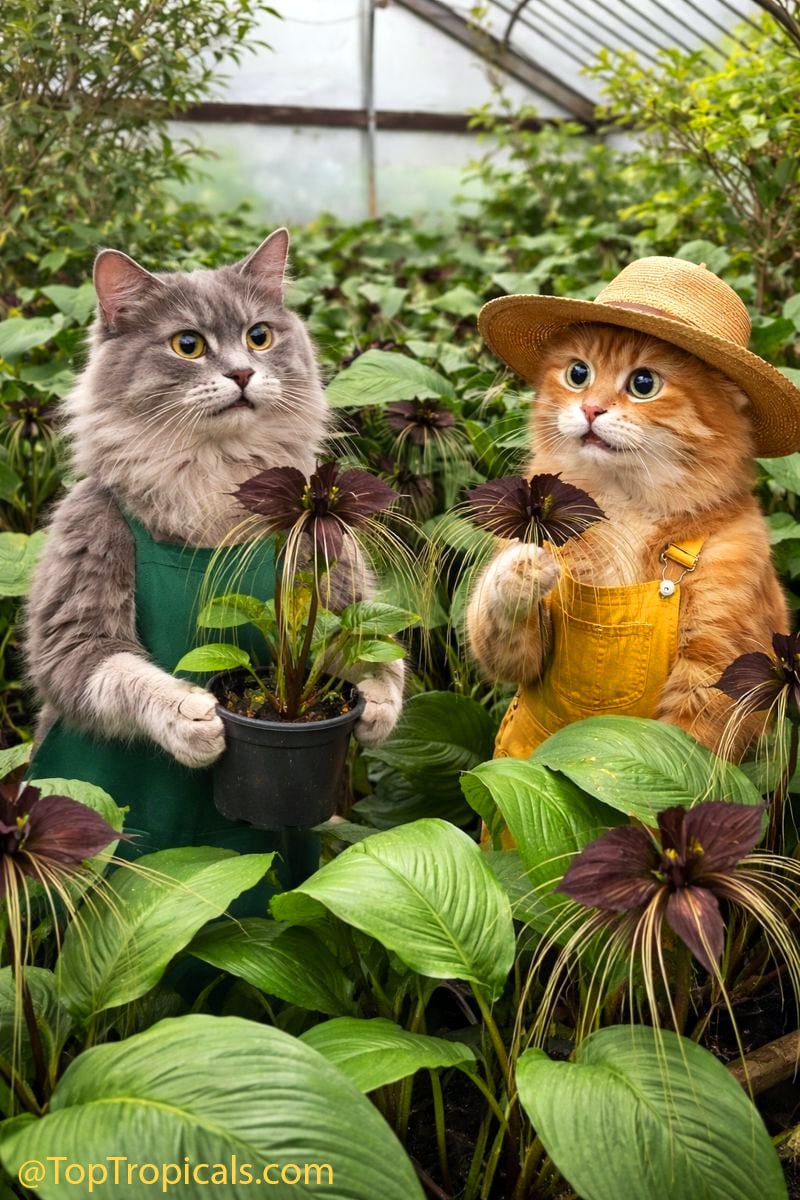
Cats had it figured out first — look mysterious, add long elegant whiskers, and everyone falls in love.
Tacca just took notes and said, “Alright, I can work with that!”
Continue reading: Tacca wants to be a cat! - and everyone loves cats!
Why orchids are way easier to grow than you think: 7 tips for the beginner
orchids are way easier to grow than you think
🌸 Why orchids are way easier to grow than you think: 7 tips for the beginner
Many beginners avoid orchids. Because they look exotic, it’s easy to assume they belong in a high-tech greenhouse. But the truth is surprisingly simple: most orchids die from too much love, not too little. The popular Phalaenopsis (Moth Orchid) is actually lower-maintenance than many common houseplants - once you understand how its roots work.
🌸 1. The #1 Mistake Beginners Make
Orchids are not regular potted plants. In nature, most are epiphytes, meaning they grow attached to tree bark where roots get constant airflow and dry quickly after rain. When well-meaning beginners plant them in dense soil or keep them constantly wet, the roots suffocate and rot. Ironically, orchids thrive on a little bit of neglect.
⚠️The Grocery Store Trap: Many orchids bought at supermarkets are packed tightly into decorative pots filled with dense moss. While they look beautiful, the roots are often already suffocating. This is why a seemingly healthy orchid can suddenly decline a few weeks after you bring it home.
👉 Pro tip: Aerial roots growing wildly outside the pot are a sign of a happy, healthy orchid - don't cut them off!
🌸 2. Decode Your Orchid’s Roots (The Ultimate Watering Trick)
Forget strict watering schedules. Instead, let the orchid tell you when it’s thirsty by looking at the color of its roots:
🟢❌ Bright Green Roots: The plant is still perfectly moist. Do not water. ⚪️✅ Silvery-Gray Roots: The plant is dry and ready for a drink.
When it's time to water, drench the mix thoroughly, let it drain completely out of the bottom, and don't water again until the roots turn silver.
And please, skip the ice cube trick. Orchids are tropical plants; freezing ice shocks their roots and causes long-term damage.
🌸 3. No Greenhouse? No Problem.
You don't need a tropical conservatory. Most orchids thrive in standard indoor conditions with bright, indirect light.
An east-facing windowsill is usually the sweet spot. Too much direct afternoon sun will scorch the leaves, while deep shade will prevent the plant from ever reblooming.
🌸 4. Don't Panic When the Flowers Fall
After a spectacular bloom cycle, an orchid’s flowers will drop, leaving behind a bare green spike. This does not mean your plant is dying.
Orchids naturally enter a resting period that can last for several weeks or months. They are simply conserving energy to build new leaves and roots before their next big show.
🌸 5. Master the Art of Gentle Feeding
Another common misstep is over-fertilizing. Orchids prefer a "weakly, weekly" approach rather than heavy doses of nutrients all at once.
Using a gentle, specialized formula like SUNSHINE Orchidasm works incredibly well for orchids and other delicate epiphytes. Because it focuses on steady, healthy growth rather than forcing rapid development, it provides the exact kind of mild, consistent nourishment orchids need to produce longer-lasting blooms. It is safe to use with every watering.
🌸 6. Think Beyond the Tree Bark
When we picture orchids, we usually think of the kinds that grow in airy bark. However, the orchid family is massive and includes terrestrial (ground) orchids.
Ground orchids grow directly in soil and can even be planted outdoors in warmer climates. If you are still nervous about managing the unique root systems of traditional orchids, ground orchids are a fantastic, beginner-friendly gateway into the hobby.
🌸 7. The Orchid Addiction is Real
The funniest thing about orchids is the shift in mindset. The moment a beginner successfully triggers a rebloom on their first plant, the fear completely vanishes.
And before you know it, that one single windowsill orchid quietly turns into five. 🛒 Explore Ground Orchids, Vanilla orchids, and enjoy Sunshine Orchidasm
📚 Learn more:
Ground Orchid Plant Facts
Botanical name: Spathoglottis kimballiana Also known as: Ground Orchid, Garden Orchid