Q: Please recommend me some interesting plants that can grow on my waterfront property and can withstand some salt wind. All my neighbors have Sea Grape trees and bougainvilleas, and I want something different and special. I would love to have some colorful or fragrant flowers, or fruit around my paradise home.
Q: Considering your neighbors successfully grow Sea Grape (Coccoloba), and Bougainvilleas, you have a mild, frost free climate. There is a number of spectacular and useful tropical plants that are salt tolerant. Orchid Trees - Bauhinias, Poincettia - Delonix, and Geiger trees - Cordias, are very showy flowering trees. For large size bushes, try Dwarf Poincianas - Caesalpinias, and Scarlet-Coral Erythrinas. Frangipani - Plumeria, come in different colors and bring you perfume fragrance from Hawaii. And of course, Desert Roses - Adeniums, can be grown and showy specimens anywhere in your yard, both in the ground or as potted bonsai.
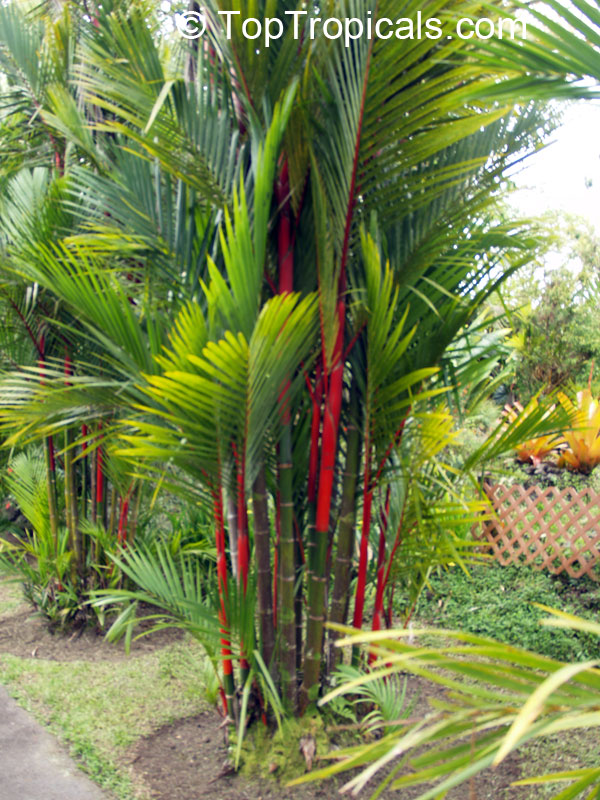
Most palms, especially popular Coconut Palm, source of tasty fruit and drink, are highly tolerant to salt breeze. If you are looking for something that nobody has, Lipstick palm, or Sealing wax palm - Cyrtostachys lakka, is definitely the most spectacular palm you can find. It is a stunning feather palm that develops a brilliantly red trunk. Palm is originally from Malaysia, but has been introduced to Costa Rica and other tropical areas of the world. Sealing Wax Palm seeds are very slow to germinate, up to a year, and large specimens are very rare and hard to find even in rare tropical plant nurseries. This palm will require a good overhead light, and constant warmth (above temperature 55F). It is definitely worth an effort to grow this beauty.
You may add more tropical accents to your landscape by the sea with many varieties of showy heliconias.
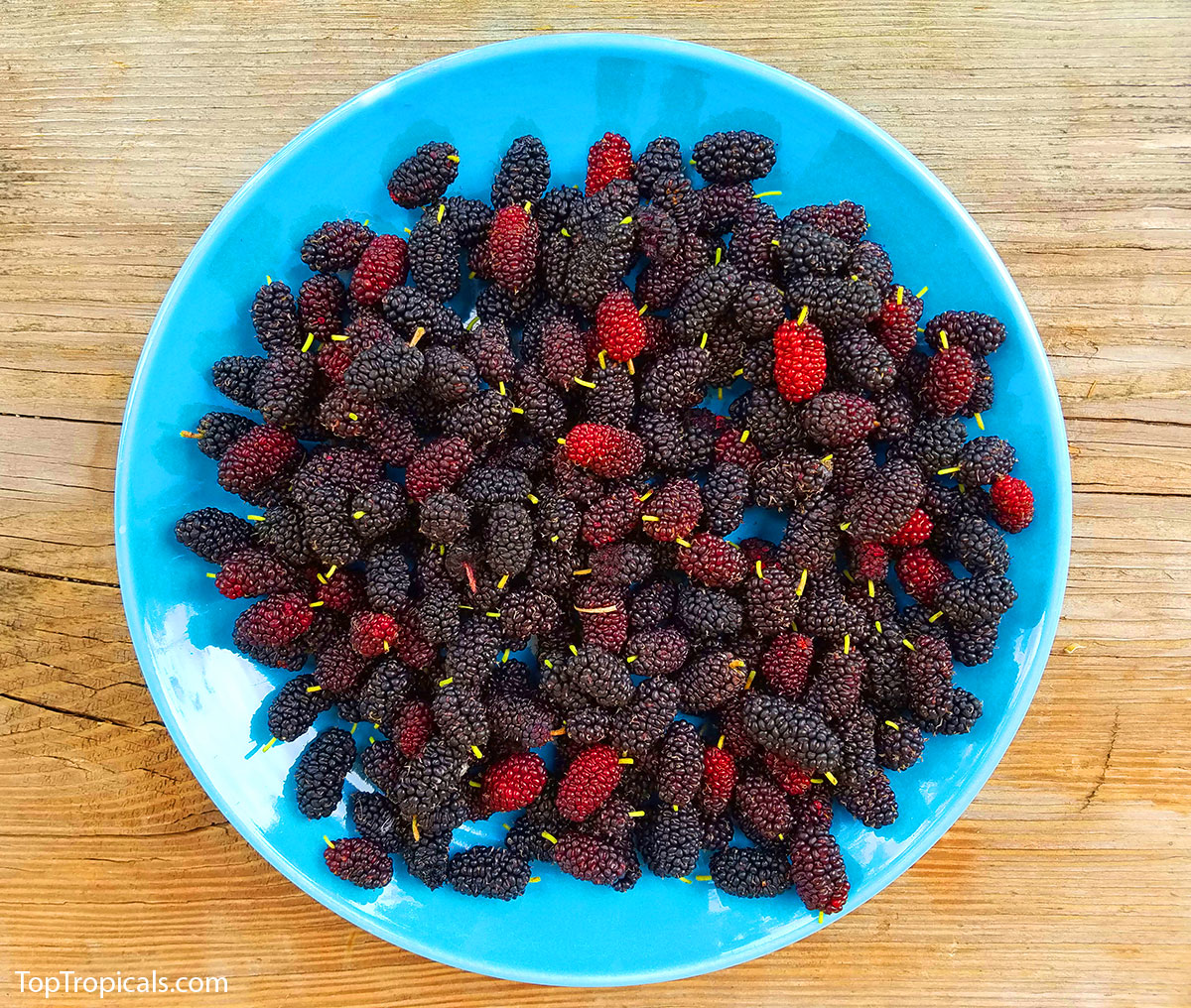
Mulberries are tough, low-maintenance fruit trees that adapt to many
conditions.
Climate: Hardy from USDA zone 5 to 10.
Soil: Grow well in almost any soil; prefer good drainage.
Watering: Regular watering during dry spells; drought tolerant
once etablished.
Growth: 3–5 feet per year, producing fruit early.
Pruning: Annual pruning controls size and improves
branching.
Pot culture: Dwarf types thrive in containers, staying 6–7
feet tall. Use a large pot, water consistently, and prune lightly. Use Abundance
potting mix for best results.
Fertilizer: For reliable production, fertilizer regularly. Apply
Sunshine C-Cibus liquid booster with every watering, or GreenMagic controlled release fertilizer every 5-6 months.
❓
Mulberry FAQ
How soon will a mulberry fruit?
One to two years, sometimes the very first season.
What climates are suitable?
USDA zones 5–10, from -20F winters to hot summers.
How tall do they get?
Standard trees 20–30 ft; dwarfs 6–10 ft in
pots.
Do I need more than one tree?
No, they are self-pollinating.
What do they taste like?
Sweet and juicy, like a blend of blackberry and raspberry.
How long is the harvest?
Everbearing types ripen gradually from summer into fall.
Do birds eat them?
Yes, but trees are so productive there’s plenty to
share.
Are they messy?
Dark-fruited varieties can stain; white mulberries do not.
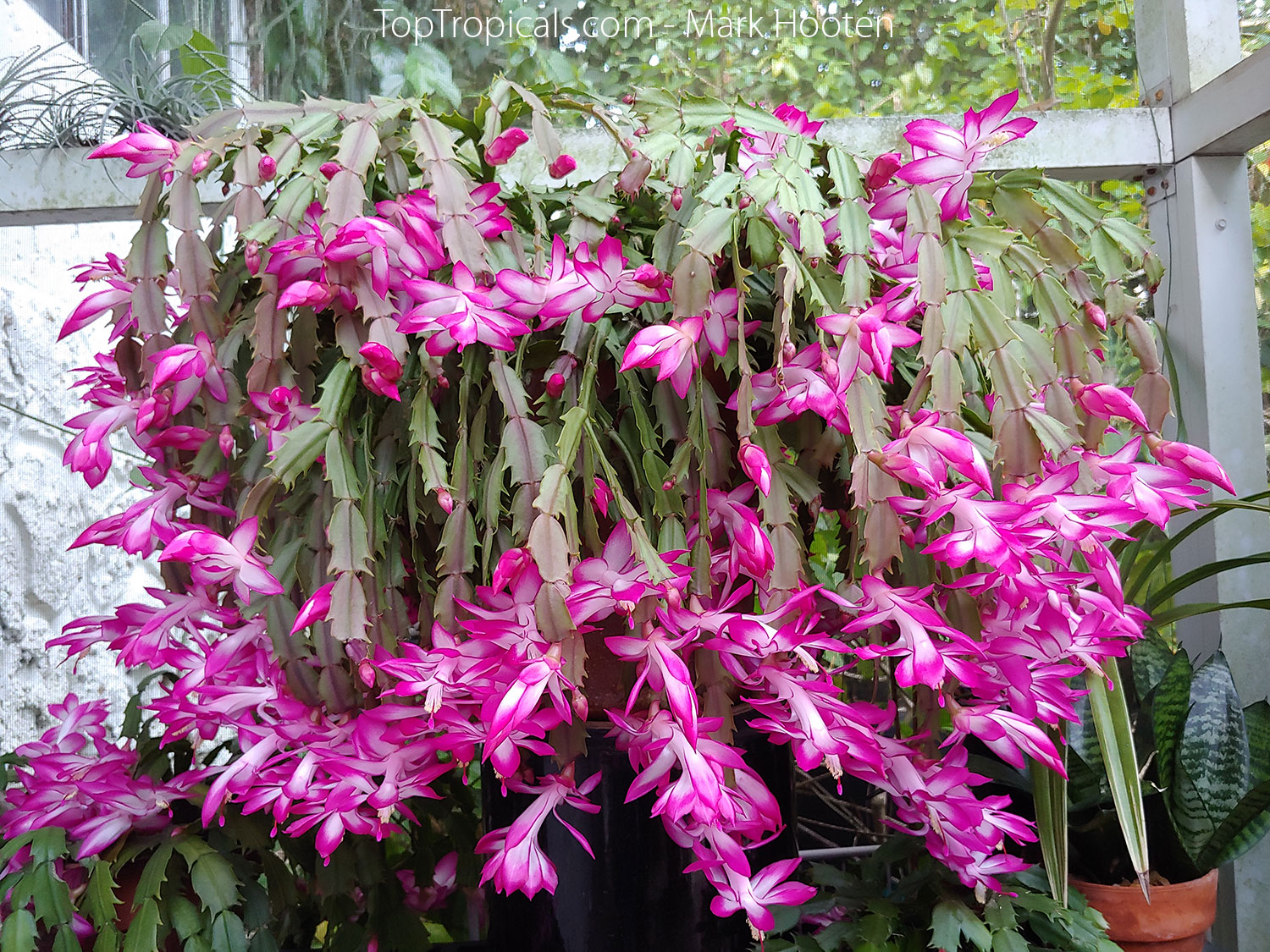
Photo above: A long-blooming holiday classic, Schlumbergera New
Deal, an heirloom Thanksgiving-to-Christmas cactus with cascades of
oversized pink flowers. Blooms from Thanksgiving through Easter!
As our way of saying thank you for growing with us all year long, here is
your exclusive holiday code. Use it for 15% off any order over $100 (excluding
shipping and handling):
THANKS2025
Ends November 30th, 2025 (Sunday) at midnight.
Min order $100 (exculuding S/H).
One use per customer.
Cannot be combined with other discounts.
Cannot be applied to previous orders.
Check out our specials below - hand-picked by our horticulturist for
size, beauty, and vigor! These are the biggest, fullest plants you'll see
all year! Take advantage of this Holiday discount code and get them now at
their best and fullest point!
Gloxinia
sylvatica - Bolivian Sunset. A perfect fall-winter standout: it bursts
with glowing blooms and makes a great holiday gift as a flowering
start.
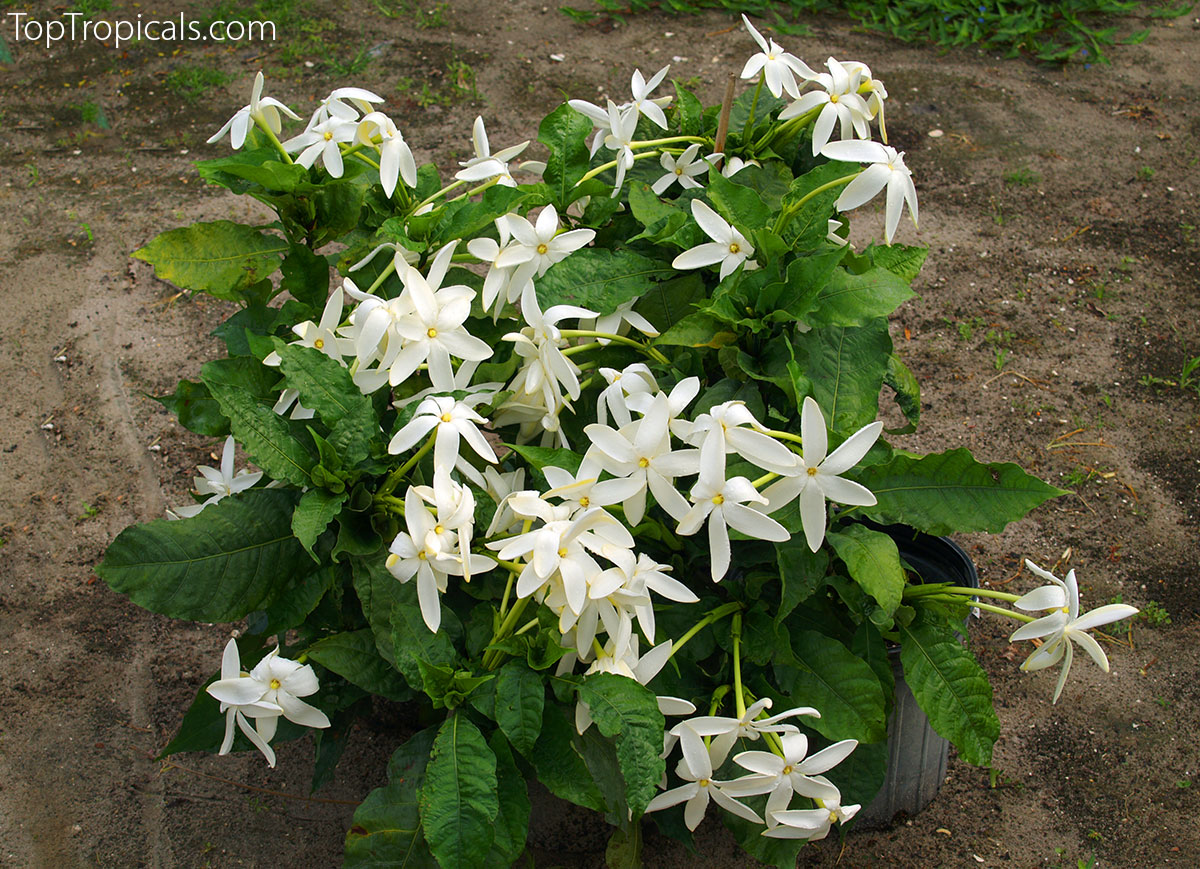
Gardenia
nitida, Shooting Star: a rare African gardenia with sweet fragrance and
star-shaped blooms that appear several times a year. Soft diamond-shaped
leaves. This true collectors gem blooms in dramatic waves, filling the air
with a strong, sweet scent.
Date: 15 Apr 2026
7 best exotic dwarf trees for maximum impact in small tropical landscapes
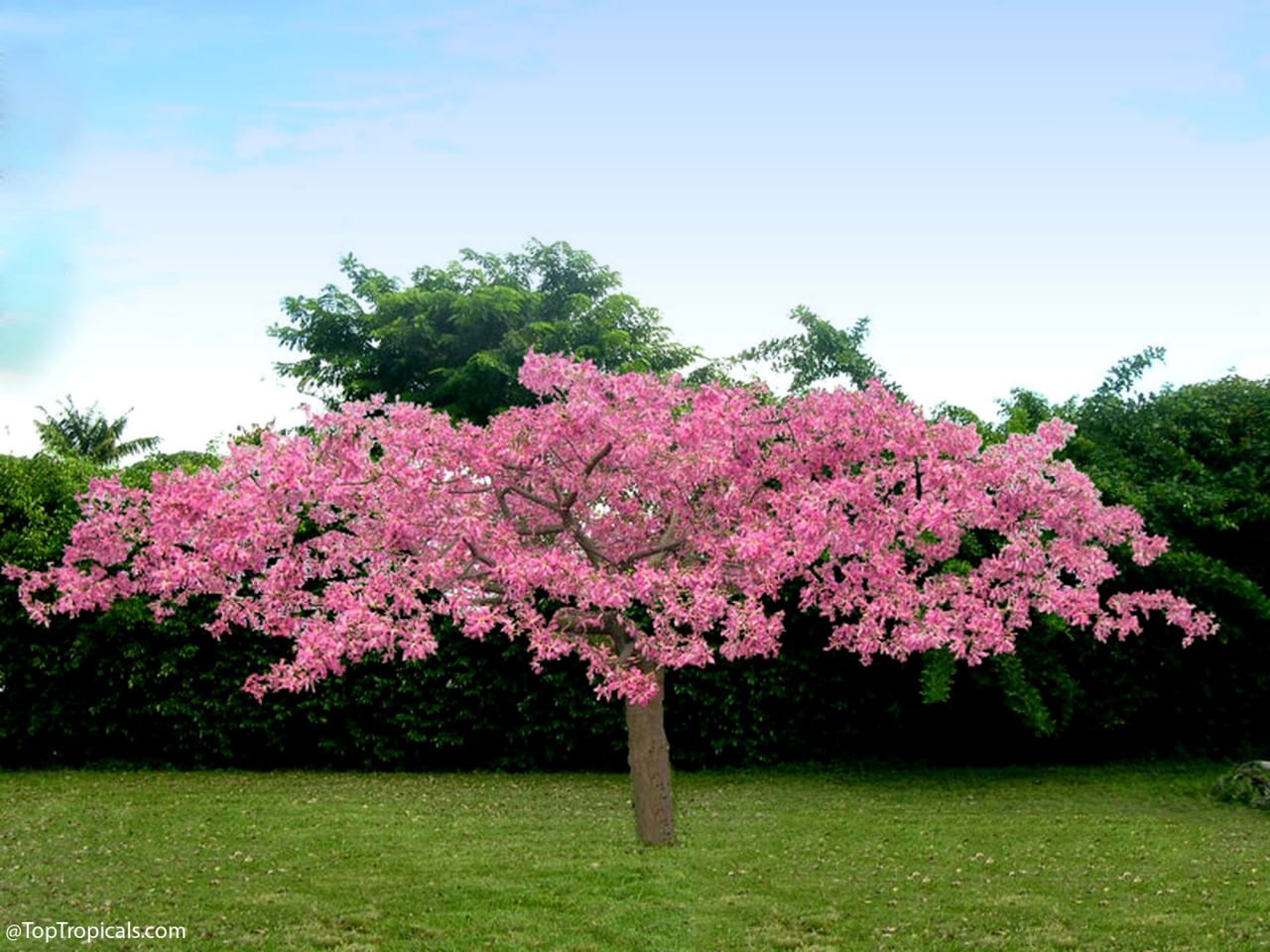
Dwarf Pink Princess Silk Floss Tree (Ceiba hybrid)
Dwarf Golden Tabebuia (Tabebuia chrysotricha)
Little Gem Southern Magnolia (Magnolia grandiflora)
7 best exotic dwarf trees for maximum impact in small tropical landscapes 🏡
For a yard that feels like a tropical escape but doesn't have the space for a massive jungle, these seven selections from TopTropicals are game-changers, chosen for their compact size, high "curb appeal," and unique tropical flair.
1. Dwarf Pink Princess Silk Floss Tree (Ceiba hybrid)
🌳 A spectacular grafted hybrid of the famous Silk Floss tree, but in a much smaller package: a unique, often "fat" or bottle-shaped trunk and large, showy pink flowers with white centers. 🏡 Unlike the standard Ceiba which can become a giant, the 'Pink Princess' is grafted to stay compact (usually under 10 - 12 feet), allowing you to enjoy those exotic, orchid-like blooms even in a tiny garden.
Ceiba Plant Facts
Botanical name: Ceiba sp. Also known as: Ceiba, Floss Silk Tree, Kapok Tree
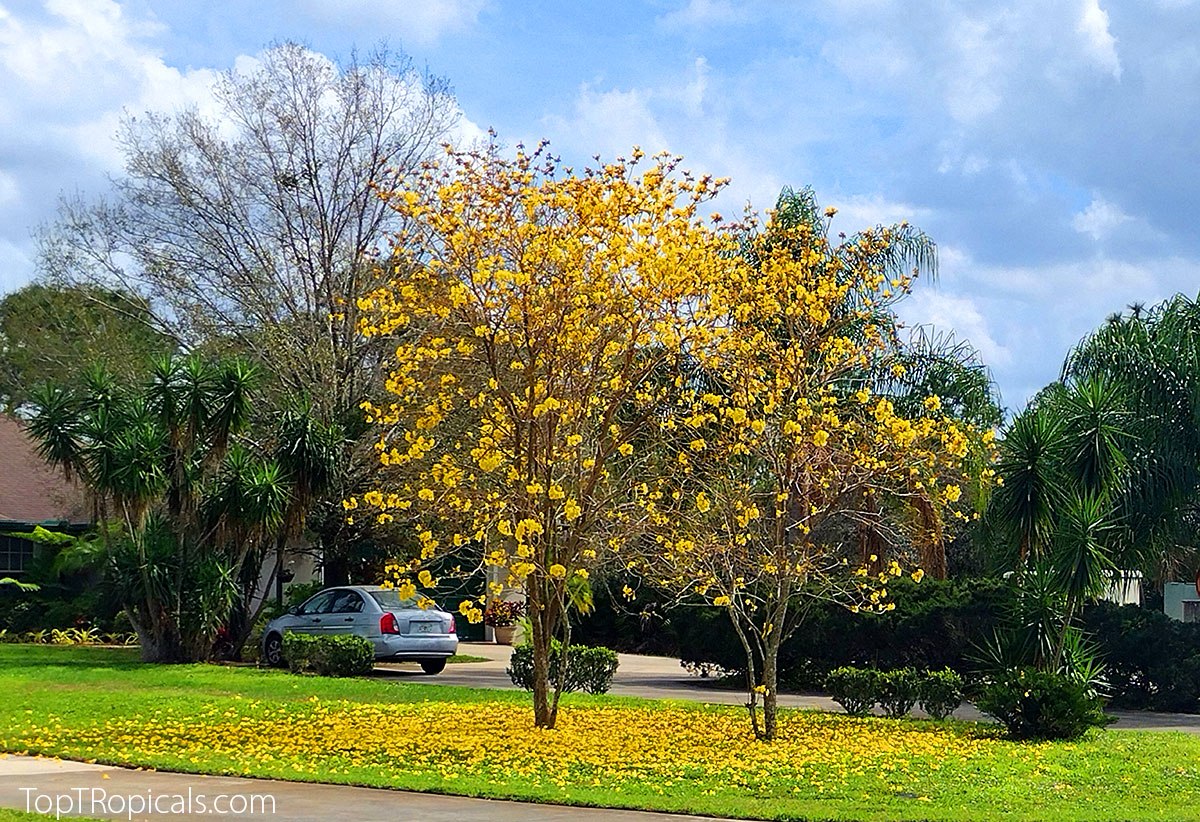
🌳 Known as the "Golden Trumpet Tree," this dwarf selection puts on one of the most brilliant displays in the plant kingdom. Before the leaves emerge in spring, the entire tree is covered in bright, trumpet-shaped yellow flowers. 🏡 This specific dwarf form stays much smaller and more manageable than the standard Tabebuias seen on city streets. Its silver-green foliage and rounded canopy make it an ideal "specimen" tree that acts as a focal point for your front yard.
Dwarf Golden Tabebuia Plant Facts
Botanical name: Handroanthus chrysotrichus, Tabebuia chrysotricha, Tabebuia chrysantha Also known as: Dwarf Golden Tabebuia
3. Little Gem Southern Magnolia (Magnolia grandiflora)
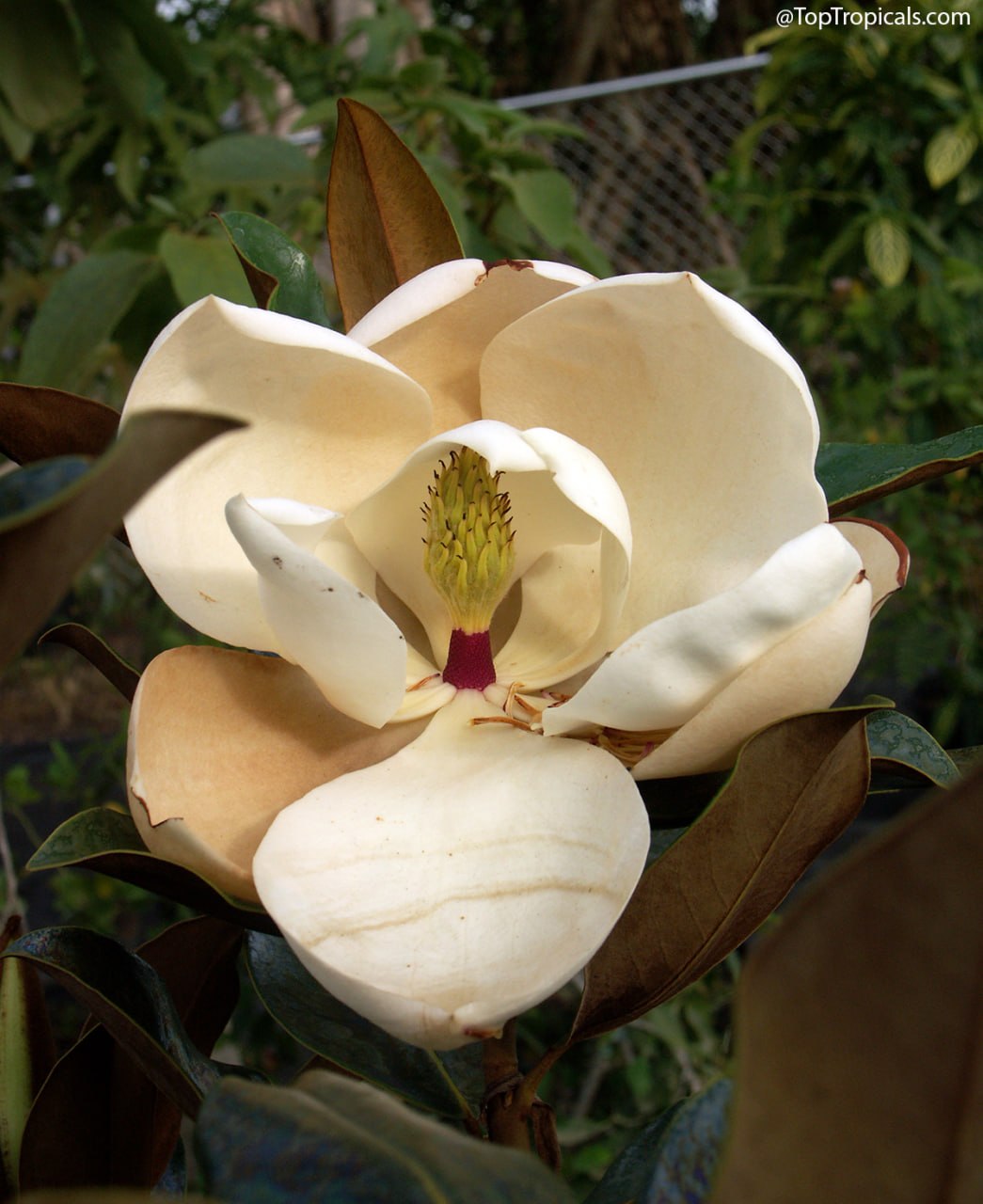
🌳 All the elegance of a classic Southern Magnolia but in a miniaturized version. It has the iconic waxy white, lemon-scented flowers and glossy leaves with fuzzy bronze undersides. 🏡 'Little Gem' is narrow and columnar, typically reaching only 15-20 feet (half the size of the standard species). It starts blooming at a very young age, so you don't have to wait years for those famous fragrant flowers.
Southern Magnolia Plant Facts
Botanical name: Magnolia grandiflora Also known as: Southern Magnolia, Bull Bay
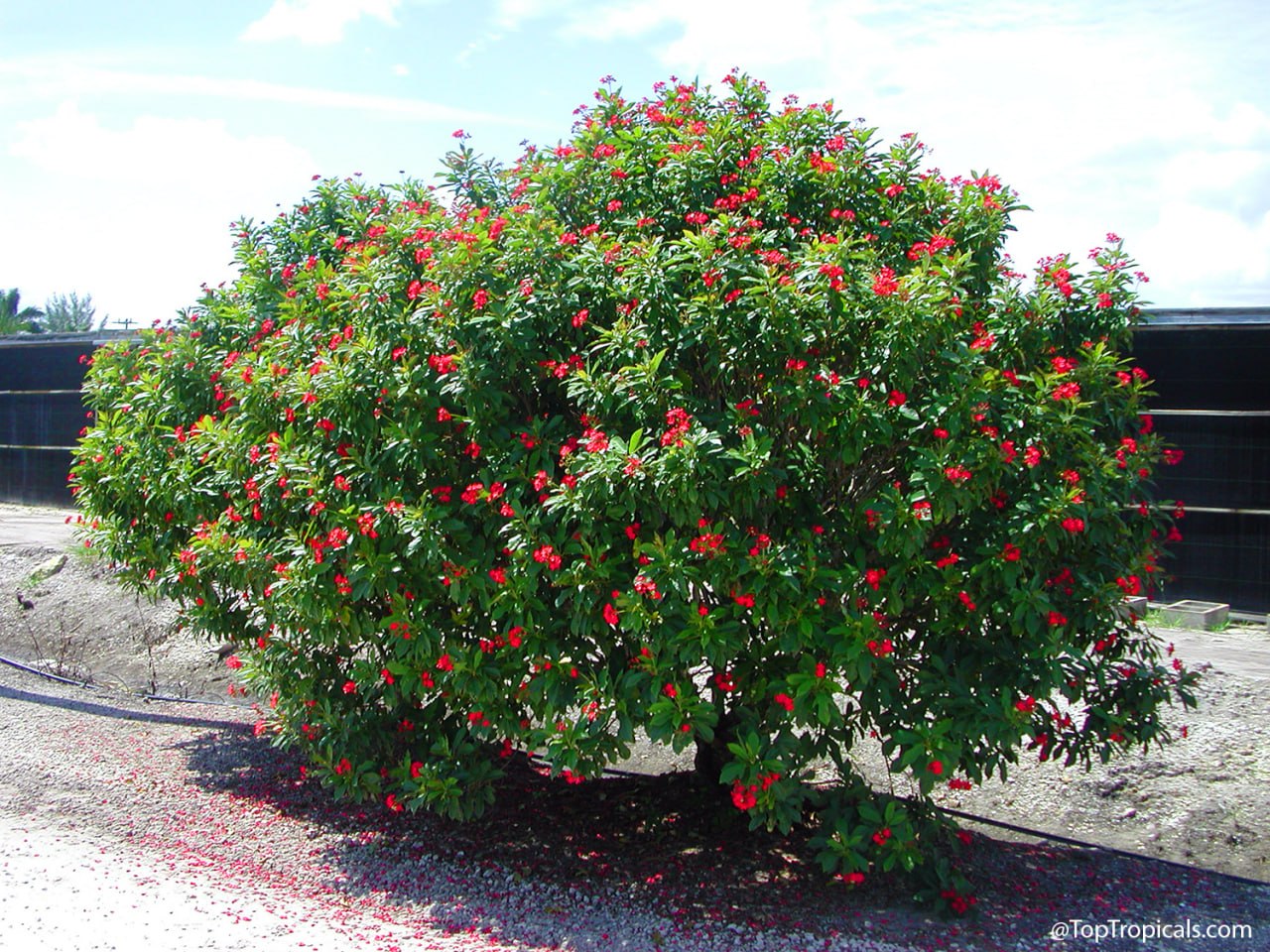
🌳 This "ever-blooming" small tree is a butterfly magnet. It features clusters of bright, cherry-red star flowers against glossy, fiddle-shaped leaves. 🏡 The Compacta variety is specifically bred to stay bushy and small. It blooms almost 365 days a year in warm climates, providing a constant splash of red that draws in hummingbirds and pollinators.
Peregrina Plant Facts
Botanical name: Jatropha integerrima, Jatropha pandurata Also known as: Peregrina, Spicy Jatropha, Coral Plant, Physic Nut
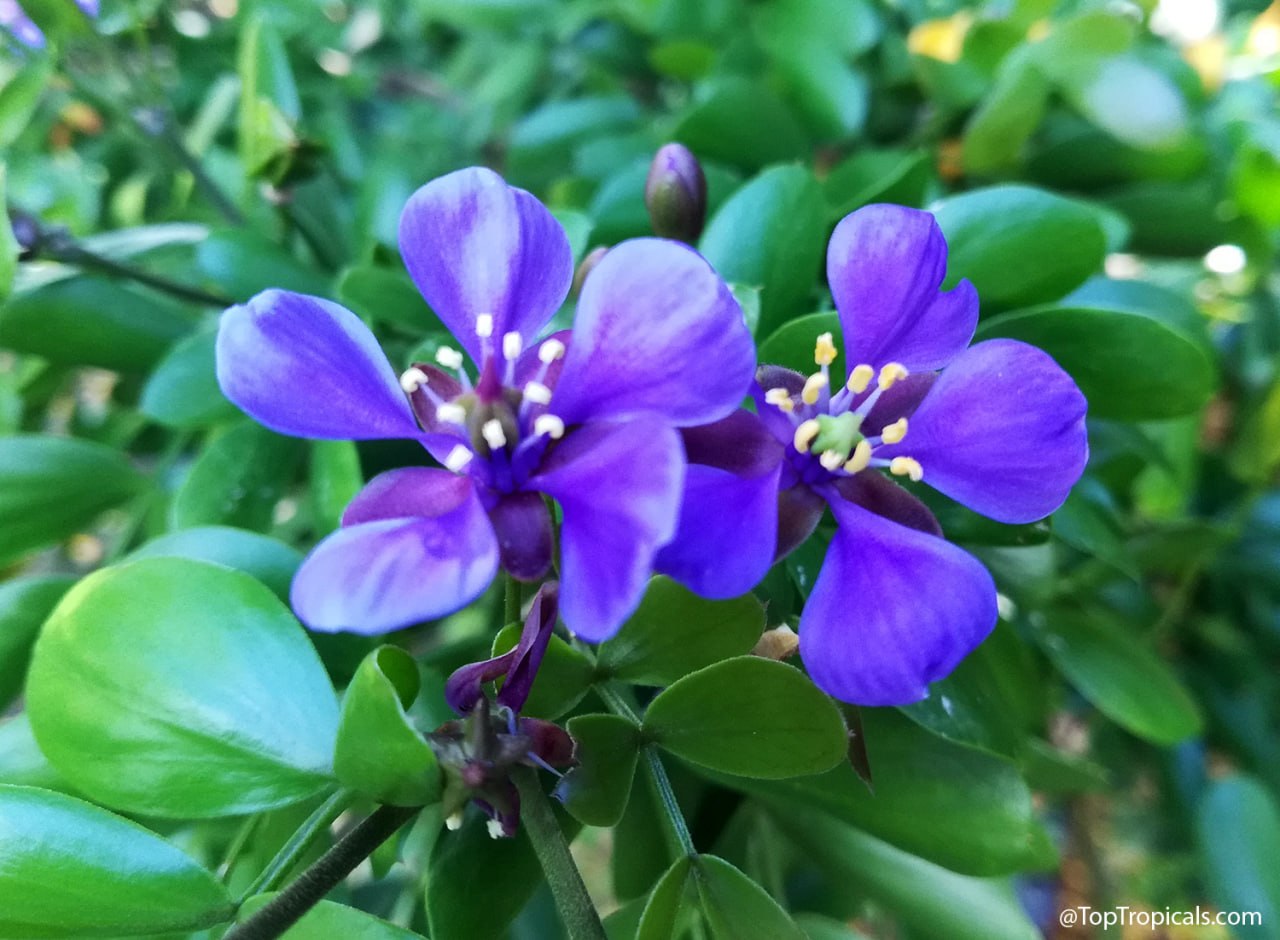
🌳 Known as the "Wood of Life," this is one of the slowest-growing trees in the world. It has fine-textured, dark green foliage and produce stunning, small blue flowers that fade to white, followed by bright orange seed pods. 🏡 Because it grows so slowly, it will never outgrow its space. It is extremely hardy, salt-tolerant, and hurricane-resistant, making it a "plant it and forget it" heirloom tree for coastal or small urban lots.
Lignum Vitae Plant Facts
Botanical name: Guaiacum sanctum Also known as: Lignum Vitae, Tree of Life, Gaiac tree
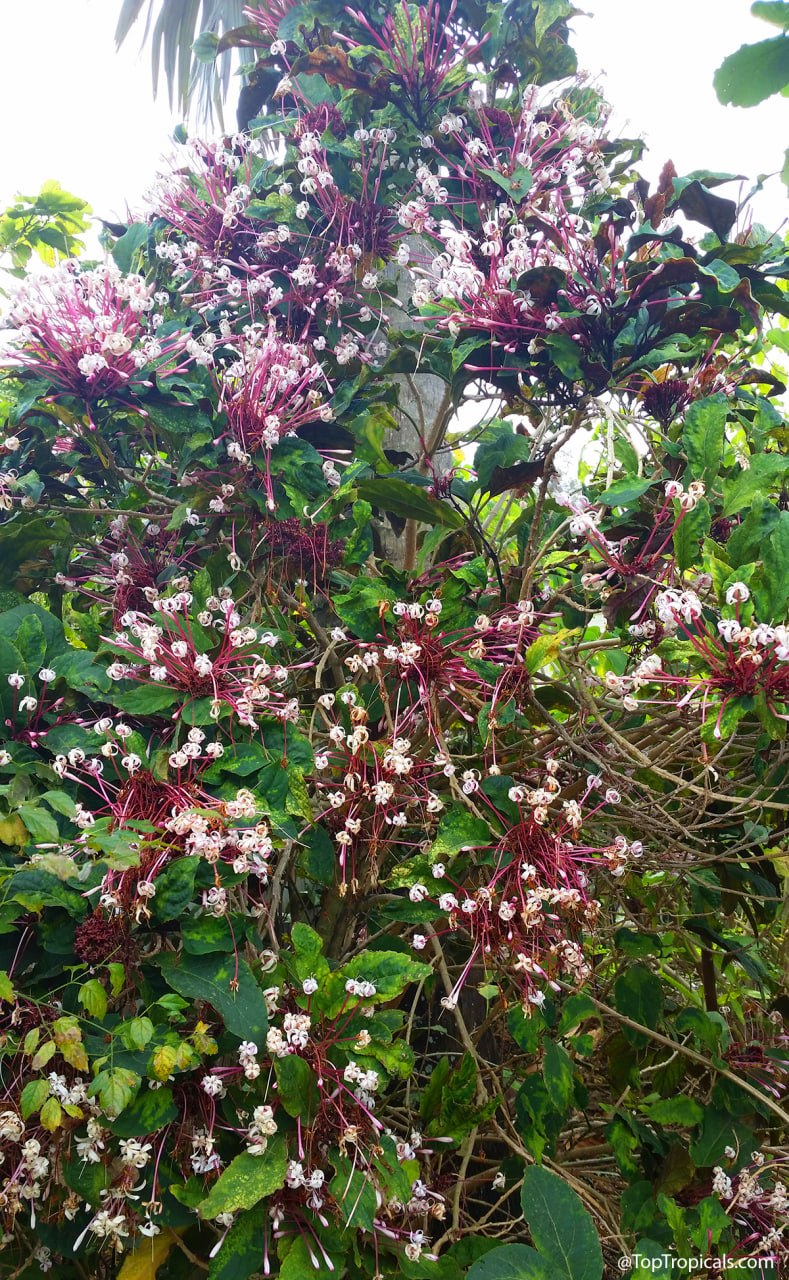
🌳 A visual firework display. The leaves are deep green on top and rich purple underneath. In late winter, it produces massive, 8-inch wide clusters of tubular pink-and-white flowers that look like an exploding star. 🏡 It is easily pruned to a single-trunk tree form. The purple foliage provides "curb appeal" year-round, while the winter blooms provide a much-needed pop of color when other plants are dormant.
Winter Starburst Plant Facts
Botanical name: Clerodendrum quadriloculare Also known as: Winter Starburst, Fireworks, Clerodendron
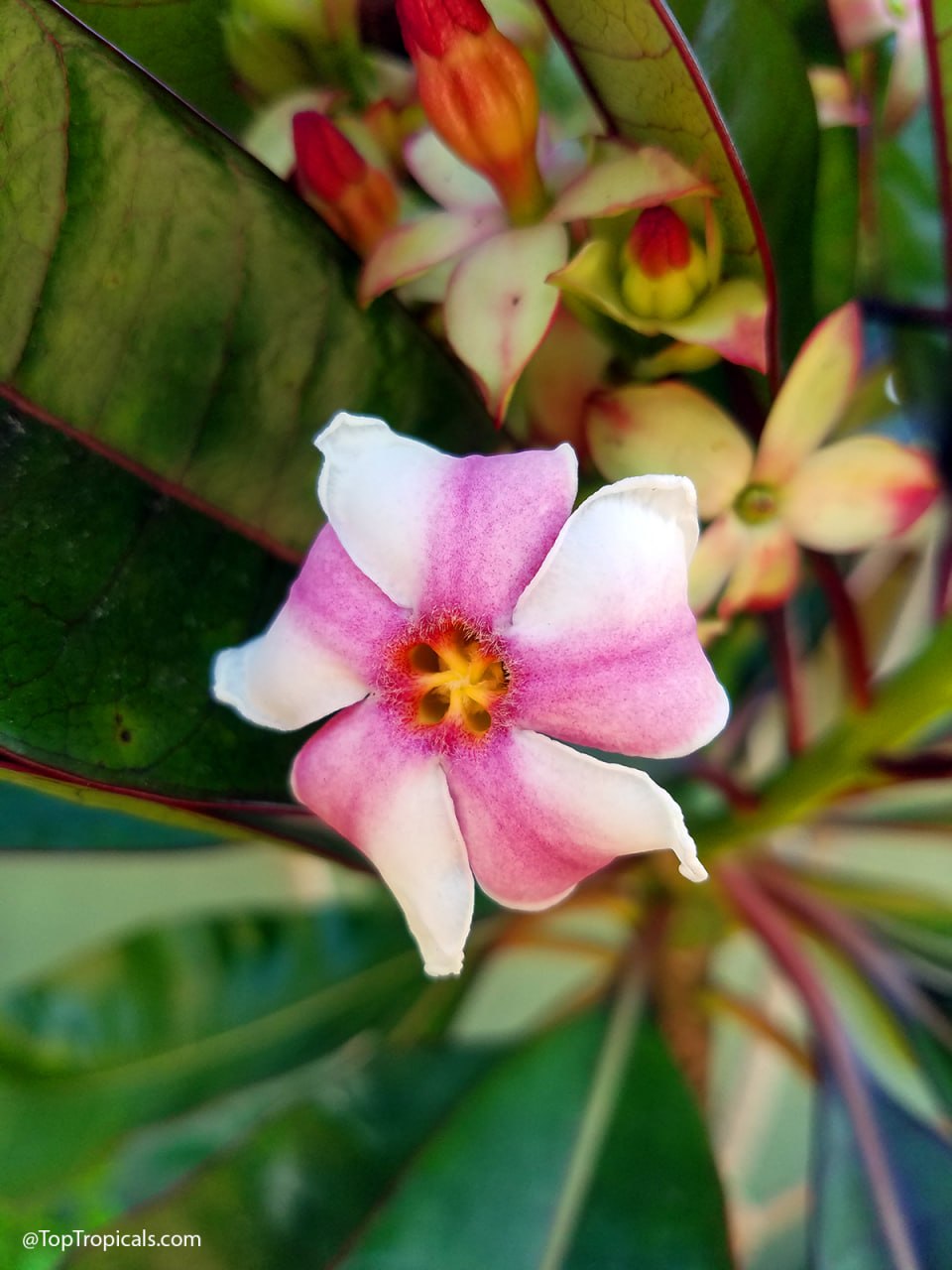
🌳 This is a rare, small evergreen tree with glossy, dark green leaves and clusters of highly fragrant, star-shaped white flowers with a red "eye." 🏡 It has an naturally architectural, upright habit. The fragrance is incredible - sweet and heavy - making it a perfect "sensory" tree to plant near a patio where you can enjoy the scent on summer evenings.
👉 more
How to learn the secret meanings behind Thai flower names
Cats Smokey and Sunshine in Thai Adenoium garden
How to learn the secret meanings behind Thai flower names 🔮
If you have ever looked at names of Adeniums or Plumerias from Thailand, you may have noticed something interesting. Many of them sound poetic, mysterious, or even magical. That is not accidental.
Adenium Plant Facts
Botanical name: Adenium sp. Also known as: Adenium, Desert Rose, Impala Lily
USDA Zone: 9 - 10
Highligths
Plumeria Plant Facts
Botanical name: Plumeria sp. Also known as: Plumeria, Frangipani
USDA Zone: 9 - 11
Highligths
Thai plant breeders often give their hybrids meaningful names connected to jewels, wealth, beauty, and mythology. Instead of simple numbers or codes, the plants receive names that sound like something from a legend - Jade Swan, Golden Lotus, Rainbow Diamond.
Once you learn a few common Thai words, these names suddenly start to make sense. It is almost like decoding a secret language of flowers.
Below are some of the most common words you will see in Thai plant names.
🔠 Glossary of common Thai words used in plant names
Gems and precious stones 💎
Anyamanee - precious jewel or rare gem. Gaew / Kaew - crystal or glass-like jewel. Manee - jewel or gemstone. A classic word in elegant Thai names. Noppakao - nine gems, a symbol of royal power and prosperity. Petch - diamond. Symbol of brilliance and beauty. Ploy - gem or precious stone. Often used for plants considered rare or jewel-like. Yok - jade.
Wealth, luck, and prosperity 💰
Boon - merit, blessing, good karma. Chok - luck or good fortune. Kanjana / Kanjamapon - golden or noble. Mongkol - auspicious or lucky. Paruay / Pa Ruay - to become wealthy or prosperous. Ramruay - to become rich or prosperous. Sap / Sab - wealth or treasure. Sedthee - wealthy person. Tawee / Taweechok - to increase or multiply. Thong - gold. Yod - the best, the peak, or the finest.
Mythology and cultural symbolism 🐉
Bua - lotus. Chai / Chai Lai - victory or triumph. Hassadee - derived from the mythical Hatsadiling, an elephant-bird creature in Thai mythology. Hong - mythical swan or phoenix. Jai - heart or spirit. Maha - great or grand. Moradok - heritage, treasure, or legacy. Orathai - heart of Thailand or beloved Thai. Pratum / Pratuma - lotus blossom. Siam - Thailand, the historic name of the country.
Colors and visual descriptions 🎨
Chompoo - pink color. Lai - patterned or striped. Lueng - yellow. Moung / Muang - purple color.
Nature and poetic imagery
Chaba - hibiscus flower. Dao - star. Doung - heart, soul, or central essence. Fah - sky. Example: Sai Fah - sky-colored. Nam - water. Namwhan - sweet water or sweetness. Natee - river or flowing water. Sai - thread, line, or ray. Sairung - rainbow. Sang Aroon - dawn or sunrise. Suree - sun or sunlight.
🌸 Examples of plant names built from these words
Once you know the meanings, the names start to read like short poems.
Hong Yok - Jade Swan Ploy Nappan - Celestial Jewel Thong Hassadee - Golden Mythical Elephant Ped Sairung - Rainbow Diamond Som Paruay - Golden Prosperity Sai Fah - Sky Blue Pratum Thong - Golden Lotus Ramruay - Becoming Rich Chok Dee - Good Luck Thong Yod - Peak of Gold
You will see these words frequently in the names of Thai-bred Adeniums, Plumerias, Orchids, and other tropical flowers. Once you recognize them, plant names become much easier - and more fun - to understand.
 Mulberry Care and Growing Tips