Garden Blog - Top Tropicals

Date: 15 Jan 2026

Smokey  and  Sunshine  the  cats  in  a  cozy  greenhouse  admiring  a  blooming 
 Black  Bat  Lily  with  dark  whiskered  flowers  on  a  winter 
 day
Smokey: I finally got these Taccas. I wanted them for a long time. I think I got a little attached already. They look like something from a Tim Burton movie. And look at that flower. It even has whiskers like me.
Sunshine: I understand. I get emotionally attached very fast too. Mostly to coffee.

Date: 28 Feb 2025

How Avocado trees set fruit

Flowering Avocado tree

👍 How Avocado trees set fruit

  • Similar to Mango trees we mentioned earlier, Avocado trees start flowering from late Winter to Spring, depending on variety. During this time, avocado trees produce small, yellow-green flowers in clusters, and the pollination process is crucial for fruit set. Avocados have both male and female flower parts, but they open at different times, requiring cross-pollination between flowers for successful fruit production. During flowering, avocado trees need warm temperatures and plenty of sunlight to encourage pollination.
  • There are numerous hybrids in cultivation, and once you plant your first tree and taste the REAL fruit (not from the grocery store), you'll be eager to explore other varieties. It's a guarantee! While it's true that avocado fruit can vary in "butter" content, most superior varieties are equally delicious.


📚 For more information on Avocado varieties, including fruit color and size, tree habit, season, and much more - check out our interactive Avocado Variety Guide. It will helps to choose the right variety for you. With its interactive tool, you can sort cultivars by fruit shape and quality, cold hardiness, origin, crop season, flower type A or B, tree habit and more.

🎥
This tiny avocado tree is covered with hundreds of flowers soon to become lots of fruit

🛍 Shop Avocado Varieties

#Avocado #Food_forest

🔴 Join 👉 TopTropicals

Date: 26 Jan 2022

Don't miss this one:
PodCast Premiere!

Episode 1
How to Protect Tropical plants in Winter: Q & A

Featuring Horticulturist Mark Hooten

...We are introducing our new Series: Top Tropicals Podcast. Growing tropicals and pushing the limits. Watch the first episode:

How to Protect Tropical plants in Winter

...Who doesn't like tropical beauty? Everyone wants tropical plants. But not everyone lives in a warm climate. Is it possible to grow tropicals outside of Tropics?
Top Tropicals horticulturist Mark Hooten, who is well known to many gardeners as the Garden Doc with his Saturday Plant Clinic, is answering gardeners' questions about how to prepare and protect tropical plants during winter...

Premiere scheduled:
Thursday, January 27, 8:00 AM

More about cold hardiness and cold protection:

Cold hardy tropical fruit trees
Growing Stephanotis and cold protection
Cold protection of tropical container plants
Plumeria cold protection
Ghost Cold Protection
Seven rules of cold protection for tropicals
Improving cold hardiness before winter: fertilizer and micro-elements
3D garden ideas and winter cold protection
Cold protection - winter action for your plant collection
About Cold Protection

Date: 19 Jan 2021

Tropical Planting Breaks the Rules. WInter planting in Florida

In the photo: Senecio confusus - Mexican flame vine, one of the most spectacular winter-bloomers.

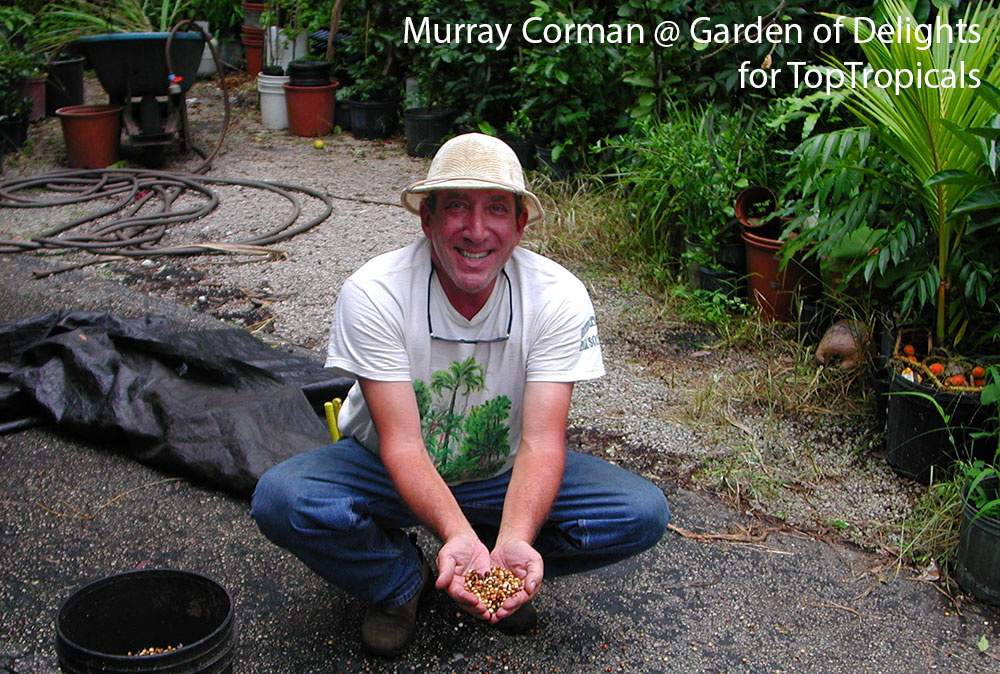
by Murray Corman (Garden of Delights)

Waiting for Arbor Day or the first day of spring to plant a tree is something of a missed opportunity for those of us who live in the virtually evergreen world of the tropics and subtropics. Wintertime does not just mean hard work for tropical gardeners. It is also a time to enjoy the fruits of our labor. Winter-blooming plants and the visitors they attract - birds, bats and butterflies - make the garden as enjoyable in winter as any other time of year.
What a welcome relief: January daytime temperatures in the 70s, dropping to the 60s at night. This is why I came to live in the subtropics of southern Florida. The balmy climate of South Florida represents one of the few places on the mainland United States where tropical plants thrive unprotected outdoors...

CONTINUE READING >>

Date: 16 Nov 2019

When to apply super boost?

Sunshine Boosters: a breakthrough in Winter fertilizing
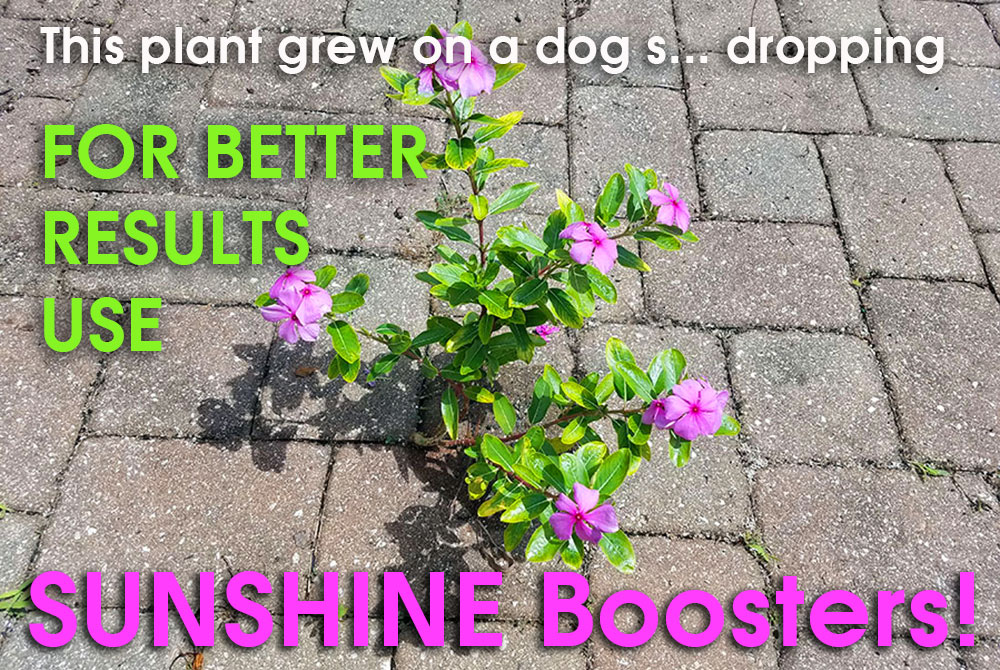
In the photo: plants are tough survivors. Life can't be stopped even by a brick road!

Q: Just wanted to know best time of day to apply super boost as spray and watering? Only listed to make sure night temp doesn't drop below 65F...

A: As a rule of thumb, plant's needs in fertilizers are very low in the cold season because they consume less nutrients during dormancy. For tropical plants, when minimum temperatures drop below 65F - we stop applications of dry (granulated) fertilizers until spring, to avoid root burn.
Liquid Sunshine Boosters are exceptions from this rule to a certain extent, for 2 reasons:
- they are amino-acid based which means, salts do not build up in the soil, and thus will not burn the roots even with slower plant metabolism.
- concentrations/formulas are mild and designed for as frequent as daily watering

Tips for winter fertilizing:

1) When a plant goes into full dormancy (drops leaves and does not show any new growth), you may stop fertilizing with any Macro NPK products (both dry and liquid)

2) If a plant is evergreen and continues growing during the cooler period, and especially if it is a winter bloomer, mild liquid fertilizers can be applied, depending on the stage of plant development.
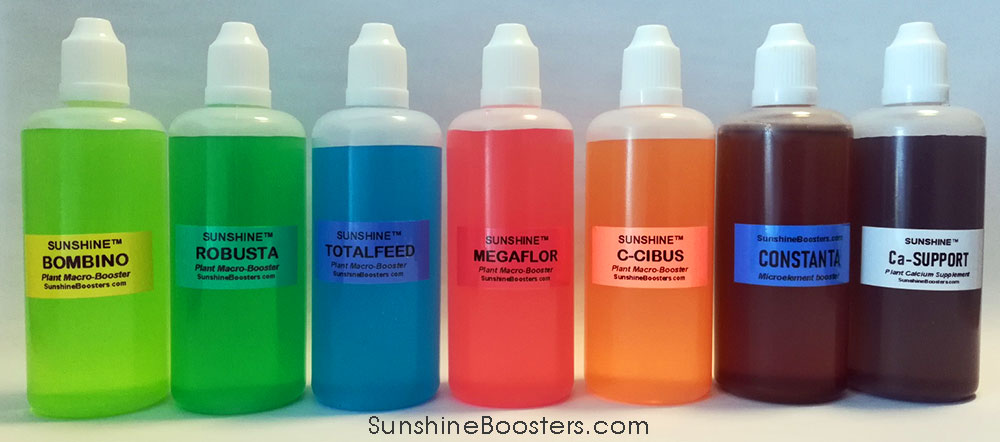
Robusta and TotalFeed are used for vegetative growth and pre-flower.
Megaflor and C-Cibus are used for winter flowering/ fruiting plants during the bloom stage.

See full list of liquid boosters

3) Micro-elements can be used all year round for all plants that are not dormant (do not drop leaves)

4) Always use Sunshine-Epi as a foliar spray to activate immune system and unlock protective mechanisms, BEFORE applying other boosters. It is especially important during Fall-Winter for improving cold tolerance and disease resistance.

5) Always apply foliar spray and/or drench the soil with solutions in morning hours so the plant has time to process the nutrients during daylight when metabolism is the most active.

6) Avoid any dry fertilizers during winter