Garden Blog - Top Tropicals

Date: 5 Aug 2022

Planting in August

Top Tropicals Garden Calendar
Philly's  garden  calendar

August is the hottest month in most places, and tropical/subtropical areas are not the exception. In Florida we have some hot August days in upper 90's. Is it still OK to plant during hot weather? Yes, and here are some guidelines for you:

1. Hot metabolism.
Many tropical plants grow faster at high temperatures. Select heat-resistant species for August planting (below are just a few suggestions).

2. Water adequately.
Water thoroughly your newly planted tree. Water daily (lightly) with a hose for at least a week, don't rely on sprinklers. Then reduce watering to every other day and gradually switch to sprinkler system if you have it. Do not overwater: non-established plants don't like combination of heat+wet.

3. Mulch well.
Keep mulch 1"away from the trunk to avoid rot.

4. Shading.
Protect the young tree from hot sun with a shade cloth or a sheet if leaves get wilted, for 1-3 days, then remove it, let the plant adjust to bright light.
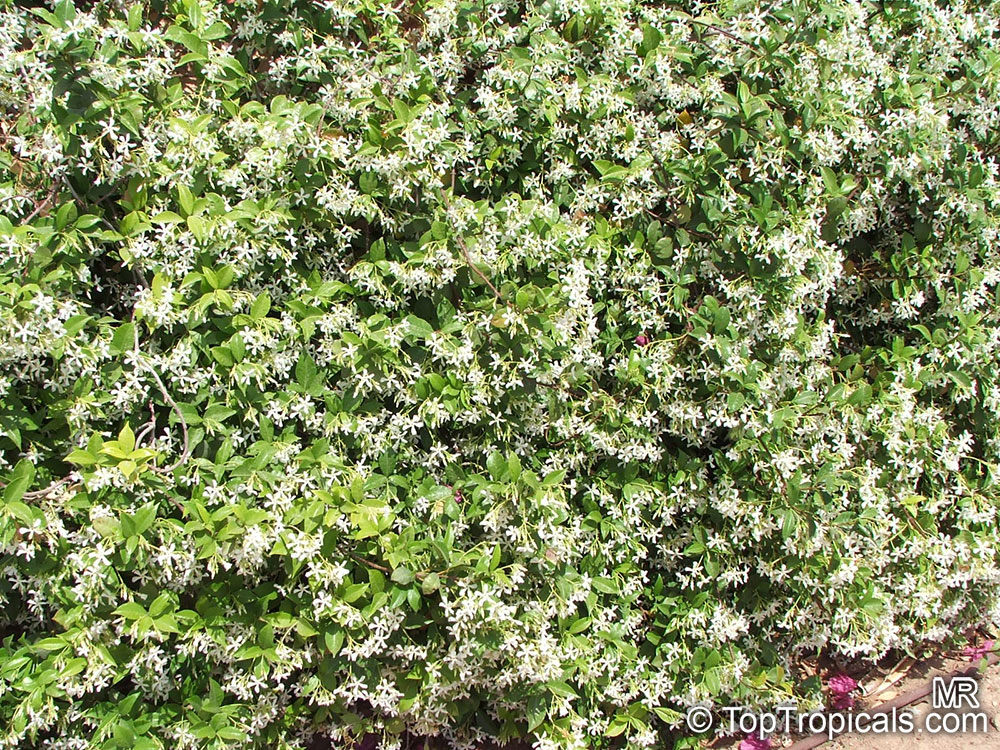
Trachelospermum  jasminoides  -  Confederate  Jasmine

Photo above: Trachelospermum jasminoides - Confederate Jasmine, the toughest jasmine that can take extreme heat and drought.

Date: 15 Jan 2021

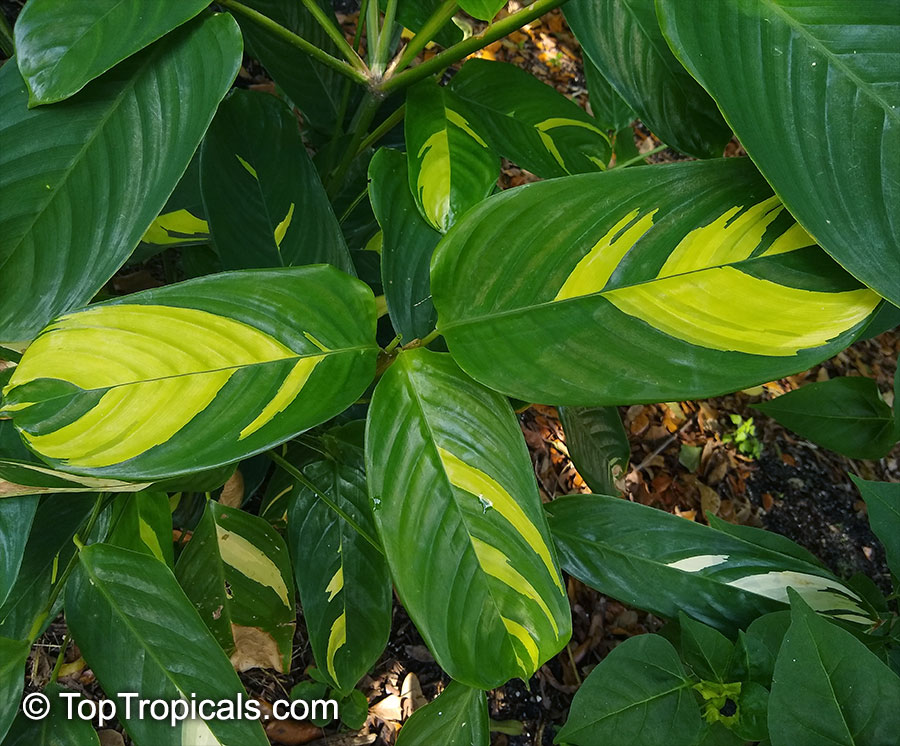
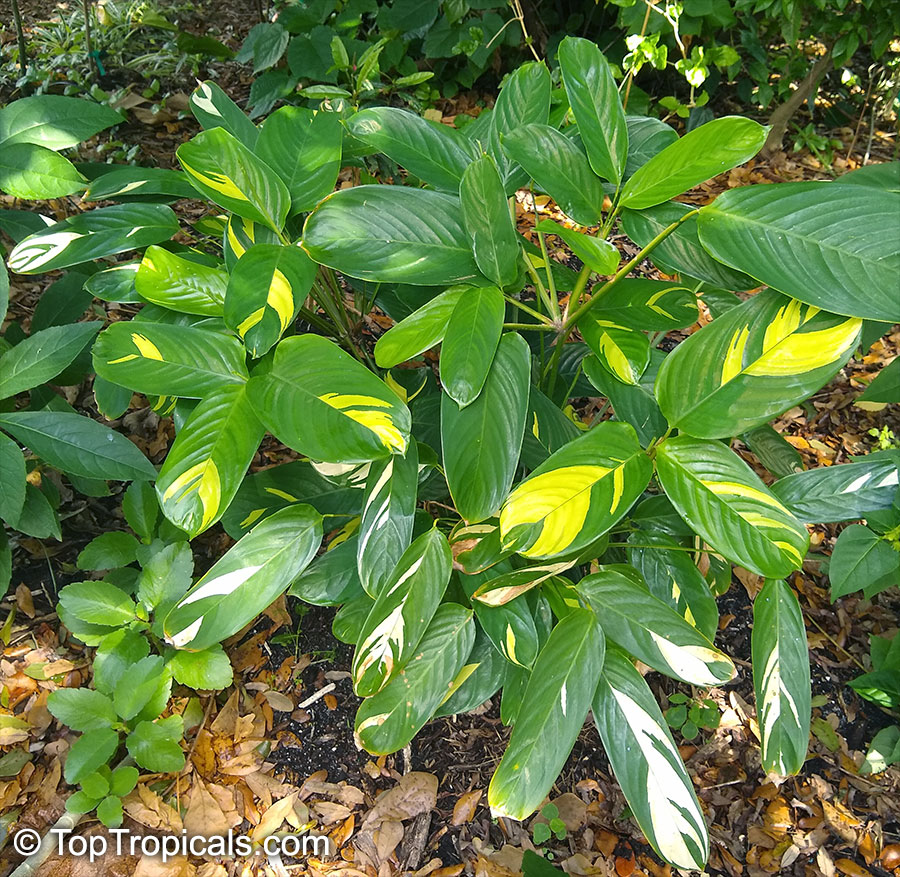
Never-never be without one! Ctenanthe lubbersiana variegata

Stevie's Pick: what's special today?

Our exotic plant grower Steven Gowdy spotlights the most interesting plants he discovers and recommends today while working in TopTropicals greenhouses.

Year 2021 is celebrated as a Year of Variegated Foliage plants, and I have something special for those rare plant collectors. Besides exclusive Monstera variegata Thai Constellation, there are a few less expensive plants that are as much beautiful and yet fit into any budget.

Known as the Never-never plant, this beauty is native to Brazil. I think in South Florida a shade garden should never-never be without one!
Ctenanthe lubbersiana variegata has deep variegation, with branching bamboo-like stems and oblong green, veined leaves that are mottled with cream and gold. Needing high humidity and indirect, bright filtered light, it just screams tropical and fun! Ctenanthe is a close relative of showy Marantas grown for the beauty of their foliage, and also makes a great house plant in cooler climates.
In warmer climates, it can be planted as an under story plant. The plant is growing to 2-3 feet high and 4-6 feet wide, with leaf patterns of indistinct cream and green marbling. It does have a rapid growth rate and liking soil moist, but not soggy. In the winter, water should only be given when the dirt is somewhat dry. Watch out for mealy bugs, spider mites, and aphids and apply Sunshine NoBug if you notice any - they will be easy to get rid of.

Give it a liquid fertilizer SUNSHINE Robusta - Rapid Growth Booster and divide as needed.

This plant is one of my favorites. I planted a nice specimen at TopTropicals entrance gate last year, and now we finally have beautiful baby plants propagated from it, looking great!

Date: 8 Nov 2024

Six colorful plants for your indoor garden

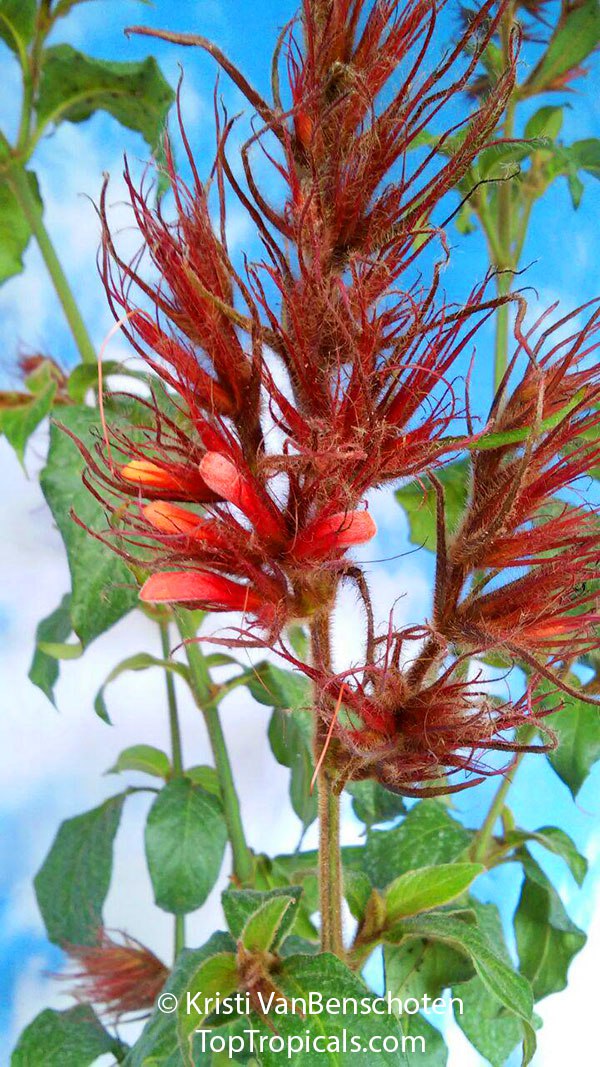
Sanchezia stenomacra - Blood Red Feather

Sanchezia stenomacra - Blood Red Feather

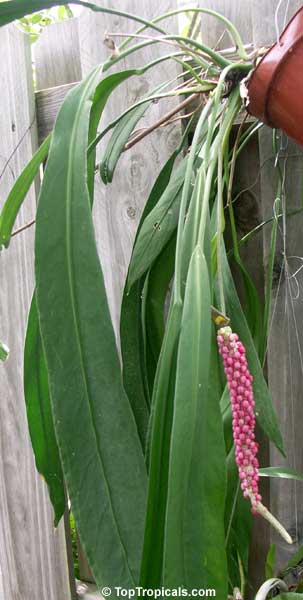
Anthurium vittariifolium- Long Leaf Anthurium

Anthurium vittariifolium- Long Leaf Anthurium

Clinacanthus nutans - Snake plant, Phaya-Yor

Clinacanthus nutans - Snake plant, Phaya-Yor

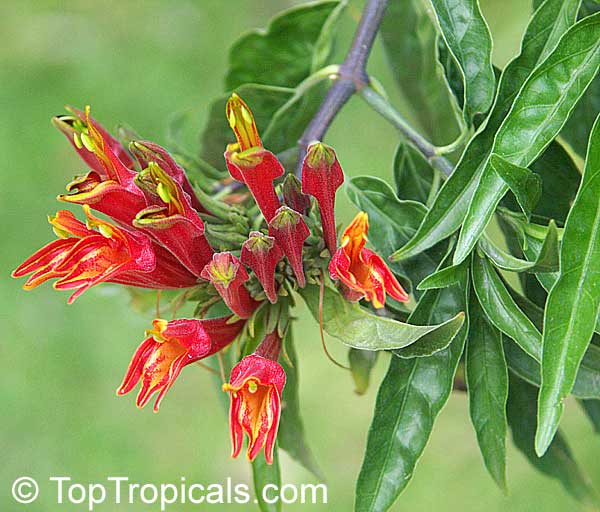
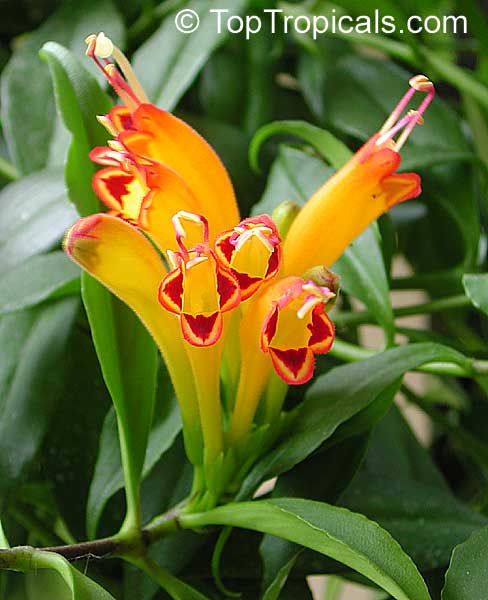
Aeschynanthus speciosus - Lipstick Plant

Aeschynanthus speciosus - Lipstick Plant

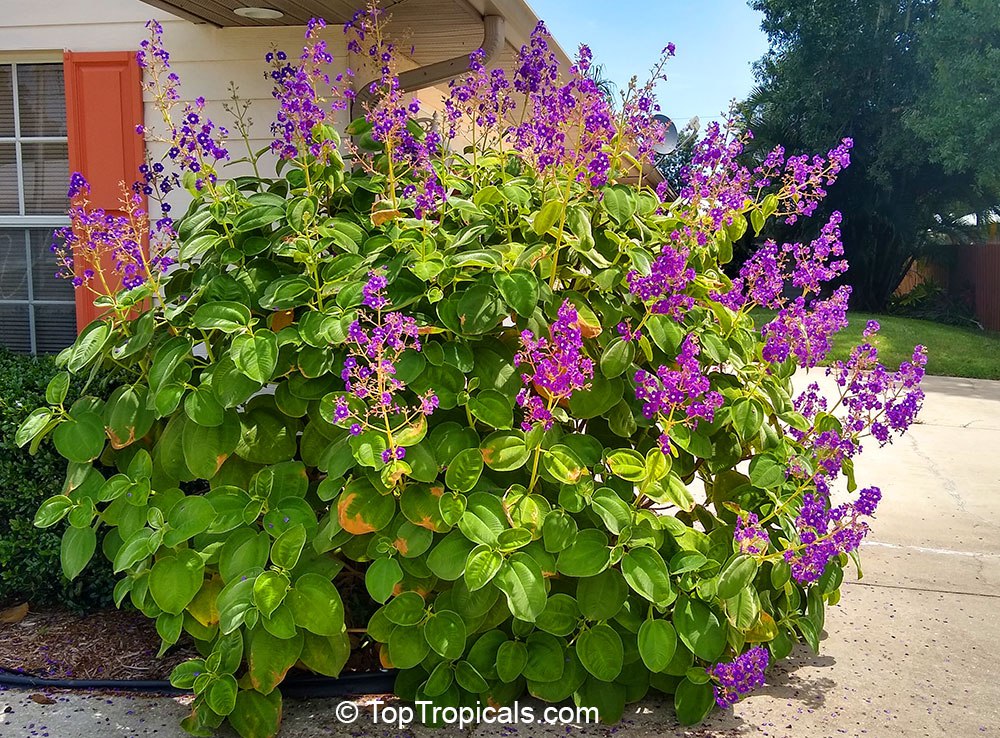
Tibouchina multiflora (grandifolia) - Glory bush, Quaresmeira

Tibouchina multiflora (grandifolia) - Glory bush, Quaresmeira

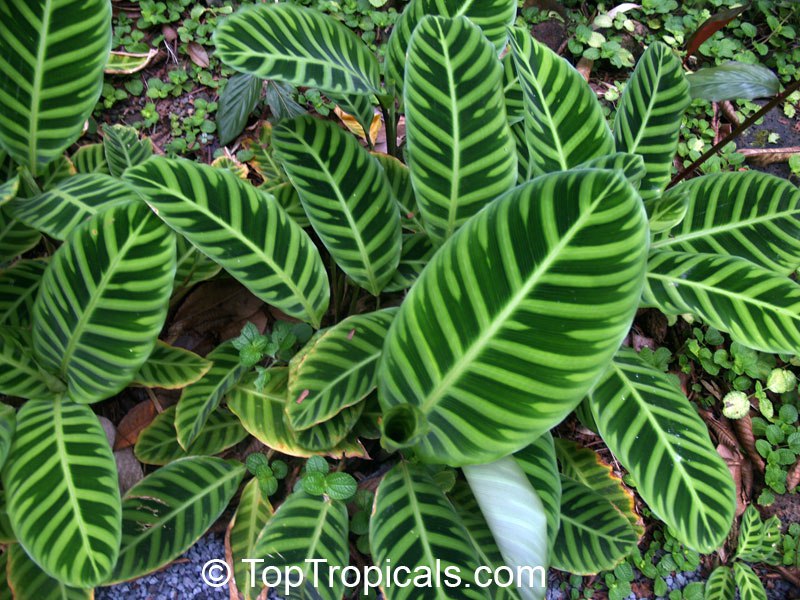
Calathea zebrina - Zebra Plant

Calathea zebrina - Zebra Plant

🌈 Six colorful plants for your indoor garden


🎶 Q: I've read your post about growing tropicals indoors and you got me inspired! Can you recommend something unusual, colorful and bright, preferably with flowers, that I can grow as house plants?

🌸 A: House plants don't have to be boring and just green! Below are a few excellent choices for your indoor garden that will brighten your sunroom. Just make sure to follow the 10 key tips for growing tropical plants indoors.
  1. Sanchezia stenomacra - Blood Red Feather - spectacular red feathery blooms and and soft, fussy leaves.
  2. Anthurium vittariifolium - Long Leaf Anthurium - super rare, an eye stopper, with long leaves up to 2 ft long, and bright pink fruit.
  3. Clinacanthus nutans - Snake plant, Phaya-Yor - exotic flower from Thailand resembling snake's open mouth.
  4. Aeschynanthus speciosus - Lipstick Plant - popular house plant with bright showy orange blooms.
  5. Tibouchina multiflora (grandifolia) - Glory bush, Quaresmeira - can be grown outside in Southern gardens, as well as in a pot indoors. Showy purple flowers, velvet leaves are wonderfully soft 6-8"in diameter!
  6. Calathea zebrina - Zebra Plant - the brightest zebra-striped large leaves up to 1 ft long.


👍 What flowering plants do you grow in shade? Share in comments⬇️

🛒 Shop indoor garden

#Container_Garden

🔴 Join 👉 TopTropicals

Date: 18 Feb 2026

🔥 Blazing into the 2026 with hot jasmines

Sunshine  the  orange  tabby  wearing  a  red,  white,  and  blue  wristband  sits
    laughing  on  a  jasmine-covered  horse  topiary  during  the  2026  Year  of  the 
 Horse,  while  Smokey  the  tuxedo  cat  trims  the  greenery  at 
 sunset.
Sunshine: I'm blazing into the 2026 Year of the Horse! Call me Mister Fahrenheit. Don't stop me now! 'Cause I'm having a good time — I'm a shooting star, leaping through the sky like a tiger, defying the laws of gravity!
Smokey: It's jasmine, Tiger. A shrub. Not Wembley. Calm down.

💮 2026 Year of the Horse - and the Plant I Trust Most

By Tatiana Anderson, Horticulture Expert at Top Tropicals

Every new year carries its own energy.

2026 is the Year of the Horse - a year of movement, fire, momentum, and bold decisions. It is not a quiet year. It pushes us forward.

When fellow gardeners ask me what to grow in a year like this, my answer is simple:
Grow something that balances strength with grace.

For me, that plant is Jasmine Sambac.

In many cultures, Sambac represents devotion, purity, and deep affection. In the Philippines it is the national flower - Sampaguita - woven into garlands for weddings and sacred ceremonies. In Hawaii, it becomes leis - a symbol of welcome and connection - Pikake. In India, it perfumes temples and homes.

This is not just a fragrant shrub.
It is a plant tied to love, loyalty, and continuity.

The Horse runs forward.
Jasmine anchors the heart.

In a fiery year like 2026, I believe we need both.

And that is why I always return to Jasminum sambac.

🛒 Explore Jasmine varieties

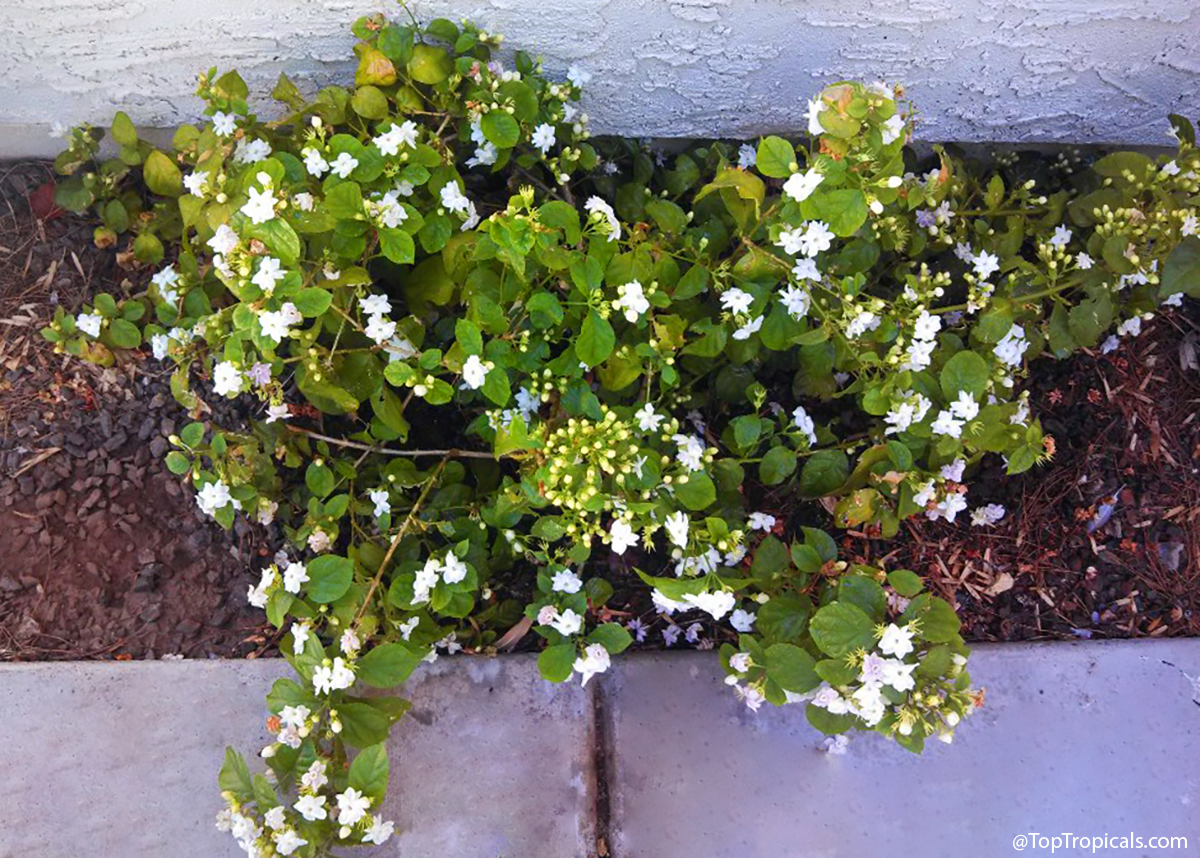
Jasmine  Sambac  Maid  of  Orleans  plant  growing  along  a  wall  with  clusters
    of  white  fragrant  flowers  in  bloom.

Jasmine Sambac thrives in hot, sunny locations

✅ Why Jasmine Sambac?

Over the years I have grown thousands of plants, but very few have the staying power of Jasmine Sambac.

It is not just fragrant. It is intensely, unmistakably fragrant. One open flower can perfume an entire patio. In the evening, the scent becomes deeper and richer.

But what makes Sambac truly special is its adaptability.

It can grow as a compact patio shrub, a flowering hedge, or a climbing vine. It performs beautifully in containers. It tolerates both full sun and partial shade. The more light you give it, the more flowers it rewards you with.

And unlike many tropicals, Sambac does not bloom just once. With proper care, it flowers in cycles throughout the warm season.

For gardeners, that combination is rare: beauty, perfume, flexibility, and repeat bloom.

That is why it has remained one of the most wanted fragrant plants in cultivation.

✍️ More About Jasmines from Blog

🛒 Explore Jasmine plants

Date: 11 Jan 2021

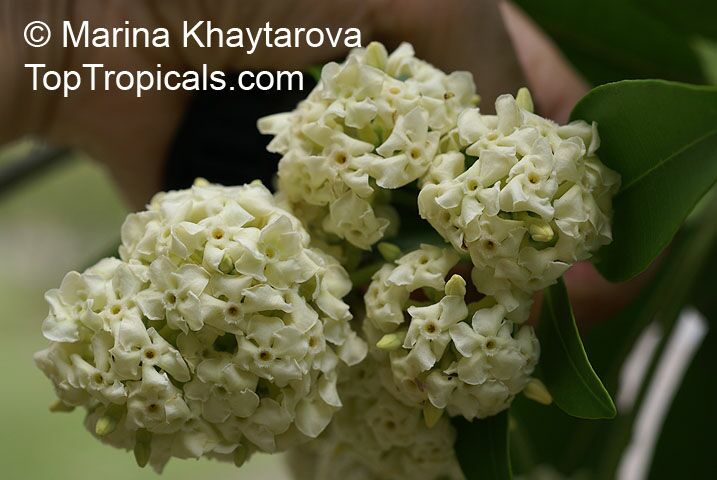
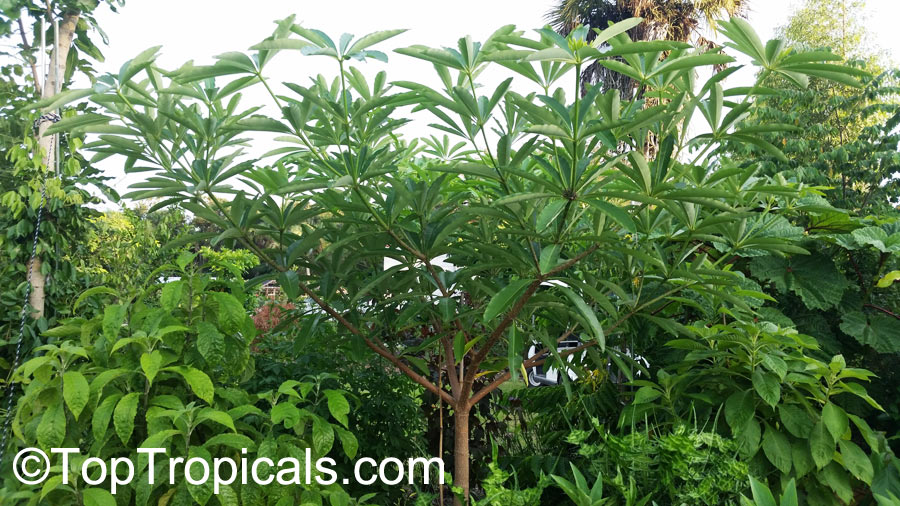
Alstonia scolaris - Indian Devil Tree

A Scholar's Award with intoxicating fragrance

By Alex Butova, the Witch of Herbs and Cats

...This fascinating rare plant with white, strongly perfumed flowers is valued as a fast growing, impressive ornamental shade tree and is used to serve as an alternative to quinine...
Popularly known as Devil Tree, as plant is believed to the devil's abode - probably due to the intoxicating fragrance emitted by flowering trees, especially at night.
The tree is of great cultural significance in the intellectual circle, as traditionally its leaves were awarded to scholars and teachers during convocation ceremonies by the Visva Bharati University (can't think of a better name than Alstonia scholaris!). This tradition was started by Rabindranath Tagore...

CONTINUE READING >>