Date: 8 May 2026
How to feed the right formula at the right time
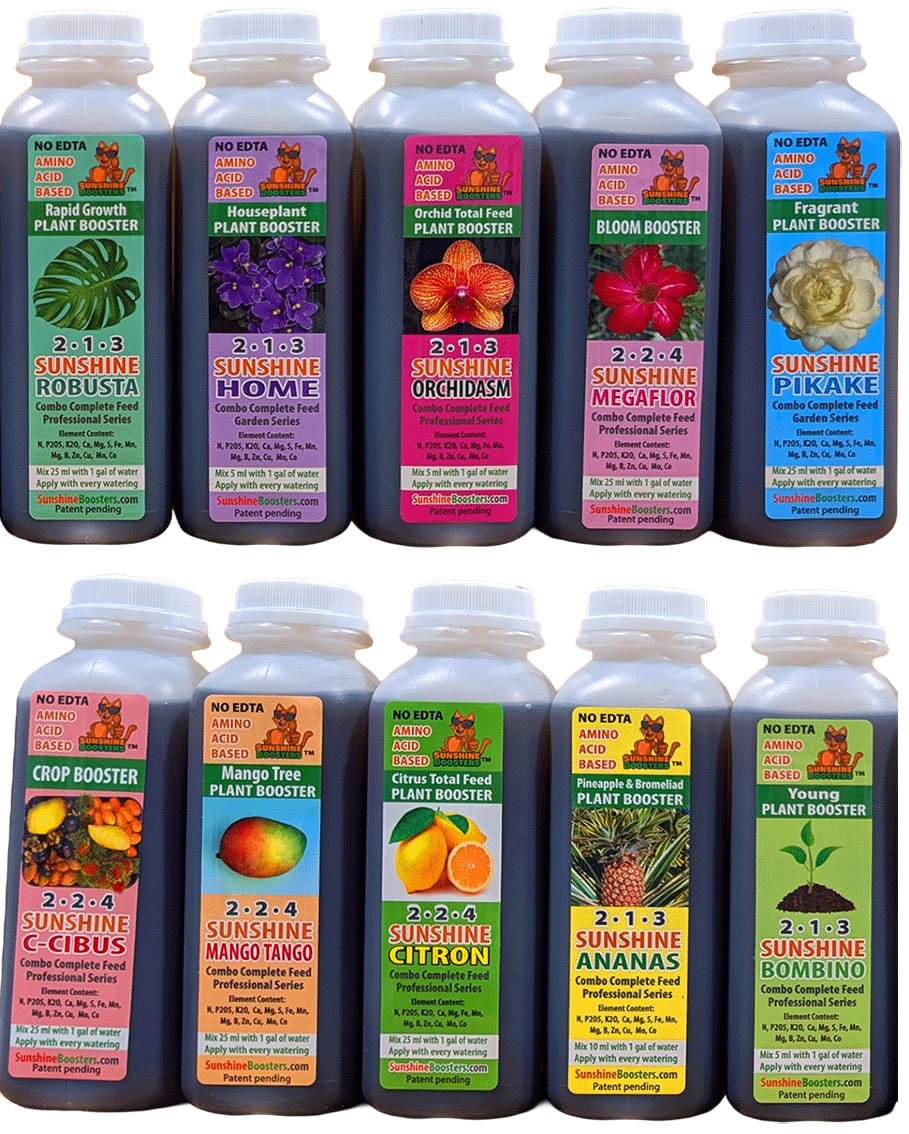
The Sunshine Boosters for different plant types.
How to feed the right formula at the right time
Most plants don't need more fertilizer - they need the right one at the right stage. Growth, flowering, and fruiting all require different support. Once you match feeding to what the plant is actually doing, everything starts to improve.
One system for every plant and stage
The Sunshine Boosters system includes different formulas for different stages of growth or plant types. Some are designed for young plants, some for vegetative growth, and others for flowering and fruiting. This allows you to match feeding to what your plant is doing without changing the overall system. All formulas, including additional supplements, remain compatible and can be used together when needed.
Build structure and foliage
Sunshine Robusta supports vegetative growth. It is useful for building strong structure, adding foliage, and helping plants recover after stress or damage.
Sunshine Bombino is a gentle formula for young plants, seedlings, and cuttings. It supports early root development without stressing tender growth.
Sunshine Home is made for indoor houseplants. It is mild and balanced for regular feeding of sensitive plants grown indoors.
Feeding for flowers
Sunshine Megaflor is a bloom booster. It helps plants produce more flowers, improves flower size, and supports strong pollen development.
Sunshine Pikake is designed for fragrant flowering plants. It increases the number of blooms and improves flower fragrance.
Sunshine Orchidasm is a complete feed for orchids. It supports steady growth and encourages longer and more frequent blooming cycles.
Feeding for fruit and yield
Sunshine C-Cibus is a crop and fruit booster. It is used during flowering and fruit development to improve yield and plant vigor.
Sunshine Mango Tango is designed for mango trees. It helps improve flowering, fruit set, and reduces flower and fruit drop.


Sunshine Citron is a complete formula for citrus trees. It supports healthy leaves, strong growth, flowering, and fruit production.
Sunshine Ananas is made for bromeliads and pineapple. It supports healthy growth and improves fruit quality in these plants.


To be continued - next we'll cover the additional boosters that take your plants from good to exceptional. More...
Get your plants real food
"Learn more:
Why your plants need more than NPK
What makes Sunshine Boosters different
This changes how you feed your plants
Sunshine Boosters: Complete Plant Nutrition System
Frequently Asked Questions: Plant Nutrition & Fertilizer
Green Magic + SUNSHINE Boosters: A Complete System for Strong Plant Growth
Spring Nutrition Strategy: Is Your Garden Starving?
How to keep your house plants beautiful all year by feeding them right
Why do you need Sunshine Boosters?
Which dry fertilizer to use - slow release or controlled release?
Green Magic effect: before and after
The SECRET growers never tell you: simple trick how to bring plants back to life and keep green
" What are Sunshine Boosters
#Discover #Fertilizers #How_to
Join TopTropicals
Most plants don't need more fertilizer - they need the right one at the right stage. Growth, flowering, and fruiting all require different support. Once you match feeding to what the plant is actually doing, everything starts to improve.
One system for every plant and stage
The Sunshine Boosters system includes different formulas for different stages of growth or plant types. Some are designed for young plants, some for vegetative growth, and others for flowering and fruiting. This allows you to match feeding to what your plant is doing without changing the overall system. All formulas, including additional supplements, remain compatible and can be used together when needed.
Build structure and foliage
Sunshine Robusta supports vegetative growth. It is useful for building strong structure, adding foliage, and helping plants recover after stress or damage.
Sunshine Bombino is a gentle formula for young plants, seedlings, and cuttings. It supports early root development without stressing tender growth.
Sunshine Home is made for indoor houseplants. It is mild and balanced for regular feeding of sensitive plants grown indoors.
Feeding for flowers
Sunshine Megaflor is a bloom booster. It helps plants produce more flowers, improves flower size, and supports strong pollen development.
Sunshine Pikake is designed for fragrant flowering plants. It increases the number of blooms and improves flower fragrance.
Sunshine Orchidasm is a complete feed for orchids. It supports steady growth and encourages longer and more frequent blooming cycles.
Feeding for fruit and yield
Sunshine C-Cibus is a crop and fruit booster. It is used during flowering and fruit development to improve yield and plant vigor.
Sunshine Mango Tango is designed for mango trees. It helps improve flowering, fruit set, and reduces flower and fruit drop.
Sunshine Citron is a complete formula for citrus trees. It supports healthy leaves, strong growth, flowering, and fruit production.
Sunshine Ananas is made for bromeliads and pineapple. It supports healthy growth and improves fruit quality in these plants.
To be continued - next we'll cover the additional boosters that take your plants from good to exceptional. More...
Get your plants real food
"Learn more:
Why your plants need more than NPK
What makes Sunshine Boosters different
This changes how you feed your plants
Sunshine Boosters: Complete Plant Nutrition System
Frequently Asked Questions: Plant Nutrition & Fertilizer
Green Magic + SUNSHINE Boosters: A Complete System for Strong Plant Growth
Spring Nutrition Strategy: Is Your Garden Starving?
How to keep your house plants beautiful all year by feeding them right
Why do you need Sunshine Boosters?
Which dry fertilizer to use - slow release or controlled release?
Green Magic effect: before and after
The SECRET growers never tell you: simple trick how to bring plants back to life and keep green
" What are Sunshine Boosters
#Discover #Fertilizers #How_to
Join TopTropicals


 Planting