Garden Blog - Top Tropicals

Date: 19 May 2016

Care of mail-order plants during hot summer

Q: I live in California and about a month ago ordered several plants from you, including fruit trees (Carambola, Mango, Avocado) and flowering trees (Xanthostemon, Adeniums, Champaca, Ylang Ylang). They were all doing well until I tried to move them into full sun, when they got leaf burn immediately. Ylang Ylang was doing great in a shade, but I repotted it from 1 gal into 3 gal and it is drooping leaves now. It has been very hot (over 100F) and dry (humidity is less than 25%). Any suggestions?

A: Hot summer can be pretty challenging time for establishing new plants. These are some guidelines to make your summer gardening more successful and rewarding.

1. You can order plants at any time, but keep your eye on your local weather forecast and try to chose cooler periods to schedule your plant shipments. Here at TopTropcals we monitor weather at destinations, and we can also delay shipment per your request until more favorable conditions.

2. During hot Summer months, many plants are still OK to ship, and to be planted, many species are heat tolerant. It's usually safe to ship most succulents, including Desert roses and Euphorbias. Some fruit trees are pretty easy too, like Loquats, Mango, Eugenias. Many flowering trees can take heat: Acacias, Clusias, Jatropha, Sausage Tree, Plumerias and many others. Check our full list of plants suitable for hot and dry conditions. Most jasmines, including Jasmine Sambac and Trachelospermum make also a safe choice for hot weather planting.

3. Use shade cloth or simply white sheets to protect young plants and new plantings from hot sun.

4. When establishing mail ordered plants during hot weather, keep them in shade for longer period of time than average recommended 1-2 weeks. Give them a chance to establish really well. In areas with low air humidity, try to create a simple mist system. It can be purchased in your local Home Depot for only $20 and set up takes only 10 minutes! It makes a big difference and can help you save many plants from hot weather stress.

5. Although it may seem that during hot weather plants need more water due to high evaporation, be careful with watering, and check soil with your finger before watering - don't water if it is still wet. Combination of "hot and wet" can be as harmful for the root system as "cold and wet" during winter. Protect root systems from overheating: covering black pots with white cloth will work. Remember when temperature is above 90F, most of plants slow down their metabolism, which means roots slow down or even stop pumping water and become more vulnerable to overwatering. For the same reason, do not hurry to step up into bigger container if roots haven't filled yet the existing pot.

Date: 5 Apr 2016

Jungle on Windowsill 101

Q: I got a Jasmine Sambac and a Tahitian gardenia as presents, they are very cute plants with flowers and flower buds. I would like to be able to keep them alive and hopefully happy for a long time, but I don't know much about growing tropical plants, and I am not sure if my thumb is green enough to make everything right. What do they need? How much sun? How much water? What kind of soil? Sorry for all these (maybe silly) questions, but I want to keep them alive, please help! I live in Wisconsin and we had some snow again last week.

A: Growing tropicals is not a hard work, it is a lot of fun! These plants are actually a good starters for a beginner who wants to try growing tropical plants, no matter if you live in a mild frost-free climate, or up North where you can have these beauties as houseplants. Below are a few simple steps for you:

1. Read. Follow planting instructions included with your plants. Check plant names on the tags and learn more about them from our online catalog.

2. Soil. Plant in quality potting mix - it must be porous and well-drained, never use heavy soils (top soil or garden soil are no-no), in a pot exactly the size of the root system. You can step up your plants in the next size container once you notice vigorous new growth. Next size means: 4" pot can go into 6" pot, 6" pot into 10" pot, etc. Too big of a pot may create rotting environment, root system must fill the entire container to use all the moisture from the soil. Container must have good hole(s) for excess water to drain through. Put the pot in a saucer and get rid of excess water every time after watering.

3. Light. Most tropical plants require lots of light in order to produce flowers. If you ever visited Florida, remember the bright sun? - these are ideal light conditions for tropicals. Up North, provide as much light as possible: a bright spot on a windowsill of Southern or Western exposure would work the best. If the sun gets too hot in summer afternoon, you may shade the window a little bit with a sheet of white paper to avoid leaf burn.

4. Water. Keep soil slightly moist but not soggy. The best way is to wait until the top of the soil feels dry to touch - this is time to water again. Jasmines prefer to stay on a dry side; gardenias do not like soil to dry out - keep them slightly moist as long as soil is very porous and well-drained. The main reason of most problems with potted indoor plants is over watering. With experience, you will feel the right balance of moisture in the soil: the brighter the light, the more water is consumed by a plant; the less light, the less frequent you should water.

5. Trimming. In low light conditions, plants tend to become leggy. Trim branches as they become too long: the more you trim, the busier the plant gets. New growth promotes more profuse blooming in many species.

6. Fertilizing. Fertilize indoor plants with slow-release granulated fertilizer from march to November.

7. Insects. Check for insects at least once a month, especially underneath the leaf. If notice any problems (deformed leaves, residue, holes, or tiny insects) - clean the leaves/stems with a solution of warm water (1 cup), vegetable oil (2 table spoons), and a few drops of a dish soap.

8. Fresh air and air humidity. As soon as air temperature gets above 65F, bring your tropicals outside in the sun and fresh air: porch, balcony, outside in the yard. Air circulation is essential for your plant health. Bright light and high air humidity will promote vigorous growth, and lots of flowers for you to enjoy!

For more information on growing Tropical Plants 101, see Problem solving with potted plants - how can we help them?.

Date: 27 Oct 2022

Add a little Sunshine
to keep your plants looking their best

By Ed Jones, the Booster Guy

Mango  leaves  before  and  after  Sunshine  Boosters  application

...Just like people, a little sunshine goes a long way in keeping them happy. It is usually easier to keep a plant healthy than it is to fix it when it is not well. Proper plant nutrition is often times the issue. The good news is that it is easy to keep your plants looking good by following proper nutrition practices...
...Feeding your plants with micronutrients that they just don't get in regular fertilizers can prevent deficiencies. Let's get started on a regular program of using foliar sprays to help keep your plants looking their best...
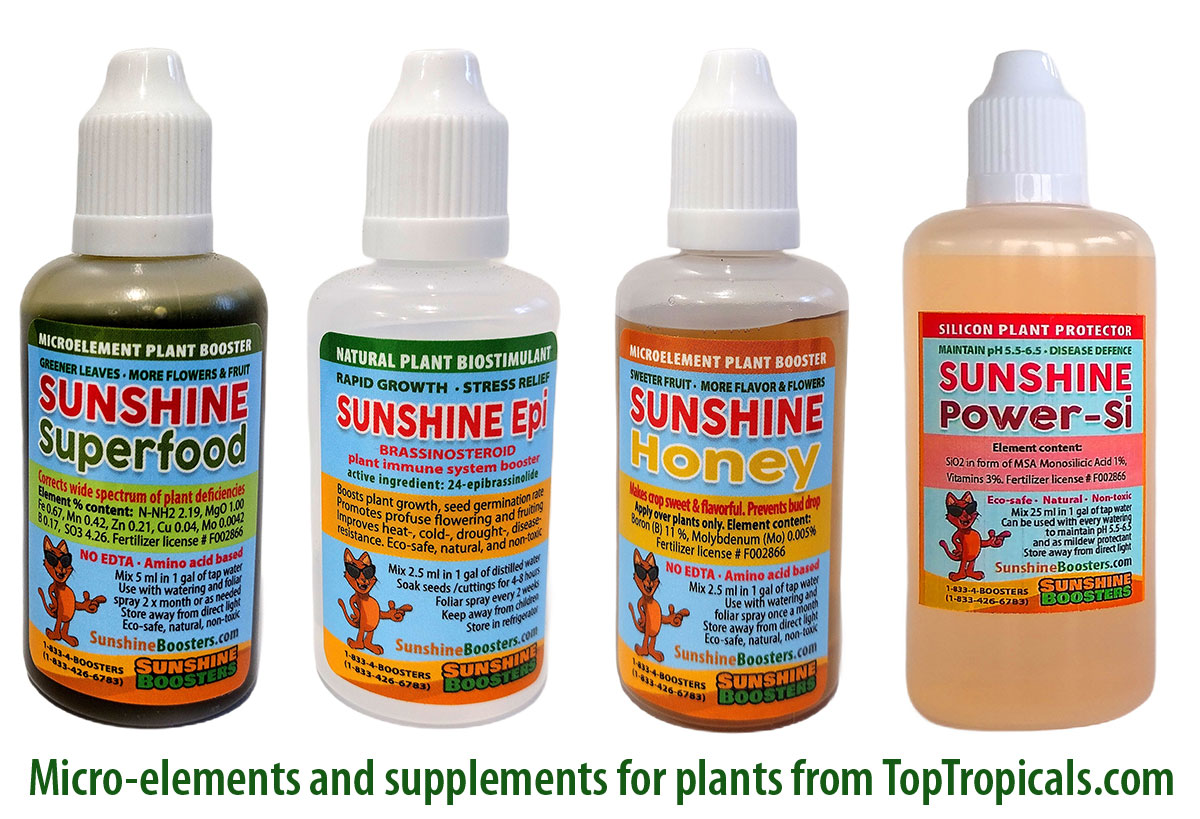
We recommend using three products in combination - the Complete SUNSHINE Microelement Supplement Kit that consists of:

- Sunshine Superfood
- Sunshine Epi
- Sunshine Power-Si

How often do I need to treat my plants?

We are recommending a foliar spray once per week to maintain optimal health conditions. This is based on recent studies done in Ukraine by the scientist who invented Sunshine Boosters products...
Continue reading to see an easy treatment schedule that will provide your plants with:
- Increased photosynthetic activity
- Increased insect and disease resistance
- Reduced mineral toxicity
- Improvement of nutrient imbalance
- Enhanced drought and frost tolerance
- Enhanced plant growth

Read more about these wonderful products and what they do >>

Sunshine  Plant  Supplement  Kit

Sunshine Boosters are developed in Ukraine and manufactured in the USA. We support Ukraine fight for freedom. All profits from these fertilizers will be donated to support our Team in Ukraine.

Date: 18 Aug 2025

Step Up Your Plants Before Fall

Tropical  plants  in  containers
Tropical Plants Ready for Repotting

After a busy summer of growth, many potted plants are bursting out of their containers. Now is the perfect time to step them up into a slightly larger pot.

🌱 Why now in August?

Repotting before fall gives roots room to expand, while there’s still warmth for active growth. Plants have time to sprout new shoots, fill out, and build strength before cooler weather slows them down.

✂️ Trim and Shape

This is also your last chance to give plants a light trim. Pinching or cutting back helps them branch, bush out, and get denser — exactly what you want going into fall.

💚 Add Green Magic

When repotting, mix in Sunshine controlled-release Green Magic fertilizer to reduce transplant stress and boost new root growth. It helps plants settle in quickly and keep thriving.

👉 Watch our on how to step up your plant the right way, then check your pots — some of your summer growers are ready to move up!

⚠️ Important Note on Timing

This advice is for gardeners in warm climates or for anyone who still has at least a month of warm weather left. Tropical plants go dormant when temperatures drop below 75F, so planting in a larger pot at that time may cause root rot — roots stop growing in dormancy, and extra moisture in the soil can lead to rotting.

Repotting,  potting  soil  and  fertilizer

Watch repotting video

How to Repot a Plant Properly

  1. Choose the Right Pot

    Pick a pot just a few inches larger than the old one.

    Make sure it has good drainage — tropical plants hate sitting in water. A pot without drainage holes can cause waterlogging and root rot.

  2. Why plastic pots are better than fancy ceramic

    Ceramic pots may look pretty, but they are heavy, breakable, and often lack proper drainage. Plastic pots are lightweight, easier to handle, and — most importantly — if a plant is root-bound and stuck, you can simply cut the plastic pot to free it without harming the roots. For looks, slip the plastic pot inside a decorative cover pot.

  3. Add Soil and Fertilizer

    Place fresh potting soil at the bottom. Mix in a good fertilizer — we use Sunshine Green Magic.

  4. Remove the Plant

    Why turn it upside down? Gravity helps loosen the plant, and it slides out more easily without tugging.

    Never pull a plant by its head (stems or leaves). That can damage the crown and tear roots.

    If it doesn’t come out easily: lay the pot on its side and gently squeeze or tap the pot to dislodge the soil. If it is really stuck, cut the old pot instead of forcing the plant.

  5. Check the Root System

    If roots are circling tightly (pot-bound), gently untangle or loosen the outside layer so they will grow outward into the new soil.

    Do not shake off or remove old soil from the root ball. Roots have tiny hairs that absorb water and nutrients, and damaging them will set the plant back. Keep the root mass intact and disturb as little as possible.

  6. Set at the Same Level

    Place the plant in the new pot so it sits at the same soil level as before.
    👉 This is important: burying the stem too deep can suffocate it, while setting the plant higher than before may expose roots and cause drying. Keeping the level the same protects the root crown.

  7. Fill and Firm

    Add more soil and fertilizer around the sides. Press lightly around the edges to remove air pockets.

  8. Water Thoroughly

    Give it a deep watering to help roots settle.

  9. Aftercare

    Don’t water again until the top inch of soil feels dry. Freshly repotted plants are vulnerable to soggy soil and root rot if kept too wet.

Watch the video how to repot properly

Shop Garden Supplies

Date: 24 Dec 2018

Plant Horoscope. Capricorn Zodiac lucky plants: Cordyline and Croton

TopTropicals.com

Capricorn - 12/22 - 1/19. An EARTH sign ruled by the planet Saturn. Capricorn's plants usually have few flowers, or small flowers, are knobby or woody, and may have an unpleasant smell or taste. Saturn rules plants with long lives and slow growth, so plants with annual rings are also associated with the Goat.
Physiologically, Saturn rules the systems that give the body its structure and form: the skeletal system, and the skin, teeth, joints, and knees, so plants that are high in calcium can be very beneficial. Those can be woody plants and shrubs that show annual rings, as well as some poisonous or narcotic plants. Saturn plants are useful in treating arthritis and rheumatism. Traditional Capricorn appreciates a spice that is powerful but familiar. Black pepper adds flavor and a bit of heat to both food and life, creating movement without too much change.

Capricorn Zodiac lucky plants: Baobab, Peach Palm, Patchouli, Bamboo, Cordyline, Spider Lily, Serissa, Desert Rose, Croton, Aloe, Palms, Giraffe knee plant - Gonatopus boivinii, Adenanthera, Black Pepper, Solanums, Loquat, Aglaonema, Jacaranda, Rosemary, Shisham - Dalbergia sissoo, Neem Tree, Nutmeg, Calendula, Brugmansia, Cannabis, Coca, Kava-Kava, Root Beer plant, Kratom, Banesteriopsis, Psychotria, Quince, Almonds, Ginkgo, Olive, Strophanthus, Bread Flower, Amorphophallus, Areca Palm, Anadenanthera, all Pipers, Brunfelsia, Chaya, Persimmons, Surinam Cherry, Bel Fruit, Ashoka Tree, Calla Lily.

For other signs information, see full Plant Horoscope.