Garden Blog - Top Tropicals

Date: 24 Jun 2018

TopTropicals

Spring is coming, plants need food! Time to fertilize...

Last winter was long and snowy in the most part of our country. Hold on fellow gardeners up North, it is almost over!
Here in Florida we have been blessed again with a mild winter without serious cold snaps. Early Spring that is already in the air. Look at this picture of flowers in our front yard now.
If the weather is already warm in your area (low temperatures above 55), it is time to start fertilizing. We are sending our love and support to tropical Puerto Rico suffered from hurricane last year, and will be happy to help you guys to restore your lost gardens!

CHECK LIST

what to do to give your garden a good kick start:

1. Slow release granulated food. Apply Slow Release Fertilizer and continue once a month. 1 tsp per gallon of pot, or a handful for in-ground plants. This will provide essential macro elements (NPK) required for a plant growth.

2. Water soluble micro-elements. Besides macro-elements, plants need many other elements that most of the time missing in soil. A lack of micro-elements causes different deficiencies, resulting in weak root systems, slow growth, deformed leaves, leaves yellowing, lack or no flowers/fruit. Apply these supplements as a foliar spray once a month to induce healthy growth and flower/fruit development. We recommend the following micro-element products to keep your plants healthy and vigorous year round:
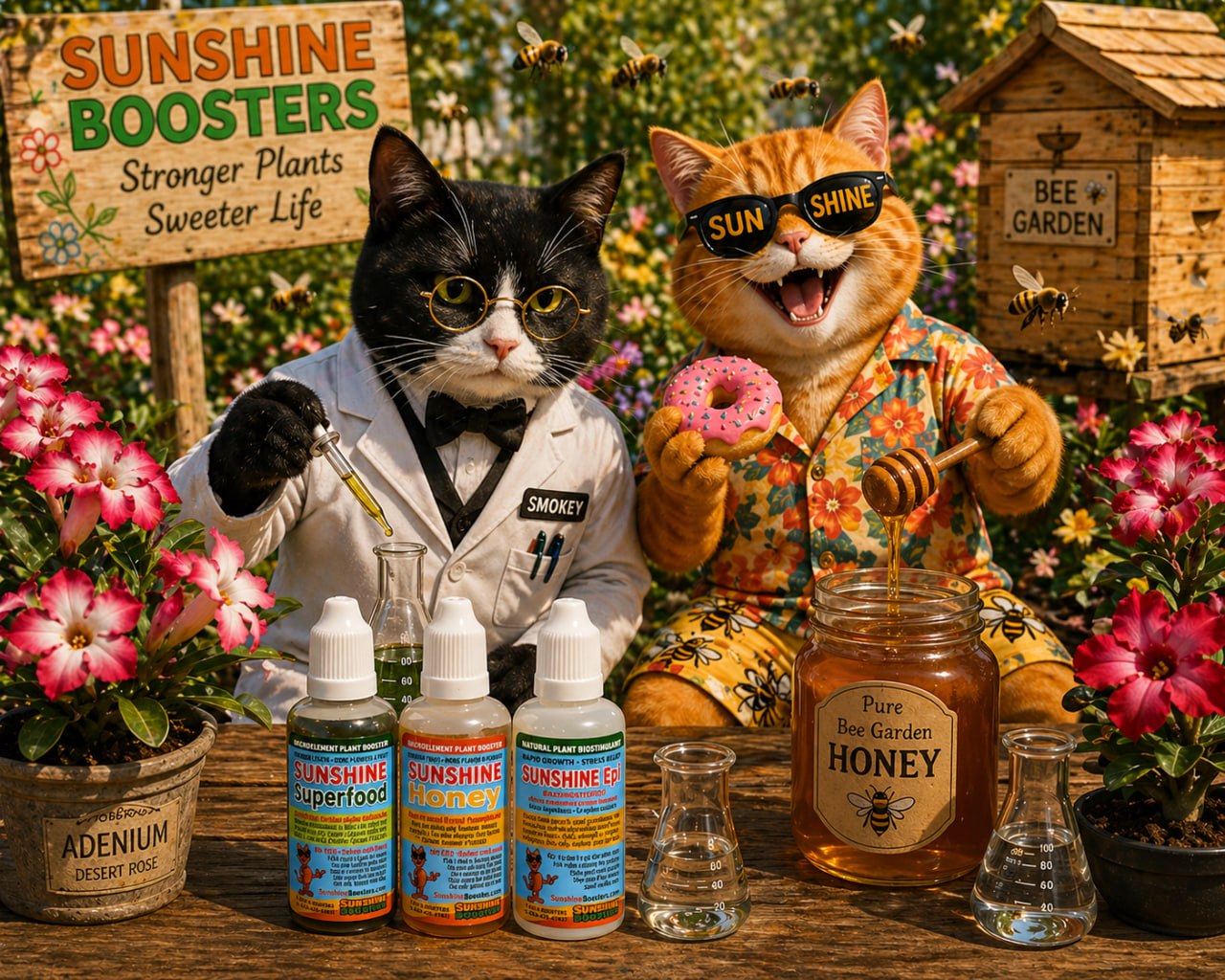
a) SUNSHINE SuperFood - plant health booster. This revolutionary new liquid complex contains ALL microelements needed and can fix all possible problems occuring to your tropical plants - from roots to flowers and fruit. We have convenient dropper bottles of 5 ml for small plant collections, 50 ml for larger gardens, and 100 ml for professional landscape applications.
b) SUNSHINE-Micro - Microelement booster - for common iron deficiency (pale leaves)
c) SUNSHINE-Super-Iron - Microelement booster - for severe iron deficiency (severe yellowing leaves)

3. SUNSHINE plant boosters - SUNSHINE-E, -BC (caudex plants and bonsai), -H (house plants). Apply these natural plant stimulants to help plants recover from cold, dormancy, increase plant's metabolism and make a plant more readily absorb both Macro- and Micro-elements. SUNSHINE boosters also will help plants grow vigorously, withstand Summer heat and drought, and produce bigger and better flowers and fruit.

4. Kickstart a sweeter fruit. To get a better and sweeter crop in Summer and Fall, you need to start first application now. SUNSHINE Honey - is natural, Amber-colored, honey-like liquid microelement product for fruiting and edible plants that will make them sweeter, tastier and more flavorful! Very effective for tropical fruits, tubers, vegetables. Great for tropical fruit trees: Mango, June Plum, Annonas, Tropical Cherries, Carambola, Citrus; subtropical fruit trees: Peaches, Apricots, Loquat and berry plants (blackberry, mulberry, etc.)

5. SUNSHINE-S. Don't forget to plant seeds! It's a perfect timing now to start your tropical garden indoors even if it is still cold outside. Soak them in SUNSHINE-S solution to increase germination rate.

See full list of SUNSHINE boosters. All these products are essential plant elements. They are not toxic and can be used safely for edible landscapes.

Date: 21 Nov 2025

How to keep your house plants beautiful all year by feeding them right

Indoor garden

Indoor garden

🍀 How to keep your house plants beautiful all year by feeding them right

  • 🌱 Healthy house plants are not just about light and water. They need food, just like we do. A good fertilizer routine keeps them green, strong, and blooming through every season. Here is a simple guide to feeding indoor plants the right way.
  • 🌱 General rules for fertilizing house plants


  • ▪️Feed lightly but regularly. Indoor plants grow in limited soil, so nutrients run out faster. Small, frequent feedings work better than one heavy dose.
  • ▪️Never fertilize dry soil. Water first, then feed.
  • ▪️Reduce feeding in winter when growth slows.
  • ▪️Watch your leaves. Pale, yellow, or slow-growing plants are asking for nutrients.
  • ▪️Use a complete formula. House plants need both macro-elements (N-P-K) and micro-elements, not just nitrogen.


🌱 What fertilizer to use


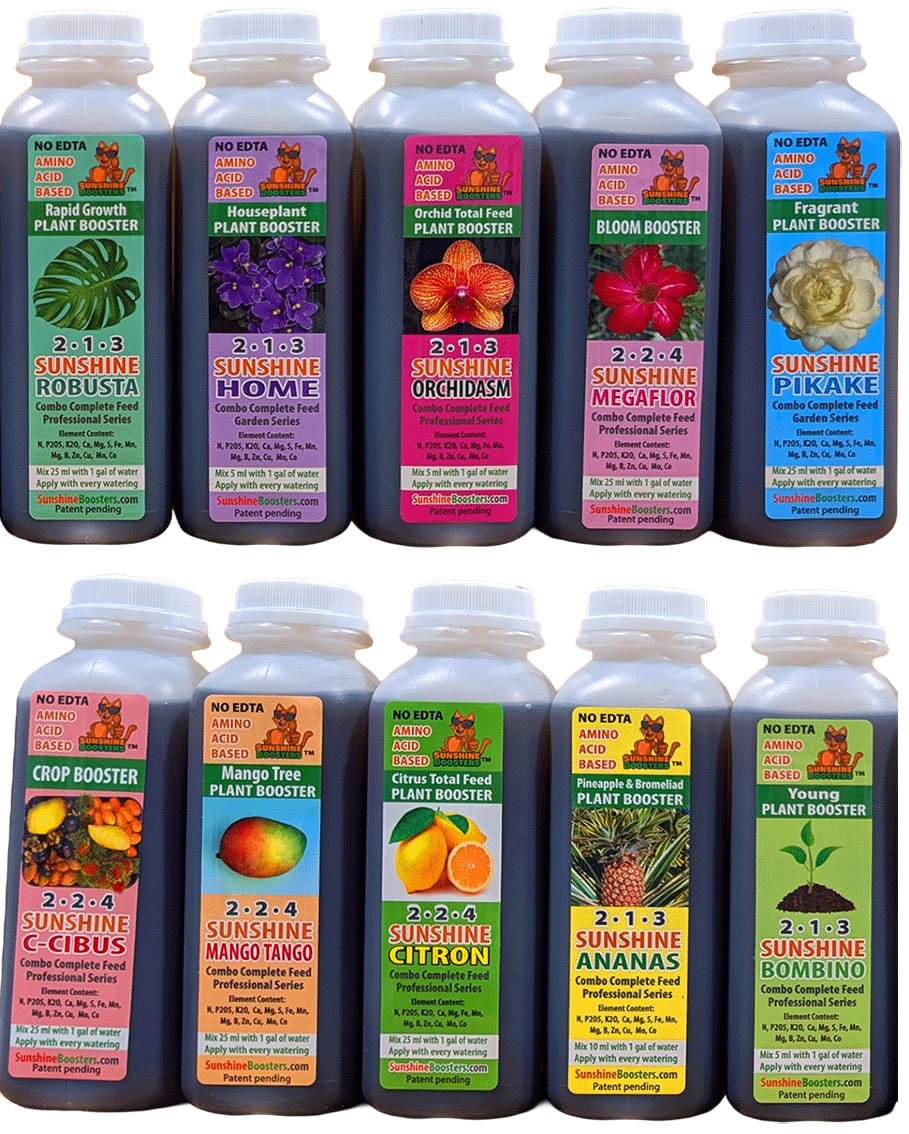
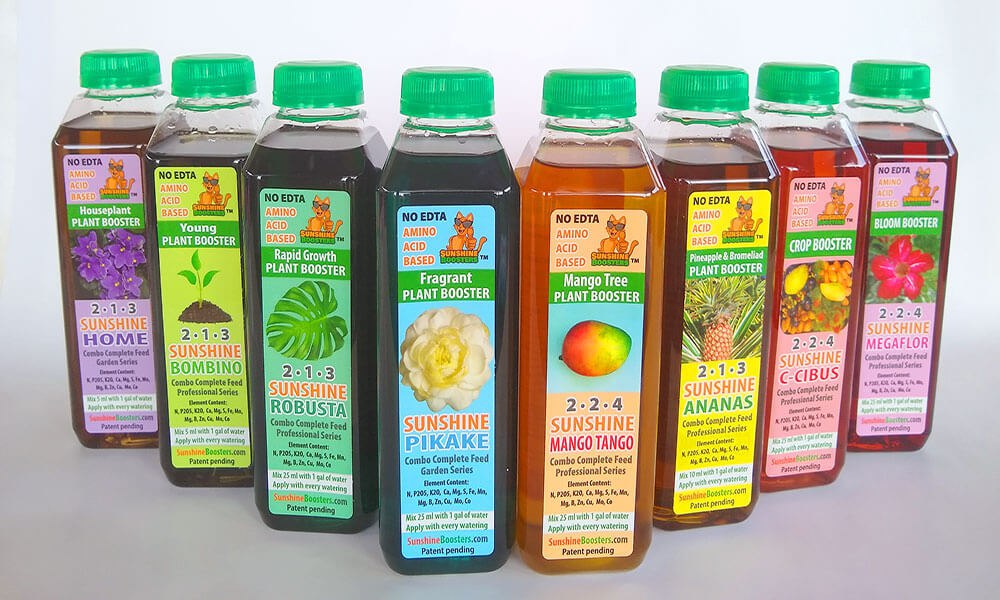
Sunshine Boosters - the everyday diet.
Sunshine Boosters are simple, balanced liquid fertilizers you mix with water. They give your plants everything they need for steady, healthy growth. They contain the right blend of nitrogen, phosphorus, potassium, and trace minerals. They do not contain harsh chemicals, so they are safe for homes with pets and kids. Regular use keeps plants growing faster, stronger, and more resilient to stress.

Sunshine Superfood - the vitamin supplement.
If a plant turns yellow or looks weak, it often needs micronutrients. These are the plant version of vitamins, including iron, zinc, copper, and manganese. Sunshine Superfood delivers these quickly and in the right proportions. Mix it with water and apply when you notice yellowing or slow growth. It corrects deficiencies fast and keeps leaves lush and green.

Green Magic - the long-term slow feeder.
Green Magic is a controlled-release fertilizer that works for six months. It uses poly-on coating technology to release nutrients slowly, without burning roots. It is perfect for repotting or for plant owners who want a set-it-and-forget-it option. Mix one teaspoon per gallon of soil during repotting or every six months. Excellent for container fruit trees and ornamentals that need steady feeding.

🌱 The simple routine

  • ▪️For regular watering: use Sunshine Boosters.
  • ▪️Once a month: add Sunshine Superfood to prevent yellowing.
  • ▪️Every six months: mix Green Magic into the soil for long-term support.

With the right diet, your house plants stay green, strong, and beautiful year-round. Feed them well, and they reward you every day.

📸 In the photo: Indoor garden of Marina Rybka, Israel, the Editor of TopTropicals.

🛒 Get your plants some food

📚 Learn more:
📱 What are Sunshine Boosters

#Fertilizers #How_to
🟢 Join 👉 TopTropicals

Date: 19 Jan 2021

Healthy Plants: Q&A from Mr Booster

Fertilizing in Winter

Q: I have many tropical plants in my garden, both in the ground and in pots. I realize it is wintertime and some of them, the Hydrangea, Hibiscuses, and roses are in bloom but the rest of them seem wilty and droopy. Is it alright to fertilize them now, or should I wait for a few days? I have an all purpose tropical fertilizer and a 20-20-20 also. Please advise what to do.

A: During wintertime, tropicals may suffer from low temperatures and lack of sunshine which causes droopy leaves, and leaf loss.
Regardless of the cause and plant condition, you should NEVER apply traditional dry fertilizers during cool months. When cold, dry fertilizers (EDTA-chelated) may create nutrient lock up in soil and damage the roots. Dry fertilizers (both granulated and water-soluble) can be used only during hot season - when min temperatures stay above 65F for at least a week in a row, and daytime temperatures are over 75-80F. During hot, active growth season plant metabolism increases. This provides less chance for a chemical root burn, as the nutrients are used up quickly.

However, liquid fertilizers, as long as they are amino-acid based, can be used year round. From our own experience last winter, we discovered that fertilizing sickly looking plants (with signs of cold damage and root issues) with Sunshine Boosters actually revived those plants. Sunshine Boosters even brought back to life some hopeless specimens. Take a look at this gardenia that grows in our garden (picture above). See full article.
In your case, it would be beneficial to use a mild formula of liquid boosters in combination with Sunshine Epi -a natural plant hormone that boost their growth and helps to cope with cold-, temperature- and low-light-related stress.

These are the products we recommend:
- Sunshine Bombino - add to every watering
- Sunshine Epi - twice a month as foliage spray

Since you grow plants in pots, feeding program is especially essential, because plants are limited with a container size where roots can't reach out to more food in the outer soil. In professional nursery set up with injector irrigation systems, container plants are fed daily (depending on season, more than once a day) with every watering. This is why greenhouse plants are so healthy looking.
So feel free to give your plants Sunshine boosters with every watering, dozing according to the label. During cold period, plants need less frequent watering, so fertilizer input will be balanced accordingly, it will depend on temperature and plant metabolism.

Sunshine Bombino - mild, "pampering" formula for young and tender plants, as well as plants recovering from stress and/or winter damage.

Date: 19 May 2016

Care of mail-order plants during hot summer

Q: I live in California and about a month ago ordered several plants from you, including fruit trees (Carambola, Mango, Avocado) and flowering trees (Xanthostemon, Adeniums, Champaca, Ylang Ylang). They were all doing well until I tried to move them into full sun, when they got leaf burn immediately. Ylang Ylang was doing great in a shade, but I repotted it from 1 gal into 3 gal and it is drooping leaves now. It has been very hot (over 100F) and dry (humidity is less than 25%). Any suggestions?

A: Hot summer can be pretty challenging time for establishing new plants. These are some guidelines to make your summer gardening more successful and rewarding.

1. You can order plants at any time, but keep your eye on your local weather forecast and try to chose cooler periods to schedule your plant shipments. Here at TopTropcals we monitor weather at destinations, and we can also delay shipment per your request until more favorable conditions.

2. During hot Summer months, many plants are still OK to ship, and to be planted, many species are heat tolerant. It's usually safe to ship most succulents, including Desert roses and Euphorbias. Some fruit trees are pretty easy too, like Loquats, Mango, Eugenias. Many flowering trees can take heat: Acacias, Clusias, Jatropha, Sausage Tree, Plumerias and many others. Check our full list of plants suitable for hot and dry conditions. Most jasmines, including Jasmine Sambac and Trachelospermum make also a safe choice for hot weather planting.

3. Use shade cloth or simply white sheets to protect young plants and new plantings from hot sun.

4. When establishing mail ordered plants during hot weather, keep them in shade for longer period of time than average recommended 1-2 weeks. Give them a chance to establish really well. In areas with low air humidity, try to create a simple mist system. It can be purchased in your local Home Depot for only $20 and set up takes only 10 minutes! It makes a big difference and can help you save many plants from hot weather stress.

5. Although it may seem that during hot weather plants need more water due to high evaporation, be careful with watering, and check soil with your finger before watering - don't water if it is still wet. Combination of "hot and wet" can be as harmful for the root system as "cold and wet" during winter. Protect root systems from overheating: covering black pots with white cloth will work. Remember when temperature is above 90F, most of plants slow down their metabolism, which means roots slow down or even stop pumping water and become more vulnerable to overwatering. For the same reason, do not hurry to step up into bigger container if roots haven't filled yet the existing pot.

Date: 5 Apr 2016

Jungle on Windowsill 101

Q: I got a Jasmine Sambac and a Tahitian gardenia as presents, they are very cute plants with flowers and flower buds. I would like to be able to keep them alive and hopefully happy for a long time, but I don't know much about growing tropical plants, and I am not sure if my thumb is green enough to make everything right. What do they need? How much sun? How much water? What kind of soil? Sorry for all these (maybe silly) questions, but I want to keep them alive, please help! I live in Wisconsin and we had some snow again last week.

A: Growing tropicals is not a hard work, it is a lot of fun! These plants are actually a good starters for a beginner who wants to try growing tropical plants, no matter if you live in a mild frost-free climate, or up North where you can have these beauties as houseplants. Below are a few simple steps for you:

1. Read. Follow planting instructions included with your plants. Check plant names on the tags and learn more about them from our online catalog.

2. Soil. Plant in quality potting mix - it must be porous and well-drained, never use heavy soils (top soil or garden soil are no-no), in a pot exactly the size of the root system. You can step up your plants in the next size container once you notice vigorous new growth. Next size means: 4" pot can go into 6" pot, 6" pot into 10" pot, etc. Too big of a pot may create rotting environment, root system must fill the entire container to use all the moisture from the soil. Container must have good hole(s) for excess water to drain through. Put the pot in a saucer and get rid of excess water every time after watering.

3. Light. Most tropical plants require lots of light in order to produce flowers. If you ever visited Florida, remember the bright sun? - these are ideal light conditions for tropicals. Up North, provide as much light as possible: a bright spot on a windowsill of Southern or Western exposure would work the best. If the sun gets too hot in summer afternoon, you may shade the window a little bit with a sheet of white paper to avoid leaf burn.

4. Water. Keep soil slightly moist but not soggy. The best way is to wait until the top of the soil feels dry to touch - this is time to water again. Jasmines prefer to stay on a dry side; gardenias do not like soil to dry out - keep them slightly moist as long as soil is very porous and well-drained. The main reason of most problems with potted indoor plants is over watering. With experience, you will feel the right balance of moisture in the soil: the brighter the light, the more water is consumed by a plant; the less light, the less frequent you should water.

5. Trimming. In low light conditions, plants tend to become leggy. Trim branches as they become too long: the more you trim, the busier the plant gets. New growth promotes more profuse blooming in many species.

6. Fertilizing. Fertilize indoor plants with slow-release granulated fertilizer from march to November.

7. Insects. Check for insects at least once a month, especially underneath the leaf. If notice any problems (deformed leaves, residue, holes, or tiny insects) - clean the leaves/stems with a solution of warm water (1 cup), vegetable oil (2 table spoons), and a few drops of a dish soap.

8. Fresh air and air humidity. As soon as air temperature gets above 65F, bring your tropicals outside in the sun and fresh air: porch, balcony, outside in the yard. Air circulation is essential for your plant health. Bright light and high air humidity will promote vigorous growth, and lots of flowers for you to enjoy!

For more information on growing Tropical Plants 101, see Problem solving with potted plants - how can we help them?.