Date: 26 Jul 2020
The best grafted Loquat varieties
at 15% OFF for 3 days!
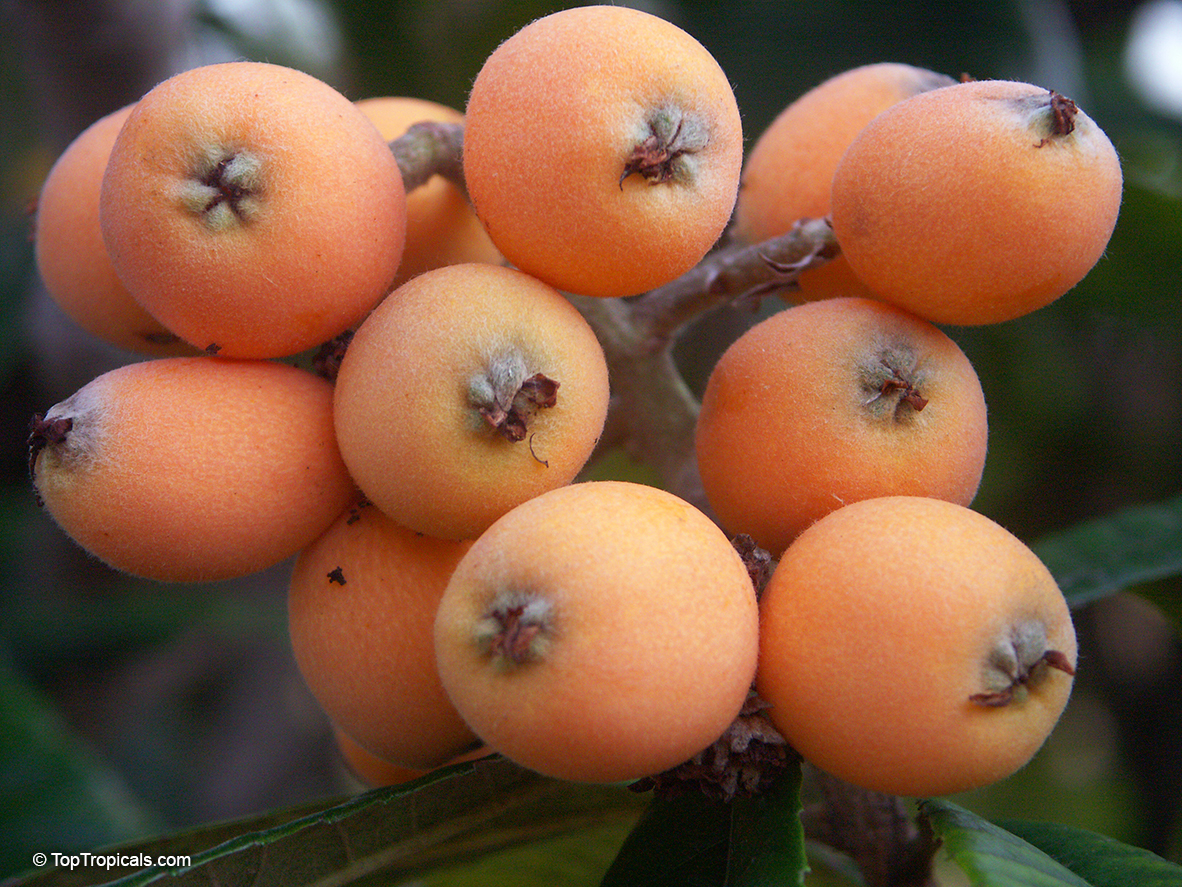
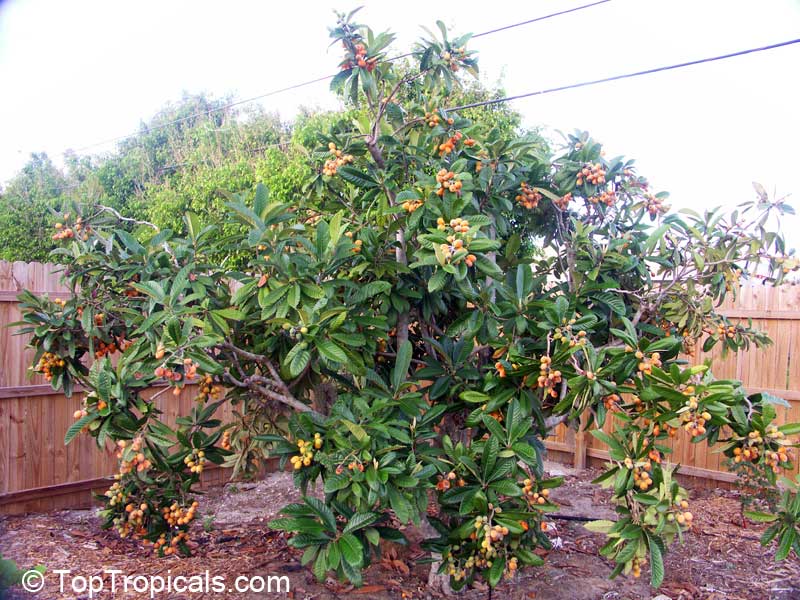
Q: I have a nice Loquat tree started from seed. I understand it will not bear fruit unless grafted. Can you graft the tree in your nursery? If this is not possible let me know the cost of Loquat tree and I buy it from your nursery.
A: From our experience, Loquat trees grown from seed bear fruit
much sooner (within 5-6 years) than seedlings of such trees as Mango and
Avocado (8-15 years). Also, unlike Mango and Avocado, the fruit quality of a
Loquat seedling is usually not too bad. However, in order to have a tree with a
superior fruit, it is recommended to plant grafted variety for a guaranteed
tasty crop. If your seedling is already a large plant (with a trunk diameter
over 5 mm), it may be too late to graft it, because quality graft requires fresh
wood.
If you have plenty of room in your yard with enough space for both grafted
tree and a seedling, you may still plant the seedling in the ground and give
it a chance to produce in a few years. If your garden space is limited, we
recommend you to plant a grafted variety and enjoy fruit as soon as the next
year.
The most popular grafted Loquat varieties, heavy
producers:
Champagne
Christmas
Gold
Nugget
Yehuda
SALE: 15% OFF now, no min. order!
- $20% OFF discount code PARENTS2020 for orders over
$200
- 5% automatically off all orders over $100
= make it a steal!
Offer expires 7-28-20
If you are local, stop by our Garden Center and we will pick the biggest
and the best tree for you. Or just order online and get it in just a few
days to your doorstep!
See full list of Loquat varieties available at the moment.

Date: 15 May 2020
Harvesting from a young mango tree
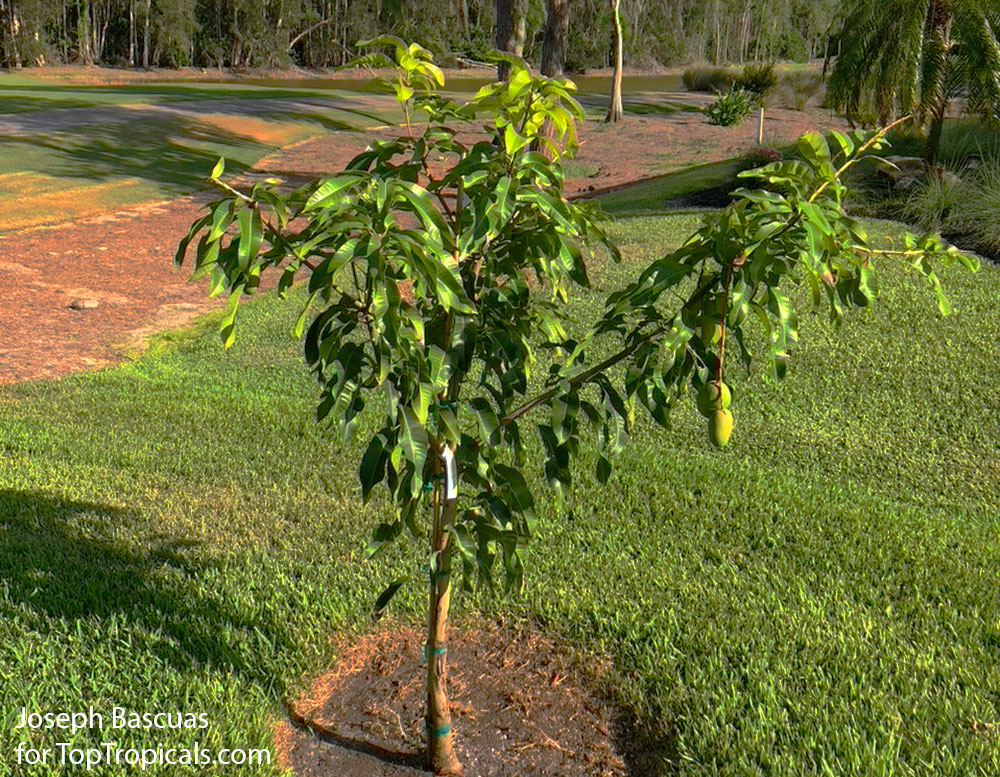
Q: About a year ago we bought a mango tree from you folks and planted it in our backyard in Estero. It has done well. It now has several mangoes and I am wondering if the tree is strong enough to support the fruit or if I should just cut off the fruit and wait until next year when the tree is a bit stronger. I am attaching some pictures. I am most concerned about the branch on the right which seems to be sagging. If you do not suggest that I cut off the fruit, can I wait until they ripen on the tree and eat them. They seem to be a bit on the small side for eating.
A: Your mango tree looks very healthy and happy, congratulation with a great job! For young mango trees, it is always recommended to minimize a number of fruit to 2-3 so
the tree has enough energy for vegetative growth rather than fruiting.
In your case, as we can see from the pictures, your tree is very well
established, has a strong root system, nice symmetrical shape, and vigorous new growth. In our opinion, you can save all
these fruit and let them ripen on the tree.
To support the plant's energy, make sure to fertilize it during summer with slow-release Mango Food, and year around - with Mango Tango booster. Use Sunshine Honey
supplement for sweeter fruit.
Secure the heavy fruit branch with a v-shape stake (a big branch may work), it can definitely use the support otherwise may break
under strong Florida winds.
You are all set to enjoy your first crop and be rewarded with fruit of your excellent work!
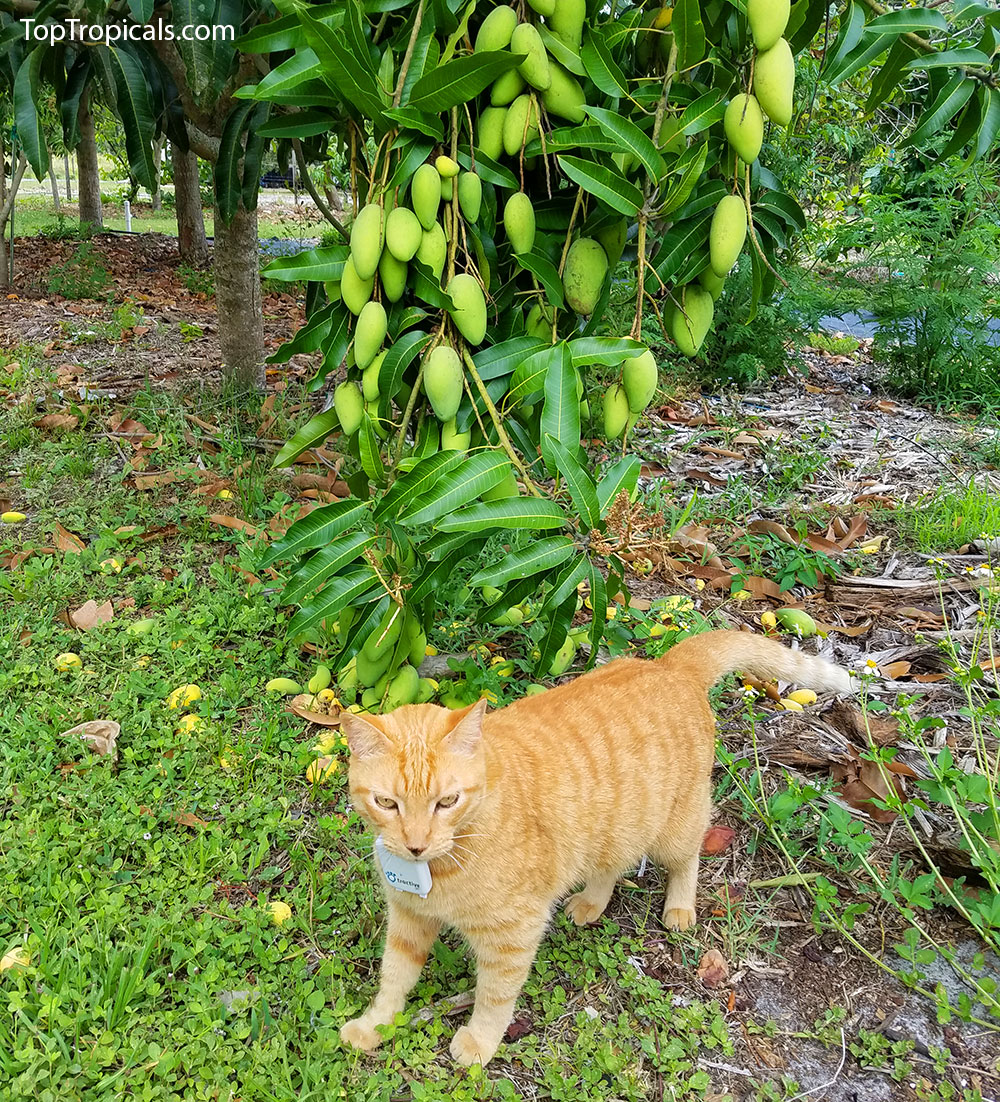
In the photo above: Mr B is harvesting Mango Pim Seng Mun after his successful Sunshine Boosters
Date: 4 Nov 2019
Hardy Plumeria Pudica
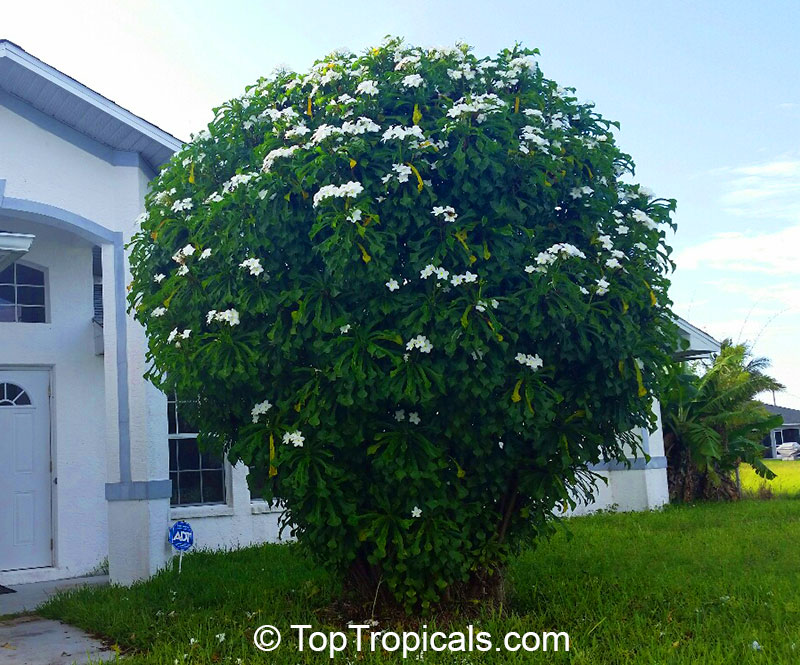
Q: I have ordered plumeria pudica from you in March and it is thriving really well here in Rancho Cordova, California. The current temperatures are ranging from 68 to 32 degrees Fahrenheit. My USDA zone is 9b. Does this plumeria pudica survive outside with temperatures dropping in coming winter in CA?
A: From our experience, Plumeria pudica is pretty cold hardy and takes some cold spells in
spite of being a tropical species.
Our trees (well-established) took a few hours of freeze with no
significant damage.
Potted plants are less hardy than in-ground plants. However, their
advantage is, they are easy to move indoors or inside warmer place like garage,
etc. If the temperature stays borderline around 32F for a few hours, the plant
should be safe as long as warm day temperatures follow a cold night. For
longer periods of cold, move the plant inside.
Make sure do not overwater and keep Plumeria on a dry side during
winter, since cold and wet is a bad combination and may cause root problems.
Above is the picture of Plumeria pudica tree growing in Cape Coral, FL
where low temperatures in winter sometimes go down to upper 20's for a few
hours.
To improve cold hardiness of Plumerias and other tropical plants, use SUNSHINE-Epi-T for plant thermal protection and immune system boost.
Make sure to fertilize plants on regular basis to keep them strong and
vigorous. The stronger and bigger the plant, the hardier it is!
RECOMMENDED FERTILIZERS:
Plumeria Top Dress - Smart-Release Booster
Pink N Good Daily Plant Food - Flower Booster
Tropical Allure - Smart-Release Booster

Date: 7 Oct 2019
Fertilizing in Winter?
Q: I'm a bit confused about what winter fertilization schedule I should follow in South Florida. For blooming plants, usually, I use a monthly granular bloom booster fertilizer as well as a liquid fertilizer every 10 days or so. Should I continue that schedule in the winter as well? Should I stop fertilizing altogether in the winter? How about fruit trees? What fertilization schedule should I follow in the winter?
A: Here is a general fertilizing schedule for established plants that we follow here
in SW Florida.
The rule of thumb is, do not fertilize (with macro- NPK elements) when
minimum temperatures drop below 65F and stay at that level for more than 7
days. At this temperature point, most of the tropical and subtropical plants
slow down their metabolism and some of them going into dormancy. This means,
nutrients are not consumed as much as during active growth period, and built-up
nutrient supply within a plant plus whatever is available in the soil is
just enough to get by through the winter. So additional fertilizing is not
necessary. You may continue micro-element supplements and bio-stimulants
throughout the year. In fact, it is highly recommended to do so, to help the plant
survive cold spells. These are very effective tropical plant protectors:
SUNSHINE-Epi - Brassinosteroid plant hormone
SUNSHINE-Power-Si - Advanced plant protector with Silicon
SUNSHINE SuperFood - Complex microelement supplement
This rule is applied to both flowering and fruiting plants, in general. However, some species are winter-flowering and winter-fruiting. For those, you can make an exception and provide extra nutrients for flowering and fruiting, as long as the weather stays warm. During cold spells, avoid any NPK fertilizers and use only bio-stimulants and micro-elements. If you apply NPK during cold, it won't be consumed by a plant, build up in the soil, and may create a root burn situation.
In simple words, fertilize from March to October. Give plants some rest from November to February.
Date: 21 Sep 2019
Shaping a tree and regrowing branches
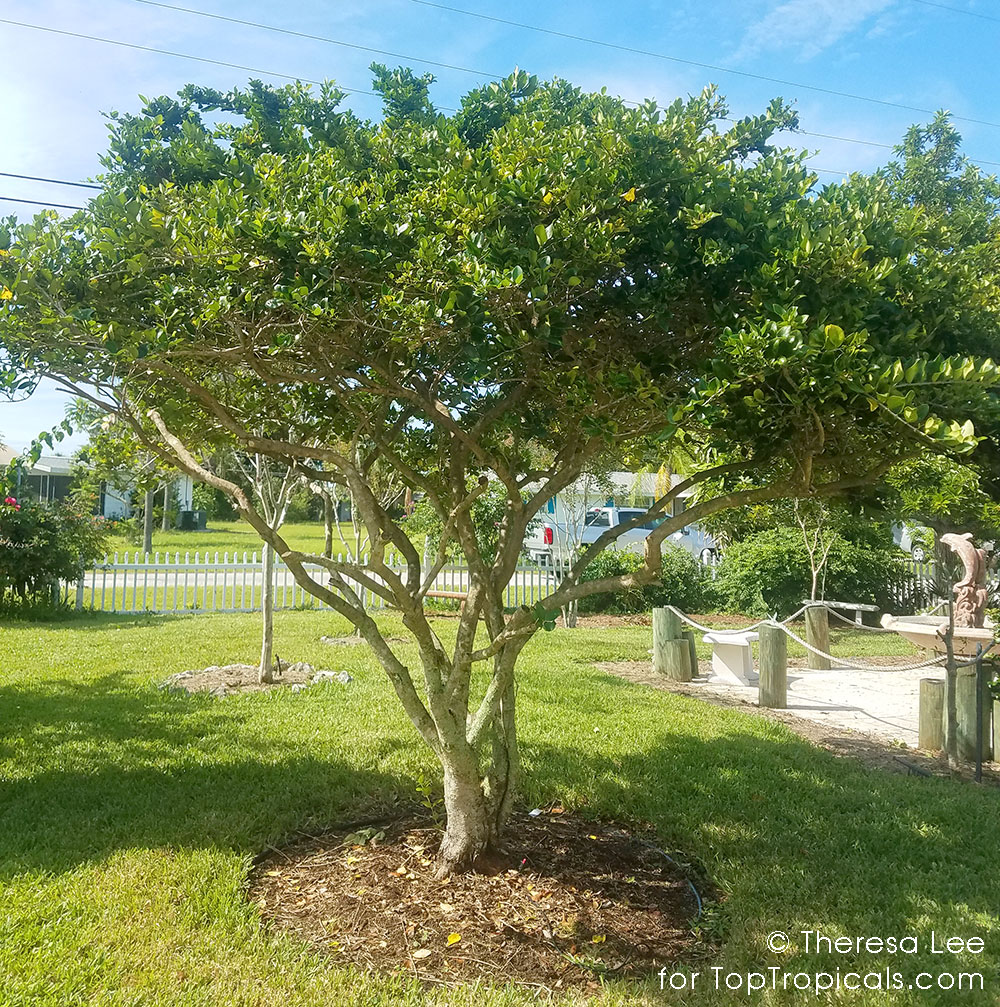
Q: I have been so worried about the beautiful ligustrum on my property since my husband decided to "prune" it 2 days ago. He removed about 20 branches from the tree and completely altered the look of the canopy which was so full and lovely ðŸ˜. Please advise me if there is anything I can do to help this tree. Will any of the branches grow back? Will the canopy return? It looks practically bare to me now.... so heartbroken. Any advice and reassuring would be greatly appreciated.
A: The good news is, the tree will regrow new leaves and will
branch out. The question is, how soon. Ligustrum is pretty slow-growing species
and it may take a while until it gets to the shape that is close to the
original.
On the other hand, pruning is beneficial almost for every plant, it
promotes new growth and bushy shape.
So do not panic, your beautiful tree has good chances to become even
prettier.
To speed up the process of re-leafing and promote healthy new growth,
we recommend the following:
1) Provide extra watering, assuming you have a sprinkler system that covers the yard. Water additionally 1-2 times a week using a garden house, for 1-2 minutes, saturating the soil around the tree and up to a drip line.
2) Apply the following fertilizers:
Tropical Greenhouse Plus - Foliage Booster
Tropical Allure - Smart-Release Booster
3) In addition to fertilizers, we recommend these 2 supplements that
will enhance effect of fertilizers and make re-grow process even faster:
SUNSHINEâ„¢ SuperFood
SUNSHINEâ„¢ HumiHum - a natural humate vitamin for plant
4) Mulch well around the tree, keeping it 2-3"away from the trunk
This should help to get your tree back in shape!