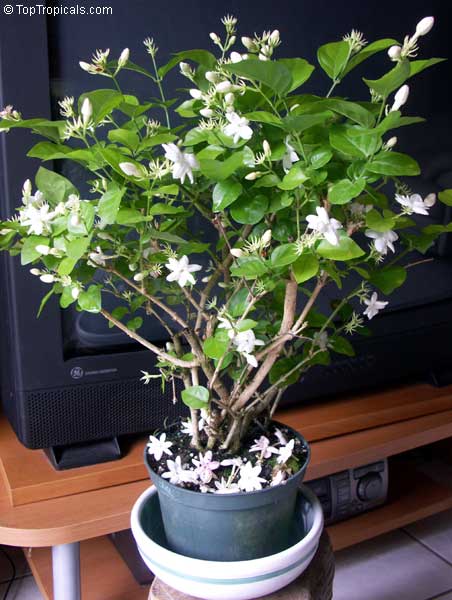
Q: I got a Jasmine Sambac and a Tahitian gardenia as presents, they are very cute plants with flowers and flower buds. I would like to be able to keep them alive and hopefully happy for a long time, but I don't know much about growing tropical plants, and I am not sure if my thumb is green enough to make everything right. What do they need? How much sun? How much water? What kind of soil? Sorry for all these (maybe silly) questions, but I want to keep them alive, please help! I live in Wisconsin and we had some snow again last week.
A: Growing tropicals is not a hard work, it is a lot of fun! These plants are actually a good starters for a beginner who wants to try growing tropical plants, no matter if you live in a mild frost-free climate, or up North where you can have these beauties as houseplants. Below are a few simple steps for you:
1. Read. Follow planting instructions included with your plants. Check plant names on the tags and learn more about them from our online catalog.
2. Soil. Plant in quality potting mix - it must be porous and well-drained, never use heavy soils (top soil or garden soil are no-no), in a pot exactly the size of the root system. You can step up your plants in the next size container once you notice vigorous new growth. Next size means: 4"pot can go into 6" pot, 6"pot into 10" pot, etc. Too big of a pot may create rotting environment, root system must fill the entire container to use all the moisture from the soil. Container must have good hole(s) for excess water to drain through. Put the pot in a saucer and get rid of excess water every time after watering.
3. Light. Most tropical plants require lots of light in order to produce flowers. If you ever visited Florida, remember the bright sun? - these are ideal light conditions for tropicals. Up North, provide as much light as possible: a bright spot on a windowsill of Southern or Western exposure would work the best. If the sun gets too hot in summer afternoon, you may shade the window a little bit with a sheet of white paper to avoid leaf burn.
4. Water. Keep soil slightly moist but not soggy. The best way is to wait until the top of the soil feels dry to touch - this is time to water again. Jasmines prefer to stay on a dry side; gardenias do not like soil to dry out - keep them slightly moist as long as soil is very porous and well-drained.
The main reason of most problems with potted indoor plants is over watering. With experience, you will feel the right balance of moisture in the soil: the brighter the light, the more water is consumed by a plant; the less light, the less frequent you should water.
5. Trimming. In low light conditions, plants tend to become leggy. Trim branches as they become too long: the more you trim, the busier the plant gets. New growth promotes more profuse blooming in many species.
7. Insects. Check for insects at least once a month, especially underneath the leaf. If notice any problems (deformed leaves, residue, holes, or tiny insects) - clean the leaves/stems with a solution of warm water (1 cup), vegetable oil (2 table spoons), and a few drops of a dish soap.
8. Fresh air and air humidity. As soon as air temperature gets above 65F, bring your tropicals outside in the sun and fresh air: porch, balcony, outside in the yard. Air circulation is essential for your plant health. Bright light and high air humidity will promote vigorous growth, and lots of flowers for you to enjoy!
If your plants look stressed, slow, or inconsistent, the issue might not be your care - it might be how you're feeding them. Most fertilizers are harder to use than they should be. Once you understand why, everything starts to make sense.
Why fertilizers are so confusing?
If you've ever stood in front of a shelf full of fertilizers thinking "what do I even pick?" - you're not alone. Most feeding programs are a mess. Different brands, different formulas, different schedules. One for growth, one for bloom, one for micros, one more "just in case". And somehow it still feels like guesswork. Easy to overfeed. Easy to underfeed. Easy to waste money. That's exactly the problem Sunshine Boosters were built to solve. The formulas are balanced and mild, so you can use them regularly without stressing about mistakes. Now here's where it gets interesting.
The problem with traditional fertilizers
Most traditional fertilizers weren't made for how we actually grow plants today. Dry fertilizers are built for large field use. They often carry excess salts and don't work well in containers or soilless mixes. Many don't even include enough trace elements. And over time, they can build up in the soil. Sunshine Boosters works differently.
Why liquid feeding wins
First - it's liquid. Plants don't eat nutrients, they drink them. Liquid feeding means nutrients are available right away. Every watering becomes feeding. No waiting, no uneven supply.
Amino-acid chelation - the real difference
Second - the way nutrients are delivered is completely different. Most fertilizers use synthetic chelators like EDTA. They keep nutrients stable, but plants have to spend energy to use them. Sunshine Boosters use amino-acid chelation instead. That means nutrients come in a form plants already recognize and use naturally. Less effort for the plant, more energy for growth, flowers, and fruit. And there's no salt buildup over time.
Low salt index - better water uptake
Speaking of salts - this is a big one. High salt levels in fertilizers actually make it harder for plants to absorb water. That's why plants can look stressed even when the soil is wet. Sunshine Boosters has a low salt index. Less resistance, better water flow into the roots, better hydration, stronger plants.
Faster growth without the risk
Put it all together and you get faster growth, stronger structure, more flowers and fruit - without the usual risk of burning or overdoing it. Because the nutrient levels are balanced and not overly concentrated, they do not affect the natural taste of fruits and edibles. The products are also safe for regular use and friendly to pollinating insects, which is important for fruit production.
Feeding made simple
And the best part? It's simple. Mix Sunshine Boosters with water. Use it when you water. That's it.
Stay with us - next we'll break down how different formulas match different plant needs, so you can get even better results. More... Get your plants real food
What tropical plants survived Floridas historic freeze without protection
Florida historic freeze
What tropical plants survived Florida's historic freeze without protection
In the first week of February 2026, arctic air pushed deep into Florida. For many areas, this was the coldest event in over a century.
We received one question over and over: How did your gardens do?
Top Tropicals Farm in Sebring, Florida is up and running - and this freeze became a real-world hardiness test for tropical and subtropical plants. Below is our initial field report after inspecting established plantings.
📊 Weather data - February 1-6, 2026
Sebring, Florida - 132 years of recorded observations
This was not a light frost. It was prolonged, windy, penetrating hard freeze.
🌡 Minimum temperature: 25F ❄️ Wind chill: 14F ⏳ Duration: 3 nights of 8-10 hour hard freeze ☀️ Daytime temperatures: around 50F for 7 days 🌀 Wind: sustained 20 mph, gusts 40-50 mph
Cold protection
In-ground trees: selected plants covered with frost cloth, especially
Mango Plant Facts
Botanical name: Mangifera indica Also known as: Mango
USDA Zone: 9 - 11
Highligths
mango and young
Avocado Plant Facts
Botanical name: Persea americana, Persea gratissima Also known as: Avocado, Alligator Pear, Aguacate, Abacate
USDA Zone: 9 - 11
Highligths
avocado trees. Tender container plants: moved into greenhouses with propane heat above 34F. Hardy container plants: frost cloth and wind protection only - no plastic Nutrition support: plants fertilized regularly during the growing season with Green Magic and Sunshine Boosters to maintain vigor and hardiness.
However, the plants listed below had no protection at all.
All were established trees 2-3 years in the ground.
The plants below had NO PROTECTION, established trees 2-3 years old
Botanical name: Psidium cattleyanum, Psidium littorale Also known as: Cattley Guava, Sand Plum, Strawberry Guava
USDA Zone: 9 - 11
Highligths
Eugenias (Grumichama, Rio Grande, Surinam and more)
Olive trees
Bay Leaf (Laurus nobilis)
Fig trees (Ficus carica)
Prunus sp - Peaches, Plums, Nectarines
Persimmons
Rubus (Blackberries) including Tropical Mysore Raspberry
Elderberry (Sambucus)
Yerba Mate - Ilex paraguariensis
Opuntia - Nopal Cactus, Prickly Pear
🌸 Flowering Trees and Shrubs:
Beaucarnea recurvata - Pony Tail
Ponytail Palm Plant Facts
Botanical name: Beaucarnea recurvata, Nolina recurvata Also known as: Ponytail Palm, Pony Tail, Bottle Palm, Nolina, Elephant-foot Tree
USDA Zone: 10 - 11
Highligths
Callistemon - Bottlebrush
Yucca
Tabebuias
Magnolia figo and Little Gem
Banana Magnolia Plant Facts
Botanical name: Magnolia figo, Michelia figo, Magnolia fuscata Also known as: Banana Magnolia, Banana Shrub, Port Wine Magnolia
USDA Zone: 7 - 10
Highligths
Calliandra tweedii - Red Powderpuff
Sophora tomentosa
Yellow Necklace Pod Plant Facts
Botanical name: Sophora tomentosa Also known as: Yellow Necklace Pod, Silverbush
USDA Zone: 8 - 11
Highligths
Galphimia gracillis - Thriallis
Thriallis Plant Facts
Botanical name: Galphimia gracillis, Galphimia gracilis, Galphimia glauca Also known as: Thriallis, Rain of Gold, Spray of Gold
USDA Zone: 9 - 11
Highligths
Acacia trees
Osmanthus fragrans
Tea Olive Plant Facts
Botanical name: Osmanthus fragrans, Olea fragrans, Olea ovalis, Osmanthus longibracteatus, Osmanthus macrocarpus Also known as: Tea Olive, Fragrant Olive, Sweet Olive, Kinmokusei in Japan
USDA Zone: 8 - 11
Highligths
Abutilon trees
Erythrina - several species
Monkey Ear tree - Enterolobium cyclocarpum
Bauhinia Orchid Trees - several species
Pseudobombax ellipticum - Shaving Brush Tree
Shaving Brush Tree Plant Facts
Botanical name: Pseudobombax ellipticum, Bombax ellipticum Also known as: Shaving Brush Tree
USDA Zone: 9 - 11
Highligths
Bulnesia arborea- Vera Wood
Vera Plant Facts
Botanical name: Bulnesia arborea Also known as: Vera, Verawood, Vera Wood, Maracaibo Lignum Vitae
USDA Zone: 10 - 12
Highligths
Caesalpinia mexicana, Mexican Bird of Paradise
Mexican Bird of Paradise Plant Facts
Botanical name: Caesalpinia mexicana Also known as: Mexican Bird of Paradise, Dwarf Poinciana
USDA Zone: 9 - 11
Highligths
Sansevieria - Snake Plant
Foxtail fern - Asparagus densiflorus
Lonicera - several varieties
Jacaranda tree
Eucalyptus
Plumbago Imperial Blue
Philodendron bipinnatum
Gardenias
Gingers (dormant rhizomes)
✳️ Minimal leaf damage only:
(These plants showed light cosmetic damage but no structural injury)
🍑 Tropical Fruit Trees and Edibles:
Glycosmis pentaphylla - Gin Berry
Ash sheora Plant Facts
Botanical name: Glycosmis pentaphylla, Limonia pentaphylla Also known as: Ash sheora, Orangeberry, Rum Berry, Gin Berry
USDA Zone: 9 - 10
Highligths
Black sapote tree
Tamarind tree
Syzygiums: Rose Apple and Java Plum
🌸 Flowering Trees and Shrubs:
Pandora vine
Jasminum - several species
Stenocarpus sinuatus - Firewheel Tree
Firewheel Tree Plant Facts
Botanical name: Stenocarpus sinuatus Also known as: Firewheel Tree
USDA Zone: 9 - 11
Highligths
Xanthostemon
Quisqualis indica
Rangoon Creeper Plant Facts
Botanical name: Combretum indicum, Quisqualis indica Also known as: Rangoon Creeper, Burma Creeper, Chinese Honeysuckle
USDA Zone: 10 - 11
Highligths
Schotia tree
Eranthemum pulchellum - Blue Sage
Blue sage Plant Facts
Botanical name: Eranthemum pulchellum, Eranthemum nervosum Also known as: Blue sage, Blue eranthemum, Lead Flower
USDA Zone: 9 - 11
Highligths
Hiptage benghalensis - Helicopter Flower
Hiptage Plant Facts
Botanical name: Hiptage benghalensis, Hyptage bengalensis Also known as: Hiptage, Helicopter Flower
USDA Zone: 9 - 10
Highligths
🏡 What this means for Florida gardeners
This freeze was a stress test few gardens are prepared for. Yet many species handled 25F, wind, and multi-night freeze conditions without protection.
Choosing proven survivors, planting in smart microclimates, and maintaining strong plant health during the growing season makes a measurable difference.
More updates will follow as full recovery continues - but these early results already help define a stronger plant palette for future winters.
Smokey: Desert rose. One caudex. Multiple grafts. Different flowers. Sunshine: So it is a team plant. Everyone blooms, nobody agrees. Smokey: Yet it grows just fine. Sunshine: That is the secret. Coffee and donuts.
Adenium Plant Facts
Botanical name: Adenium sp. Also known as: Adenium, Desert Rose, Impala Lily
USDA Zone: 9 - 10
Highligths
🌸Featured Adeniums
Recommended by our Horticulturist, Tatiana Anderson
Moung Kusuma
Deep magenta flowers with a velvety look and a darker, almost black edge. A bold, elegant adenium that stands out immediately.
Sunshine
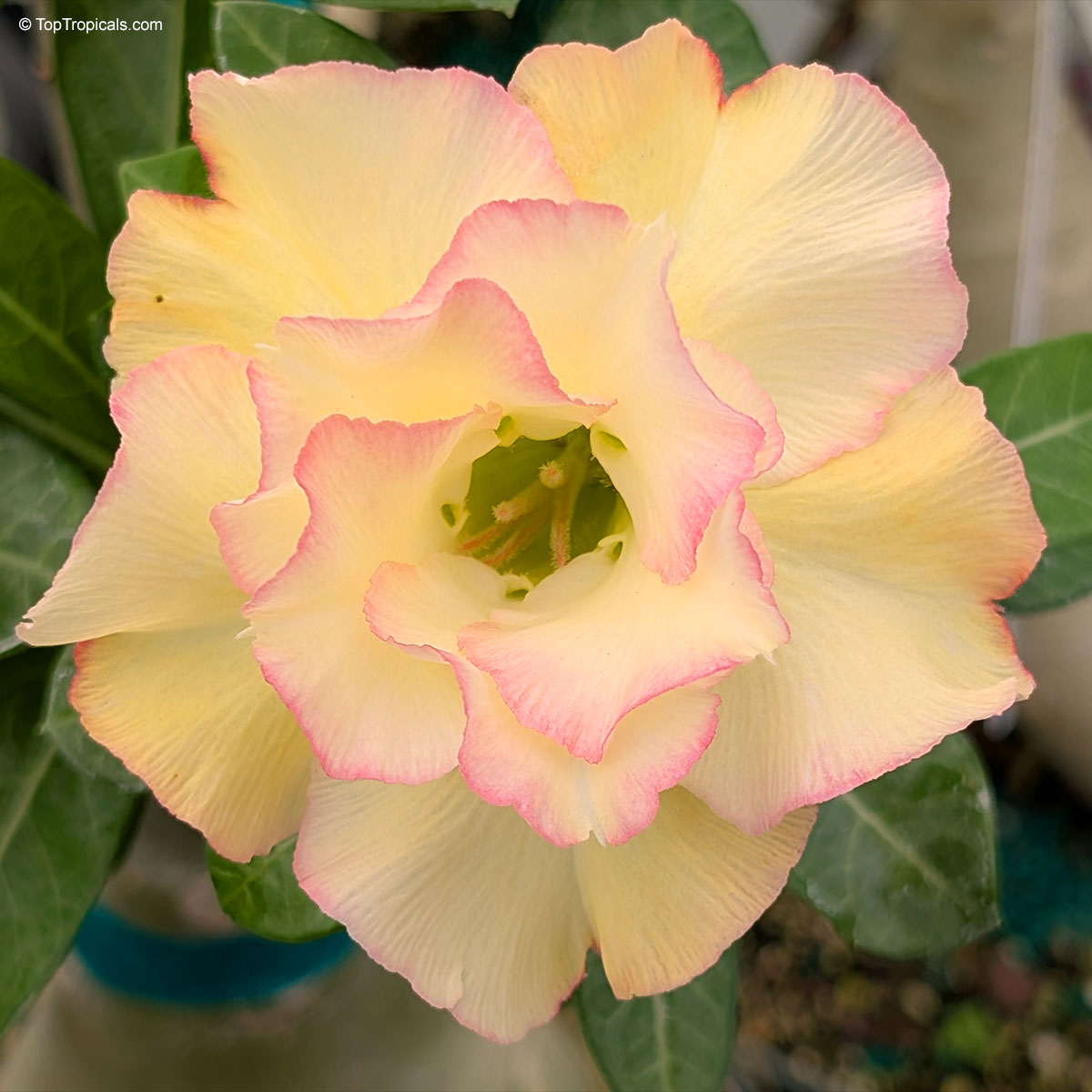
Bright yellow and mauve swirls across layered petals create a warm, cheerful bloom that lives up to its name.
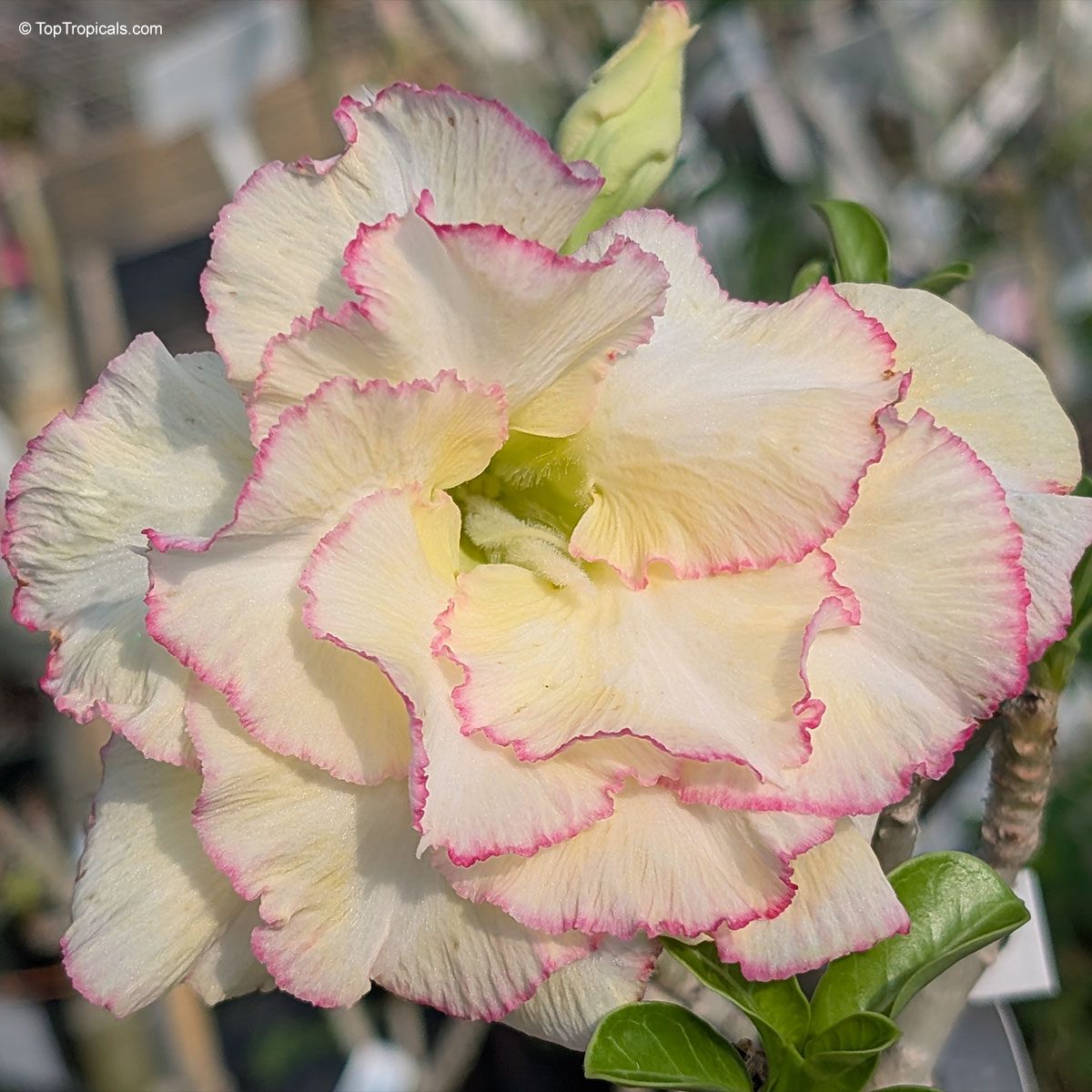
White RabbitClean white petals brushed with playful pink streaks. A reliable bloomer with soft ruffled flowers.
Thong Samsee
Known for its three-color effect, shifting from yellow to pink to nearly white on the same plant.
Candy
Cheerful yellow petals dipped in cherry red with bold ruffled layers. Bright, playful, and impossible to miss.
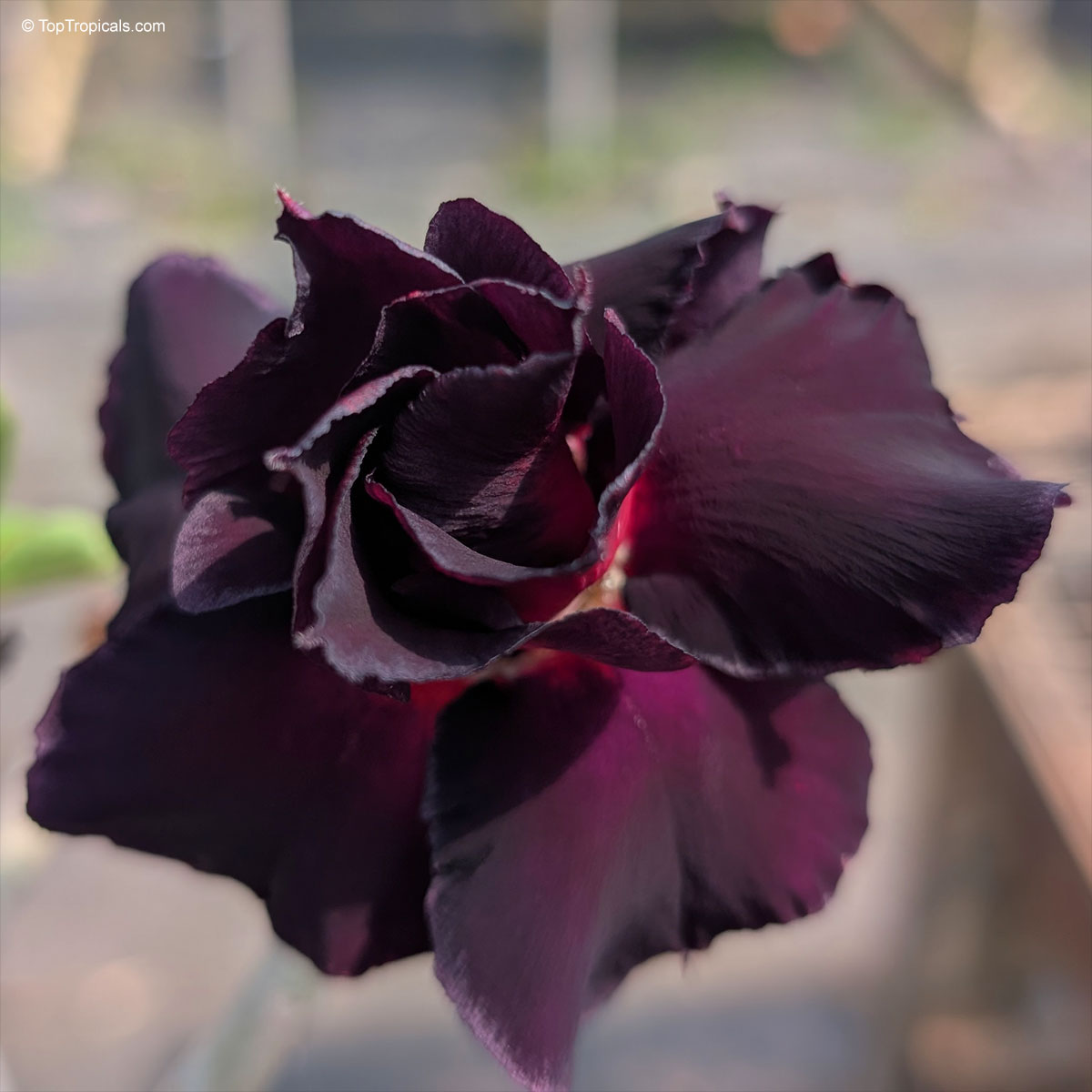
Black Sheep
Nearly black petals with a glowing red center. Dark, dramatic, and different.
Free Adenium (Desert Rose) Shipping
Plant now, bloom soon. Get select Adenium (Desert Rose) varieties shipped to you with FREE S&H.
Offer valid through 02/06/2026. Limited quantities. While supplies last.
Free shipping applies to qualifying Adenium items only. Excludes other items and prior orders.
10 common mistakes to avoid with mail order plants
⚠️ 10 common mistakes to avoid with mail order plants
⁉️ Q:How to get happy and healthy plants from mail order? Will they survive the trip and grow well after transportation? What mistakes should I avoid?
✅ A: At Top Tropicals, we have over 20 years of experience shipping plants. We know how to pack them properly and ensure the safest journey possible. We ship the biggest and healthiest plants, and our customers are often amazed at how great they look after a few days in a dark box. But receiving a healthy plant is only half the adventure. Now that the plant is in your hands, it's up to you to keep it thriving. The first couple of weeks after shipping are critical. With the right care, your new plant can reward you with beautiful flowers and fruit for years to come. Here are 10 common mistakes to avoid when buying plants by mail order.
⏺1. Not unpacking plants immediately Leaving plants in the box too long can cause stress or damage. Unpack them as soon as they arrive to let them breathe and adjust.
⏺2. Ignoring acclimation Plants need time to adjust to their new environment. Don't place them in full sun or extreme conditions (heat, wind) right away.
⏺3. Overwatering right after arrival Many people water their new plants too much. Plants often need time to recover from transit, and too much water can cause root rot.
⏺4. Stepping up too soon Repotting immediately in a large pot can cause root rot. Plant in a pot just the size of a root ball, step up only after the plant is showing new growth.
⏺5. Ignoring the plant's needs Research the specific needs of your plant before it arrives. Light, water, and soil requirements vary greatly, and misunderstanding them can lead to issues.