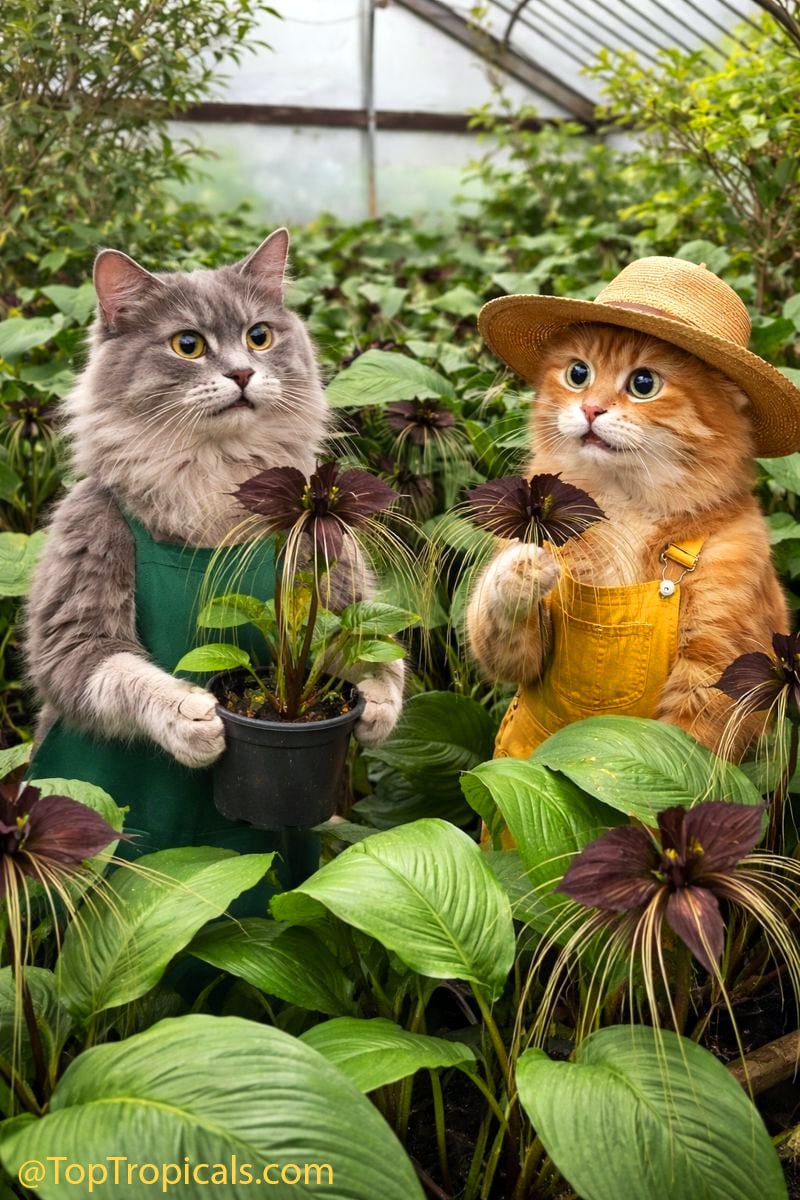
That’s probably the real evolutionary secret no botanist will admit! Those whiskers? Pure marketing genius from nature.
Cats had it figured out first — look mysterious, add long elegant whiskers, and everyone falls in love.
Tacca just took notes and said, “Alright, I can work with that!”
Continue reading: Tacca wants to be a cat! - and everyone loves cats!
Watch how to squeeze natural shampoo from the Ginger!
Shampoo Ginger, Zingiber zerumbet, Pine Cone Ginger
💄 Watch how to squeeze natural shampoo from the Ginger!
🎆 Shampoo ginger uses and fragrance
Shampoo Ginger, also known as Zingiber zerumbet or Pine Cone Ginger, is one of those plants that sounds too good to be true - but isn’t. This tropical ginger has been used for centuries not just as an ornamental plant, but as a practical, fragrant, everyday resource.
Pine Cone Ginger Plant Facts
Botanical name: Zingiber zerumbet Also known as: Pine Cone Ginger, Shampoo Ginger
USDA Zone: 8 - 10
Highligths
🎆 Natural shampoo from a flower cone
The most famous use of shampoo ginger comes from its bright red, pine cone-shaped flower bracts. When the cones mature, they fill with a milky, slippery liquid. Simply squeezing the cone releases this natural cleanser, traditionally used as shampoo in Asia and Hawaii. It gently cleans hair, leaves it soft, and adds a light, fresh scent. Even today, extracts of shampoo ginger are still used in commercial shampoos and hair products.
🎆 Fragrance throughout the entire plant
Shampoo ginger isn’t just useful - it smells amazing. The leaves, stems, and cones all carry a warm, spicy fragrance typical of true gingers. The scent is fresh and clean, with earthy and slightly citrusy notes. Because of this, the plant has also been used in traditional body rinses, hair treatments, and natural perfumes.
🎆 More than hair care
Beyond shampoo, the cones are popular as long-lasting cut flowers, often used in tropical floral arrangements. The plant itself grows into a lush, leafy clump that adds strong tropical character to gardens, especially in warm, humid climates.
🎆 A plant with a traveling history
Shampoo ginger is also known as a “canoe plant.” Ancient Polynesian voyagers intentionally carried it across the Pacific as they settled new islands. Its usefulness, fragrance, and beauty made it valuable enough to earn a place on long ocean journeys.
Shampoo ginger is a rare mix of beauty, history, fragrance, and function - a plant that proves some of the most interesting garden plants are also the most practical.
Our coffee trees, Coffea arabica, are growing in 7-gallon pots, and after months of waiting, the cherries are fully ripe!
They bloomed in May, set fruit in August, and now in winter the fruit has turned red and ready to harvest.
Coffee is one of the easiest fruiting plants you can grow at home. It does well in containers, loves shade, and can be grown indoors or outdoors in warm climates. With regular watering and a little patience, you can grow, harvest, roast, and brew your own coffee right from your home garden.
We are harvesting now, and the next video will show the full roasting process step by step.
👉 Coming up next: Roasting video coming soon - stay with us!
New way to grow Vanilla Orchid, and a wise message at the end
Vanilla planifolia - Vanilla Bean Orchid
🎆 New way to grow Vanilla Orchid, and a wise message at the end
✨ Vanilla planifolia - Vanilla Bean Orchid (they call it also Madagascar, Bourbon, or French Vanilla) discovered a new set up!
✨ I gave this vanilla orchid as a tiny plant last year: "Bathroom with a skylight, add trellis" - classic vanilla advice.
✨ Fast forward to this Christmas - and this thing has gone rogue! It climbed out of the bathroom, marched down the hallway, and claimed the concrete wall by the front door. And yes, it looks very happy doing it!
✨ Every visitor stops. Every visitor stares. And then they notice the sign underneath. Turns out vanilla orchids are excellent at pointing things out.
✨ If you’ve ever wondered where vanilla really wants to grow… this one has opinions. Add something unexpected to your garden - or your house.
The secret New Deal Franklin Roosevelt never told you about
🌸 The secret New Deal Franklin Roosevelt never told you about
🌸 Schlumbergera x New Dealis not your regular Christmas cactus. Big blooms, long history. This heirloom flowers from Thanksgiving to Easter and descends from a plant first sold on the very day Franklin Delano Roosevelt was elected. This variety actually vanished from the trade for decades. Its first known appearance was at a rare plant sale at the Brooklyn Botanic Garden on November 8, 1932 - the exact day Franklin Roosevelt won the presidency and launched the famous New Deal. The name stuck, and so did the legend!
🌸 What makes New Deal so special? The blooms are huge - about an inch larger than standard holiday cactus flowers - and come in brilliant violet-pink and white. And the timing is even better. It sends up a full flush around Thanksgiving and Christmas, then wakes up again with a second wave closer to Easter. That’s why some people call it a Thanksgiving cactus, others call it a Christmas cactus, and many insist it’s an Easter cactus. The truth? It’s all three.
🌸 Despite its pedigree, New Deal is surprisingly easy to grow. It thrives in normal houseplant conditions, stays compact, and rewards even casual care with heavy, reliable blooming.
🌸 The plants available today come from true descendant cuttings of an original 1932 specimen that is still alive. This makes New Deal one of the rarest, most authentic holiday cactus cultivars you can own - a living slice of history and one of the most generous bloomers of the entire holiday season.