Garden Blog - Top Tropicals

Date: 2 Jan 2026

Velvet Nopal tacos: quick-n-fun exotic recipes
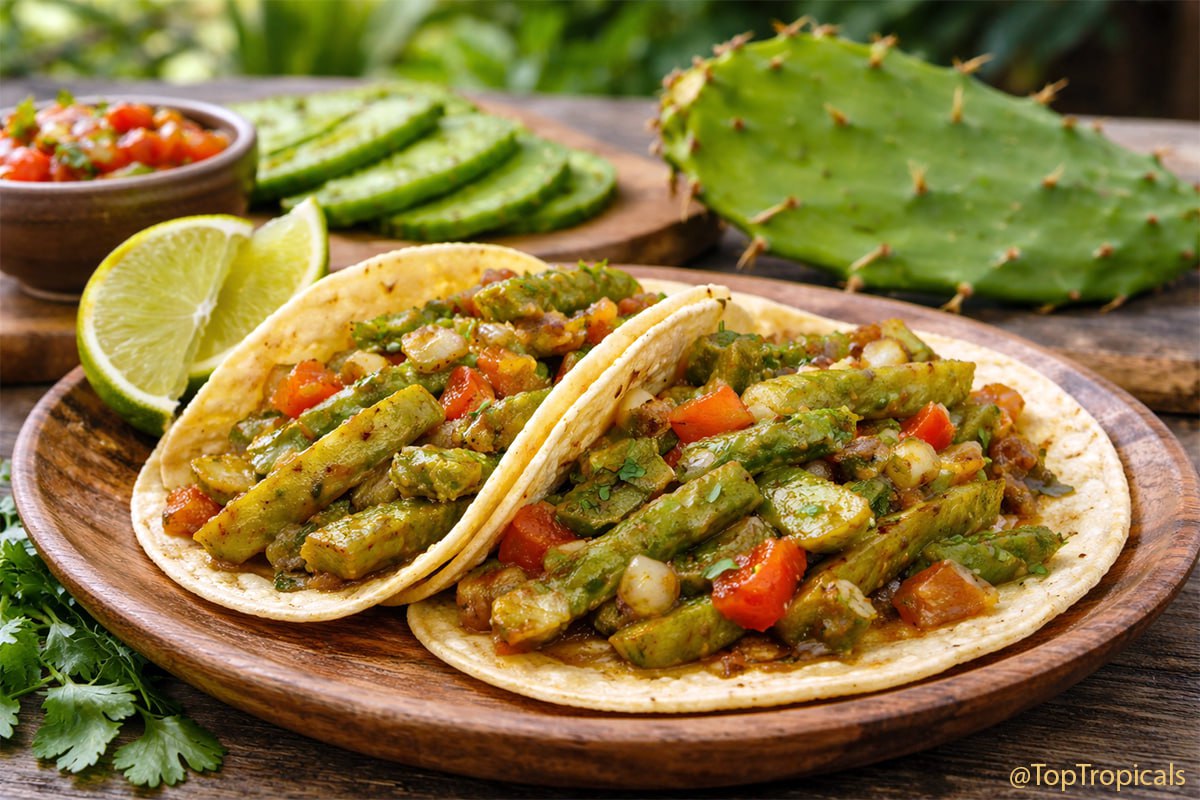
Velvet Nopal tacos
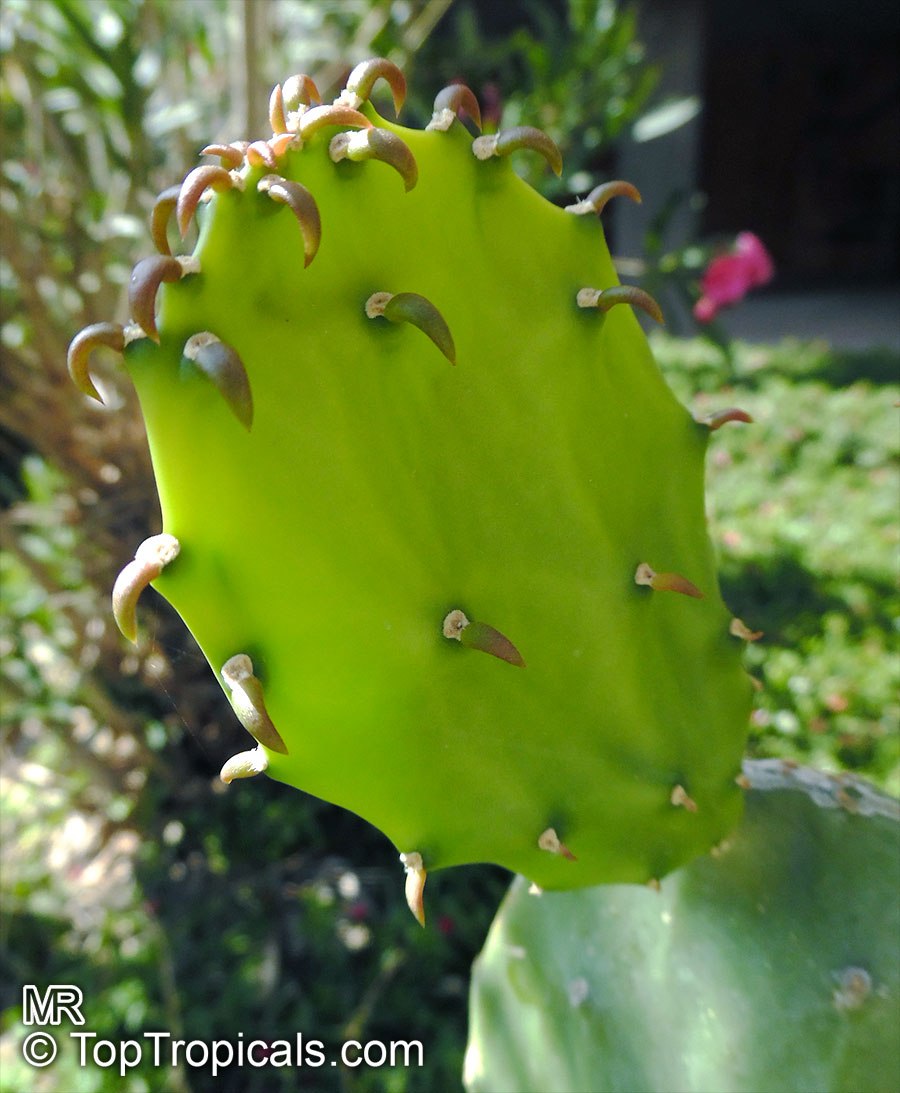
Velvet Nopal tacos

Opuntia cochenillifera - Velvet Nopal Cactus, Prickly Pear

Opuntia cochenillifera - Velvet Nopal Cactus, Prickly Pear

🍴 Velvet Nopal Tacos

Ingredients

  • 2 to 3 tender velvet nopal pads (Opuntia cochenillifera)
  • 1 small onion, diced
  • 1 small tomato, diced
  • 1 tablespoon vegetable oil
  • Salt to taste
  • Corn tortillas

Instructions

  1. Remove spines from nopal pads and slice into strips.
  2. Boil the sliced nopal for 5 minutes, then drain well.
  3. Heat oil in a pan and saute onion until soft.
  4. Add tomato and cooked nopal, season with salt, and saute until tender.
  5. Serve warm in corn tortillas.

🌵 About the plant:


Nopal Opuntia (prickly pear cactus pads) is a cornerstone vegetable in Mexican cuisine and a long-standing staple across Central and South America. It is valued both as food and medicine. Traditionally eaten sauteed, grilled, or stewed, nopal is rich in fiber, minerals, and antioxidants. It is especially well known for its role in blood sugar management - many people who eat it regularly report significant improvement in diabetes control.

🌱 In the garden:


Prickly pear is a fast-growing, tough desert plant with showy red flowers. It thrives on neglect, tolerates drought, and also handles Florida rain surprisingly well. Easy to grow, productive, and edible, it is one of the most practical food plants you can add to your landscape.

🛒 Add Nopal Cactus to your kitchen garden

📚 Learn more:

Plant Facts

Opuntia cochenillifera, Nopalea cochenillifera, Opuntia nuda
Cochineal Cactus, Warm hand, Velvet Opuntia, Nopales Opuntia, Nopal Cactus
USDA Zone: 9-11
Large shrub 5-10 ft tallSemi-shadeFull sunModerate waterRed, crimson, vinous flowersEdible plantSubtropical plant. Mature plant cold hardy at least to 30s F for a short time
  • Opuntia cochenillifera - Velvet Nopal Cactus, Prickly Pear in Plant Encyclopedia
  • Edible cactus with health benefits that your tortoise will love too

  • #Food_Forest #Recipes #Remedies

    🟢 Join 👉 TopTropicals
    Date: 30 Dec 2025

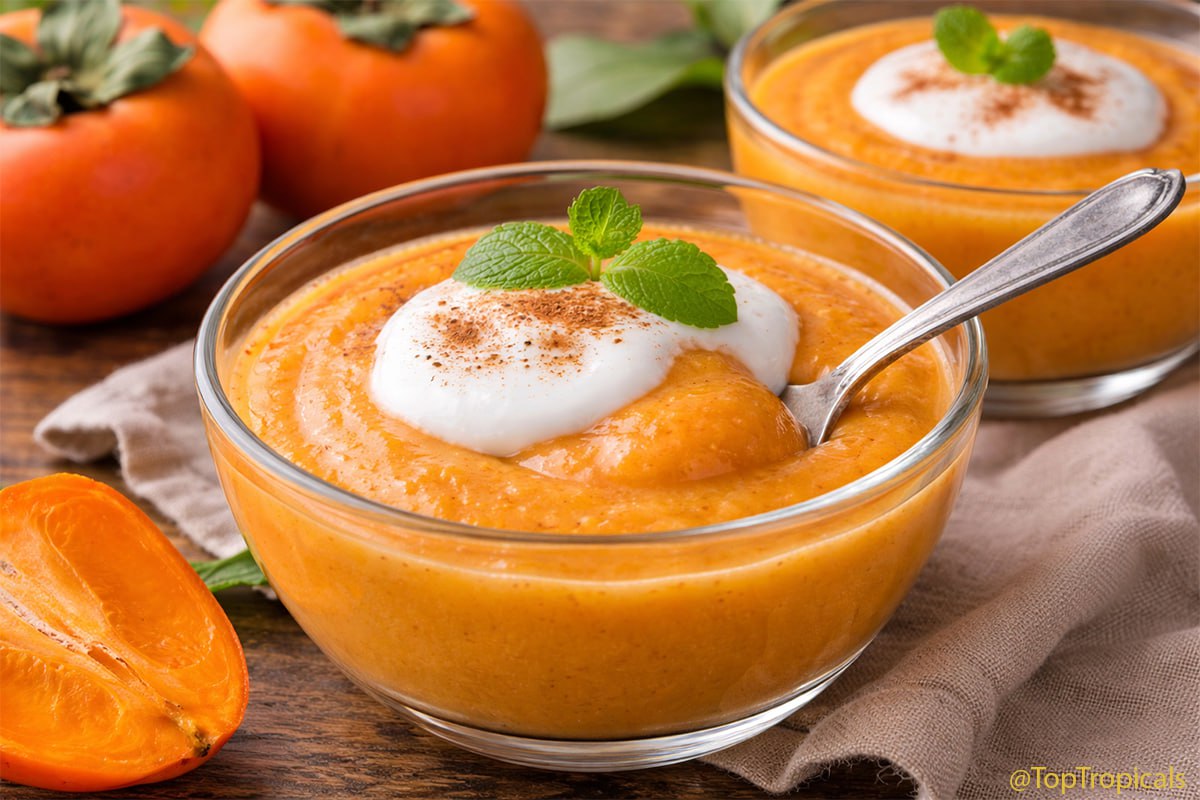
    Persimmon spoon pudding: quick-n-fun exotic recipes

    Persimmon spoon pudding

    Persimmon spoon pudding

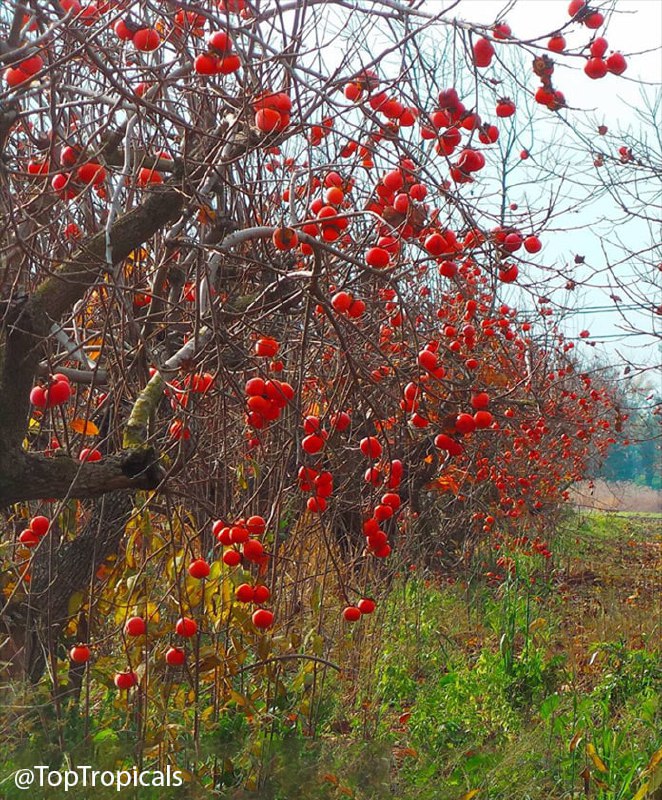
    Persimmon tree (Diospyros sp)

    Persimmon tree (Diospyros sp)

    🍴 Persimmon spoon pudding


    Ingredients

    • 2 very ripe persimmons (astringent type, fully soft)
    • 2 tablespoons plain yogurt
    • Optional: pinch of cinnamon

    Instructions

    1. Scoop the soft persimmon flesh into a blender and puree until smooth.
    2. Chill the puree in the refrigerator for 15 to 30 minutes.
    3. Spoon into a bowl and top with plain yogurt.
    4. Sprinkle lightly with cinnamon if desired and serve.

    🍑 About the fruit:


    Persimmon (Diospyros spp.) is a graceful, cold-hardy subtropical fruit tree native to China and widely grown across temperate and warm regions. The fruit is loved for its rich sweetness, often compared to honey and apricot. Persimmons are divided into astringent types, which must soften fully before eating, and non-astringent types, which can be enjoyed firm. The fruit is nutritious and commonly eaten fresh or used in desserts.

    🌱 In the garden:


    Persimmon trees are highly ornamental, with drooping branches, lush summer foliage, and dramatic fall color. They thrive in well-drained soils, tolerate alkaline conditions, and are hardy in USDA zones 7-10. Many varieties perform well in containers, making persimmon a beautiful and productive choice for both edible landscapes and patio gardens.

    🛒 Plant Persimmon Tree for sweet fruit and deserts

    📚 Learn more:

    Plant Facts

    Diospyros blancoi, Diospyros discolor
    Velvet Apple, Mabolo
    USDA Zone: 9-11
    Large tree taller than 20 ftFull sunRegular waterEdible plant
  • Explore Persimmon trees (Diospyros spp) in Plant Encyclopedia
  • How soon will Persimmon tree fruit?
  • Why so many gardeners this year planted Native American Persimmon
  • Hardy, dramatic looking tropical fruit tree with a sweet fruit

  • #Food_Forest #Recipes

    🟢 Join 👉 TopTropicals

    Date: 26 Dec 2025

    Blackberry warm smash: quick-n-fun exotic recipes

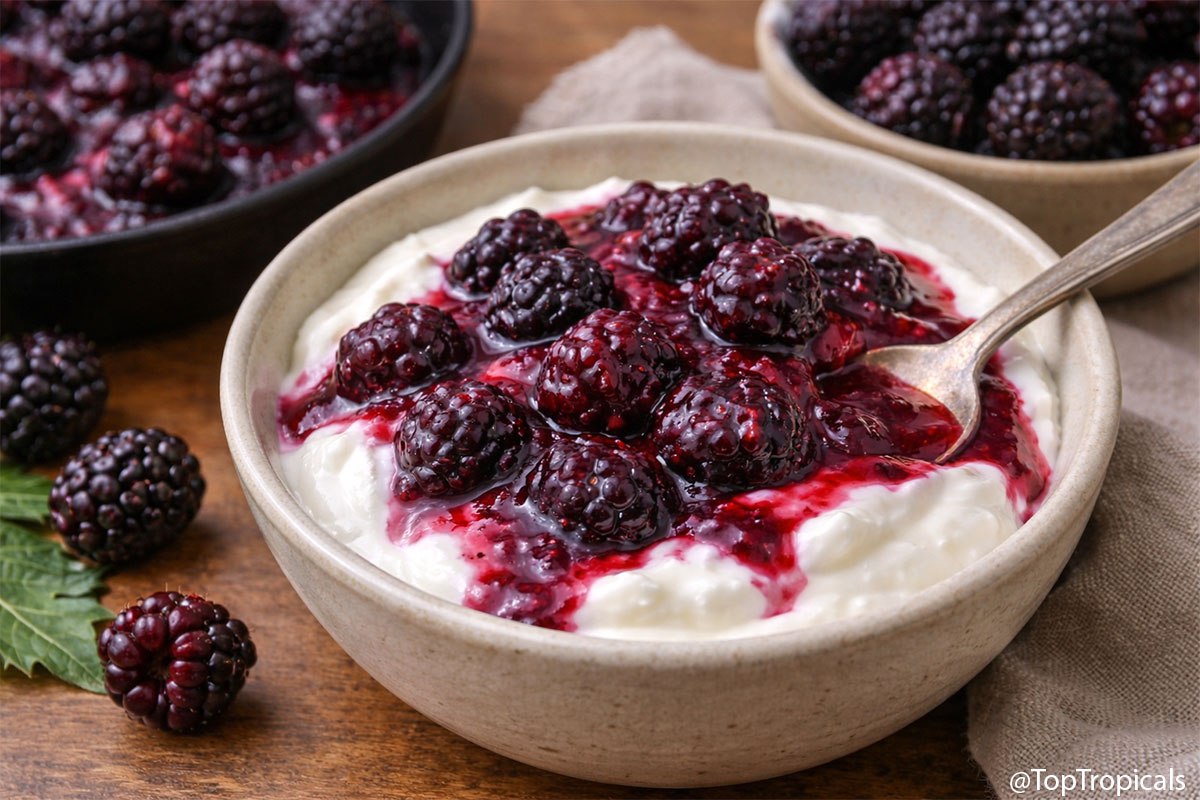
    Blackberry warm smash

    Blackberry warm smash

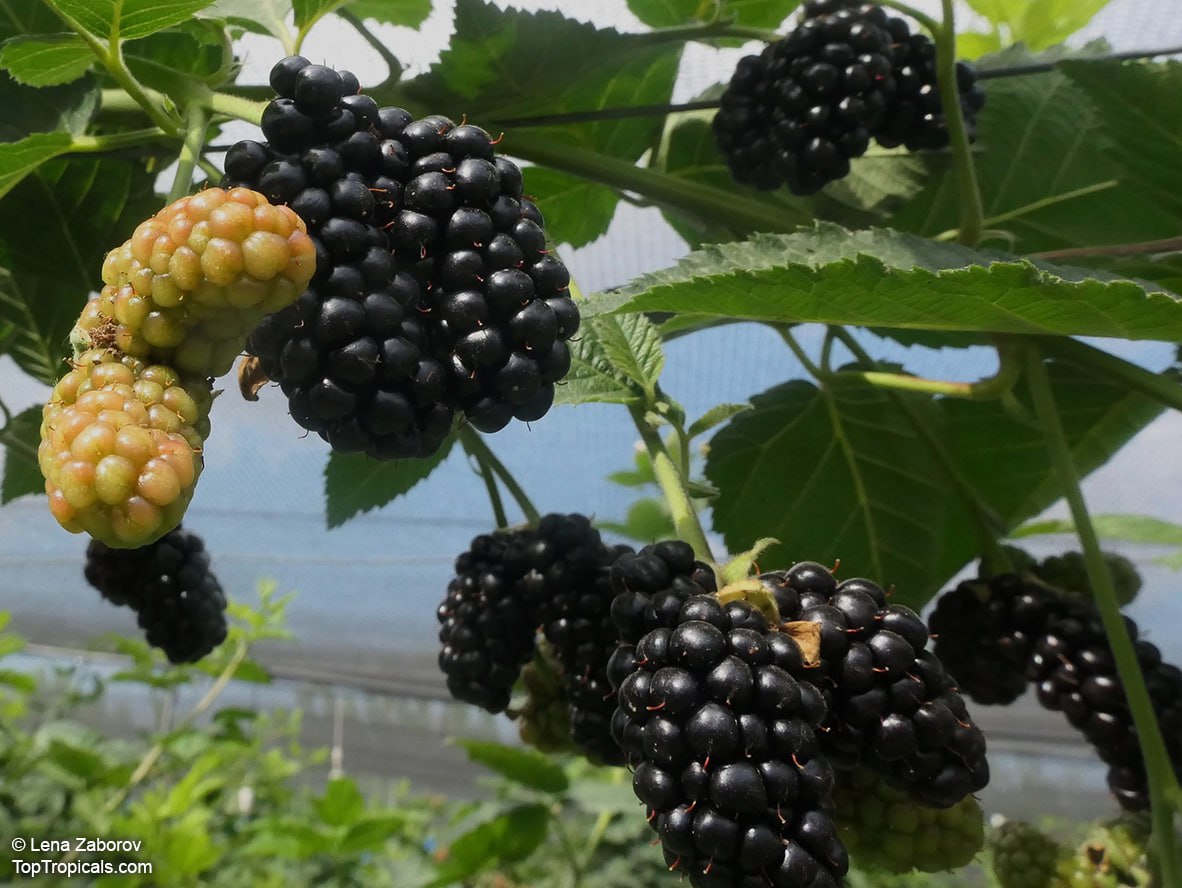
    Blackberry fruit - Rubus hybrid

    Blackberry fruit - Rubus hybrid

    🍴 Blackberry Warm Smash Recipe

    Ingredients

    • 1 cup fresh or frozen blackberries (Rubus sp.)
    • Optional: 1 tsp honey or sugar
    • Thick yogurt or toasted bread, for serving

    Instructions

    1. Add blackberries to a small pan and warm over medium heat.
    2. Cook until berries soften and burst, about 3 to 5 minutes.
    3. Lightly mash with a spoon. Sweeten if desired.
    4. Spoon warm blackberry smash over yogurt or toast and serve immediately.

    🛒 Grow your own Blackberries - hardy and productive plants

    📚 Learn more:

    Plant Facts

    Rubus sp.
    Brazos Blackberry, Black Raspberry
    USDA Zone: 9-11
    Large shrub 5-10 ft tallVine or creeper plantFull sunModerate waterThorny or spinyEdible plantDeciduous plantSubtropical plant. Mature plant cold hardy at least to 30s F for a short time
  • Blackberry (Rubus sp.) in Plant Encyclopedia
  • Fruits with the most vitamin E, according to dietitians

  • #Food_Forest #Recipes

    🟢 Join 👉 TopTropicals

    Date: 22 Dec 2025

    Chaya Nutritious Omelet: quick-n-fun exotic recipes

    Chaya Nutritious Omelet

    Chaya Nutritious Omelet

    Cnidoscolus aconitifolius (Chaya, Maya Spinach Tree)

    Cnidoscolus aconitifolius (Chaya, Maya Spinach Tree)

    🍴 Chaya Nutritious Omelet: quick-n-fun exotic recipes


    Ingredients

    • Chaya leaves - about 2 cups packed, stems removed
    • Onion - 1 small, sliced
    • Eggs - 2
    • Cooking oil - 1 tablespoon
    • Salt - to taste

    Instructions

    1. Boil chaya leaves in plenty of water for 10 to 15 minutes to remove natural toxins. Drain well and chop.
    2. Heat oil in a pan and saute the onion until soft and lightly golden.
    3. Add eggs and scramble gently.
    4. Fold in the cooked chaya and stir for 1 to 2 minutes until well combined.
    5. Serve warm. Flavor is similar to spinach with a firmer texture.

    🛒 Add Chaya to your tropical Veggie Garden

    📚 Learn more:

    Plant Facts

    Cnidoscolus aconitifolius
    Spinach Tree, Tread Softly, Cabbage Star, Chaya
    USDA Zone: 9-11
    Large shrub 5-10 ft tallSmall tree 10-20 ftSemi-shadeRegular waterOrnamental foliageWhite, off-white flowersEdible plantSpice or herb plantEthnomedical plant.
Plants marked as ethnomedical and/or described as medicinal, are not offered as medicine but rather as ornamentals or plant collectibles.
Ethnomedical statements / products have not been evaluated by the FDA and are not intended to diagnose, treat, cure, or prevent any disease. We urge all customers to consult a physician before using any supplements, herbals or medicines advertised here or elsewhere.Irritating plantSubtropical plant. Mature plant cold hardy at least to 30s F for a short time
  • Cnidoscolus aconitifolius (Chaya, Maya Spinach Tree) in Plant Encyclopedia
  • Variegated Chaya - beauty meets nutrition
  • Chaya's health benefits: a must-have tropical leafy vegetable for sustainable gardening

  • #Food_Forest #Recipes

    🟢 Join 👉 TopTropicals

    Date: 20 Dec 2025

    Grumichama spoon drizzle: quick-n-fun exotic recipes

    Grumichama spoon drizzle

    Grumichama spoon drizzle

    Eugenia brasiliensis fruit tree - Grumichama

    Eugenia brasiliensis fruit tree - Grumichama

    🍴 Grumichama Spoon Drizzle

    Ingredients

    • Ripe grumichama fruit (Eugenia brasiliensis), pulp only
    • Water, a small splash
    • Vanilla ice cream, for serving

    Instructions

    1. Remove seeds from ripe grumichama fruit and collect the pulp.
    2. Blend the pulp with a small splash of water until smooth and pourable.
    3. Spoon or drizzle over vanilla ice cream and serve immediately.

    📚 Learn more:

    Plant Facts

    Eugenia brasiliensis, Eugenia dombeyi
    Grumichama, Brazilian Cherry
    USDA Zone: 9-11
    Small tree 10-20 ftSemi-shadeFull sunModerate waterEdible plantSubtropical plant. Mature plant cold hardy at least to 30s F for a short timeSeaside, salt tolerant plant
  • Eugenia brasiliensis fruit tree - Grumichama in Plant Encyclopedia
  • Grumichama jam recipe
  • The best tasting and most beautiful tropical cherry
  • Why grow Grumichama? Benefits of Brazilian Eugenia Tree - Cherry of the Tropics

  • #Food_Forest #Recipes

    🟢 Join 👉 TopTropicals