Garden Blog - Top Tropicals

Date: 24 Mar 2024

Bauhinias: trees with Orchid Flowers
and Butterfly Wings...

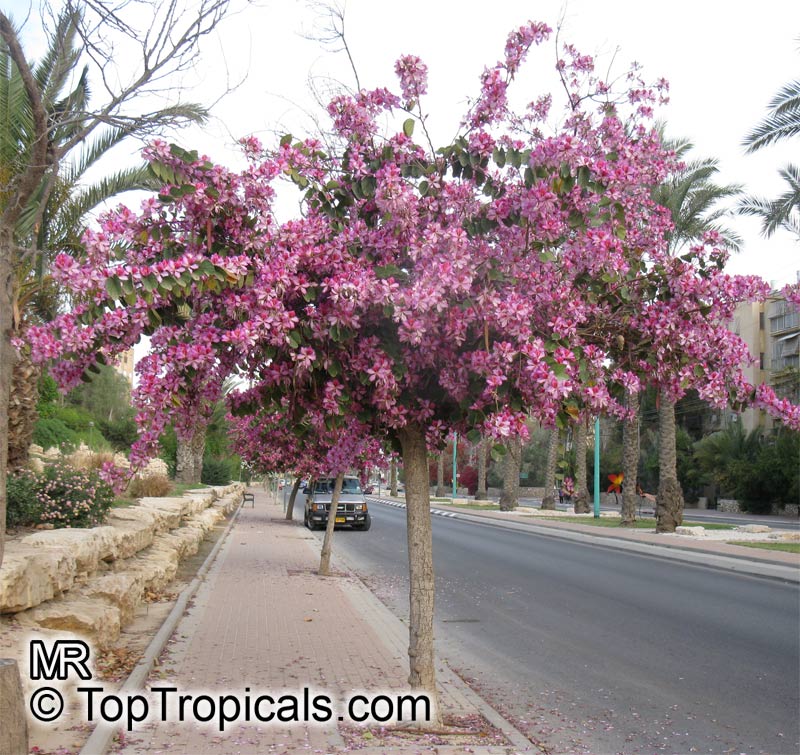
Bauhinia  variegata  -  Purple  Orchid  Tree

Photo above: Bauhinia variegata - Purple Orchid Tree, one of the most spectacular varieties.

Q: We just moved to Florida and I see these beautiful trees with large purple flowers. I was told these are Orchid trees, do you have them?

A: Bauhinias, commonly known as Orchid trees, are renowned for their captivating flowers and unique foliage. These trees typically grow to a moderate height of 15-25 feet with a spread of 10-15 feet, showcasing a rounded to vase-like shape. Thriving in hardiness zones 9-11, they exhibit resilience to heat and can withstand mild frost. There are over 300 species of Bauhinia, which are distributed in tropical and subtropical areas. These species vary in characteristics such as size, foliage, and flower color, contributing to the diversity and appeal of this genus. You can find them as trees, shrubs, and even vines.

Bauhinias are evergreen (in tropics) to semi-deciduous (in cooler climates), offering year-round beauty with intermittent blooming cycles. The peak bloom time varies depending on the species and location, often occurring in late winter to early spring, bedecking the tree with striking orchid-like flowers in hues ranging from white and pink to purple and red. The flowers boast delicate petals with intricate patterns, resembling the elegance of true orchids.

One of the distinguishing features of Bauhinia leaves is their unique bi-lobed or bilobed structure, which gives them a distinct appearance. The leaves are deeply divided, typically into two lobes or halves, hence the common name "Butterfly tree" due to their resemblance to butterfly wings. This characteristic is often used as an identifying trait for Bauhinia species. The bilobed leaves add to the visual appeal of the tree, contributing to its ornamental value in addition to its beautiful flowers.

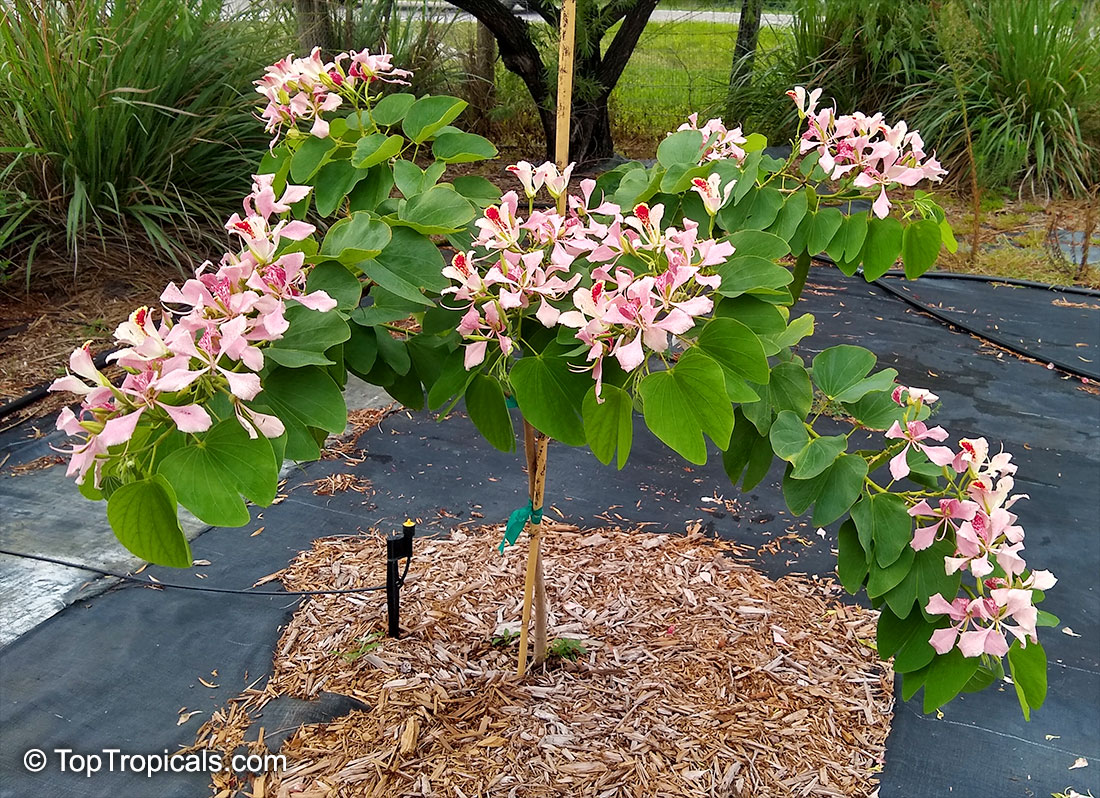
Bauhinia  monandra  -  Napoleons  plume

Photo above: Bauhinia monandra - Napoleons Plume, starts flowering in small size. This one is very beautiful but the most cold sensitive and should be grown in pots in areas with winter freeze. It will happily bloom in container!

Low-maintenance by nature, Bauhinias require minimal upkeep. Annual feeding with a balanced fertilizer enhances growth and flowering. Pruning is generally optional but can be done in late winter or spring, after flowering, to maintain shape or remove dead or damaged branches. These trees thrive in full sun, preferring well-drained soil. With their enchanting blooms and easy care requirements, Bauhinia orchid trees are a delightful addition to any landscape, and a colorful specimen for tropical winter gardens.

In addition, Orchid trees grow fast and provide excellent shade. They can make a shady spot in your garden in no time, giving relief from the hot sun. This is really valuable, especially in places where it gets very hot. So, not only are Orchid trees pretty to look at with their lovely flowers, but they're also great for keeping you cool!

Read more about Bauninias:
Bauihnias: Orchid trees with Butterfly flowers... and leaves

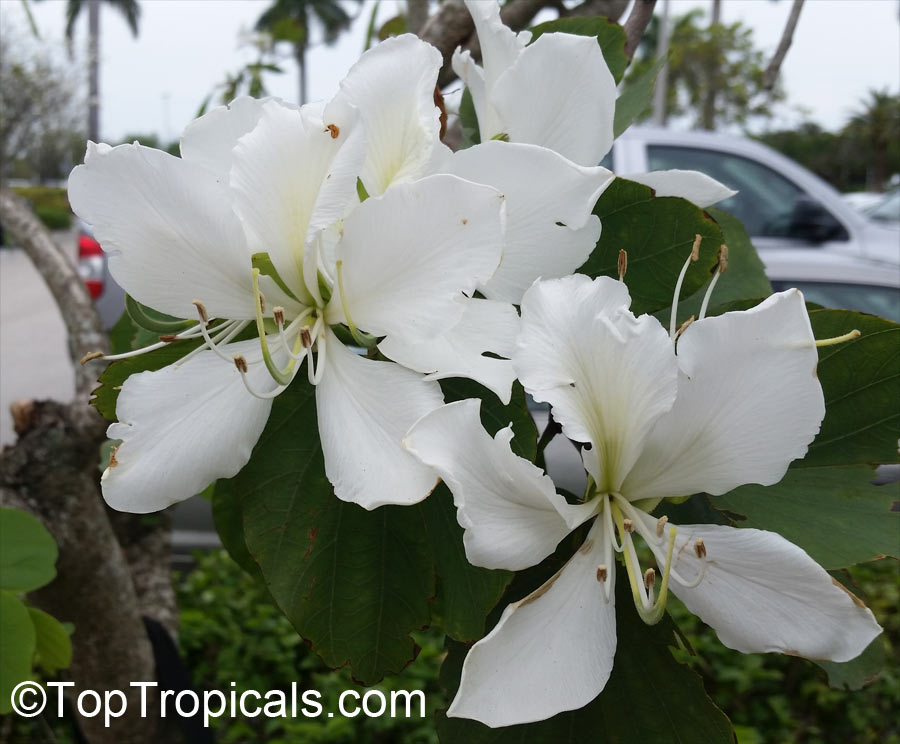
Bauhinia  x  alba  (candida)  -  White  orchid  tree

Photo above: Bauhinia x alba (candida) - White orchid tree, the most cold hardy variety that can take light freeze once established.

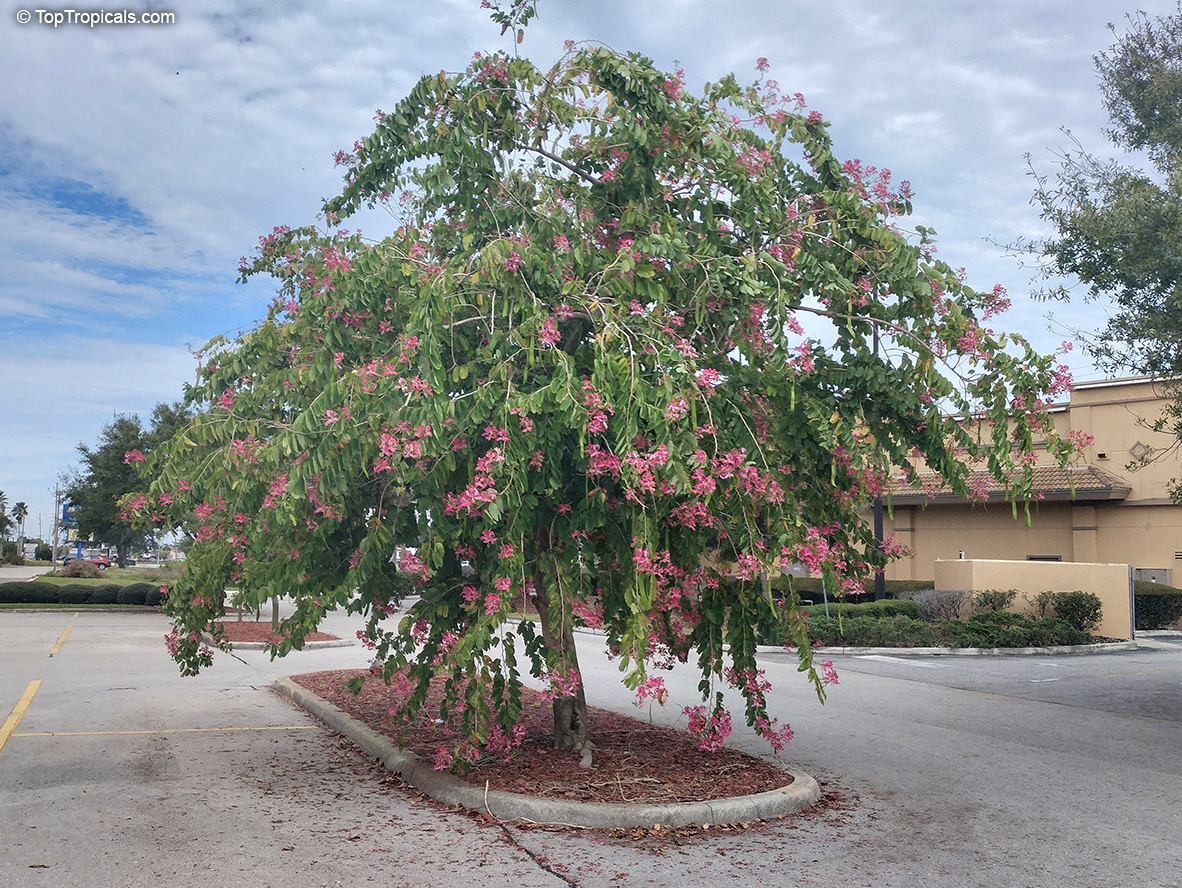
Bauhinia  purpurea  -  Purple  Orchid  Tree

Photo above: Bauhinia purpurea - Purple Orchid Tree, one of the most popular and easy trees in Southern landscapes.

Date: 16 Jan 2026

The most asked-about tree in the Sunshine State: Bauhinia

Purple Orchid tree - Bauhinia purpurea

🌸 The most asked-about tree in the Sunshine State: Bauhinia

  • 🌸 If you visit Florida in winter, chances are you will notice a tree covered in orchid-like flowers and wonder what it is. That tree is often an orchid tree, most commonly Bauhinia purpurea. It is fast growing, wide spreading, and blooms from late winter through spring, sometimes with a second round in summer. The flowers range from magenta to lavender, are lightly fragrant, and stand out even from a distance. The leaves are just as distinctive - split into two halves like butterfly wings, which is why these trees are also called butterfly trees.
  • 🌸 Orchid trees are easygoing and practical. They thrive in full sun, tolerate many soil types as long as drainage is good, and need little water once established. Growth is quick, often 2–3 feet per year, making them excellent shade trees for hot climates. The flowers attract bees, butterflies, and hummingbirds, and in some cultures the buds and blossoms are used in cooking, while the bark has a long history in folk remedies. Beautiful, useful, and low maintenance, orchid trees are a perfect fit for Southern landscapes.


🛒 Discover Bauhinias - Orchid trees

📚 Learn more:

Dwarf White Orchid Tree Plant Facts

Bauhinia acuminata
Dwarf White Orchid Tree, White Bauhinia, Kaa-long, Snowy Orchid
USDA Zone: 9-11
Large shrub 5-10 ft tallSmall tree 10-20 ftFull sunModerate waterWhite, off-white flowersDeciduous plant

#Trees

🟢 Join 👉 TopTropicals

Date: 20 Mar 2026

Just in time for spring: Nun Orchid blooms for months!

Phaius tankervilleae, Chinese Ground Orchid, Nut Orchid

Phaius tankervilleae, Chinese Ground Orchid, Nut Orchid

Phaius tankervilleae, Chinese Ground Orchid, Nut Orchid

Phaius tankervilleae, Chinese Ground Orchid, Nut Orchid

Phaius tankervilleae, Chinese Ground Orchid, Nut Orchid

Phaius tankervilleae, Chinese Ground Orchid, Nut Orchid

Just in time for spring: Nun Orchid blooms for months! 🌹
  • 🌷 What a wonderful treat after a long cold winter: Nun Orchid (Phaius tankervillea) is putting on a full show right now in the garden - and it’s been going strong since February.
  • 🌷 These plants were already loaded with buds before our Record 25F Florida Freeze, so I moved the two pots into the garage to protect them. Totally worth it - they came through beautifully and didn’t miss a beat.
  • 🌷 Now they’re in full bloom and should keep going well into April. This is one of those rare orchids that just keeps going.
  • 🌷 Unlike most orchids, Nun Orchid grows in regular soil. Big lush leaves, tall flower spikes, and it’s perfectly happy in filtered light - great for patios, containers, or a shady spot in your garden.

What’s blooming in your yard today?

🛒 Plant beautiful Nun Orchid

📚 Learn more:

Chinese Ground Orchid Plant Facts

Phaius tankervilleae
Chinese Ground Orchid, Nun Orchid
USDA Zone: 9-11
Groundcover and low-growing 2ft plantSemi-shadeFull sunModerate waterRed, crimson, vinous flowersWhite, off-white flowersPlant attracts butterflies, hummingbirdsFragrant plant

#Container_Garden #Shade_Garden

🟢 Join 👉 TopTropicals

Date: 10 May 2026

🍑 From the Garden: Why I Always Recommend Growing Your Own Peaches

by Tatiana Anderson, Top Tropicals Garden Expert

A  peach  tree  growing  outdoors  under  a  blue  sky  with  ripe  red-orange 
 peaches  hanging  among  long  green  leaves.  The  image  also  shows  a  close-up 
 view  of  several  fuzzy  peaches  ripening  on  a 
 branch.

Peach trees are beautiful long before harvest day - glossy green leaves, colorful fruit, and that classic fuzzy peach look straight from the branch.

I'll be honest with you. The first time I bit into a peach straight off the tree, still warm from the afternoon sun, I understood why people get obsessed with this fruit. There is no comparison to what you find in a grocery store. Store peaches are picked hard, shipped cold, and by the time they reach you, something important is already gone. A tree-ripened peach is soft, fragrant, juicy, and sweet in a way store peaches rarely are. Eat it fresh, slice it into a cobbler, throw it on the grill - it holds up beautifully either way.

So let's talk about how to actually get there.

Planting

Peaches are not difficult. Give them sun, drainage, and room for air movement, and they will usually tell you very quickly that they are happy.

  • Full sun is essential - 8 hours minimum, and more is better.
  • Drainage matters - peach roots do not like sitting wet.
  • If your soil stays wet, plant on a mound - simple fix, big difference.
  • Water deeply, then pause - let the soil partially dry before watering again.
  • Prune every year - it keeps the tree open, improves airflow, and helps the tree put energy into fruit instead of tangled growth.

Branches  of  a  peach  tree  covered  in  masses  of  bright  pink  blossoms 
 during  spring  bloom.  The  flowers  densely  fill  the  tree,  creating  a  colorful 
 display  of  pink  petals  against  the  brown 
 branches.

Peach trees put on one of spring's prettiest shows - clouds of pink blossoms before the fruit season even begins.

What If You Do Not Have Room?

You can still grow peaches in a large container. This is a great option for patios, small yards, renters, or gardeners who want better control over soil and drainage.

  • Use a large pot with drainage holes.
  • Choose a fast-draining potting mix, not heavy garden soil. We recommend Sunshine Abundance potting mix.
  • Place the container in the sunniest spot you have.
  • Water more often than in-ground trees, but never let the pot stay soggy.
  • Prune to keep the tree compact and easy to manage.

Fertilizing

Peach trees are generous plants, but producing vigorous growth and a heavy crop of sweet fruit takes energy. Regular feeding makes a noticeable difference in tree health, flowering, and fruit quality.

I prefer a simple two-part approach that provides both steady background nutrition and quick, readily available nutrients when the tree is actively growing.

  • Green Magic controlled-release fertilizer provides a steady supply of nutrients for months and serves as the foundation of the feeding program.
  • Sunshine Boosters liquid fertilizers deliver amino acid-based nutrients that are quickly absorbed and especially useful during periods of active growth, flowering, and fruit development. Sunshine C-Cibus formula is the best for fruit trees.

During the growing season, this combination helps build stronger branches, healthier leaves, better flowering, and sweeter, higher-quality fruit.

If your tree shows yellowing leaves or weak growth, consistent feeding often makes a dramatic difference within a few weeks.

📚 More about low-chill peaches from our garden Blog

Clusters  of  ripe  fuzzy  peaches  growing  on  tree  branches  surrounded  by 
 long  green  leaves  in  bright  sunlight.  The  peaches  show  shades  of  pink,  red, 
 and  soft  yellow  as  they  ripen  on  the 
 tree.

Tree-ripened Tropic Beauty peaches warming in the sun - fuzzy, colorful, and almost ready to pick straight from the branch. Tropic Beauty variety is one of the most colorful and sweet.

📚 More about Tropic Beauty Peach

🛒 Shop Low-Chill Peach trees

Sunshine’s Philosophy: Lazy Peach Sundae 😺

Sunshine absolutely loves peach cobbler, especially when someone else does all the peeling, slicing, mixing, and baking. But when he is left to prepare dessert on his own, his standards become much more practical. Why turn on the oven when perfectly ripe peaches already taste amazing? His philosophy is simple: if a recipe takes less than five minutes and ends with peaches and vanilla ice cream in the same bowl, it is a masterpiece.

A  bowl  of  sliced  ripe  peaches  topped  with  two  scoops  of  vanilla  ice 
 cream,  drizzled  with  honey  and  lightly  sprinkled  with  cinnamon,  sits  on  a 
 rustic  wooden  table  outdoors.  Fresh  whole  peaches  rest  nearby,  with  a  sunny 
 peach  orchard  full  of  fruit  and  a  bright  blue  sky  in  the 
 background.

Sunshine's Lazy Peach Sundae - fresh peaches, cold ice cream, and zero effort on a perfect sunny day.

Sunshine's Lazy Peach Sundae

This is not cooking. This is assembly.

Ingredients

  • 2 ripe homegrown peaches
  • 2 big scoops of vanilla ice cream
  • A drizzle of honey (optional)
  • A pinch of cinnamon (optional)

Instructions

  1. Slice the peaches.
  2. Put them in a bowl.
  3. Add vanilla ice cream.
  4. Drizzle with honey and sprinkle with cinnamon if you feel ambitious.
  5. Eat immediately while smiling.

Sunshine's Review

"I peeled exactly nothing and still got dessert. This is my kind of gardening."

Want this?
Start with a low-chill peach tree. That is usually how it begins.

🛒 Plant your own Peach tree

Date: 8 Mar 2019

RARE Featured plant, finally in stock!

TopTropicals.com

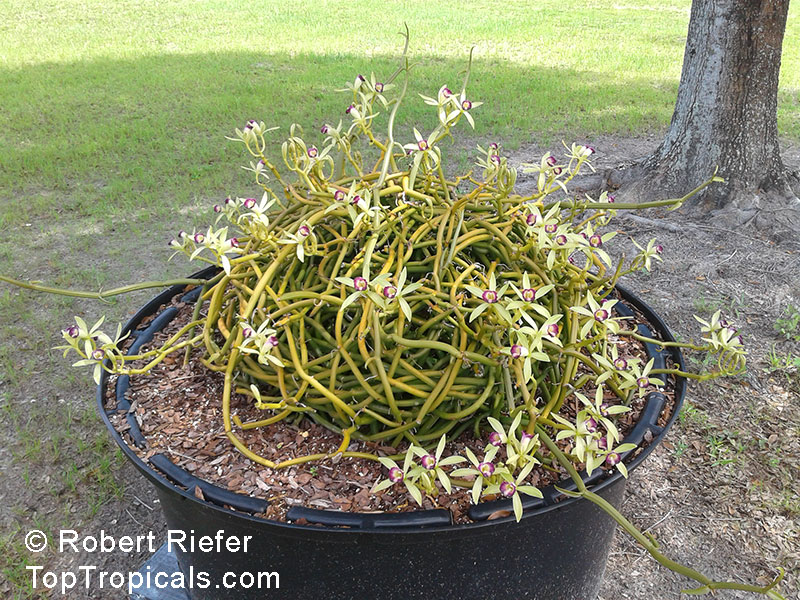
Vanilla dilloniana - Leafless Vanilla Orchid

Very rare, collectible and extinct species! This plant propagated at TopTropicals nursery from Robert Riefer's unique specimen, the biggest potted specimen in the World, grown in 100 gal pot, originated in 1927, awarded in 2011 with CHM certificate of Horticultural Merit by American Orchid Society. Leafless Vanilla Orchid is amazing exotic vanilla that forms a multi-branched, leafless vine reaching lengths up to 15 ft. The light green flowers are similar to Vanilla barbellata but the petals and sepals are longer and the fluted lip is a deep reddish-purple with a yellow crest. Vanilla dilloniana is distributed throughout the West Indies and had been reported on the banks of the Miami River in South Florida. Vanilla dilloniana is a very rare species and considered vulnerable, endangered across its range. Pieces of plants from the original colony have been shared and may be found in local collections.

See the .

Check out this plant...