Garden Blog - Top Tropicals

Date: 28 Sep 2025

Guava Tree Plant Care

Tips from Top Tropicals Plant Expert - Tatiana Anderson

Guava  trees  for  sale  in  3-gallon  nursery  pots,  healthy  young  plants 


with  green 


foliage.

Where to Plant Outdoors

Guavas love full sun — aim for 6–8 hours of direct light. They’re adaptable to many soils but do best in well-drained, organic-enriched mixes. Plant them in a spot where you can water easily; guavas are thirsty trees during fruiting.

Container & Indoor Growing

Don’t have space or live in a cooler climate? Guavas thrive in large pots. Use well-drained potting mix. LINK TO OUR SOIL Keep them on a sunny patio during warm months and bring them indoors when nights dip below freezing. Compact varieties like Dwarf Hawaiian Rainbow or Tikal are especially good for pots.

Winter Care

Mature guavas can handle a light frost (down into the high 20s F), but young plants need protection. If planted outdoors, cover them with frost cloth on cold nights. Container guavas can be wheeled into a garage, greenhouse, or bright indoor window until the weather warms.

Watering and Fertilizing

Water deeply once or twice a week, more often in hot weather or when fruit is developing. They don’t like soggy soil, but they won’t complain about short floods either. Fertilize 3–4 times a year during the growing season with a balanced fruit tree fertilizer. Guavas especially love potassium and phosphorus for strong flowering and heavy crops. We recommend liquid crop booster Sunshine C-Cibus and balanced controlled release fertilizer Green Magic.

Pruning

Prune after fruiting to keep them compact and open up airflow. Remove crossing or dead branches. In containers, trim back vigorous shoots regularly to manage size and encourage more fruiting wood.

Pests and Problems

Guavas are generally tough and pest-resistant. The main thing to watch for in humid or rainy climates is mealybugs - those cottony white clusters on leaves or stems. They're easy to manage with neem oil or a quick spray of horticultural soap.

Fruit time

Guavas fruit young - often within a year or two.

Pollination

Guavas are self-pollinating, so you'll get fruit even with a single tree. Planting more than one tree, however, often boosts harvests and gives you a longer fruiting season.

If you've ever wanted instant gratification from a fruit tree, guava is it.

Ruby  Supreme  Guava  tree  with  a  large  ripe  yellow  fruit,  variety  known 


for  sweet  pink  flesh  and  reliable 


harvests.

🍴 Guava Recipes

With all that fruit, the next question is always: "What do I do with it?" Here are our favorites:

  • Cas Guava: Make Agua de Cas

    Boil halved Cas Guava fruits with sugar, simmer, strain, and bottle. Dilute with water when serving. The concentrate keeps for months in the fridge.
    Check out the recipe.

  • Hawaiian Gold: Make Drinks

    Perfect for Mojitos or Margaritas. Sweet, tangy juice pairs beautifully with lime and mint. Learn more

  • Araca Pera: Guava Wine

    Famous in Brazil, where the fruit is turned into a vibrant rosу wine. Locals say it’s the taste of summer in a glass — and yes, you can make it at home too. Learn more...

  • Quick snack: Guava Grilled Cheese

    Spread guava paste or fresh mashed fruit with cheese, grill until golden. Sweet and savory heaven. Learn more...

  • Simple Guava Juice

    Blend ripe guavas with water, ice, and a little sugar if you like. Instant refreshment.

✅Ready to Grow? Whether you want fresh juice, sweet fruit, or even your own guava wine, we’ve got the best varieties in stock right now. Your future self, sipping guava juice on a hot summer afternoon, will thank you.

👉 Order your guava tree today

Tabby  cat  sitting  between  a  glass  of  yellow  guava  juice  with  white 


guavas  and  a  glass  of  pink  guava  juice  with  green  guavas  and  cut  pink  guava 


fruit.

Date: 10 Dec 2024

We ate all pineapples from that ugly corner!

Pineapples fruiting

🍍 We ate all pineapples from that ugly corner!


All the Pineapples that we mentioned in our earlier post, have ripened and we already ate them all!
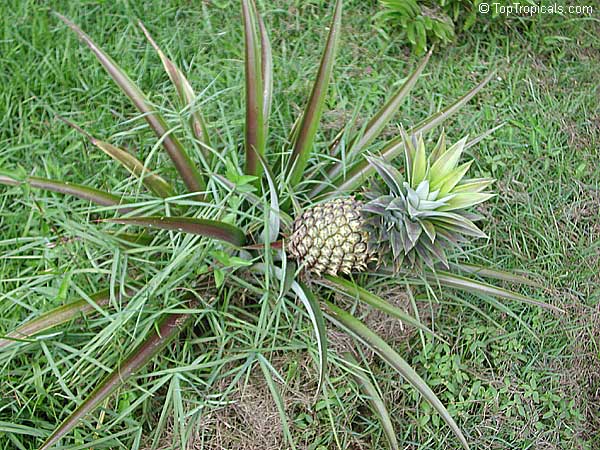
Note that this amazing fruit grows in the most neglected corner of the yard, with NO irrigation, and in pretty hot sunny spot - by the water treatment tank. Yet look how happy the plants are!

📚 Learn more about pineapple plants from previous posts:


The most luscious Hospitality Fruit: Pineapple
Three must-have fruit for every tropical garden

🛒 Select Pineapple varieties

#Food_Forest

🔴 Join 👉 TopTropicals

Date: 28 Apr 2024

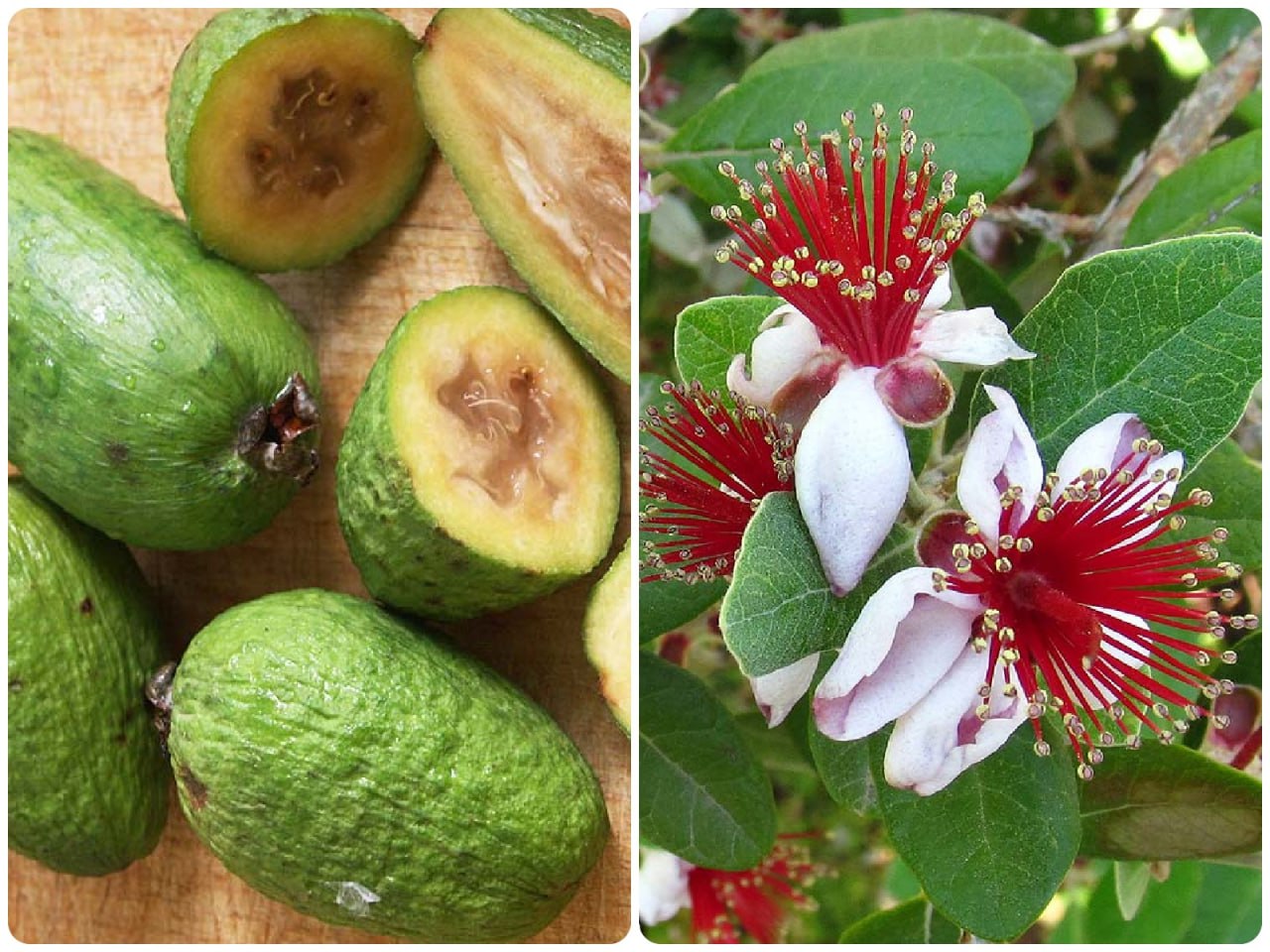
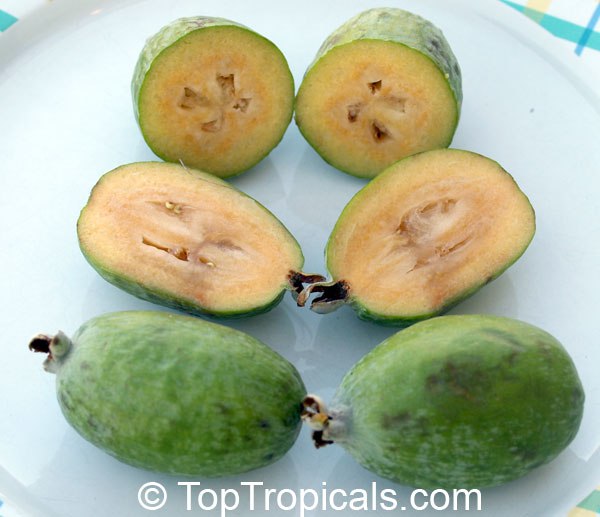
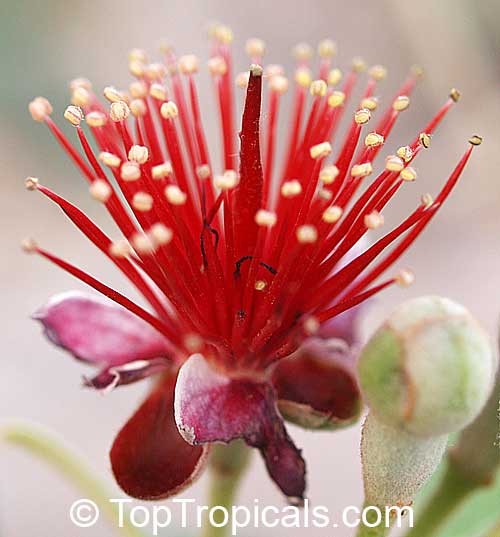
Why is it called Pineapple Guava? It tastes just like strawberries! Feijoa Superfood

Pineapple Guava, Guavasteen, Feijoa sellowiana

Pineapple Guava, Guavasteen, Feijoa sellowiana

Pineapple Guava, Guavasteen, Feijoa sellowiana

Pineapple Guava, Guavasteen, Feijoa sellowiana

🍓 Why is it called Pineapple Guava? It tastes just like strawberries! Feijoa Superfood.
  • Feijoa is certainly one of the easiest fruit trees to grow as it does not require much care.
  • Feijoa is an attractive, evergreen large shrub that produces lovely edible flowers and fruit.
  • The fruit is eaten fresh, added to smoothies, fruit salads, used to make delicious jam (that tastes like Strawberry Jam on steroids!), and wicked chutneys.

Feijoa fruit go a long way in flavor!

📚 Learn more about Feijoa

🛒Grow your own Feijoa

#Edible_Forest #Guava

TopTropicals.com
We Grow Happiness

Date: 9 Oct 2025

King of Fruits that makes you healthy and happy

🍍 King of Fruits that makes you healthy and happy


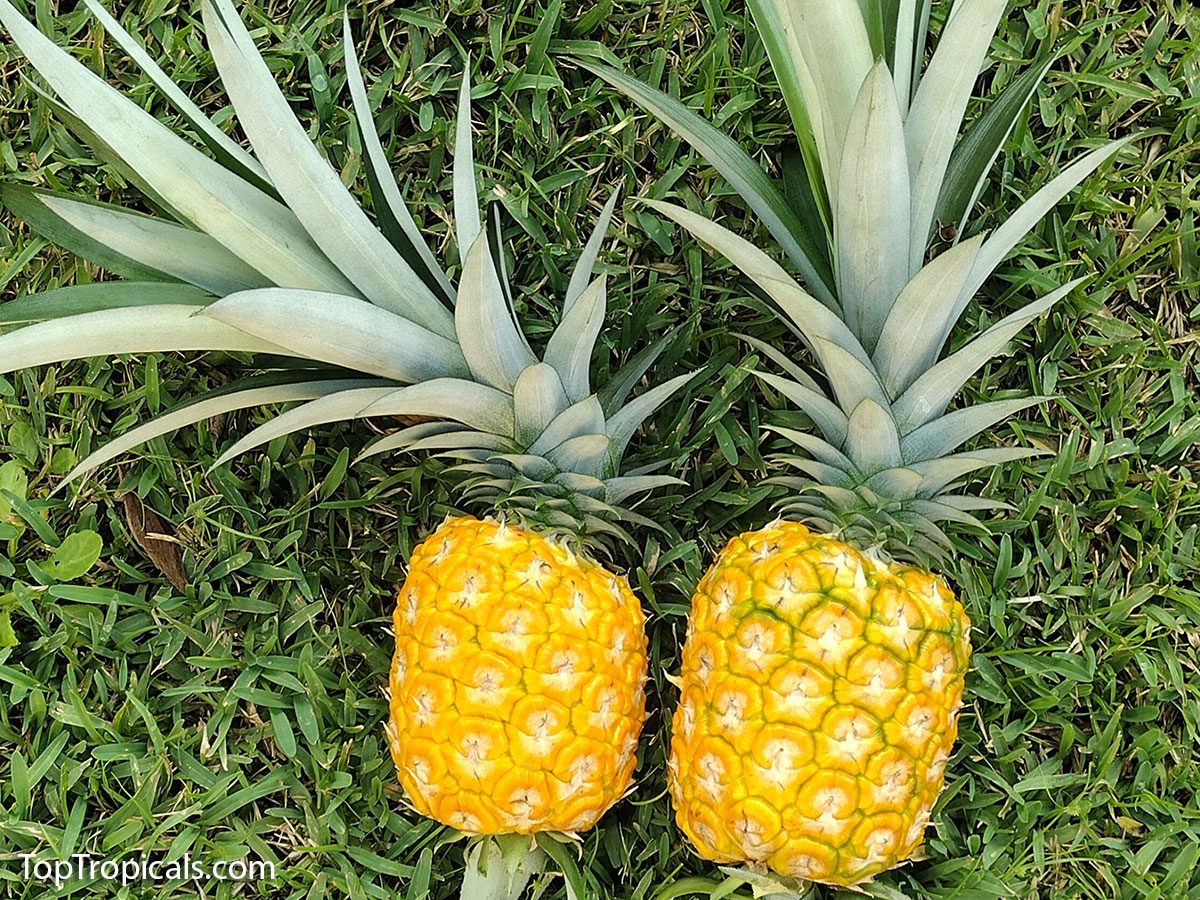
🍍 Everybody loves the Pineapple, but not everyone knows that this exotic fruit actually grows on a plant, Ananas comosus, a member of the Bromeliad family. Growing pineapple is easier than you may think, and sure to grab attention.
Pineapple can make you healthier.... and happy! Watch the video:

📱

🛒 Explore Pineapple varieties

#Food_Forest

🟢 Join 👉 TopTropicals

Date: 25 Nov 2019

Flavor of Feijoa Superfood

by Onika Amell, tropical plant specialist

Q: What exactly is Feijoa - Pineapple Guava? Does the fruit really taste like pineapple? I am curious to know if it is easy to grow.

A: Feijoa is certainly one of the easiest fruit trees to grow as it does not require much care. It is an attractive, evergreen tree or large shrub with dark green, oval, leathery leaves. It has an abundance of uses in the garden and produces lovely edible flowers and fruit! The fruit is eaten fresh, added to smoothies or fruit salad and is also commonly used to make delicious jams and wicked chutneys. Feijoa fruit go a long way in flavor.
This plant is drought tolerant and will grow in almost any soil type. It loves full sun or partial shade and is wind resistant. A lot of gardeners like to grow it as a wind barrier for this reason. It can easily be shaped into a dense, informal hedge or screen that needs very little pruning. Because of this density, it provides excellent shelter for all kinds of wildlife. Butterflies, birds, and butterflies will all love you for growing Feijoa!
Space the plant five feet apart to create a wind barrier hedge. Heat does no not bother it at all and it will also withstand temperatures to 10 degrees F.
The plant gets its names from the delicious perfume it emits. Some folks seem the fruit taste like pineapple, with a slight minty undertone. Others feel the flavor reminds them of juicy fruit gum! The texture is described as smooth and slightly gritty - almost like a pear, but firmer.
If you prefer to grow this plant as a tree rather than a large shrub, simply remove the lower branches up to one-third of the tree's height over a period of time. The Pineapple Guava can grow up to 15 feet wide and tall. They also do really well as a container plant on patios where you can truly enjoy the lovely fragrance of the fruit. It prefers rich, organic, well-drained soil and will need light fertilization every other month in most soils.

We recommend:

Fruit Festival Plant Food - Super Crop Booster
Mango-Food - Smart Release Fruit Tree Booster
SUNSHINE-Honey - Sugar booster
SUNSHINE C-Cibus - Crop Nutrition Booster

Pretty, pink, edible flowers will wow you from May to June, followed in late summer or fall by the delicious and fragrant fruit. An interesting thing about this fruit is that you don't pick it. It falls to the ground when it is ripe. Or simply place something under your tree, like a tarp, and shake the tree. The ripe fruit will fall off. You can store the fruit in your refrigerator for up to a week. And remember! The fruit of the Feijoa is not only a very rich source of soluble dietary fiber, but also an excellent source of Vitamin C, and very rich in antioxidants. They are also low in calories. Each fruit only holds 55 calories.