Garden Blog - Top Tropicals

Date: 24 Jun 2018

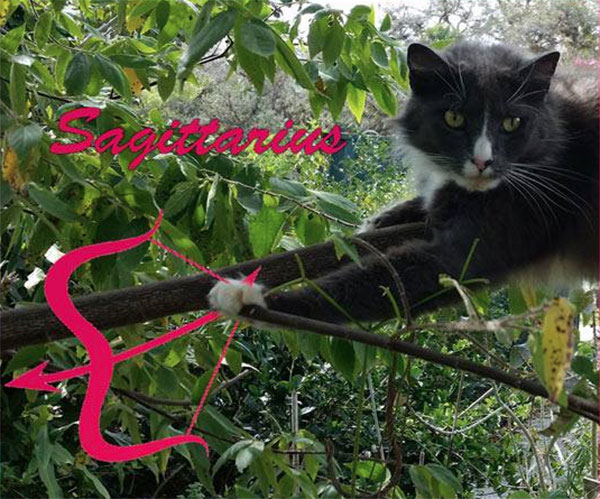
Plant Horoscope. Sagittarius Zodiac lucky plants: Fig and Baobab
TopTropicals

Sagittarius - 11/22 - 12/21. Sagittarius is a FIRE sign that is ruled by the large and optimistic planet Jupiter.
Archer's plants tend to be large in size and fairly conspicuous, with a pleasant odor. They may have large, or elongated leathery leaves and showy flowers.
The best plants for Sagittarius will support the body's largest glandular organ, the liver. The planet Jupiter also rules the hips, thighs, lower spine, and the autonomic nervous system, as well as the process of growth and preservation. Herbs related to Jupiter have traditionally been used to treat lower back problems (including sciatica and lumbago), arthritis, and rheumatism. Herbs with a high silica content are related to Sagittarius (they promote a positive frame of mind), as are plants with large taproots and trees that produce fruit and nuts. Illnesses of Jupiter are said to arise from immoderate consumption. Basil is an herb that's both expansive and cheerful - just like Sagittarius - and its reputation as a money attractor resonates with this sign's generous nature as well. Use this happy herb when you want to infuse your life with fun and prosperity!

Sagittarius Zodiac lucky plants: Mulberry, Ceiba, Chonemorpha, Beaumontia, Baobab, Grapefruit, Anise, Sage, Cinnamon, Blueberry, Thistles, Nut trees, Lemon, all Ficus trees, Peepal, Fig, Coleus, Basil, Banana, Mango, Ironwood Mesua ferrea, Clematis, Peony, Jasmine, Nutmeg, Mint, Tea, Date palm, Guava, Jambul, Maple, Magnolia, Teak, Bird of Paradise, Heliconia, Showy Gingers.

For other signs information, see full Plant Horoscope.
Date: 18 May 2021

Healthy Plants: Q&A from Mr Booster

Healthy Heliconia Leaves?

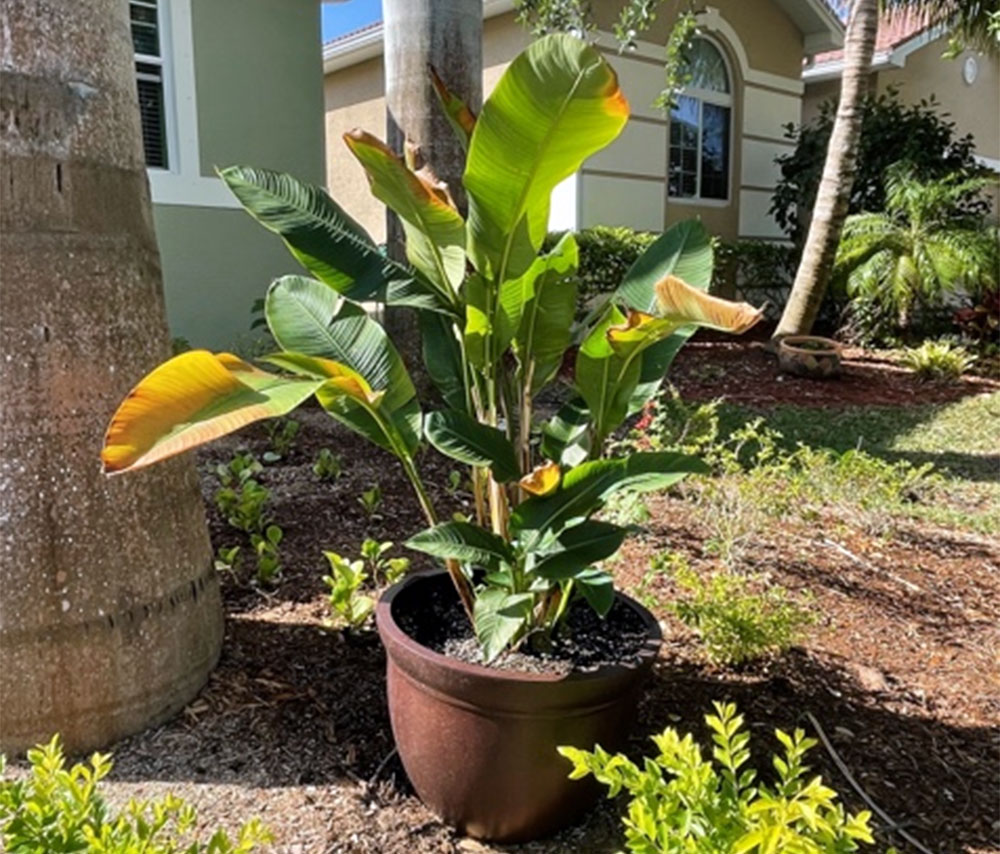
Q: I purchased a heliconia from you a couple months ago. The new growth seems to be doing fairly well, however some of the larger leaves are discoloring around the edges then drying up. It's potted in a large pot with potting soil with 3 holes in the bottom to help with drainage in partial sun under a Royal Palm facing northwest. I'm here in Ft Myers. I was previously watering it every other day with your rapid growth fertilizer 1 tbsp per gallon but I have cut that back to once or twice a week. Please let me know your thoughts.

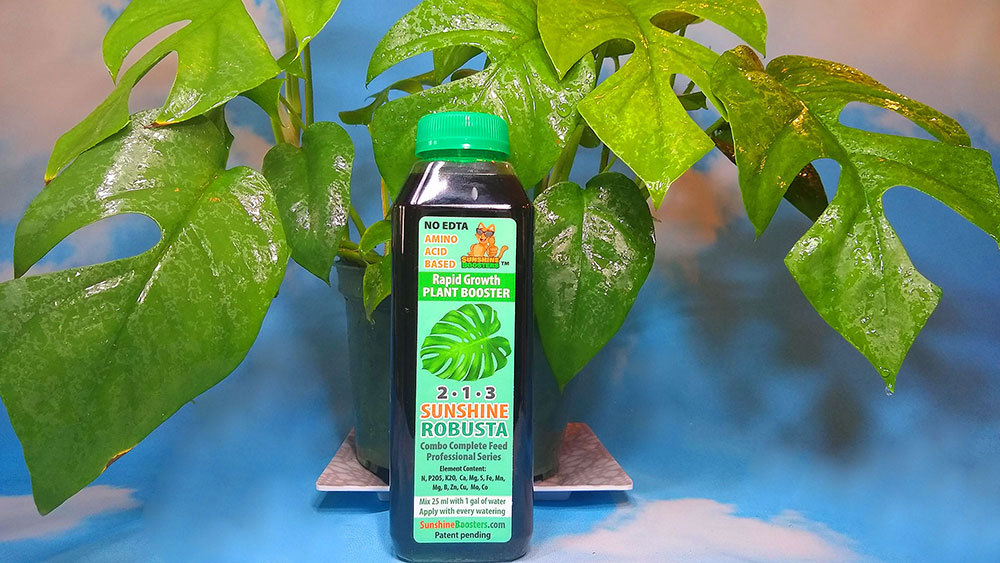
A: Heliconias and Gingers tend to develop dry leaves if grown in pots, especially ceramic or clay pots, because soil in such pots dries out too fast. These dry leaves are not caused by fertilizer, and you can see lots of new healthy green growth. The plant overall seem to be healthy. Continue fertilizing it with liquid Sunshine Robusta that is great for all wide-leaf tropical species, promotes green, lush foliage, and do not use any additional dry fertilizers!
Another suggestion, try to move the plant in more shady spot. Right now it sits in pretty bright light, this may be OK for established plants in the ground, but potted heliconias are very sensitive to hot sun. They get leaf burn easily.

Date: 29 Mar 2021

Small flowering tree for community

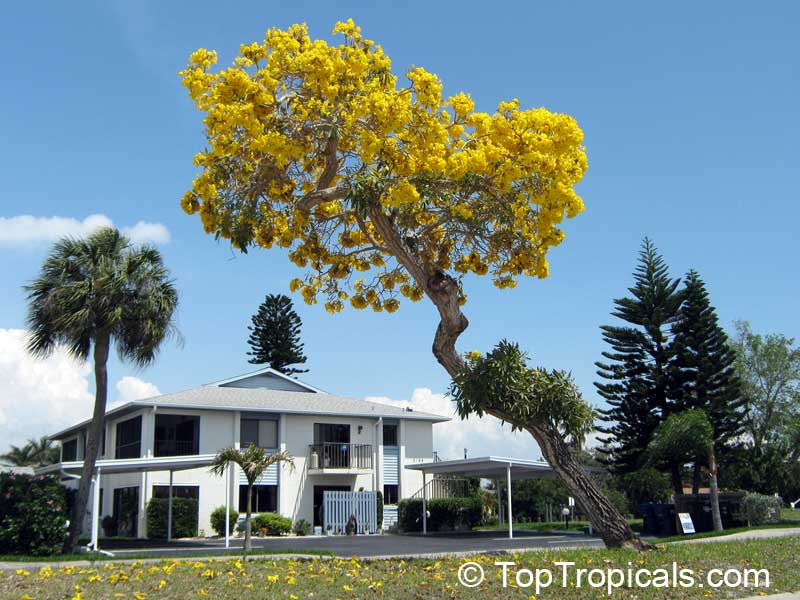
Q: Hi, I live on the east coast near West Palm, but I see you ship your plants. My HOA allows for Yellow Tabebuia species and I'm looking for two or three smaller trees that can fit in my front yard in smaller spaces. Ideally looking for trees that would stay under 20' in height, but preferably even smaller. Can you tell me the average height and spread of the Dwarf Golden Tabebuia or Silver Trumpet trees?

A: The Yellow Tabebuia - Tabebuia caraiba is a very good choice for a small yard. It grows about 20 ft average size, 7-10 ft wide. Sometimes taller, but it is slow growing and it will take many-many years to grow to a bigger size. It is a spectacular tree when in bloom, however, keep in mind that it is not very wind resistant; although it is not difficult to secure it back being a small tree. Another Tabebuia which is even more compact tree, has stronger root system and is more wind resistant:
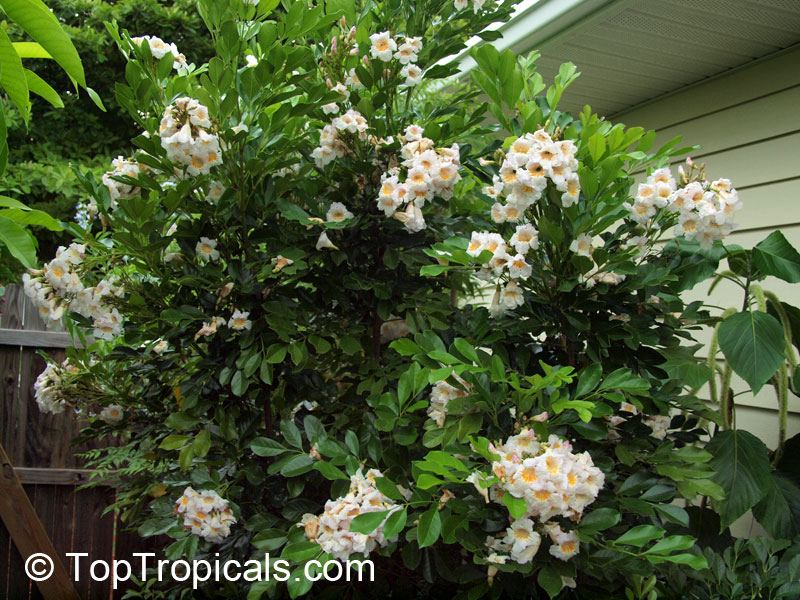
Tabebuia chrysotricha - Dwarf Golden Tabebuia
Also some other interesting choices:
Radermachera Kunming - Dwarf Tree Jasmine
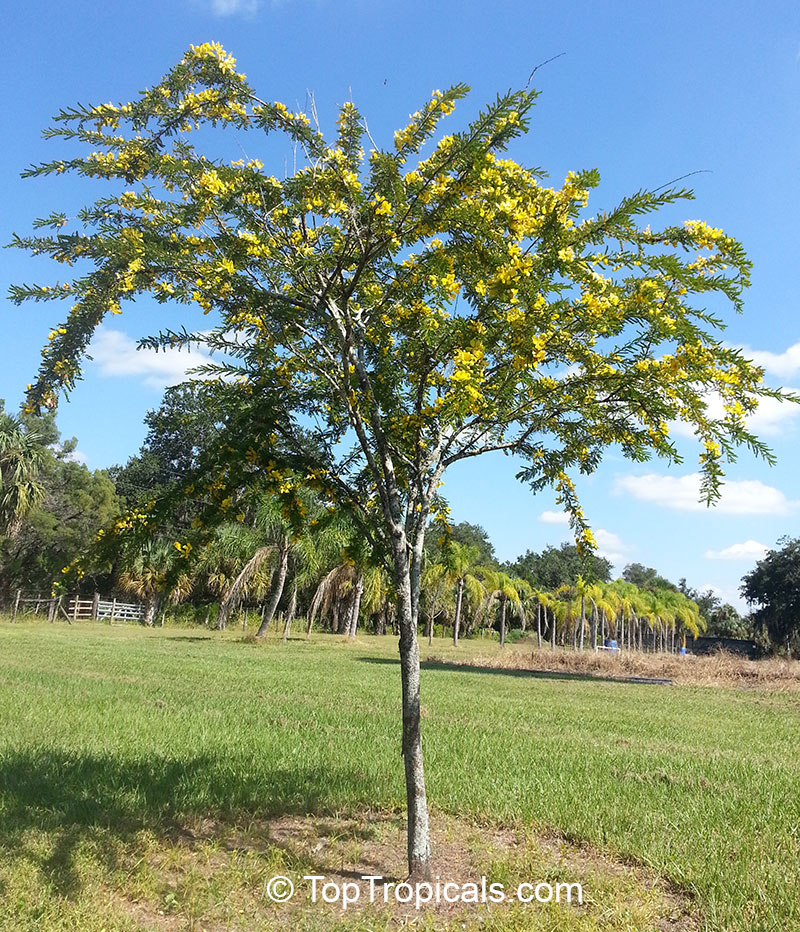
Senna polyphylla - Bahamas Cassia, Desert Cassia
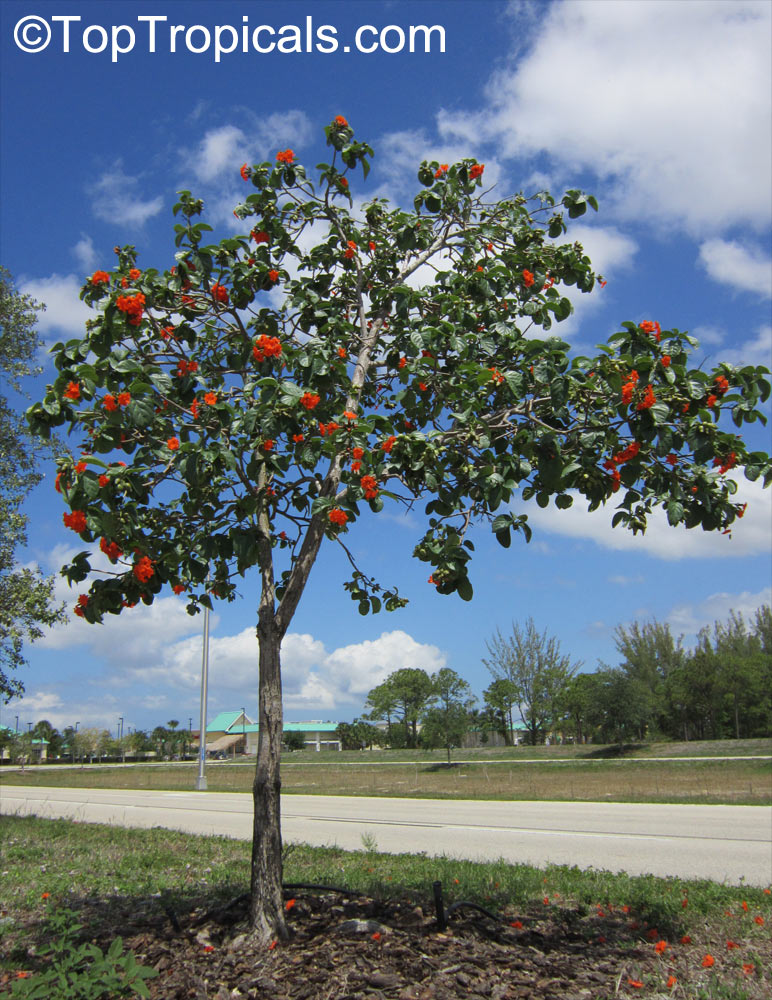
Cordia sebestena - Scarlet Geiger tree

See full list of compact small trees

Tabebuia chrysotricha - Dwarf Golden Tabebuia

Radermachera Kunming - Dwarf Tree Jasmine

Senna polyphylla - Bahamas Cassia, Desert Cassia

Cordia sebestena - Scarlet Geiger tree

Date: 23 Oct 2020

PeopleCats of TopTropicals. Cat of the Day: the mischievous Jim the Second

In May 2020 we celebrated 16th birthday of Jim the Founder - the Cat who established TopTropicals. It broke our hearts when this Old and Wise Purrrson peacefully passed away this August :(( We want to believe that he is now in Cat Paradise... but we miss him terribly - both humans and PeopleCats. Google the Cat lost his appetite and went into a deep depression after he lost his best buddy... To get him distracted from his separation stress, we decided that Google needs... a Project.
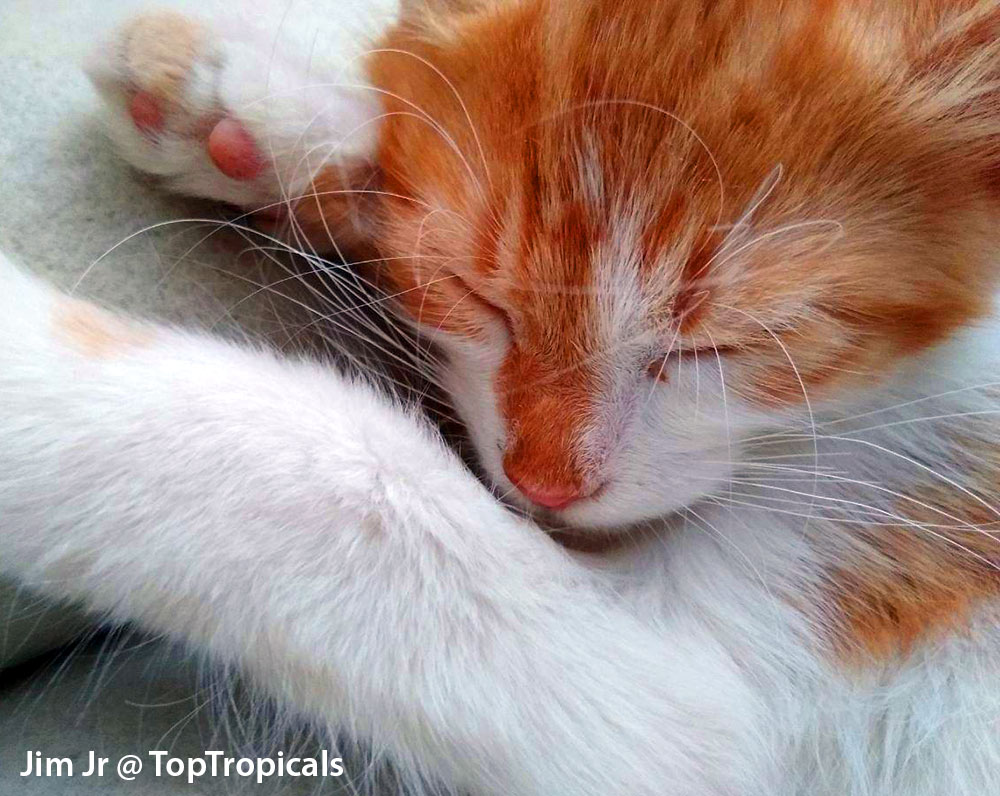
Here he is. Jim the Second. About a month ago we found him in a Human Society shelter. He was a tiny fur ball size of a palm of a hand. But he proudly carries his Godfather's name, for a reason - he likes to EAT - just as much as Jim the First. He eats 3 times more than Google, and he talks a lot. And of course, he pulls everyone's tail, and kicks everything that is kickable...
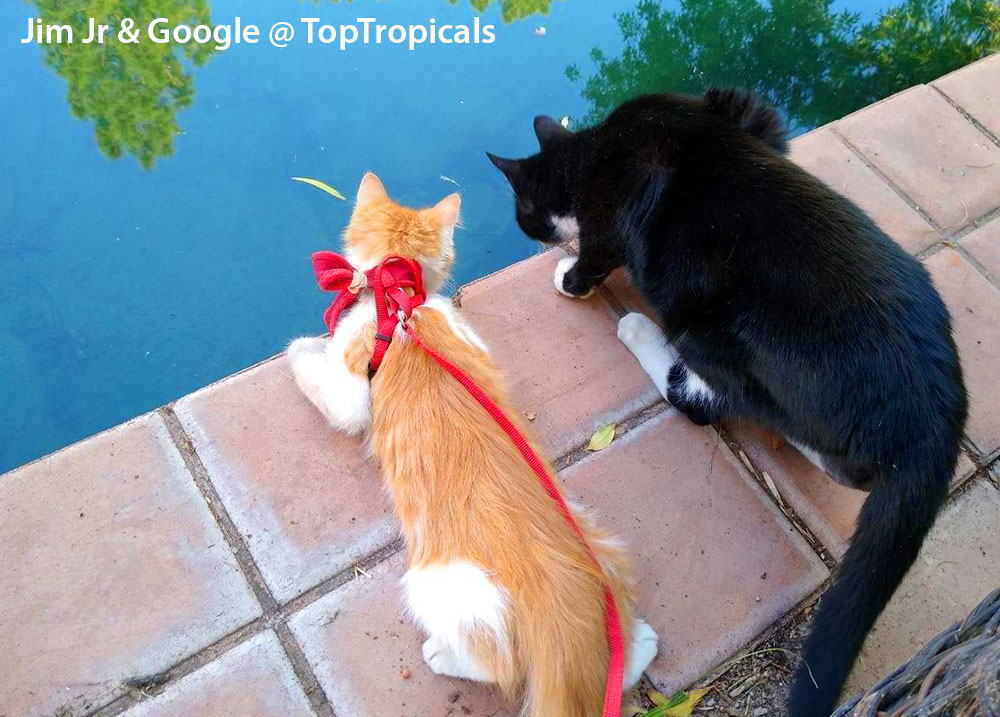
The Veteran Google complains that young generation of PeopleCats nowadays are nothing but trouble... but they've become friends anyway! Google feels much happier now. He just took Jim Jr to his first walk outside to the lake and showed him some fishing techniques...
Bon voyage Little Jim, you soon will master it all! As Mr Booster claims, Orange Cats Bring Happiness!

TopTropicals PeopleCat Club and Zoo

Thank you for supporting us in helping PeopleCat Community!
Make your kind donation today and receive a surprise gift from us! Every little bit helps. Thank you and God bless you and your pets!

Date: 10 Oct 2020

Healthy Plants: Q&A from Mr Booster

How to keep bugs away naturally?

Q: I started moving my tropical plant collection indoors as it's getting colder... And all of a sudden, I noticed bugs on leaves! I know for sure all my plants were bug-free when I kept the pots outside in my lanai. What happened? And how can I keep them clean and healthy without using any harsh chemicals? I have many edibles and herbs that I use in my cooking and prefer to stay away from insecticides. Any suggestions?

A: It is very common when healthy looking plants, once moved indoors for the winter, get insect infestations. The main reason is change of environment that puts a plant into stress and makes it susceptible to parasites and diseases. Just think about what a plant is missing, a whole combination of necessary conditions that provided a good life:
- Bring light -> light level reduced, so beneficial UV spectrum is gone
- Air circulation -> less wind = more bugs thriving
- Warm temperature -> from upper 80's in summer to 70's in your AC room
- Air humidity -> although humid air is believed to be causing some issues (for example fungus), however, reducing humidity overall puts a plant into stress and makes it more vulnerable.

Many gardener prefer to avoid chemicals, especially when it comes to treating edible plants and indoor collections. The solution to your problems is - Organic Solution!

SUNSHINE NoBug - Natural Plant Protector.
Shampoo for Plants - for both indoors and garden

SUNSHINE NoBug - is a natural solution to keep your plants healthy and bug-free without harsh chemicals. It is great for organic gardening and edibles, eco-safe and non-toxic for humans and pets. It kills, repels and prevents: spider-mites, mealybugs, whiteflies, aphids and many more. No wait time required - spray and play! And it smells like jasmine, forget stinky insecticides!
How does it work? Just look at these ingredients: Kosher Glycerine, Organic Coconut Oil, Organic Palm Oil, Oat Protein, Organic Soap, Horticultural Oil, Jasmine Oil, Water. Yum! But bugs hate it - they suffocate in it! This is why your plants will have NO BUGS with NoBug, that's it!

Directions are simple:

- Mix 100 ml (3-4 oz) with 1 qt (32 oz) of water, or 500 ml (16 oz) in 1 gal of water - for larger applications
- Spray foliage to drip point, including underneath leaves.
- Repeat the treatment in 7 days.
- As a preventive care, spray leaves once a month to keep insects away.
- You may use a paper towel saturated with this solution to wipe the leaves and remove residue from insects.
- Store at room temperature.

This poor Pepper plant was tossed into garbage can by a neighbor... it looked hopeless, infested with mealybugs. We saved it with NoBug ! In 2 days it perked up, and after 4 weeks its healthy and fruiting!