Garden Blog - Top Tropicals

Date: 28 Sep 2025

Guava Tree Plant Care

Tips from Top Tropicals Plant Expert - Tatiana Anderson
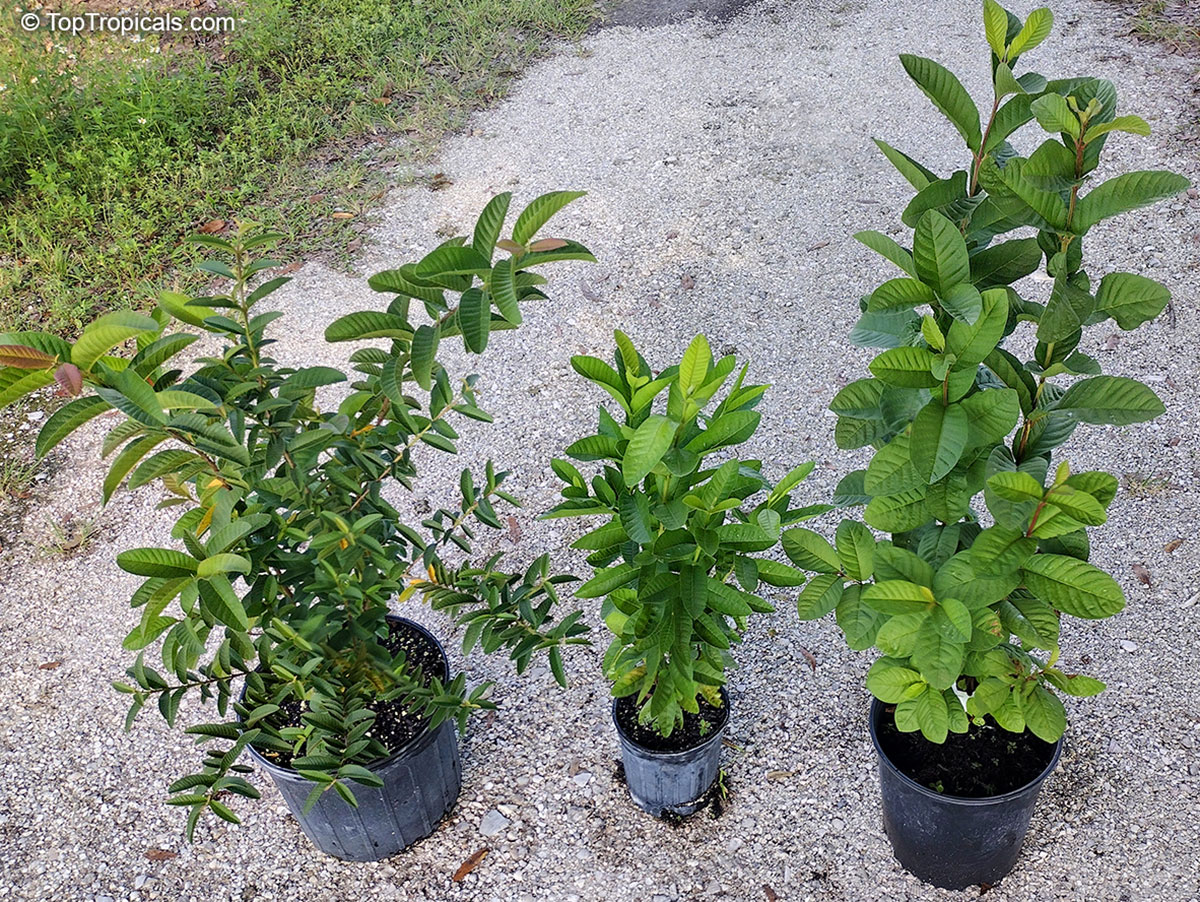
Guava  trees  for  sale  in  3-gallon  nursery  pots,  healthy  young  plants 
 with  green 
 foliage.

Where to Plant Outdoors

Guavas love full sun — aim for 6–8 hours of direct light. They’re adaptable to many soils but do best in well-drained, organic-enriched mixes. Plant them in a spot where you can water easily; guavas are thirsty trees during fruiting.

Container & Indoor Growing

Don’t have space or live in a cooler climate? Guavas thrive in large pots. Use well-drained potting mix. LINK TO OUR SOIL Keep them on a sunny patio during warm months and bring them indoors when nights dip below freezing. Compact varieties like Dwarf Hawaiian Rainbow or Tikal are especially good for pots.

Winter Care

Mature guavas can handle a light frost (down into the high 20s F), but young plants need protection. If planted outdoors, cover them with frost cloth on cold nights. Container guavas can be wheeled into a garage, greenhouse, or bright indoor window until the weather warms.

Watering and Fertilizing

Water deeply once or twice a week, more often in hot weather or when fruit is developing. They don’t like soggy soil, but they won’t complain about short floods either. Fertilize 3–4 times a year during the growing season with a balanced fruit tree fertilizer. Guavas especially love potassium and phosphorus for strong flowering and heavy crops. We recommend liquid crop booster Sunshine C-Cibus and balanced controlled release fertilizer Green Magic.

Pruning

Prune after fruiting to keep them compact and open up airflow. Remove crossing or dead branches. In containers, trim back vigorous shoots regularly to manage size and encourage more fruiting wood.

Pests and Problems

Guavas are generally tough and pest-resistant. The main thing to watch for in humid or rainy climates is mealybugs - those cottony white clusters on leaves or stems. They're easy to manage with neem oil or a quick spray of horticultural soap.

Fruit time

Guavas fruit young - often within a year or two.

Pollination

Guavas are self-pollinating, so you'll get fruit even with a single tree. Planting more than one tree, however, often boosts harvests and gives you a longer fruiting season.

If you've ever wanted instant gratification from a fruit tree, guava is it.
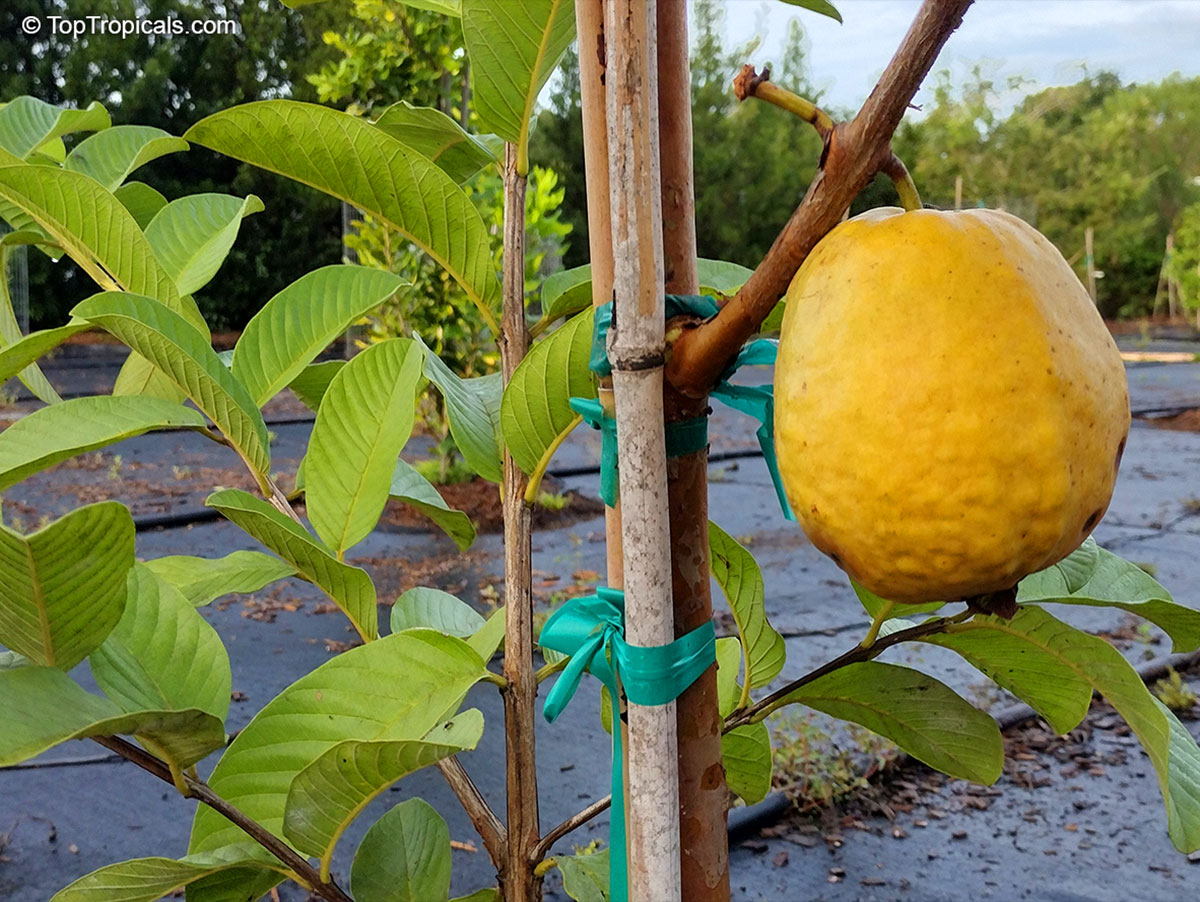
Ruby  Supreme  Guava  tree  with  a  large  ripe  yellow  fruit,  variety  known 
 for  sweet  pink  flesh  and  reliable 
 harvests.

🍴 Guava Recipes

With all that fruit, the next question is always: "What do I do with it?" Here are our favorites:

  • Cas Guava: Make Agua de Cas

    Boil halved Cas Guava fruits with sugar, simmer, strain, and bottle. Dilute with water when serving. The concentrate keeps for months in the fridge.
    Check out the recipe.

  • Hawaiian Gold: Make Drinks

    Perfect for Mojitos or Margaritas. Sweet, tangy juice pairs beautifully with lime and mint. Learn more

  • Araca Pera: Guava Wine

    Famous in Brazil, where the fruit is turned into a vibrant rosу wine. Locals say it’s the taste of summer in a glass — and yes, you can make it at home too. Learn more...

  • Quick snack: Guava Grilled Cheese

    Spread guava paste or fresh mashed fruit with cheese, grill until golden. Sweet and savory heaven. Learn more...

  • Simple Guava Juice

    Blend ripe guavas with water, ice, and a little sugar if you like. Instant refreshment.

✅Ready to Grow? Whether you want fresh juice, sweet fruit, or even your own guava wine, we’ve got the best varieties in stock right now. Your future self, sipping guava juice on a hot summer afternoon, will thank you.
👉 Order your guava tree today

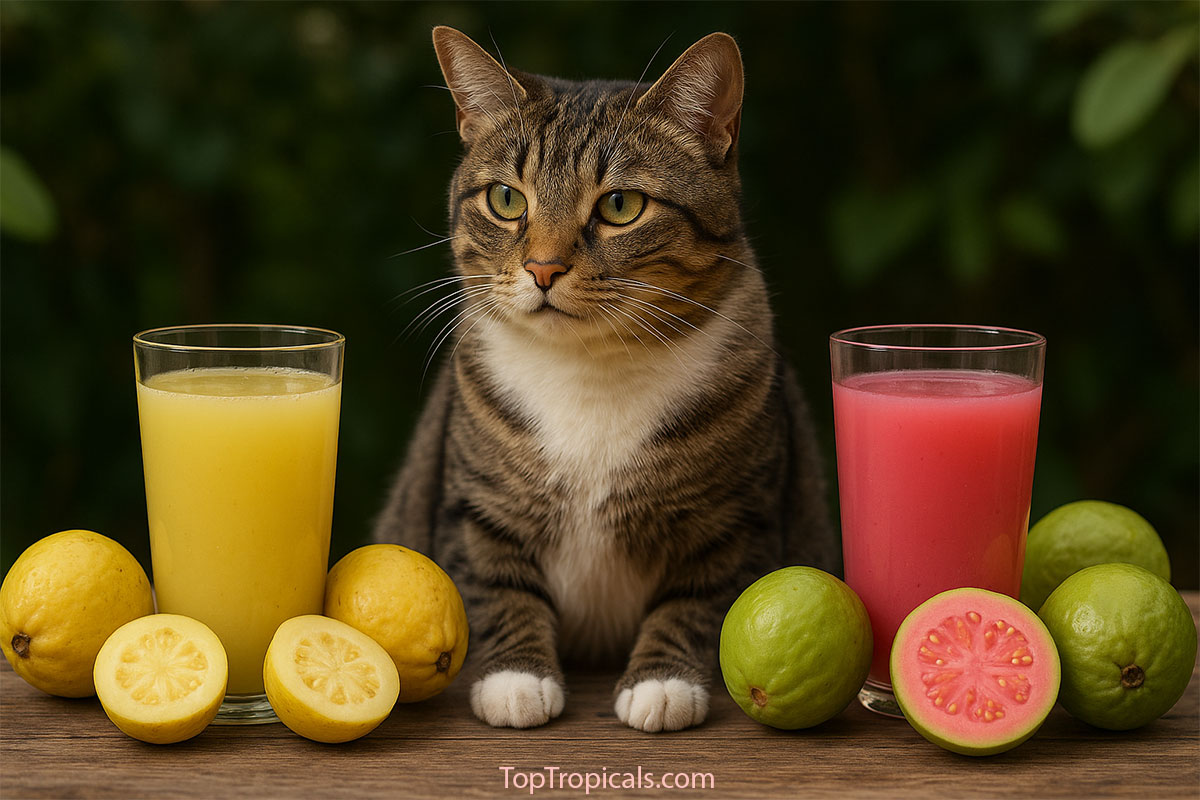
Tabby  cat  sitting  between  a  glass  of  yellow  guava  juice  with  white 
 guavas  and  a  glass  of  pink  guava  juice  with  green  guavas  and  cut  pink  guava 
 fruit.

Date: 5 Jan 2025

Condo (Dwarf) Mango Practical Guide:
What varieties are good for container culture
or small yards

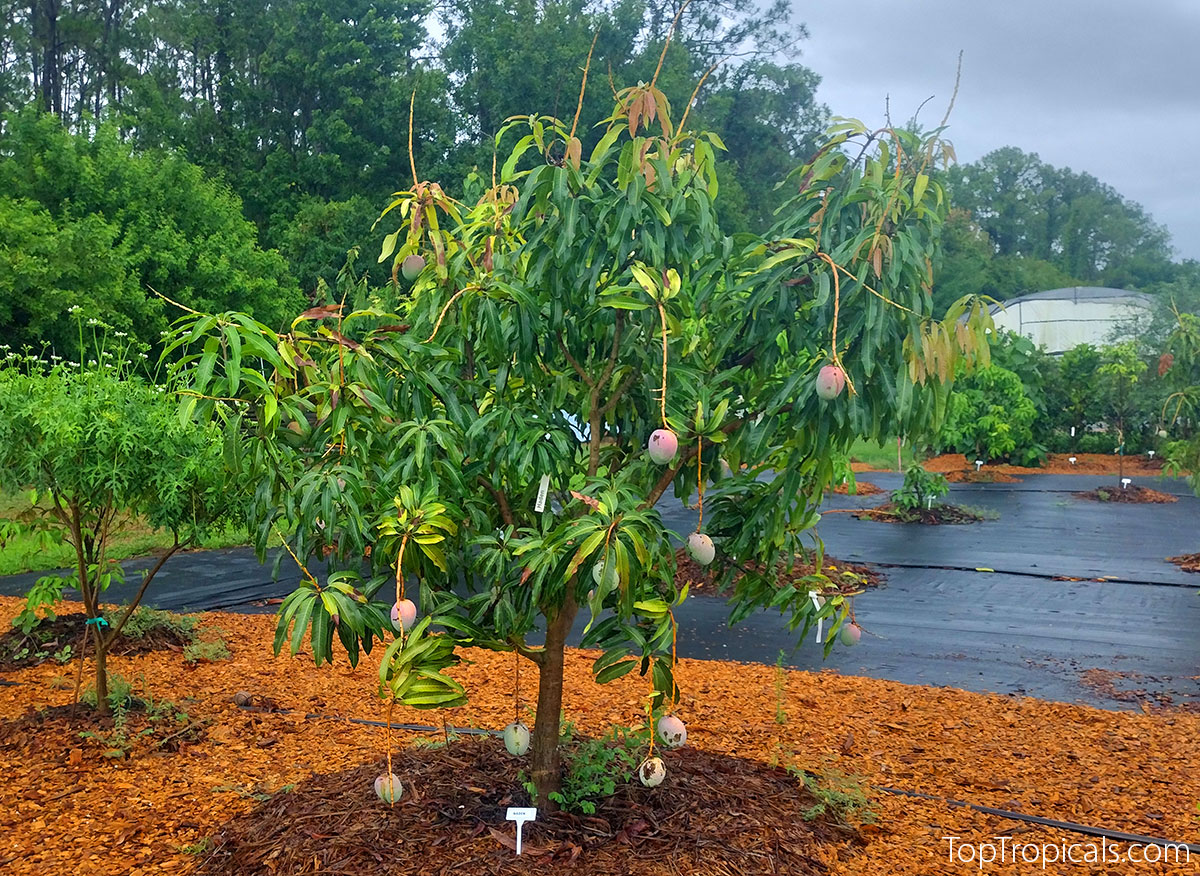
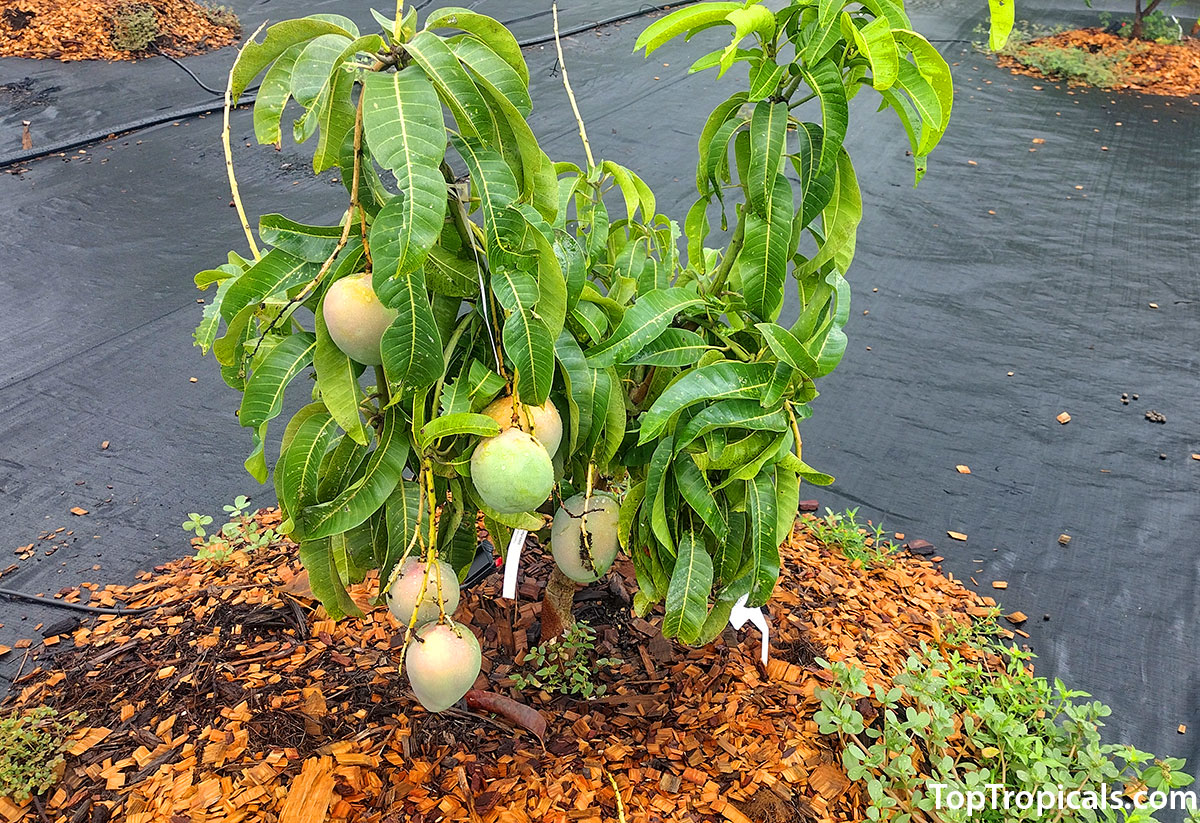
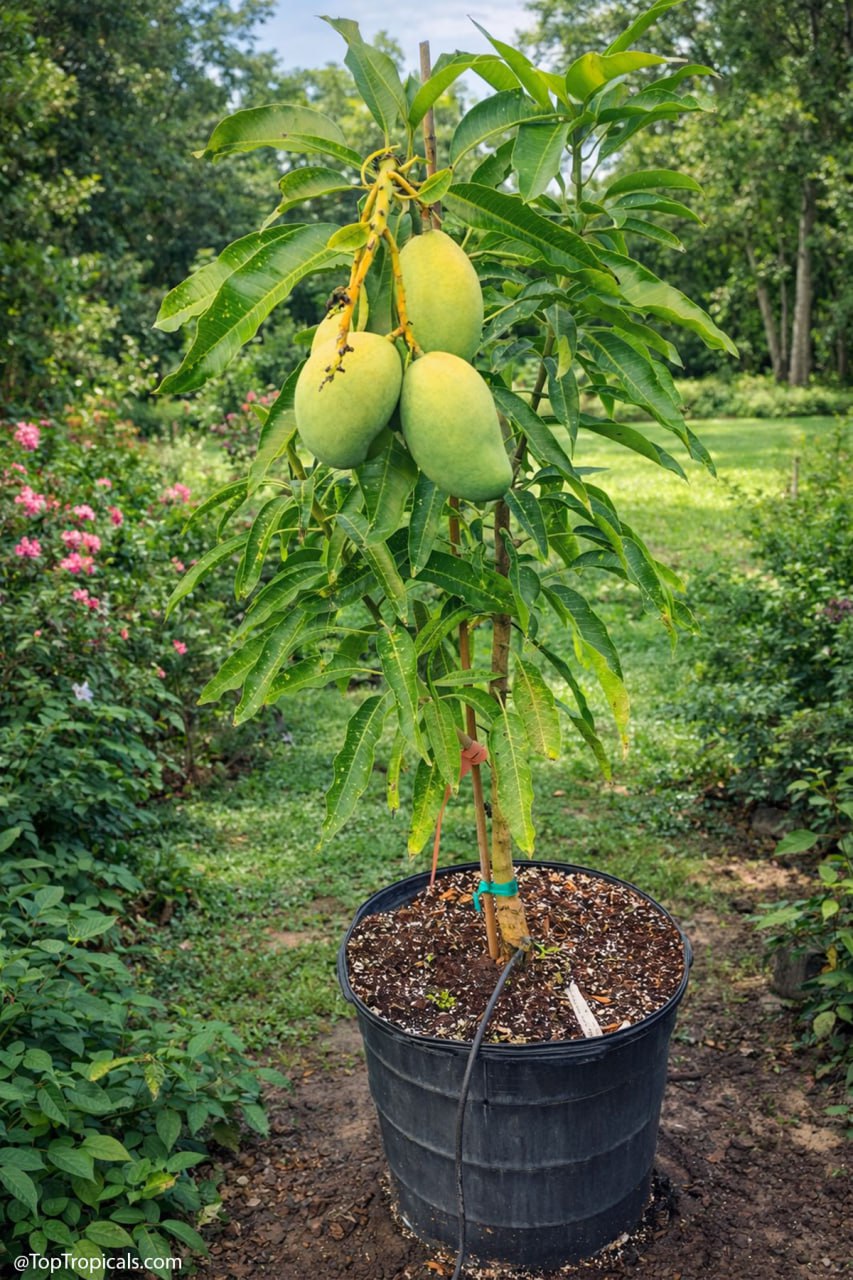
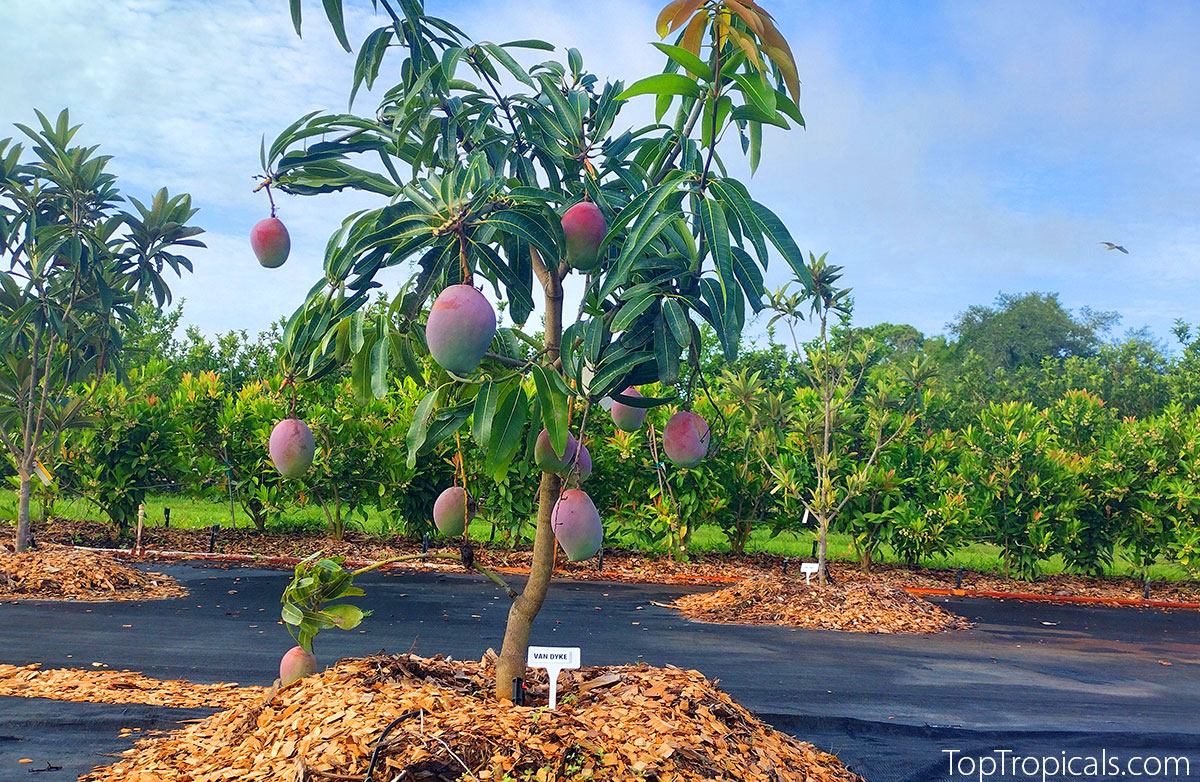
Condo  dwarf  mango  with  fruit

Q: "Our winters are too cold for a mango tree, but I'd like to grow one in a pot so I can bring it inside during cold nights. Which varieties do you recommend for container gardening? I've heard of Condo Mango - do you carry them?"

A: Yes, we always carry Condo Mango varieties: they are a fantastic choice for gardeners with limited space or in cooler climates. They grow well in containers and can be easily maintained through pruning. Whether you're growing them on a balcony, in a greenhouse, or in a backyard, Condo Mangos provide the perfect mix of beauty and practicality.

What Are Condo Mangos?

Condo Mangos, also known as dwarf mango trees, are perfect for small spaces. These trees can be grown in containers, making them ideal for balconies, greenhouses, or small suburban backyards. With proper care, they can be maintained at a manageable height of 6-10 feet through regular pruning. Some plant enthusiasts even manage growing Mango tree as an indoor plant!

The term Condo Mango

Condo Mango refers to mango varieties that thrive in containers and are small by nature, allowing them to be easily kept even smaller with selective pruning.

Size and Growth

Unlike traditional mango trees, Condo Mangos are compact. They naturally grow to around 6-10 feet, but with proper pruning, they can be kept small, making them an excellent choice for limited space.

Growing in Containers

- Condo Mango trees thrive in pots and containers.
- A 15-20 gallon pot is ideal to give the roots enough room to grow.
- Ensure your container has drainage holes to prevent root rot.

Planting Tips

- Plant Condo Mangos in full sun, where they'll get plenty of heat and light.
- Use well-draining soil for optimal growth.
- Fertilizer regularly with quality plant food. Out best choice is Sunshine Mango Tango for edibles. - Late Winter to early Spring is the best time to plant in containers, before the rainy season starts.
- Mangoes grow well in USDA zones 9-10, but if you live in cooler climates, you can grow them indoors or in a greenhouse, as long as you meet their heat and light needs.

Pruning and Maintenance

- Prune Condo Mango trees once a year to keep them at the desired height (6-10 feet), right after harvesting (late Summer to Fall)
- Trim the tips of the branches to maintain a compact shape and encourage healthy growth.
- Regular pruning will help keep the tree manageable and ensure better fruit production.

Learn more: Find out what are Top 10 Dwarf Condo Mango - great for container culture.

Condo  dwarf  mango  with  fruit

Condo  dwarf  mango  with  fruit

Date: 14 Oct 2025

Yes, you can grow a tropical fruit tree in a pot!

Yes, you can grow a tropical fruit tree in a pot! Yes, you can grow a tropical fruit tree in a pot!

🥭 Yes, you can grow a tropical fruit tree in a pot!


🍒 If you dream of picking fresh tropical fruit - Mango, Avocado, exotiс Annona and more - but only have a patio, balcony, or small yard, you’re not out of luck. Many tropical fruit trees grow perfectly well in large containers. The key is choosing the right variety, pot, and care routine.
  • 🍒 Pick a compact tree type
    Start with a dwarf or semi-dwarf variety. Regular tropical trees can grow huge, but container-sized cultivars stay under 8–10 feet and are much easier to manage. For example, Condo varieties of Mango like Pickering or Ice Cream stay small and still produce full-sized fruit. The same goes for Dwarf Avocados like Wurtz (also called Little Cado) and Sugar apples. Blackberry Jam fruit tree (Randia formosa) and Peanut Butter Fruit tree (Bunchosia argentea) are also excellent choices.
  • 🍒 Choose the right pot
    Begin with a 5-gallon container and move up as the tree grows. A mature plant will be happy in a 20–25-gallon pot. Drainage is critical - roots will rot if the pot stays soggy. Use a sturdy plastic, ceramic, or wooden container with multiple holes in the bottom.
  • 🍒 Soil and watering
    These trees all like loose, well-draining soil. Mix potting soil with perlite or pine bark for better aeration. Water deeply but not too often - let the top few inches dry before watering again. Overwatering is the quickest way to kill a potted tropical.
  • 🍒 Light and feeding
    Full sun is a must - aim for at least 6 hours daily. Fertilize during the growing season with a balanced fruit tree or slow-release fertilizer like Green Magic or liquid Sunshine Boosters. Many tropicals appreciate an extra boost of micronutrients like iron and magnesium to keep their leaves green.
  • 🍒 Cold protection and pruning
    If you live where winters get chilly, move the pot indoors or into a greenhouse before frost. Prune lightly in spring to keep shape and airflow. Container trees can fruit heavily if given light, warmth, and consistent care.


At the end of the day, container culture lets you grow the tropics anywhere - from a city balcony to a backyard deck.

Next: The best tropical fruit trees for containers...

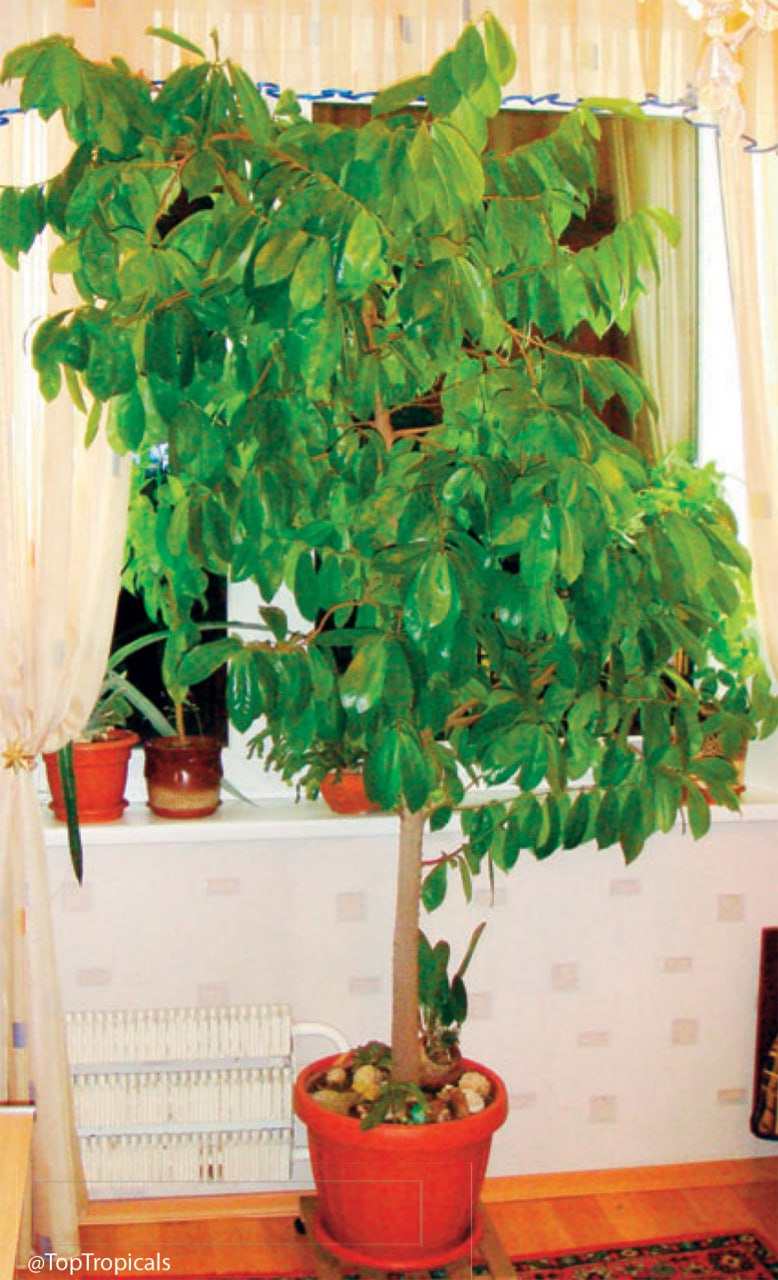
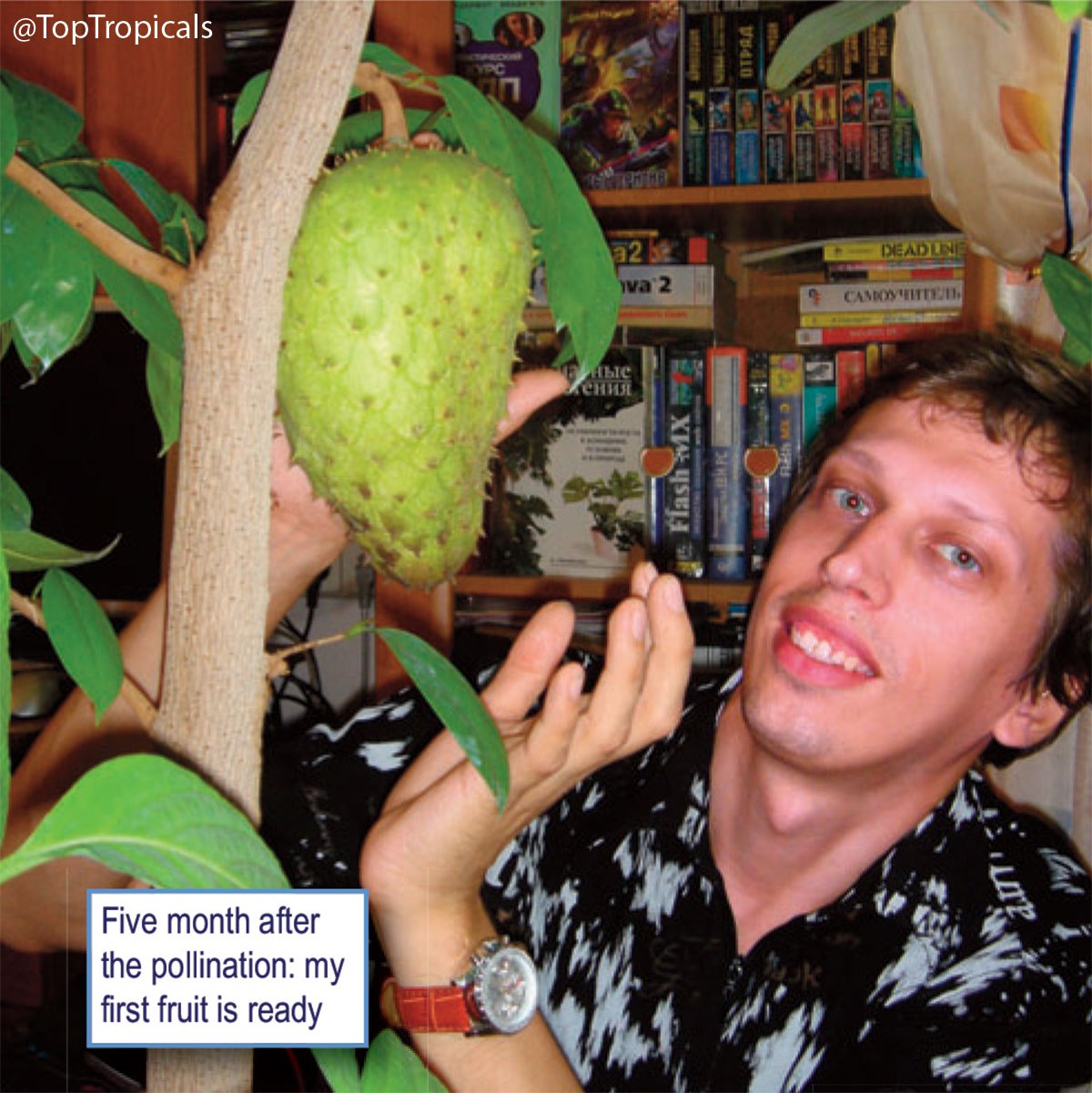
📸 Growing and fruiting Soursop in apartment (PDF download)

🛒 Explore tropical fruit trees

#Food_Forest #How_to #Discover

🟢 Join 👉 TopTropicals

Date: 7 Jan 2026

How to grow papaya from seed without killing it, Part 3: containers, sunlight, and 11 common mistakes

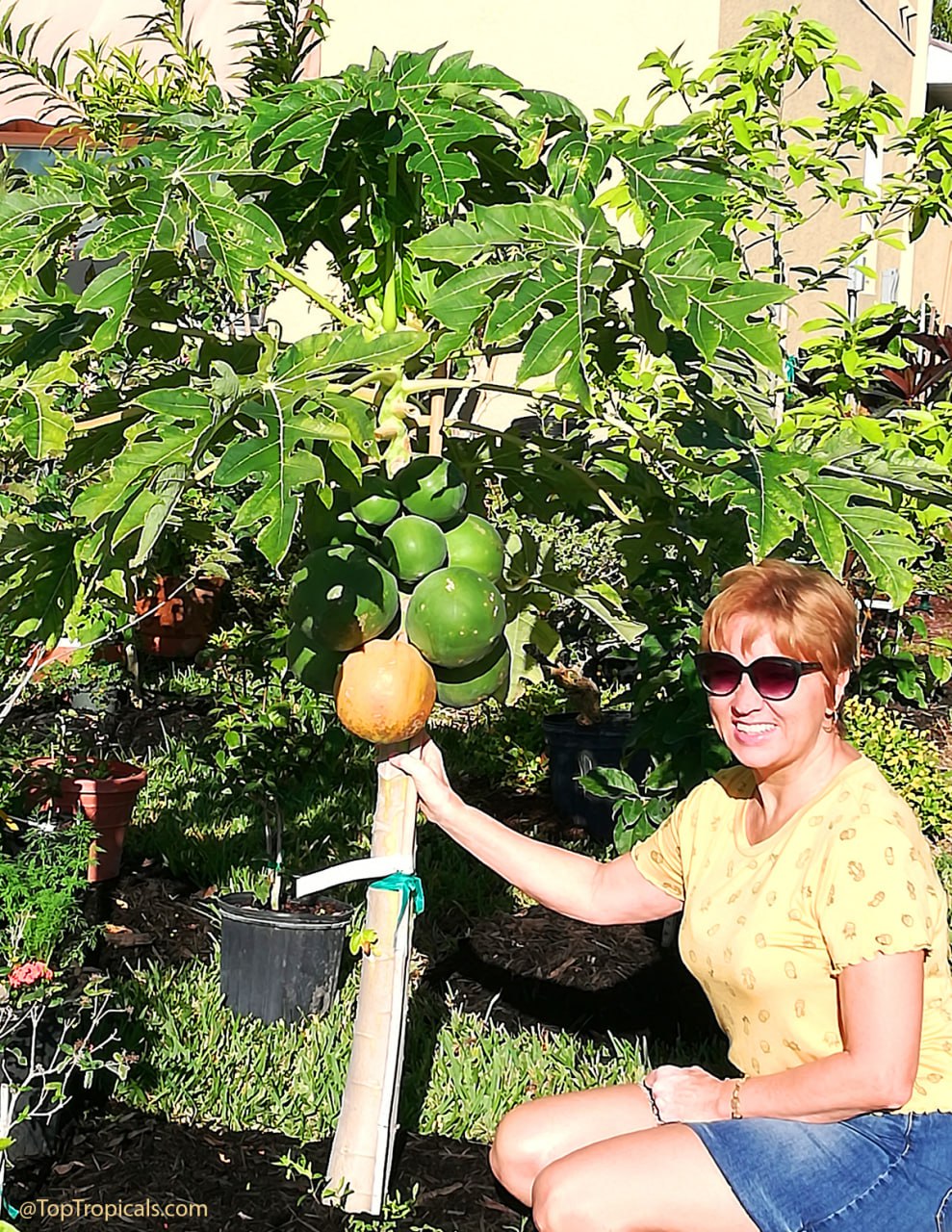
Dwarf Papaya tree

Dwarf Papaya tree

🍊 How to grow papaya from seed without killing it, Part 3: containers, sunlight, and 11 common mistakes


Getting papaya to sprout (see part 1 and part 2) is only half the battle. How you handle containers, sun, water, and root disturbance determines whether your plant reaches fruiting size or slowly declines. In this final part, we cover practical container growing, light requirements, and the mistakes that stop papaya from ever producing fruit.

🍊 Transplanting papaya - what most people get wrong


The one thing papaya roots hate (and most growers ignore)

Choosing the right container is critical.
Rule of thumb: papayas hate transplanting. Their roots do not like to be disturbed.

Because of this:
🟡Reduce transplanting as much as possible
🟡Choose a container that will last longer once seedlings leave starter pots
🟡Avoid stepping up pot sizes too frequently

Watering matters just as much:
🟡Larger pots stay wet longer
🟡Papaya roots dislike constant moisture
🟡Always reduce watering when moving into a bigger container

🍊 Container growing guide for papaya


Grow papaya anywhere - but only if you do this right

🟡Start seeds in small cells (1–2 seeds per cell) or small pots (4–8 seeds per pot, spaced far apart)
🟡Transplant carefully when seedlings reach about 2 inches
🟡Once a 4-inch pot is outgrown, move directly to 1-gallon or even 3-gallon containers
🟡Reduce watering when containers are much larger than the root system
🟡Protect young plants from heavy rain until roots fill the pot
🟡Stake plants with bamboo
🟡Papayas grow fast, and the stem often outpaces root development. Even light wind can knock them over

🍊 Sunlight requirements for papaya


Papaya grows fast, but one mistake stops it cold

Papayas need full sun and prefer to stay on the drier side once established.

In shade:
🟡Plants become leggy and overly tall
🟡Flowering may stop completely
🟡Fruit production may be reduced or zero

Shade also keeps soil wet longer:
🟡Soil dries slowly
🟡Excess moisture can kill roots, even on mature plants

🍊 11 most common mistakes when growing papaya from seed


From seed to fruit in under a year - if you avoid these papaya mistakes

· 1. Leaving pulp or slime on seeds - prevents germination and causes rot
· 2. Soil too wet during germination - keep damp, not soggy
· 3. Overwatering seedlings - young plants rot easily
· 4. Disturbing roots during transplanting - papayas hate it
· 5. Not enough sun - papaya hates shade and will not produce in low light
· 6. Too much water once established - prefers drier conditions
· 7. Planting in low spots in the ground - poor drainage leads to root rot
· 8. Using heavy soil - waterlogging kills roots
· 9. Giving up too early - seeds can take weeks to sprout
· 10. Not fertilizing - papaya is a heavy feeder. Poor soil means no fruit. Remember, it is a giant grass.
· 11. Do not trim papaya. Trimming may cause side shoots, but it ruins the natural tropical form. If you need a ladder to harvest fruit, the solution is not pruning - it is growing a dwarf variety.

Papaya rewards growers who understand its quirks. Treat it like the fast-growing, shallow-rooted plant it is, and it will produce quickly and generously. Ignore those basics, and it will struggle no matter how much care you give it.

If you found this helpful, bookmark all 3 parts - papaya grows fast, and timing matters
:

How to grow papaya from seed without killing it:
Part 1: Papaya basics
Part 2: Seeds germination
Part 3: Containers, sunlight, and common mistakes

🛒 Explore Papaya varieties

📚 Learn more:

Papaya Plant Facts

Botanical name: Carica papaya
Also known as: Papaya
USDA Zone: 9 - 11
Highligths Small tree 10-20 ftFull sunWater Requirement: Low. Allow soil to dry out between wateringsWatering: Moderate. Water when top soil feels dryYellow, orange flowersWhite, off-white flowersEdible plantEthnomedical plant.
Plants marked as ethnomedical and/or described as medicinal, are not offered as medicine but rather as ornamentals or plant collectibles.
Ethnomedical statements / products have not been evaluated by the FDA and are not intended to diagnose, treat, cure, or prevent any disease. We urge all customers to consult a physician before using any supplements, herbals or medicines advertised here or elsewhere.Subtropical plant. Mature plant cold hardy at least to 30s F for a short time
Get personalized tips for your region

· Carica papaya in Plant Encyclopedia

#Food_Forest #How_to #Papaya

🟢 Join 👉 TopTropicals

Date: 16 Feb 2026

Yes, you can grow a mango tree on your patio - here is how to do it right

Mango fruiting in container

Mango fruiting in container

🥭 Yes, you can grow a container mango tree on your patio - here is how to do it right


Think you need a backyard orchard to grow mangoes? You don't. Mango trees grow very well in containers. Compact varieties, often called condo mangoes, stay naturally smaller and are well suited for pots, patios, and small yards. We grow and ship mango trees nationwide and have seen which varieties perform best in containers.

Growing mangoes in pots is also practical in cooler climates. The tree can be moved to protection during cold weather while still producing real fruit. Here is how to do it right.

🥭 Pick the right condo mango tree variety


Choose condo or semi-dwarf mango varieties that stay smaller and respond well to pruning. These mango trees usually stay 6 to 10 feet tall in containers with light pruning. Fruit size is full-size, just fewer than on large trees.

Good mango choices for pots include:
· Cogshall - compact and productive
· Pickering - naturally small and reliable
· Carrie - manageable size, great flavor
· Ice Cream - slow growing, narrow canopy
· Julie - classic Caribbean type
· more condo varieties...

🥭 Choose the right pot


Start small. Young mango trees do best in a 5- to 7-gallon pot. Oversized containers too early often cause overwatering and root issues.

Increase size gradually:
First pot: 5-7 gallons
Next size: 10-15 gallons
Mature container: 20-25 gallons

The pot must drain well. Mango roots dislike wet soil. Add holes if needed. Plastic, ceramic, and fabric pots all work.

🥭 Use fast-draining soil


Mango trees need air around their roots.
Use a loose, fast-draining mix, such as Abundance Professional Soilless Mix. Improve drainage with perlite, pine bark, or coarse sand. Avoid heavy or water-holding soils. Drainage matters more than fancy ingredients.

🥭 Water carefully


Mango trees prefer a wet-dry cycle.
Water deeply, then allow the top few inches of soil to dry before watering again. Always check with your finger first.
In warm weather, water once or twice a week. In winter, much less. Overwatering is the most common container mistake.

🥭 Give plenty of sun


Mango trees love sun and heat.
Place the pot in full sun with at least 8 hours daily. More sun improves growth and flowering.
If overwintered indoors, use the brightest window possible. Grow lights help, but outdoor sun is best when weather allows.

🥭 Fertilize lightly but consistently


Potted mango trees benefit from regular feeding during active growth.
Use a balanced mango or fruit tree fertilizer such as Sunshine Mango Tango (safe to use with every watering, year-around). Controlled-release fertilizer Green Magic (every 6 months) work well too. Avoid excess feeding, which promotes leaves over flowers.
If leaves pale, check watering first, then nutrition.

🥭 Prune to stay compact


Pruning is essential for mangoes in pots.
Light tipping and trimming control size, encourage branching, and increase flowering points. Keep the canopy open and balanced. Watch how simple tipping works in real life: .
Avoid heavy pruning before flowering. Most pruning is best right after harvest.

🥭 Protect from cold


Mango trees are tropical and cold-sensitive.
When temperatures drop below 40F, move the pot to protection or indoors. Young trees are especially vulnerable.
During winter, reduce watering and stop fertilizing. Growth slows and the tree rests.
When warm weather returns, reintroduce the tree to sun gradually to prevent leaf burn.

🥭 Final thoughts


Growing a mango tree in a pot is practical and rewarding. With the right variety, good drainage, full sun, and careful watering, a potted mango can thrive and fruit for years, even in small spaces. Ready to start? Choose a compact mango variety.

🛒 Discover Condo Mango

📚 Learn more:
Mango in Plant Encyclopedia
Mango Tree for Zone 5: top 15 Condo Mango for growing in cold areas
How long does it take for a mango tree to bear fruit?
What are the Condo Mangos - a practical guide
Top 10 Dwarf "Condo" Mango, great for container culture
Yes, you can grow an avocado tree on your patio - here is how to do it right

#Food_Forest #How_to #Discover #Mango

Mango Plant Facts

Botanical name: Mangifera indica
Also known as: Mango
USDA Zone: 9 - 11
Highligths Large tree taller than 20 ftSmall tree 10-20 ftFull sunWatering: Moderate. Water when top soil feels dryYellow, orange flowersPink flowersEdible plantSeaside, salt tolerant plant
Get personalized tips for your region
🟢 Join 👉 TopTropicals