Garden Blog - Top Tropicals

Date: 26 Jun 2026

Twins

Twins

👯 Twins


"Being a twin is like being born with a best friend." - Tricia Marrapodi

🐈📸 Cat Shura aka Lil Sht with her best friend at TopTropicals PeopleCats.Garden.

#PeopleCats #Quotes

🟢 Join 👉 TopTropicals

Date: 26 Jun 2026

How to Grow Mahoe: The Fast-Growing Shade Tree That Changes Color - Tropical Chameleon

How to Grow Mahoe: The Fast-Growing Shade Tree That Changes Color - Tropical Chameleon How to Grow Mahoe: The Fast-Growing Shade Tree That Changes Color - Tropical Chameleon How to Grow Mahoe: The Fast-Growing Shade Tree That Changes Color - Tropical Chameleon
🌳 How to Grow Mahoe: The Fast-Growing Shade Tree That Changes Color - Tropical Chameleon

Looking for a fast-growing, low-maintenance tropical tree that brings effortless shade, constant color, and a parade of pollinators to your yard - Mahoe is the one! Talipariti tiliaceum, formerly Hibiscus tiliaceus - is native to coastal pantropical regions. This sturdy evergreen is a true garden workhorse. Whether grown as a dense, 5-to-10-foot privacy shrub or trained into a beautiful, umbrella-shaped small tree reaching up to 20 feet, Mahoe delivers that lush, instant-jungle vibe in just one season.

🌳 Nature's Color-Changing Magic


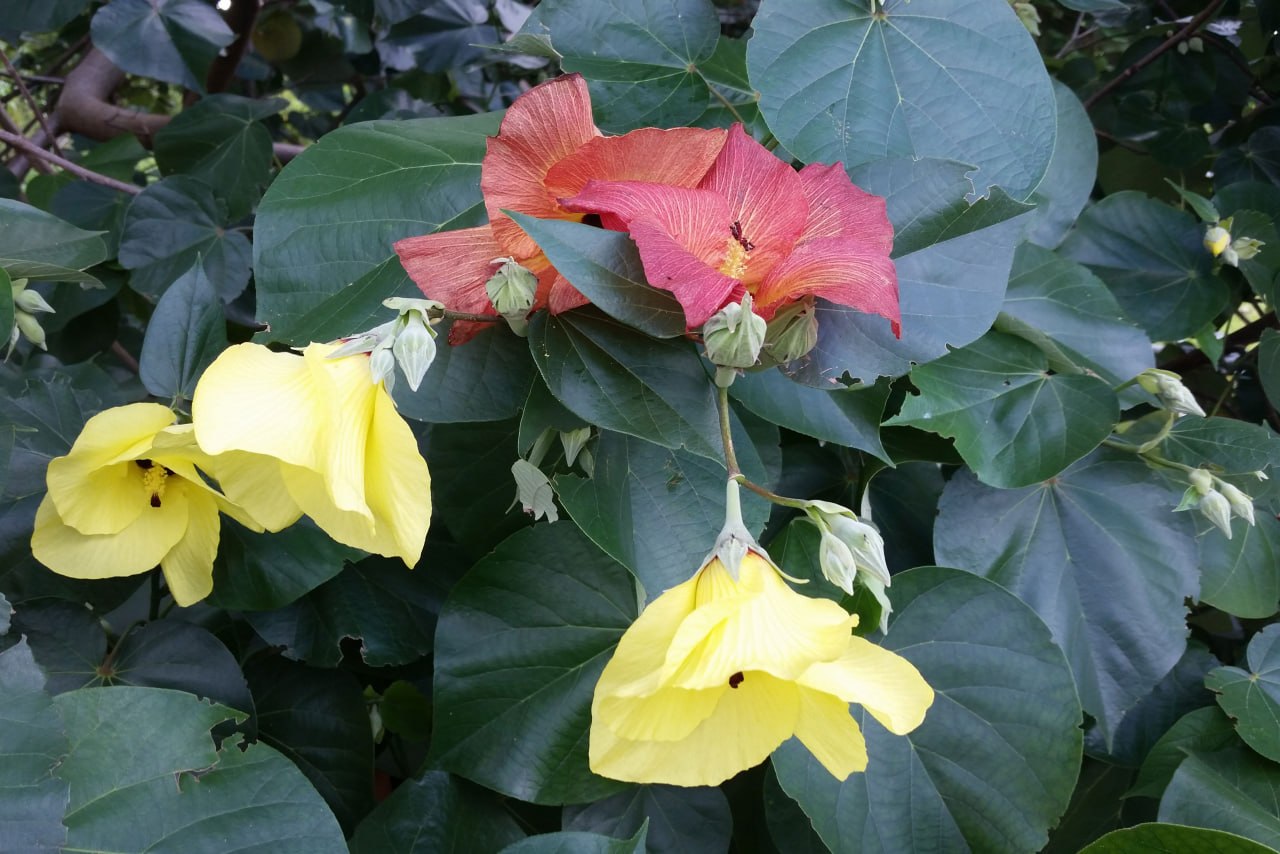
The real magic of the Mahoe lies in its blooms. Throughout the year, magnificent flowers open a bright, vibrant yellow in the morning. As the day goes on and the blooms age, they undergo a stunning transition - deepening to rich orange, crimson, and vinous red before they drop. This shifting color wheel creates a breathtaking, multi-colored display that acts as a magnet for hummingbirds and butterflies.

🌳 Landmark Shade for Warm Climate Landscapes


Mahoe thrives in full sun, loves regular water, and is exceptionally salt-tolerant, making it an absolute powerhouse for coastal and southern landscapes (USDA Zones 9b-11).

Instant Canopy: Because it grows with incredible vigor, it can transform a wide-open, sunny spot into a dense, shady retreat in just one or two seasons.

Growth Management: In the ground, it quickly matures into a substantial, wide-spreading tree. While its wild growth habit means regular, aggressive pruning is mandatory to keep it shaped and contained within typical garden bounds, it rewards that effort with unmatched privacy and a massive, tropical canopy.

🌳 The Designer Upgrade: Variegated Mahoe


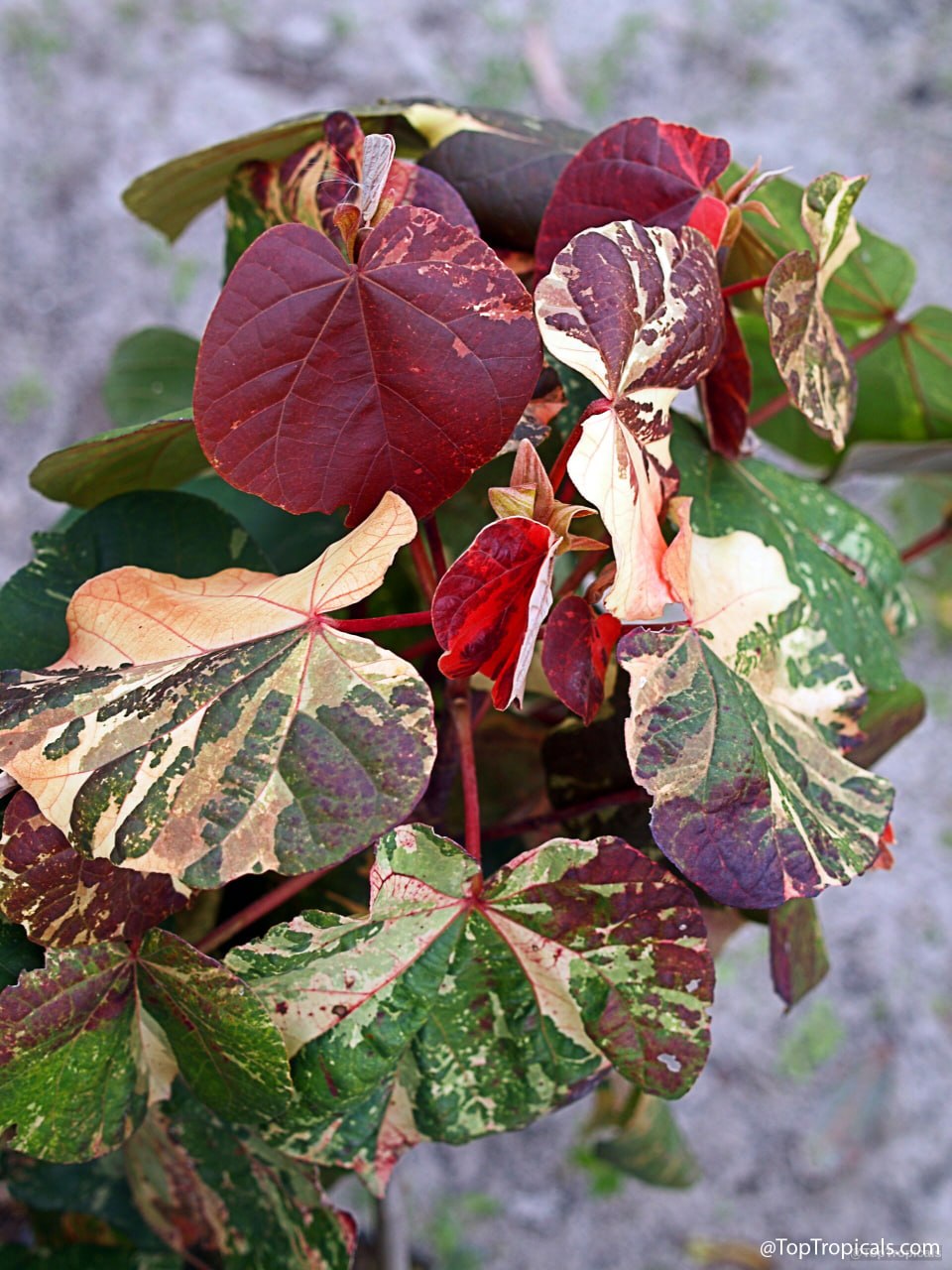
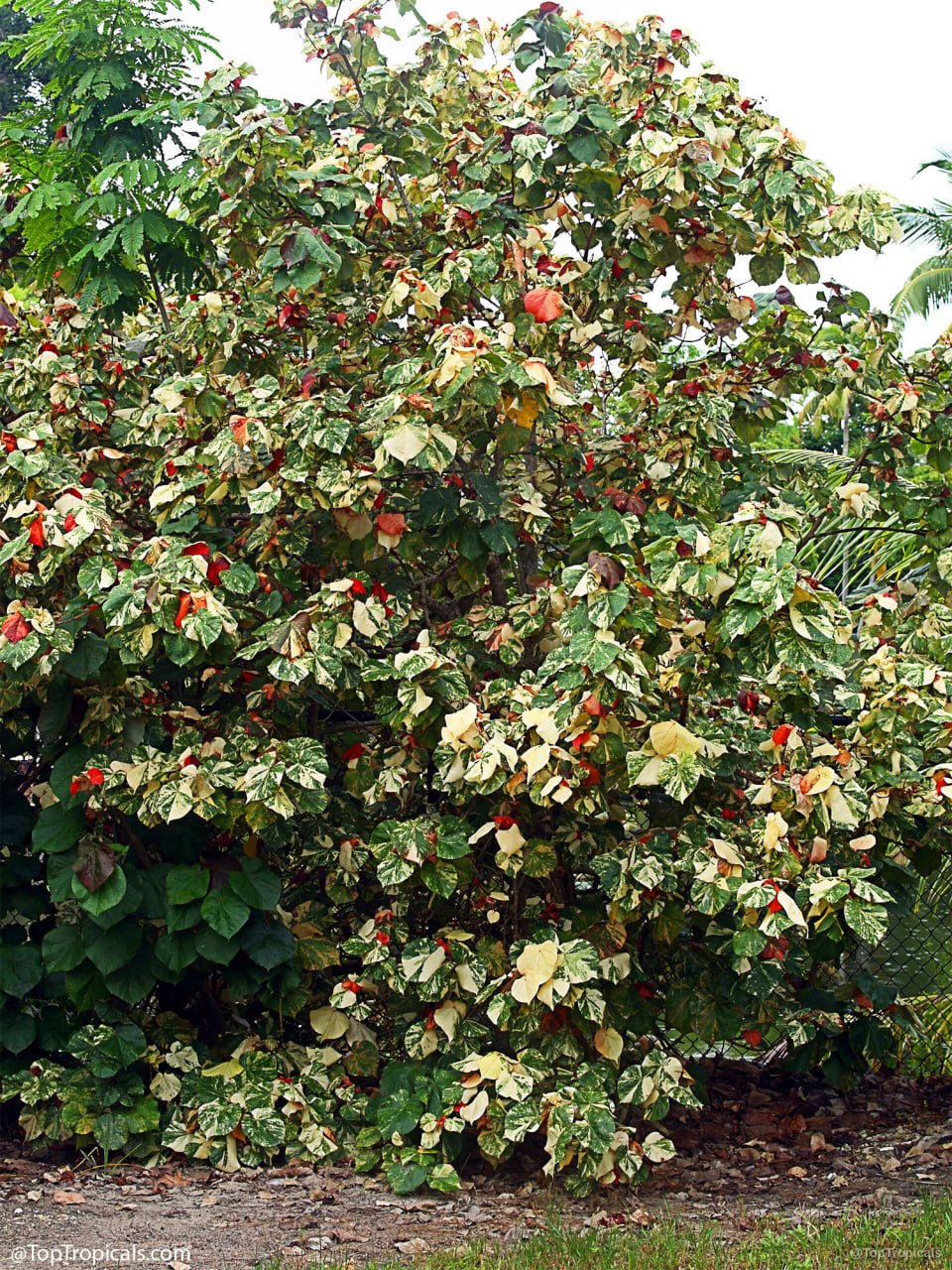
If you want all the fast-growing stamina of the standard Mahoe but want to turn the visual drama up to ten, the Variegated Mahoe (Hibiscus tiliaceus Variegatum) is the absolute must-have tree of the year.

While its color-changing flowers are just as magical as the original, its foliage is a spectacular show all on its own. The large, heart-shaped leaves are a living kaleidoscope, splashed with dramatic patterns of white, cream, deep green, and even soft pink and red.

Even better for smaller yards! The variegated variety tends to naturally maintain a tighter, more compact, and symmetrical umbrella-like shape than its wild green cousin, giving you high-end landscape style with minimal effort.

Whether you choose the classic, pollinator-loving green or the eye-popping variegated cultivar, the Mahoe family is guaranteed to be the centerpiece of your garden.

🛒 Get Instant Tropical Shade - Mahoe

📚 Learn more:
· Talipariti tiliaceum (Hibiscus tiliaceus) in Plant Encyclopedia
· The Tree Everyone's Talking About: Variegated Mahoe

#Trees #Discover

Mahoe Plant Facts

Botanical name: Talipariti tiliaceum, Hibiscus tiliaceus
Also known as: Mahoe
USDA Zone: 9 - 11
Highligths Large shrub 5-10 ft tallSmall tree 10-20 ftFull sunWatering: Regular. Let topsoil dry slightlyYellow, orange flowersRed, crimson, vinous flowersPlant attracts butterflies, hummingbirds
Get personalized tips for your region
🟢 Join 👉 TopTropicals

Date: 25 Jun 2026

It fits my lifestyle

It fits my lifestyle

💤 It fits my lifestyle


"I may not fit the box, but the box fits my lifestyle."

🐈📸 Cat Persephone at work, TopTropicals PeopleCats.Garden.

#PeopleCats #Quotes

🟢 Join 👉 TopTropicals

Date: 25 Jun 2026

Why Everyone Is Obsessed With This Intoxicating Night Blooming Jasmine

Why Everyone Is Obsessed With This Intoxicating Night Blooming Jasmine

⭐️ Why Everyone Is Obsessed With This Intoxicating Night Blooming Jasmine


Night blooming jasmine, Cestrum nocturnum - why is everybody searching for this exact plant? If you’ve ever walked outside after dark and been stopped in your tracks by a sweet, mesmerizing scent, you already know the answer. This fast-growing, dense shrub has earned its reputation as one of the most famous and desirable fragrant plants in the world.
If you want to fill your entire yard with a dizzy, romantic perfume, here is why this magical plant belongs in your garden.


✨ A Nighttime Perfume Machine


Night Blooming Jasmine doesn’t play around when it comes to fragrance. The magic begins exactly when the sun goes down:
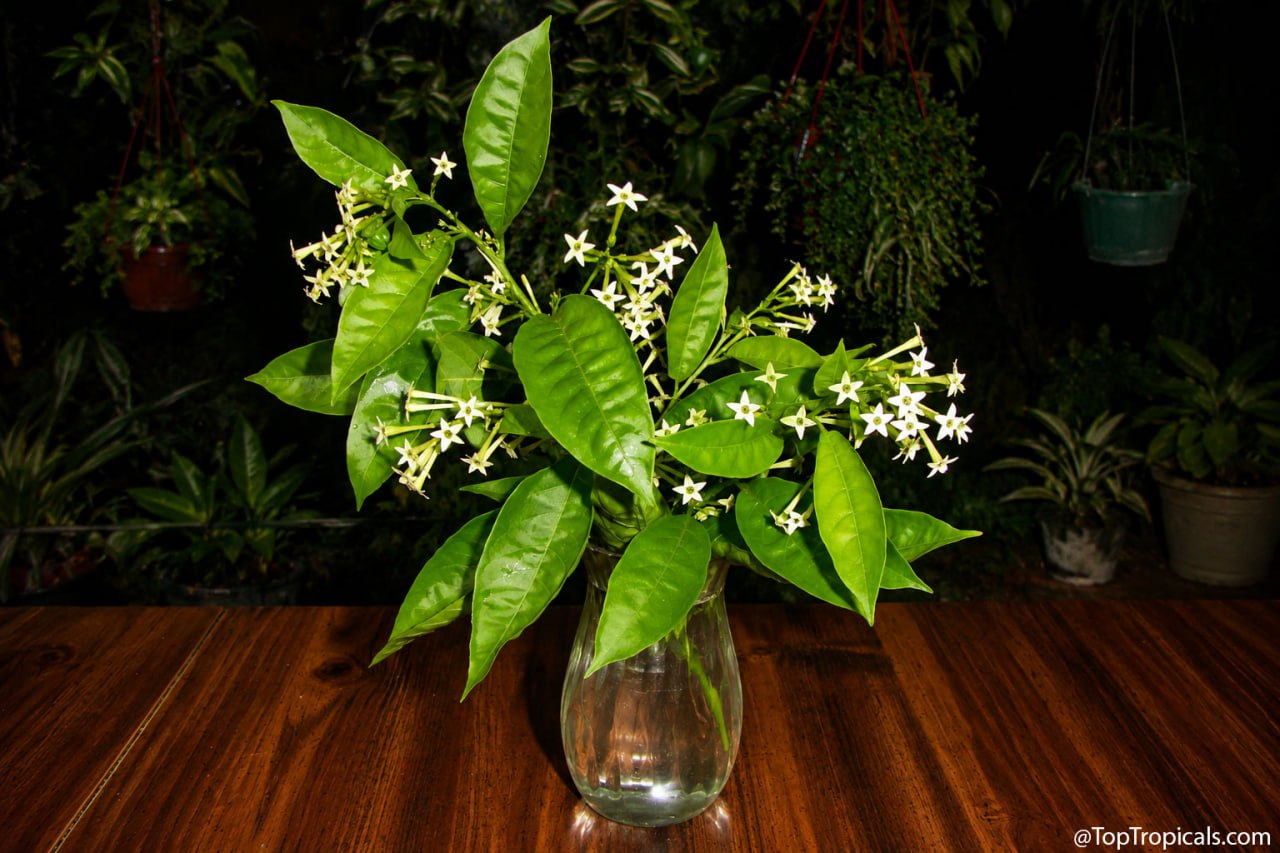
· Sunset to Sunrise: The tiny, understated pale yellow-to-white flowers open exclusively after dark, releasing a sweet, powerful aroma that stays intensely fragrant until the morning sun breaks.
· Garden-Wide Scent: The fragrance is so airborne that it will literally follow you all over the garden at night. You can even cut a few branches to bring indoors, instantly filling your living space with a rich, pleasant perfume.
· A Botanical Surprise: The crazy part? It is actually a member of the Solanaceae (Nightshade) family, making it a cousin to tomatoes, potatoes, and peppers. But it acts nothing like a vegetable - it functions purely as a high-powered, nighttime perfume machine during the warm months.

✨ Cultural Royalty


This plant’s fragrance is so legendary that it holds a sacred place in many traditions. In India and across South Asia, these flowers are widely harvested for high-end perfumery, traditional medicinal applications, and religious ceremonies. They are a staple at weddings and festivals because the scent is unmatched in its intensity and beauty.
  • What Does "Nocturnal" Really Mean?
    It's no wonder the botanical name is Cestrum nocturnum!
    💡 noc·tur·nal: adjective - done, occurring, or active at night. "Most owls are nocturnal..."
  • Where to Plant for the Full Effect


To get the absolute most out of your Night Blooming Jasmine, placement is everything. You want to plant it where the evening breeze can carry the scent directly to you.

The Best Locations:
✓Near a favorite walkway or driveway
✓Right beneath a bedroom or living room window
✓Framing an entrance, porch, or patio

Just one or two of these fast-growing shrubs are enough to transform your entire outdoor space into a fragrant paradise after dark.

Do you have one in your garden yet? Let us know how far the fragrance travels at your house!

🛒 Experience the Fragrance

📚 Learn more:

Night Blooming Jasmine Plant Facts

Botanical name: Cestrum nocturnum
Also known as: Night Blooming Jasmine, Queen of the Night, Night Jessamine, Lady of the Night, Huele de Noche
USDA Zone: 9 - 11
Highligths Large shrub 5-10 ft tallSmall plant 2-5 ftSemi-shadeFull sunWatering: Regular. Let topsoil dry slightlyYellow, orange flowersWhite, off-white flowersToxic or PoisonousPlant attracts butterflies, hummingbirdsEthnomedical plant.
Plants marked as ethnomedical and/or described as medicinal, are not offered as medicine but rather as ornamentals or plant collectibles.
Ethnomedical statements / products have not been evaluated by the FDA and are not intended to diagnose, treat, cure, or prevent any disease. We urge all customers to consult a physician before using any supplements, herbals or medicines advertised here or elsewhere.Fragrant plantSubtropical plant. Mature plant cold hardy at least to 30s F for a short timeSeaside, salt tolerant plant
Get personalized tips for your region

· Cestrum nocturnum in Plant Encyclopedia
· Do this if you want to smell a dizzy perfume!
· How many flowers on Night Blooming Jasmine?
· This magical fragrance follows you all over the garden at night
· Why everybody wants this plant

🎥
Dizzy perfume of Night Blooming Jasmine

#Perfume_Plants #Hedges_with_benefits #Discover

🟢 Join 👉 TopTropicals

Date: 24 Jun 2026

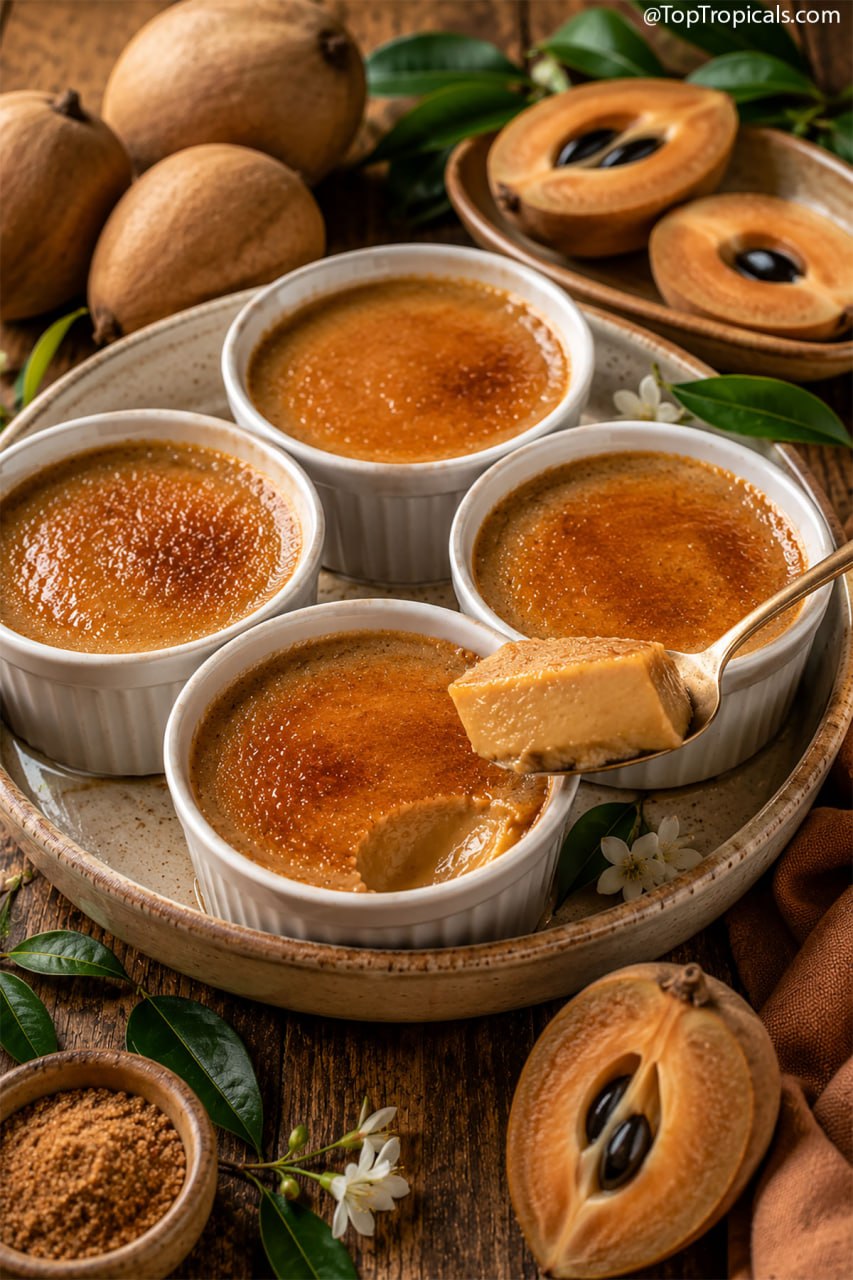
Sapodilla baked custard

Sapodilla baked custard Sapodilla baked custard
🍴 Sapodilla baked custard: quick-n-fun exotic recipes

🔴Blend ripe sapodilla pulp with eggs, milk, and a touch of sugar until smooth and creamy.
🔴Pour the mixture into small ramekins or a lightly greased baking dish.
🔴Bake gently until the custard is set around the edges but still slightly soft in the center.
🔴Allow to cool for a few minutes as the custard finishes setting.
🔴Serve warm or chilled for a dessert that tastes remarkably like natural caramel pudding with hints of brown sugar and pear.

🌿 About the plant:


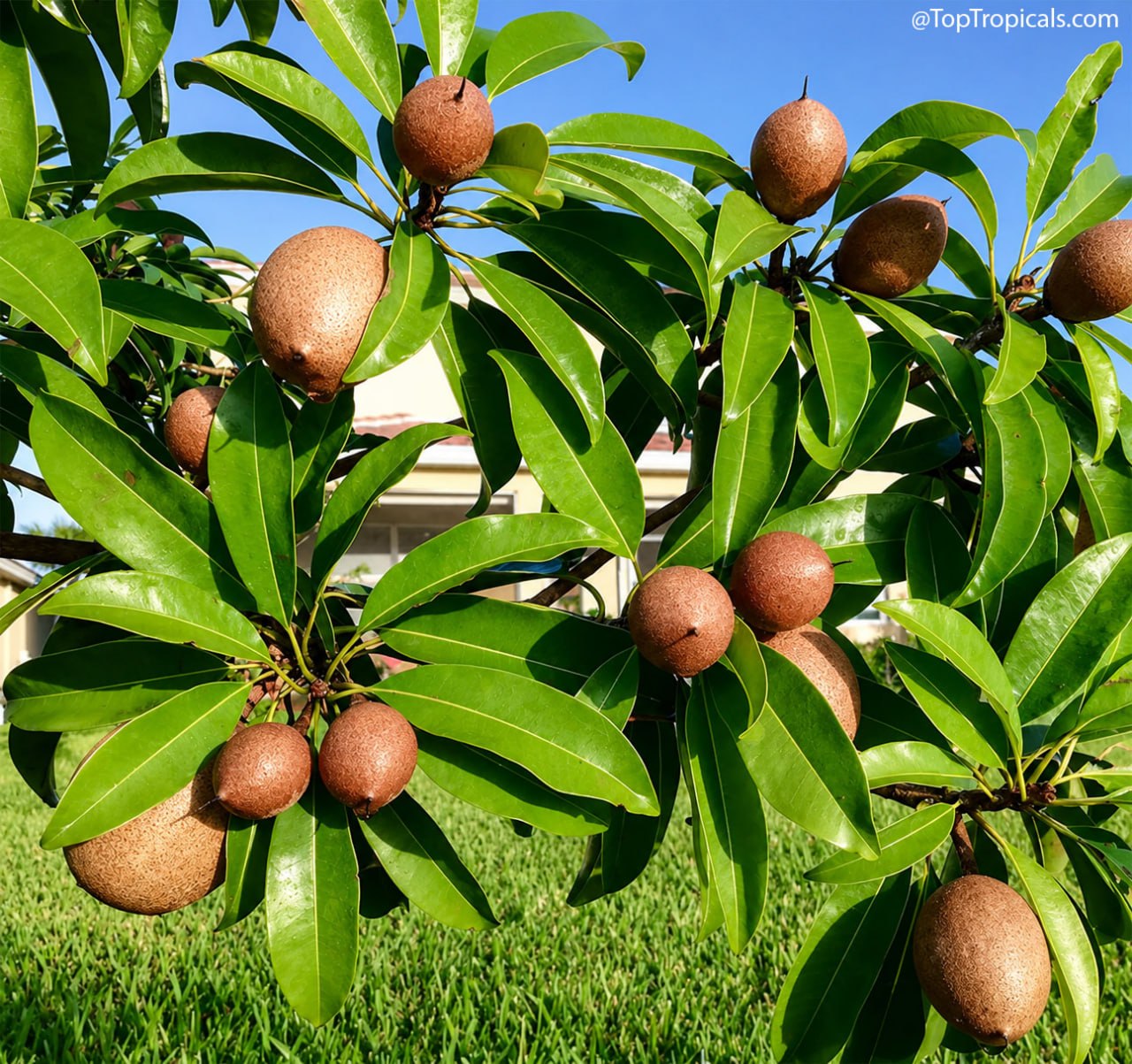
The flesh of sapodilla is naturally high in sugars and fiber, with a flavor often compared to caramel, pear, and brown sugar. It is also a source of vitamin C and several antioxidants.

🏡 In the garden:


Regular feeding during the growing season improves flowering and fruit size. Young trees benefit from consistent moisture, especially during fruit development.

🛒 Add Sapodilla - Brown Sugar Fruit tree to your Food Forest

📚 Learn more:

Sapodilla Plant Facts

Botanical name: Manilkara zapota, Manilkara achras, Achras sapota
Also known as: Sapodilla, Ciku, Naseberry, Nispero, Sapote, Brown Sugar Fruit
USDA Zone: 9 - 11
Highligths Large tree taller than 20 ftSemi-shadeFull sunWatering: Regular. Let topsoil dry slightlyEdible plantSubtropical plant. Mature plant cold hardy at least to 30s F for a short timeSeaside, salt tolerant plant
Get personalized tips for your region

Sapodilla (Achras zapota) in Plant Encyclopedia
Sapodilla caramel toast: quick-n-fun exotic recipes
How to make Sapodilla fruit profusely?
A sugar that’s good for your health
When does Sapodilla start fruiting and what is the best variety
New variety of Sapodilla: Thai Brownie

#Food_Forest #Recipes

🟢 Join 👉 TopTropicals