Garden Blog - Top Tropicals

Date: 24 Jun 2018

TopTropicals

What you need for successful growing Adeniums

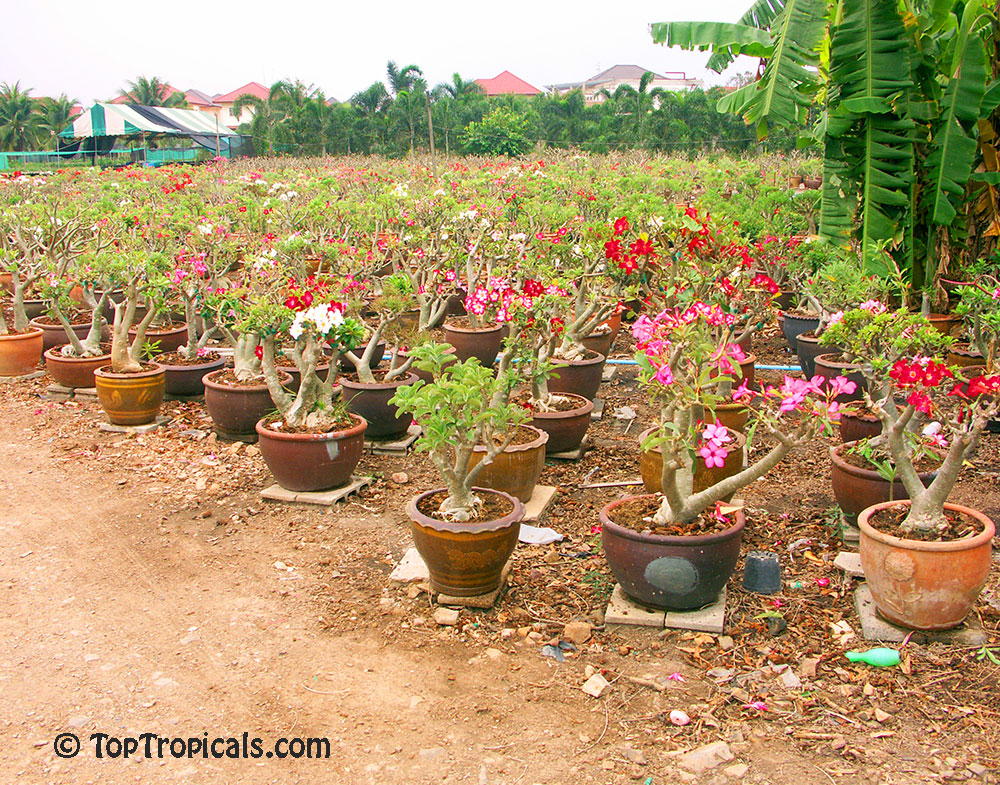
1) Adenium plants - from TopTropicals Endless selection of Adeniums. We have double flower, red, purple, yellow and even black flowers!
2) A small pot with excellent drainage is a must. Position the plant in a pot, size of root system.
3) Adenium soil mix. TopTropicals Adenium Soilless Mix. Use only well-drained soil.
4) Lots of light. Adeniums need lots of light for heavy flowering. However from our own experience, in super hot climates, they look healthier in filtered bright light. After initial planting, once the plant is established and starts growing new leaves (may take a few weeks), gradually move it into brighter light.
5) Little water. Adeniums like a neutral to hard water. Acidic water tends to sour the soil too fast and may cause root rot. Water plants preferably in the early morning, and allow them to drink up throughout the day. Watering can be done daily to every few days. Do not water again until soil dries on surface. Never allow your plants to sit in a saucer of water, but don't let them to dry out too often - this causes adeniums to go into early dormancy. Adeniums do not like both over-watering or drying-out.
6) Fertilizer. To make your plant develop a large swollen base/trunk, you'll need a good quality fertilizer. Use slow-release granulated fertilizer for overall plant health, and liquid water soluble fertilizer for swelling up trunks that is also used to increase flowering. It shouldn't be too high in nitrogen, the middle number should be the highest (similar to 10-50-10). Never apply fertilizer directly on roots and do not liquid feed when a plant is thirsty: always water first slightly to avoid root burn and leaf drop. Do not wet leaves.
7) SuperFood micro-elements. Besides macro-nutrients provided by fertilizer, Adenium needs micro-elements for balanced development of root system and especially caudex: Sunshine-SuperFood.
8) SUNSHINE-BC. Spray leaves with SUNSHINE-BC once a month to encourage young growth, profuse flowering and large caudex.
9) Growing caudex. There is a secret how to create a large swollen caudex: raise the plant a bit every time you re-pot it, so that the upper part of roots will be a little exposed. The plant will form more roots that will go down.

See full list of Adeniums - plants and seeds.
Date: 24 Jun 2018

TopTropicals

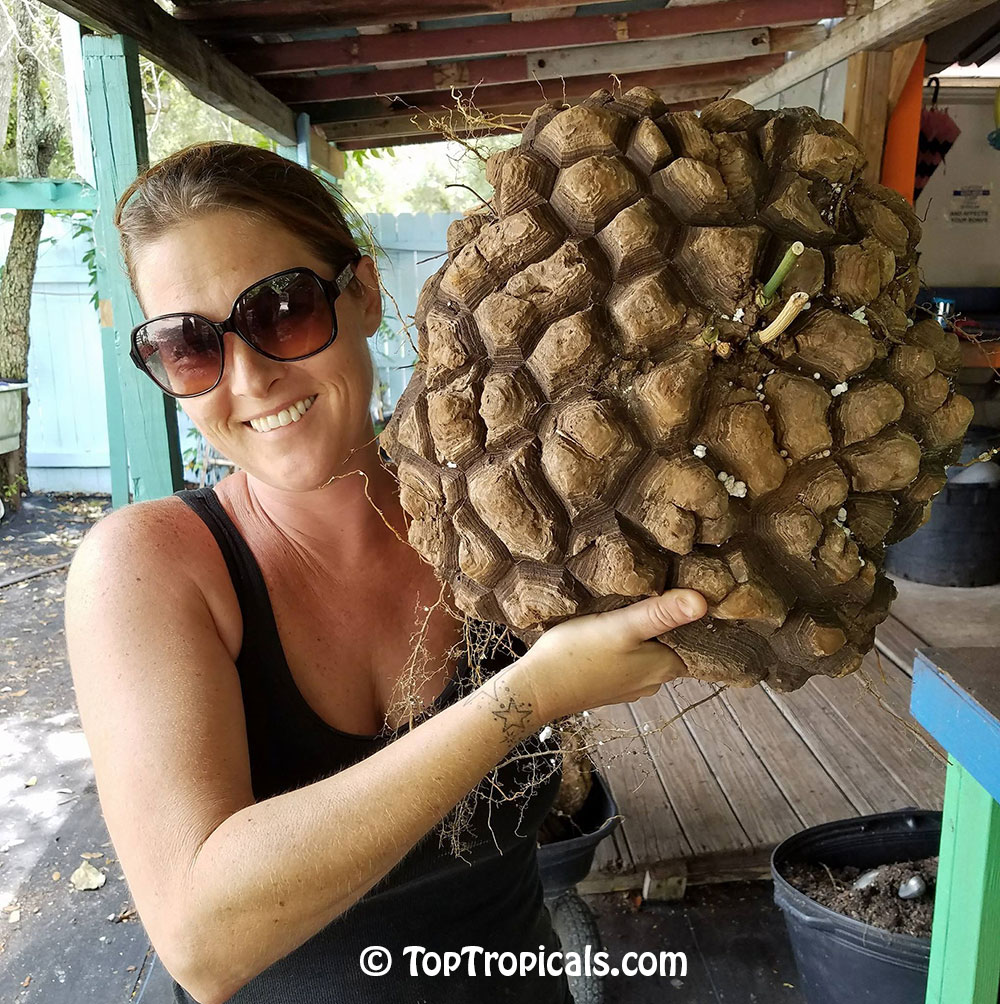
Elephant Foot, Turtle Shell - back in stock!

Dioscorea elephantipes.
Dioscorea is a curious plant with tuber above ground level covered with layers of corky bark, resembling a caudex. It is a slow growing, very unusual succulent. Tuber contains saponins, originally cooked and eaten as a famine food by the Hottentots. Caudex that grows up to 6' in nature, resembling an elephant's foot and looks as if it is segmented into geometric patterns (smaller plants look like tortoises) and looks dead but is actually a living tuber. A plant with 18"caudex can be almost 100 years old! The plant grows into a vine with attractive heart-shaped leaves and small yellow flowers. Culture is relatively easy. The vines may die back and regrow several times a year, depending on the particular plant and your region. The plant doesn't send down deep roots, so plant in a shallow pot about 1" larger than the diameter than the caudex. Potting soil should be very porous/loose so that there is easy drainage. Water well around the edges. Keep in a warm area and wait for the first shoots of the vine to appear. Water regularly from that point on. The plant should not be kept damp as with other tropical plants. Allow it to dry before watering again. Many books will say that they are winter growers, because they are native to the southern hemisphere. In fact, they grow in all seasons! Let the plant be your guide. You cannot force them to grow, and over watering will simply cause them to rot.
Elephant Foot is a collectors item, but remarkably easy to grow. It will be with you for years with no effort. It is a wonderful conversation piece! See more info about Dioscorea elephantipes.

We have limited stock, while supply lasts, hurry up!
*** 4-6"caudex *** 6-8" caudex *** 10-12"caudex *** Seeds. Don't forget special TopTropicals Adenium Soilless Mix that perfectly works for this plant!

Date: 1 Jan 2022

Easy Sunday Morning Deals: Five Tropical Garden favorites for 2022

Saving on your favorite plants is Easy. Easy like Sunday Morning...

"...The ticking of the hands of your watch are telling you how time is passing away, never to return. Listen to it..."
Ryan Holiday, Daily Stoic

Tropical Colors for the New Year

This New Year, resolve to add color into your garden and into your life.

Today we feature five Tropical Garden favorites for 2022.

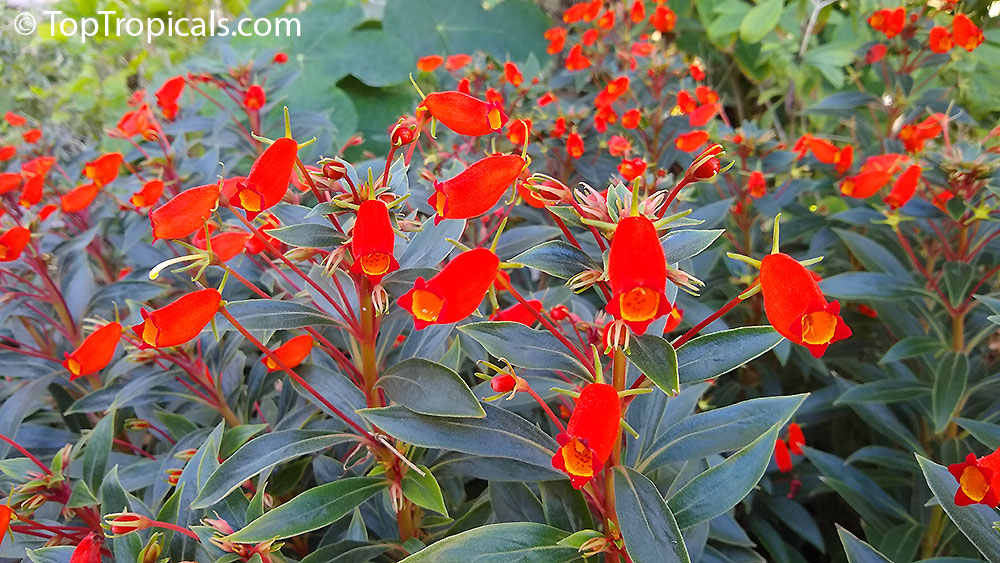
1. Bolivian Sunset

Gloxinia sylvatica - Bolivian Sunset. Low growing perennial that will always surprise you with a sudden burst of scarlet blooms in Fall-Winter.

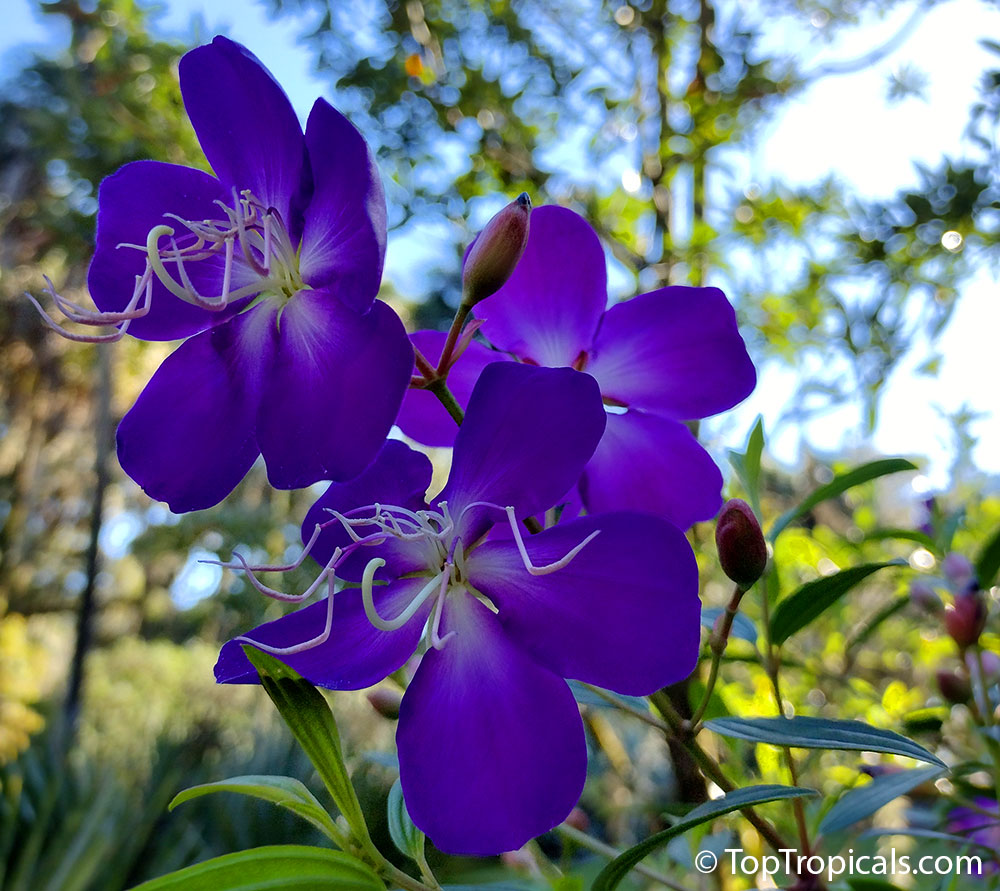
2. Dwarf Tibouchina

Tibouchina lepidota - Jules Dwarf. So much purple for such a small compact plant! Relatively cold tolerant.

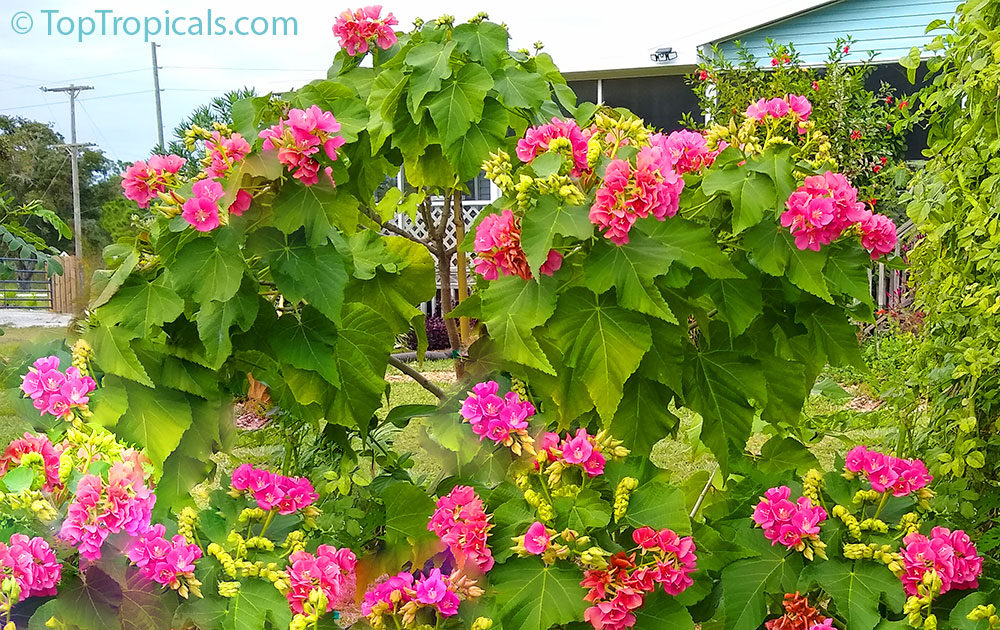
3. Tropical Hydrangea

Dombeya seminole - Tropical Rose Hydrangea. All time favorite that blooms for several months from Fall through Winter.

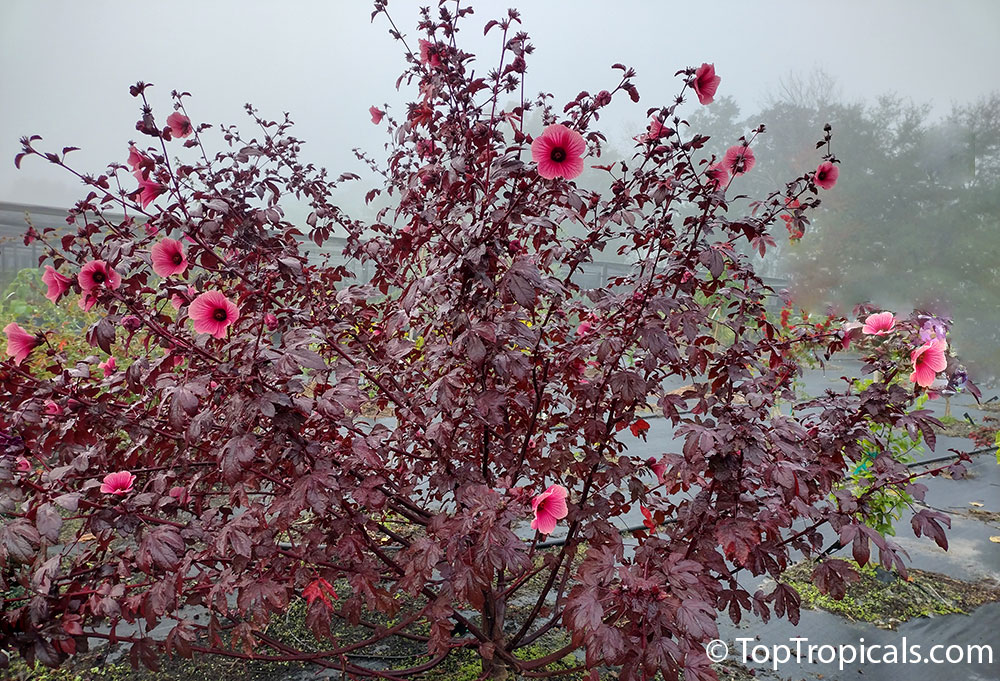
4. Cranberry Hibiscus

Hibiscus acetosella - African Cranberry Hibiscus. Super fast growing colorful shrub with beautiful flowers and edible leaves.

5. Burgundy Thread

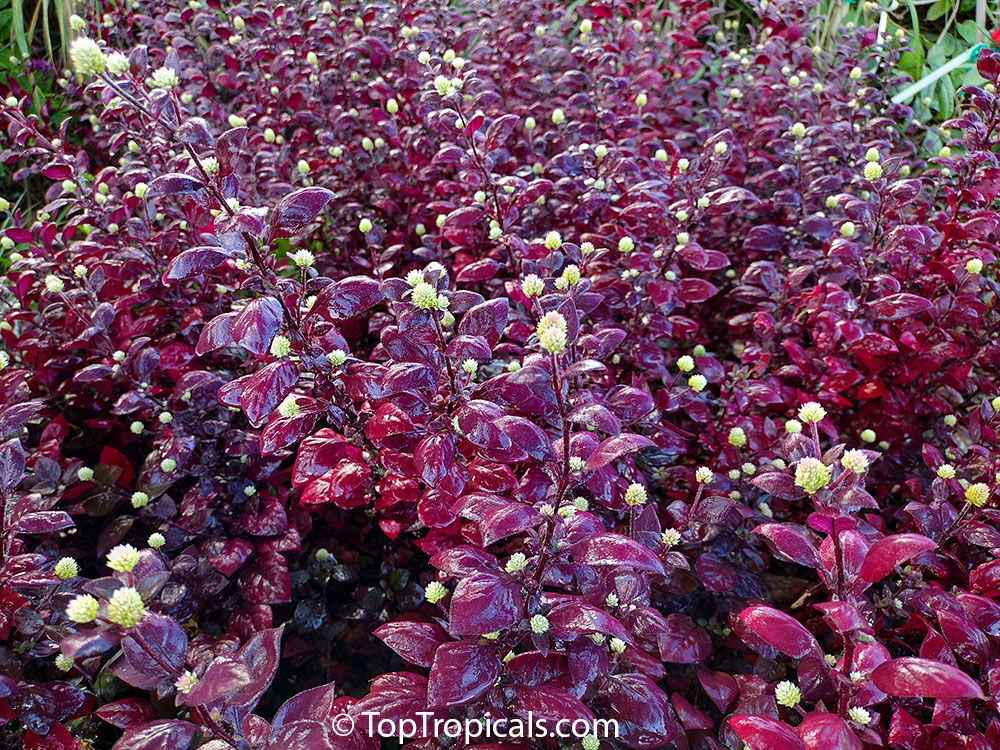
Alternanthera dentata - Red Thread Burgundy. Ultimate fast growing groundcover for sun or shade, any soil and any water, any size of garden, cold- and heat-tolerant.

The Easy New Year Deal expires at midnight Sunday, January 2nd, 2022.
Enjoy your Hot Deal!

Date: 16 Oct 2025

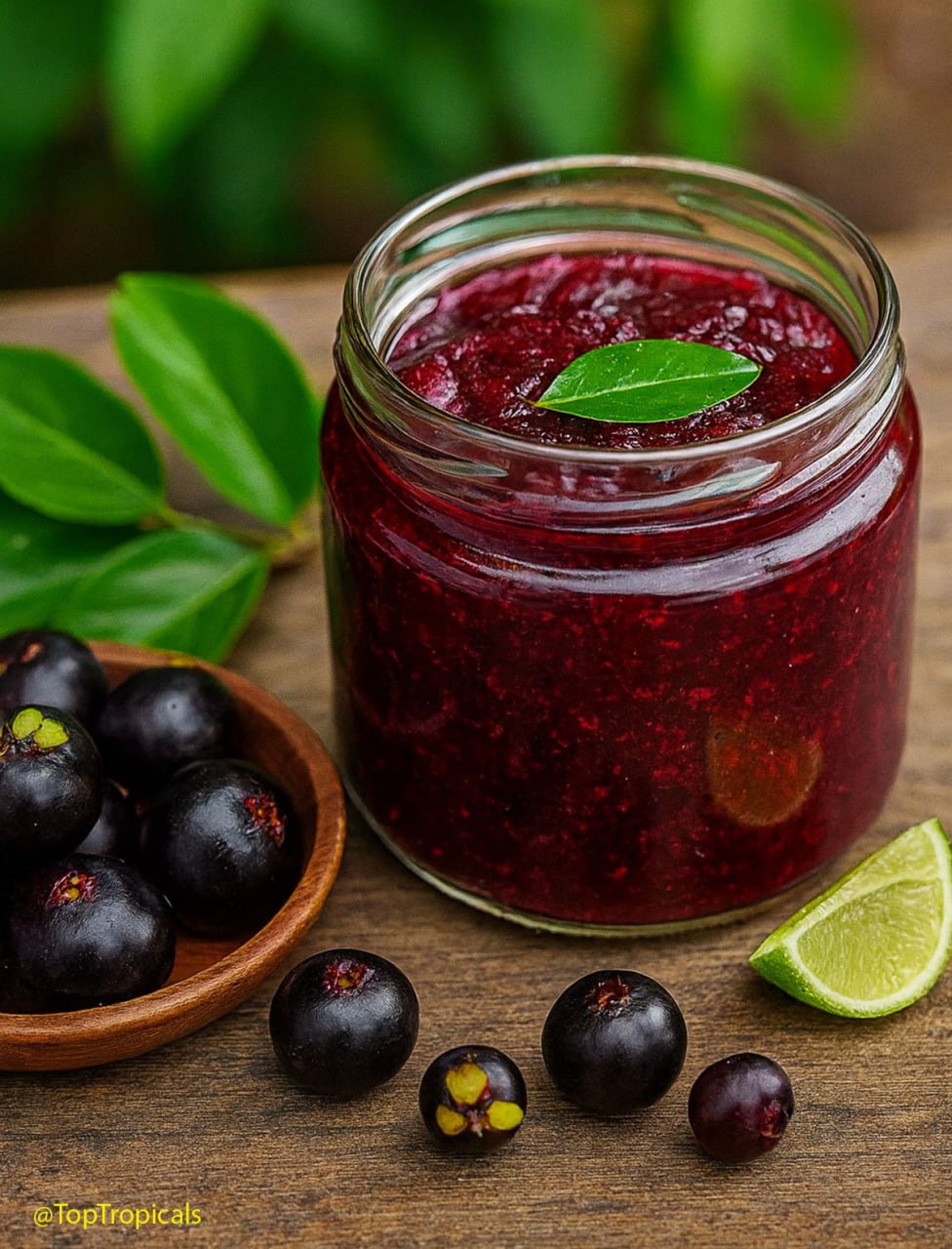
Grumichama jam: quick-n-fun exotic recipes

Grumichama jam: quick-n-fun exotic recipes Grumichama jam: quick-n-fun exotic recipes

🍴 Grumichama jam: quick-n-fun exotic recipes


  • 🔴Cook Grumichama cherries with sugar and lime juice.
  • 🔴A deep red jam with a cherry-meets-blackberry flavor.

Grumichama Jam: Quick-n-Fun Exotic Recipes

Ingredients

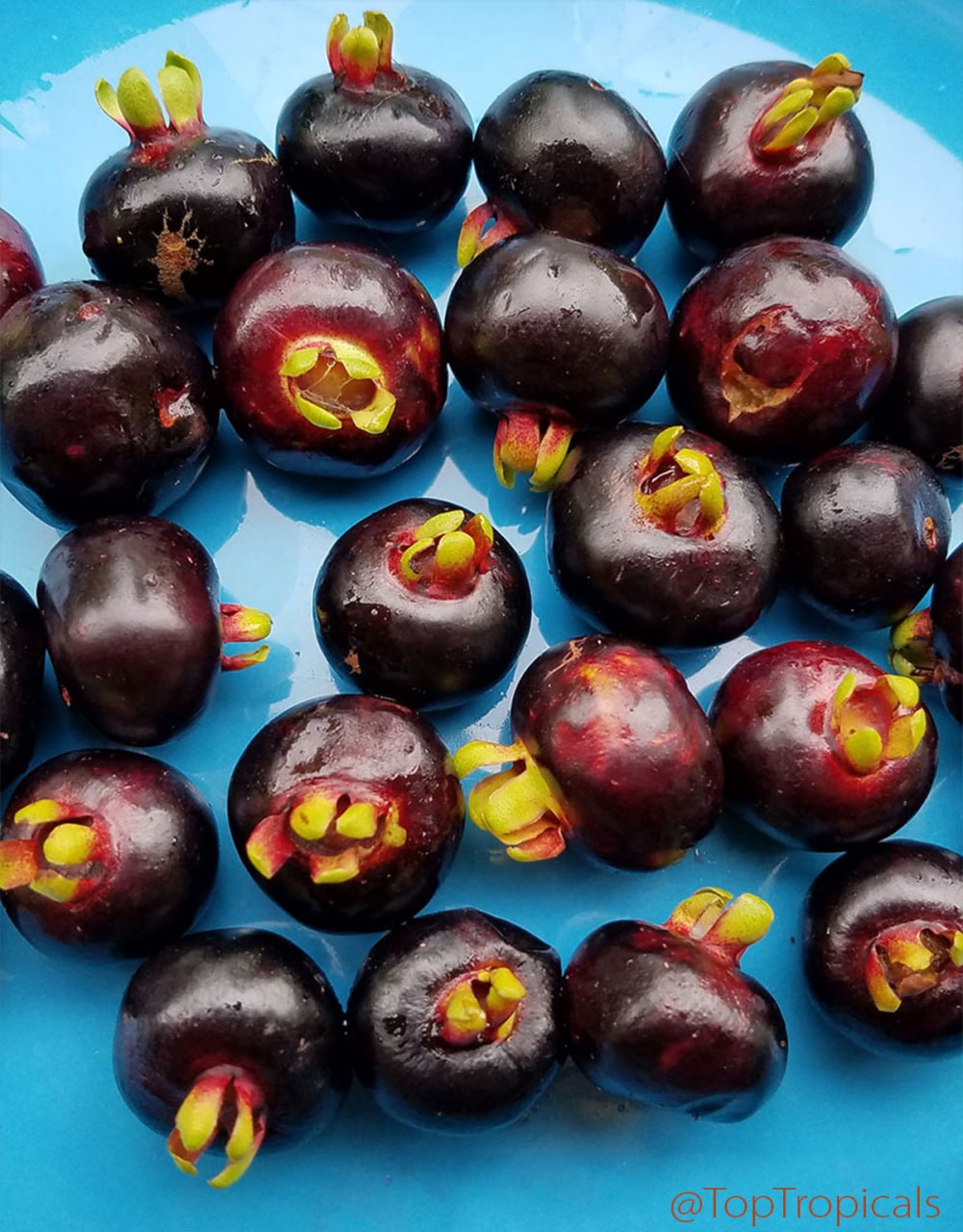
  • 2 cups fresh Grumichama cherries (Eugenia brasiliensis)
  • 1 cup sugar
  • 1 tbsp lime juice

Instructions

  1. Remove seeds from Grumichama cherries.
  2. Place fruit in a saucepan with sugar and lime juice.
  3. Simmer over low heat until thick and glossy, stirring often.
  4. Pour into sterilized jars and let cool before sealing.


🛒 Plant Grumichama tree (Eugenia brasiliensis)

📚 Learn more:


#Food_Forest #Recipes

🟢 Join 👉 TopTropicals

Date: 30 Oct 2025

Before you open a bottle of wine,

Jaboticaba (Myrciaria cauliflora)

🍷Before you open a bottle of wine, meet the Secret Wine Tree from Brazil
  • 🍷Jaboticaba (Myrciaria cauliflora) grows grapes right on its trunk! It's one of Brazil’s most fascinating and beloved native fruits. Its name alone sounds exotic, but wait until you see it in fruit: shiny, grape-like berries bursting straight from the bark!
  • 🍷 Jaboticaba is the source of the famous Brazilian wine Vinho Tinto de Jabuticaba. The fruits are small, dark purple, with a thick skin and a sweet, melting pulp that tastes a lot like black currant. They can be eaten fresh, made into jams, or fermented into homemade wine with an incredible aroma and rich color.
  • 🍷 Jaboticaba tree is slow-growing and compact, often used as a bonsai because of its small leaves and graceful shape. But patience pays off - mature trees covered in purple fruits are absolutely stunning! The fruiting habit, called cauliflory, means the fruits grow directly from the trunk and main branches, creating a truly one-of-a-kind look.
  • 🍷 Jaboticaba trees can handle some cold (down to mid-20's once mature), don't mind wet rainy seasons and can be grown in containers in cooler areas. They make beautiful landscape trees and conversation starters wherever they’re planted.
  • 🍷 If you've ever dreamed of making your own wine from fruit grown in your backyard, this is the tree for you. Jaboticaba isn’t just a plant - it's an experience, a piece of Brazil's culture, and a living work of art that rewards patience with magic.


🛒 Grow your own wine from Jaboticaba Tree

📚
Learn more:


#Food_Forest #Nature_Wonders #Container_Garden
🟢 Join 👉 TopTropicals