Garden Blog - Top Tropicals

Date: 12 Nov 2025

How to get lots of Star Fruit

Star Fruit- Carambola Tree, Averrhoa carambola

⭐️ How to gets lots of Star Fruit Carambola

🌟 Star Fruit - Carambola Tree (Averrhoa carambola is one of those trees that makes gardening instantly rewarding. Once you plant it, you’ll soon have a tree covered in shiny yellow fruit shaped like little stars.

🌟 Growing tips


🟡 Sun: Loves full sun. The more light, the sweeter the fruit.
🟡Temperature: Keep warm and protect from winds. It thrives in warm, tropical climates but can handle light frost if sheltered from cold winds - wind-free is the key.
🟡Soil: Prefers well-drained soil. Avoid waterlogging.
🟡Water: Regular watering keeps it happy, but don’t let roots sit in soggy soil.
🟡Size: Space saver! This compact tree doesn’t take up much room, perfect for smaller gardens. Dwarf varieties also do well in containers.
🟡Growth and crop: Fast-growing and early to fruit. Seedlings start producing in about three years, while grafted or air-layered trees fruit right away.
🟡Flowers: Beautiful pink blooms appear before the fruit, adding extra charm to the garden.

🌟 With just a bit of care and protection from wind and cold, your Carambola tree will reward you with baskets of bright, starry fruit through the cooler months when most other trees rest.

🌟 Slice one open and you get perfect star-shaped pieces that brighten up salads, desserts, or smoothies. The fruit is crisp, juicy, and beautifully sweet-tart. It’s nature’s candy - refreshing, low in calories, and rich in vitamin C and antioxidants.

📚 Learn more:


Star Fruit from our garden
Grow your own Carambola
Top 10 fast-fruiting trees: #8. Carambola - Starfruit
Carambola Banana Whip
Carambola Jam recipe
When young Carambola trees are covered with fruit
Carambola tree is the Star of the orchard

🛒 Explore Star Fruit varieties

#Food_Forest

🟢 Join 👉 TopTropicals

Date: 5 Jan 2026

A  tuxedo  cat  planting  a  small  shrub  in  a  tropical  garden  while  a  ginger
    cat  relaxes  nearby  with  coffee  and  donuts,  illustrating  winter  planting  in 
 a  warm 
 climate.
Sunshine: January might feel warm, but its still winter. Wool socks, scarf, hot coffee.
Smokey: You get warm when you work. Plant now so roots are established before spring growth starts.
Sunshine: Alright. Lets see who stays warmer - you digging or me with coffee.

🌴 Why winter planting works in a warm climate

By our plant expert Tatiana Anderson

We are lucky to live in a warm climate. This is how I think about the seasons here. Winter is for roots. Spring is for growth. Summer is for managing heat and water.

So if we want plants that handle summer better, we plant them in the season that gives them the best start. Winter here is comfortable. The soil stays workable. The days are mild. And plants are not being stressed by heat. That is exactly why winter is the best time to plant in Florida and other warm areas.

If we use this season well, plants go into spring already settled instead of trying to catch up. This is what I like to plant now, and why.

🟢 Trees first. Anything that will be in the ground for years. Fruit trees, shade trees, flowering trees. When we plant them in winter, they can focus on roots before the spring growth surge starts. By the time spring arrives, the tree is anchored and ready to grow on top.
Examples: mango, avocado, Eugenia cherries, jackfruit, sapodilla, longan, lychee, canistel.

🟢 Shrubs next. Shrubs establish faster than trees, but winter still gives them an advantage. They settle in quietly before the spring flush and bloom cycles begin. That usually means steadier growth and fewer problems once heat returns.
Examples: gardenia, jasmine, brunfelsia, hibiscus, clerodendrums.

🟢 Vines are often overlooked. Vines want to grow fast when spring starts. If the root system is not ready, you get weak growth and frustration. Planting vines in winter gives them time to build a foundation first, so spring growth has support.
Examples: Rangoon creeper, stephanotis, Petrea, Mexican Flame Vine.

🛒 Explore cold tolerant plants

Date: 24 Jun 2018

Cold hardy tropical fruit trees for Luisiana

Q: I've just moved to Louisiana and have been wondering whether it would make sense to plant some tropical fruit trees in our garden. Average lows in New Orleans are 41 deg F in January and February, although we did hit 25 once with the Arctic vortex. I'm interested in litchi, longan, rambutans, and persimmons. Do you have varieties that can tolerate Louisiana's temperature range? I'd love mangosteen but I don't suppose they will survive. Do you have any suggestions on tropical fruit trees that I could try?

A: Average temperatures are for statistics only; it is actual temperatures that may hurt your cold sensitive plant. This is what you should keep in mind when starting your tropical fruit collection:
1) Ultra-tropical plants like Rambutan can not survive winters below 45-50F. However, they can be successfully grown in containers in a greenhouse or moved indoors into a sun room during cold periods.
2) Tropical plants like Litchi and Longan may take some light frost once established. Still, for areas with freeze our advice is - keep them in pots and move inside in case of cold.
3) There is a number of subtropical fruit trees that are hardy enough to take some freeze. Persimmon, Feijoa, Fig, Cattley Guava, Jujube, Kiwi, some Eugenias and others. Please refer to our Tropical Fruit Sensitivity Chart.
4) Remember that plant's ability to survive winter depends on several factors, not only temperature itself. Important factors are: wind protection (chill wind kills rather than low temperature itself), exposure, how close the tree is planted to the house, plant maturity and its overall strength and health. If a plant had received good nutrients during summer, has well established root system, planted in enclosed area protected from winds and has plenty of bright sunlight - it has better chances to survive than a weak plant in warmer conditions.
5) Use SUNSHINE plant boosters for improving cold tolerance of your tropical plant. It only takes a few drops, and only costs $5!

Date: 10 Apr 2016

Growing by the sea

Q: Please recommend me some interesting plants that can grow on my waterfront property and can withstand some salt wind. All my neighbors have Sea Grape trees and bougainvilleas, and I want something different and special. I would love to have some colorful or fragrant flowers, or fruit around my paradise home.

Q: Considering your neighbors successfully grow Sea Grape (Coccoloba), and Bougainvilleas, you have a mild, frost free climate. There is a number of spectacular and useful tropical plants that are salt tolerant. Orchid Trees - Bauhinias, Poincettia - Delonix, and Geiger trees - Cordias, are very showy flowering trees. For large size bushes, try Dwarf Poincianas - Caesalpinias, and Scarlet-Coral Erythrinas. Frangipani - Plumeria, come in different colors and bring you perfume fragrance from Hawaii. And of course, Desert Roses - Adeniums, can be grown and showy specimens anywhere in your yard, both in the ground or as potted bonsai.

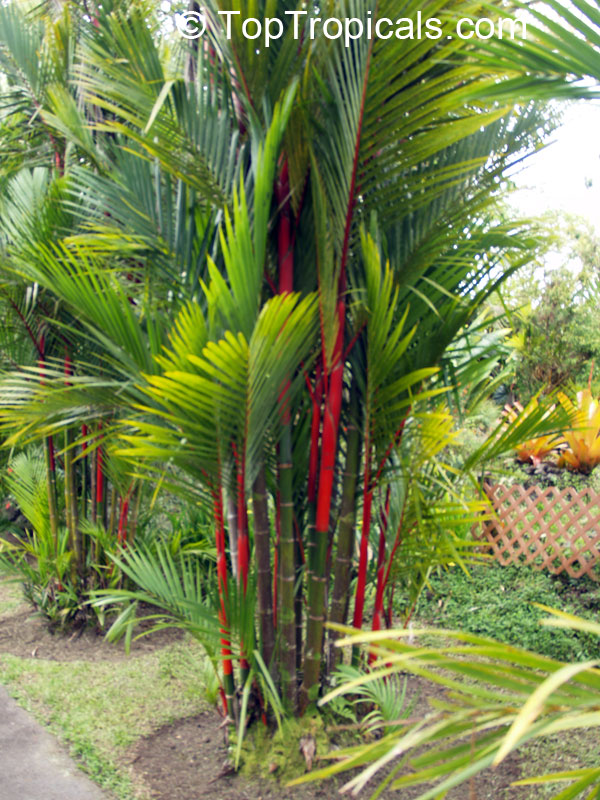
Most palms, especially popular Coconut Palm, source of tasty fruit and drink, are highly tolerant to salt breeze. If you are looking for something that nobody has, Lipstick palm, or Sealing wax palm - Cyrtostachys lakka, is definitely the most spectacular palm you can find. It is a stunning feather palm that develops a brilliantly red trunk. Palm is originally from Malaysia, but has been introduced to Costa Rica and other tropical areas of the world. Sealing Wax Palm seeds are very slow to germinate, up to a year, and large specimens are very rare and hard to find even in rare tropical plant nurseries. This palm will require a good overhead light, and constant warmth (above temperature 55F). It is definitely worth an effort to grow this beauty.

You may add more tropical accents to your landscape by the sea with many varieties of showy heliconias.

See full list of salt tolerant trees.

Date: 6 Feb 2023

How to make your Olive tree grow faster

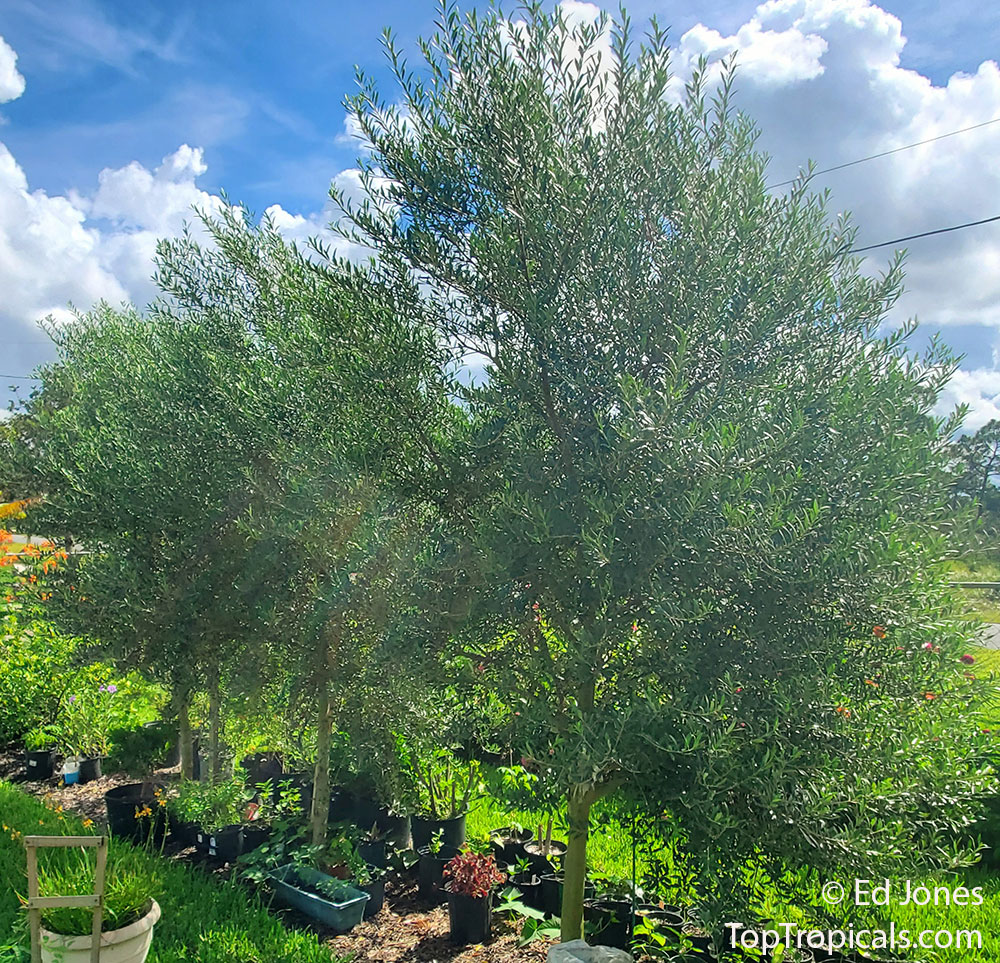
Ed's  Olive  trees  in  the  garden

In past blog posts, Ed Jones shared his insights on cultivating olives in Central Florida using Sunshine Boosters. Despite olives having a reputation for slow growth and being uncommon in Florida gardens, Ed has successfully grown not only productive but also aesthetically pleasing trees in just two years. As seen in this winter photo, the trees are thriving!
Encouraged by Ed's success, we have decided to plant olive trees as well. They are low maintenance and tolerant to cold temperatures. Simply heed Ed's advice, and you too can have a beautiful tree that produces your own olives in the future.

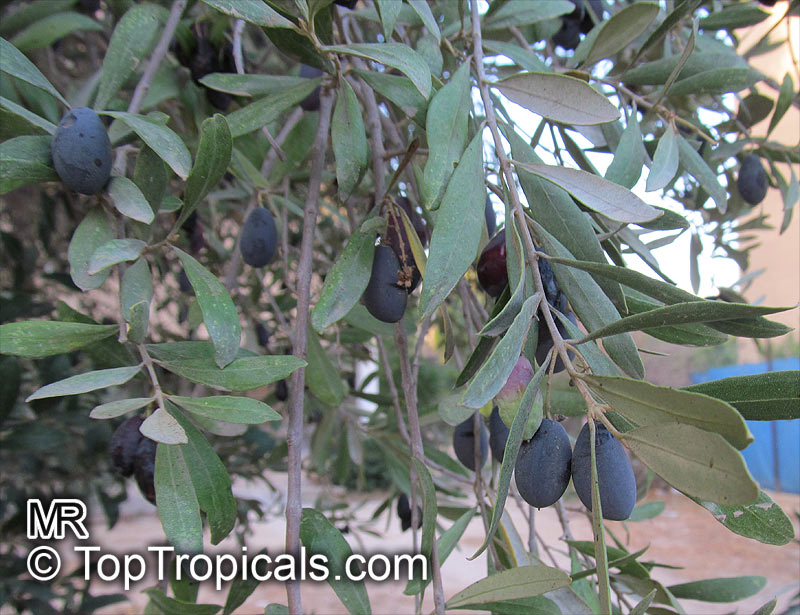
Olive  branch  with  fruit