Garden Blog - Top Tropicals

Date: 12 Apr 2026

Easter morning with Smokey and Sunshine

Easter morning with Smokey and Sunshine

Easter morning with Smokey and Sunshine

Easter morning with Smokey and Sunshine


Happy Easter to all who celebrate today - especially across Eastern Europe and Orthodox communities around the world.

Smokey and Sunshine are taking a well-earned break with coffee, sweet Easter bread, and a table full of spring color. Wishing you a day filled with peace, renewal, and quiet joy. And of course - the perfect time to plant flowers and fruit and bring new life into your garden.

🛒 Shop tropical flowers and plants

#PeopleCats

🟢 Join 👉 TopTropicals

Date: 1 Apr 2026

Happy Passover!

Cats Smokey and Sunshine celebrating Passover

Cats Smokey and Sunshine celebrating Passover

Happy Passover!

Sunshine: I fixed the donut problem. And I brought mango.
Smokey: Non-traditional. Compliant. Happy Passover.

🥭 Some traditions stay exactly as they are. Others - adapt. On our patio this Passover, Smokey kept things properly grounded (wine in hand), watching closely as the table filled with familiar symbols. Sunshine, meanwhile, solved a practical problem the only way he knows how: creatively. No leavened donuts allowed? Fine. Matzah donuts it is. And since no celebration should be short on sweetness, a plate of fresh mango quietly found its place at the table.

Mango Plant Facts

Botanical name: Mangifera indica
Also known as: Mango
USDA Zone: 9 - 11
Highligths Large tree taller than 20 ftSmall tree 10-20 ftFull sunWatering: Moderate. Water when top soil feels dryYellow, orange flowersPink flowersEdible plantSeaside, salt tolerant plant
Get personalized tips for your region


🥭 That is gardening in a nutshell. You respect the rules, but you work with what grows, what thrives, and what brings joy. A tropical garden teaches the same lesson every day: conditions change, but abundance is always possible if you choose the right plants.

🥭 This season, whether you are planting something new or enjoying the fruits already within reach, take a note from Smokey and Sunshine. Stay within the rules - but do not be afraid to make them work for you.

🛒 Explore Mango varieties · Shop fruit trees

#Mango #Food_Forest

🟢 Join 👉 TopTropicals

Date: 14 Feb 2026

🍧Vanilla does not come from a bottle

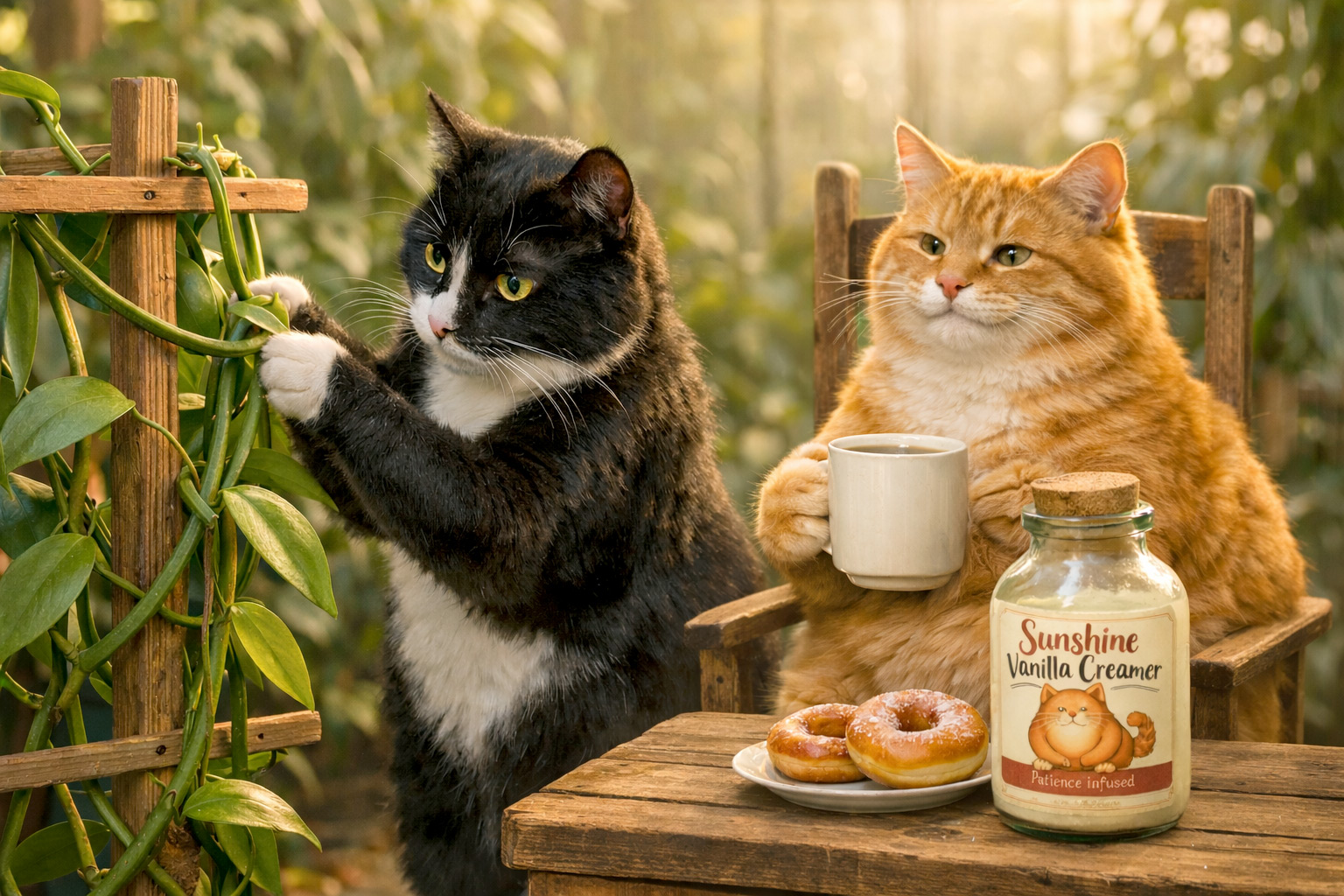
Tuxedo  cat  training  a  vanilla  vine  on  a  wooden  trellis  while  orange  cat
   drinks  coffee  beside  jar  labeled  Sunshine  Vanilla  Creamer.
Sunshine: What are you doing?
Smokey: Growing vanilla for your creamer. It needs support to climb.
Sunshine: I can provide moral support and donuts. Count on me, my friend.

🍨 The orchid behind the worlds favorite flavor

Vanilla does not come from a bottle. It comes from a climbing orchid. Vanilla planifolia is the plant that produces real vanilla beans - and yes, you can grow it at home. It starts simply. A potted orchid with glossy leaves. Then it begins to reach. Vanilla is a climber. It wants something solid to attach to. This is where most people go wrong. They keep it in a pot and wait. Vanilla needs support - a log, a trellis, a wooden board. Once its aerial roots attach firmly and the plant matures, flowering becomes possible.

Madagascar Bourbon Vanilla Bean Plant Facts

Botanical name: Vanilla planifolia, Vanilla fragrans
Also known as: Madagascar Bourbon Vanilla Bean, French Vanilla, Vanilla Orchid
USDA Zone: 9 - 11
Highligths Vine or creeper plantSemi-shadeWatering: Regular. Let topsoil dry slightlyYellow, orange flowersEdible plantSpice or herb plantFragrant plantSubtropical plant. Mature plant cold hardy at least to 30s F for a short time
Get personalized tips for your region

It is not instant. You need patience. The pods form green and only develop their aroma after curing. That slow process is part of what makes vanilla so valuable. For gardeners who enjoy growing something meaningful - something edible and beautiful - vanilla is worth it. Vanilla is not a novelty plant. It is a long conversation with your garden.

🎁 Shop Vanilla Orchids

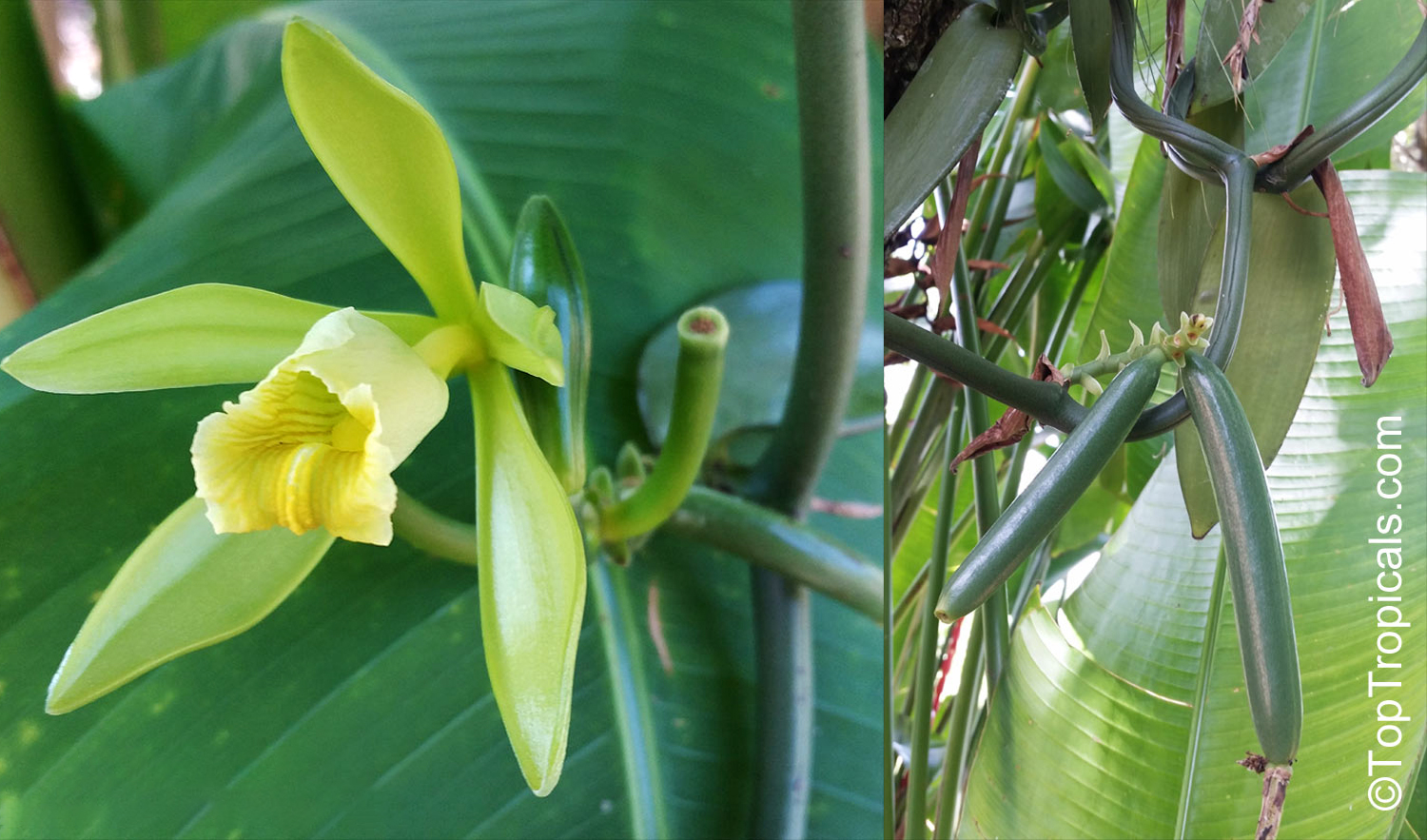
Close-up  of  Vanilla  planifolia  flower  with  yellow  throat  and  green 
 vanilla  bean  pods  developing  on  climbing  vine

Vanilla planifolia Flower and Developing Vanilla Pods

Date: 7 Aug 2025

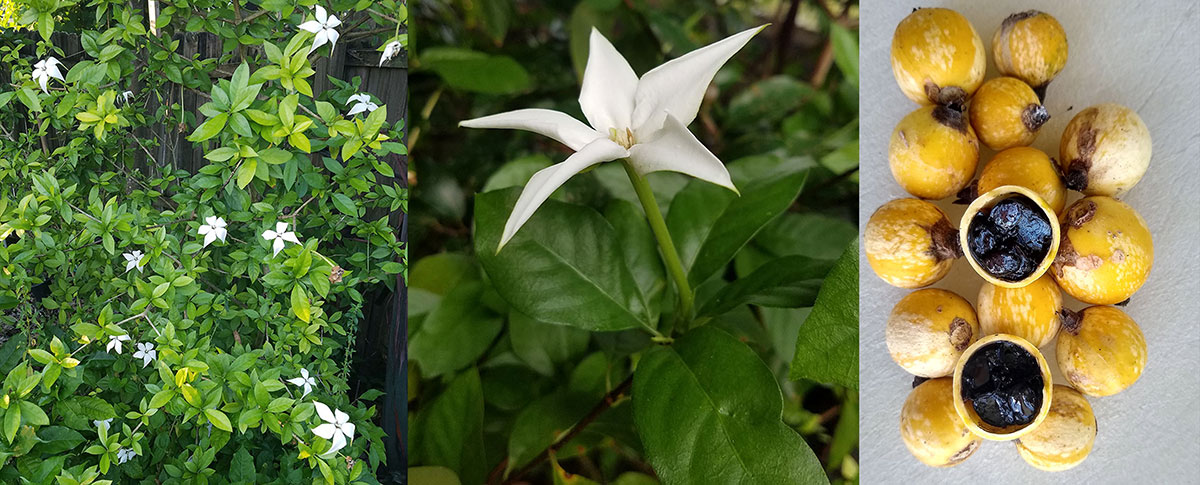
Randia  formosa  shrub  in  bloom  with  white  star-shaped  flowers,  close-up  of  single  bloom,  and  ripe  yellow  fruit  with  black  pulp  that  looks  like  blackberry  jam

Randia formosa - Blackberry Jam Fruit Tree with Flowers and Ripe Fruit

You know how some plants just surprise you?

That's Randia formosa - the Blackberry Jam Fruit Tree. At first, it just looks like a cute little gardenia-type shrub. Glossy leaves, sweet white flowers. Nice enough. But then the fruit shows up… and you crack one open and go, “Wait - this tastes like jam?!”

And not just any jam - like real, fresh blackberry jam. No sugar, no cooking. Just soft black pulp inside this golden little fruit. It's weirdly satisfying. One of those things you make everyone taste just to see their face.

What's even cooler is how easy it is. This thing starts blooming and fruiting when it's barely 2 feet tall. You can grow it in a pot on your porch, or even inside if it gets enough light. And while most of your other plants take the winter off, this one keeps going - flowers, fruit, the whole show.

If you've got a spot with filtered light and a little curiosity, it's absolutely worth a try. Honestly, it's just… fun.

This rare South American evergreen shrub checks all the boxes: fragrant, compact, easy, and edible.

✅ Grows in pots ✅ Indoors ✅ Small yards

Randia formosa – Blackberry Jam Fruit Tree – FAQ

What is Randia formosa?

Randia formosa, also known as Blackberry Jam Fruit or Jasmin de Rosa, is a compact tropical shrub that produces fragrant white flowers and small yellow fruits filled with soft, black pulp that tastes remarkably like blackberry jam. It belongs to the Rubiaceae family, the same as Gardenia and Coffea.

Why gardeners love Randia

  • Delicious jam-flavored fruit – no sugar needed.
  • Compact grower – perfect for patios and indoor spaces.
  • Fast results – blooms and fruits within 1–1.5 years.
  • Big yield in a small pot – 25–30 fruits at once!
  • Fall–Winter performer – keeps going when others stop.
  • Kid favorite – fun to grow, fun to eat.

What does the fruit taste like?

The pulp inside the fruit tastes just like fresh blackberry jam - sweet, tangy, and rich. It is edible fresh, without any processing or sweeteners, and is loved by both kids and adults.

How big does the plant get?

In the ground, Randia formosa typically reaches 4 to 5 feet tall. In containers, it usually stays smaller, around 3 to 4 feet, making it perfect for small gardens, patios, or indoor growing.

How soon will it fruit?

Very quickly! This is one of the fastest fruiting tropicals. Plants begin to flower and produce fruit within two years from seed. Еstablished plants in 3 gallon containers may begin fruiting at just 2 feet tall.

Does it need full sun?

No. It actually prefers filtered light or partial shade, especially in hot climates. Leaves tend to look healthier and greener when grown in dappled light.

Can I grow Randia formosa indoors?

Yes! Its compact size and shade tolerance make it an excellent choice for bright indoor spaces. Just be sure to provide good air circulation, high humidity if possible, and avoid cold drafts.

How cold-hardy is it?

Mature plants can tolerate temperatures down to about 26F for short period of time, but young plants are more sensitive and should be protected from frost. It is best grown outdoors in USDA zones 9b and up or kept as a container plant that can be brought indoors in winter.

What kind of soil does it need?

Randia formosa requires acidic, well-draining soil. Avoid alkaline soils, which may cause leaf chlorosis (yellowing with green veins).

How often should I water it?

Keep soil evenly moist but not soggy. It is sensitive to overwatering, especially in cooler weather. During winter, reduce watering. Underwatering may cause sudden leaf drop - but the plant usually recovers quickly once watered again.

What fertilizer does it need?

Yes. Use a slow-release fertilizer formulated for acid-loving plants. Regular applications of micronutrients (especially iron and magnesium) help prevent chlorosis. Foliar sprays can also be helpful. Apply Sunshine C-Cibus Booster or Green Magic controlled release fertilizer to keep your plant happy: Blackberry Jam Fruit is a heavy feeder!

When does it flower and fruit?

This plant can bloom and fruit for several months, often from summer through winter. It is known to bloom off-season, making it a fun and productive plant when others are dormant.

Are the flowers fragrant?

Yes, the white star-shaped tubular flowers have a light, sweet fragrance, similar to gardenias but less intense. The flowers open at night.

Is it self-pollinating?

Yes. A single plant can set fruit on its own, although insect activity can improve fruit set.

Are there any common problems?

The most common issue is chlorosis, which shows up as yellowing leaves with green veins - usually due to overwatering, poor drainage, or alkaline soil. It's fixable with acidification and micronutrients. The plant may also drop leaves suddenly if underwatered but tends to bounce back.

Is this plant related to Gardenia?

Yes. It is in the same plant family (Rubiaceae) as Gardenia and Coffee. That's why the flowers look similar and why it tolerates similar care needs.

Can it be used for bonsai or miniature tree styling?

Yes, due to its slow growth and branching habit, Randia formosa can be shaped into a miniature tree form and is quite attractive when trained.

Is it drought-tolerant?

Once established, it shows moderate drought tolerance. However, young plants need regular watering and are more vulnerable to drying out.

Read Garden Blog about Blackberry Jam Fruit

Get your Blackberry Jam Fruit

Date: 16 Mar 2023

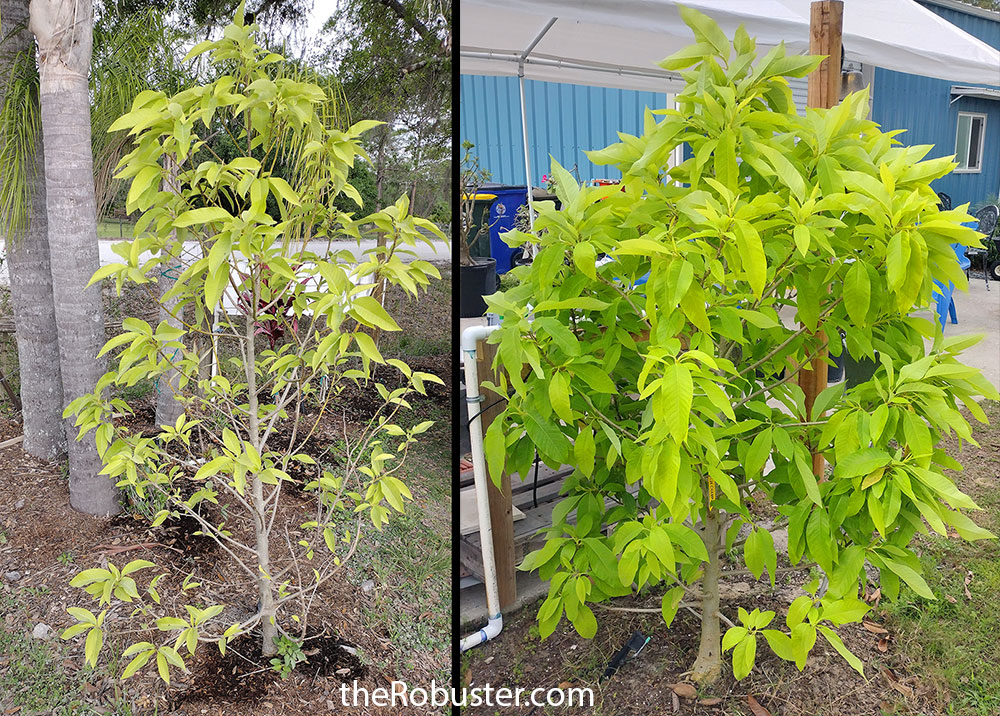
The Robuster field test:
turning green!

The  Rubuster  and  Champaka  tree  turning  green

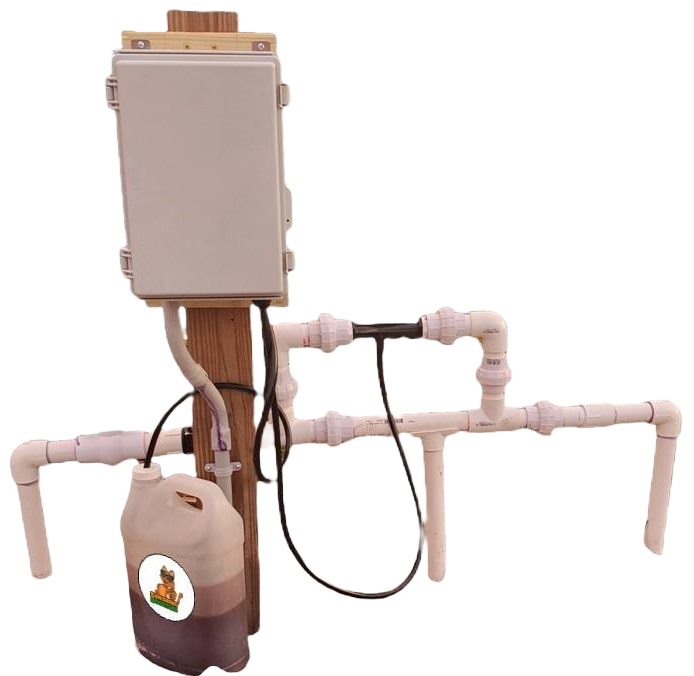
These two Champaka trees are of the same age, planted at the same time, 100 ft apart, with the same light, soil, and water amount... The only difference is - fertilizer schedule! The tree on the left is planted by our farm gate and gets pure water plus slow release fertilizer every 3 months. The tree on the right grows by our farm office with watering station hooked up to the Robuster active display. The Rubuster automatically dozes Sunshine Boosters liquid fertilizer with every watering.

Date of planting: 3/13/2022
The Robuster Started: 11/25/2022
Formula used: Sunshine C-Cibus 10 ml/gal with every watering
Drip irrigation: directly to the root zone once a day, 2-5 min (weather adjusted)
Image taken: 3/15/2023 @ TopTropicals B-Farm (Sebring)

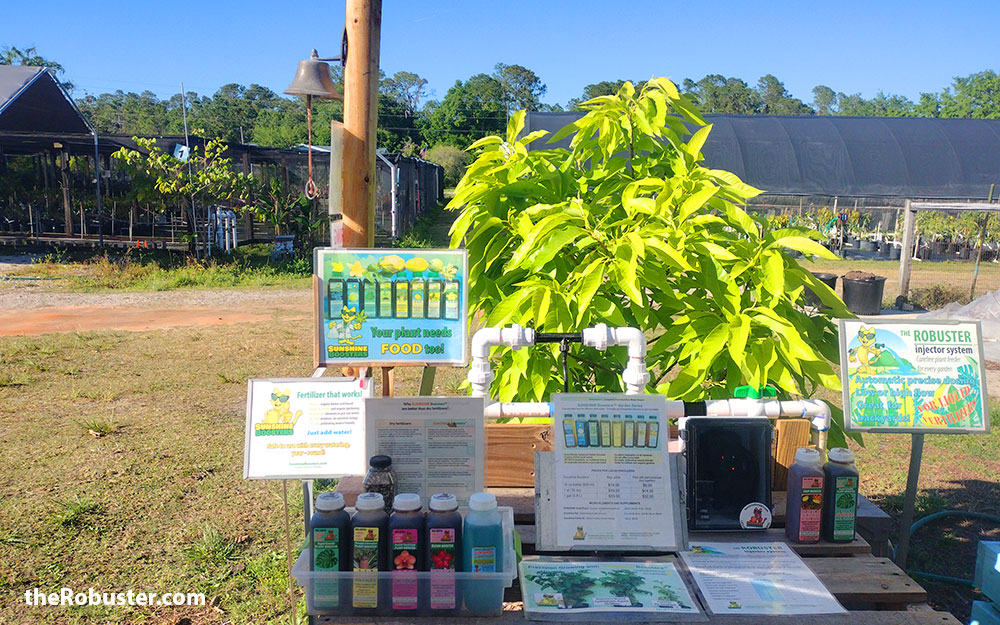
The  Robuster  and  Champaka  tree  by  Top  Tropicals  office

In the photo: The Robuster active display by our B-Farm office in Sebring, with the subject Champaka tree behind it that gets its food first come first serve!

Installation available
for local customers

The instructions for assembly are included and are straightforward, making it easy for online purchasers to put together. If you're capable of basic PVC plumbing, then assembling this system will be a breeze!

For a green, lush and fruitful garden that allows you to relax and enjoy your tropical paradise, the Robuster automatic smart fertilizer injector system is a must-have. It takes the hassle out of gardening, ensuring that it's carefree! Do you have any questions, need advice, or require assistance with installation? Simply contact us, and we'll be happy to help!

The  Rubuster  -  automatic  smart  fertilizer  injector  system