Garden Blog - Top Tropicals

Date: 23 Jan 2026

Insulin Ginger traditional remedies: Quick-n-fun exotic recipes

Insulin Ginger (Chamaecostus cuspidatus) traditional remedies recipes

Insulin Ginger (Chamaecostus cuspidatus) traditional remedies recipes

❣️ Insulin Ginger traditional remedies: Quick-n-fun exotic recipes

  • 6 very simple, real-world ways people actually use Insulin Ginger (Chamaecostus cuspidatus)


✦ 1. 🍵 Simple leaf tea


Steep 1–2 fresh leaves (or dried) in hot water for 10–15 minutes. Drink warm, plain or lightly sweetened.
  • 2. ❄️ Refreshing iced herbal drink
Blend a couple of leaves with water, strain, add ice. Some people add a squeeze of lemon.
  • ✦ 3. Coconut water blend


    Blend 1–2 leaves with fresh coconut water. Drink chilled as a mild daily tonic.
  • ✦ 4. 🌿 Fresh leaf chew


    The simplest method - chew a fresh leaf in the morning, then discard. Very common traditional use.
  • ✦ 5. Salad add-in


    Finely slice young leaves and mix with other greens. Use lightly, like a functional herb.
  • ✦ 6. 🍲 Leaf Chutney


    Leaves can be blended with spices and other herbs into a savory condiment. Meals like this make the leaves easy to include in everyday diet (though you’d want to adapt it for flavor and personal preferences).


👆This plant has a long history of traditional use. Everyone’s body is different, so if you have diabetes or take medication, it’s wise to check with your healthcare provider first.

🛒 Add Insulin Ginger to your medicinal herb garden

📚 Learn more:

Plant Facts

Costus igneus, Chamaecostus cuspidatus
Insulin Plant, Fiery Costus, Spiral Flag
USDA Zone: 9-11
Large shrub 5-10 ft tallSmall plant 2-5 ftSemi-shadeShadeRegular waterYellow, orange flowersEdible plantSpice or herb plantEthnomedical plant.
Plants marked as ethnomedical and/or described as medicinal, are not offered as medicine but rather as ornamentals or plant collectibles.
Ethnomedical statements / products have not been evaluated by the FDA and are not intended to diagnose, treat, cure, or prevent any disease. We urge all customers to consult a physician before using any supplements, herbals or medicines advertised here or elsewhere.Subtropical plant. Mature plant cold hardy at least to 30s F for a short time

#Food_Forest #Remedies #Shade_Garden #Discover #Recipes

🟢 Join 👉 TopTropicals

Date: 23 Jan 2026

A leaf you grow, not a pill you buy

Insulin Ginger (Chamaecostus cuspidatus)

Insulin Ginger (Chamaecostus cuspidatus)

❣️ A leaf you grow, not a pill you buy: Insulin ginger - the plant people actually use
  • ❣️ Costus igneus (Chamaecostus cuspidatus) - Insulin Ginger, Fiery Costus or Spiral Flag - I love this plant! And that’s not something I say lightly.
  • ❣️ Customers often ask me about medicinal plants that may help with diabetes, and Insulin Ginger always comes up - for a good reason. This is one of those plants people grow on purpose, not just because it looks nice. Imagine stepping into your garden and picking a leaf instead of opening a pill bottle. That idea alone makes people pause.
  • ❣️ In everyday use, Insulin Ginger is valued for supporting healthy blood sugar and helping the body respond better to insulin. It’s also packed with antioxidants, which gardeners like to think of as quiet helpers for organs that get stressed when sugar balance is off. No lab talk, no big claims - just a plant people have trusted and used for a long time.
  • ❣️ From a gardener’s point of view, it’s hard not to love. You can harvest leaves year-round, and the more you pick, the better it grows. One plant quickly turns into many, which means you’ll have enough for yourself and extras to share with friends and family.
  • ❣️ It’s one of those plants people don’t regret planting. Easy to grow. Easy to share. Easy to use.


🛒 Add Insulin Ginger to your medicinal herb garden

📚 Learn more:

Plant Facts

Costus igneus, Chamaecostus cuspidatus
Insulin Plant, Fiery Costus, Spiral Flag
USDA Zone: 9-11
Large shrub 5-10 ft tallSmall plant 2-5 ftSemi-shadeShadeRegular waterYellow, orange flowersEdible plantSpice or herb plantEthnomedical plant.
Plants marked as ethnomedical and/or described as medicinal, are not offered as medicine but rather as ornamentals or plant collectibles.
Ethnomedical statements / products have not been evaluated by the FDA and are not intended to diagnose, treat, cure, or prevent any disease. We urge all customers to consult a physician before using any supplements, herbals or medicines advertised here or elsewhere.Subtropical plant. Mature plant cold hardy at least to 30s F for a short time

#Food_Forest #Remedies #Shade_Garden #Discover

🟢 Join 👉 TopTropicals

Date: 25 Jan 2026

Collecting clerodendrums: big color, little effort

Clerodendrum collage

Clerodendrum collage

🎨 Collecting clerodendrums: big color, little effort

  • 🎨 Collector hook


    If you love plants that look rare, unusual, and a little dramatic - but do not want high-maintenance divas - Clerodendrums belong in your collection.
    Clerodendrums are a surprisingly diverse group of plants, ranging from flowering vines to shrubs and even small trees. What they all share is bold, colorful blooms and an easygoing nature that makes them far less fussy than they appear. This combination of exotic looks and forgiving care is exactly why collectors gravitate toward them.
    Many clerodendrums bloom repeatedly through the year in warm climates, and several tolerate lower light better than most flowering plants. That makes them flexible - happy in the garden, in containers, on patios, or even indoors near a bright window. Their flowers come in striking combinations of red, white, blue, pink, and purple, often with unusual shapes that stop people mid-walk.
  • 🎨 Why clerodendrums earn collector status


  • ✦ Uncommon, eye-catching flowers
  • ✦ Long or repeat bloom cycles in many varieties
  • ✦ Vines, shrubs, and small trees in one genus
  • ✦ Excellent performance in containers
  • ✦ More tolerant of lower light than expected


🎨 Clerodendrum care made simple


Give clerodendrums bright filtered light to partial sun, regular watering with good drainage, and light feeding during active growth. A little pruning keeps them tidy and encourages fresh blooms. That is it. No complicated routines, no constant fixing.

For collectors who want maximum visual payoff without constant effort, clerodendrums deliver exactly what the title promises - big color, very little work.

🛒 Start your Clerodendrum collection

📚 Learn more:
#Butterfly_Plants #Shade_Garden #How_to #Hedges_with_benefits #Container_Garden

Plant Facts

Clerodendrum bungei
Cashmere (Cashmir) bouquet, Glory Bower, Clerodendron
USDA Zone: 9-11
Large shrub 5-10 ft tallSemi-shadeFull sunRegular waterRed, crimson, vinous flowersPink flowersPlant attracts butterflies, hummingbirdsDeciduous plantFragrant plantSubtropical plant. Mature plant cold hardy at least to 30s F for a short time
🟢 Join 👉 TopTropicals

Date: 25 Feb 2026

A Miracle in the Garden: Watching a Tiger Swallowtail Rebuild Itself on a Magnolia Champaka - Joy Perfume Tree

Tiger Swallowtail Butterfly

A Miracle in the Garden: Watching a Tiger Swallowtail Rebuild Itself on a Magnolia Champaka - Joy Perfume Tree 🐯

Tiger Swallowtail Metamorphosis: From Cocoon to Joy
  • 🏼 Nature’s most mind-blowing magic trick happened right here on a branch of our Magnolia champaka - the Joy Perfume Tree. Did you know that when a caterpillar enters its chrysalis (cocoon), it literally dissolves its body and rebuilds it from scratch?
  • 🏼 This Tiger Swallowtail chose the legendary Joy Perfume Tree as its nursery. It’s a match made in heaven—the "flying tiger" of North America born on a tree famous for the world’s most expensive perfume scent. While most people know the Champaka for its intensely fragrant flowers, few realize that even the leaves release a soft, sweet aroma when brushed against.
  • 🏼 In this video, you’ll see the rare moment of eclosion - where the butterfly emerges with soft, wrinkled wings and begins the slow process of pumping life into them before its first flight.
  • 🏼 It is a real gem in your garden - not just for fragrance lovers, but for wildlife that clearly loves it too.
Watch this Tiger Swallowtail butterfly being born on a Champaka - Joy Perfume tree!

🛒 Bring the miracle Joy to your garden - the perfume Champaka tree

📚
Everything You Need to Know About the Joy Perfume Tree:
· How to grow Magnolia champaca and get some Joy
🟡The Fragrance: What does Joy Perfume flower smell like?
· Which Champaka tree is better - White or Golden?
🟡More:

🎥

#Perfume_Plants #Container_Garden #Trees #Discover

Plant Facts

Magnolia champaca, Michelia champaca
Joy Perfume Tree, Huang Yu Lan, Safa
USDA Zone: 9-11
Small tree 10-20 ftFull sunRegular waterYellow, orange flowersPlant attracts butterflies, hummingbirdsFragrant plantSubtropical plant. Mature plant cold hardy at least to 30s F for a short time
🟢 Join 👉 TopTropicals

Date: 2 Mar 2026

Beyond fruit: how this African tree supports wildlife and garden health

Vangueria infausta - Spanish Tamarind

Vangueria infausta - Spanish Tamarind

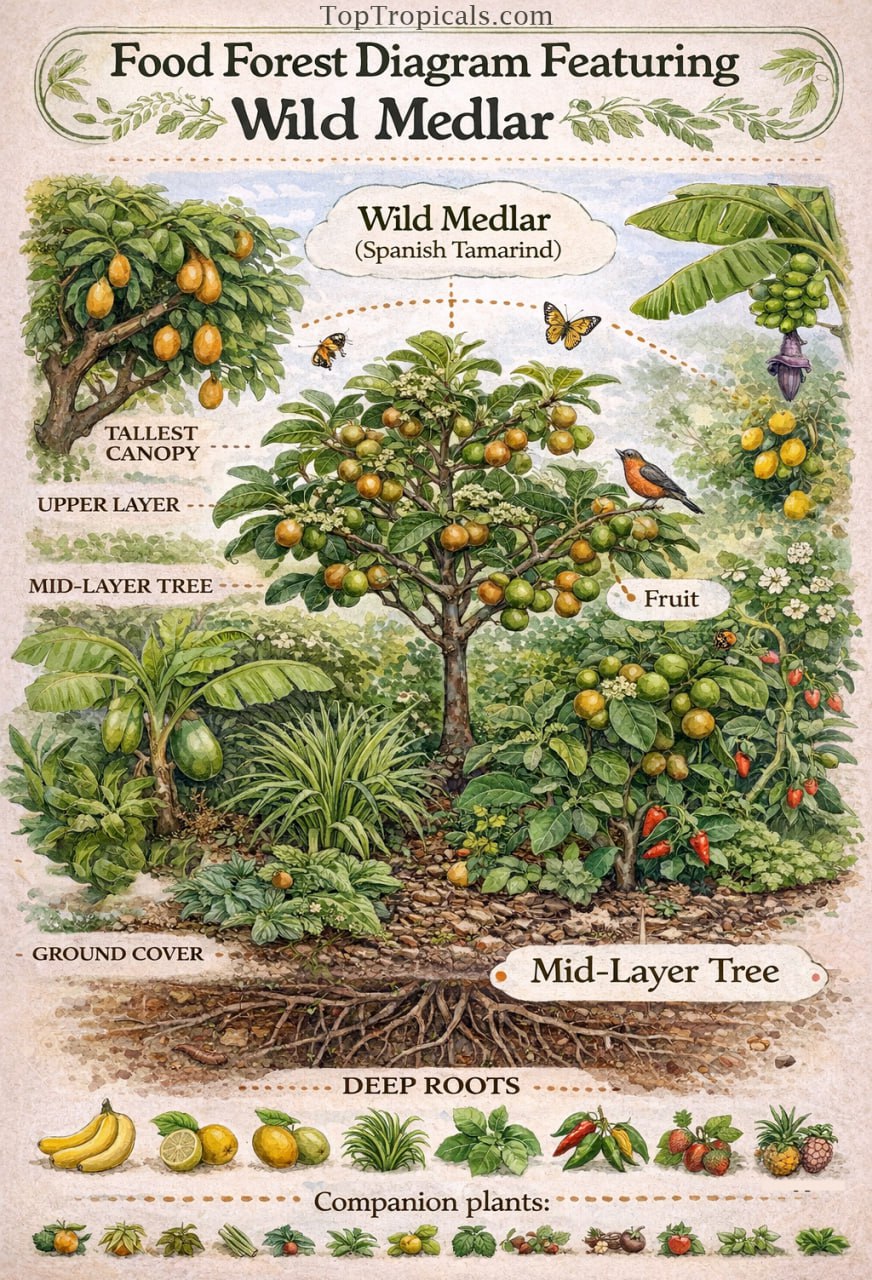
Beyond fruit: how this African tree supports wildlife and garden health: Wild Medlar in the ecological food forest 🍊

Vangueria infausta (Spanish Tamarind, Wild Medlar) might win your heart for its sweet-tart fruit and folk medicine magic - but did you know it’s also a quiet hero in the ecosystem? Whether you’re planting a full-blown food forest or just a mixed backyard garden, Vangueria infausta brings more than fruit to the table. It brings balance, beauty, and biodiversity.

🐝 Pollinator power


When in bloom, this tree produces nectar-rich flowers that attract bees, butterflies, and other pollinators. These beneficial insects don’t just help the Wild Medlar fruit - they boost productivity in your entire garden.
If you grow mangos, citrus, guava, or veggies nearby, Spanish Tamarind helps keep the pollinator traffic moving.

🐦 Bird magnet


Birds are big fans of this tree. They nest in its dense branching, snack on overripe fruit, and help spread seeds. In return, they’ll help keep down pests like caterpillars and beetles.
Even in a small garden, one Wild Medlar can be a micro-habitat for birds, insects, and other helpful wildlife.

🌱 Soil stabilizer


With its deep roots and drought-hardy nature, Wild Medlar helps hold soil in place, especially on slopes or rocky patches. It improves drainage and reduces erosion, which makes it a great addition to food forests in challenging spots.

🍂 Natural mulch & green cleanup


The tree drops a modest amount of leaf litter, which breaks down into soft, rich mulch. In a diverse planting, that means fewer weeds, better soil structure, and less watering needed.

🌿 Companion planting & food forest stacking
  • · Works great as a mid-layer tree in multi-tiered systems
  • · Provides light shade for herbs or smaller fruiting plants
  • · Plays well with bananas, papaya, guava, lemongrass, and ground covers
In zones 9-11, it can live happily in a mixed border or permaculture guild. In colder zones, just keep it potted and move it around as needed - it still offers many of the same benefits.

🛡 Pest and disease resistant


One more bonus: Spanish Tamarind is incredibly low-maintenance. It resists most common pests and doesn’t suffer from fungal issues like many tropical fruit trees do. That means fewer chemicals and more harmony in your garden ecosystem.

✍️ Ready to plant something that gives back?


Think you need more than just another fruit tree? More life. More movement. More meaning in your garden?
Grow Wild Medlar for the fruit - but keep it for everything else it brings. The pollinators. The shade. The quiet medicine. The steady presence that makes your space feel alive.
If you’re building a food forest - or simply want a tree that earns its place every single season - this one doesn’t just sit there. It contributes.

🛒 Plant Spanish Tamarind in your Food Forest for a happy wildlife

📚 Learn more:

Plant Facts

Vangueria infausta
Wild Medlar, Spanish Tamarind
USDA Zone: 9-11
Small tree 10-20 ftFull sunModerate waterEdible plantDeciduous plantEthnomedical plant.
Plants marked as ethnomedical and/or described as medicinal, are not offered as medicine but rather as ornamentals or plant collectibles.
Ethnomedical statements / products have not been evaluated by the FDA and are not intended to diagnose, treat, cure, or prevent any disease. We urge all customers to consult a physician before using any supplements, herbals or medicines advertised here or elsewhere.Subtropical plant. Mature plant cold hardy at least to 30s F for a short time

#Food_Forest #Discover

🟢 Join 👉 TopTropicals