Date: 31 Oct 2025
👻 When plants grow wings...

🌴 Twilight in the garden. Smokey is holding a glowing pumpkin. Sunshine is sipping cocoa.
Sunshine: "Smokey, why does that plant look like it wants to fly away?"
Smokey: "That’s the Bat Lily - Tacca. It’s rare, it’s
weird, and it’s in bloom just in time for Halloween."
Sunshine: "Figures. You always find the spooky ones."
Meet the Bat Lily (Tacca)
Tacca is also called the Bat Lily or Devil Flower. This tropical wonder grows bat-shaped wings and foot-long whiskers. The black form (Tacca chantrieri) looks straight out of a gothic dream, while the white one (Tacca nivea) is ghost-like and elegant.
Some of our plants are blooming right now in the nursery — true Halloween magic! Blooms are delicate and may not travel, but the plants are strong and will flower again soon in your care.
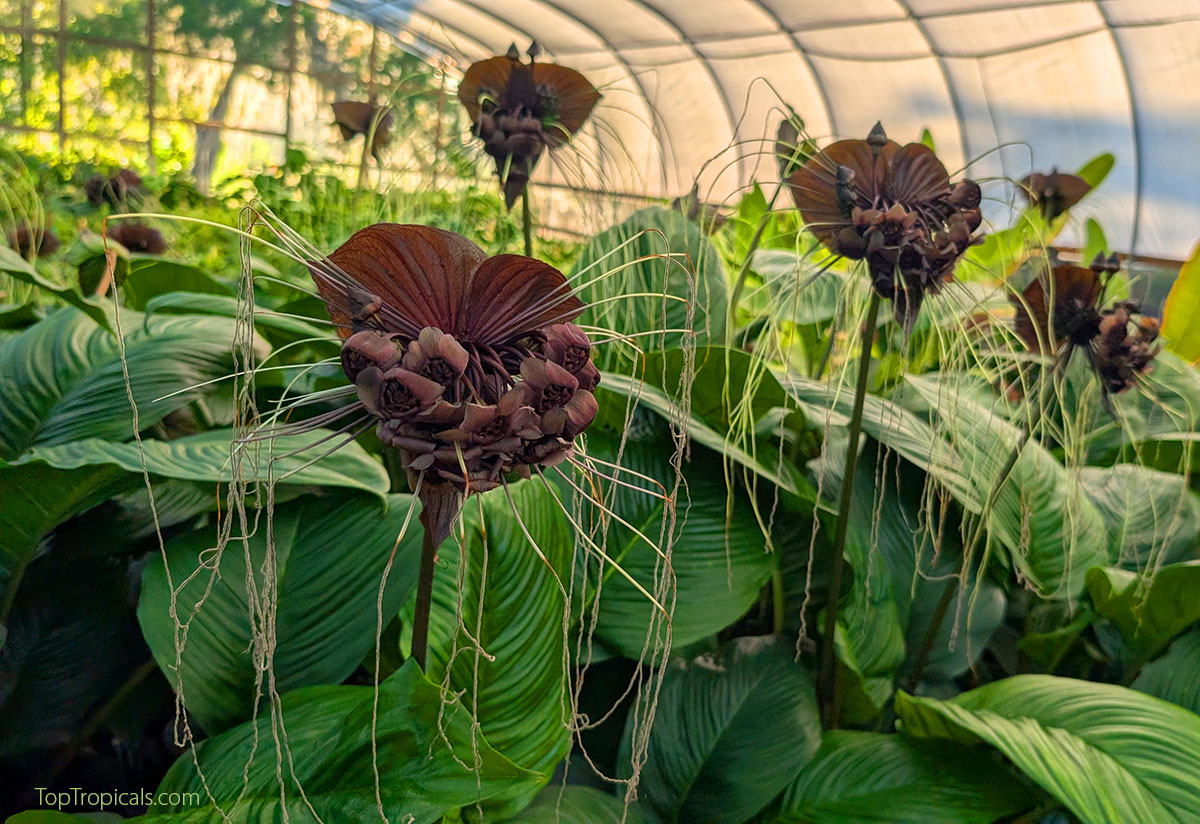
Black Bat Lily (Tacca chantrieri) with dark maroon wings and long whiskers
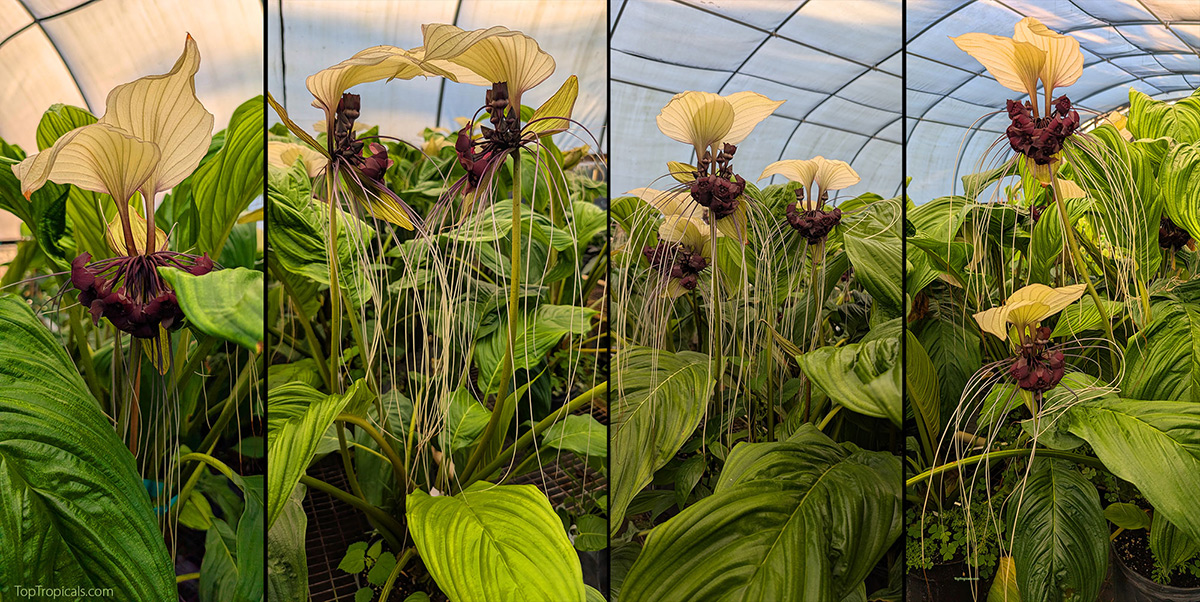
White Bat Lily (Tacca nivea) in bloom with wide ivory wings
"The White Bat Lily (Tacca nivea) is bold and sculptural, with oversized
ivory wings that command attention. Its pale bracts stretch wide above
clusters
of deep maroon flowers, and long, silvery whiskers spill gracefully through
the foliage. In filtered light, the plant seems to glow from within —
elegant, crisp, and perfectly balanced between the strange and the
beautiful.
If I could pick, I’d go with the White Tacca. It feels more
architectural, more balanced — those oversized wings catch light in a
way that
shows off every vein and curve. It looks engineered by nature, almost like
an
alien design prototype that actually works.
The Black Bat Lily (Tacca chantrieri) feels alive with shadow. Its dark
maroon wings and wiry whiskers make it look like something that fluttered
out of
the jungle at dusk. The bloom’s layered structure and near-black sheen
give it a quiet power — mysterious, understated, but impossible to
ignore. But if I were designing mood lighting for a greenhouse at night, the
Black Tacca wins. It’s subtle, mysterious, like a secret only visible
up
close. Together, they’re perfect opposites — yin and yang of the
tropical underworld: white for daylight, black for moonlight." — says
Tatiana Anderson, Top Tropicals Plant Expert
Special Offer: Discounts on Rare Tacca Plants
Grow your own Bat Lilies — White or Black — at a special Halloween price!
Get 25% OFF Tacca plants with code
TACCA2025
Min order $25 (excluding S/H), valid online only, cannot be combined with other offers.
Hurry, offer expires November 03, 2025!
🎃 Storewide Halloween Sale – For Everything Beyond Tacca
Not into spooky plants? Enjoy savings on all other tropical plants across the store!
Get 15% OFF tropical plants with code
HALLOWEEN2025
Min order $100 (excluding S/H), valid online only, cannot be combined with other offers.
Hurry, offer expires November 03 2025!
👉 Collect Tacca plants:
Date: 31 Oct 2025
Tacca wants to be a cat! And everyone loves cats!
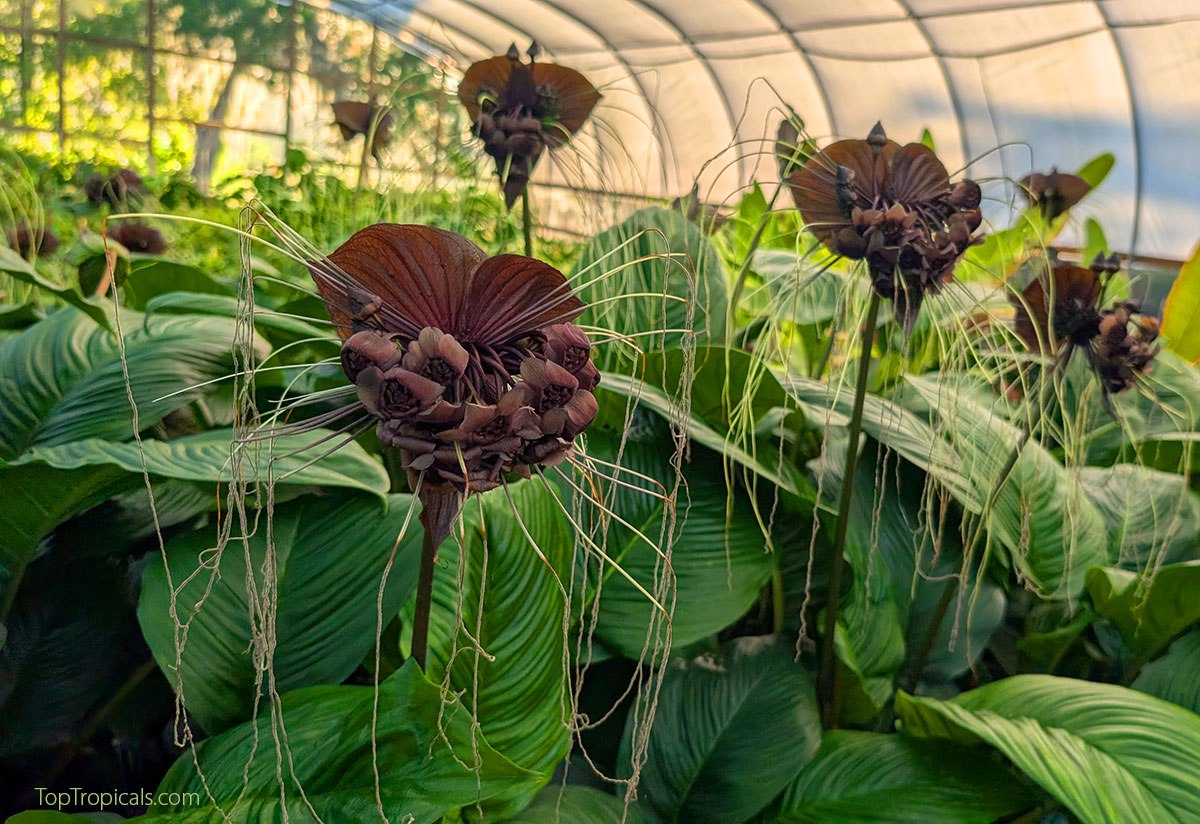
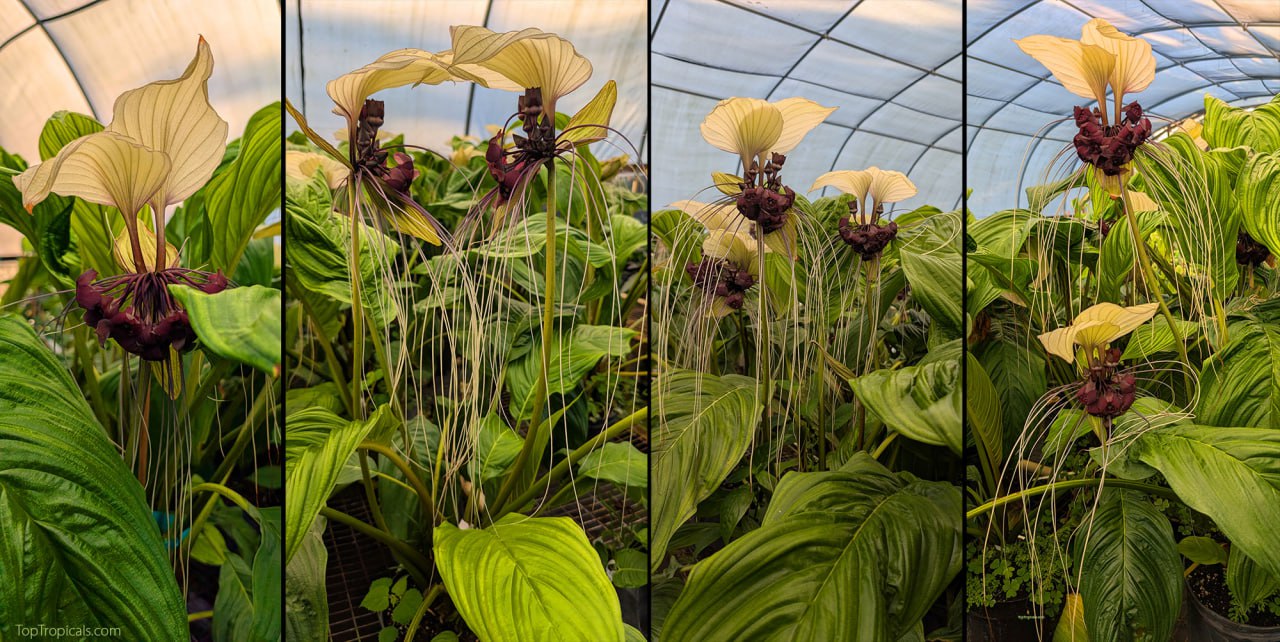
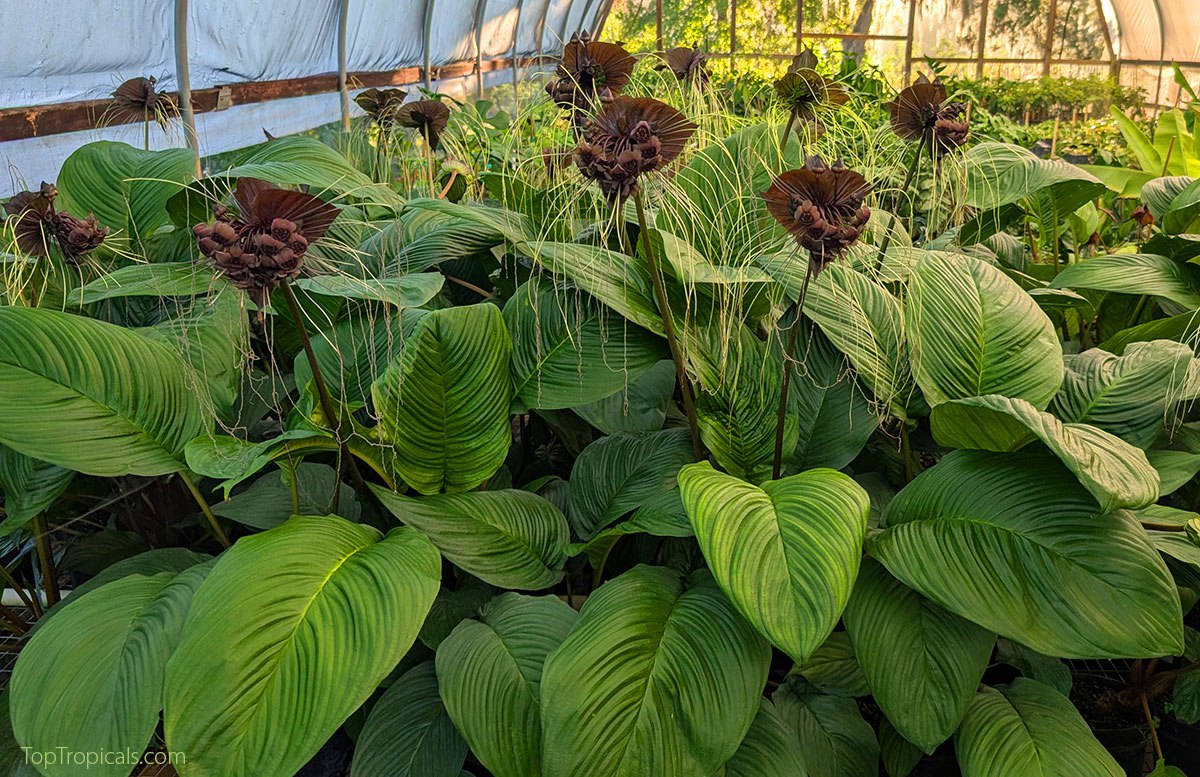
🐈 Tacca wants to be a cat! And everyone loves cats!
That’s probably the real evolutionary secret no botanist will admit! Those whiskers? Pure marketing genius from nature.
Cats had it figured out first — look mysterious, add long elegant whiskers, and everyone falls in love.
Tacca just took notes and said, “Alright, I can work with that!”
So now we have a tropical plant that looks half orchid, half bat, and just enough cat to make people stop, smile, and want one for their collection!
Tacca is also called the Bat Lily or Devil Flower. This tropical wonder grows bat-shaped wings and foot-long whiskers. The black form (Tacca chantrieri) looks straight out of a gothic dream, while the white one (Tacca nivea) is ghost-like and elegant.
Some of our plants are blooming right now in the nursery — true Halloween magic! Blooms are delicate and may not travel, but the plants are strong and will flower again soon in your care.Tacca colors: Black, White, Green:
Tacca chantrieri - Black Tacca
Tacca leontopetaloides - Green Tacca
📚 Learn more:
- The mystery of the White Bat Lily - the plant with wings and whiskers
- A flying bat with whiskers
- The rarest Green Tacca - Tacca leontopetaloides
- When Bat Head Devil Flower is in bloom
- Bat Head - Devil Flower
🛒 Add Taccas - Bat Lilies to your collection
#Container_Garden #Shade_Garden #Nature_Wonders
🟢 Join 👉 TopTropicals
Date: 1 Nov 2025
Tropical fruits that help you sleep better

Tropical fruits that help you sleep better: Cherries, Pineapple, Banana
🍒 Tropical fruits that help you sleep better
🌱 Looking for a natural way to fall asleep faster? Skip the pills and head for the fruit bowl. Some tropical fruits are surprisingly rich in melatonin, the hormone that tells your body it's bedtime. According to a study referenced by New York City Nutrition, eating melatonin-rich fruits about an hour before bedtime can naturally support better sleep quality.
😴 Melatonin naturally rises at night, helping you feel sleepy and cooling your body temperature. But things like blue light from phones, jet lag, or late-night stress can throw it off. That’s where certain fruits can help - they either contain melatonin or boost your body’s ability to make it.
🍒 Cherries
Both sweet and tart cherries are sleep boosters. Tart cherry juice is especially effective because it’s concentrated - studies show it can raise melatonin levels and increase total sleep time. Just go easy on added sugar. Try pairing the juice with almonds or cheese to keep your blood sugar steady before bed.
🍍 Pineapple
In one study, people who ate pineapple had a big jump in melatonin levels just two hours later. It’s also loaded with vitamin C and enzymes that aid digestion, making it a nice evening snack. Have it with a bit of protein, like yogurt or nuts, to avoid a sugar spike.
🍌 Banana
Bananas don’t contain much melatonin on their own, but they help your body make it. They’re full of tryptophan and magnesium, both of which support serotonin and melatonin production. A banana before bed can calm muscles and nerves - no wonder it’s a favorite natural sleep aid.
✅ Bottom line
A small fruit snack in the evening - cherries, pineapple, or banana - can help your body settle into sleep mode naturally. Eat it about an hour before bed, keep screens dim, and let nature do the rest.
🛒 Grow your own fruit and sleep better
📚 Learn more:
- Plant a fruit tree - and breathe easier: fruit might be the surprising key to healthier lungs
- 11 tropical fruits to eat instead of taking a fiber supplement
- Tropical fruit health benefits guide - what fruit and edibles can help with health issues and vitamin deficiencies, Part 1 and Part 2.
- Five best fruit trees to plant in Summer
- 10 best fruit trees to grow in Florida and Southern landscapes
- Top 10 fruiting plants you'll ever need for your health benefits
#Food_Forest #Remedies #Discover
🟢 Join 👉 TopTropicals
Date: 7 Nov 2025
The vine with square stems that heals bones and turns heads
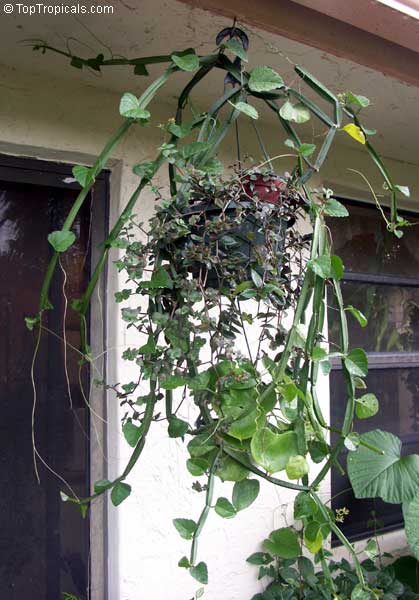
Cissus quadrangularis - Veld Grape, hanging basket
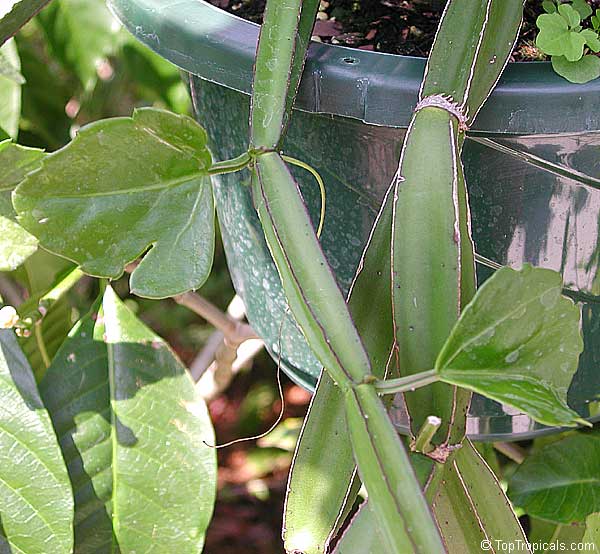
Cissus quadrangularis - Veld Grape, stems
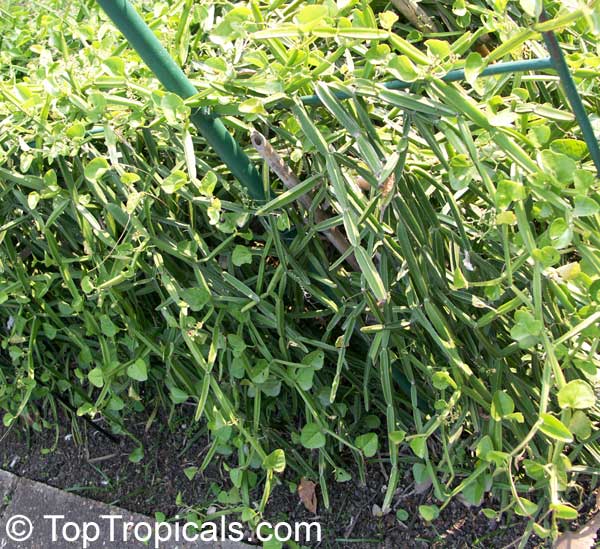
Cissus quadrangularis - Veld Grape plant
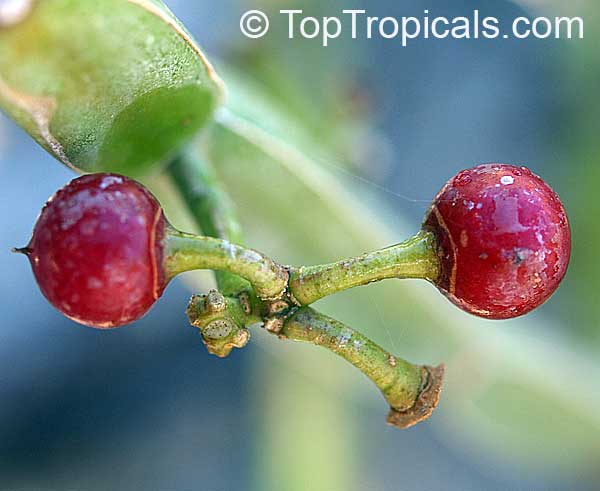
Cissus quadrangularis - Veld Grape, fruit
The vine with square stems that heals bones and turns heads
- Cissus quadrangularis - Veld Grape. This plant is anything but ordinary! It has four-winged stems – square, chunky, and unlike anything else in your garden. Each stem looks like a little green sculpture, with ribs running down the sides. It’s technically a vine, but behaves like a succulent, with thick, juicy stems and tiny tendrils that climb or spill from a pot.
- Native to Africa and India, veld grape thrives on sunshine, heat, and a bit of neglect. Perfect for hanging baskets or as a quirky groundcover. Just give it some light and occasional water, and it’ll keep growing strong.
- It’s also famous as a traditional "bone-healing" herb, earning it the nickname Bone setter plant. But even if you don’t use it for that, it’s a total show-stopper for anyone who loves plants with personality.
- A true show-stopper for collectors and anyone who loves the strange and beautiful side of nature.
🛒 Get your own Veld Grape show stopper
#Container_Garden #Remedies #Fun_Facts
🟢 Join 👉 TopTropicals
Date: 12 Nov 2025
How to get lots of Star Fruit
Star Fruit- Carambola Tree, Averrhoa carambola
🌟 Growing tips
🟡 Sun: Loves full sun. The more light, the sweeter the fruit.
- 🟡Temperature: Keep warm and protect from winds. It thrives in warm, tropical climates but can handle light frost if sheltered from cold winds - wind-free is the key.
- 🟡Soil: Prefers well-drained soil. Avoid waterlogging.
- 🟡Water: Regular watering keeps it happy, but don’t let roots sit in soggy soil.
- 🟡Size: Space saver! This compact tree doesn’t take up much room, perfect for smaller gardens. Dwarf varieties also do well in containers.
- 🟡Growth and crop: Fast-growing and early to fruit. Seedlings start producing in about three years, while grafted or air-layered trees fruit right away.
- 🟡Flowers: Beautiful pink blooms appear before the fruit, adding extra charm to the garden.
- 🌟 With just a bit of care and protection from wind and cold, your Carambola tree will reward you with baskets of bright, starry fruit through the cooler months when most other trees rest.
- 🌟 Slice one open and you get perfect star-shaped pieces that brighten up salads, desserts, or smoothies. The fruit is crisp, juicy, and beautifully sweet-tart. It’s nature’s candy - refreshing, low in calories, and rich in vitamin C and antioxidants.
📚 Learn more:
- ✦ Star Fruit from our garden
- ✦ Grow your own Carambola
- ✦ Top 10 fast-fruiting trees: #8. Carambola - Starfruit
- ✦ Carambola Banana Whip
- ✦ Carambola Jam recipe
- ✦ When young Carambola trees are covered with fruit
- ✦ Carambola tree is the Star of the orchard
🛒 Explore Star Fruit varieties
#Food_Forest
🟢 Join 👉 TopTropicals