Garden Blog - Top Tropicals

Date: 8 Nov 2019

Trimming Mussaenda bush
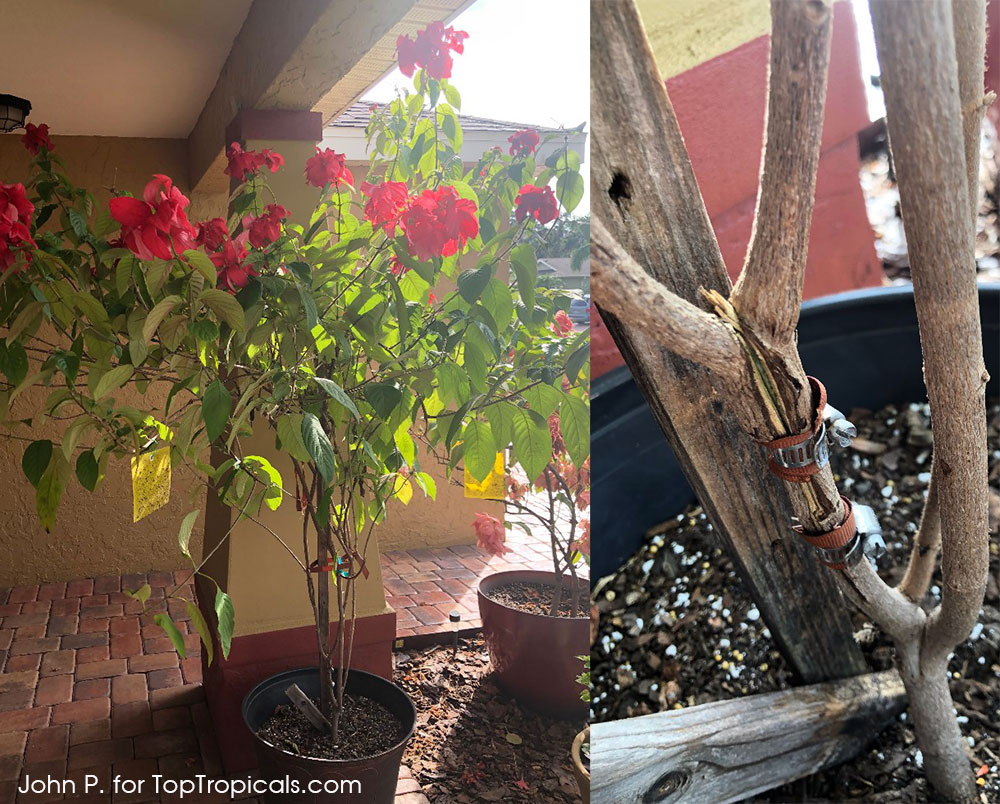
Q: My wife and I bought a Dona Evangelina from you this year. It thriving and has grown to 6-8 ft. It has become top-heavy and in wind, it falls over. Main stems have split twice but still continues to grow. I usually prune Dona Luz back to 3-4 ft and am wondering how much you would advise me to lop off your plant. Any advise will be appreciated.

A: Mussaendas, indeed, have very fragile stems that break often, especially in Florida wind storms. The good news is, these plants grow vigorously once established.
You did a good job trying to tie together the split stems and in fact, cracks do grow back together as long as the dressing is tight. Try to use green tape or even electric tape to tighten the broken spot.
However, do such repairs only if it is critical for a plant. When possible, simply cut off the broken branch and give the plant a chance to grow a new stronger branch. You may trim the bush pretty short. Mussaendas respond well to pruning which promotes more side growth and makes the plant bushier.
Keep in mind that during cold weather, Mussaenda may drop all leaves and go into dormancy until spring.

RECOMMENDED FERTILIZERS:
Pink N Good Daily Plant Food - Flower Booster
Tropical Allure - Smart-Release Booster

Date: 30 Oct 2019

Fragrant Gold Leaf Orchid Vine

By Onika Amell, tropical plant specialist

Q: I am absolutely thrilled to see you have this vine. I've tried for years to get this plant! It is so, so rare. It just seemed impossible to find in this country. How do I make it thrive? I am ordering two.

A: We are happy to confirm that indeed we do have this rare vine!
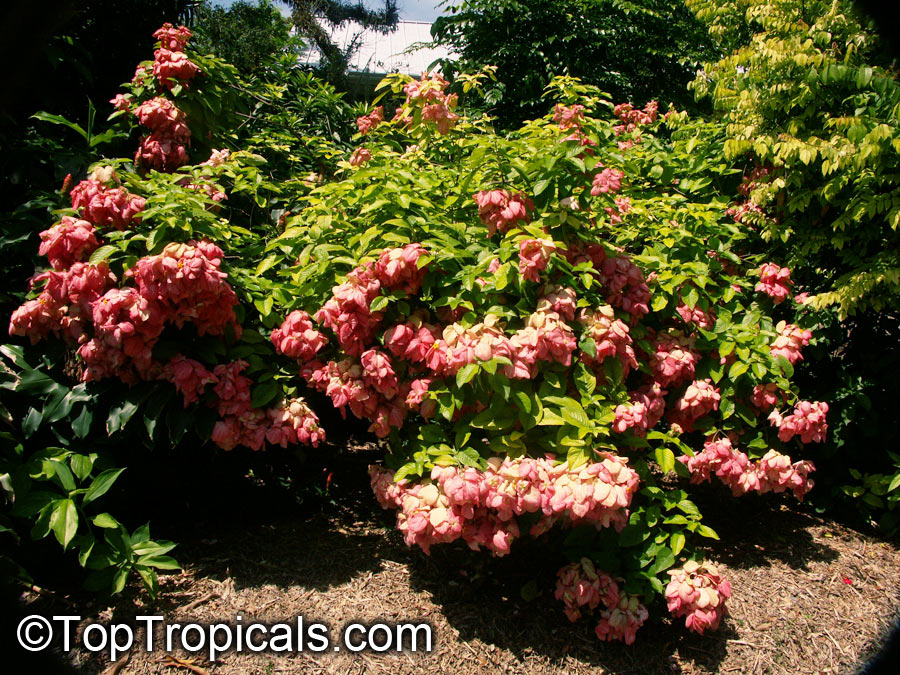
Bauhinia aureifolia - Gold Leaf Orchid Vine - was discovered in Thailand in 1983. It is endemic to Pattani, Narathiwat, and Yala in Southern Thailand. Danish botanist Kai Larsen named this plant and hailed it as one of the rarest plant species of the world when it was discovered in the eighties.
The Thai people call this vine Bai Mai Si Thong. It is a beautiful climber with large, bi-loped leaves (7 inches or more!) and good branching.
Young leaves are a stunning burnt orange to terracotta color for about a week and as they reach full size, they turn green over a couple of days. This is a very rare color for Bauhinia. It produces leaves all the time and this means this vine is always full of beautiful color. With its golden leaves, it sure is reminiscent of Autumn.
This vine blooms from May to November. It bears bunches of small flowers that are delicately fragrant in the evenings. The cultivated plants range flower color from pure white to purple and pink, while the wild ones have often white petals with pinkish patches.
Bauhinia aureifolia needs well-drained soil, full light and good humidity to thrive. It will tolerate a light freeze once established and it is very important to protect young plants.
Gold Leaf Orchid Vine also makes a wonderful container plant with staking or support. It is a must for every rare plant collection!

RECOMMENDED FERTILIZERS:
Pink N Good Daily Plant Food - Flower Booster
Tropical Allure - Smart-Release Booster
Date: 29 Jul 2019

When to fertilize and prune tropical fruit trees?

Q: Can tropical fruit trees (Soursop, Mango, Star fruit, etc) be given plant food any time of year? Also can they be trimmed this time of year/summer?

A: True tropical plants (including fruit trees) need plant food most of the year in real Tropics, where temperatures have very little fluctuations, and active growth season is close to 12 months a year. In subtropical areas when temperatures in winter drop below 65F, plant metabolism slows down, so it is recommended to fertilize only during the warmest period (March through November). So yes, Summer is the perfect time for fertilizing your trees; their metabolism is at the highest point and they can use more food!

Trim your fruit trees right after harvesting. Obviously, you don't want to prune branches before or during flowering or fruiting. The specific time of the year for pruning depends on the plant - every tree has its own flowering/fruiting season. However, avoid pruning right before winter: young shoots promoted by pruning are tender and can be cold damaged.

Recommended fertilizers for fruit trees:

Fruit Festival Plant Food - Super Crop Booster
Mango-Food - Smart Release Fruit Tree Booster
SUNSHINE-Honey - for sweeter fruit
SUNSHINE SuperFood - microelement supplement

Date: 12 Mar 2019

Fertilizing Ylang Ylang

TopTropicals.com

Q: What fertilizer should we be using for ylang ylang?

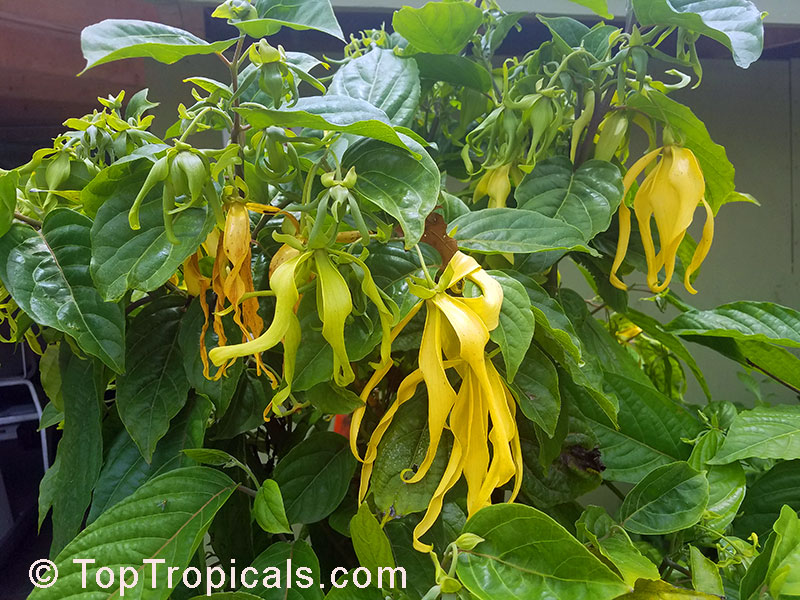
A: Ylang Ylang is a free-flowering tropical plant that requires regular feeding during active growth period (March through November in Florida). We use balanced granulated fertilizer that contains micro-elements. Apply once a month 1 tsp per 1 gal of soil. For in-ground plants, 1/2 cup once a month.
We also apply additional micro-element treat SuperFood as foliar spray which dramatically increases growth rate and promotes flowering.

Check out our fertilizers, plant boosters, and garden supplies:

Date: 24 Jun 2018

TopTropicals

SUNSHINE-SuperFood for your plants health

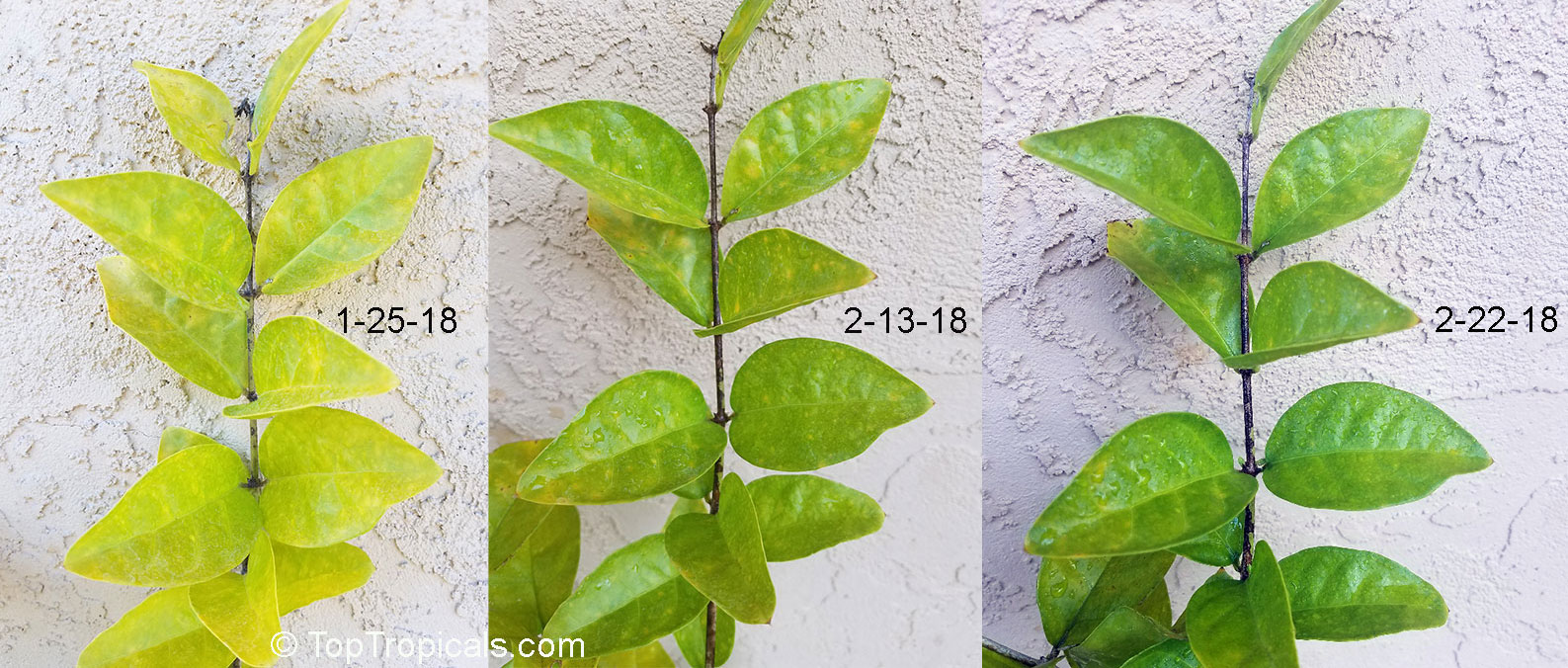
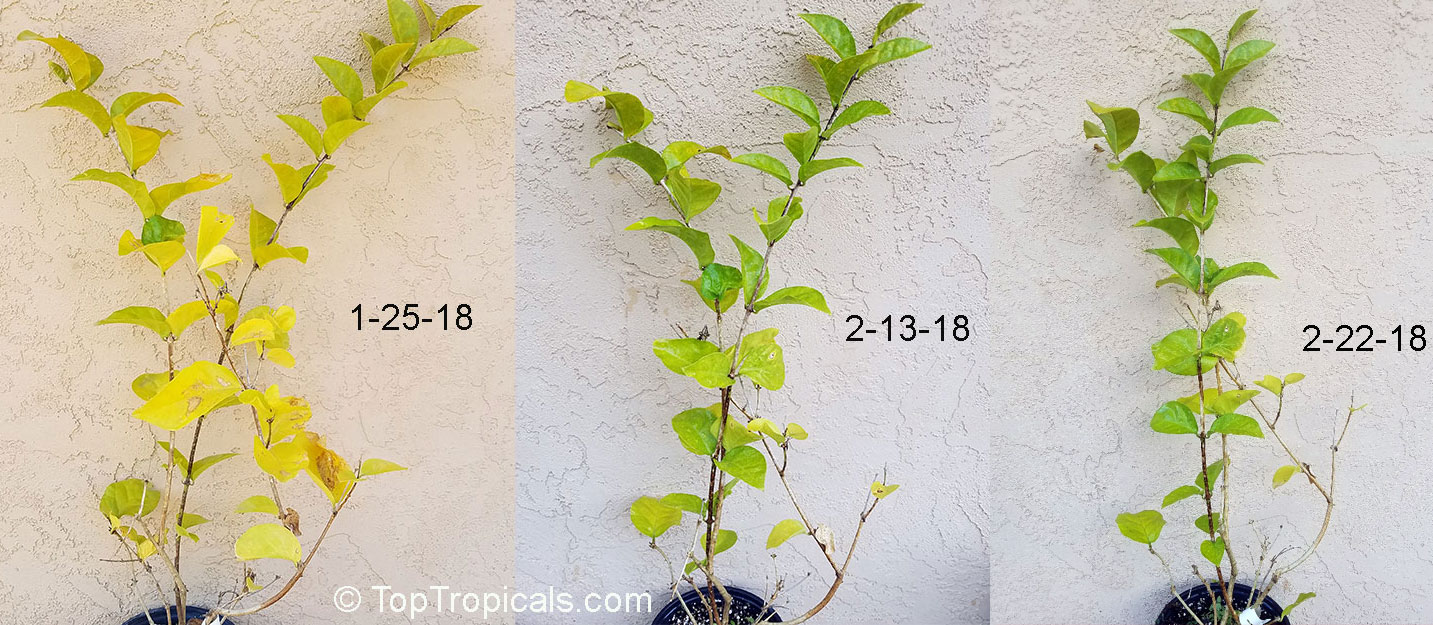
We are getting very high interest from our customers to our new plant booster SUNSHINE-SuperFood as well as many questions. We continue experimenting with the Jasmine that you saw in our previous newsletter, that had pale yellow leaves and numerous deficiencies. Right now, after only 2 applications, it looks healthy green again. Click on the picture to zoom in and see leaves turning from yellow to green within less than a month. See also full plant photo of this jasmine.

Q: Is SUNSHINE-SuperFood a fertilizer?

A: Traditionally we call a fertilizer macro-elements (NPK - nitrogen, phosphorus, and potassium). Technically, SUNSHINE-SuperFood is a complex of micro-elements that are essential for plant's health. It provides such elements as Mg, Fe, Mn, Zn, Cu, B, Mo, S, and Amino-acids that our soils are usually poor of. These elements are responsible for proper development of leaves, roots, flowers, and overall plant vigor. Read more about role of these micro elements.

Q: Can I just get these additional elements in a dry form and add to soil like a fertilizer?

A: No. Some of these elements must present in extremely low concentrations (this is why they are called micro-). SUNSHINE-SuperFood is a liquid substance with very high bioavailability that has very complicated formula; it is not just a mix of the elements. The formula is developed with the maximum efficiency for a plant to absorb through leaves and a root system.

Q: Is it better to spray leaves or water the plant with the solution?

A: Foliar applications are always most efficient in regards of seeing a quick result. However, we recommend to also drench the root ball with SUNSHINE-SuperFood solution to deliver the necessary elements evenly to all parts of the plant through its natural metabolism.

Q: My gardenia looks very sad after winter - most leaves are yellow and some have pale spots. Should I use SUNSHINE-SuperFood more often and in higher concentrations?

A: We recommend to apply SUNSHINE-SuperFood once a month to maintain a general plant health. In difficult cases like with this jasmine on the photo, you can do twice a month. However do not exceed recommended concentration. The rule of thumb is, you can apply water soluble fertilizers and supplements more often, but with lower concentrations - this way a plant will be more responsive. Plant metabolism in general is rather slow, changes take days and weeks - don't try to speed it up. Your patience will be rewarded.

Try SUNSHINE SuperFood on sick looking plants, especially with leaves that are yellowing, deformed or have spots (see photos of different deficiencies). There are no miracles, but this one works like a Miracle! All you need is a few drops of SUNSHINE SuperFood - item 6000! We also have bottles 50 ml and 100 ml for large plant collections and yard/landscape applications. Read more about SUNSHINE SuperFood...