Date: 24 Jun 2018
Cold hardy tropical fruit trees for Luisiana
Q: I've just moved to Louisiana and have been wondering whether it would make sense to plant some tropical fruit trees in our garden. Average lows in New Orleans are 41 deg F in January and February, although we did hit 25 once with the Arctic vortex. I'm interested in litchi, longan, rambutans, and persimmons. Do you have varieties that can tolerate Louisiana's temperature range? I'd love mangosteen but I don't suppose they will survive. Do you have any suggestions on tropical fruit trees that I could try?
A:
Average temperatures are for statistics only; it is actual
temperatures that may hurt your cold sensitive plant. This
is what you should keep in mind when starting your
tropical fruit collection:
1) Ultra-tropical plants like Rambutan can not survive
winters below 45-50F. However, they can be successfully
grown in containers in a greenhouse or moved indoors into
a sun room during cold periods.
2) Tropical plants like Litchi and Longan may take some light
frost once established. Still, for areas with freeze our
advice is - keep them in pots and move inside in case of
cold.
3) There is a number of subtropical fruit trees that are
hardy enough to take some freeze. Persimmon, Feijoa, Fig, Cattley Guava, Jujube, Kiwi, some Eugenias and others. Please
refer to our Tropical Fruit Sensitivity Chart.
4) Remember that plant's ability to survive winter depends
on several factors, not only temperature itself. Important
factors are: wind protection (chill wind kills rather than
low temperature itself), exposure, how close the tree is
planted to the house, plant maturity and its overall
strength and health. If a plant had received good
nutrients during summer, has well established root system,
planted in enclosed area protected from winds and has
plenty of bright sunlight - it has better chances to
survive than a weak plant in warmer conditions.
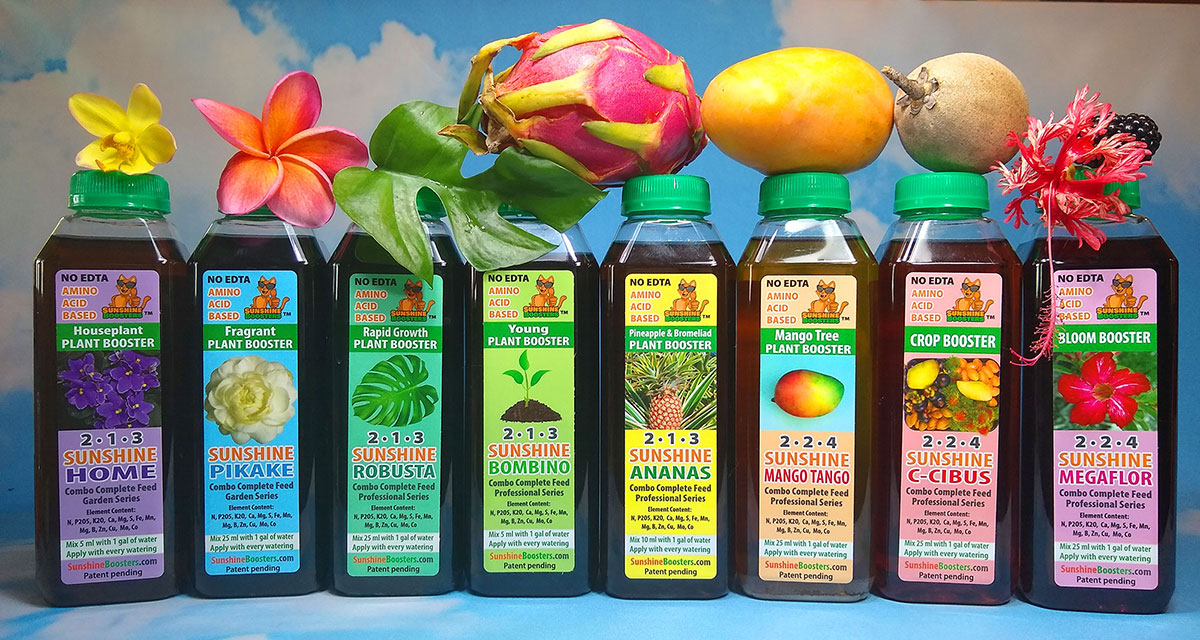
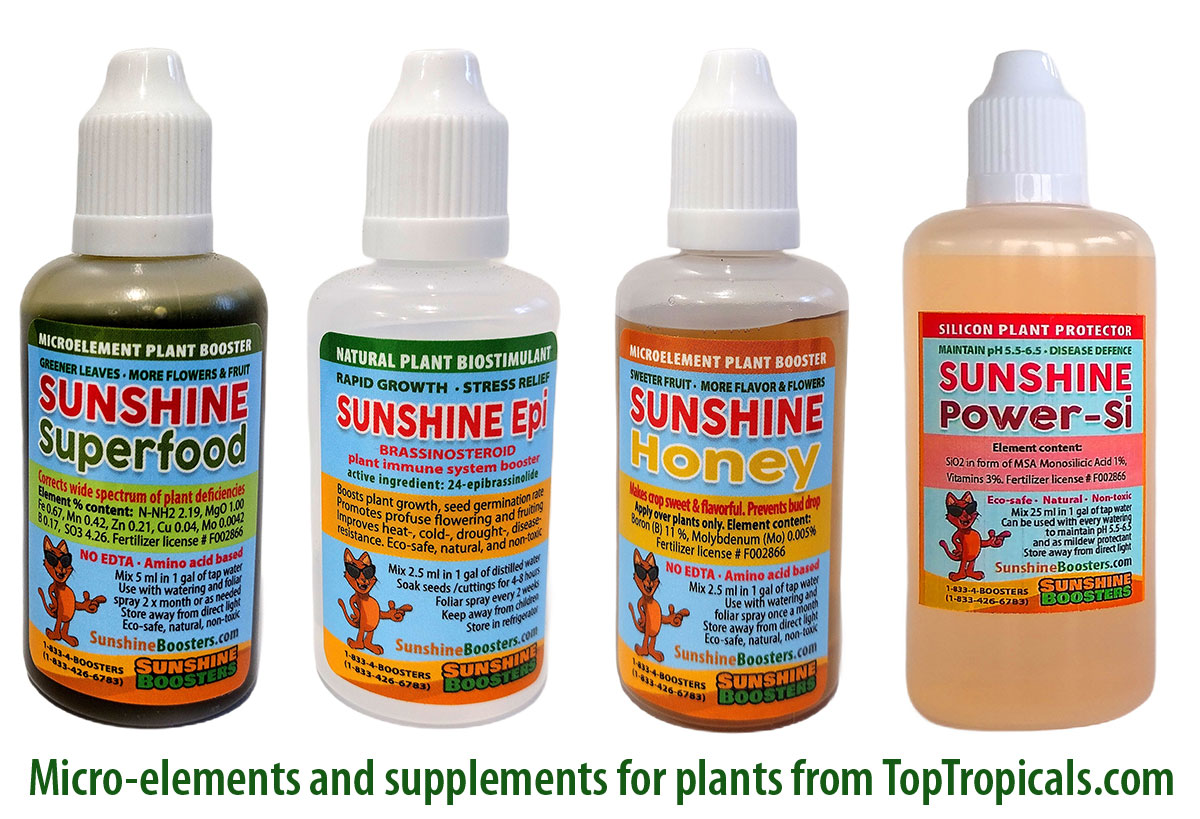
5) Use SUNSHINE plant boosters
Date: 19 Jul 2022
New video: Royal Poinciana
The most beautiful tropical shade tree
"The Royal Poinciana is one of the most spectacular flowering trees
in the USA, and probably among the top 10 on this planet. In full bloom, it is
like a regal elephant caparisoned in red and yellow brilliance." (Larry
M. Schokman, The Kampong, National Tropical Botanic Garden)
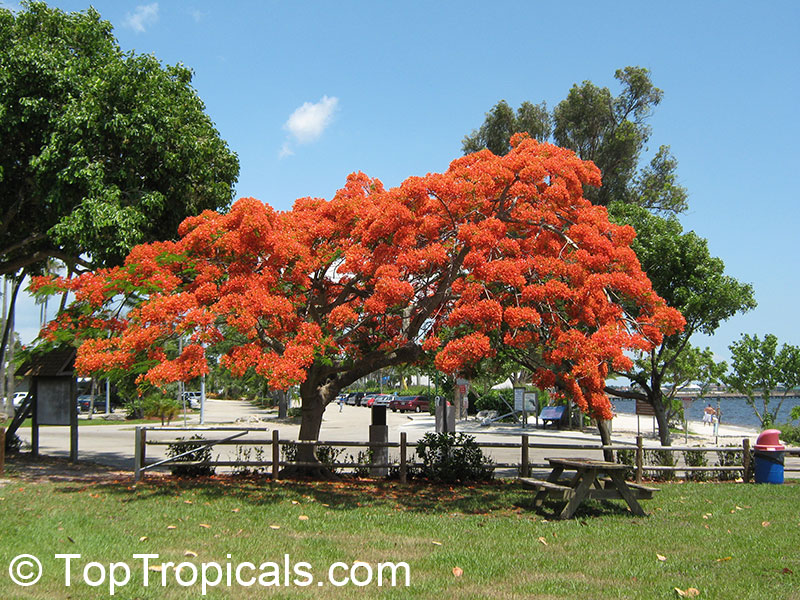
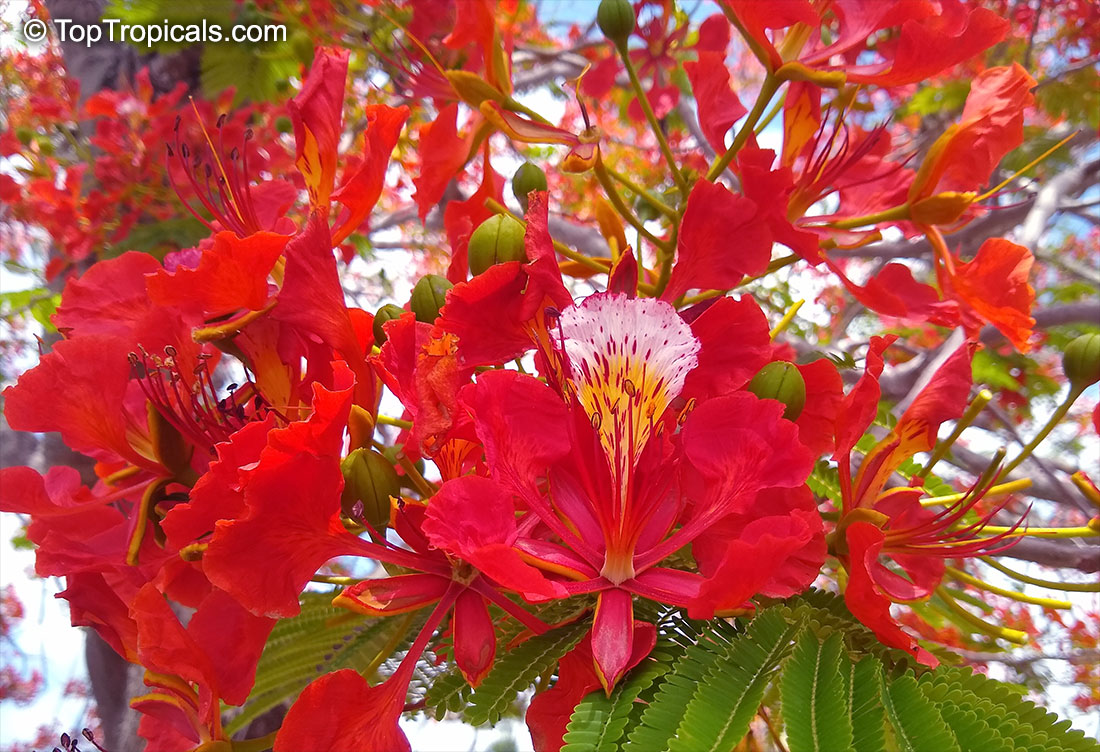
One of the most conspicuous flowering trees seen in the tropics, Royal poinciana (Delonix regia) has bright fiery red/orange
blossoms cover its mimosa type leaves which close up and go to sleep for the
night.
This large tree, which naturally assumes a spreading umbrella shape, is now
found in gardens, parks, and planted along streets throughout the tropics.
In late spring, as the new leaves appear, the tree is covered with masses of
five-petalled red flowers resembling orchid flowers. Blooming is followed by
long, flattened, leathery dark brown or black seed pods. Delonix requires full
sun and adequate space to take its characteristic form....
Read Article about this tree.
Subscribe to our Channel:
Stay updated with TopTropicals Videos by subscribing to our channel at YouTube.com/TopTropicals and get our latest video news of what is fruiting and blooming!
Date: 10 Nov 2025
❄️ How to Prepare Your Tropical Garden for Winter

Smokey and Sunshine Wrap Up the Garden with Frost Cloth Before the Chill.
Smokey: "Thermometer says 45. Time to wrap the bananas!"
Sunshine: "You wrap the bananas. I’ll guard the mulch… from this
sunny spot."
Smokey: "Teamwork, Sunshine. Teamwork."
🌡️ Cold nights are coming - but your tropicals do not need to shiver!
Even in sunny Florida and other warm zones, one cold snap can undo months of growth. Preparation is everything. Tropical plants can handle a lot, but they dislike surprises. Let’s make sure your garden stays safe, strong, and happy all winter long.
Tips from Tatiana Anderson, Top Tropicals Plant Expert
👉 Group and Check Your Plants
You already know which plants are in pots and which are in the ground. What matters now is prioritizing by cold sensitivity. Identify the tender tropicals – papaya, banana, plumeria, adenium, heliconia – and decide which ones get covered first when temperatures drop. Keep frost cloths or old sheets near those areas, ready to grab fast. If your garden is large, label protection zones or mark plants that always need extra care. The goal is to have a plan, not a panic, when the cold alert hits.
Once you know your priorities, you can plan the rest of your protection strategy.
👉 Feed and Mulch
Stop using high-nitrogen fertilizers by late fall. They push soft new growth that freezes easily. Add compost around the base of your plants and top with 3 to 4 inches of mulch. Mulch acts like a blanket: it keeps warmth in, protects the roots, and keeps soil moisture steady. Just make sure the soil drains well; cold and soggy soil leads to root rot. In raised beds, check that water flows away easily.
After you feed and mulch, it is time to look at how your local zone changes the game.
👉 Zone-by-Zone Tips

Moving Tropical Plants Indoors for Winter Protection
- Zone 10: You are lucky! This is mostly a maintenance season. Watch for root rot after heavy rain, trim lightly if needed, and protect tender young trees during surprise chills. Keep some frost cloth ready just in case.
- Zone 9: This is the main action zone. Nights can dip into the 30s. Deep-water your trees once before cold nights to insulate the roots. Apply heavy mulch, and have frost protection ready to go. If you grow tropical fruit like mango or guava, consider wrapping young trunks in burlap or foam pipe insulation.
- Zone 8: This is where tropical gardening becomes creative. Stick to cold-hardy tropicals such as loquat, guava, or cold-hardy avocado varieties. Use portable greenhouses, wrap trunks, and move smaller plants indoors or to a heated porch when frost threatens.
Now that the garden beds are set, let’s look at your pots and containers – your most mobile plants.
👉 Container and Patio Plants
Potted plants are the easiest to protect but also the quickest to freeze. Start reducing watering now so roots do not stay too wet in cooler weather. Before moving them, check for insects hiding under leaves or in the soil. Group your pots close to a wall for reflected heat and wind protection. If you plan to bring them indoors, do it gradually. Move them closer to the house for a few days before bringing them all the way inside to help them adjust to lower light and humidity.
When the chill starts, many gardeners rush to move everything inside at once – but a smooth transition works much better.
👉 Indoor Plants
When bringing plants inside, give them a good rinse to remove dust and bugs, and flush the soil to wash out salts from summer fertilizing. Keep them separate from your houseplants for a week to make sure no pests come along. Expect some leaf drop – it is normal as they adjust to lower light. Give them bright light near a window, and cut watering by about half until spring. Avoid misting too much; good airflow matters more than humidity during winter.
Many tropicals, like hibiscus, brugmansia, and crotons, may look tired for a while, but they will bounce back quickly once days get longer.
👉 Timing Is Everything
The key is to prepare before the first cold warning. Check your weather app regularly once nights start dropping into the 50s. Keep covers, mulch, and supplies ready so you are not running outside at midnight with a flashlight and a frozen hose. Have your frost cloths labeled by plant group and stored in an easy spot. A little organization now saves a lot of stress later.
Many tropicals, like hibiscus, brugmansia, and crotons, may look tired for a while, but they will bounce back quickly once days get longer.
Remember: the goal is to help your plants rest safely. Many gardeners prune or fertilize too late in the season – we will talk about why that can be risky next week."— says Tatiana Anderson, Top Tropicals Plant Expert
Coming next mail-list: The best gadgets for cold protection (lights, heaters, frost covers) and what NOT to do in winter.
📚 Learn more from Top Tropicals Blog:
Cold protection - winter action for your plant collection
What plants are good to order in Winter?
How to take care of house plants in Winter
How to protect tropical plants in Winter
How to take care of a mango tree in winter
Date: 12 Nov 2025
How to get lots of Star Fruit
Star Fruit- Carambola Tree, Averrhoa carambola
🌟 Growing tips
🟡 Sun: Loves full sun. The more light, the sweeter the fruit.
- 🟡Temperature: Keep warm and protect from winds. It thrives in warm, tropical climates but can handle light frost if sheltered from cold winds - wind-free is the key.
- 🟡Soil: Prefers well-drained soil. Avoid waterlogging.
- 🟡Water: Regular watering keeps it happy, but don’t let roots sit in soggy soil.
- 🟡Size: Space saver! This compact tree doesn’t take up much room, perfect for smaller gardens. Dwarf varieties also do well in containers.
- 🟡Growth and crop: Fast-growing and early to fruit. Seedlings start producing in about three years, while grafted or air-layered trees fruit right away.
- 🟡Flowers: Beautiful pink blooms appear before the fruit, adding extra charm to the garden.
- 🌟 With just a bit of care and protection from wind and cold, your Carambola tree will reward you with baskets of bright, starry fruit through the cooler months when most other trees rest.
- 🌟 Slice one open and you get perfect star-shaped pieces that brighten up salads, desserts, or smoothies. The fruit is crisp, juicy, and beautifully sweet-tart. It’s nature’s candy - refreshing, low in calories, and rich in vitamin C and antioxidants.
📚 Learn more:
- ✦ Star Fruit from our garden
- ✦ Grow your own Carambola
- ✦ Top 10 fast-fruiting trees: #8. Carambola - Starfruit
- ✦ Carambola Banana Whip
- ✦ Carambola Jam recipe
- ✦ When young Carambola trees are covered with fruit
- ✦ Carambola tree is the Star of the orchard
🛒 Explore Star Fruit varieties
#Food_Forest
🟢 Join 👉 TopTropicals
Date: 5 Jan 2026
Smokey: You get warm when you work. Plant now so roots are established before spring growth starts.
Sunshine: Alright. Lets see who stays warmer - you digging or me with coffee.
🌴 Why winter planting works in a warm climate
By our plant expert Tatiana Anderson
We are lucky to live in a warm climate. This is how I think about the seasons here. Winter is for roots. Spring is for growth. Summer is for managing heat and water.
So if we want plants that handle summer better, we plant them in the season that gives them the best start. Winter here is comfortable. The soil stays workable. The days are mild. And plants are not being stressed by heat. That is exactly why winter is the best time to plant in Florida and other warm areas.
If we use this season well, plants go into spring already settled instead of trying to catch up. This is what I like to plant now, and why.
🟢 Trees first. Anything that will be in the ground for years. Fruit trees, shade trees, flowering trees.
When we plant them in winter,
they can focus on roots before the spring growth surge starts. By the time
spring arrives, the tree is anchored and ready to grow on top.
Examples: mango, avocado, Eugenia
cherries, jackfruit,
sapodilla,
longan, lychee, canistel.
🟢 Shrubs next.
Shrubs establish faster than trees, but winter still gives
them an advantage. They settle in quietly before the spring flush and bloom
cycles begin. That usually means steadier growth and fewer problems
once heat returns.
Examples: gardenia,
jasmine, brunfelsia,
hibiscus, clerodendrums.
🟢
Vines are often overlooked. Vines want to grow fast when spring starts.
If the root system is not ready, you get weak growth and frustration.
Planting vines in winter gives them time to build a foundation first, so
spring growth has support.
Examples: Rangoon
creeper,
stephanotis, Petrea, Mexican
Flame Vine.