Date: 22 Nov 2022
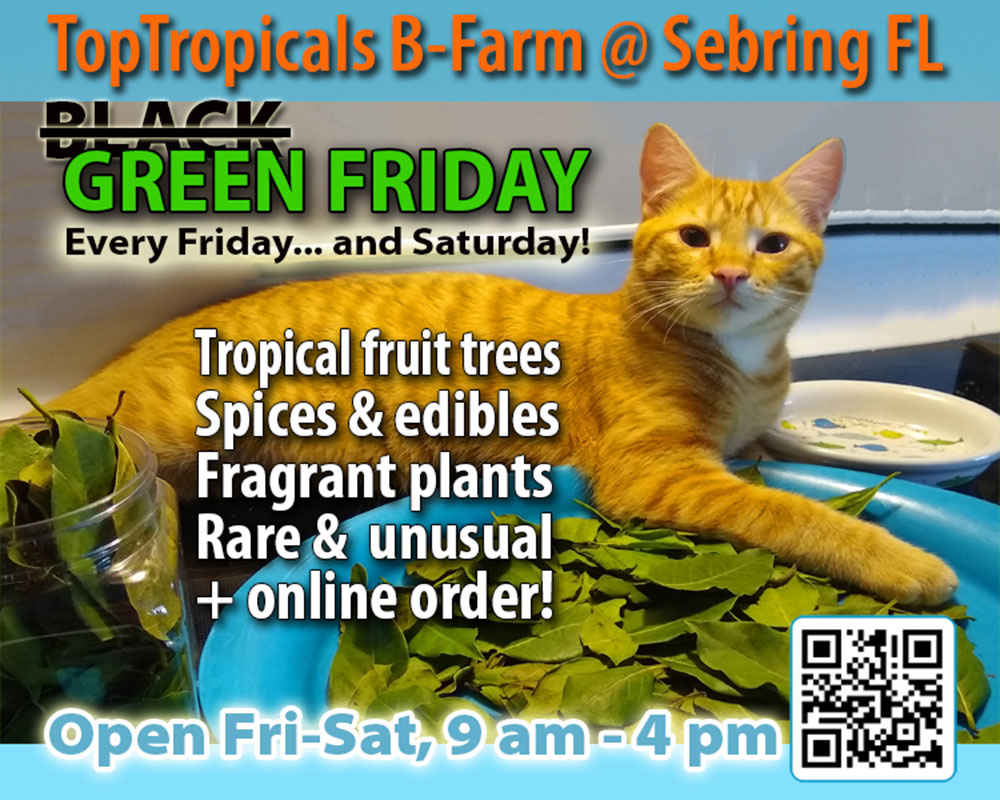
This Friday: Green Friday...
and every Friday and Saturday!
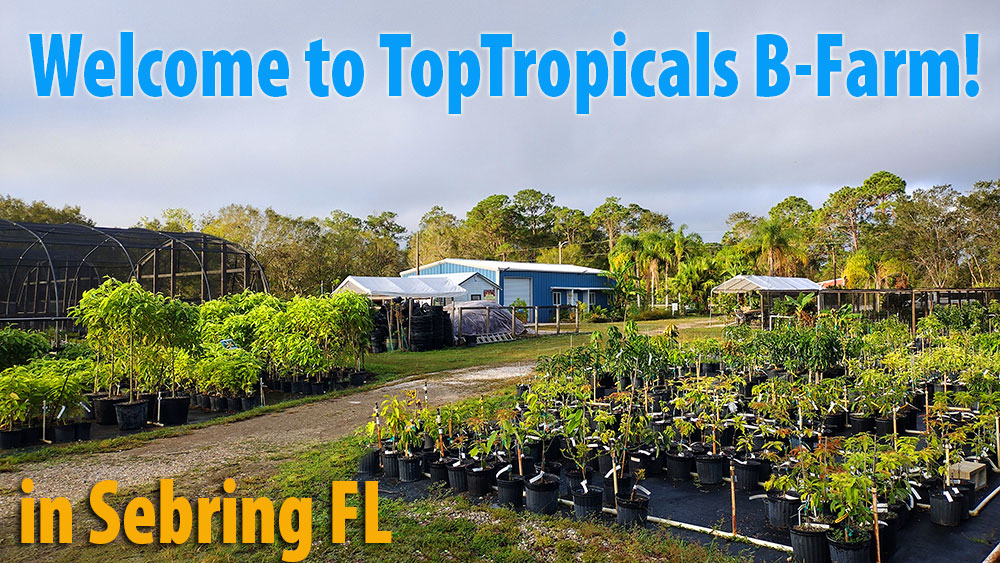
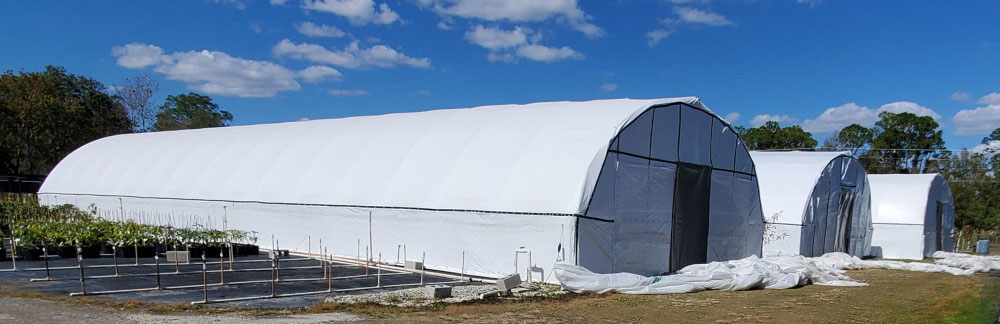
Welcome to TopTropicals B-Farm in Sebring FL
Starting this coming Friday, November 25, our farm in Sebring (B-Farm)
will be open to the public every Friday and Saturday.
B-Farm is a 10-acre growing facility with hundreds of varieties of rare and
much wanted tropical plants. Fruit trees, flowering trees, shrubs, vines,
fragrant plants and rare collectibles - we grow the biggest selection of
tropical plants known in cultivation.
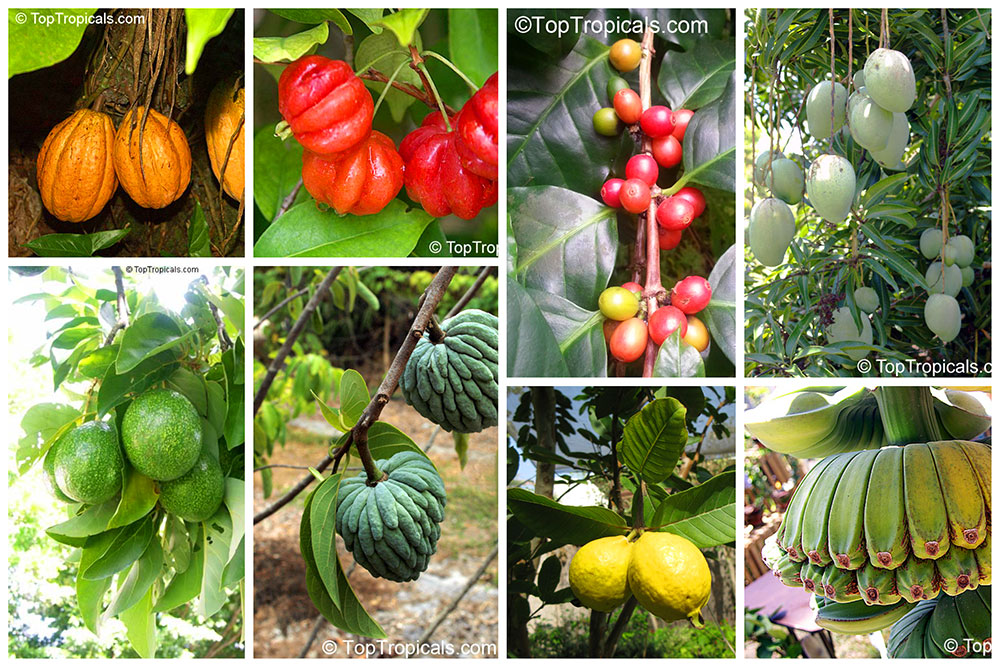
Come over to select the best Mango, Avocado, any other fruit tree or rare
spice for your edible landscape. Shop our biggest in the world variety of
flowering and fragrant tropical plants - directly from our growing farm!
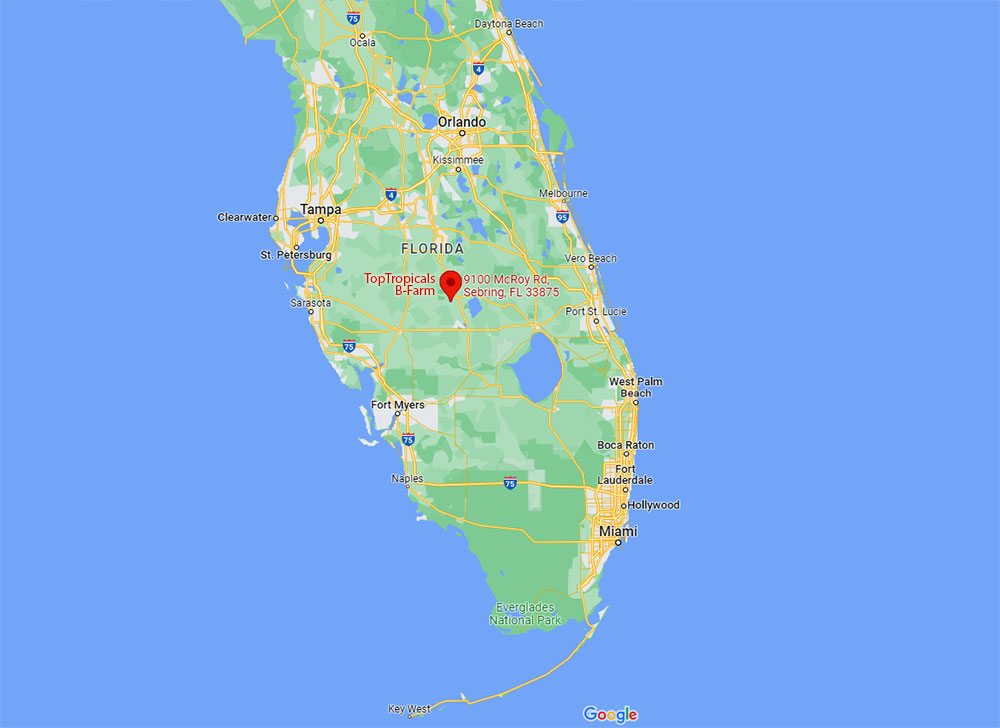
Conveniently located right in the heart of Florida, Highlands County, Top Tropicals B-Farm is within about an hour from most Florida destinations.
Date: 22 Aug 2022
What tree will fruit indoors?
Q: I love your tropical fruit selection and I wish I lived in a warmer climate. Is there any fruit tree that can be happy indoors during winter and have fruit? I am not expecting a big crop but it would be fun to have a small piece of tropics at home. I don't have much gardening experience, can you suggest something easy for a start?
A: Several tropical fruit trees can be grown indoors, in pots,
providing bright light that is necessary for flowering and setting fruit. Among
them are many varieties of Bananas,
Guavas,
Annonas and tropical Cherries - these can be easily maintained in containers. Even dwarf
varieties of
Avocado and Mango
are good candidates for indoor culture. You can bring containers indoors for
winter and take outside into full sun during warm months so your plants can
store lots of energy in Summer.
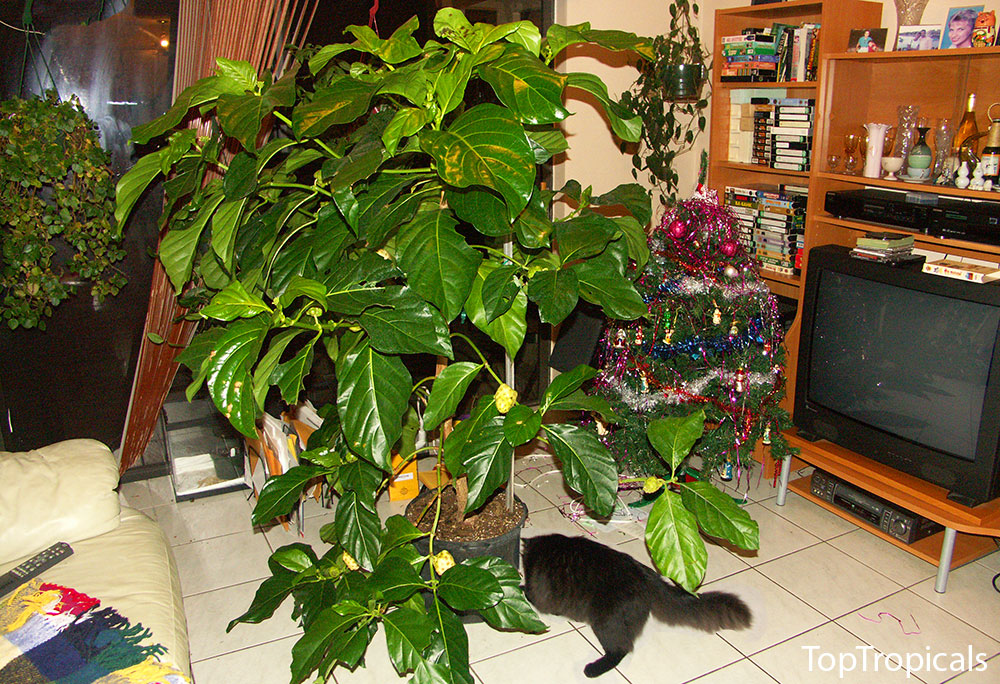
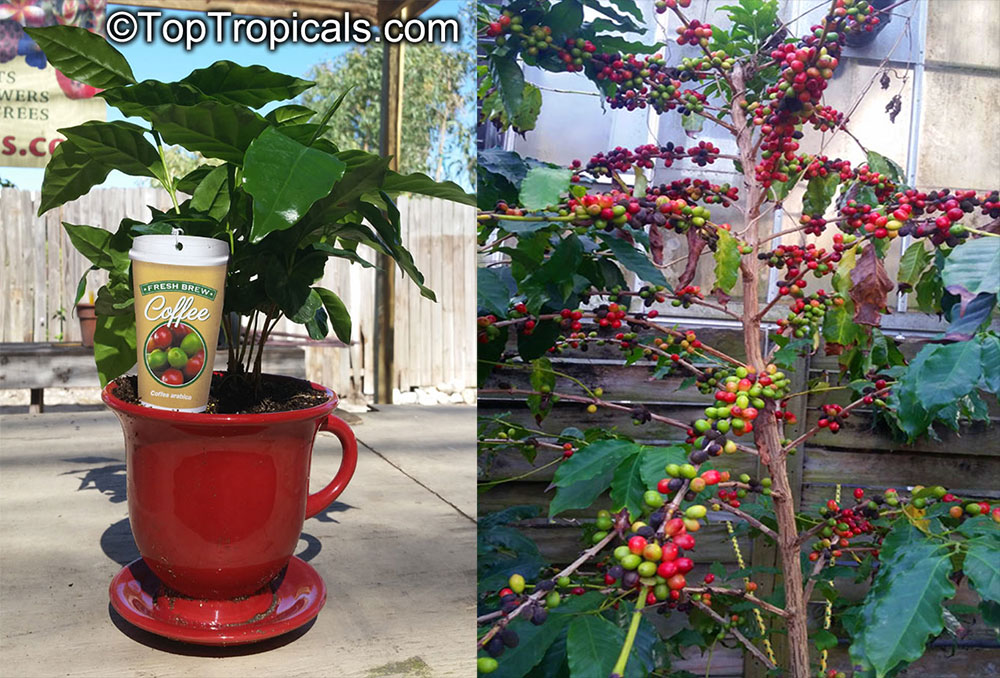
The easiest fruit tree for indoor culture that doesn't require bright light
and can be grown indoors year around is a Coffee tree. Start with it, it is on sale today! Once you gain some experience, you can upgrade to
a Chocolate tree!
Remember, all container grown plants need balanced nutrition program. It
can be easily provided with Sunshine Boosters your around. For fruit trees, just add some Sunshine C-Cibus Crop Booster to your cart.
Date: 22 Feb 2022
How to survive Winter in South Central Florida
A touching story
by Ed Jones, the Booster Guy
...As much of the country is still in the midst of winter, I believe the
worst has passed for us here in the South Central part of Florida...
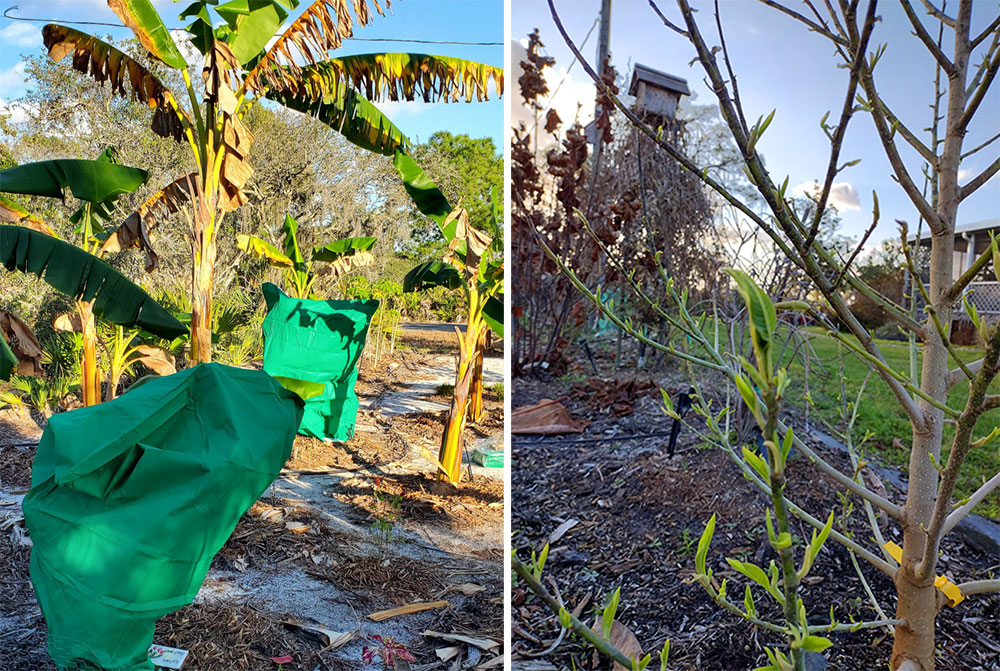
...This Winter, almost all of zone 9b and some of zone 10a had frost and
many had a hard freeze...
...Now, many of us here in this part of the state enjoy growing subtropical
plants and trees. There are many that grow well here and most can handle a
frost or even a dip to the high 20s for a short time. Smaller and more
recently planted trees and bushes are most at risk...
...At the Top Tropicals nursery here in Sebring, home to over 20,000
plants, we scrambled for several days to try to protect as many of our plants as
possible. We moved smaller plants into some of our hoop houses that had propane
heaters...
...After 2 weeks of moving plants in and out of protection, we were all
pretty worn out; happy that everything survived and hoping that we would not
have to do that again anytime soon. Slowly, things at the nursery are beginning
to resemble our old normal. Seeds are being planted, cuttings are continuing
to grow and grafting season will be upon us soon. We are all very happy for
that...
...What to do and not to do when the freeze is coming and you have mango,
avocado, and other tropical fruit trees and tender tropicals? Here is some
news from the Orchard and many more coming... check it out and stay with our
updates to learn more!
Date: 23 Sep 2020
Fast-fruiting trees?
Photo above: Annona reticulata - Red Custard Apple
Q: More of a question than a review, but a review regarding your catalog, it would be easier for us buyers, if we could search for plants that produce fruit in 2 years or less, I don't have the patience to wait longer than that for fruit. I'm trying to buy for a fairly good sized garden but want some fast growers and fruit produced in 2 yrs. Can you help me out?
A: Fruiting time depends on many factors (established size,
growing conditions, fertilizing, and even specific variety), this is why we can
not just put a simple icon "will fruit within 2 years".
However, most grafted and air-layered fruit trees, including all Mango, Avocado, Loquat, Sapote, Sapodilla, Lychee/Longan, Peaches and Nectarines - will fruit right away. If you see in our store
"grafted" or "air-layered" in plant description - these trees will fruit
soon. Some of them already flowering and fruiting.
Some non-grafted trees or seedlings like Annona, Artocarpus (Jackfruit), Eugenia, Guava, Banana, Dragon fruit, Mulberry, Blackberry/Raspberry - will fruit within 3-4 years from seed or even
sooner (Banana, Mulberry, Dragon fruit, Blackberry-Raspberry - within a year).
Usually it says in description that this plant can produce fruit soon.
Bigger size plants are more established and have more energy to produce, so
try to get larger size plants if your budget permits, and especially if you can
pick up bigger plants rather than shipping them - obviously, shipping has size
limitations.
In addition, all spice trees like Bay Leaf, Bay Rum, Allspice and many more - they will
produce spice for you right away, so you don't need to wait at all!
If you have questions about fruiting time on any specific plant you put
your eye on, don't hesitate to ask!
Photo above: Pimenta dioica - Allspice
Date: 21 Feb 2020
When plants are ready for a meal?
Q: We have an early Spring here in Florida. All plants in my garden flushing out new leaves and buds opening. Can I start fertilizing? I have Mango, Avocado, Peach trees, many medicinal herbs and flowering shrubs: Angel trumpets, plumerias, bromeliads. I prefer mild organic fertilizers; can you suggest something that is safe for edibles and butterflies?
Q: As a rule of thumb, tropical gardeners start regular fertilizing when the minimum temperatures (at night) go above 65F. Keep in mind that Sunshine Boosters fertilizers can be applied year around because they have mild formulas and used with every watering; during cooler period, you water less frequently, so feeding is reduced accordingly. Another advantage of Sunshine Boosters - they are natural (derived from organic amino acids which is the basics of Life). They are safe for edibles as well as pollinating insects.
Here is the feeding plan for your plants:
1. The most universal solution for all plants (both potted and
in-ground): get a complete set of Sunshine Boosters Pro system: Advantage-Pro for vegetative growth, BloomBoom Pro for flowering stage, and Ca-Support-Pro + Constanta-Pro as necessary daily supplements. You will need all these 4
components for your garden.
2. Start adding these liquid boosters with every watering according
to dozing directions and you will notice amazing growth boost within a
week.
3. Apply Sunshine Epi plant hormone every 2 weeks as a foliar spray to boost
immune system and metabolism of plants and protect them from diseases. Epi
makes plants (especially young plants and those "waking up" from dormancy)
grow twice faster! It also enhances effect of fertilizers by increasing plant
metabolism.
4. After cool winter temperatures, some plants may develop element
deficiencies like chlorosis (yellowing leaves). Additional microelement boost
can be provided with Sunshine Greenleaf (iron supplement) and Sunshine Superfood (micro-elements).
5. For additional boosting of flowering and setting fruit, use the
following individual boosters:
Sunshine Robusta - for foliage plants and when you need rapid vegetative
growth
Sunshine TotalFeed - for Plumerias and other fragrant plants
Sunshine Megaflor - for Brugmansias and other flowering heavy feeders
Sunshine C-Cibus - for improving fruit production and quality
Sunshine Honey - for sweeter fruit (must be applied 4-5 times a year)
6. For young/small plants (seedlings, rooted cuttings) as well as
tender tropicals like bromeliads, and orchids - Sunshine Bombino is a perfect choice due to its mild formula.
7. To save money, order complete sets rather than individual
boosters; you will be able to safe up to 40%! Sunshine Complete Nutrition System
Kits: Combo
Kit, and Pro Kit.
If you are a fan of organic gardening, do not use dry fertilizers. While water-soluble and granulated (smart-realease) fertilizers are popular choice in plant nurseries due to their convenience, they are not as safe as liquid boosters because they create salt build-up in soil and have a high risk of overdosing/burning plant roots, especially potted plants, plants at breaking dormancy, at establishing, and at early stages of plant development. Besides, dry fertilizers may affect the taste of your fruit and herbs. See advantages of liquid boosters over dry fertilizers.
Learn more about Sunshine Nutrition System - a Natural solution for your garden.