Date: 5 Sep 2019
How to get Jasmines to flower
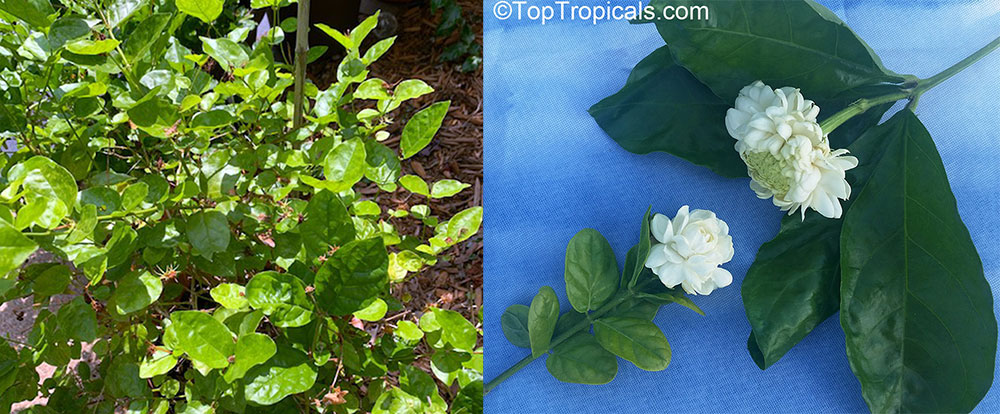
Q: On the picture, these are a few of the jasmine plants that I have from Top Tropicals. I have bought so many plants from you over the years, not just jasmine. I have several varieties of jasmine. They were all doing very well. However this year I didn't get a single flower. There are a lot of buds... But before the buds open they become brown and withered. I bought fertilizer from you. Fertilized the plants once a month like I always do. I water the plants once a week. I repotted the plants hoping that would take care of this problem. Some of the jasmine plants I pruned... the plants came back vigorous growth with a lot of buds... BUT it is the same problem! Please help.
A: One of the possible reasons why they have flower issues is - maybe they don't have enough sunlight. They need to be in full sun all day long for profuse blooming and proper flower forming. However since the buds are forming, there may be just enough light. In this case, dropping buds may be a sign of overwatering.
Important steps - how to make Jasmine Sambac flower:
1. Soil. Use only well-drained soil
2. Water. Keep plants on a dry side and never over water. If the top of the soil is still moist, do not water.
3. Sun. Keep in full sun all day long. The more sun, the more flowers.
4. Bloom booster. Use Flower booster fertilizers:
Pink N Good Daily Plant Food - Flower Booster
Fragrant Plant Special booster, this 90-day Smart-Release container
plant food:
Plumeria Top Dress - Smart-Release Booster
Do not use fertilizers with high Nitrogen (1st number in NPK formula)
- those will promote more leaves instead of flowers.
5. Micro-elements. Use Apply micro-elements, they will help the
plant to develop healthy and long-lasting flowers:
SUNSHINE SuperFood - plant booster
Here is more information on growing Jasmine
Date: 18 May 2021
Mark your calendar:
June 19, 2021
Summer Solstice Celebration with PeopleCats

Special Event you can't miss!
First day of Summer and the longest day of the year! Live Jazz in the
Garden, lots of cool vendors
and "A Roof for Rufus" cat adoptions...
Come join the Top Tropicals crew for the longest planting day of the year.
Onika, Bella, Mark and David will be here soaking in the sun and helping you
to pick the right plants...
Saturday, June 19th
9:00 am - 4:00 pm
Top Tropicals is proud to partner with A Roof for Rufus cat adoptions. Each cat attending this event has been
hand picked and approved by King.
Don't miss this event! Talk to the kitties and find your companion in life.
PeopleCats never betray and they will love you forever!
SEE KITTIES PROFIILES >>


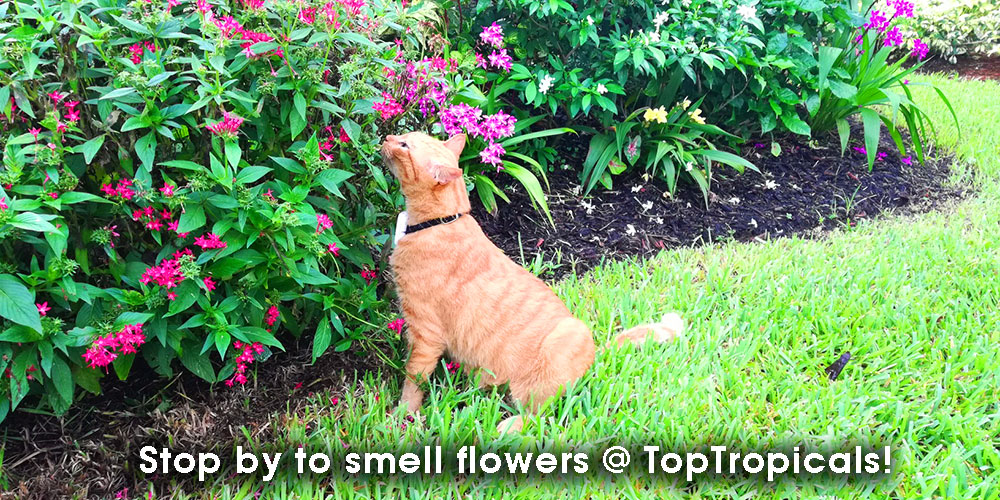
In the photo: PeopleCats from Roof for Rufus Rescue
Date: 26 Mar 2020
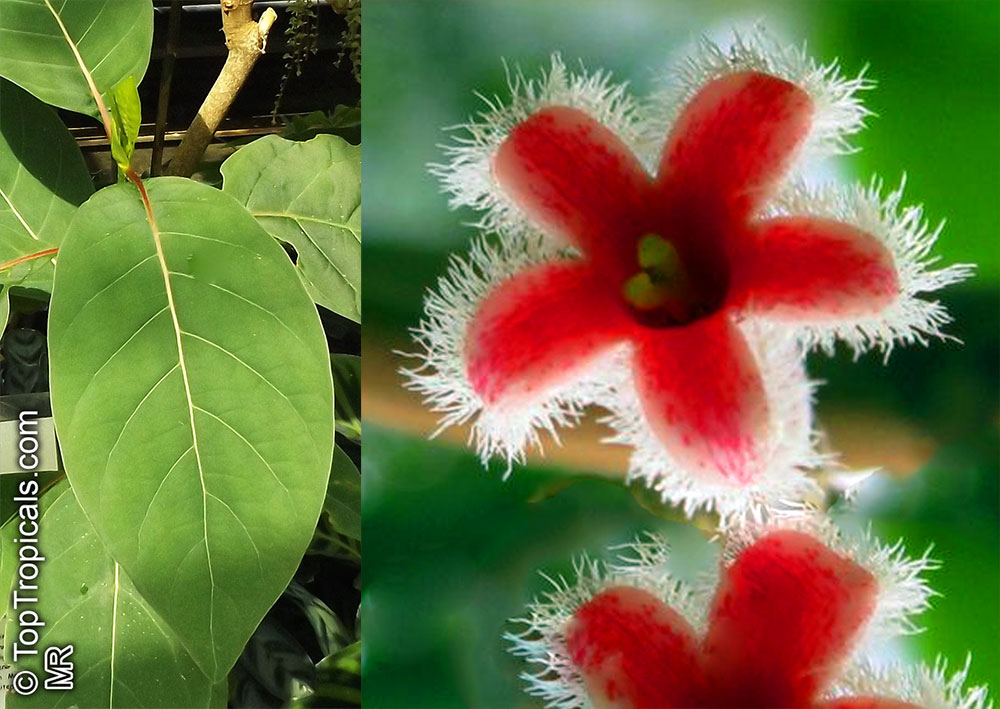
Nature's farmacy: Coronavirus cure discovery? Cinchona - Fever Tree
by Alex Butova
As the world's health experts race to find a cure for the novel
coronavirus, this drug have jumped to their attention - Chloroquine. It contains
alkaloid Quinine, extracted from the bark of the Cinchona, or Fever Tree.
We receive many questions from our customers if we carry this plant.
Although we do not offer it at the moment, we definitely can tell you more about
this interesting medicinal plant!
If you like gin and tonic, you will be familiar with the bitter taste of
the tonic which is provided by quinine. While it is now mainly used
to add a flavor to our favorite tipple, the Cinchona tree bark once held a
place as one of the most important drugs in history.
Cinchona was discovered in the 1630s as a treatment for malaria and, for
350 years, was the only effective cure known in Europe until synthetic
replacements were developed in the 1940s. Malaria remains today one of the deadliest
diseases known throughout the tropics, but up until the 20th century the
disease was prevalent throughout Europe, including Britain.
The Cinchona tree is native to the Eastern slopes of the Andes with a range across Ecuador, Peru and Bolivia. Once the bark became an established medicine, particularly in the 18th and 19th centuries, demand started to outstrip supply. Threats of overharvesting and the desire to control the source of this precious bark drove various competing empires to source this plant for themselves. Understandably, the Spanish, who were in control of this area of South America, actively tried to prevent this, but failed to establish successful plantations themselves. A race to source and cultivate Cinchona ensued, and eventually both the Dutch, in Indonesia, and the British, in India, founded government controlled plantations for the mass production of quinine.
Chloroquine appears to have "broad-spectrum antiviral properties" and effects on immune response, and to be effective against severe acute respiratory syndrome... As the rest of the world, we are looking forward to the research results and hope the cure will be found soon!
In the meantime, let's just have more Gin-n-Tonic!

Date: 18 Nov 2021
7 reasons to get an Aroid Houseplant
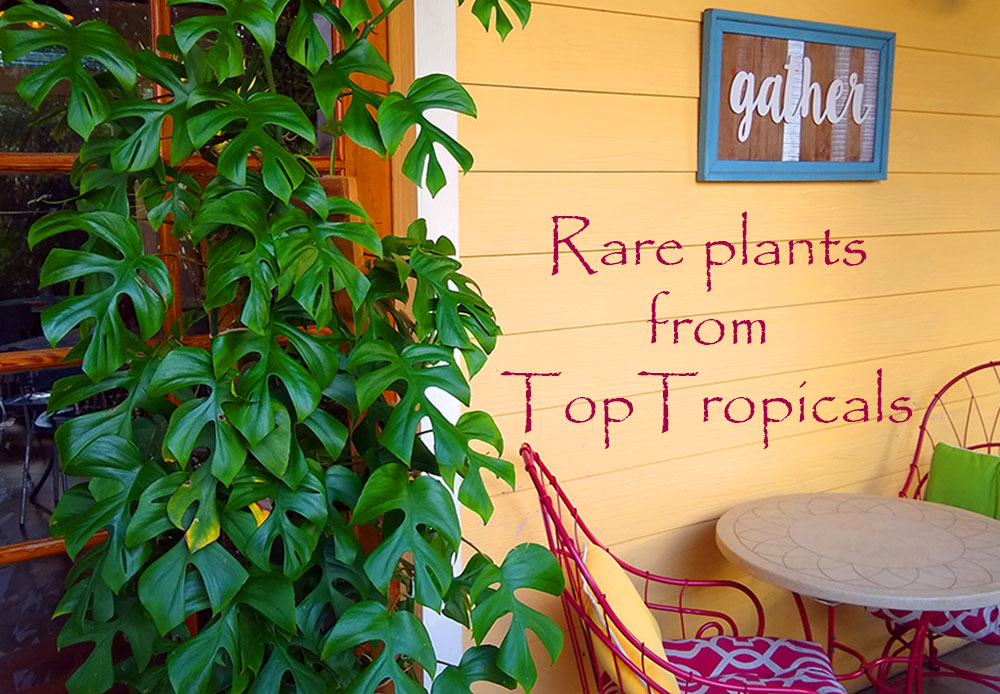
1. It's almost Winter... You need something tropical in your home! Aroids have the most tropical look!
2. Aroids tolerate low light conditions of indoors.
3. Aroids require almost no care. Care is easy because if you watch for the
signals, the plant will tell you exactly what it needs
4. Aroids adapt to wide range of conditions. Many of them thrive in neglect
and survive even in sub-optimal conditions... Unlike most tropicals, Aroids
don't experience much stress when moving from indoor to outdoor settings and adapt readily to conditions inside the home.
5. Aroids are compact and easy to manage.
6. Aroids are fast growing while still being compact.
7. They are on sale now!
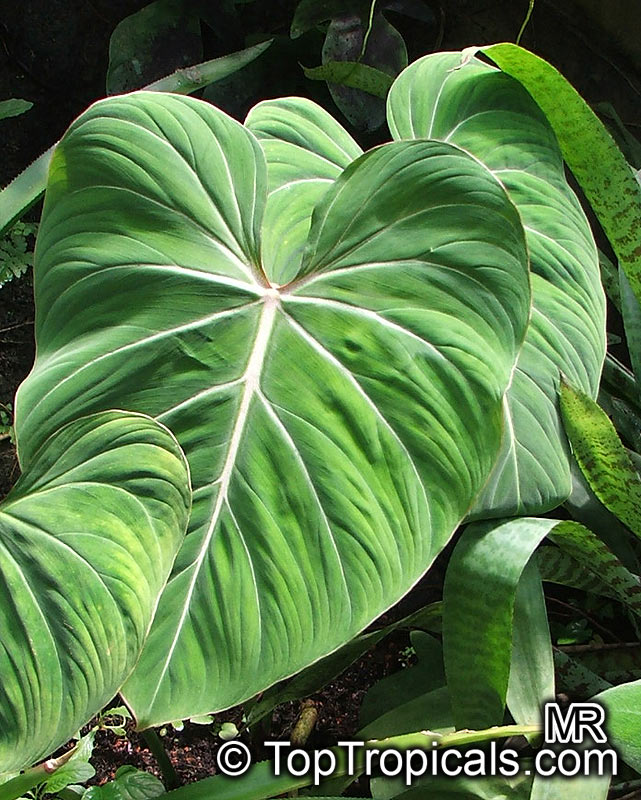
Check out our Philodendrons, Monsteras, Fancy Syngoniums, Alocasias, Colocasias.

Date: 9 Dec 2020
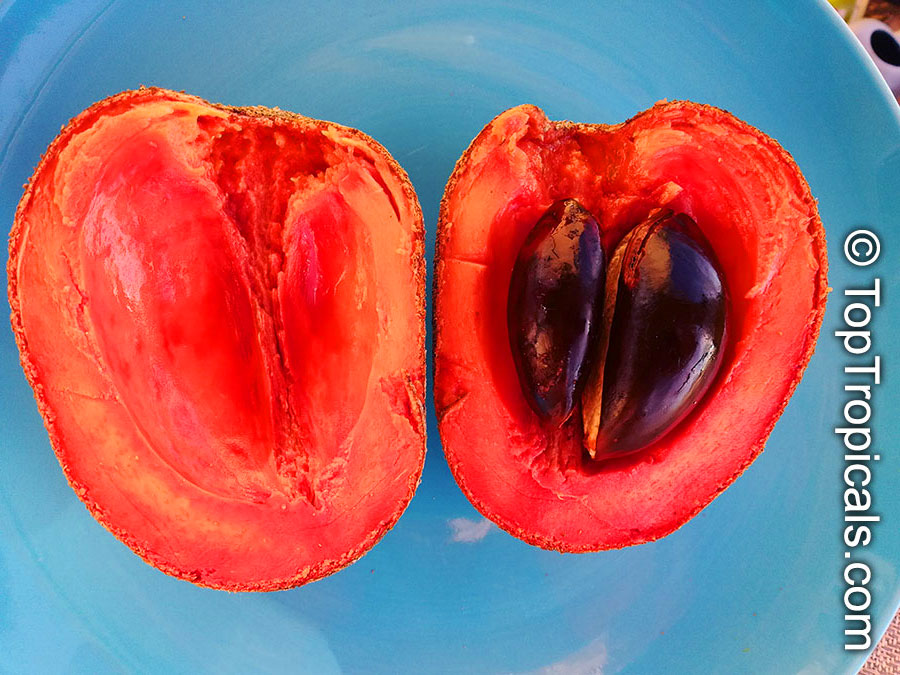
Establishing Mamey Sapote
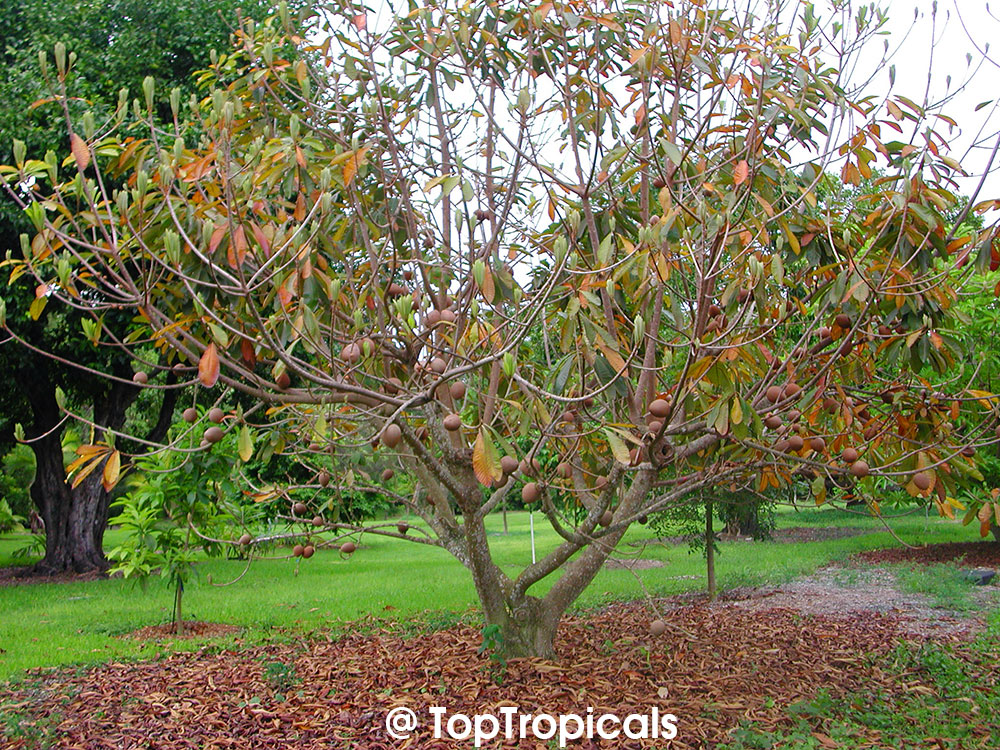
In the photo: Mamey Sapote lre-leafing.
Q: I purchased Mamey sapote last fall and am very excited about having it in my yard. It lost leaves during the winter, but then budded and put on a lot of beautiful leaves. I was hand watering since this covid stay at home event, and thought I'd put it in a larger container, 10 gallon. About 2 months after transplant and hand watering the leaves turned yellow. I cut back on watering, allowing some dryness between. Some leaves now have fallen off, but looks like new ones forming. What have I done and most importantly now, what do I need to do so she survives? I haven't yet decided exactly where to plant her... so hoping she can stay in container for a bit longer while recovering.
A: It is possibly a combination of over-watering and seasonal
changes (re-leaf). During this time of the year, Pouteria sapote loses old
leaves and grows new ones. This plant is semi-deciduous, which means, it drops
leaves during unfavorable conditions (too dry, too wet, too cold, to hot, etc. =
any stress).
The new buds are healthy. Give it a couple of weeks. Reduce watering. Don't water again if the soil is still moist.
If planted in the ground, it will be easier to control the moisture, as long as you plant it high enough (at least 3-4"above the surrounding area, like on a little hill, for a better drainage.
See
how to plant a tree.
Once you notice a new growth and healthy leaves, give the plant some
food:
SUNSHINE C-Cibus - Crop Nutrition Booster
Mango-Food - Smart Release Fruit Tree Booster