Garden Blog - Top Tropicals

Date: 28 Sep 2025

Guava Tree Plant Care

Tips from Top Tropicals Plant Expert - Tatiana Anderson
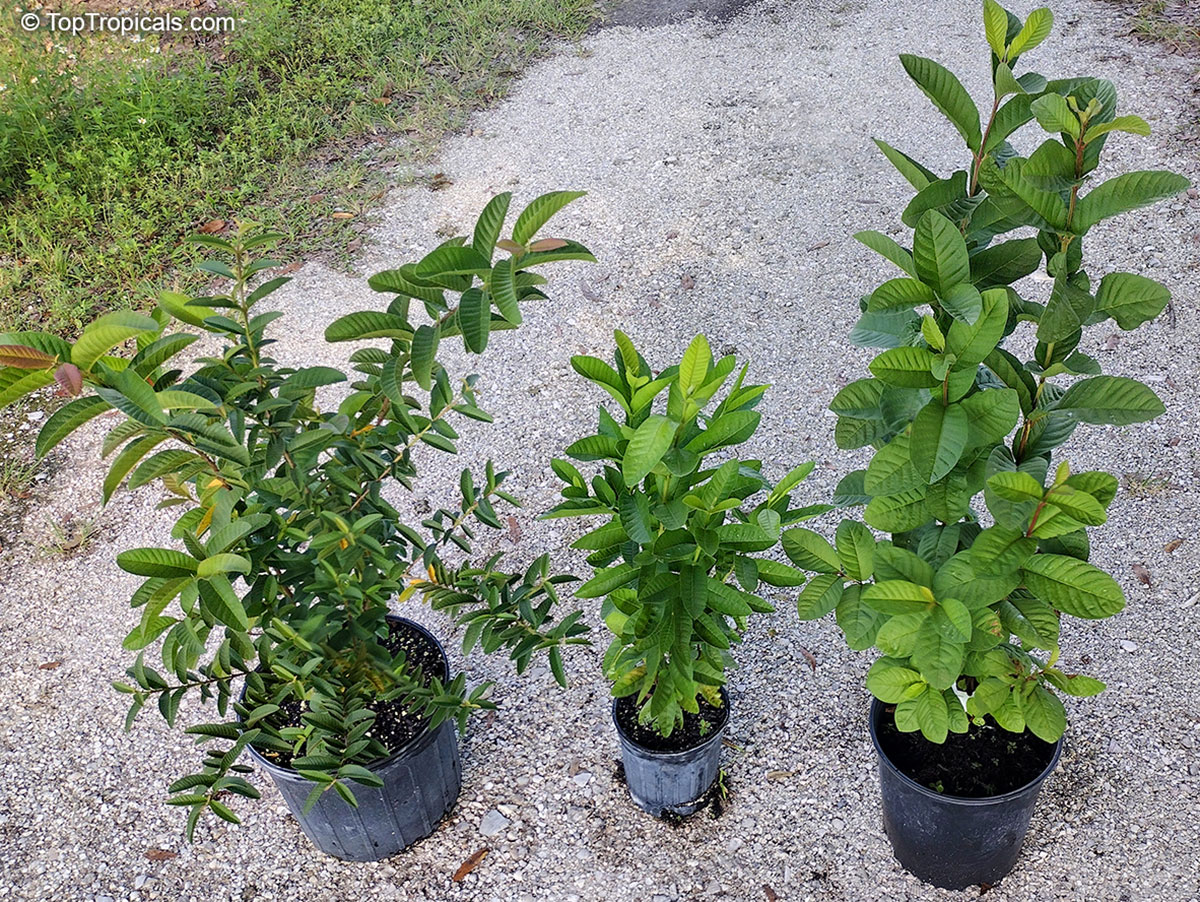
Guava  trees  for  sale  in  3-gallon  nursery  pots,  healthy  young  plants 
 with  green 
 foliage.

Where to Plant Outdoors

Guavas love full sun — aim for 6–8 hours of direct light. They’re adaptable to many soils but do best in well-drained, organic-enriched mixes. Plant them in a spot where you can water easily; guavas are thirsty trees during fruiting.

Container & Indoor Growing

Don’t have space or live in a cooler climate? Guavas thrive in large pots. Use well-drained potting mix. LINK TO OUR SOIL Keep them on a sunny patio during warm months and bring them indoors when nights dip below freezing. Compact varieties like Dwarf Hawaiian Rainbow or Tikal are especially good for pots.

Winter Care

Mature guavas can handle a light frost (down into the high 20s F), but young plants need protection. If planted outdoors, cover them with frost cloth on cold nights. Container guavas can be wheeled into a garage, greenhouse, or bright indoor window until the weather warms.

Watering and Fertilizing

Water deeply once or twice a week, more often in hot weather or when fruit is developing. They don’t like soggy soil, but they won’t complain about short floods either. Fertilize 3–4 times a year during the growing season with a balanced fruit tree fertilizer. Guavas especially love potassium and phosphorus for strong flowering and heavy crops. We recommend liquid crop booster Sunshine C-Cibus and balanced controlled release fertilizer Green Magic.

Pruning

Prune after fruiting to keep them compact and open up airflow. Remove crossing or dead branches. In containers, trim back vigorous shoots regularly to manage size and encourage more fruiting wood.

Pests and Problems

Guavas are generally tough and pest-resistant. The main thing to watch for in humid or rainy climates is mealybugs - those cottony white clusters on leaves or stems. They're easy to manage with neem oil or a quick spray of horticultural soap.

Fruit time

Guavas fruit young - often within a year or two.

Pollination

Guavas are self-pollinating, so you'll get fruit even with a single tree. Planting more than one tree, however, often boosts harvests and gives you a longer fruiting season.

If you've ever wanted instant gratification from a fruit tree, guava is it.
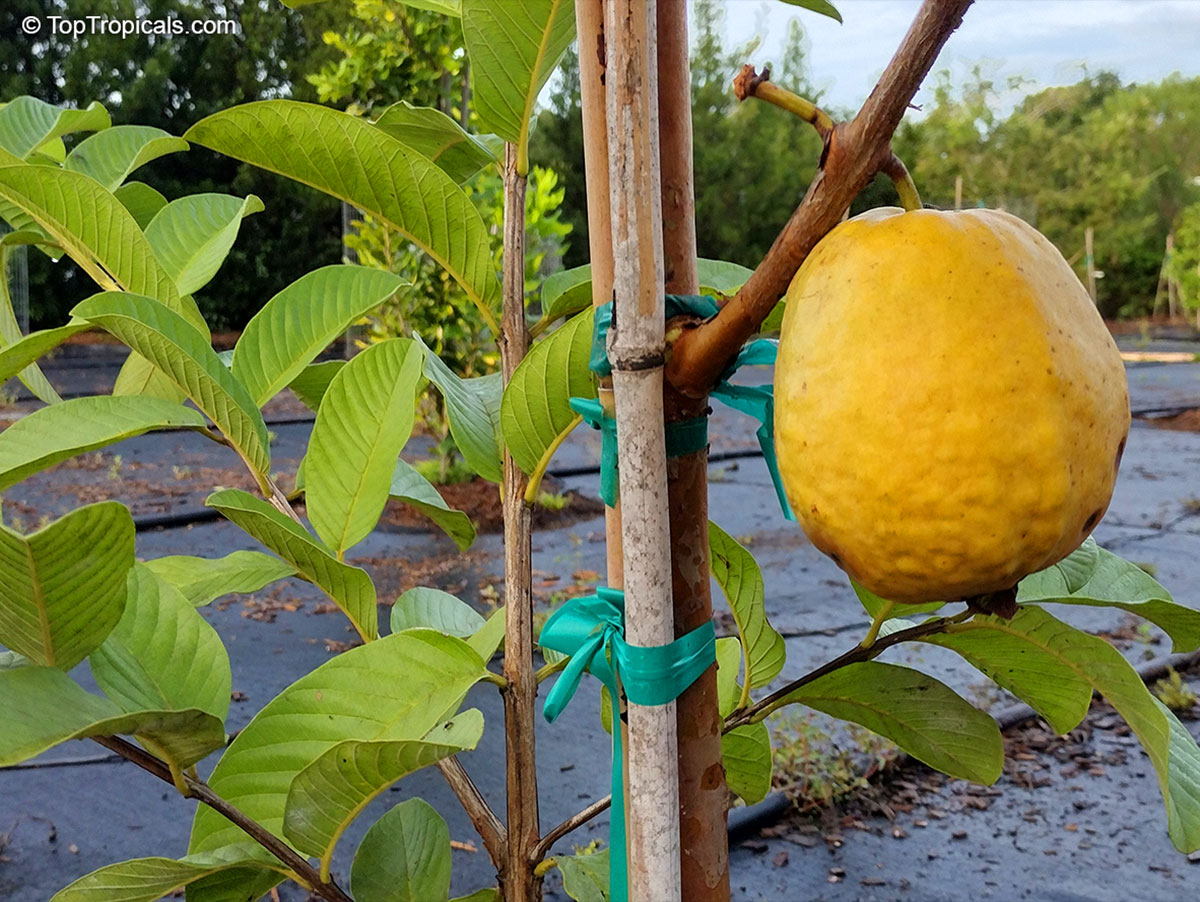
Ruby  Supreme  Guava  tree  with  a  large  ripe  yellow  fruit,  variety  known 
 for  sweet  pink  flesh  and  reliable 
 harvests.

🍴 Guava Recipes

With all that fruit, the next question is always: "What do I do with it?" Here are our favorites:

  • Cas Guava: Make Agua de Cas

    Boil halved Cas Guava fruits with sugar, simmer, strain, and bottle. Dilute with water when serving. The concentrate keeps for months in the fridge.
    Check out the recipe.

  • Hawaiian Gold: Make Drinks

    Perfect for Mojitos or Margaritas. Sweet, tangy juice pairs beautifully with lime and mint. Learn more

  • Araca Pera: Guava Wine

    Famous in Brazil, where the fruit is turned into a vibrant rosу wine. Locals say it’s the taste of summer in a glass — and yes, you can make it at home too. Learn more...

  • Quick snack: Guava Grilled Cheese

    Spread guava paste or fresh mashed fruit with cheese, grill until golden. Sweet and savory heaven. Learn more...

  • Simple Guava Juice

    Blend ripe guavas with water, ice, and a little sugar if you like. Instant refreshment.

✅Ready to Grow? Whether you want fresh juice, sweet fruit, or even your own guava wine, we’ve got the best varieties in stock right now. Your future self, sipping guava juice on a hot summer afternoon, will thank you.

👉 Order your guava tree today

Tabby  cat  sitting  between  a  glass  of  yellow  guava  juice  with  white 
 guavas  and  a  glass  of  pink  guava  juice  with  green  guavas  and  cut  pink  guava 
 fruit.

Date: 27 Oct 2025

🌳 Why Large Grafted Trees Are Better

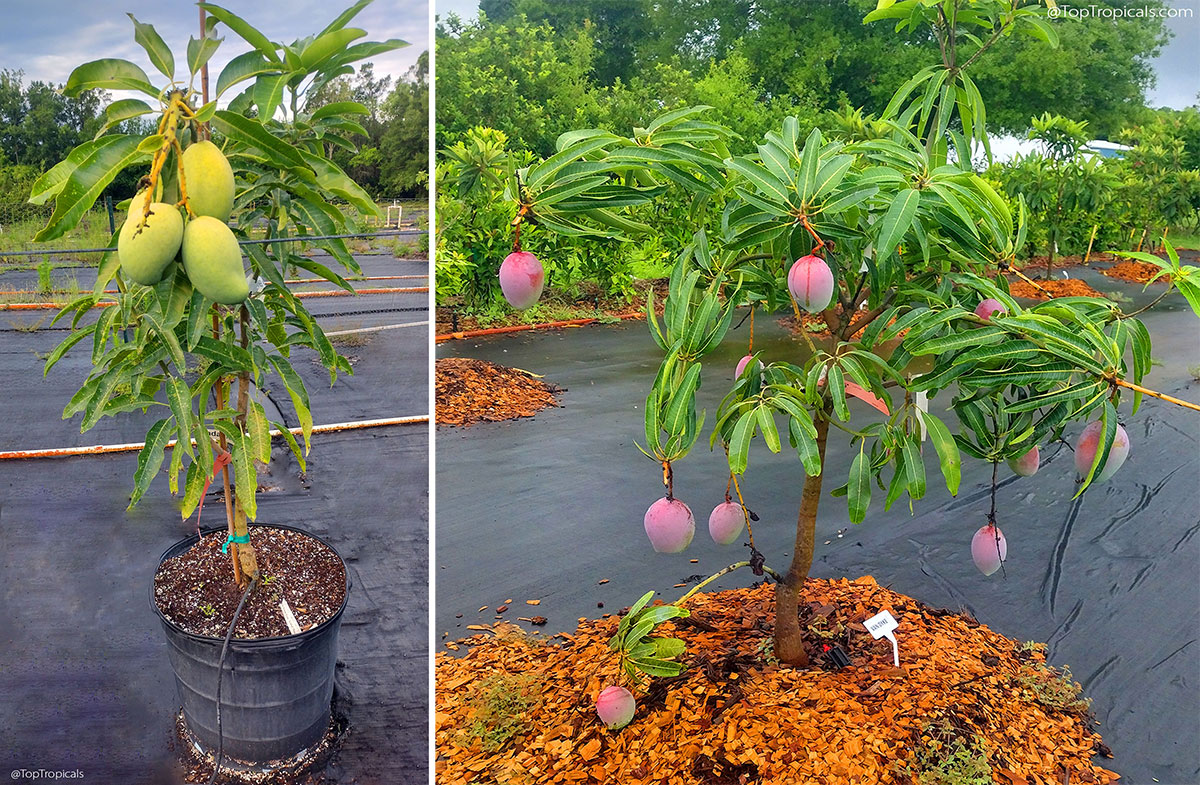
Comparison  of  Mango  trees  growing  in  container  and  in  ground  at  Top 
 Tropicals  nursery  -  potted  tree  with  large  green  fruit  and  in-ground  tree 
 with  ripe  purple  fruit  ready  for 
 harvest

These are not seedlings — they’re grafted trees, which means you get the true variety with known flavor, quality, and performance. Large grafted trees give you a real head start:

  • Already mature with a strong root system.
  • Handle transplanting and weather shifts with ease.
  • Can bloom and fruit in the first or second season.

No guessing, no waiting years — you’ll get the exact fruit you want, sooner.
👉 Learn more: How long does it take for a mango tree to bear fruit?

For Indoor and Patio Growers

No space for a full orchard? You can still grow your own tropical paradise! Our large grafted Condo Mango trees adapt beautifully to big containers on patios, balconies, and sunrooms. They stay compact, flower sooner, and can fruit even in pots when given good light and warmth.
👉 Learn more: What are the Condo Mangos?

Bring the tropics indoors — move your tree outside for summer sun, then back inside before frost. It’s the perfect way to enjoy homegrown fruit wherever you live.

Give your garden a smart start this season. Large grafted Mango trees are ready — but only for a short time before winter.

👉 Plant now, harvest sooner, and enjoy the true variety!

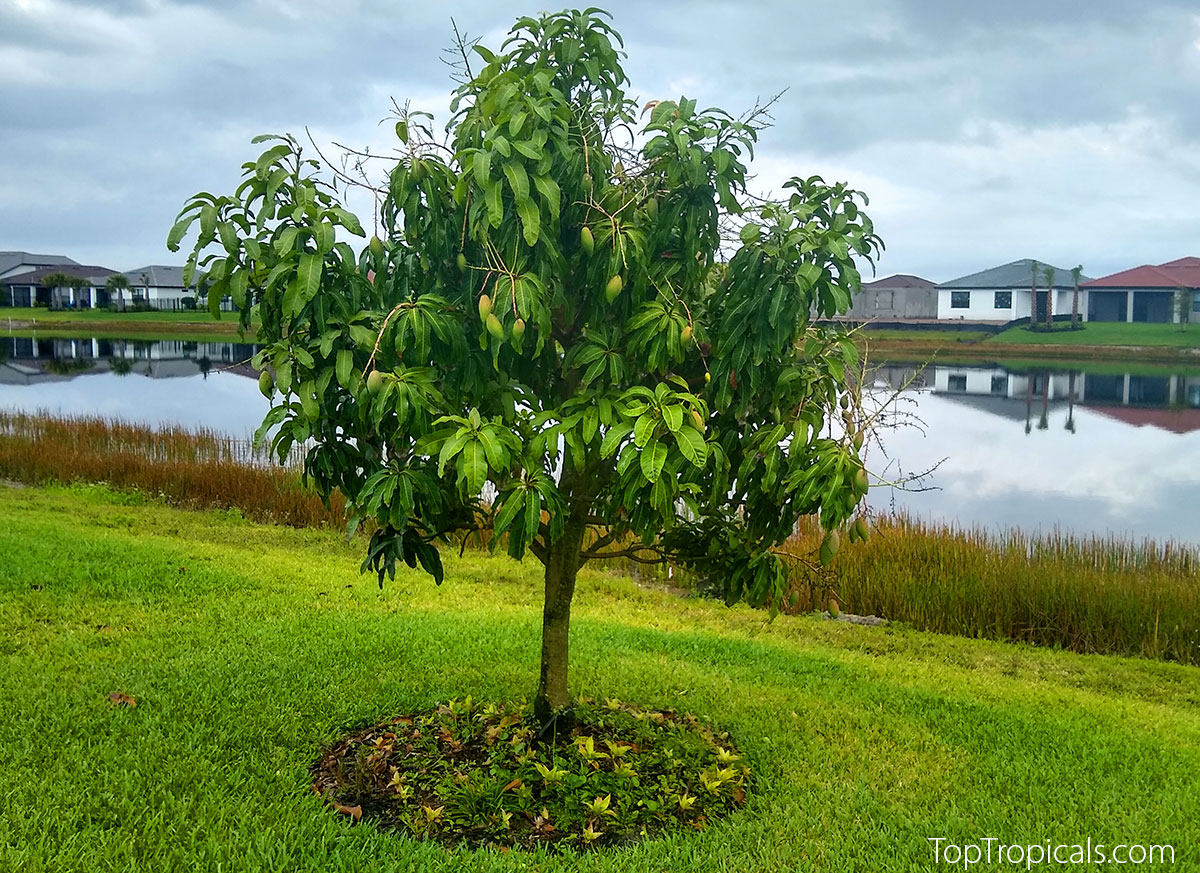
Mango  tree  growing  by  a  lake  in  a  Florida  backyard,  healthy  green 
 foliage  and  young  fruit  developing  on 
 branches

Plant Care Tips by Top Tropicals Plant Expert Tatiana Anderson

Large grafted Mango trees are easy to establish.

  • Soil: Well-drained, rich mix — avoid heavy clay.
  • Water: Deeply once or twice a week after the tree is established; keep soil evenly moist during the first few weeks after planting.
  • Light: Full sun or bright patio spot.
  • Feeding: Use balanced fertilizer Sunshine Boosters Mango Tango with every watering and Green Magic controlled release fertilizer every 6 months for steady growth.
  • Protection: Cover on cold nights for the first winter.
  • 👉 Learn more: How to take care of a mango tree in winter.

Plant once, care lightly, and your tree will reward you with fast growth and early fruit.

🌳 Big Trees, Local Pickup Only

For our local gardeners, we have something special. Extra-large 15- and 25-gallon Mango trees. These are full, mature specimens that simply can’t be shipped, but they’re perfect for local pickup or delivery.

Instant Impact and Faster Fruit

These trees already have strong trunks, big root systems, and start blooming next Spring. Plant one in your yard and it instantly looks like it’s been there for years.

Delivery and Installation

We offer local delivery and professional installation for large trees in the nearby area. Our team can bring the tree to your garden, position it correctly, and help with planting and setup.

👉 Contact us to arrange delivery and installation for your 15- or 25-gallon tree.

Limited Availability: Quantities are small, and these big trees go fast — once sold, they won’t be available again until next growing season.

"Large grafted trees give you a head start — they’re stronger, settle in faster, and can reward you with fruit the very next season," says Tatiana Anderson

🎥 Watch Short Videos:

🛒 Shop Mango trees

Date: 14 May 2026

How to take your plants from good to exceptional

How to take your plants from good to exceptional

How to take your plants from good to exceptional


If your plants are growing but not really impressing you, this is the missing piece. Basic feeding keeps plants alive. The right boosters take them further - stronger growth, better blooms, sweeter fruit, and healthier plants overall.

☘️ Additional boosters that take plants to the next level


Beyond the base nutrition, Sunshine Boosters includes additional products that help plants perform better during key stages of growth. All formulas, including supplements, are compatible and can be used together when needed.

☘️ Full microelement support


Sunshine SuperFood is a microelement supplement that corrects deficiencies and improves flowering and fruiting. It helps with yellow leaves, weak growth, poor rooting, and low fruit set.

☘️ Growth and stress support


Sunshine Epi is a natural bio-stimulant that supports faster growth, stronger roots, and better resistance to stress. It helps plants handle cold, heat, drought, and disease.

All these boosters work together with the base Sunshine Boosters system. They do not replace regular feeding but enhance it. When used at the right time, they help plants grow stronger, flower better, and produce higher-quality fruit with improved taste and appearance. 👉 More...

🛒
Get your plants real food

📚
Learn more:
How to feed the right formula at the right time
Why your plants need more than NPK
What makes Sunshine Boosters different
Sunshine Boosters: Complete Plant Nutrition System
Why do you need Sunshine Boosters?
📱 What are Sunshine Boosters

#Discover #Fertilizers #How_to

🟢 Join 👉 TopTropicals

Date: 4 May 2026

🎉 Work First. Celebrate Anyway. That Is the Plan.

Sunshine  cat  holding  large  mango  tacos  in  a  garden  nursery  while  Smokey
   works  on  laptop  with  margarita  and  donuts  on 
 table
Smokey: Work first. Celebrations later.
Sunshine: I am celebrating efficient workflow.
Smokey: Impressive. Somehow your workflow smells like tacos.
Sunshine: I assembled mango tacos. Join my festivities.

Cinco de Mayo has a way of sneaking up the right way. The weather settles, the evenings stretch a little longer, and suddenly everything moves outside - plants, people, and whatever happens to be for lunch. It is the kind of day where you stay out longer than planned, something cold is sweating on the table, and dinner becomes whatever sounds good.

This year, it was mango tacos. Not a recipe we planned - just a few ripe mangoes that needed a purpose and the kind of lazy inspiration that shows up around 5pm in the garden. Nothing complicated. Just something warm from the pan and a quick assembly that somehow feels like a celebration.

Mango Plant Facts

Botanical name: Mangifera indica
Also known as: Mango
USDA Zone: 9 - 11
Highligths Large tree taller than 20 ftSmall tree 10-20 ftFull sunWatering: Moderate. Water when top soil feels dryYellow, orange flowersPink flowersEdible plantSeaside, salt tolerant plant
Get personalized tips for your region

It's funny how a good meal can send you down a rabbit hole. One bite of something fresh and you start wondering where it came from, whether you could grow it yourself, and how much better it might taste if you did.

That is really the point. A small shift from planning to picking, where the line between the garden and the kitchen starts to blur. If you are growing fruit, or thinking about it, this is your reminder: the best meals usually start about ten feet from your back door.

🛒 Start with one plant - Shop Fruit Trees

Date: 30 Apr 2026

The One Peach Tree Every Florida Gardener Should Know About: Tropic Beauty

Peach tree in full bloom

Tropic Beauty Peach tree

Tropic Beauty Peach tree

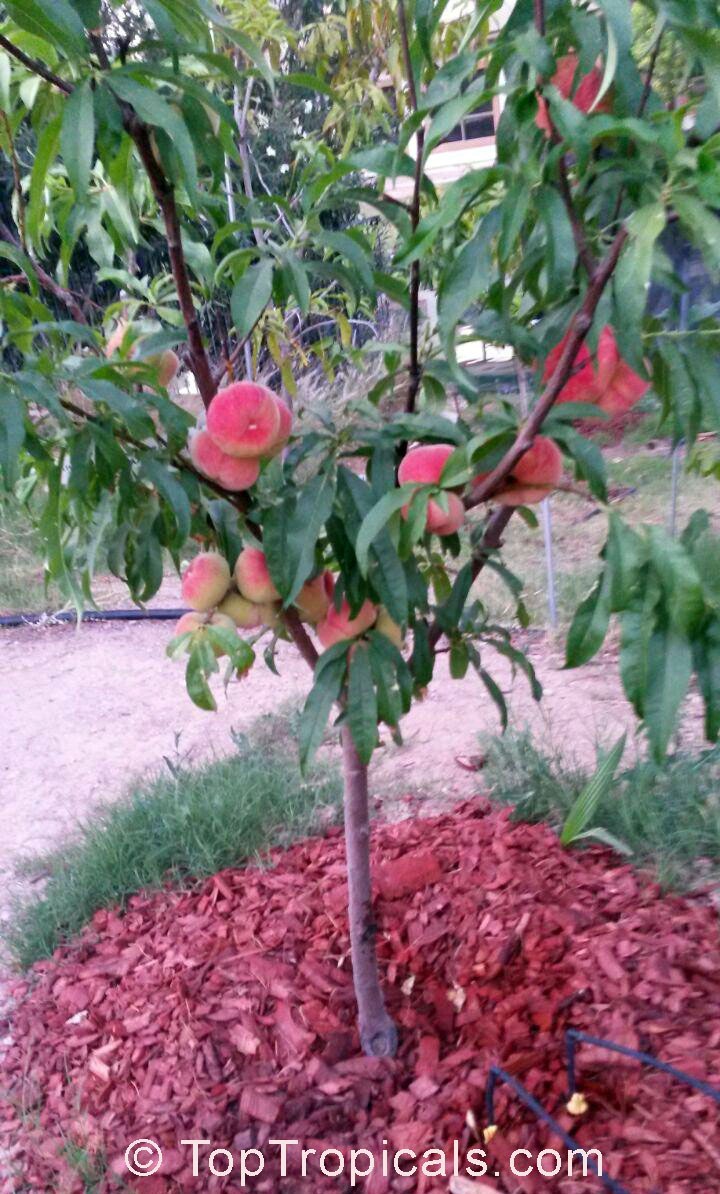
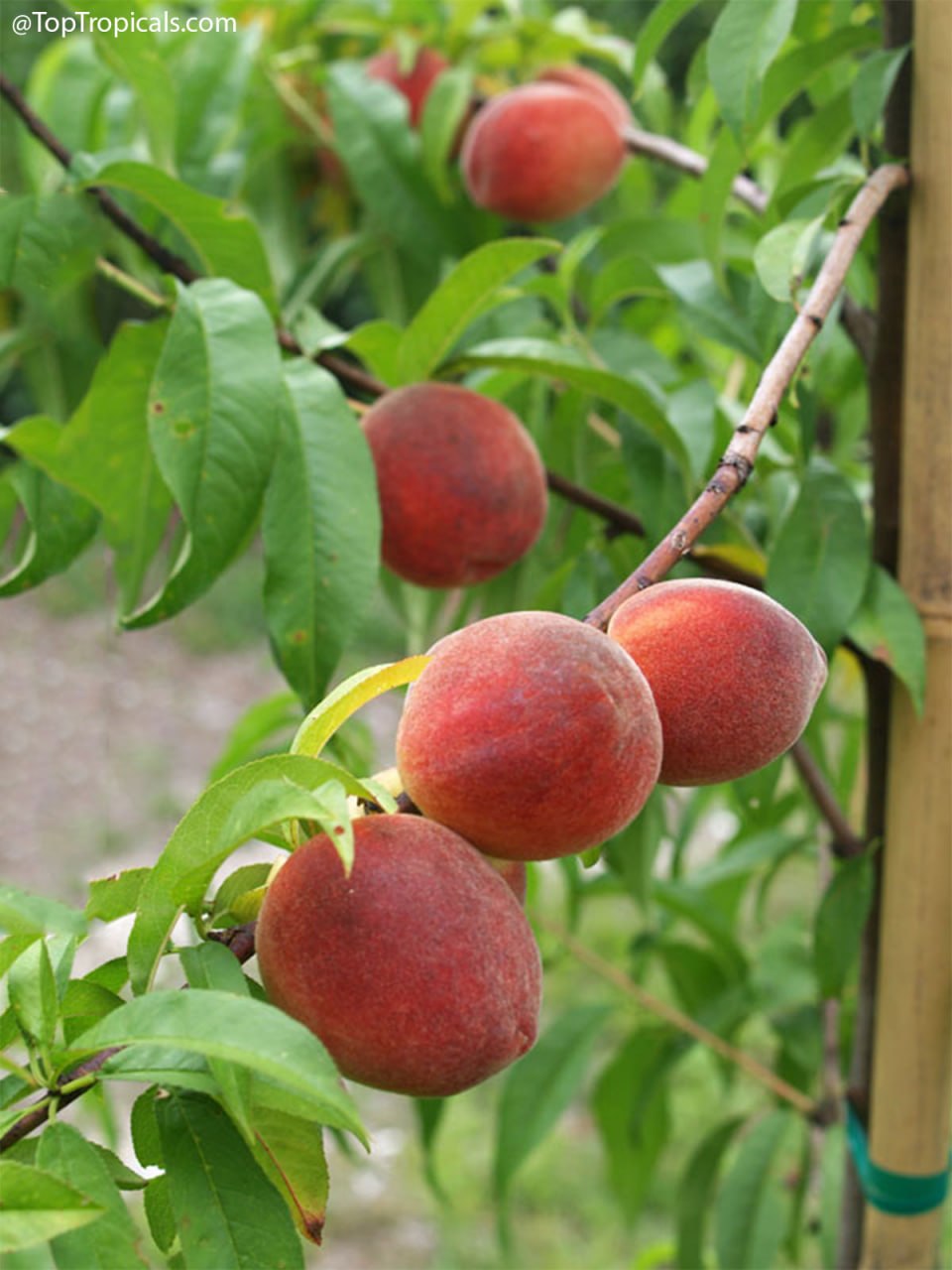
Tropic Beauty Peach fruit

Tropic Beauty Peach fruit

The One Peach Tree Every Florida Gardener Should Know About: Tropic Beauty

Most Florida gardeners assume peaches are off the table. Wrong climate, not enough cold, too much heat. Tropic Beauty exists specifically to prove that wrong - and it ripens in late April while the rest of the country is still waiting on summer.

Peach Plant Facts

Botanical name: Prunus persica, Amygdalus persica
Also known as: Peach
USDA Zone: 5 - 10
Highligths Small tree 10-20 ftFull sunWatering: Regular. Let topsoil dry slightlyWhite, off-white flowersPink flowersEdible plantDeciduous plantSubtropical plant. Mature plant cold hardy at least to 30s F for a short time
Get personalized tips for your region


I Didn't Think You Could Grow Peaches Here


I'll be honest - when I first started growing fruit trees in Florida, I assumed peaches were just off the table. Too much heat, not enough cold winters, wrong climate entirely. Then someone at my local nursery pointed me toward Tropic Beauty, and that assumption went right out the window.

This variety has been around since 1989, developed jointly by the University of Florida and Texas A&M. That's over three decades of Florida gardeners growing it, eating it, and planting more of them. When a cultivar sticks around that long, it's just a good tree.

Why Low Chill Actually Matters Here

Most peaches need 700 to 1,000 chill hours - the number of hours below 45°F the tree needs during winter to break dormancy and set fruit. In central and south Florida, we're lucky to scrape together 150 to 300 hours in a mild year. That rules out most varieties before you even get started.

Tropic Beauty only needs 150. It was built for exactly the winters we have here - cool but not cold, brief but not brutal. Most years, it gets what it needs without you thinking about it at all.

What the Fruit Is Actually Like

Medium-sized peaches, deep red blush covering about 70% of the skin over a bright yellow background. They look genuinely good on the tree - the kind of fruit that makes you grab your phone before you even pick one.

Cut one open and you get soft, melting yellow flesh with classic sweet peach flavor, plus a little acidity to keep it interesting. The pit is semi-freestone, easy enough that you're not wrestling with it.

If you've ever bitten into a grocery store peach and been let down - mealy texture, no real flavor - this is the opposite of that. Warm from the tree on a late April morning, it tastes like what peaches are supposed to taste like.

April Harvest: Earlier Than You'd Think

Ripening in late April, Tropic Beauty is one of the earliest peaches you can grow anywhere. Most of the country is still waiting on peach season while you're already making cobbler.

The fruit also holds well on the tree - no need to pick everything at once. You can let them hang and harvest over a couple of weeks, which is a real convenience if you're planning to can and want to spread the work out.

One Tree Is Enough (But Two Doesn't Hurt)

Tropic Beauty is self-fertile, so it doesn't need a second tree to produce fruit. Plant one, get peaches. That matters if you're working with a smaller yard or just testing the waters.

If you have space for two, yields do go up with cross-pollination - worth keeping in mind for a small home orchard.

It Fits More Spaces Than You'd Expect

The tree can grow 15 to 20 feet, but with regular pruning it's easy to keep around 10 feet. It also works well in containers, which makes it more accessible than most fruit trees.

Plant it in full sun, well-drained soil. Peaches don't love wet feet, so if drainage is questionable in your yard, mounding the soil before planting is a smart move.

Worth Planting?

If you're in central or south Florida and you've been wanting to grow peaches but weren't sure it was realistic - Tropic Beauty is your answer. Proven over decades, adapted to the climate, and when it produces, it produces well.

Some trees you plant and hope for the best. This one, you just wait for April.

"Before the peaches, there's this. Tropic Beauty in full bloom - proof that a fruit tree can be just as beautiful as anything you'd plant purely for looks.

" Learn more:
Peach trees in Plant Encyclopedia
When Peach trees are in full bloom
The most rewarding hardy fruit tree suitable for hot climate: peaches, nectarines, apricots and plums

Shop Low Chill Peaches

#Food_Forest #Discover

TopTropicals