Meet PeopleCats of TopTropicals. Cat of the Day: Field Grown Marco
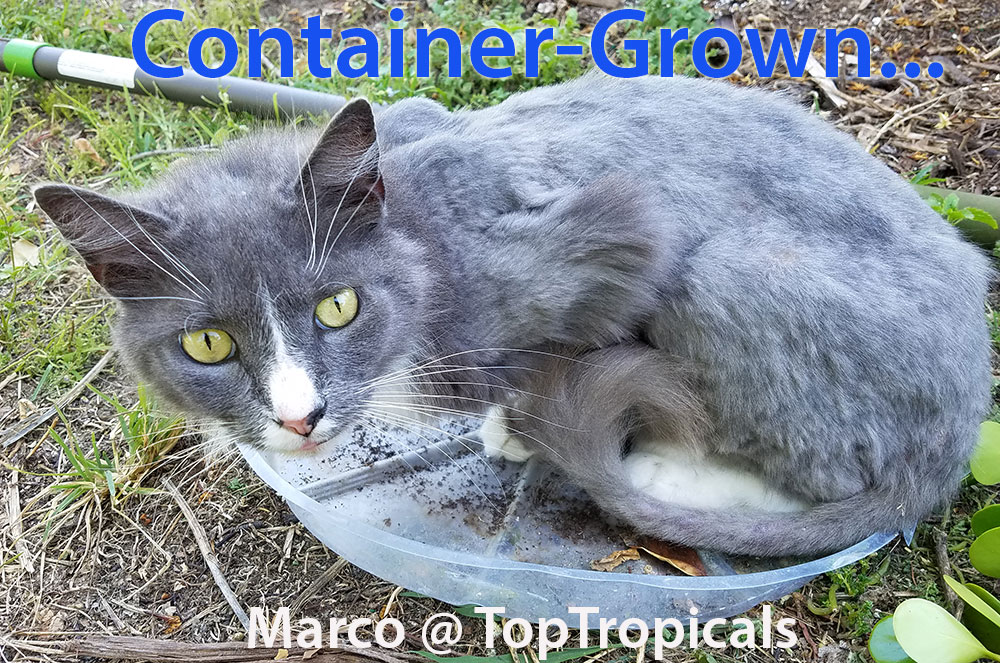
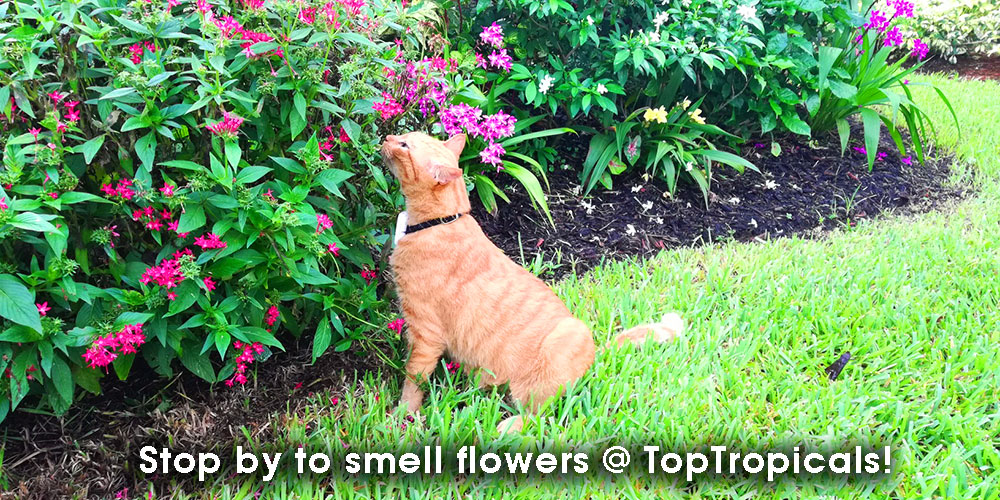
Marco loves growing plants and be involved in different
projects outside. He is good at finding spots either on top, or inside some inappropriate objects. Yet simple boxes, that most
cats find super comfy, do not interest him. Is has to be a plant container, saucer, or even a charcoal grill full of ash...
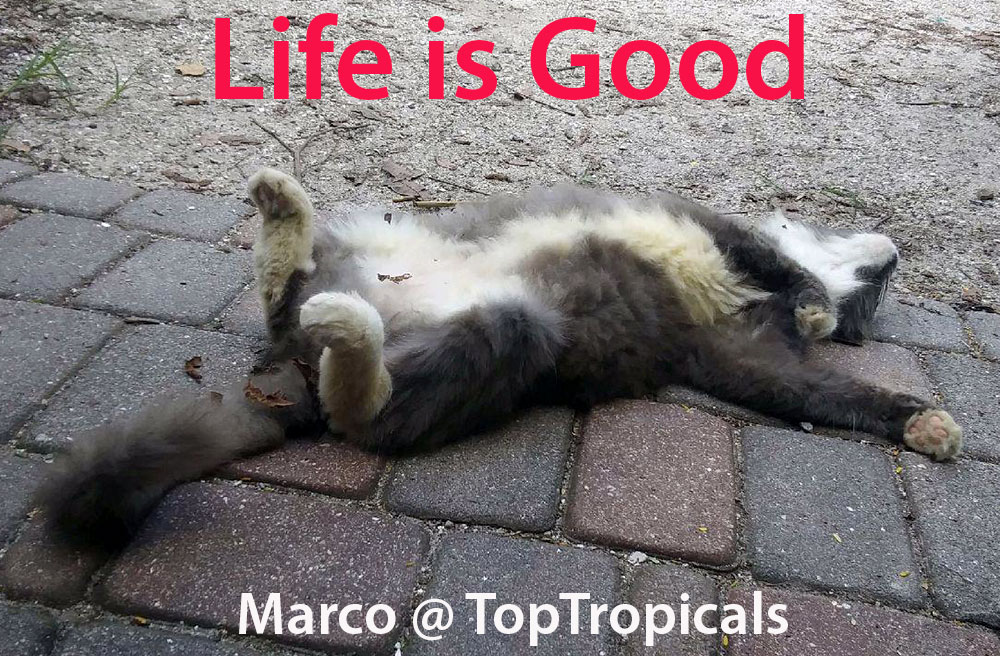
He can sit in some weird places for hours like on top of a fence pole, or lay in the middle of a busy walking traffic while
everybody have to step over or walk around him... We have quite a collection of Marco's special places and will be sharing with
you!
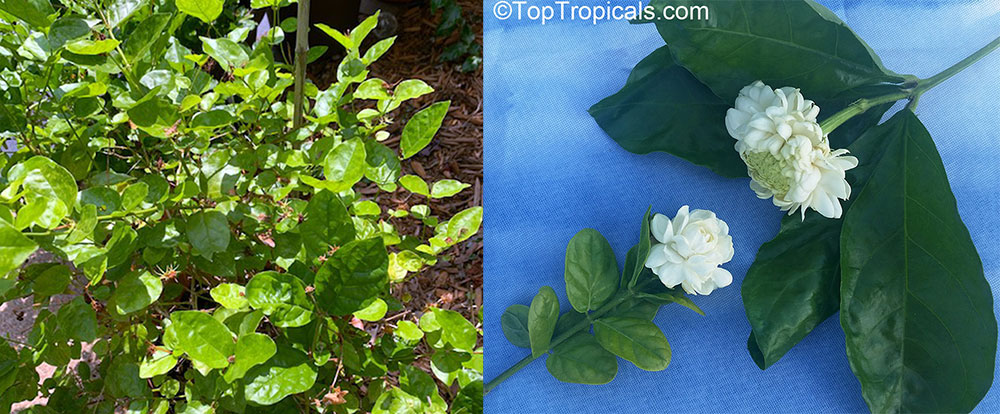
Q: On the picture, these are a few of the jasmine plants that I
have from Top Tropicals. I have bought so many plants from you over the years,
not just jasmine. I have several varieties of jasmine. They were all doing
very well. However this year I didn't get a single flower. There are a lot of
buds... But before the buds open they become brown and withered. I bought
fertilizer from you. Fertilized the plants once a month like I always do. I
water the plants once a week. I repotted the plants hoping that would take care
of this problem. Some of the jasmine plants I pruned... the plants came back
vigorous growth with a lot of buds... BUT it is the same problem! Please
help.
A: One of the possible reasons why they have flower issues is -
maybe they don't have enough sunlight. They need to be in full sun all day
long for profuse blooming and proper flower forming. However since the buds are
forming, there may be just enough light. In this case, dropping buds may be a
sign of overwatering.
Important steps - how to make Jasmine Sambac flower:
Mark your calendar:
June 19, 2021
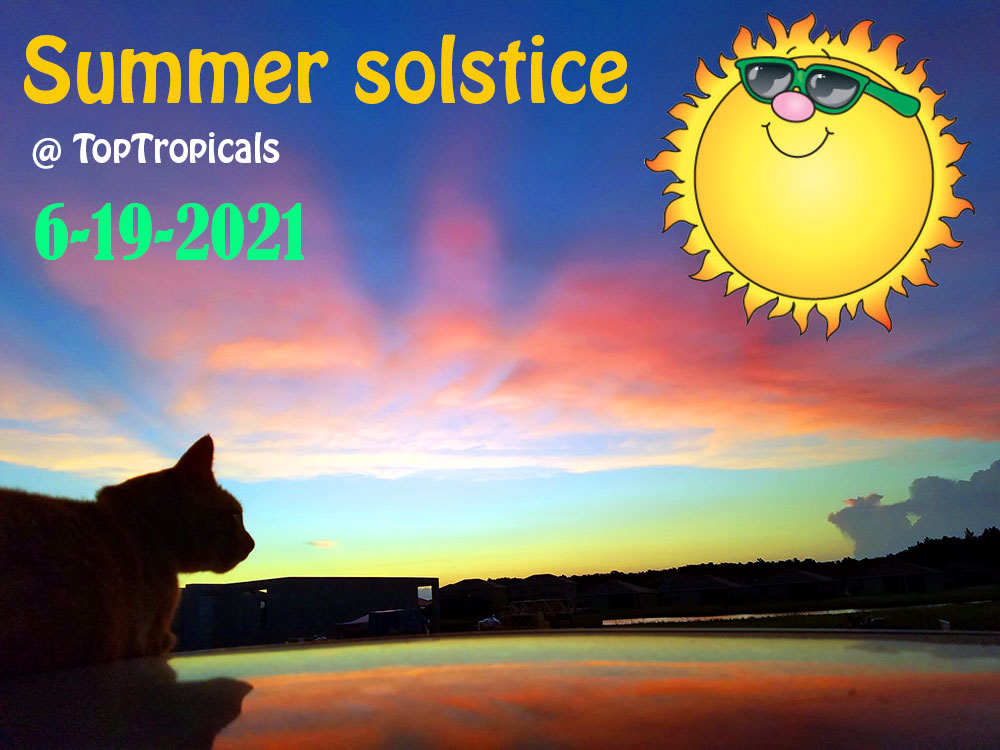
Summer Solstice Celebration with PeopleCats
Special Event you can't miss!
First day of Summer and the longest day of the year! Live Jazz in the
Garden, lots of cool vendors
and "A Roof for Rufus" cat adoptions...
Come join the Top Tropicals crew for the longest planting day of the year.
Onika, Bella, Mark and David will be here soaking in the sun and helping you
to pick the right plants...
Saturday, June 19th
9:00 am - 4:00 pm
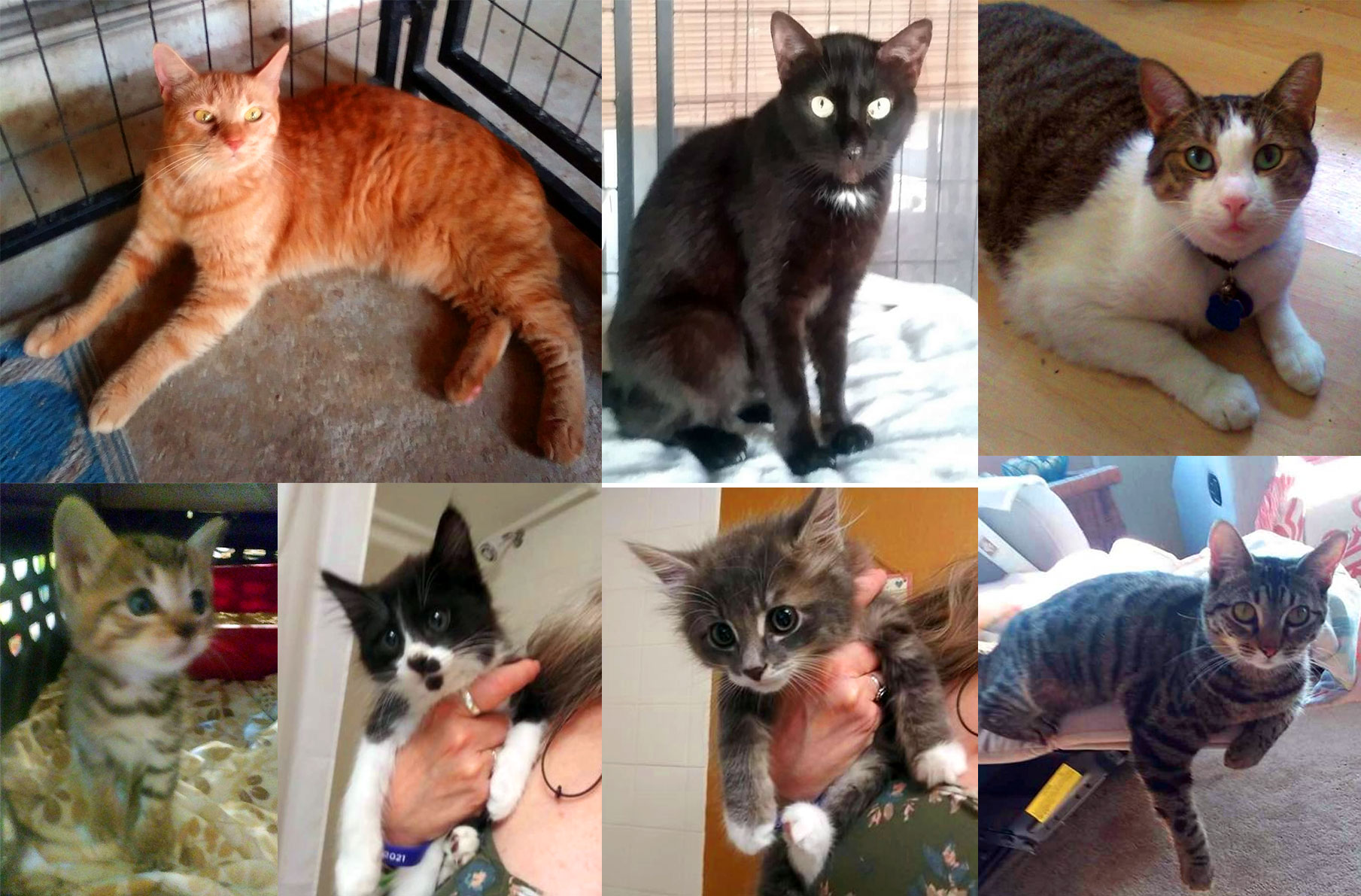
Top Tropicals is proud to partner with A Roof for Rufus cat adoptions. Each cat attending this event has been
hand picked and approved by King.
Don't miss this event! Talk to the kitties and find your companion in life.
PeopleCats never betray and they will love you forever!
As the world's health experts race to find a cure for the novel
coronavirus, this drug have jumped to their attention - Chloroquine. It contains
alkaloid Quinine, extracted from the bark of the Cinchona, or Fever Tree.
We receive many questions from our customers if we carry this plant.
Although we do not offer it at the moment, we definitely can tell you more about
this interesting medicinal plant!
If you like gin and tonic, you will be familiar with the bitter taste of
the tonic which is provided by quinine. While it is now mainly used
to add a flavor to our favorite tipple, the Cinchona tree bark once held a
place as one of the most important drugs in history.
Cinchona was discovered in the 1630s as a treatment for malaria and, for
350 years, was the only effective cure known in Europe until synthetic
replacements were developed in the 1940s. Malaria remains today one of the deadliest
diseases known throughout the tropics, but up until the 20th century the
disease was prevalent throughout Europe, including Britain.
The Cinchona tree is native to the Eastern slopes of the Andes with a
range across Ecuador, Peru and Bolivia. Once the bark became an established
medicine, particularly in the 18th and 19th centuries, demand started to
outstrip supply. Threats of overharvesting and the desire to control the source of
this precious bark drove various competing empires to source this plant for
themselves. Understandably, the Spanish, who were in control of this area of
South America, actively tried to prevent this, but failed to establish
successful plantations themselves. A race to source and cultivate Cinchona ensued,
and eventually both the Dutch, in Indonesia, and the British, in India, founded
government controlled plantations for the mass production of quinine.
Chloroquine appears to have "broad-spectrum antiviral properties" and
effects on immune response, and to be effective against severe acute
respiratory syndrome... As the rest of the world, we are looking forward to the
research results and hope the cure will be found soon!
In the meantime, let's just have more Gin-n-Tonic!
Date: 29 Jun 2026
😾
When Orange
Isn't a Good Thing
Smokey: Those orange spots are plumeria rust. Sunshine: Orange is an excellent color. Smokey: On cats, yes. On plumeria leaves, no. Sunshine: I represent the good kind of orange.
🌸 Plumeria Rust in Humid Climates:
What Finally Worked for Us
By Tatiana Anderson, Plant Expert, Top
Tropicals
Healthy
plumerias with clean, vibrant foliage after successful rust
management. Good airflow, bright conditions, and effective fungicide
treatment
help keep plants growing strong through Florida's rainy season.
If you grow plumerias in Florida,
you probably know what comes next. Around June, when the rainy season begins
and afternoon thunderstorms become part of the daily routine,
orange-yellow spots start appearing on the undersides of plumeria leaves.
Plumeria rust arrives almost like clockwork.
If you have ever tried to fight it, you know how frustrating that battle can
be.
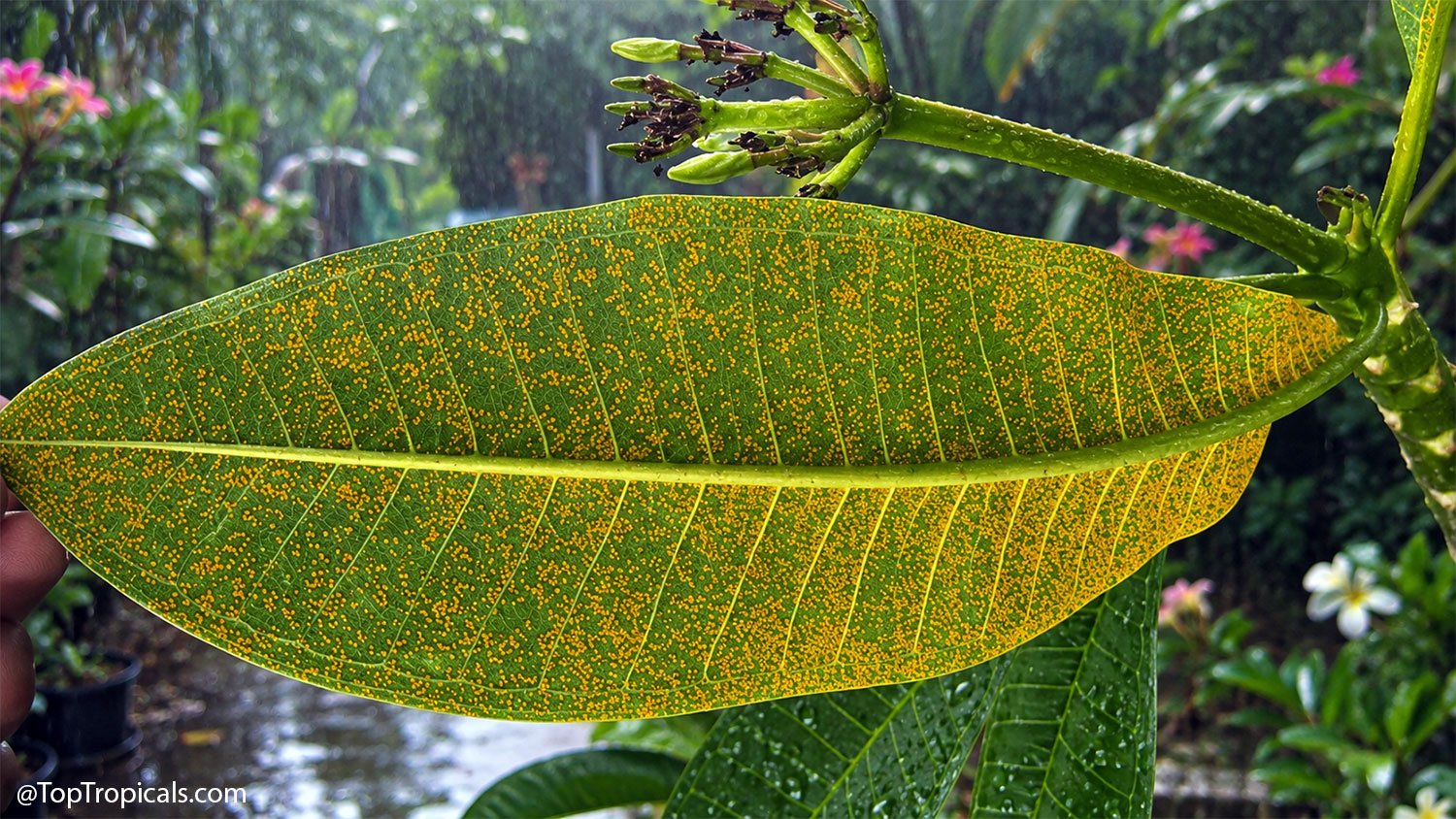
Plumeria
rust appears as bright orange powdery spores on the underside of
leaves. Warm, humid, rainy conditions allow the fungus to spread quickly,
making it a common sight in tropical and subtropical gardens.
Let me be clear about something right away: Plumeria rust is
rarely fatal to an otherwise
healthy plant.
In our experience, we have never lost a healthy plumeria
to rust alone. The disease is mostly
cosmetic, but it causes significant yellowing, triggers premature leaf drop,
and can turn a beautiful specimen into something that looks ragged
throughout the best months of the growing season. For a plant grown as much
for its attractive foliage as its spectacular flowers, that matters.
At Top Tropicals, we have grown plumerias for many years and have tried most
of the approaches gardeners typically recommend: sulfur-based fungicides,
neem
oil, copper sprays, improving drainage, and removing infected leaves before
they hit the ground. Some of those things helped to varying degrees. None
of them felt like a real breakthrough until recently.
The Fungicide That Actually Did Something
Real-world results after treating plumeria rust with Southern Ag
Garden Friendly Fungicide. The inset shows a
leaf heavily infected with orange rust spores before treatment, while the
main image shows clean, healthy new foliage after the fungus was
brought under control.
A few seasons ago, on the recommendation of another grower, we tried
Southern Ag Garden Friendly Fungicide
. This biological fungicide contains the beneficial bacterium Bacillus
sp, and I want to be careful here: I am not suggesting it is the best
product for everyone or that it will produce the same results in every
situation. What I can say is that, in our experience, it was the first
fungicide that consistently produced visible improvement when applied
according to the label directions.
We applied it at the first sign of rust, repeated applications according
to the label, and actually saw the progression slow down while new
infections became less severe. Whether that was
the product, the timing, or some combination of factors, I cannot say with
certainty. But after cycling through several options over the years, it
was the one that felt like it was doing something real. If you are looking
for a starting point, it is worth trying.
But the fungicide wasn't our main discovery. That came this past season,
and it changed how we think about this disease.
☔️ What This Season Taught Us About Leaf Wetness
Healthy, dry plumeria foliage is one of the best defenses against
plumeria rust. Good airflow, bright light, and keeping leaves dry whenever
possible help prevent the fungus from taking hold during the rainy
season.
This season we moved our prized container plumerias under a covered
growing area with a clear plastic roof and approximately 30 percent shade
cloth overhead. The structure provides excellent light, warm temperatures,
and very good air circulation while protecting the plants from Florida's
frequent summer rains. It is not a climate-controlled greenhouse, but rather
a protected outdoor growing area.
Here is the important part: these plants were still irrigated regularly,
every two to four days, with overhead watering. The leaves did get wet. But
because they were not sitting outside
during Florida's daily summer downpours, the foliage dried within a
reasonable
amount of time instead of remaining wet for hours, which is common after a
heavy rain followed by cloudy skies and still air.
The result? Not a single case of rust developed on those plants
throughout the season.
Considering how consistently plumeria rust appears each summer in our
nursery,
that result immediately caught our attention. The most significant
difference was how long the foliage remained wet after watering or
rain.
Meanwhile, plumerias growing in the ground nearby, fully exposed to the
weather, showed rust
infection at the usual time.
💦 Ambient Humidity vs. Standing Water
That observation made us rethink what we believed was driving the
disease. We had always assumed Florida's high humidity was the primary
factor. Humidity certainly plays a role. But this experience suggested that
prolonged leaf wetness may be a much more significant factor than ambient
humidity by itself.
There is a real difference between air that feels humid and leaves that stay
wet for four, six, or eight hours after a rain. Humid air means the
moisture content of the atmosphere is high. Wet leaves means there is
standing water on the leaf surface. Both conditions can occur together, but
they are not the same thing. A leaf in a humid but breezy location can dry
within an hour. A leaf in still, wet conditions after a heavy rain may stay
wet most of the day. That difference may be far more important than many
gardeners realize.
We are not plant pathologists, and we do not want to overstate what we
learned from one growing season. But after many years of growing plumerias
in Florida, the results were convincing enough that we now
protect our best container specimens from prolonged summer rainfall whenever
possible.
👉 What We Recommend
Based on many years of growing plumerias in Florida, here are the
practices that have worked best for us:
Grow plumerias in full sun whenever conditions allow. Good light means
faster drying after rain or
irrigation, and plants grown in low light often seem to show rust symptoms
more readily.
Keep your plumerias well-fed. Healthy, vigorously growing plants recover
from stress and disease much better than weak ones. We apply Green
Magic
controlled-release fertilizer every six months for a steady supply of
nutrients, and supplement with Sunshine
Boosters Megaflor during the growing season. Because Megaflor is gentle,
it can be safely applied with every watering, all
year long.
During extended rainy periods, consider moving valuable container plants
under cover if possible. Even a covered patio can make a difference if it
keeps the leaves from remaining wet for most of the day.
Provide air circulation. Plants crowded together stay wet longer. Space
them properly and position them where they receive good airflow.
Remove infected fallen leaves. They can continue serving as a source of
spores.
Pick them up and dispose of them rather than leaving them beneath the
plants.
If rust begins to appear, start fungicide applications early. Slowing an
infection at the beginning is much easier than trying to control one that
is already well established.
💡 A Realistic Conclusion
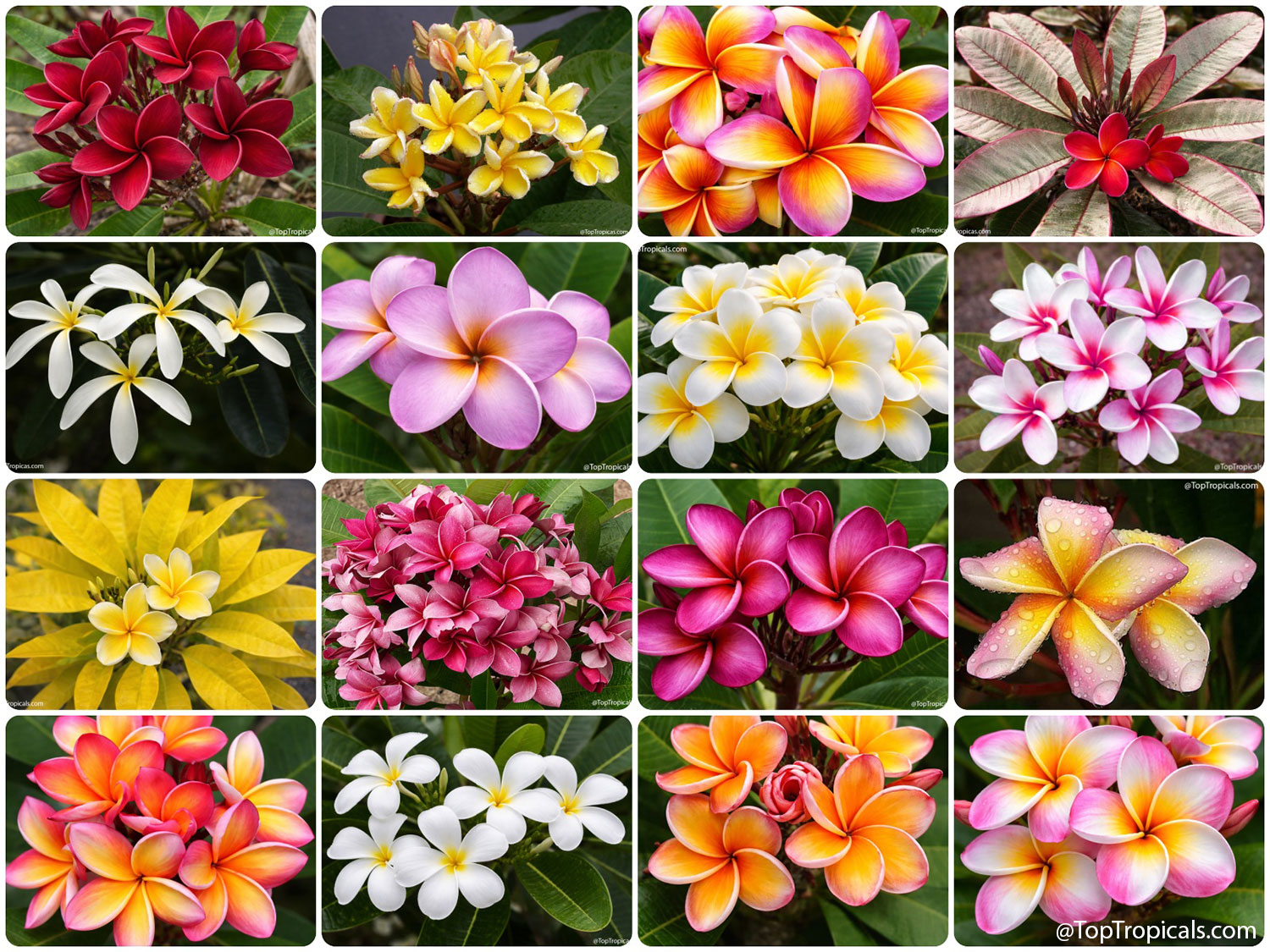
A parade
of healthy plumerias in full color. Clean foliage, bright blooms, and
vigorous growth show what plumerias can look like when rust is kept under
control, letting each variety shine in its own unique colors.
Plumeria rust is mostly a cosmetic problem rather than a life-threatening
one.
Healthy plants usually recover well, but yellowing foliage and premature
leaf drop can take much of the beauty out of an otherwise
beautiful blooming season.
We cannot promise these methods will eliminate rust in every garden.
Every growing environment is different.
However, after years of battling this disease, reducing how long the leaves
remain wet made a bigger difference than any other single change we have
tried. If
you grow plumerias in a humid climate and continue struggling with rust, it
may be worth focusing not only on humidity itself, but also on how quickly
the foliage dries after the rain
stops.
Mix and match your favorite varieties! Purchase 2 or more
plumerias and receive 25% off all plumerias in
your order. No coupon code required. Discount is applied automatically when
qualifying items are added to your cart.
Valid through July 3, 2026
Offer applies to new orders only. Not valid on previous purchases, pending
orders, gift certificates, shipping charges, or combined with other
discounts or promotional offers.
Plumerias come in an amazing spectrum of colors and forms. From pure
white
and buttery yellow to fiery reds, soft pinks, rainbow blends, and even
variegated foliage, there is a plumeria to match every tropical garden and
collector's taste.
Sunshine: Healthy plumerias need sunshine... that's me...
good airflow, and dry leaves. Smokey: That's a surprisingly accurate summary. Sunshine:We can help with all of that. Donut worry. Coffee
first.