Garden Blog - Top Tropicals

Date: 12 Feb 2026

Hoa Mai and the Year of the Horse - why yellow flower Ochna is the luckiest plant of 2026?

Ochna integerrima - Vietnamese Mickey Mouse plant, Hoa Mai - seeds

Ochna integerrima - Vietnamese Mickey Mouse plant, Hoa Mai - seeds

Ochna integerrima - Vietnamese Mickey Mouse plant, Hoa Mai tree

Ochna integerrima - Vietnamese Mickey Mouse plant, Hoa Mai tree

Ochna integerrima - Vietnamese Mickey Mouse plant, Hoa Mai flowers

Ochna integerrima - Vietnamese Mickey Mouse plant, Hoa Mai flowers

🔥 Hoa Mai and the Year of the Horse - why yellow flower Ochna is the luckiest plant of 2026?


Ochna integerrima - Vietnamese Mickey Mouse plant, Hoa Mai has seeds and sepals that resemble the face of Mickey Mouse, hence the common name.
  • 💖 On February 17, 2026, the Lunar New Year begins - welcoming the Year of the Fire Horse


    And if there is one plant that perfectly captures the bold, bright energy of a new zodiac cycle, it is Ochna integerrima, known in Vietnam as Hoa Mai. This cheerful yellow bloomer is not just decorative. In Vietnam, it is the flower of Tet - a living symbol of luck, prosperity, and fresh beginnings.
  • 💖 Does Vietnamese New Year start on a different date in 2026?


    No. In 2026, Tet - the Vietnamese Lunar New Year - begins on the same day as the Chinese Lunar New Year: February 17. Tet follows the lunar calendar, just like Chinese New Year, so both celebrations align this year.
    Tet, officially called Tet Nguyen Dan, marks the arrival of spring and is the most important holiday in Vietnam. And nothing represents Tet in southern Vietnam more than Hoa Mai in full bloom.
  • 💖 Why Hoa Mai is the flower of Tet


    Hoa Mai literally means "yellow blossoms". In southern Vietnam, these bright yellow flowers open right around Lunar New Year, often covering the entire plant.
    The color yellow symbolizes:

· Wealth
  • · Prosperity
  • · Happiness
  • · Good fortune

Families display flowering Hoa Mai trees in homes, courtyards, and businesses during Tet. The more blossoms, the more luck the coming year is believed to bring.
  • 💖 Why it is called the Mickey Mouse plant


    After flowering, Ochna integerrima produces glossy black berries that sit on bright red sepals. The combination looks surprisingly like a tiny cartoon face - two black "ears" and a round head - which is how it earned the nickname Vietnamese Mickey Mouse plant.

    It is playful, unusual, and a total conversation starter.
  • 💖 A perfect plant for Year of the Fire Horse energy


    The Fire Horse year is associated with:

· Passion
  • · Independence
  • · Bold action
  • · Fast movement
And honestly? A plant that explodes into golden blooms in the middle of winter feels exactly right for that kind of year!
If you have been waiting to start something new - planting a rare shrub, reshaping your garden, training a miniature tree - this zodiac cycle carries that "go for it" momentum.
  • 💖 Can you grow Hoa Mai outside Vietnam?


    Yes - and that is part of its appeal. Ochna integerrima - Hoa Mai - is:

· A slow-growing, medium shrub
  • · Trainable into a small tree or bonsai form
  • · Suitable for containers
  • · Relatively tolerant of light frost
It blooms in winter, when many tropical collections feel quiet. That alone makes it valuable in warm-climate gardens like Florida.

To encourage winter blooms, steady feeding before and during the cooler season helps stimulate bud formation. Consistent light, good drainage, and balanced fertilization are key.

💖 A living symbol of luck for 2026


Every Lunar New Year carries its own theme. The Year of the Fire Horse is about bold growth, forward motion, and courage.
Hoa Mai blooms exactly at the moment when people reset intentions, clean their homes, and welcome fresh energy. It is not just a plant - it is a seasonal signal that a new chapter has begun.

And if you want to invite a little more golden luck into your garden this February, few plants say "new year, new beginning" better than Hoa Mai in full bloom.

🛒 Plant your own lucky Mickey Mouse Plant

📚 Learn more:

Plant Facts

Ochna integerrima, Ochna thomasiana
Vietnamese Mickey Mouse Plant, Hoa Mai, Mai Vang, Hoang Mai
USDA Zone: 9-11
Large shrub 5-10 ft tallSemi-shadeFull sunModerate waterYellow, orange flowersWhite, off-white flowersPlant attracts butterflies, hummingbirdsEthnomedical plant.
Plants marked as ethnomedical and/or described as medicinal, are not offered as medicine but rather as ornamentals or plant collectibles.
Ethnomedical statements / products have not been evaluated by the FDA and are not intended to diagnose, treat, cure, or prevent any disease. We urge all customers to consult a physician before using any supplements, herbals or medicines advertised here or elsewhere.Fragrant plant
  • Ochna integerrima in Plant Encyclopedia
  • What is Mickey Mouse Plant?
  • 2026: Year of the Fire Horse - time to grow bold, live free, and plant lucky
  • Year of the Fire Horse - what should you grow in 2026?
  • More #Horoscope info for plants and cats

  • #Horoscope #Hedges_with_benefits #Nature_Wonders #Fun_Facts

    🟢 Join 👉 TopTropicals

    Date: 2 Mar 2026

    Eugenia Cherries 🍒

    By Tatiana Anderson, Horticulture Expert at Top Tropicals with Smokey & Sunshine help

    Eugenia brasiliensis - Grumichama fruit on the branch

    Growing Eugenia Cherries (Cherry of the Rio Grande & Grumichama)

    Cherry of the Rio Grande and Grumichama are compact, adaptable tropical fruit trees well suited to Southern landscapes. While forgiving, they perform best when planted correctly from the beginning.

    Site and Planting

    • Drainage is essential. Avoid low areas where water collects. Plant on a slight mound if soil is heavy or clay-like.
    • Choose full sun for best flowering and fruit production. Partial shade is tolerated.
    • A south or southeast exposure near a wall improves cold resilience and reduces wind stress.
    • Dig a hole twice as wide as the container, but no deeper than the root ball.
    • Set the tree level with surrounding soil. Do not bury the trunk.

    Water and Feeding

    • Water regularly during the first few months while roots establish.
    • Once established, trees tolerate short dry periods but fruit best with moderate, consistent moisture.
    • Feed lightly and consistenly. SUNSHINE Boosters Robusta liquid fertilizer is safe to use with with every watering. During hot season you may add controlled release Green Magic every 6 months. It is essential to apply micro elements: Sunshine Superfood micro nutrients complex

    Cold Tolerance

    • Protect young trees during hard freezes.
    • Established Cherry of the Rio Grande can tolerate brief drops into the low 20s.
    • Established Grumichama tolerates temperatures into the upper 20s.

    Harvest and Production

    • Cherry of the Rio Grande fruits from late spring into summer. Pick when fully dark and slightly soft.
    • Grumichama ripens quickly, often within four weeks after flowering. Pick when glossy and deep purple-black.
    • Both trees often begin fruiting within 2–3 years and increase production steadily with maturity.

    Growing in Containers

    • Use at least a 10–20 gallon pot for long-term growth.
    • Ensure multiple drainage holes.
    • Use a high-quality, well-draining container mix. Avoid heavy garden soil. Top Tropicals Abundance soil-less mix is specially formulated for pot growing
    • Place in full sun for best fruiting.
    • Water deeply, then allow the top layer to dry slightly before watering again.
    • Move containers to a protected area during hard freezes.
    • Prune lightly to maintain shape and airflow.

    Common Mistakes

    • Planting in poorly drained soil.
    • Overwatering and keeping soil constantly saturated.
    • Over-fertilizing with excessive nitrogen.
    • Planting too deep and burying the trunk.
    • Expecting heavy crops immediately instead of allowing time for maturity.
    • Skipping cold protection for young plants.

    Learn more: Tropical Cherries – Eugenias

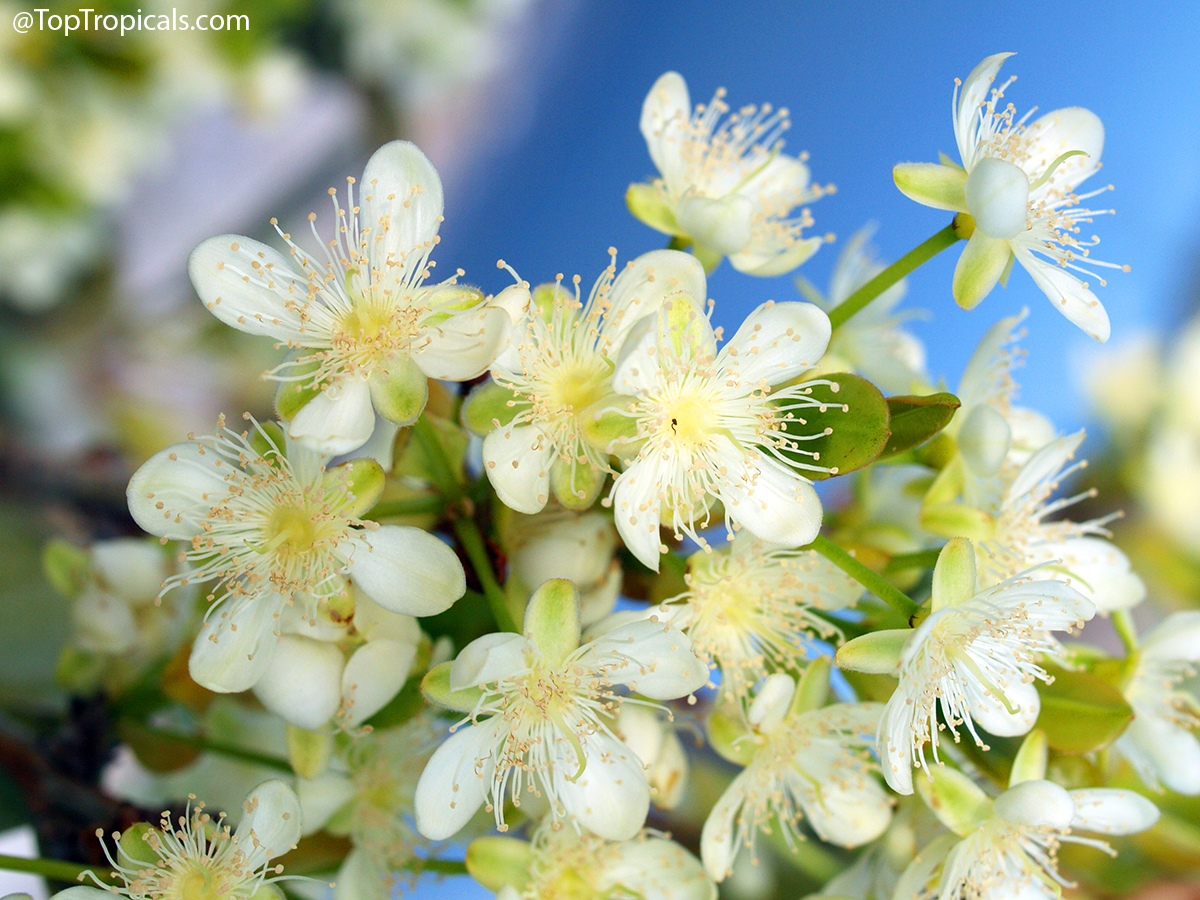
    EGrumichama  flowers  (Eugenia  brasiliensis)  in  close-up  showing  white 
 petals  and  long 
 stamens

    Eugenia brasiliensis - Grumichama flowers

    ❓Frequently Asked Questions: Eugenia cherries (FAQ)

    • Which one tastes better – Cherry of the Rio Grande or Grumichama?
      Cherry of the Rio Grande has a deeper, classic “sweet cherry” flavor with slight richness. Grumichama is softer, juicier, and often described as cherry with hints of grape and plum. Both are excellent fresh; Grumichama is especially popular for jam.
    • Which tree produces more fruit?
      Grumichama typically produces heavier crops once mature and can carry hundreds of fruits in a season. Cherry of the Rio Grande produces consistently but in slightly smaller volumes.
    • Do birds take all the fruit?
      Birds are attracted to both trees, especially Grumichama. Netting during peak ripening or harvesting promptly usually solves the issue.
    • Are these true "tropical" trees or subtropical?
      They are best described as subtropical tropicals. Unlike ultra-tender tropical fruits, Eugenia cherries tolerate occasional frost once established, making them more reliable in Southern landscapes.
    • Do they drop fruit messily?
      Fruit will fall if overripe, but the trees are compact and manageable. Regular harvesting prevents ground drop and keeps the area clean.
    • Can they be used for hedging or screening?
      Yes. Their dense evergreen foliage and upright growth make them suitable for edible hedges or privacy screens while still producing fruit.

    Choosing between them is not about survival — both have proven resilient. It is about flavor preference, crop volume, and how you want to use the fruit in your kitchen and landscape.

    Eugenia brasiliensis - Grumichama fruit close up

    Eugenia aggregata (cv. Calycina), Cherry of the Rio Grande

    🛒 Add Eugenia cherries to your garden

    ✍️ Top Ten Fruit Tree Winners of Florida 2026 Record Freeze

    Date: 15 Mar 2026

    What Thai Adenium names mean: luck, gold, and mythology

    Cats Smokey and Sunshine in adenium garden

    Cats Smokey and Sunshine in adenium garden

    What Thai Adenium names mean: luck, gold, and mythology 🌸

    Many Adenium hybrids come from Thailand, where breeders often give varieties meaningful and poetic names rather than simple codes. Instead of simple labels like "Red Double #27", Thai breeders often give their flowers names that sound like small poems. These names frequently reference wealth, luck, jewels, mythology, and beautiful colors.

    Once you start recognizing common Thai words, Adenium names become much easier to understand. Some sound almost like short blessings - promising prosperity, beauty, or good fortune.

    Below are examples of Adenium varieties whose names reflect these traditions.
    • 🏯 Thai names related to luck, wealth, and prosperity


      These words are extremely common in Thai plant naming and often suggest good fortune or financial success.


    🏯 Thai names related to gold or wealth (Thong group)


    The word Thong means gold and appears in many Thai plant names associated with value and prosperity.
    • 🏯 Mythological and symbolic creatures

    • Some Adenium names come directly from Thai mythology and sacred animals.


    Hassadee (Hatsadiling) refers to a legendary elephant-bird creature found in Thai mythology.
    • 🏯 Gem and jewel themed names

    These names reflect the Thai tradition of treating ornamental plants like living jewels.

    Blue Diamond
    Chaba Kaew
    Maneenate
    Petch Pratum (Diamond Lotus)
    Ploy Nappan
    Ploy Sakorn
    Ploysai
    Talab Phet

    🛒 Explore Exotic Thai Adeniums

    📚 Learn more:


    #Container_Garden #Adeniums #Horoscope #How_to #Discover

    🟢 Join 👉 TopTropicals

    Date: 20 May 2017

    Forget the gym and get to gardening?

    Fun workout? We never have enough time to go to the gym or do an exercise so it's good to know that just doing something that you love can give you a workout. We all know that when we are out in the garden it gives us a bit of exercise but we do not realize how much exactly. Research says that three hours of gardening can have the same effect as an intense 1-hour gym session. The study was carried out with a group of 100 gardeners who were asked to monitor the amount of time spent doing a series of common gardening tasks over a four week period. Gardening tasks that were monitored included weeding, digging, mowing the lawn, hedge trimming, trimming shrubs and trees, raking, planting shrubs, and moving garden waste using a wheel barrow. Here are some facts and numbers:
    - Just doing half an hour weeding can burn up to 150 calories and tasks that handle heavy electrical equipment such as hedge trimming will give you a good workout burning 400 calories per hour.
    - Spending a day or five hours each week in the garden will burn up to around 700 calories
    - Over a gardening season that works out at 20,000 calories per year, equivalent to running seven marathons
    - The gardening hobby could help burn a million calories over a lifetime.

    Calories burned with only 1 hour of:
    340 cal - Chopping wood, splitting logs, gardening with heavy power tools, tilling a garden, chain saw. Mowing lawn, walk, hand mower. Shoveling by hand.
    272 cal - Carrying, loading or stacking wood, loading/unloading or carrying lumber, digging, spading, filling garden, composting, laying crushed rock or sod. Clearing land, hauling branches, wheelbarrow chores.
    238 cal - Operating blower, walking. Planting seedlings, shrubs, trees, trimming shrubs or trees, manual cutter. Weeding, cultivating garden.
    224 cal - Raking lawn, sacking grass and leaves
    136 cal - Picking fruit off trees, picking up yard, picking flowers or vegetables. Walking, gathering gardening tools.
    102 cal - Walking, applying fertilizer or seeding a lawn
    34 cal - Watering lawn or garden, standing or walking

    Radio Top Tropicals Live Webcast upcoming event: Saturday May 20, at 11 am EST.
    Topic: Come Ride My Peninsula! Discusses the REAL Florida. Our plants, the Everglades, how all of the wonderful plants Top Tropicals has to offer are grown in South Florida. Our Host Robert Riefer - Internationally Certified Crop Adviser and Weed Scientist - answering all your gardening questions.
    Listen to Radio Top Tropicals, every Saturday, at 11 am EST! You may use our website radio player DURING AIR TIME. To ask questions using live chat, you need to log in at Mixlr.com or simply call our office 239-887-3323 during air time!
    If you missed a live webcast, you may listen to recording by following Showreel item link.
    Check out our upcoming radio shows and get your gardening questions ready!

    Date: 10 Oct 2016

    Cold protection - winter action for your plant collection

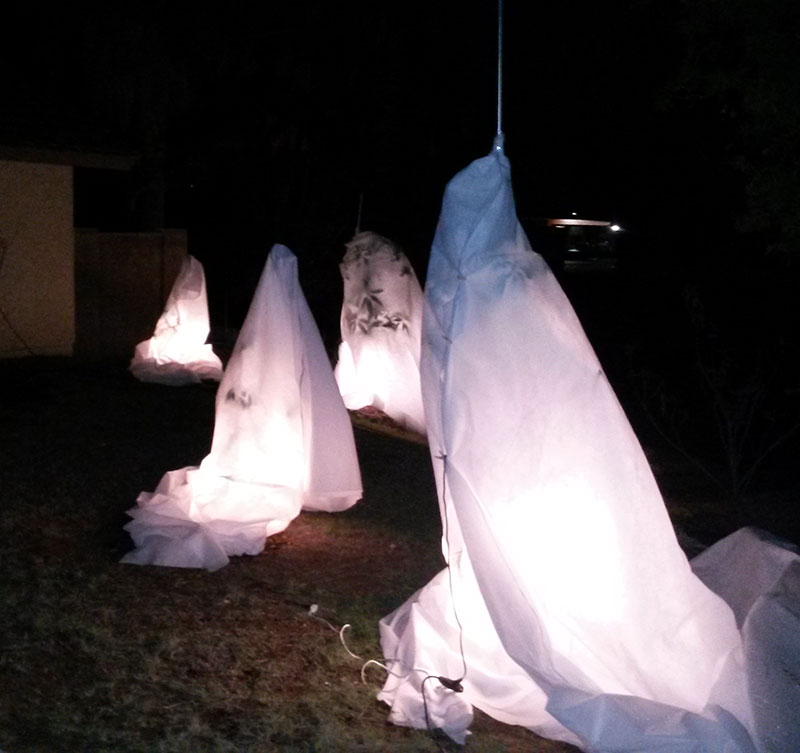
    A note from our customer: Last winter was very cold here in Arizona, lower 30's. I used white synthetic sheets (called frost cloth, it is very light and yet effective) to cover my fruit trees, and kept simple light garlands on for the whole night. Sending you couple photos so you can share with others. It worked pretty well for my plants and no cold damage!

    With winter approaching, it is time to take some actions to protect your rare plants from cold stress and damage.
    If you live in a mild climate, you still need to get ready for the cold nights. When expecting a cold night, individual plants and trees can be wrapped with sheets, or blankets, to protect them from the wind chill. Christmas lights is a good idea for an additional warm up.

    For large collections of tropical plants, temporary winter greenhouse doesn't have to be expensive. An easy-assembly mobile carport from a hardware store covered with a plastic or fabric will cost you $100-200. It can fit a hundred plants or more!

    If you live in area with a hard freeze, Southern exposure windowsill will work for most of the compact tropicals providing proper care. Larger collections may also move into your garage for a few cold nights, or for longer periods if the garage has a bright light source.

    Factors affecting tropical plant winter survival:

    1. Duration of cold period. Tropical plants can't stand long periods of cold. A few days of even upper 30's may kill a tropical plant. A few hours of frost may cause leaf drop but the plant will recover.
    2. Minimum temperature - of course, the warmer the better. But see 1) - if cold is not for too long, it may be OK.
    3. Wind-chill can be more dangerous than low temperatures.
    4. Exposure. Southern slopes get warm during daytime and stay warm longer.
    5. Protection with a house, fence, larger trees - where a "pocket" of warm air forms and stays - is beneficial.
    6. Humidity. A lake or a river nearby (especially ocean) will mild the micro-climate.
    7. Individual species hardiness. Don't try to grow Orchid Tree outdoors in New York.
    8. Plant maturity and health. A well-established plant with developed root system has more chances to survive cold. If a plant had a good change to develop during warm season (bright light, enough water, fertilizer), it will be more cold hardy. Healthy plant can withstand lower temperature, so proper nutrition is important, including micro-element applications. Large specimens, even ultra-tropical, may survive cooler winter than they normally do in their natural habitat. The Nature provided plants with better hardiness level than it is normally used. To boost plant immune system and improve cold tolerance even more, use SUNSHINE plant boosters. SUNSHINE-T - thermo-protection booster, is specially formulated for winter protection of tropical plants. To improve cold hardiness, spray 1-2 days prior to cold with 5 ml/1 gal solution and continue applications with 2.5 ml/1 gal solution every 10-15 days throughout winter period.
    9. Gradual temperature decrease is less dangerous than a sudden drop since it gives a plant a chance to adjust. One sudden freeze in December with prior warm fall may create more damage than a gradual temperature adjustment. If it starts to get cold early in the Fall, plants slow down their metabolism, and the new tender growth won't get hurt later in winter, since the plants are "expecting" the cold.
    10. Do not fertilize plants during cool months. Not only because they don't need much food beyond growing season, but also because fertilizer (especially Nitrogen) encourages rapid tender growth that will be damaged by cold and this will stress the whole plant.

    Stay warm!