Date: 29 Oct 2024
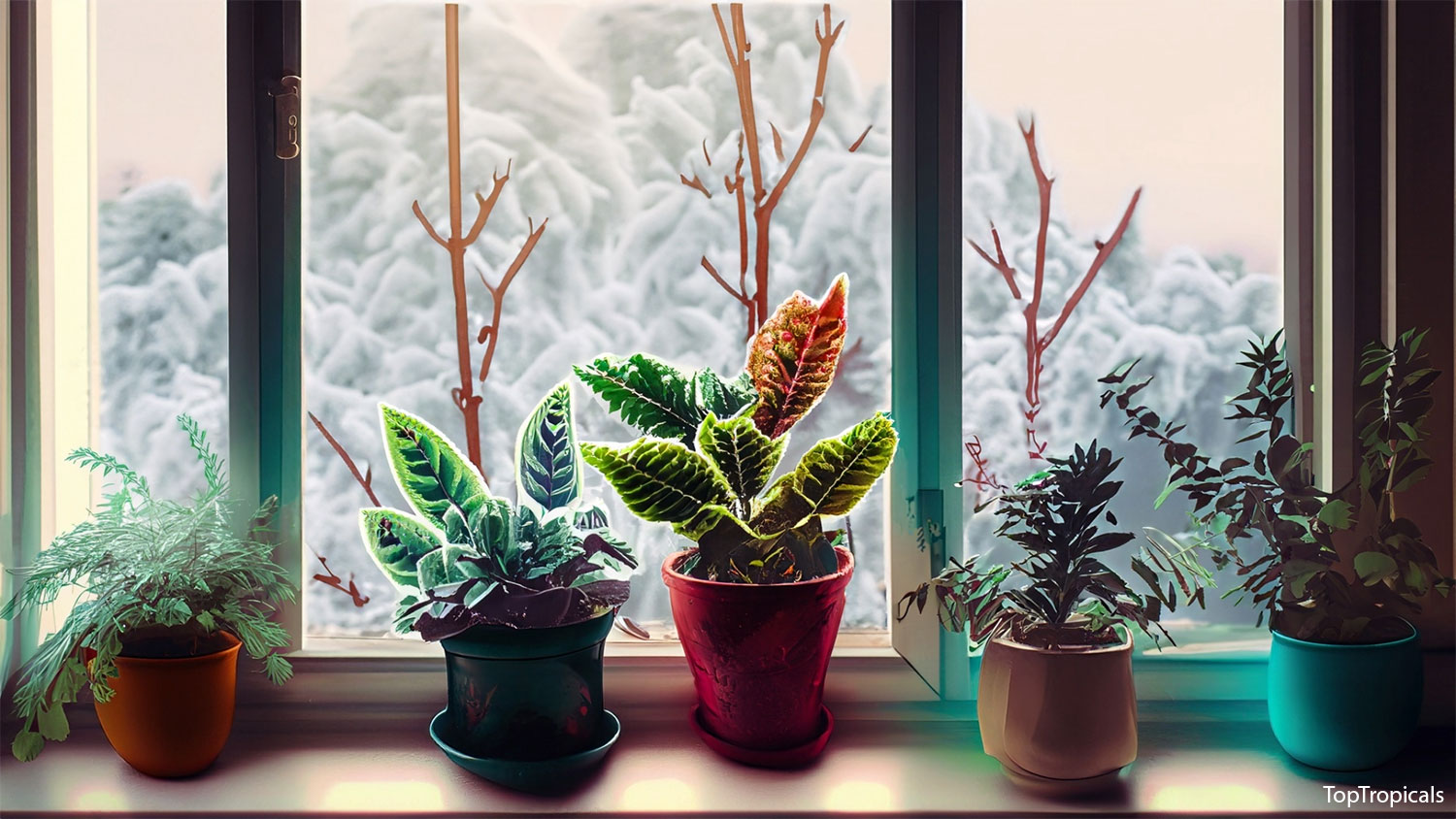
How to overwinter tropical plants indoors
10 key tips for successful overwintering
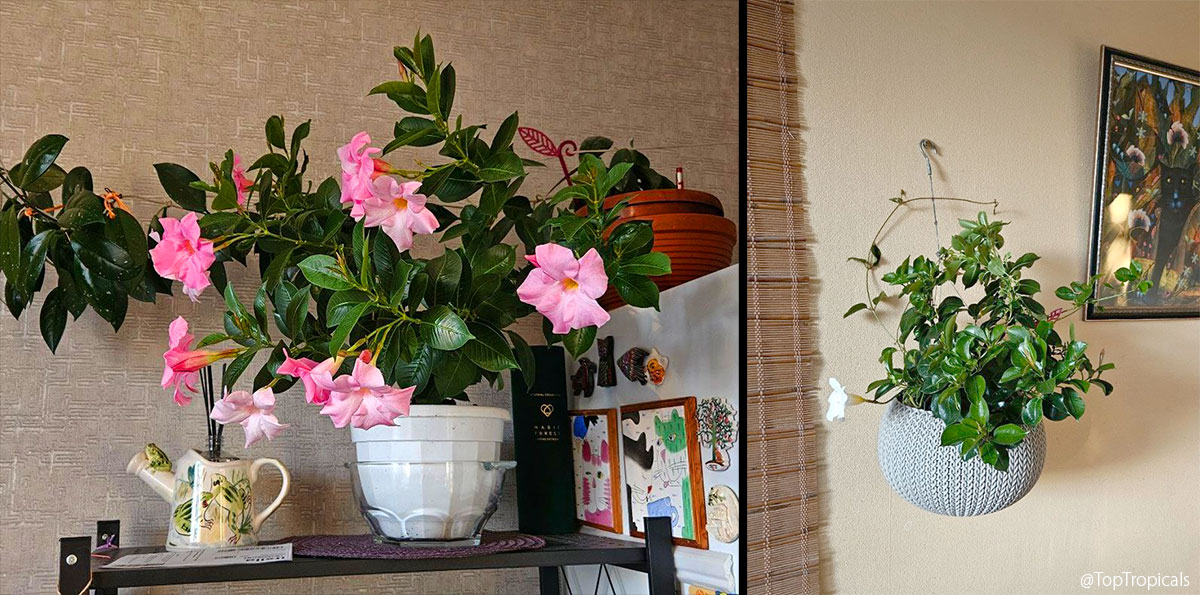
Q: I have two Mandevillas that thrived on my balcony all summer. Now that cold weather is approaching, I've moved them indoors to bright spots, but they're dropping and wilting leaves. How can I keep them healthy until spring? Should I fertilize them? Can Mandevillas grow indoors year-round?
A: First, keep in mind that the plants we call "indoor plants" or "house plants" are all tropical. However, not all tropical plants are suitable for indoor living. Some, especially shade-loving ones, thrive in indoor conditions, which is why we refer to them as "house plants" (philodendrons, monsteras, calatheas, peperomias, and many others, including some succulents). Others are less adaptable to the lower light and humidity typical of indoor spaces, but with a little extra care, you can overwinter them inside and move them back outdoors in spring. Mandevillas are no exception! Even tropical trees, including fruit trees, can tolerate a few months indoors if given the right conditions for semi-dormancy. Below are the 10 key tips for successfully overwintering tropical plants indoors.
1. Maximize Light: The more light, the better. There's no such thing as too much indoor light. If windows aren't enough, use LED grow lights, which stay cool and won't dry the air. Rotate plants every few days to prevent uneven leaf loss.
2. Reduce Watering: Less light and cooler temperatures mean plants need less water. Allow the soil to dry between waterings, and avoid overwatering - combination of cold + wet is especially harmful.
3. Maintain Moderate Temperatures: Most tropicals are happy with daytime temperatures around 75F and nights at 50-60F. In sunrooms or greenhouses, some can handle 45F if watering is kept to a minimum.
4. Boost Humidity: Avoid placing plants near heaters or vents that dry the air. Misting daily helps, or place pots on trays filled with water and pebbles to raise humidity around them.
5. Monitor for Pests: Check leaves weekly to catch insect problems early, as pests can cause serious damage or even kill the plant indoors.
6. Fertilize Smart: Use ONLY liquid, amino-acid-based fertilizers like Sunshine Boosters throughout winter; they won't burn roots since their dosage adjusts with reduced watering. Avoid dry, granulated, and EDTA-based fertilizers during winter and dormancy.
7. Use Micro-Nutrients: Along with macro-elements (fertilizers), supplement with micro-elements like Sunshine Superfood and bio-stimulants such as Sunshine Epi to build strong plants with robust immune systems, better able to withstand unfavorable conditions and resist diseases.
8. Hold Off on Pruning: Leaf drop and leggy growth are normal responses to winter. Wait until spring to prune, when new growth starts, to encourage branching and healthy foliage.
9. Don't Repot Yet: During dormancy, roots slow their growth. Repotting too soon risks root rot. Wait until spring when new growth appears to transplant into a larger container. Typically, roots grow in proportion to the above-ground parts.
10. Let Them Rest: Winter is a natural resting period. Avoid forcing growth - your plants will reward your patience with vibrant leaves and flowers when spring returns.
Date: 22 Oct 2025
💞 Cassia or Bauhinia?
Looking for a small tree that blooms like fireworks but still fits on your patio? We hear this question all the time at Top Tropicals: Cassia or Bauhinia? Both are tropical showstoppers, but they shine in very different ways.
🌞 Cassias: Sunshine Fireworks
Cassia trees are some of the most rewarding tropical bloomers you can grow. Fast-growing, free-flowering, and surprisingly cold-tolerant, they thrive in full sun and summer heat. Their bright clusters come in shades of yellow, orange, pink, red, and even multicolor blends. The famous Rainbow Cassias show swirls of coral, gold, and rose on the same tree, creating a living fireworks display.
For gardeners in warm regions, these trees become spectacular focal points in the landscape. In containers, compact yellow forms like Cassia didymobotrya (Popcorn Cassia) and Senna alata (Empress Candles) stay manageable and bloom freely through summer.
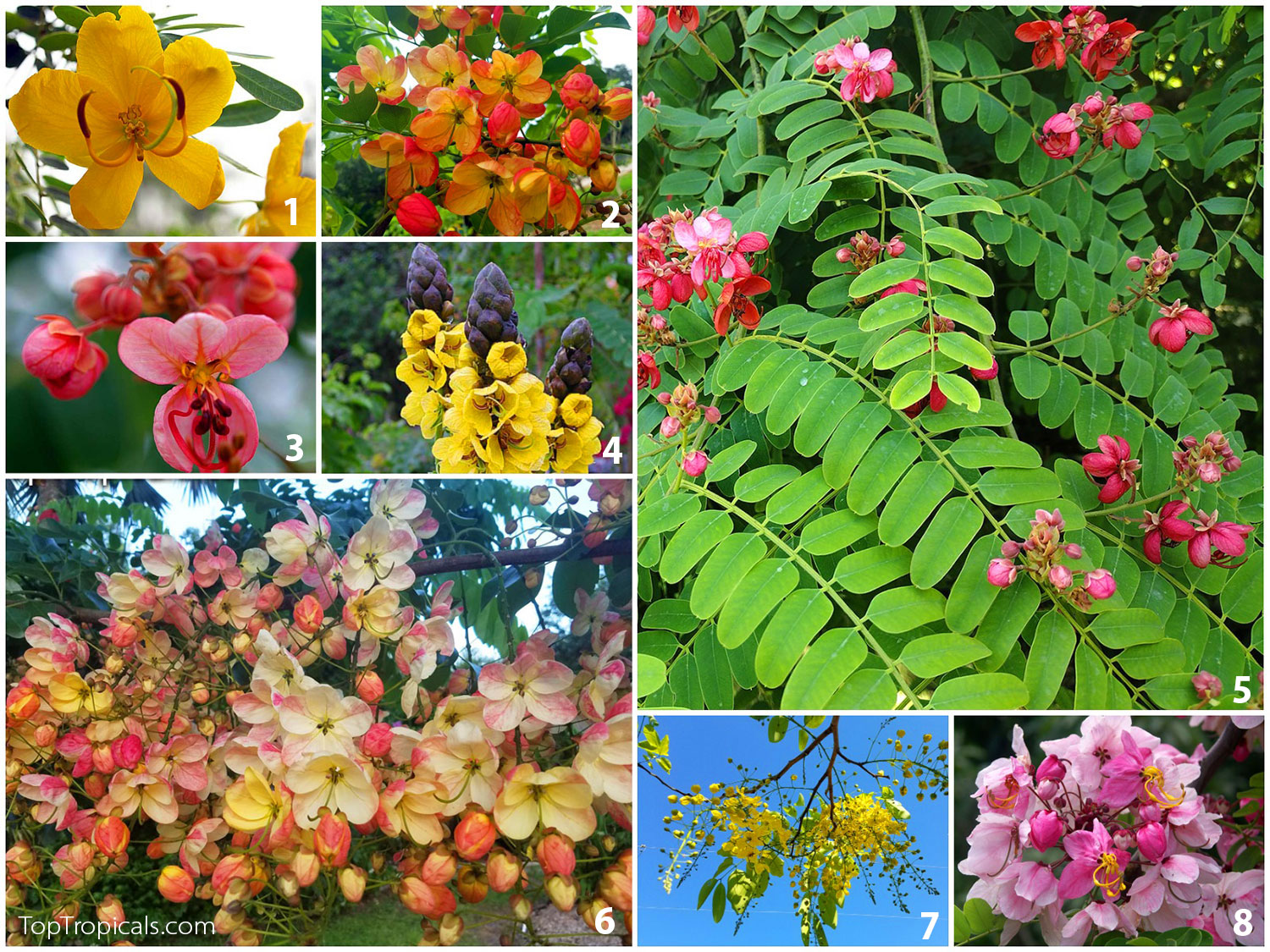
Cassias can also be grown in pots with pruning and patience. Once mature, they reward you with breathtaking color that turns any patio or pool deck into a tropical show. Most showy cassias (numbers correspond to the photos in the collage above):
- Cassia bicapsularis (Butterfly Bush) - is a fast-growing, low-maintenance shrub covered in bright yellow, butterfly-like blooms from fall through winter.
- Cassia x natalensis (Rainbow Cassia)
- Cassia grandis (Red cassia) - a medium size tree having profuse blooms of dark pink to crimson flowers throughout the Spring.
- Cassia didymobotrya (Popcorn Cassia), small tree producing golden-yellow flowers with a distinct scent of peanut butter that open from brown buds in late summer and autumn. Similar to Senna alata (Empress Candles)
- Cassia roxburghii (Ceylon Senna) - graceful tree with spreading, drooping branches appearing to be overweighed by its wealth of clustering red blossoms.
- Cassia x nodosa (Pink Shower) - is a spectacular medium-sized, fast-growing tree with cascading clusters of fragrant pink-and-white appleblossom blooms in spring and summer.
- Cassia fistula (Golden Shower) - to many tropical gardeners, the most beautiful of cassias with masses of bright gold flower clusters appear on almost every branch.
- Cassia javanica (Apple Blossom) - dazzles with dense clusters of pink-to-white blossoms that change shades as they bloom, creating a spectacular display that lasts for months.
"Cassias love the heat and sunshine," says Tatiana Anderson, Top Tropicals Plant Expert. "They are perfect for anyone who wants big bursts of color and doesn’t mind giving them space and light to grow."
Bauhinia Magic: Orchid-Like Blooms in a Compact Size
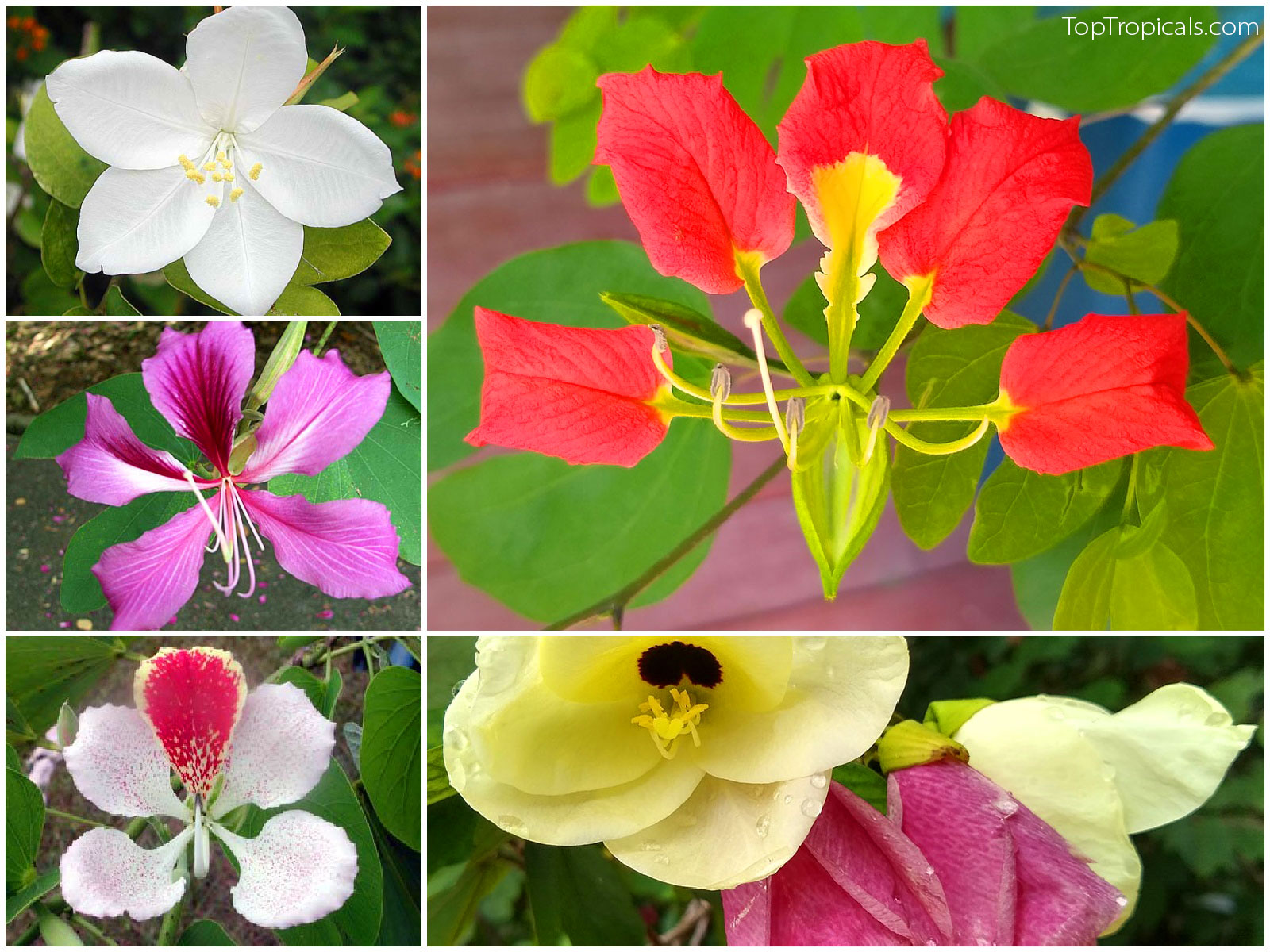
Bauhinia orchid trees: top left – Bauhinia acuminata (Dwarf White Orchid Tree), middle left – Bauhinia blakeana (Hong Kong Orchid Tree), bottom left – Bauhinia monandra (Napoleon’s Plume Orchid Tree), top right – Bauhinia madagascariensis (Red Dwarf Orchid Tree), and bottom right – Bauhinia tomentosa (Yellow Orchid Tree)
Bauhinia trees known as Orchid Trees, bring a touch of tropical luxury to any space. Their butterfly-shaped leaves and orchid-like blossoms appear in shades of red, pink, purple, white, and yellow, often lasting up to ten months a year. Bauhinias are ideal for gardeners who want nonstop color in a manageable size. Most species grow well in large pots and bloom young, often within the first season.
The following compact varieties stay neat and flower almost continuously in warm weather:
- Bauhinia madagascariensis (Red Butterfly Orchid Tree). Blooms from winter through fall, up to 10 months a year. The most cold-hardy of all.
- Bauhinia blakeana (Hong Kong Orchid Tree). A large tree in the ground, but compact in pots if trimmed. Grafted trees flower right away. Winter bloomer, cold hardy to light frost.
- Bauhinia tomentosa (Yellow Orchid Tree). Flowers from Winter through Summer, cold hardy to light frost.
- Bauhinia acuminata (Dwarf White Orchid Tree). Blooms from summer through winter. Less cold hardy.
- Bauhinia monandra (Napoleon's Plume Orchid Tree). Almost everblooming with the longest flowering period. Less cold hardy.
The Hong Kong Orchid Tree is especially prized because it is sterile and produces no messy seed pods, keeping patios clean. Grafted Buhinia blakeana trees begin blooming while still small, making them perfect for containers or tight spaces.
"Bauhinias are generous bloomers," Tatiana explains. "They respond beautifully to regular feeding and full sun. If nights turn too cold, just move the pot to a sunny porch - they’ll keep their tropical charm most of the year."
Give them full sun, regular fertilizer, and a well-drained mix such as Sunshine Abundance, and they will reward you with months of vivid blooms. When nights turn too cold, simply move the pot to a sunny porch or bright window. Bauhinias adjust beautifully and keep their tropical grace year after year.
🎥 Watch Short Videos:
💲 Special Offer – 20% off Cassias and Bauhinias!
Get 20% OFF Cassias and Bauhinias with code
RAINBOW2025
Min order $100. Excluding S/H, valid online only, cannot be combined with other offers.
Hurry, offer expires October 30, 2025!
Date: 20 Oct 2023
Prepare your plants for Winter with Sunshine Boosters
We usually stop using dry slow-release fertilizers from November to March. However, liquid Sunshine Boosters, which are natural plant food, can be used all year. They help your plants survive winter. When it gets colder, we water less, so the fertilizer decreases too. The plants only use what they need. To learn more about how Sunshine Boosters work and why they're safe and helpful, check out this blog: Using Sunshine Booster during Winter.
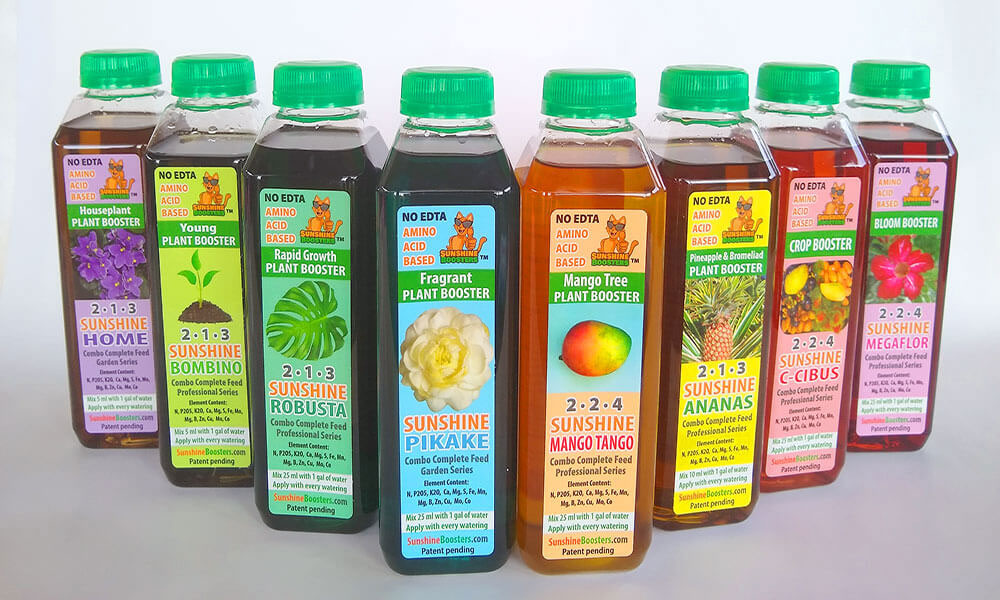
Apart from giving your plants nutrients during winter, you also can improve their ability to handle the cold. Try the Sunshine Boosters supplement kit for tropical plants. Follow the schedule and use three different supplements: SUNSHINE Superfood, SUNSHINE Epi, and SUNSHINE-Power-Si. Read more about treatment with Sunshine boosters supplement kit.


Date: 12 Sep 2024
How to get Live Fireworks in Winter
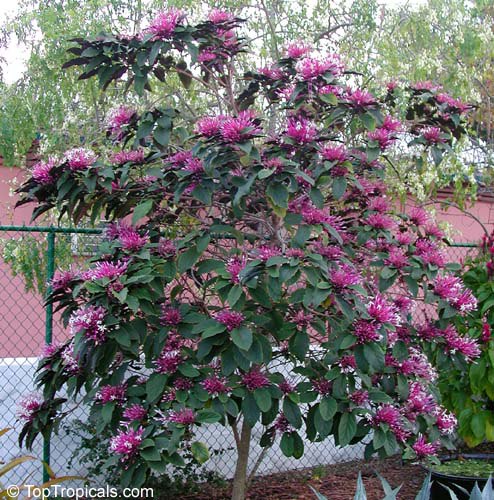
Clerodendrum quadriloculare - Winter Starburst, Fireworks

Clerodendrum quadriloculare - Winter Starburst, Fireworks
How to get Live Fireworks in Winter
- 🎆 Clerodendrum quadriloculare - Winter Starburst, Fireworks - is a large bush or small tree with showy dark green leaves with a striking purple underside, adding visual interest even when not in bloom.
- 🎆 Spectacular winter blooms are slightly fragrant. Clusters of long, tubular flowers in shades of pink and white that resemble a burst of fireworks - spectacular show!
- 🎆 Fast growing, grows well in full sun to partial shade and thrives in warm climates, reaching heights of 8-15 feet.
🛒 Order Winter Starburst
#Hedges_with_benefits #Trees
🔴 Join 👉 TopTropicals
Date: 15 Jan 2024
Florida Starter Garden in Winter
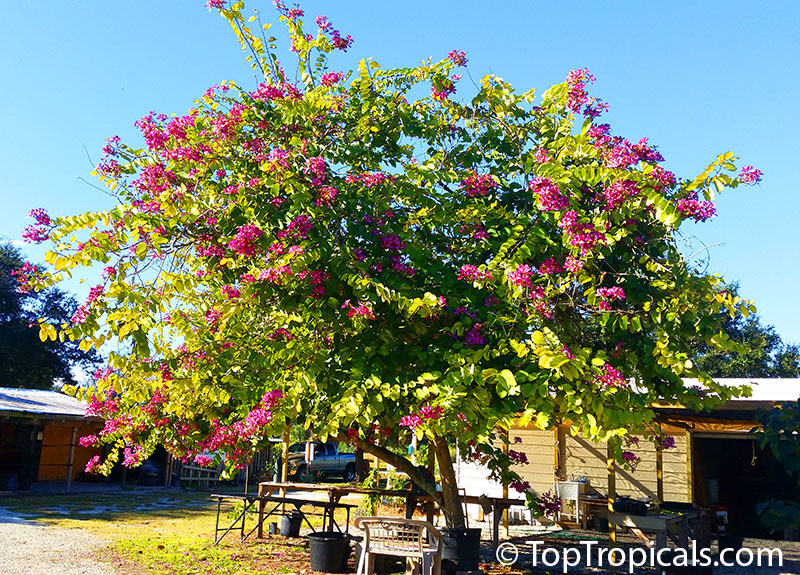
Photo above: Bauhinia blakeana - Hong Kong Orchid Tree
Q: We just moved to Florida and our yard is currently just plain grass. I want to add some beautiful tropical plants, but I'm not sure where to start. Can you suggest easy-to-care-for plants that look nice in winter, preferably with flowers? Considering it's Winter time and some trees look dormant... But I can't wait to start my tropical garden!
A: Florida residents are blessed to have mild winters, and many tropical and subtropical plants enjoy this climate year around. Just be mindful of your location's specific conditions (sun-shade, wet-dry, cold sensitive or hardy). Here are some recommendations for easy-to-grow, evergreen plants that love Florida and look great even in winter. They'll establish well during cooler months, add a splash of color to your garden with their flowers, and even treat you with fruit!
Winter flowers - will bloom now!
Clerodendrum Winter Starburst
Clerodendrum Blue Butterfly
Eranthemum Blue Sage
Odontonema Firespike
Pavonia - Brazilian Candles
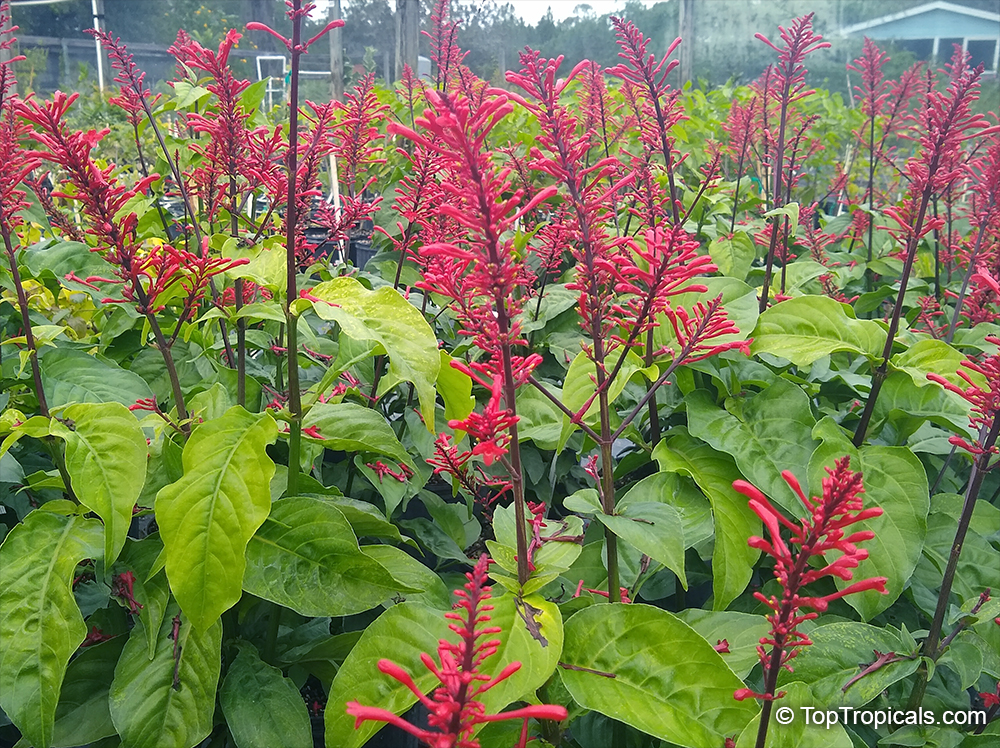
Photo above: Odontonema cuspidatum - Firespike
Fragrant Garden
Banana Magnolia
Jasminum sambac Little Duke Supreme
Vietnamese
Gardenia
Nyctanthes - Parijat
Ylang Ylang vine
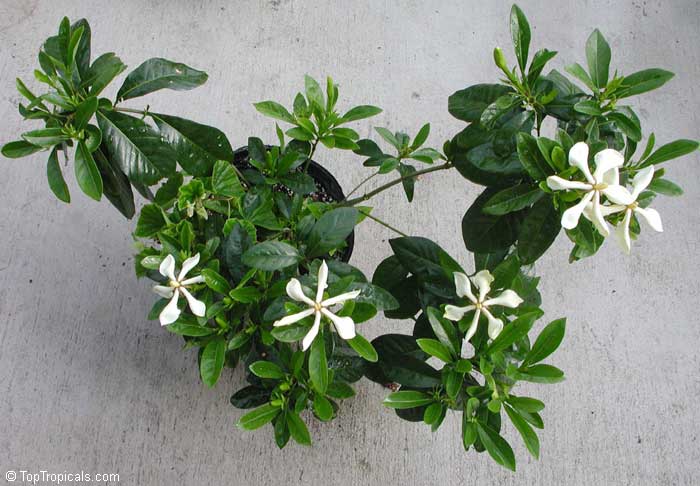
Photo above: Gardenia vietnamensis - Vietnamese Gardenia
Curious unusual trees
Hong Kong Orchid Tree
Candle Tree
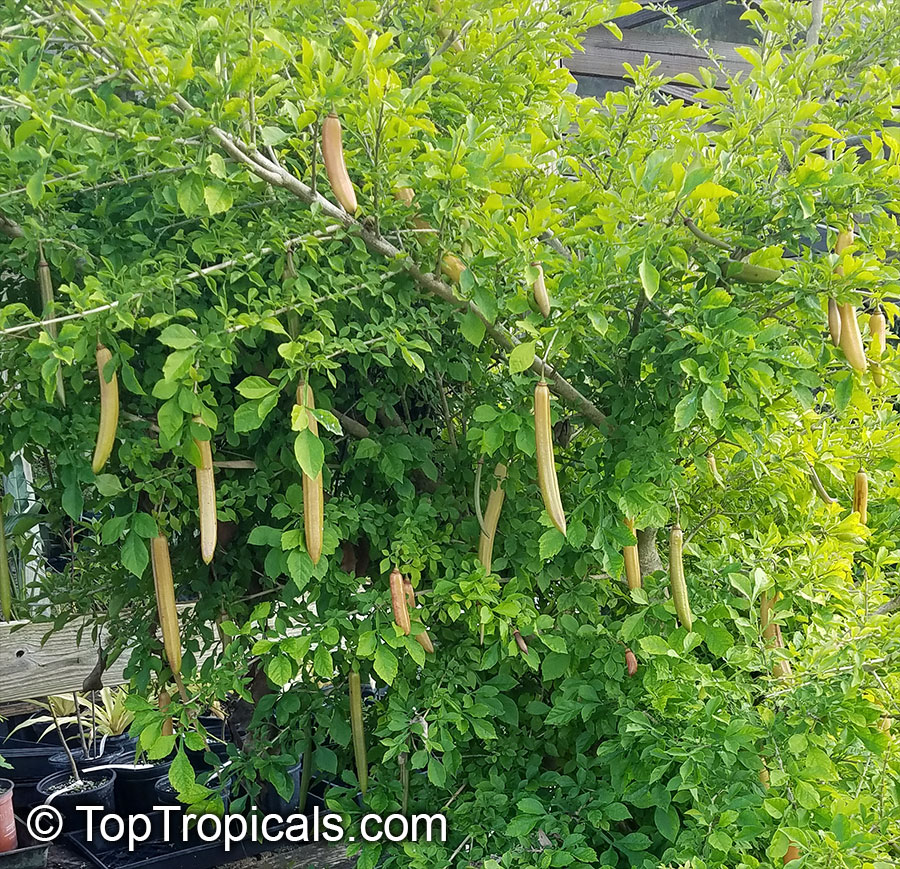
Photo above: Parmentiera edulis - Candle Tree, Guahalote
Easy fruit
Noni Tree
Yellow Dragon Fruit Palora
Coffee Tree
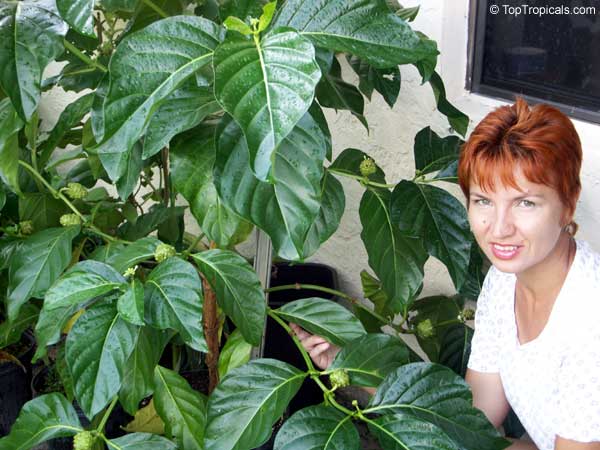
Photo above: Morinda citrifolia - Noni Tree
Great looking now:
for Shade and Indoor Garden
Calathea
zebrina - Zebra Plant
Black Bat Head Lily
White Bat Head Lily
Medinilla
Vanilla Orchid
Reed Ground
Orchid
Calathea Fuzzy
Pheasant
Colocasia Mojito
Syngonium
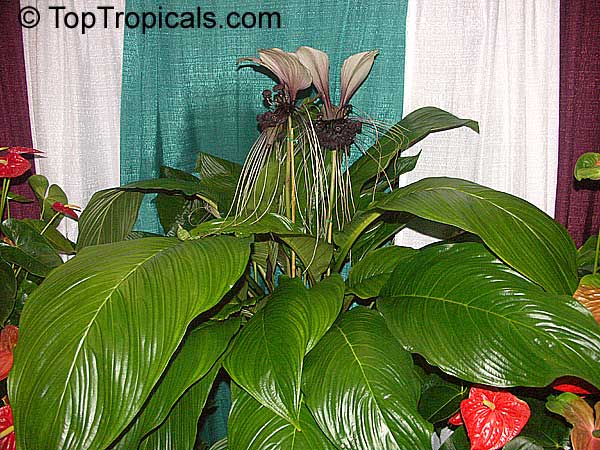
Photo above: Tacca nivea - White Bat Head Lily