Garden Blog - Top Tropicals

Date: 31 Dec 2025

Year of the Fire Horse - what should you grow in 2026?

Year of the Fire Horse

Year of the Fire Horse

🐎 Year of the Fire Horse - what should you grow in 2026?


✔️ Here are the top lucky plants to grow, gift, or decorate with during the Year of the Fire Horse - each one chosen for its symbolism, element balance, and ability to channel that galloping energy in a positive direction:

🌿Anthuriums

Symbolizes: Elegance, passion, transformation
Why it's lucky: Its bold, vigorous leaves and exotic flowers are perfect for 2026.
Where to use it: Place in the southeast corner of your home, office, or garden to draw prosperity and charisma.
🛒 What to plant: Exotic Anthuriums - Anthurium Black Dragon, Anthurium hookeri - Giant Birds Nest, Anthurium veitchii - King Anthurium, Anthurium vittariifolium - Long Leaf Anthurium

💮 Jasmines and Gardenias


Symbolizes: Love, luck, beauty
Why it's lucky: Horses are social and affectionate - jasmine’s sweet scent supports romance and good vibes.
Where to use it: Grow near entrances or windows; use jasmine oil in bedrooms to boost relaxation and harmony.
🛒 What to plant: Fragrant Jasmines - Sambac, French Perfume, Night Blooming, and many varieties of Gardenias.

🌻 Sunflowers and sunny-yellow flowers


Symbolizes: Optimism, vitality, success
Why it's lucky: Bright yellow blooms reflect Fire energy and attract recognition.
Where to use it: Display in the east or south part of your home; great for creative spaces or work areas.
🛒 What to plant: Tropical Sunflower (Tithonia diversifolia), Tecoma stans - Yellow Elder, Cassias and Sennas

🎋 Lucky Bamboo, Money Trees and Bonsai


Symbolizes: Growth, flexibility, fortune
Why it's lucky: Combines Wood (growth) with Fire (motivation) - a perfect combo for 2026.
Where to use it: Place arrangements with 3 or 9 in the southeast to promote health and wealth.
🛒 What to plant: Lucky Bamboo (Dracaena sanderiana), Shaving Brush Tree (Pseudobombax), Money Plant (Pilea), Money Tree (Pachira aquatica)

Edible Greens with Fire-Friendly Energy


Symbolizes: Nourishment, healing, grounded action
Why they're lucky: Green leafy herbs support Wood energy, which fuels Fire. Think fresh, healthy, juicy, and nourishing.
🛒 What to plant: Tropical herbs, spices and edibles, including -
· Chaya (Maya spinach tree)
· Gynura (Longevity spinach)
· Lippia dulcis (Aztec sweet herb)
· Lemongrass and Citronella
· Alspice and Baurum
· Pepper Vines (Pipers) and Chili Peppers (Capsicums)
Grow them near the kitchen, patio, or sunny balcony for both beauty and bite.

❌ What to avoid?


Poisonous or sharp plants. The Horse is a plant lover - but not a fan of painful surprises. Keep the Fire Horse energy smooth, not spiky.

✍️ Final tip: Let the Fire Horse run wild - but not out of control


2026 is your chance to charge ahead - but keep your hooves on the ground. Plants can help you stay focused, bring balance, and add a little luck along the way. So get planting, stay bold, and let the good energy gallop in!

📚 Learn more:


More #Horoscope info for plants and cats
2026: Year of the Fire Horse - time to grow bold, live free, and plant lucky

#Horoscope

🟢 Join 👉 TopTropicals

Date: 5 Jan 2026

How to grow papaya from seed without killing it

How to grow papaya from seed without killing it
🍊 How to grow papaya from seed without killing it, Part 1: Papaya basics

Papaya (Carica papaya) is one of the fastest and most rewarding fruit plants you can grow from seed - but it is also one of the easiest to lose early if you treat it like a regular tree. In this guide, we start at the very beginning: what papaya really is, how to choose and prepare seeds, and what it actually takes to get strong, healthy seedlings off to a good start.


🍊 Papaya basics - what kind of plant it really is


Papaya is not a tree - and that changes how you should grow it

🟡 Papaya is technically not a tree. It is a herbaceous plant with a hollow trunk - often jokingly called a giant grass.
🟡Papaya grows extremely fast from seed and usually starts producing fruit within 10–15 months. It has a palm-like look, with a large canopy of leaves at the top. Flowers and fruit form directly under that canopy, right on the trunk.
🟡In the ground, papaya can grow 10–15 ft tall, but there are dwarf varieties that stay under 4–5 ft in containers while still producing full-size fruit.
🟡Papayas are very productive and are one of the best exotic fruit plants to grow even outside the tropics, especially because they perform so well in containers.

🍊 Growing papaya from seed - what to know first


What grocery store papaya seeds don’t tell you

Papaya is easy to grow from seed, but one detail matters more than most people realize:
🟡Seeds from store-bought fruit come from unknown varieties
🟡Most will not be dwarf
🟡If you want a compact plant, start with a known dwarf variety or seeds from one
🟡The good news: papaya comes true from seed, so when the source is known, the result is reliable.

Now that you understand what papaya is - and what grocery store seeds don’t tell you - it is time to move on to the most misunderstood stage of all: germination. In Part 2, we break down exactly how papaya seeds sprout, what they need, how long they really take, and why so many people give up too early.

👉 Coming up next: Part 2 - Papaya seed germination, step by step

🛒 Explore Papaya varieties

📚Learn more:
· Carica papaya in Plant Encyclopedia
· How to grow papaya from seed without killing it:
Part 1: Papaya basics
Part 2: Seeds germination
Part 3: Containers, sunlight, and common mistakes
· Carefree Garden: How Easy Is It to Grow a Papaya Tree?
· Male papaya produces fruit!
· Top 10 fast-fruiting trees: #6. Papaya
· How to have fresh Papaya fruit year around
· The truth about Papaya
· Papayas contain a secret enzyme

🎥 Nobel Prize goes to this pregnant male papaya

#Food_Forest #How_to #Papaya

Papaya Plant Facts

Botanical name: Carica papaya
Also known as: Papaya
USDA Zone: 9 - 11
Highligths Small tree 10-20 ftFull sunWater Requirement: Low. Allow soil to dry out between wateringsWatering: Moderate. Water when top soil feels dryYellow, orange flowersWhite, off-white flowersEdible plantEthnomedical plant.
Plants marked as ethnomedical and/or described as medicinal, are not offered as medicine but rather as ornamentals or plant collectibles.
Ethnomedical statements / products have not been evaluated by the FDA and are not intended to diagnose, treat, cure, or prevent any disease. We urge all customers to consult a physician before using any supplements, herbals or medicines advertised here or elsewhere.Subtropical plant. Mature plant cold hardy at least to 30s F for a short time
Get personalized tips for your region
🟢 Join 👉 TopTropicals

Date: 11 Jan 2026

How to lose weight naturally with tropical fruit and plants

Fat orange cat on treadmill with tropical fruit that help lose weight naturally

Fat orange cat on treadmill with tropical fruit that help lose weight naturally

🍑 How to lose weight naturally with tropical fruit and plants


🏃‍♀️ Losing weight isn’t about starving yourself - it’s about supporting your body with the right nutrients and keeping things balanced. Plants can help by boosting your metabolism, keeping you full longer, improving digestion, and regulating blood sugar. When you build a food forest with the right plants, you’re investing in long-term health that tastes good and feels good.

🏆 15 TOP TROPICAL plants and fruits that naturally help with weight management:


💚 Papaya – Contains enzymes like papain that aid digestion, and it’s high in water and fiber—great for feeling full.
💚 Mango – Supports fat metabolism and reduces inflammation. Its fiber helps regulate appetite and digestion.
💚 Avocado – Full of healthy fats and fiber, avocado helps you feel satisfied longer and supports steady energy levels.
💚 Banana – Rich in resistant starch (especially when underripe), bananas help support gut health and fat metabolism.
💚 Jackfruit – High in fiber and low in fat, this fruit keeps blood sugar steady and supports slow, sustained energy.
💚 Yerba Mate – A natural tea with gentle stimulant properties that may help reduce appetite and increase fat burn.
💚 Moringa – Known as a superfood, moringa helps regulate blood sugar and boosts metabolism with powerful nutrients.
💚 Galangal (Thai Ginger) – Supports digestion and contains compounds that may help increase fat burning, like regular ginger.
💚 Cinnamon – Can improve insulin sensitivity and help with sugar cravings, making it easier to stay on track.
💚 Insulin Ginger (Costus igneus) – Traditionally used to manage blood sugar, it also supports digestion and energy. Chewing the spiraled leaves or brewing them as tea is a natural way to get more from your garden.
💚 Dragon Fruit – Extremely high in fiber, dragon fruit supports healthy digestion and helps regulate metabolism, which can aid weight loss.
💚 Pomegranate – Used for centuries in Ayurvedic medicine to improve metabolism. Its antioxidant-rich juice supports fat burning and digestion.
💚 Tea Leaf Tree (Camellia sinensis) – The source of green, black, and white tea. These teas are linked to metabolism boost, heart health, and appetite regulation.
💚 Noni – A powerhouse fruit traditionally used for inflammation, immune health, blood sugar balance, and metabolism support. It may also help reduce fat accumulation and boost overall vitality.
💚 Canistel (Eggfruit, Pouteria campechiana) is a naturally sweet, nutrient-dense fruit that helps curb sugar cravings while keeping you full longer. Its rich fiber content and slow-digesting carbs make it a great choice for supporting weight management without reaching for processed snacks.

❗️When you grow these plants in your home garden or food forest, you're not just planting food - you’re planting tools for better health.
And bonus: gardening itself keeps you active and stress-free, which is another win for your waistline.


🛒 Explore tropical fruit and edibles

📚 Learn more about natural weight loss with plants:


Tropical fruit health benefits guide: Part 1 and Part 2.
How to make lots of Insulin Ginger plants quickly and get more health benefits
Truth about which fruit helps you lose weight faster: Mango or Papaya?
Jambolan health and life benefits
Health benefits of dragon fruit
Weight loss with Noni
Healing drops of blood: why Pomegranate is a superfood

#Food_Forest #Remedies #Discover

🟢 Join 👉 TopTropicals

Date: 20 May 2017

Forget the gym and get to gardening?

Fun workout? We never have enough time to go to the gym or do an exercise so it's good to know that just doing something that you love can give you a workout. We all know that when we are out in the garden it gives us a bit of exercise but we do not realize how much exactly. Research says that three hours of gardening can have the same effect as an intense 1-hour gym session. The study was carried out with a group of 100 gardeners who were asked to monitor the amount of time spent doing a series of common gardening tasks over a four week period. Gardening tasks that were monitored included weeding, digging, mowing the lawn, hedge trimming, trimming shrubs and trees, raking, planting shrubs, and moving garden waste using a wheel barrow. Here are some facts and numbers:
- Just doing half an hour weeding can burn up to 150 calories and tasks that handle heavy electrical equipment such as hedge trimming will give you a good workout burning 400 calories per hour.
- Spending a day or five hours each week in the garden will burn up to around 700 calories
- Over a gardening season that works out at 20,000 calories per year, equivalent to running seven marathons
- The gardening hobby could help burn a million calories over a lifetime.

Calories burned with only 1 hour of:
340 cal - Chopping wood, splitting logs, gardening with heavy power tools, tilling a garden, chain saw. Mowing lawn, walk, hand mower. Shoveling by hand.
272 cal - Carrying, loading or stacking wood, loading/unloading or carrying lumber, digging, spading, filling garden, composting, laying crushed rock or sod. Clearing land, hauling branches, wheelbarrow chores.
238 cal - Operating blower, walking. Planting seedlings, shrubs, trees, trimming shrubs or trees, manual cutter. Weeding, cultivating garden.
224 cal - Raking lawn, sacking grass and leaves
136 cal - Picking fruit off trees, picking up yard, picking flowers or vegetables. Walking, gathering gardening tools.
102 cal - Walking, applying fertilizer or seeding a lawn
34 cal - Watering lawn or garden, standing or walking

Radio Top Tropicals Live Webcast upcoming event: Saturday May 20, at 11 am EST.
Topic: Come Ride My Peninsula! Discusses the REAL Florida. Our plants, the Everglades, how all of the wonderful plants Top Tropicals has to offer are grown in South Florida. Our Host Robert Riefer - Internationally Certified Crop Adviser and Weed Scientist - answering all your gardening questions.
Listen to Radio Top Tropicals, every Saturday, at 11 am EST! You may use our website radio player DURING AIR TIME. To ask questions using live chat, you need to log in at Mixlr.com or simply call our office 239-887-3323 during air time!
If you missed a live webcast, you may listen to recording by following Showreel item link.
Check out our upcoming radio shows and get your gardening questions ready!

Date: 10 Oct 2016

Cold protection - winter action for your plant collection

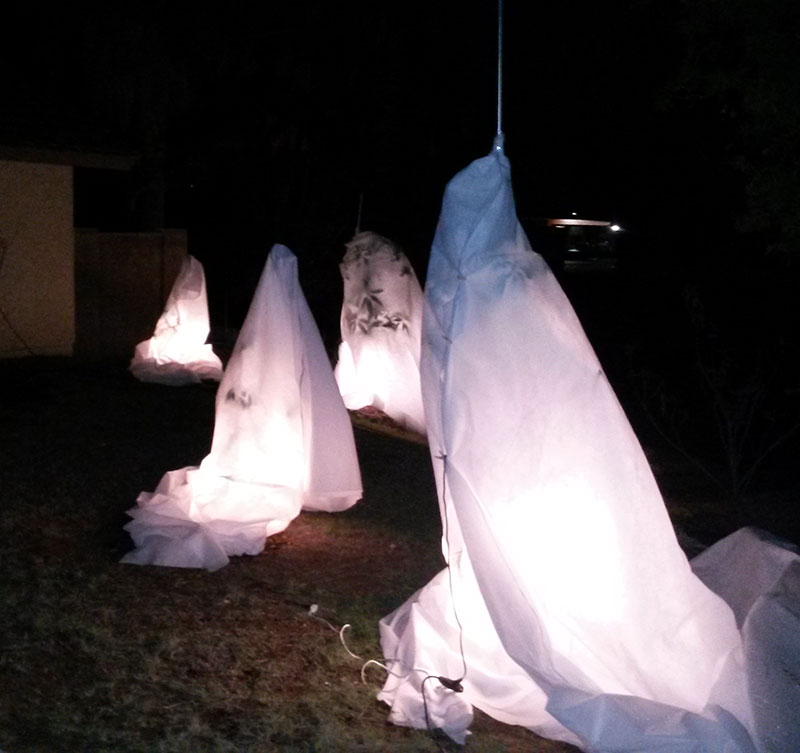
A note from our customer: Last winter was very cold here in Arizona, lower 30's. I used white synthetic sheets (called frost cloth, it is very light and yet effective) to cover my fruit trees, and kept simple light garlands on for the whole night. Sending you couple photos so you can share with others. It worked pretty well for my plants and no cold damage!

With winter approaching, it is time to take some actions to protect your rare plants from cold stress and damage.
If you live in a mild climate, you still need to get ready for the cold nights. When expecting a cold night, individual plants and trees can be wrapped with sheets, or blankets, to protect them from the wind chill. Christmas lights is a good idea for an additional warm up.

For large collections of tropical plants, temporary winter greenhouse doesn't have to be expensive. An easy-assembly mobile carport from a hardware store covered with a plastic or fabric will cost you $100-200. It can fit a hundred plants or more!

If you live in area with a hard freeze, Southern exposure windowsill will work for most of the compact tropicals providing proper care. Larger collections may also move into your garage for a few cold nights, or for longer periods if the garage has a bright light source.

Factors affecting tropical plant winter survival:

1. Duration of cold period. Tropical plants can't stand long periods of cold. A few days of even upper 30's may kill a tropical plant. A few hours of frost may cause leaf drop but the plant will recover.
2. Minimum temperature - of course, the warmer the better. But see 1) - if cold is not for too long, it may be OK.
3. Wind-chill can be more dangerous than low temperatures.
4. Exposure. Southern slopes get warm during daytime and stay warm longer.
5. Protection with a house, fence, larger trees - where a "pocket" of warm air forms and stays - is beneficial.
6. Humidity. A lake or a river nearby (especially ocean) will mild the micro-climate.
7. Individual species hardiness. Don't try to grow Orchid Tree outdoors in New York.
8. Plant maturity and health. A well-established plant with developed root system has more chances to survive cold. If a plant had a good change to develop during warm season (bright light, enough water, fertilizer), it will be more cold hardy. Healthy plant can withstand lower temperature, so proper nutrition is important, including micro-element applications. Large specimens, even ultra-tropical, may survive cooler winter than they normally do in their natural habitat. The Nature provided plants with better hardiness level than it is normally used. To boost plant immune system and improve cold tolerance even more, use SUNSHINE plant boosters. SUNSHINE-T - thermo-protection booster, is specially formulated for winter protection of tropical plants. To improve cold hardiness, spray 1-2 days prior to cold with 5 ml/1 gal solution and continue applications with 2.5 ml/1 gal solution every 10-15 days throughout winter period.
9. Gradual temperature decrease is less dangerous than a sudden drop since it gives a plant a chance to adjust. One sudden freeze in December with prior warm fall may create more damage than a gradual temperature adjustment. If it starts to get cold early in the Fall, plants slow down their metabolism, and the new tender growth won't get hurt later in winter, since the plants are "expecting" the cold.
10. Do not fertilize plants during cool months. Not only because they don't need much food beyond growing season, but also because fertilizer (especially Nitrogen) encourages rapid tender growth that will be damaged by cold and this will stress the whole plant.

Stay warm!