Garden Blog - Top Tropicals

Date: 24 Jun 2018

TopTropicals

Carambola (Star Fruit) in winter

A word from our customer:
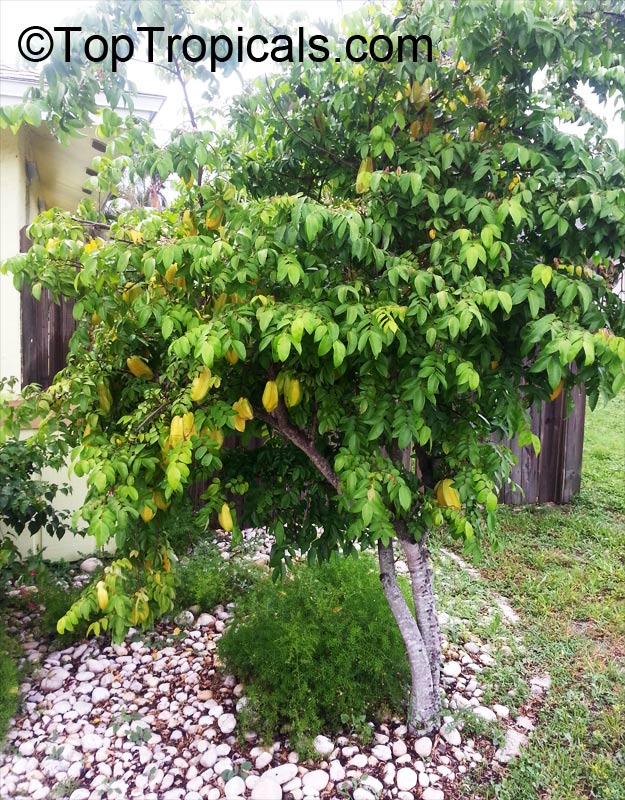
I just wanted to let you know that the Dwarf Carambola Kari has survived last winter and turned into a nice bushy tree this summer.I have been trying to grow this tree forever it never survived winters here. Then last year you suggested me to plant Carambola in wind protected corner, so I picked a place next to the house,South side very close to the wall. I covered it several times with a sheet on windy days like you said. The tree did lose leaves during winter but it survived and established well. I had my first crop this year nearly 20 fruit!Just thought your other customers wanted to know keep it protected from winds this is the secret,it works! (M., Avon Park, FL)

Check out this plant...

Date: 24 Jun 2018

White Sapote from under graft

Q: My super sweet white sapote died back all the way to the roots but it's growing back from the roots and I'm wondering if that's just the rootstock growing back or if that's good fruiting wood that's going to make a nice healthy super sweet tree?

A: The "super sweet" White Sapote, or Casimiroa edulis, was probably variety Young Hands, Super Sweet White Sapote. It was grafted on seedling of White Sapote that has a pleasant somewhat-sweet flavor. The grafted variety you had is a little sweeter than that. So to answer your question, it is worth to give the tree a second chance as far as fruit quality is concerned, although it won't be the a grafted variety, if the new growth coming from under the graft point. The only problem is, non-grafted tree may take longer until it fruits. Grafted trees may fruit right away, seedlings may take a few years.

We suggest to use SUNSHINE-Sweet to enhance flavor of your White Sapote fruit, and make them sweeter, better tasting!

Date: 24 Jun 2018

Our honest advise on Holiday Gift Plants

Q: Any suggestions on gift plants? With Holidays around the corner, I've been thinking of getting a present for my grandma, she lives in FL and is an experienced gardener. I also have a friend that lives in CA, also warm climate, but she doesn't have a green thumb. Any "easy" plants I can try for her?

A: Live plant is a perfect gift, as we all know. However when ordering a plant online as a present, for a happy experience, you should have three things to consider:
1) Gardener's experience. Planting instructions are included with every order, and usually success is there if you follow them. But all plants go through shipping stress (some more, others less) and need time, patience and love to recover. Also, a plant will need a new home after shipping: a pot and a good soil mix. It would be wise if you add potting mix with a gift order; the plant should be planted in a permanent pot as soon as possible, but normally can wait a day in a packing bag until its new owner gets a pot, if it is not ready yet.
2) How easy the plant is? If buying a plant for a beginner, chose something easy, as well as showy. Adeniums - Desert Roses, Jasmines, Clerodendrums, Cordylines are always a good choice. Calatheas, Gingers and Heliconias are always showy, even when not in bloom. Spice trees and herbs are fun, easy to grow and one can enjoy their aroma right away without waiting on them growing bigger. Miracle Fruit is an awesome present, it comes with detailed instructions how to grow the Miracle!
3) How easy the plant ships? Some plants can be easy in cultivation, but they don't take shipping well. After being in a dark box for a few days, most plants usually recover well in experienced hands. When making a present, you want something showy, not just a stick to arrive. Besides Adeniums and Jasmines, many fruit trees usually take shipping without a problem - such as Mango or Sapote trees. You may not want to start with Avocado, Papaya, Carambola, or Cacao - unless they go to an experienced grower - these may take some time and skill to etanblish. Fig trees are super easy in shipping, but figs may drop leaves in Winter - for this same reason, you may think twice about deciduous plants like Sugar Apples, Grapes, Mulberries or Persimmons to be sent as gifts. On the other hand, if you are sending a deciduous tree to a gardener who can appreciate the variety, this may be a good choice - dormant plants take shipping with less stress!

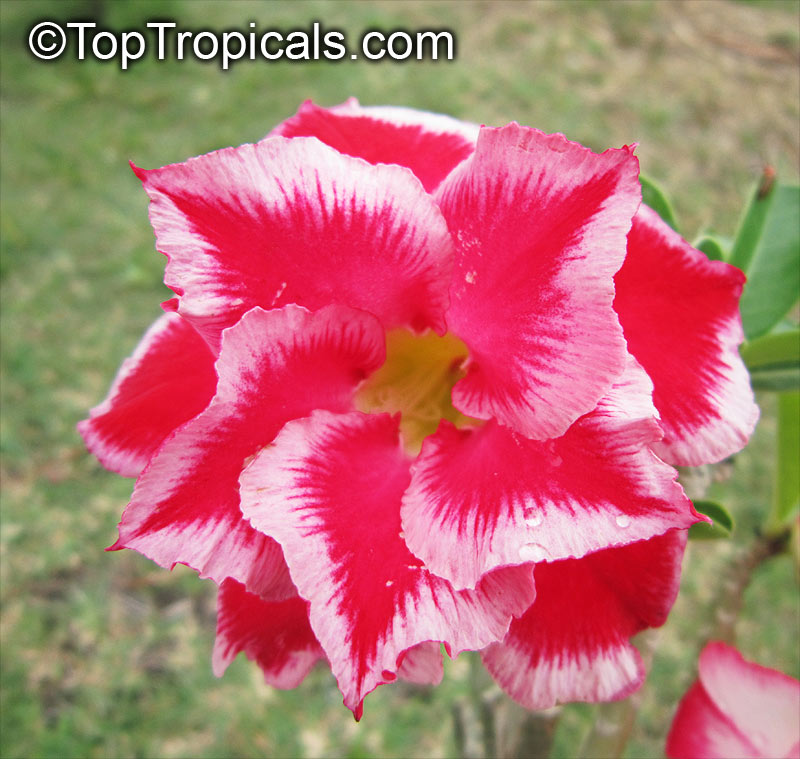
Holiday special: On the picture: Adenium Xmas Santa. A Holiday Special Desert Rose with Christmas-colored flowers - deep-red and white.

Still not sure which plant to choose? You may buy a Top Tropicals Gift Certificate, it ships well and has no expiration date!
Date: 24 Jun 2018

TopTropicals

Florida winters and gardening

From Anna Banana, our Garden Center customer advisor.
Cool weather - no sweat. Here in Florida we are blessed to have warm winters. We just went to the beach for Christmas! Winter time is not only a good beach time, but also the best planting time here. Why? I always refer my customers to Murray Corman's article Tropical Planting Breaks the Rules. "...Wintertime does not just mean hard work for tropical gardeners. It is also a time to enjoy the fruits of our labor. Winter-blooming plants and the visitors they attract - birds, bats and butterflies - make the garden as enjoyable in winter as any other time of year. Tasks performed during the spring and summer up north have to be done during the fall and winter here. Why? The answer is elementary: It's too hot! Taking advantage of the coolest months of the subtropical year for heavy chores like planting trees has a twofold benefit: The gardener can make hay while the sun shines without getting heat stroke and the plants appreciate the moderate temperatures, enjoying a break from the stress of 93 degrees in the shade..."
Continue reading...

Winter flowering plants - are a blessing for a tropical gardener. See below what's blooming now! See our recommendations for winter flowering and fruiting plants (PDF).

Date: 24 Jun 2018

Overwintering tropicals indoors and air humidity

Q: My rainforest plant collection thrived outdoors in our humid summer (I live in Maryland) but of course I had to bring them indoors for winter and now with snow outside they are suffering. Some leaves dried and fell of. Please advise how not to lose my babies over winter!

A: When overwintering tropical plants indoors, think about 3 factors: light, temperature, and humidity.
Light. Providing bright light is obvious, and all indoor gardeners are doing their best to have as much well-lit spots for their plants as possible.
TemperatureTropical plants, especially those from rainforest, do not enjoy significant fluctuations in temperature, so avoid following places: - neat hear register (or air conditioning vent) - in drafts - on a windowsill behind curtains at night
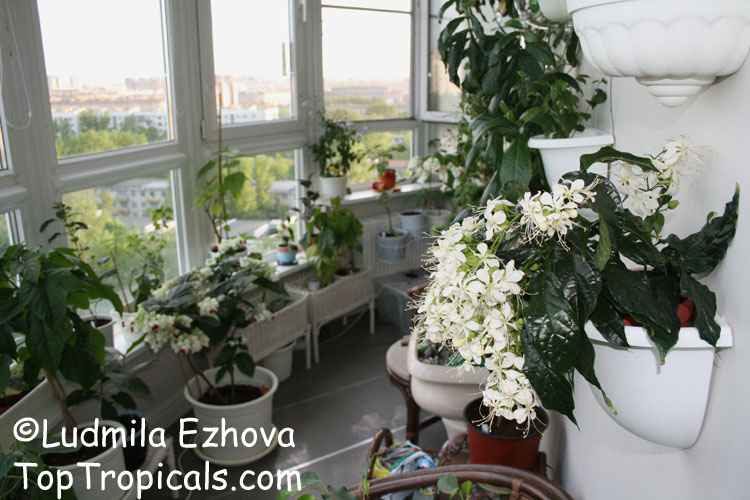
Humidity. Most tropical plants need more humidity than is available in the average, centrally heated home, but some rooms, such as bathrooms and kitchens, are more humid than others. To created humidity, fill a tray that is the same width as a plant, with pebbles or gravel. Pour in water, keeping the level at just below the top of the pebbles, then place your plant on top. The water will produce humidity as it evaporates. Alternatively, mist the leaves using a hand mister in the morning, so leaves dry before night. If you have hard water, use distilled or rain water. Grouping plants together will also increase humidity.