Garden Blog - Top Tropicals

Date: 7 Oct 2018

Multi-flowering Hoyas:
from Mark, the Garden Whiz
TopTropicals.com

Q: A few months ago, i was given a Hoya vine. At the time, I was told to not cut-off the flowers but was never told why. However now that it IS flowering, they are so wonderful I would like to. Is there really a reason to not clip them off?

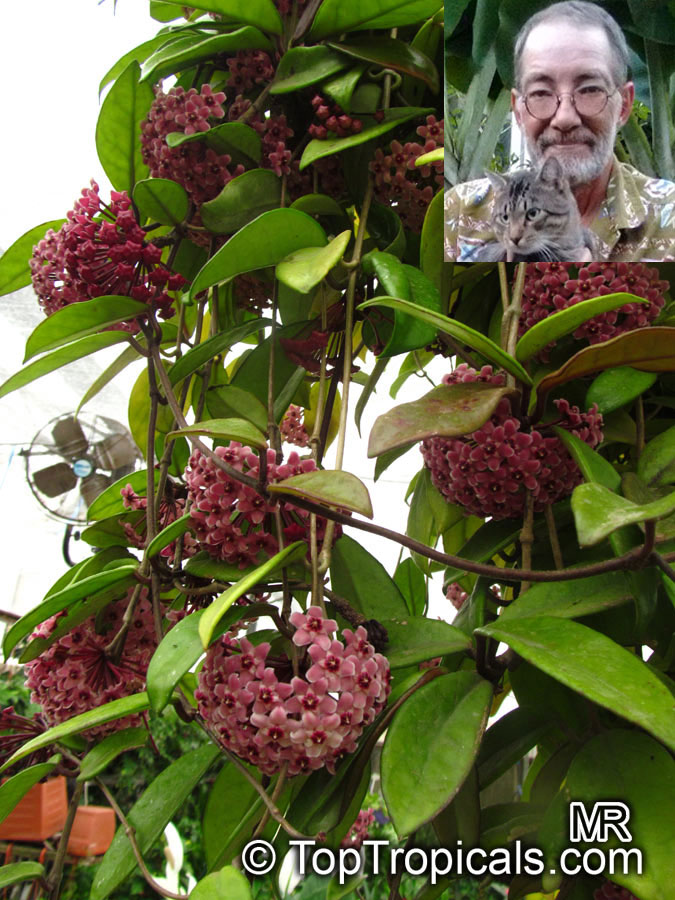
A: Actually, that was very good advise. Unlike most plants we encounter, hoyas develop perennial flower spikes. This means that each spike flowers more than just once! In other words, after the flowers on such a spike have gotten old and fall off, the knobby ended spike remains. Then, after a period of time, that same spike will develop another ring of flower buds. Depending on what kind of hoya it is, these perennial flower spikes may continue to periodically make more flowers for several years! And while the plant will continue to make more of these perennial spikes its whole life, the flowering display becomes better all the time as more and more spikes grow. (By the way, these are technically called "flowering spurs"). So every time a spur might be cut for ornamental purposes, it'll be one less place the vine can flower from in future years.

See our selection of Hoyas...

Date: 25 Sep 2018

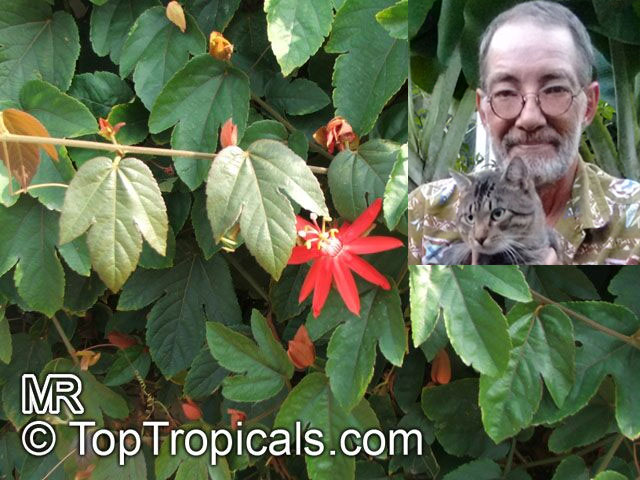
How to get Passion Vine to flower?
From Mark Hooten, the Garden Whiz

TopTropicals.com

Q: Several months ago, I purchased a passionflower vine, a red one with lots of flowers. I ended up putting it in a much larger pot with a large trellis, using a popularly advertised bagged potting soil recommended at a big box store. I have given it a blue colored water-soluble fertilizer every couple of weeks as recommended. However, while the vine seems very happy, growing faster than i can keep winding it around the trellis, it has not flowered all summer. I there something I am doing wrong?

A: Passionvines as a group (and there are some 500 different kinds!) are sort-of unusual among popularly grown ornamentals because they have "nitrogen issues". This is because, even though unrelated, they are much like most legumes, as they maintain a symbiotic relationship with certain beneficial soil bacteria which allows them to gather atmospheric nitrogen and store it in their roots. When they have an overabundance of nitrogen, they simply stop flowering and produce rampant leafy growth while never flowering. They only flower well after a period of healthy vine growth, because the plant had finally used up all of its stored nitrogen.
Since you had both used a bagged potting soil which likely already contained fertilizer with nitrogen added, as well as bi-monthly doses of a liquid fertilizer which also contains nitrogen, it has been receiving so much nitrogen it only knows to grow more vineage until the nitrogen is used up. If and when that happens, it will again begin to flower. This rule applies of course not only to flowering but also to fruiting varieties of Passiflora: the more flowers, the more fruit you get!
So the answer is - for the time being, just stop giving it supplemental fertilizer and it will start flowering for you sooner than later!

See all passion vines from TopTropicals.

Date: 3 Aug 2018

Featured Plant. Monstera deliciosa - Swiss cheese plant

TopTropicals

Monstera deliciosa - Swiss cheese plant

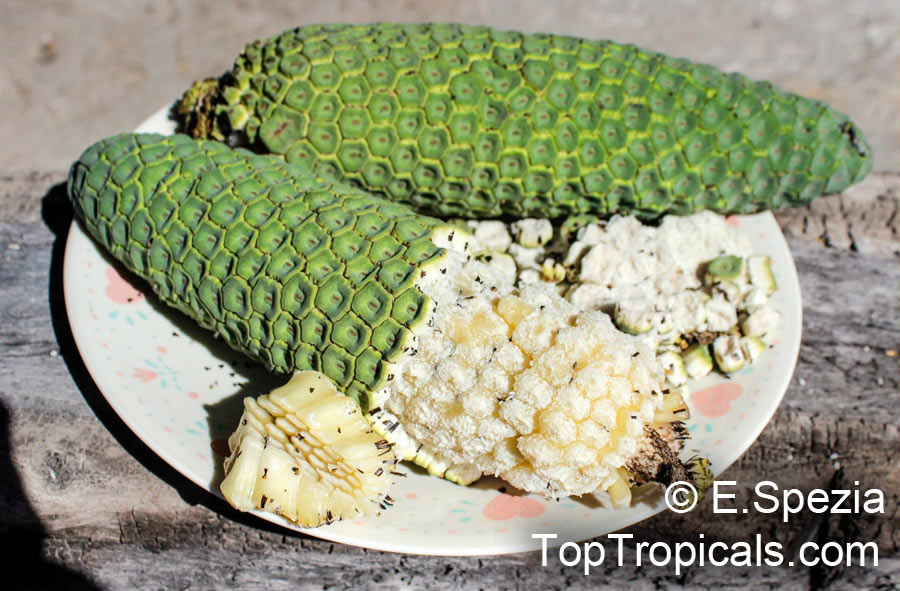
Swiss cheese plant is a jungle climbing relative of the philodendron from Mexico and Guatemala. It is seen in gardens in tropical and subtropical areas, growing well in partial sun or shade. The plant begins bearing fruit after three years. The large deep green, cone-like fruit is actually an unripened flower spike, covered with hexagonal scales that dry out and separate as the fruit ripens from the base upwards, revealing the white pulp. It takes a little longer than a year to mature to an edible stage. The fruit tastes kind of like a cross between a sugar apple and a pineapple. Very perfuming smell and taste! It's so amazing, can't figure the consistency, but totally a pineapple sugar apple cross... But wash the black specks off before eating - they will sting your tongue.

Check out this plant...

Date: 20 Jul 2018

How to get shade quickly... and stay away from oaks

TopTropicals

Q: I just moved from Tennessee into a new house in Florida and there are no trees on the property, the yard is brutal hot. What can I plant so I have some shade real quick? I like Florida shady oaks, how long will they take to grow?

A: First of all, do not rush into oak solution. Oaks are beautiful shade trees, however they have at least 2 problems:
a) Oaks are slow growers and unless you are willing to wait some 20 years... you won't get that desirable shade that quickly.
b) We have hurricanes in Florida... sometimes. A hurricane can damage any tree, however with oaks it may be the worse case scenario - the branches of those giant trees are huge, hard and heavy and in unfortunate situation when you need to remove or trim a broken tree, it may cost you... a few thousand dollars.

These are solutions that are more economical and practical:

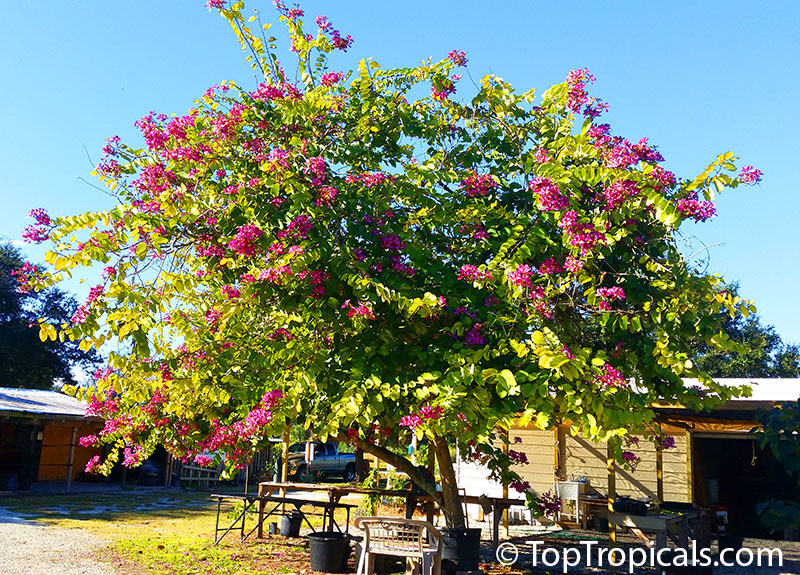
1) Selection. If you have room, get one of these most popular Florida shade trees: Royal Poinciana, Golden Shower, Hong Kong Orchid Tree, Red Kapok, Bottlebrush, and many others. See full list of fast growing shade trees. Or simply get a Mango Tree and have delicious fruit too! Many varieties of Mangos are very large and fast growing.

2) Do it right. Even if you are planting a smaller tree, 1-3 gal size, it may become a nice shade tree within 2-3 years and start providing your driveway with desirable shade. The keys for fast growth are -
a) Good soil. Dig as big hole as possible and fill it with good rich soil containing compost. See planting instructions PDF.
b) Water. Do not rely on sprinklers and rains. Water your tree daily for the first week, then at least twice a week for another month. After that, irrigation system will be enough.
c) Fertilizer. Put a few handfuls of fertilizer in a planting hole. Then fertilize once a month during warm season. Apply micro elements for even better results and faster growth.

3) Ask experts. Contact our office for advice. We will suggest the most suitable shade tree for your yard based on features of your property: location, soil, exposure, etc.

Check out fast growing shade trees

Date: 24 Jun 2018

Tip of the day: Growing Plumeria from seed

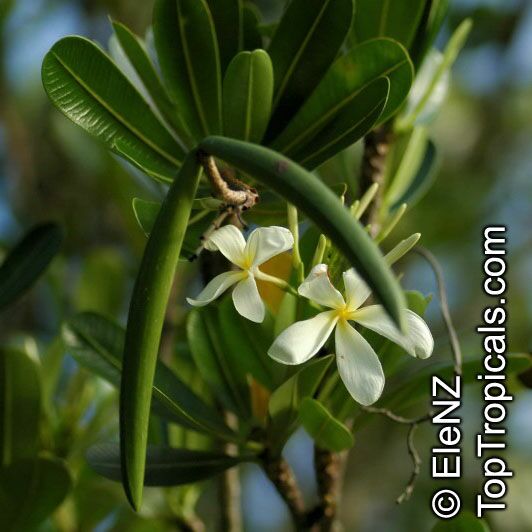
Q: I purchased a Plumeria from your company. It has done quite nicely and now has produced a seed pod. Please forward me information on how to care for it and use the seeds that may be inside to propagate another plant.

A: Wait until seeds are ripe (seed pod turns brownish). Soak seeds overnight. Use only well drained soil, or cactus mix. Insert heavy end of seed 1/4"into soil, leaving feathered end exposed. Place the pot in direct sunlight. Don't allow soil to completely dry out, but don't let it be soggy. Germination occurs usually within 3 weeks. Do not overwater. For more information on growing Plumerias, see our slideshow guide: