Garden Blog - Top Tropicals

Date: 29 Jan 2026

How to make Sapodilla fruit profusely?

Sapodilla - Manilkara or Achras zapota, the Brown Sugar Fruit

🍊 How to make Sapodilla fruit profusely?


Sapodilla - Manilkara or Achras zapota), the Brown Sugar Fruit is a warm-climate evergreen fruit tree that can produce a lot of fruit once conditions are right. So why do so many sapodilla trees grow beautifully, flower heavily, and still refuse to set fruit?

Sapodilla Fruit Production - What Really Matters

1. 🌳 Choose the Right Tree
Grafted or air-layered trees fruit much sooner - typically in 1-2 years - and more reliably than seedlings, which may take 6–8+ years.
Some varieties are more profuse producers than others. For example, Silas Woods is virtually everbearing, Hasya is commercial prolific producer, Oxkutzcab (or Ox) -is also heavily productive (learn more about varieties).

2. ☀️ Environment: Heat, Sun & Water Balance

Temperature and Humidity
Excessive heat above 90F and low humidity can cause flowers to dry up and fall before setting fruit.
Solution: Provide filtered light or shade during the hottest part of the day to reduce heat stress on blossoms.

Water
Sapodillas are drought tolerant, but consistent moisture during flowering and fruit set improves fruit retention.
Avoid waterlogged conditions - soggy soil can stress roots and reduce yield.

Sun Exposure
Full sun is best for growth and flowering - but for hot climates, protection during peak afternoon heat helps reduce flower drop.
Young trees can also suffer sunburn.

3. Fertilization: Feed for Fruit, Not Just Foliage
Good nutrition is critical for flowers to turn into fruit. Apply a routine feed through the growing/flowering season - contolled-release (Green Magic) or liquid (Sunshine C-Cibus) both work.
Balanced fertilizer with trace elements like Boron (B), Molybdenum (Mo), Iron (Fe), and Copper (Cu) is essential for fruit set and development. Boron & Molybdenum deficiency as a frequent cause of flower/fruit drop in container-grown trees (nutrients get depleted quickly in pots).
Micro-nutrient sprays 2-3 times per year help improve fruit retention and quality. Some growers use sugar boosters (Sunshine Honey) or micronutrient blends that include Mo & B to help fruit set (Sunshine Superfood).

4. 🐝 Pollination - Often Overlooked
Sapodilla flowers are small and often require pollinators for best fruit set.
In some regions, small insects like thrips are key pollinators.
In places with low insect activity, hand pollination dramatically increases fruit set - brushing pollen from one flower to another with a small paintbrush during peak bloom times can help.
Placing fruit scraps (apple peels/banana peels) under the tree to attract beetles is an inexpensive way to boost insect activity.

5. ✂️ Pruning and Tree Structure
Moderate pruning can help open the canopy for better light penetration and air circulation, which supports flowering and reduces stress. Training young trees promotes a strong branch structure that can carry more fruit later. Sapodilla flowers on young growth (tips of the branches).

6. Pot vs Ground: Size Matters
If your sapodilla is in a container, root bound trees struggle with fruit set because roots run out of space and nutrients - stepping up to a larger container or planting in the ground can help.
Root-bound trees often bloom but fail to develop fruit.

7.

📅 Patience & Timing


Even healthy trees can take years to start fruiting well.
Trees often flower repeatedly but only set fruit when environmental conditions and pollination align - especially important for young or newly planted trees.

📌 Summary Checklist for Better Sapodilla Fruiting


✔️ Choose a grafted variety (faster, more reliable fruit).
✔️ Manage heat & humidity - shade during hot hours.
✔️ Water consistently but avoid waterlogging.
✔️ Fertilize balanced NPK + micronutrients (include B & Mo).
✔️ Encourage pollination

🛒 Grow your own Sugar Fruit

📚 Learn more:


A sugar that’s good for your health
When does Sapodilla start fruiting and what is the best variety
New variety of Sapodilla: Thai Brownie

#Food_Forest

🟢 Join 👉 TopTropicals
Date: 12 Nov 2025

How to gets lots of Star Fruit

⭐️ How to gets lots of Star Fruit Carambola

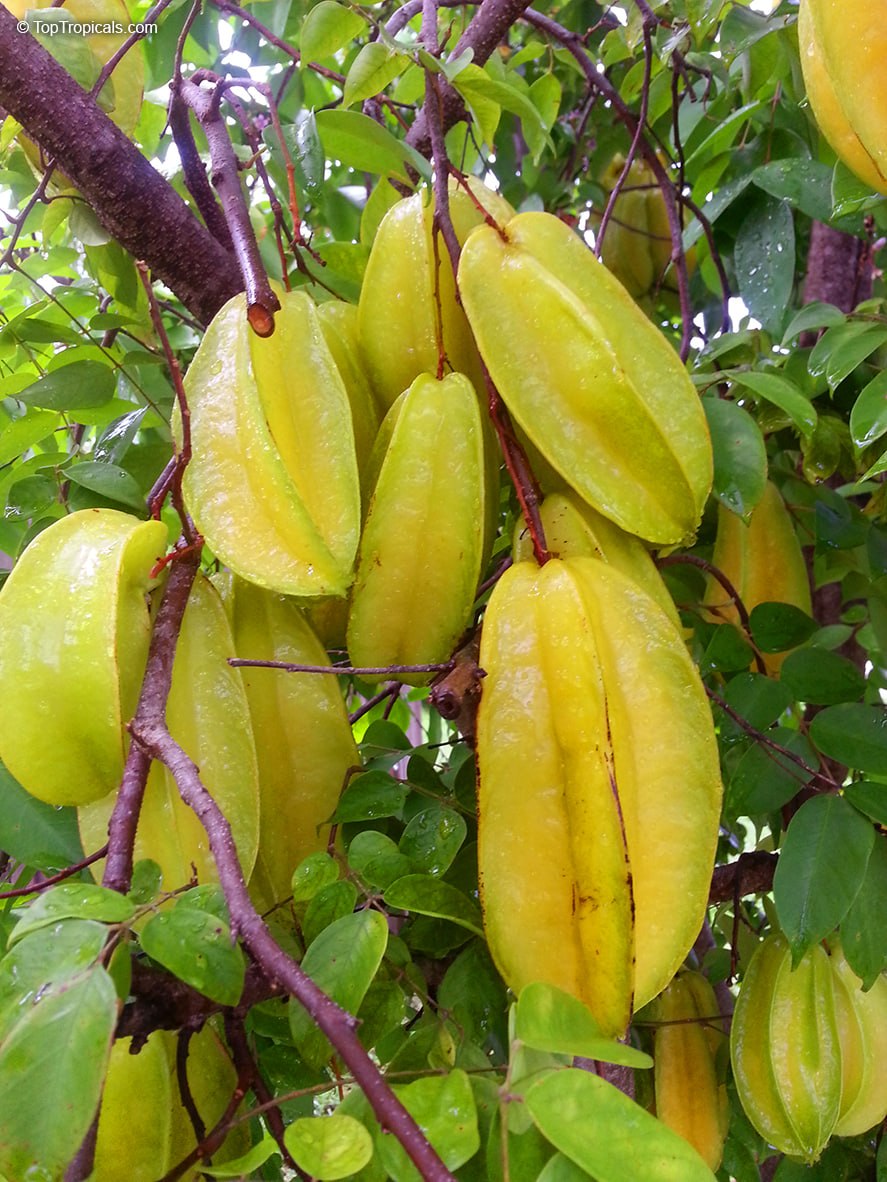
🌟 Star Fruit - Carambola Tree (Averrhoa carambola is one of those trees that makes gardening instantly rewarding. Once you plant it, you’ll soon have a tree covered in shiny yellow fruit shaped like little stars.

🌟 Growing tips


🟡 Sun: Loves full sun. The more light, the sweeter the fruit.
🟡Temperature: Keep warm and protect from winds. It thrives in warm, tropical climates but can handle light frost if sheltered from cold winds - wind-free is the key.
🟡Soil: Prefers well-drained soil. Avoid waterlogging.
🟡Water: Regular watering keeps it happy, but don’t let roots sit in soggy soil.
🟡Size: Space saver! This compact tree doesn’t take up much room, perfect for smaller gardens. Dwarf varieties also do well in containers.
🟡Growth and crop: Fast-growing and early to fruit. Seedlings start producing in about three years, while grafted or air-layered trees fruit right away.
🟡Flowers: Beautiful pink blooms appear before the fruit, adding extra charm to the garden.

🌟 With just a bit of care and protection from wind and cold, your Carambola tree will reward you with baskets of bright, starry fruit through the cooler months when most other trees rest.

🌟 Slice one open and you get perfect star-shaped pieces that brighten up salads, desserts, or smoothies. The fruit is crisp, juicy, and beautifully sweet-tart. It’s nature’s candy - refreshing, low in calories, and rich in vitamin C and antioxidants.

📚 Learn more:


Star Fruit from our garden
Grow your own Carambola
Top 10 fast-fruiting trees: #8. Carambola - Starfruit
Carambola Banana Whip
Carambola Jam recipe
When young Carambola trees are covered with fruit
Carambola tree is the Star of the orchard

🛒 Explore Star Fruit varieties

#Food_Forest

🟢 Join 👉 TopTropicals

Date: 11 Jun 2026

Star fruit chili relish: quick-n-fun exotic recipes

Star fruit chili relish

Star fruit chili relish

Carambola - Starfruit

Carambola - Starfruit

🍴 Star fruit chili relish: quick-n-fun exotic recipes


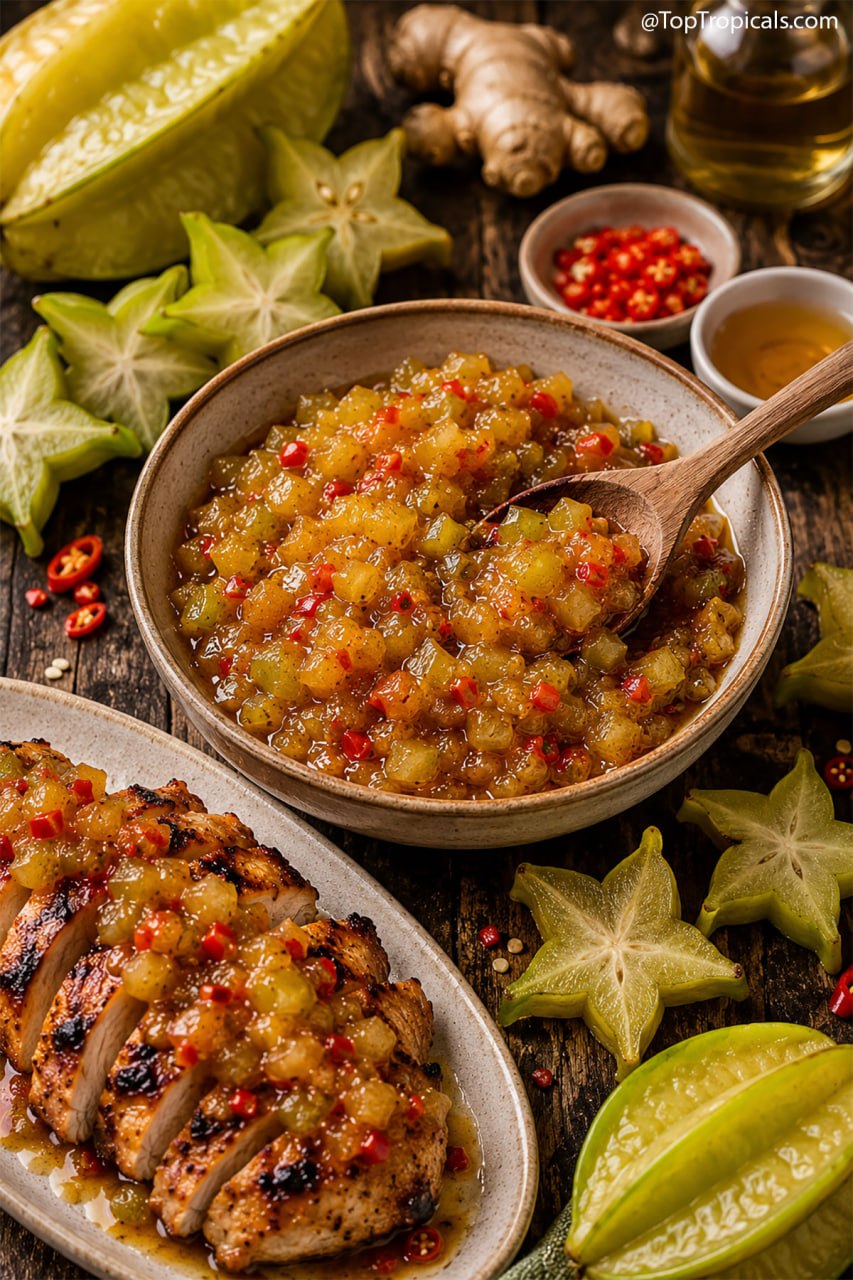
🟡Dice ripe star fruit into small cubes and combine with finely chopped chili peppers, grated ginger, and a splash of vinegar in a saucepan.
🟡Simmer over medium heat, stirring occasionally, until the fruit softens and releases its juices.
🟡Continue cooking until the mixture thickens into a glossy sweet-and-spicy relish with tender fruit pieces throughout.
🟡Spoon generously over grilled chicken, pork, or fish for a bright tropical kick.

🌿 About the plant:


Carambola, Averrhoa carambola, produces delicate pink-lavender flowers that grow along the branches before forming ribbed fruit. The distinctive five ridges create those clean star shapes when sliced.

🏡 In the garden:


Trees stay relatively compact and respond well to light pruning. Flowering can occur several times a year in warm climates, leading to multiple harvests. Good drainage is essential - they dislike soggy roots.

🛒 Plant Star Fruit Carambola Tree

📚 Learn more:

Carambola Plant Facts

Botanical name: Averrhoa carambola
Also known as: Carambola, Starfruit, Five-finger, Balimbing
USDA Zone: 9 - 11
Highligths Small tree 10-20 ftSemi-shadeFull sunWatering: Regular. Let topsoil dry slightlyEdible plantSubtropical plant. Mature plant cold hardy at least to 30s F for a short time
Get personalized tips for your region

Averrhoa carambola in Plant Encyclopedia
Grilled star fruit slices: quick-n-fun exotic recipes
How to gets lots of Star Fruit Carambola
Star Fruit from our garden
Grow your own Carambola
Top 10 fast-fruiting trees: #8. Carambola - Starfruit
Carambola Banana Whip
Carambola Jam recipe
When young Carambola trees are covered with fruit
Carambola tree is the Star of the orchard

#Food_Forest #Recipes

🟢 Join 👉 TopTropicals

Date: 18 Jun 2026

Dating tips

Dating tips from Smokey and Sunshine

Dating tips from Smokey and Sunshine

🌹 Dating tips


Sunshine: Smokey, I have a date in one hour.
Smokey: Congratulations. Try not to order donuts.
Sunshine: I will try really hard. She is very smart. I need to sound intelligent.
Smokey: Then don't open your mouth. Your IQ will appear much higher.
Sunshine: You were on Jeopardy. Give me some random facts to impress her with my knowledge.
Smokey: I lost in the first round.
Sunshine: You still know more than me.
Smokey: Everyone knows more than you, Sunshine. How random?
Sunshine: Smart random. Not weird random.
Smokey: Those are the same category, Sunshine.
Sunshine: Just give me the facts.
Smokey: Avocados don't ripen on the tree. They mature there, then ripen after picking.
Sunshine: That sounds like personal growth.
Smokey: Plants warn each other about insects using chemical signals.
Sunshine: Romantic. Mysterious. Slightly terrifying.
Smokey: Bananas are technically berries.
Sunshine: Perfect. I'll say that and then stare thoughtfully at my coffee.
Smokey: Don't say everything you know in the first five minutes.
Sunshine: What if she asks about dessert?
Smokey: Then you'll be fine.
Sunshine: What if she doesn't?
Smokey: Lead with the banana thing. And please — not your ridiculous pants.
Sunshine: They are a statement.
Smokey: Yes. The statement is do not approach me


🛒 Explore plants and their facts

📚 Learn more:


·  About Smokey & Sunshine
·  Smokey & Sunshine interview

#PeopleCats

🟢 Join 👉 TopTropicals

Date: 21 Jun 2026

How to Grow Massive, Exotic Lobster Claw Blooms Anywhere (Even in Pots!)

How to Grow Massive, Exotic Lobster Claw Blooms Anywhere (Even in Pots!)

How to Grow Massive, Exotic "Lobster Claw" Blooms Anywhere (Even in Pots!)


If you’ve ever dreamed of transforming your patio or backyard into a lush, dramatic tropical getaway, there is one iconic plant that needs to be on your radar: Heliconia rostrata - famously known as the Lobster Claw or Parrot’s Beak.
With its massive, neon-bright, dangling inflorescences, it looks like something straight out of a high-end botanical resort. But here is the best-kept secret in tropical gardening: you don’t need to live in the deep jungle to grow them. Whether you have a sprawling tropical landscape or a simple sunny patio in a colder climate, this showstopper is ready to perform.


🔻 Why Heliconia Rostrata Rules the Tropics


There’s a reason the Lobster Claw is one of the most recognized and celebrated exotic plants in the world. It delivers maximum visual drama with surprisingly little fuss.

Jaw-Dropping Blooms: The vibrant, cascading flower bracts feature intense shades of red, yellow, and green, looking exactly like bright lobster claws or parrot feathers.
Unbeatable Vase Life: These flowers don’t just look spectacular on the plant; they last for weeks in water, making them the ultimate centerpiece for tropical floral arrangements.
Instant Scale: Growing up to 7 feet tall, a healthy cluster of Heliconia creates a dense, gorgeous tropical screen in no time.

🔻 The Container Secret: Growing in Pots


Think your winter weather is too harsh for jungle exotics? The Lobster Claw is surprisingly resilient. While it loves tropical heat, it can actually withstand brief temperature drops down into the high 20s F.
More importantly for northern gardeners, it adapts beautifully to container life.

By planting your Heliconia in a large, sturdy pot, you unlock the ability to grow them anywhere. When summer hits, your patio becomes a tropical oasis. When winter sets in and sustained freezing weather arrives, you simply roll the container into a greenhouse, garage, or bright indoor room until spring.

🔻 Pro-Tips for Maximum Blooms


To get those massive, vibrant stalks to stretch to their full potential, just follow these three golden rules:

1. Give the Underground Room
Heliconias grow from thick underground structures called rhizomes. To get a 7-foot canopy, use a large, deep pot with excellent drainage. Give those stalks room to multiply and spread!

2. Keep the Fuel Coming

These are fast-growing plants that require plenty of energy to produce those heavy, cascading flowers. Keep the soil consistently moist (never soggy) and feed them regularly with a high-quality tropical fertilizer to maximize bloom production. We put a scoop of Green Magic controlled release fertilizer every 6 months and Sunshine Booster Megaflor that is safe to apply with every watering, year around.

3. Sun and Shelter
Position your plant where it can soak up plenty of bright, filtered sunlight or partial afternoon sun. Try to protect it from harsh, whipping winds so those beautiful, banana-like leaves stay pristine and tear-free.

🛒 Claim Your Lobster Claw

📚 Learn more:

Lobster Claw Plant Facts

Botanical name: Heliconia rostrata, Bihai rostrata
Also known as: Lobster Claw, Parrot's beak
USDA Zone: 9 - 11
Highligths Small plant 2-5 ftSemi-shadeShadeFull sunWatering: Regular. Let topsoil dry slightlyYellow, orange flowersRed, crimson, vinous flowersSubtropical plant. Mature plant cold hardy at least to 30s F for a short timeFlood tolerant plantSeaside, salt tolerant plant
Get personalized tips for your region

Heliconia rostrata in Plant Encyclopedia
Blooming Lobster Claw Show at TopTropicals
Lobster Claw - Simply Spectacular
How to grow Lobster Claw
🎥 Lobster Claw Show at TopTropicals

#Hedges_with_benefits #Shade_Garden #Nature_Wonders #Discover

🟢 Join 👉 TopTropicals