Garden Blog - Top Tropicals

Date: 16 Sep 2019

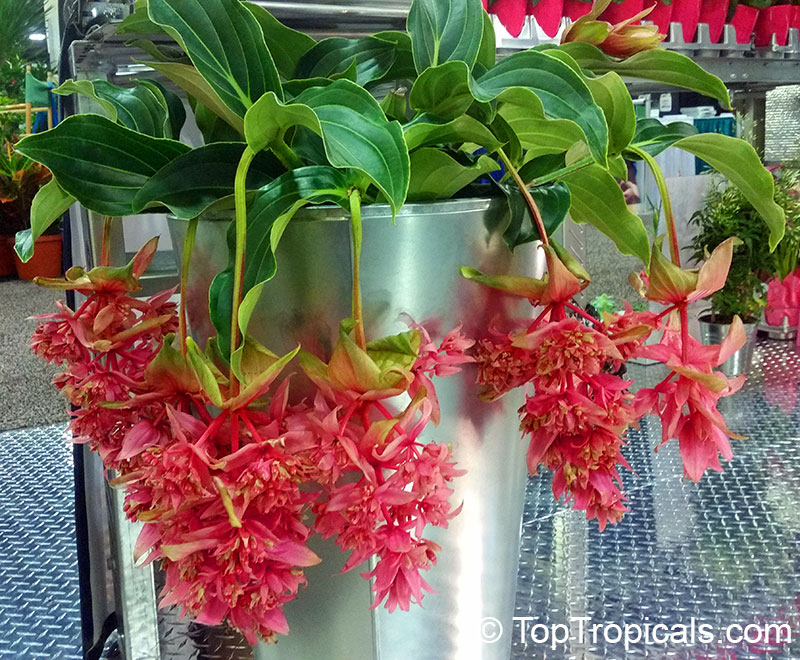
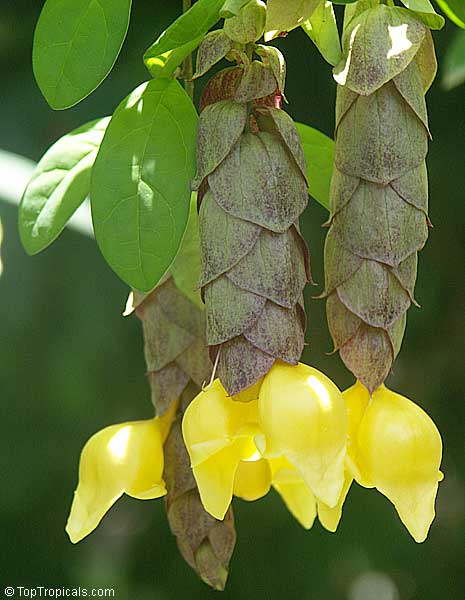
What pot is good for Medinilla?

Q: I just acquired a Medinilla plant. I have a cylindrical tall clay pot that I would like to repot this beauty into. Would like to know if a deep pot is good for this type of tropical plants even if the medium is lightweight with bark and perlite allowing adequate drainage. Would appreciate your advice.

A: Medinillas are very close to epiphytes, meaning they like high air humidity and very good soil drainage characteristics. Clay pots usually provide good air circulation, as long as they are not glazed. If you add a lot of soil conditioner into your mix, like orchid mix and perlite, the tall pot will provide a good drainage. Tall pot is also great for displaying the beautiful pendulous blooms!

Plastic pots work well too, as long as you provide a well-drained soil for the plant. If a nursery plastic pot is not pretty enough, you may place it in a fancy planter; however, make sure never let the pot sit in water, Medinillas do not like wet feet.

Date: 6 Oct 2024

Eight most spectacular gingers

White  ginger  flower

Photo above: Costus arabicus - Spiral Ginger

Q: I grow ginger for cooking, but I know that some varieties have showy flowers. What gingers can you recommend as ornamentals?

A: Ginger is famous for its culinary and medicinal uses, and many species are also strikingly beautiful, making them perfect centerpieces for tropical gardens or potted plant collections, especially in shaded spots. Here are a few of our favorite cultivars.

1. Yellow Butterfly Ginger

Hedychium  flavum  x  coronarium  -  Yellow  Butterfly  Ginger,  Nardo  Ginger 


Lily

Hedychium flavum x coronarium - Yellow Butterfly Ginger, Nardo Ginger Lily - rare hybrid of White Butterfly ginger we mentioned earlier (https://t.me/TopTropicals/710), it is more vigorous and tall than its parent. With attractive long green leaves with a slight fuzziness, this ginger has open long spikes of pastel yellow flowers with a beautiful heady aroma. Exquisitely fragrant!

2. Variegated Spiral Ginger

Costus  arabicus  (amazonicus)  variegata  -  Variegated  Spiral  Ginger

Costus arabicus (amazonicus) variegata - Variegated Spiral Ginger - is a tropical stunner originally from South America but adored in Hawaii and Florida. This ginger's eye-catching, spiraling stems are streaked with striking white variegation, topped with elegant pure white flowers with yellow centers. The pure white blooms are truly a piece of art! Perfect for shade gardens, this plant thrives in moist soil and loves plenty of water. If you're looking to add a bit of drama and elegance to your garden, this beauty is a must-have!

3. Pine Cone (Shampoo) Ginger

Zingiber  Zerumbet  -  Pine  Cone  Ginger,  Shampoo  Ginger

Zingiber Zerumbet - Pine Cone Ginger, Shampoo Ginger - is probably the most popular one. All parts of this ginger are spicy fragrant. The cone shaped flowers are long lasting and useful for cut flower arrangements. It is in fact used as a shampoo in Asia and Hawaii, and as an ingredient in several commercial shampoos! Pinecone ginger is considered a "canoe plant", that is, a plant introduced throughout the Pacific by the ancient Polynesian settlers.

4. Spiral Raspberry Ginger

Costus  vargasii  -  Spiral  Ginger  Raspberry  Yogurt

Costus vargasii - Spiral Ginger Raspberry Yogurt - The name refers to the colorful raspberry colored stem, but that's not the only colorful thing about it: the leaves are dark green, long and glossy with velvety deep purple undersides. The inflorescence is a vivid red with tight bracts and bold yellow flowers. The butterflies love to drink the nectar from the flowers. Large vigorous ginger, growing up to 5-6 ft tall.

5. Cameroon Costus African Princess

Costus  fissiligulatus  -  African  Princess,  Cameroon  Costus

Costus fissiligulatus - African Princess, Cameroon Costus - from Gabon in West Africa. It has a dazzling pink trumpet flower with a yellow throat. It is very floriferous with an inflorescence of numerous flower buds on a shortish plant of 3-4 ft that stands very erect. It is an easy grower.

6. Red Button Ginger (French Kiss)

Costus  spicatus  x  woodsonii  -  Red  Button  Ginger,  French  Kiss

Costus spicatus x woodsonii - Red Button Ginger, French Kiss: this ginger's inflorescence resembles a cluster of bright red buttons, making it a standout in tropical gardens.

7. White Butterfly Ginger

Hedychium  coronarium  -  White  Butterfly  Ginger

Hedychium coronarium - White Butterfly Ginger is a must for every Southern garden. It is famous for its intense, sweet scent. Symbol of Hawaiian Paradise along with Plumeria and Jasmine. It is popular in Hawaii and the Pacific Islands for leis and hair adornments and bears fragrant, butterfly-resembling flowers in summer. It has long lasting cut flowers, ideal for scenting the home. Can survive light freezes, with tops regrowing in the spring. Takes sun or shade.

8. Laos Silver Stripe Peacock Ginger

Kaempferia  angustifolia  -  Laos  Silver  Stripe

Kaempferia angustifolia - Laos Silver Stripe is one of the most beautiful of all the Kaempferia Peacock Ginger cultivars. It is one of the large types. The plant has boldly striped leaves of green and silver. The flowers are orchid shaped white and purple. Small, compact perennial, great for container culture. This hard to find variety is a must for every Ginger collector.

Date: 27 Feb 2025

What Fertilizer to Use Now and How?
Five important keys to healthy plants

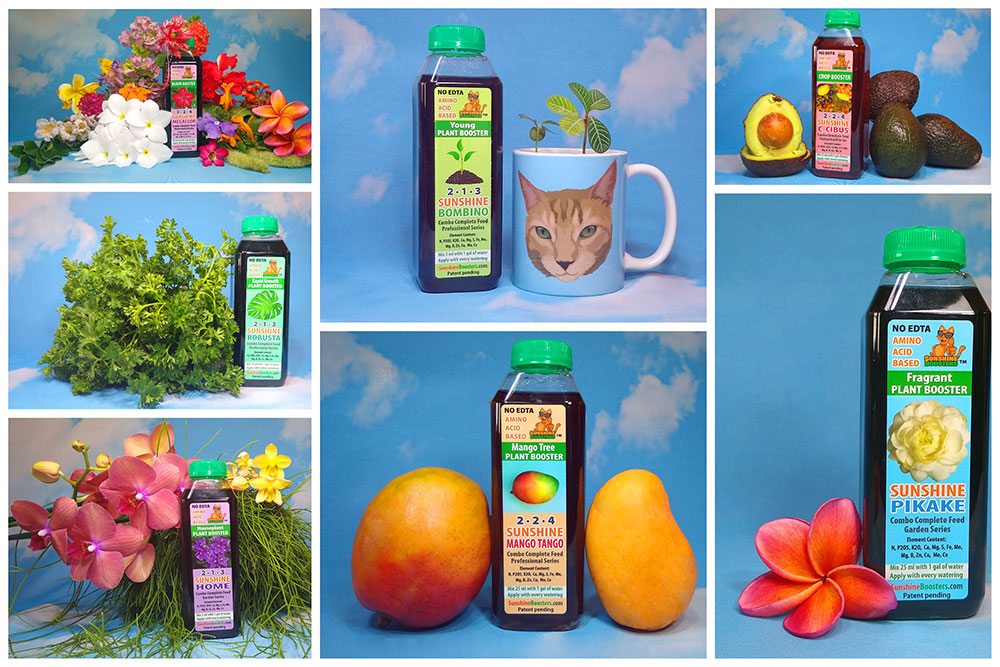
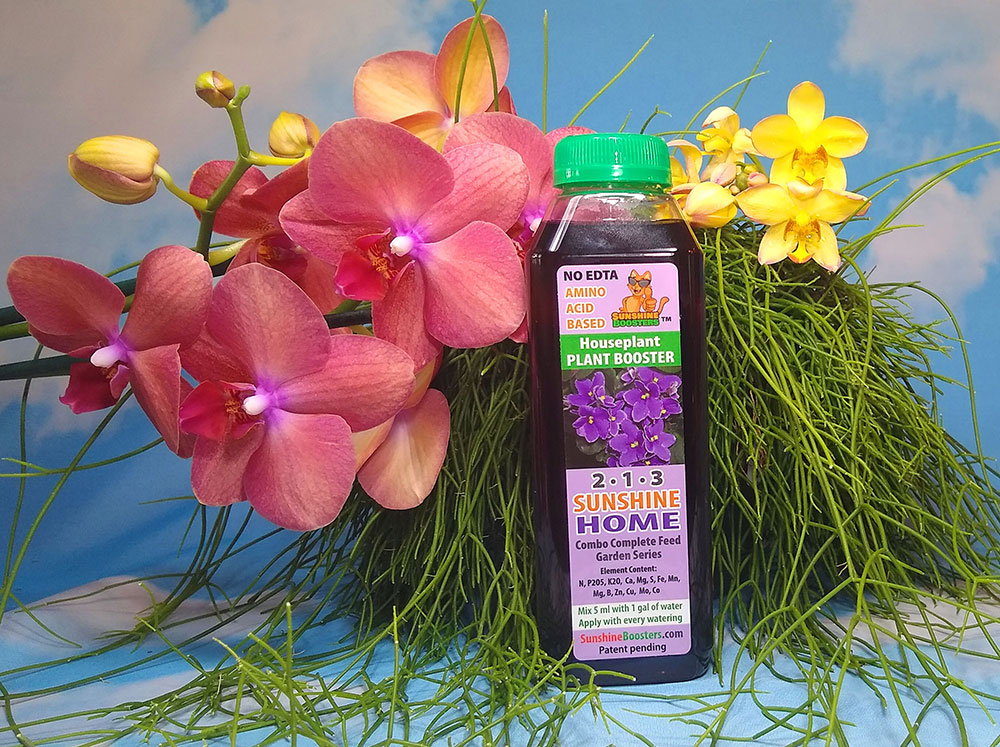
Sunshine  Boosters  Selection

Q: It's early Spring this year. Should I start fertilizing my plants sooner than usual?

A: Most fertilizer instructions recommend fertilizing tropical plants from March to November. This is because plants don't need as much food during the cooler months when many go dormant, and excess nutrients can burn the roots if not absorbed. However, for the most effective fertilizer program and healthy plants, consider these points:

1. Sunshine Boosters Year-Round

Liquid amino-acid-based fertilizers like Sunshine Boosters are safe to use year-round. Since watering is reduced in cooler weather, the intake of water-soluble fertilizer is also lower, providing plants with just the essential nutrients for their minimal needs.

2. Dry Fertilizer Schedule

Be cautious with dry fertilizers. Apply them only during active growth in the hot season.

3. Temperature Is Key

If March is still cold, delay dry fertilizer use. However, if nighttime temperatures in February stay above 65F, you can start a dry fertilizer program using slow-release, granulated plant food.

4. What Fertilizers to Use and How

Check out our Sunshine Boosters selection for different types of plants and choose the right type for your needs. These can be applied as often as with every watering:

For Rapid Growth
Sunshine Robusta - Rapid Growth Booster: general fertilizer for both foliage plants and small starters that need an extra boost.

For Flowers
Sunshine Megaflor - Bloom Booster: boosts flowers on established plants; and Sunshine Pikake - Fragrant Plant Booster: best for fragrant flowers.

For Fruit Trees
Sunshine C-Cibus - Crop Booster: contains all necessary elements for fruit trees and their production. Sunshine Mango Tango - specifically formulated for Mango and Avocado trees, and Sunshine Citron - ideal for citrus trees.

For Tender Perennials
Sunshine Orchidasm - Orchid Total Feed and Sunshine Ananas - Pineapple and Bromeliad Booster: mild formulas for these tender perennials.

5. Microelement Supplements Are a Must

Besides macronutrients, plants need additional microelements, just like humans need vitamins. Be sure to apply these supplements along with your regular plant food:

For Green Leaves and Health
Sunshine SuperFood - Complex Microelement Supplement: a must for healthy plants. Apply once a month.

For Stress Relief
Sunshine-Epi - Brassinosteroid Plant Hormone: essential for plants recovering from stress (shipping, transplanting, drought, insect damage, cold stress, etc.). Apply as needed.

For Sweeter, Bigger Fruit
Sunshine Honey - Fruit Sugar Booster: application on fruit trees will make fruit bigger and sweeter by directing sugars to the fruit from other plant parts, and helps to prevent bud drop. Apply 4 times a year: at bud setting, flowering, fruit setting, and after harvesting.

For Better Resistance
Sunshine Power Si - Silicon Protector - enhances resistance to insects, diseases, drought, and frost, while boosting growth. Apply once a month, along with Sunshine SuperFood.

Need Help? Our Plant Experts Are Ready to Assist!

Microelements  and  supplements  for 


plants

Date: 20 Jul 2018

How to get shade quickly... and stay away from oaks

TopTropicals

Q: I just moved from Tennessee into a new house in Florida and there are no trees on the property, the yard is brutal hot. What can I plant so I have some shade real quick? I like Florida shady oaks, how long will they take to grow?

A: First of all, do not rush into oak solution. Oaks are beautiful shade trees, however they have at least 2 problems:
a) Oaks are slow growers and unless you are willing to wait some 20 years... you won't get that desirable shade that quickly.
b) We have hurricanes in Florida... sometimes. A hurricane can damage any tree, however with oaks it may be the worse case scenario - the branches of those giant trees are huge, hard and heavy and in unfortunate situation when you need to remove or trim a broken tree, it may cost you... a few thousand dollars.

These are solutions that are more economical and practical:

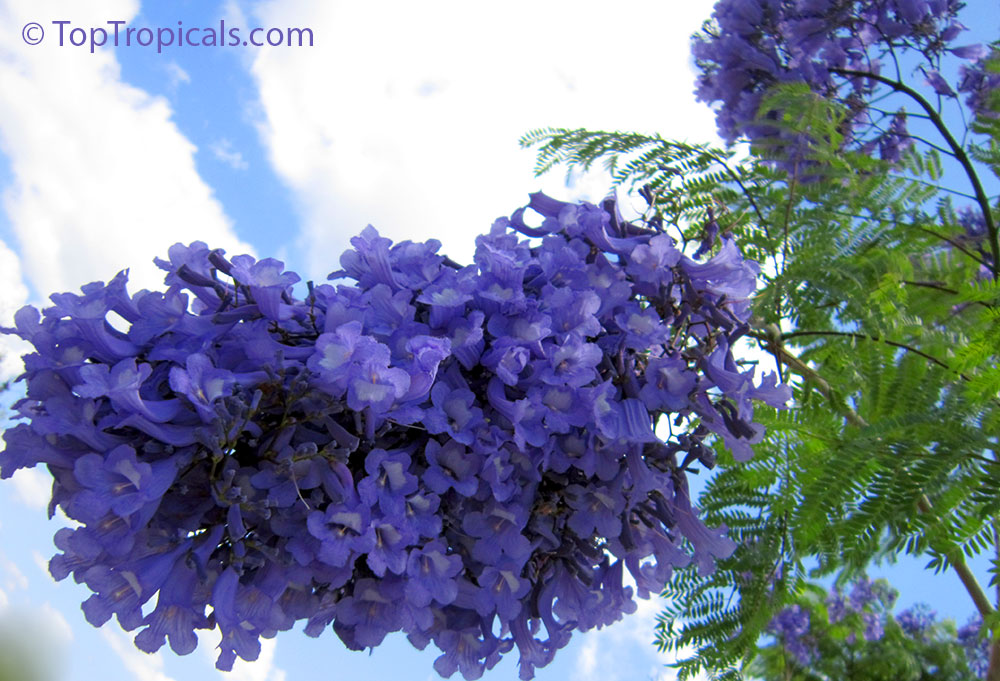
1) Selection. If you have room, get one of these most popular Florida shade trees: Royal Poinciana, Golden Shower, Hong Kong Orchid Tree, Red Kapok, Bottlebrush, and many others. See full list of fast growing shade trees. Or simply get a Mango Tree and have delicious fruit too! Many varieties of Mangos are very large and fast growing.

2) Do it right. Even if you are planting a smaller tree, 1-3 gal size, it may become a nice shade tree within 2-3 years and start providing your driveway with desirable shade. The keys for fast growth are -
a) Good soil. Dig as big hole as possible and fill it with good rich soil containing compost. See planting instructions PDF.
b) Water. Do not rely on sprinklers and rains. Water your tree daily for the first week, then at least twice a week for another month. After that, irrigation system will be enough.
c) Fertilizer. Put a few handfuls of fertilizer in a planting hole. Then fertilize once a month during warm season. Apply micro elements for even better results and faster growth.

3) Ask experts. Contact our office for advice. We will suggest the most suitable shade tree for your yard based on features of your property: location, soil, exposure, etc.

Check out fast growing shade trees

Date: 19 Jul 2022

New video: Royal Poinciana
The most beautiful tropical shade tree

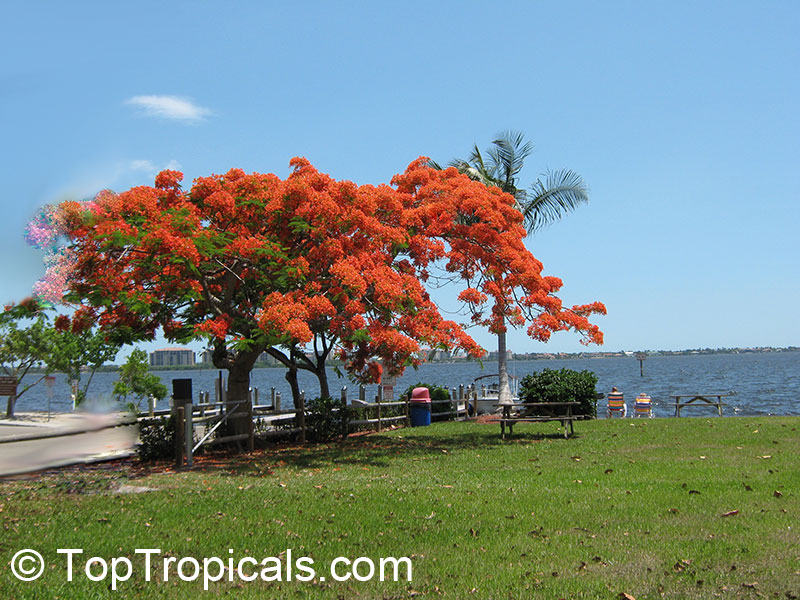
"The Royal Poinciana is one of the most spectacular flowering trees in the USA, and probably among the top 10 on this planet. In full bloom, it is like a regal elephant caparisoned in red and yellow brilliance." (Larry M. Schokman, The Kampong, National Tropical Botanic Garden)
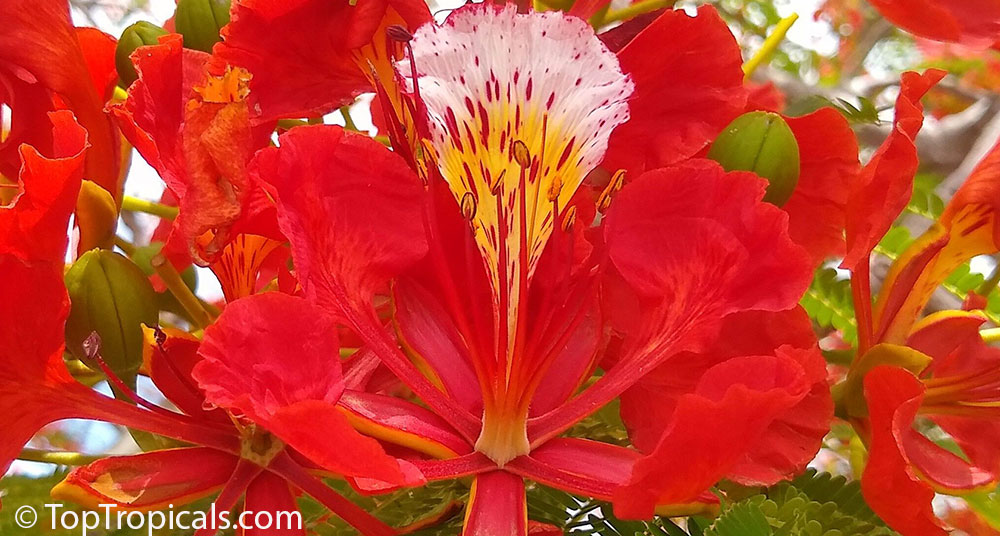
One of the most conspicuous flowering trees seen in the tropics, Royal poinciana (Delonix regia) has bright fiery red/orange blossoms cover its mimosa type leaves which close up and go to sleep for the night. This large tree, which naturally assumes a spreading umbrella shape, is now found in gardens, parks, and planted along streets throughout the tropics. In late spring, as the new leaves appear, the tree is covered with masses of five-petalled red flowers resembling orchid flowers. Blooming is followed by long, flattened, leathery dark brown or black seed pods. Delonix requires full sun and adequate space to take its characteristic form....
Read Article about this tree.

Royal  Poinciana  tree

Subscribe to our Channel:

Stay updated with TopTropicals Videos by subscribing to our channel at YouTube.com/TopTropicals and get our latest video news of what is fruiting and blooming!

Royal  Poinciana  tree  flowers