Garden Blog - Top Tropicals

Date: 24 Jun 2018

Choosing the right Mango for your garden

Q: Do the mango trees you sell already have fruit? Or how long does it take to get fruit? Are they tricky to keep up? I live locally and have been interested in getting a few!

A: Some of our mangos in both 3 gal and 7 gal pots have fruit on them. All our mango trees are grafted which means they are ready to produce fruit. So if not the same year, you should get fruit the next year.
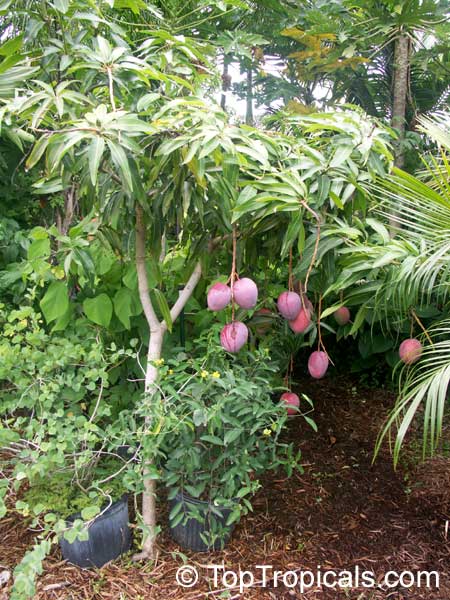
Mangoes in general are easy to grow plants. They are not picky about soil and water, however they need full sun for fruiting. When you are lucky to live in tropical or subtropical climate, your mango will thrive in a ground, and within 2-3 years you will have a mature tree, and a crop every year (those who have cold winters, still can grow a mango tree in a pot, and move it indoors for colder period). Visit our garden center for a tour of our Mango Gardenthat is only 3 years old and is full of fruit! Tasting table available :) We offer over 100 varieties, and our experts can help you to make the right choice for your garden. To start your own mango tree collection, depending on space available, you may begin with the following varieties:
Nam Doc Mai - one of the most popular and delicious Asian mango
Carrie - very compact grower, reliable producer with great taste
Cogshall and Ice Cream - dwarf varieties for small yards, excellent taste
Alphonso - considered one of the best tasting

See full list of our mango varieties, all fiberless and great sweet flavors.
Date: 6 Jan 2017

6 easiest fruit trees and 5 spices to grow in containers indoors

Q: This is why I want to move so that I can grow absolutely anything I want from your catalogue. Prefered Puerto Rico. Right now I live in New York and there is absolutely nothing I can grow there.

A: Of course living in Puerto Rico brings more opportunities to grow tropical species. However, you can create your unique tropical paradise even living in New York. We have many customers from up North who successfully grow tropical species (and get them to flower and fruit) in greenhouses, and even indoors.
Here are a few suggestions of tropical fruit trees that adapt well for container/indoor culture - for both beginners and advanced gardeners.

Top 6 fruit trees great for indoors / container culture / beginners
1. Mango (Mangifera indica). Select from one of smaller mango varieties
2. Sugar Apple (Annona squamosa)
3. Guanabana, Soursop (Annona muricata)
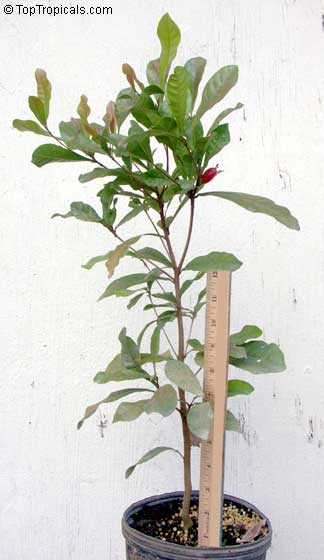
4. Miracle Fruit (Synsepalum dulcificum)
5. June Plum (Spondias cytherea)
6. Guava (Psidium guajava)

5 top spice plants (the spice will be with you right away, you don't have to wait for it to grow)
1. Allspice (Pimenta dioica)
2. Cinnamomon or Campor tree
3. Bay Leaf (Laurus nobilis)
4. Mint Tree (Satureja vimenea)
5. Vanilla orchid (Vanilla planifolia)

See a brief article of growing tropicals outside of tropics.

Don't forget to get some SUNSHINE boosters for your plant collection - for both successful indoor culture and cold protection!

See also our magazine Tropical Treasures) - Pushing the Limits of Tropical Gardening, with list of issues.

Date: 19 Dec 2016

Update on SUNSHINE in a Bottle

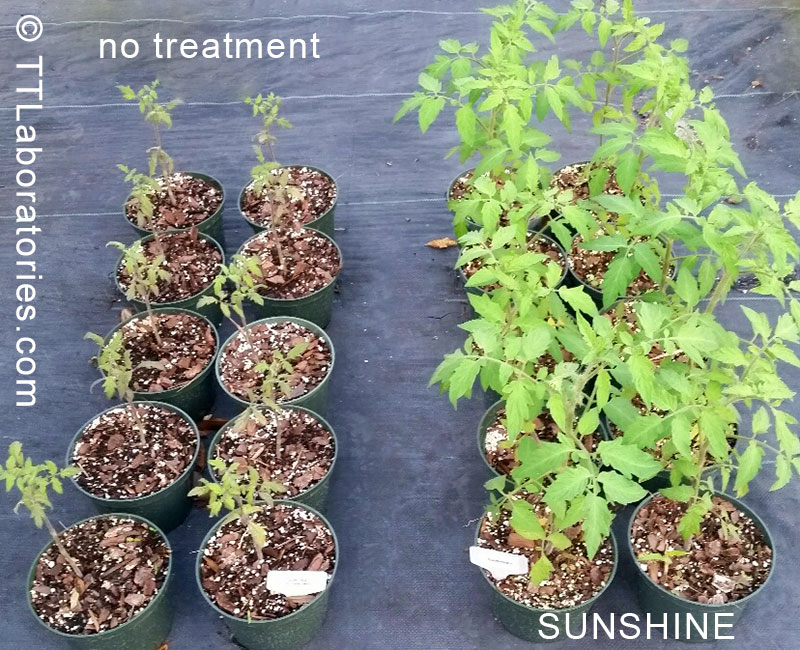
Photos of our experiments. These tomato seedlings potted 4 weeks ago, and batch on the right treated with standard recommended dose of SUNSHINEâ„¢ twice (within one week period). They are setting buds and flowers, while untreated plants (batch on the left) have much slower growth rate and are still far from flowering.
See TTLaboratories website and order SUNSHINE boosters.

Date: 29 Nov 2016

December Fest on Dec 10, mark your calendars!

Topic: Edible landscape. 10:00am - 2:00pm. Agenda:

Class @ 11:00am by Robert Riefer. How to keep pests off of maturing fruit.
Class @12:00pm Super foods by Zoe Merring. Benefits of Soursop, barbados cherry, goji, moringa. Benefits and recipes.

Discounts on all edibles
Prize giveaways at 12:00pm and 2:00pm (must be present to win)

20% off After-Cyber-Monday sale! Now that everybody is done with shopping for monitors and speakers, it is time to get some happy stuff! 20% off on all fruit trees, 1 day only! Enjoy your shopping and get the plants you always wanted at a low price!

Date: 24 Aug 2016

More useful information on Grow Lights!

By Michael Aiton, FL: When I was taking classes at Palm Beach State College for my AA degree in Horticulture, what we used in the lab for 'grow lights' was a combination of incandescent and florescent lights to get the full spectrum of red/blue/green light. I saw it as a tried and true method, and cheaper than going out and buying 'grow lights', although they are making incandescent lights harder and harder to get anymore...

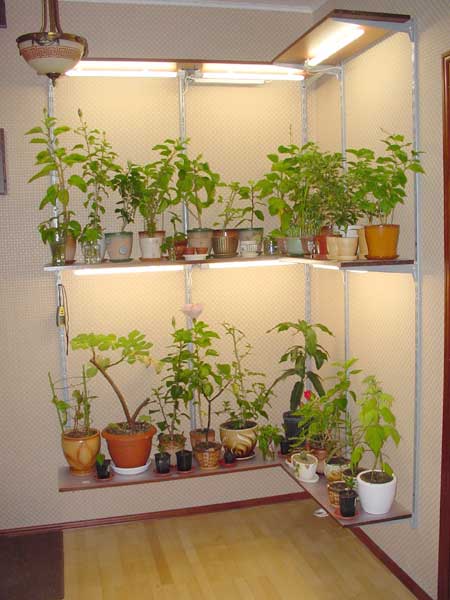
Fluorescent lights are by far the most economical and easy choice for houseplants. They come in tubes or compact bulbs (CFL) that screw into regular lamp sockets, and they're cool enough to put close to plant foliage. Generic fluorescent tubes and bulbs are higher in blue wavelengths, so look for “full-spectrum” or include a mix of "cool" and "warm" bulbs. When in doubt, buy "cool white" products, since white light contains the full spectrum of wavelengths. For maximum effect, position fluorescents about a foot away from plant foliage.

Incandescent lights give off a lot of heat and should be placed farther away from plant foliage. Incandescent bulbs give off more red wavelengths, so they can be used to supplement fluorescent light and balance out the spectrum, especially if you're trying to encourage plants to bloom. If you want to mix the two, try using a ratio of about one-third incandescent and two-thirds fluorescent by wattage.

See more information on grow lights