🎄 It is almost here! December 13, 2025 - Holiday Plant Market, proudly hosted by the #PeopleCats of TopTropicals. Our big end-of-season Plant Day. All year we grow the rare and unusual plants that will be featured at this event, and Saturday is the day they finally meet their new homes. The garden turns into a small holiday escape: fresh air, bright colors, music, snacks, and the PeopleCats greeting everyone like they have known you for years.
📱 Event discounts and specials valid at both locations:
Why white-flesh Dragon fruits deserve more attention?
White Dragon fruit varieties (Hylocereus undatus)
🏆 Why white-flesh Dragon fruits deserve more attention?
✔️ Fast growers, heavy producers.
White-fleshed Dragon fruits are often overlooked, but they are the real workhorses of the Pitaya world. These varieties tend to be more vigorous, faster growing, and less demanding than red-fleshed types. They establish quickly, handle a wider range of conditions, and are usually heavier producers.
✔️ Juicy, light, and refreshing.
Flavor-wise, white-flesh types are milder and juicier, with higher water content and lower sugar. That makes them refreshing, hydrating, and a good choice for people watching sugar intake. Because they set fruit more reliably and produce larger crops, white-fleshed dragon fruits are often the best option for beginners and for anyone who wants dependable harvests without fuss.
✔️ The sweetest of them all.
Yellow-skinned dragon fruit with white flesh takes things one step further. While the plant itself is a bit slower and more selective, the fruit is the sweetest and most flavorful of all dragon fruits, often described as honeyed or tropical with pineapple notes.
✍️ The best white-fleshed Dragon fruit varieties:
🔴 ⚪️ Red skin, white flesh(Hylocereus undatus): the most common and productive group. These plants are vigorous, fast-growing, and known for large fruit size. Flavor is mildly sweet and very refreshing, often compared to kiwi or pear. Excellent choice for heavy production and easy care. Varieties:David Bowie, Delight, Hana, Lake Atitlan, Seoul Kitchen, Vietnamese Jaina, Hana
🟡⚪️ Yellow skin, white flesh (Hylocereus, or Selenicereus megalanthus) - Smaller fruit but unmatched sweetness. Crisp, juicy flesh with honey, pineapple, or tropical notes. Less productive than red-skin whites, but prized for flavor above all else. Varieties:Amarilla (Kirin), Colimbiana, Godlen Dragon, Palora, Thai Gold (Hawaiian)
Quick Takeaway:
⚪️ White-flesh reds = most vigorous, most productive, easiest to grow 🟡 Yellow with white flesh = sweetest and most flavorful 🔴 Red-flesh types = richer flavor but usually slower and less productive
As we step into a fresh year, we want to thank you for being part of our little tropical corner of the world.
May your garden be full of new leaves, surprise blooms, and plants that thrive beyond expectations.
May your hands get a little dirty, your heart stay light, and your days be brightened by greenery, flowers, and a few curious cats supervising every step.
Here is to another year of growing, learning, and enjoying the simple joy of life in the garden.
Our coffee trees, Coffea arabica, are growing in 7-gallon pots, and after months of waiting, the cherries are fully ripe!
They bloomed in May, set fruit in August, and now in winter the fruit has turned red and ready to harvest.
Coffee is one of the easiest fruiting plants you can grow at home. It does well in containers, loves shade, and can be grown indoors or outdoors in warm climates. With regular watering and a little patience, you can grow, harvest, roast, and brew your own coffee right from your home garden.
We are harvesting now, and the next video will show the full roasting process step by step.
👉 Coming up next: Roasting video coming soon - stay with us!
How to grow papaya from seed without killing it, Part 2: seeds germination step by step
Ppaya fruit
🍊 How to grow papaya from seed without killing it, Part 2: seeds germination step by step
Papaya germination is simple (see part 1), but it is rarely forgiving. Most failures happen not because seeds are bad, but because moisture, temperature, or patience is off by just a little. In Part 2, we focus entirely on germination - from preparing seeds to creating the right conditions for strong, healthy sprouts.
🍊 Papaya seed germination requirements
The simple papaya growing rules that actually work
Fresh seeds taken from ripe fruit usually germinate in 2–3 weeks, as long as temperatures stay above 70F. Warmer is better - ideally 85-90F.
Bottom heat helps a lot. Seed germination mats work very well.
🍊 Key conditions:
🟡Well-draining potting mix or coconut fiber 🟡Moist soil, never soggy 🟡Consistent warmth 🟡Stored dry seeds often go dormant and can take 8–10 weeks to sprout. When stored properly, papaya seeds remain viable for at least 12 months.
🍊 How to extract and prepare papaya seeds correctly
Growing papaya from seed sounds easy until this happens
So you bought a papaya at the grocery store and decided to plant the seeds. Here is the correct way to do it.
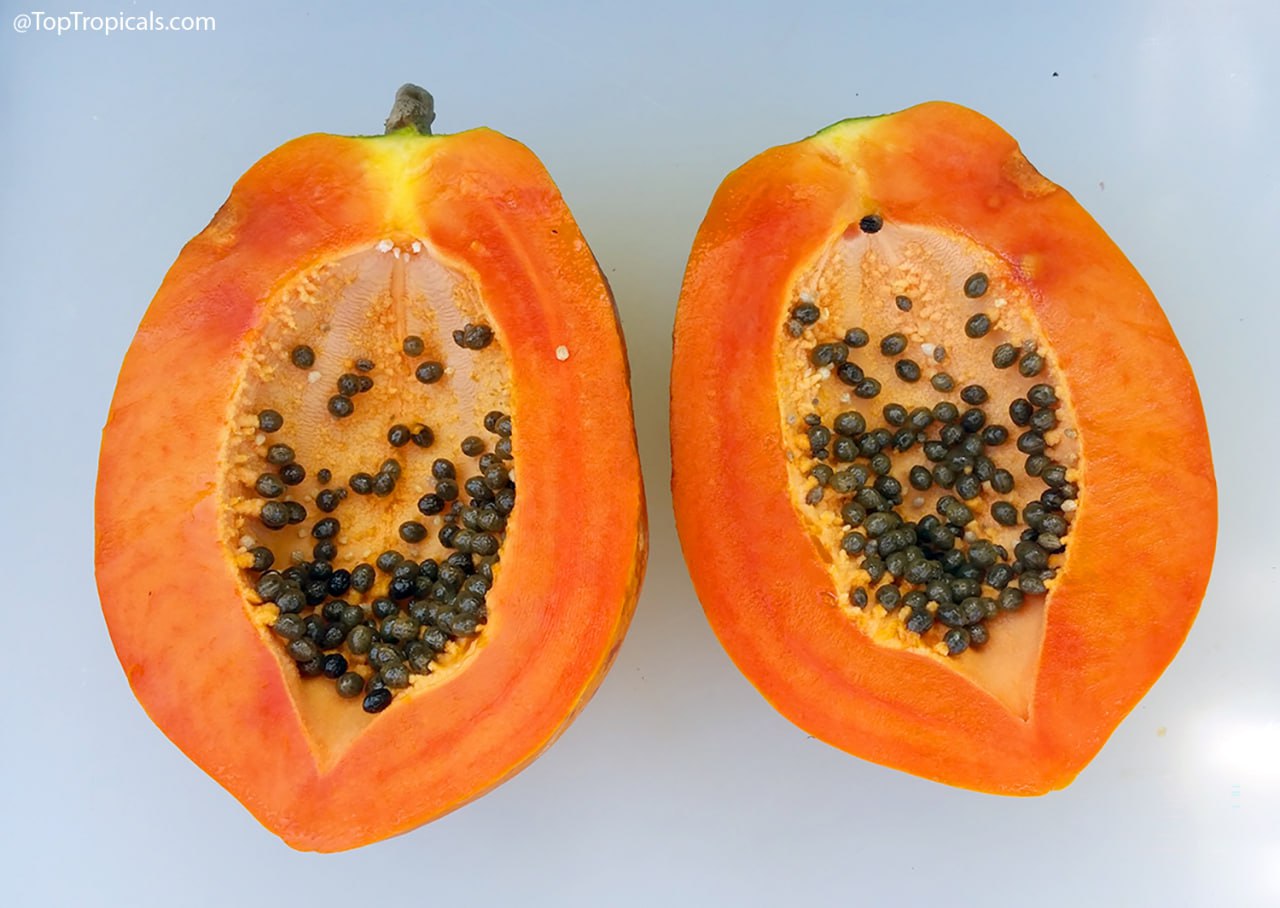
Removing the seeds 🟡Cut the fruit in half lengthwise 🟡Cut each half lengthwise again 🟡Scoop seeds from each quarter with a teaspoon
Choosing viable seeds 🟡Good seeds are black and about 1/4 inch in diameter 🟡Small, green, or white seeds are immature and will not germinate 🟡Fresh papaya seeds are coated with a slimy layer that prevents sprouting inside the fruit. This coating must be removed.
Cleaning and storing 🟡Rinse seeds thoroughly (a strainer works well) 🟡Remove all pulp and slime 🟡Dry seeds on a paper towel
If storing seeds: 🟡Dry completely for several days 🟡Even slightly moist seeds will rot in storage
If planting right away: 🟡Remove all pulp and slime and plant as soon as possible
If your papaya seeds have sprouted, you have already passed a major hurdle. Unfortunately, this is where many plants are lost next - not from poor germination, but from transplanting mistakes, excess water, or lack of sun. In Part 3, we cover containers, sunlight, watering, and the most common mistakes that kill papaya after it starts growing.