Garden Blog - Top Tropicals

Date: 16 Jan 2019

Climate change is wiping out the Baobab, Africa's tree of life...
TopTropicals.com

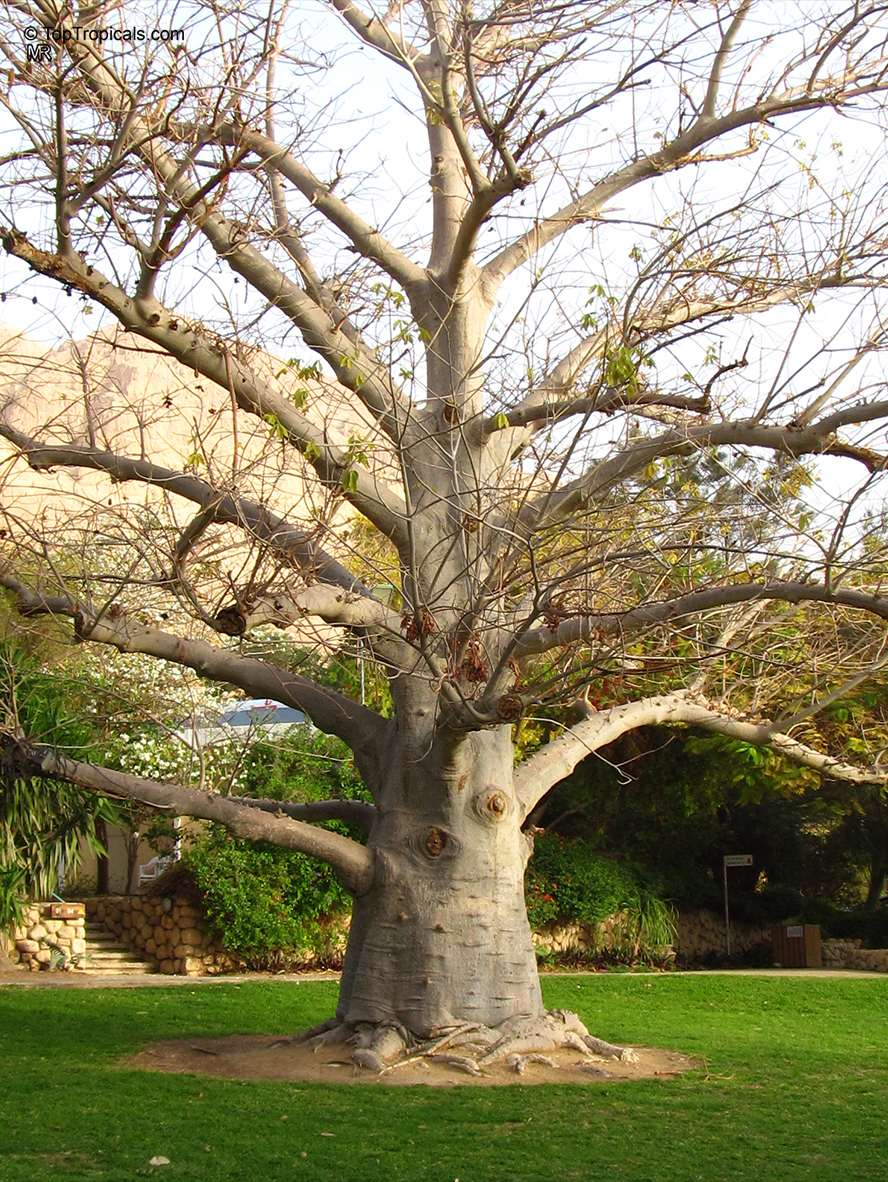
According to The Guardian News and Media, Africa's "tree of life" may not have much longer left... These highly important species are threatened with extinction, due to climate change and human development. Some species may not survive the next century. While plants have generally adapted to extended droughts, climate change is different, and with the Anthropocene, we are already witnessing the loss of these impressive trees. Africa's largest, oldest inhabitants, that have played silent witness to numerous generations, are already paying a heavy price for the environmental crimes of foreign lands.
Baobab forms an integral part in people's livelihoods. In West Africa, it is also called the "palaver tree" because of its social functions: when there is a problem in the community, meeting under the Baobab tree with the chief or the tribesmen would be synonymous with trying to find a solution to that problem; it reinforces trust and respect among members of the community. Its extinction would not simply be an environmental tragedy...

Every tropical gardener should have a Baobab to help to save this amazing species for the planet!

Date: 20 Oct 2018

Featured Plant. Bilimbi, Cucumber tree, Tree Sorrel

TopTropicals.com

Bilimbi, Cucumber tree, Tree Sorrel

Ethnic names are: Kamias, Belimbing Asam, Belimbing Buloh, Bimbiri. This rare exotic fruit is very popular in Thailand, Malaya and Singapore. In India, where it is usually found in gardens, the bilimbi has gone wild in the warmest regions of the country. Outside native habitat, Bilimbi is hard to find plant, very few growers produce them, although it is not so hard in cultivation.
The bilimbi is closely allied to the carambola but quite different in appearance, manner of fruiting, flavor and uses. The only strictly English names are"cucumber tree"and"tree sorrel"."Bilimbi"is the common name in India and has become widely used. Many people are more familiar with the close ralative - Averrhoa carambola - Star Fruit, which foliage looks very similar to bilimbi. The bilimbi leaves and taste of fruit are quite similar to those of the Phyllanthus acidus - Otaheite Gooseberry), although these plants are not related. Continue reading...

Check out this plant...

Date: 17 Oct 2018

Dobi Duck @ Top Tropicals

TopTropicals.com

Introducing a new member of Top Tropicals Team: Duck Dobi. Full name is Adobe (Acrobat or Photoshop - he is both active and colorful perrrson).

A customer brought us this little guy who was lost on the street, probably left behind when his Mama took her babies across the road. (Why did the Duck have to cross the road after all?)
So Kristi adopted Dobi. He has been doing great for the last couple of days, decided that Kristi is his Mom so he is following her everywhere. TopTropicals cats are excited but staying away knowing better: don't mess with Mama Kristi!
Those of you who know little secrets how to raise little ducklings please drop us a line! Dobi is our first experience in raising something different than plants or cats!

Date: 12 Oct 2018

Portlandia - rich hot chocolate with vanilla

TopTropicals.com

From Mark, the Garden Whiz. Since working in the horticultural field for nearly 50 years, at either nurseries or botanical gardens both in Florida and southern California, I have come into contact with a LOT of very cool plants. So many of them in-fact, that it's becoming increasingly difficult to run across new ones that really make me take special notice. Since being at Top Tropicals for a while now, there are a few species I had not met before which really stand out. Among them are a couple of kinds of Portlandia. Continue reading...

See our selection of Portlandias...

Date: 7 Oct 2018

Multi-flowering Hoyas:
from Mark, the Garden Whiz

TopTropicals.com

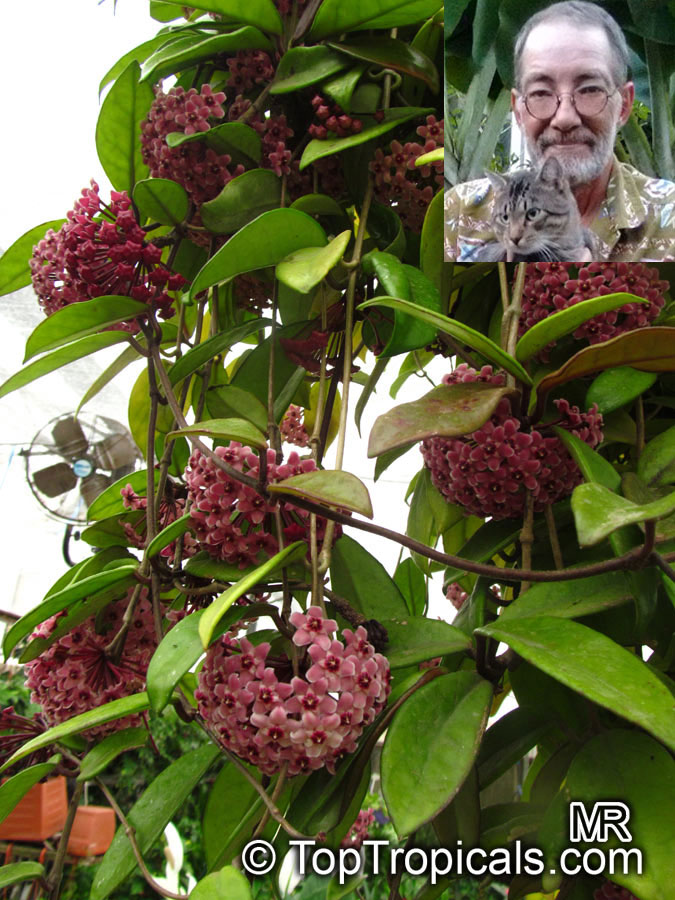
Q: A few months ago, i was given a Hoya vine. At the time, I was told to not cut-off the flowers but was never told why. However now that it IS flowering, they are so wonderful I would like to. Is there really a reason to not clip them off?

A: Actually, that was very good advise. Unlike most plants we encounter, hoyas develop perennial flower spikes. This means that each spike flowers more than just once! In other words, after the flowers on such a spike have gotten old and fall off, the knobby ended spike remains. Then, after a period of time, that same spike will develop another ring of flower buds. Depending on what kind of hoya it is, these perennial flower spikes may continue to periodically make more flowers for several years! And while the plant will continue to make more of these perennial spikes its whole life, the flowering display becomes better all the time as more and more spikes grow. (By the way, these are technically called "flowering spurs"). So every time a spur might be cut for ornamental purposes, it'll be one less place the vine can flower from in future years.

See our selection of Hoyas...