Garden Blog - Top Tropicals

Date: 3 Dec 2019

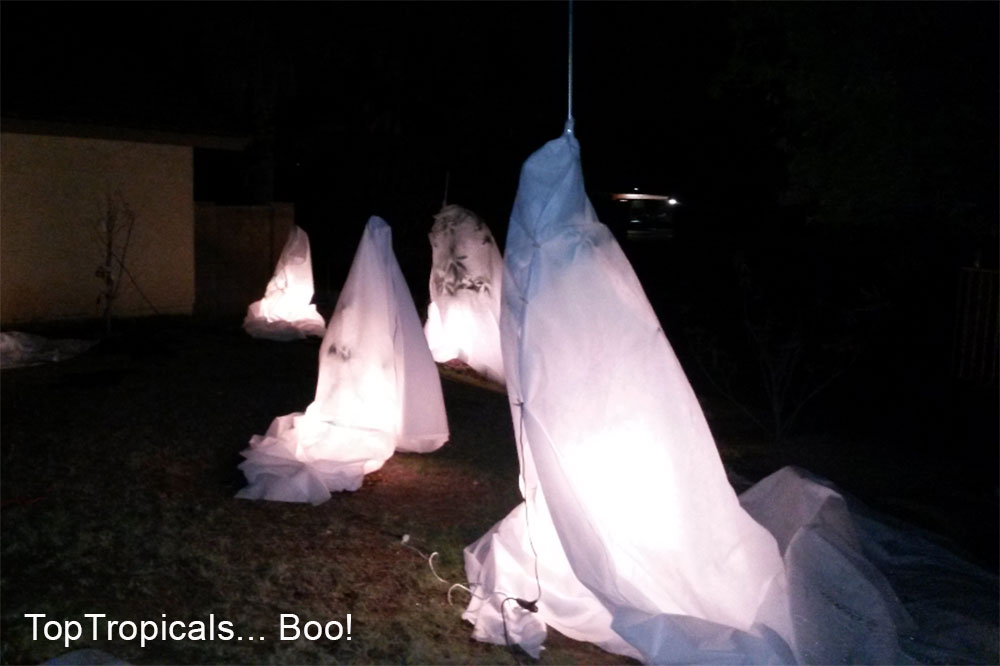
Ghost Cold Protection

Q: Has anyone ever tried using heat packs under frost blankets to protect tropical plants from frost?

A: The reality is, the heat packs used for shipping do not have enough heat capacity to create efficient warming effect. From our own experience, the best way is to use small 25W incandescent bulbs which produce lots of heat (considering observing all safety precautions and fire safety). Some gardeners use Christmas lights. See picture of our plants in the ground during a cold night. We called them Ghost Cold Protection! ;)

See more columns on cold protection:
Seven rules of cold protection for tropicals
About Cold Protection
Cold protection - winter action for your plant collection
Tropical Treasures articles

Date: 6 Dec 2018

Seven rules of cold protection for tropicals

TopTropicals.com

Q: I was always wondering how you guys manage to grow true tropical trees in Florida? I live in Puerto Rico and we have Breadfruit trees growing here in a wild... but my sister lives not far away from you, in Orlando, which is much colder, and I wonder if I can get her a Breadfruit tree for Christmas?

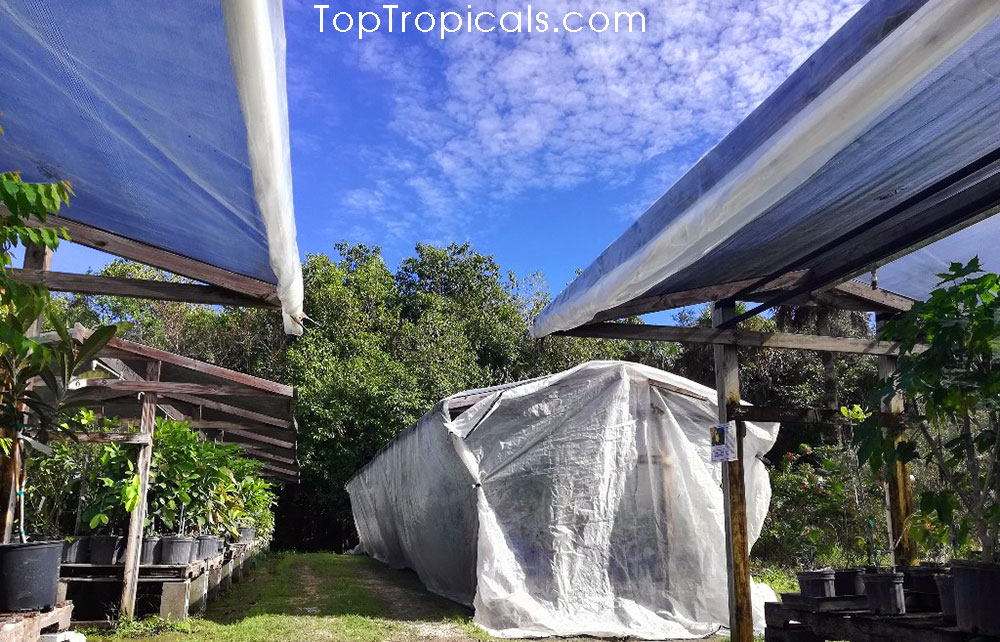
A: Your sister can grow a Breadfruit tree in Orlando either in a pot (and bring it indoors during cold periods) or in the ground inside a structure (an elclosed conservatory with heating system). See our customer's Greenhouse in Virginia. Cold protection of tropical plants is a lengthy subject and we have many interesting publications about it in our managine Tropical Treasures and on the website. In a nutshell, when growing tropicals outside of tropical climate, you need to follow these 7 rules:
1. Cut watering to a minimum. Cold+wet kills tropical roots.
2. Water thirsty plants before a cold night. Jucy leaves have fewer chances to be cold-zapped.
3. Wind protection is more important than a temperature drop. Plant tropicals close to a house or surrounded by other trees.
4. Duration of a cold period is more critical than the cold itself. If expecting long cold hours, bring up all available protection resources. Christmas lights or propane heaters - as long as there is a heat source, everything helps!
5. Remove plastic covers during the daytime so plants don't get "cooked" in the sun. Fabric covers are better than plastic.
6. Grow ultra-tropicals in containers and bring them inside the garage or even indoors during the cold.
7. Use SUNSHINE plant boosters and feed your plants well during Summer to improve cold hardiness.

Related topics:
About Cold Protection
Cold protection - winter action for your plant collection
Improving cold hardiness before winter: fertilizer and micro-elements
Cold hardy tropical fruit trees

Date: 28 Apr 2024

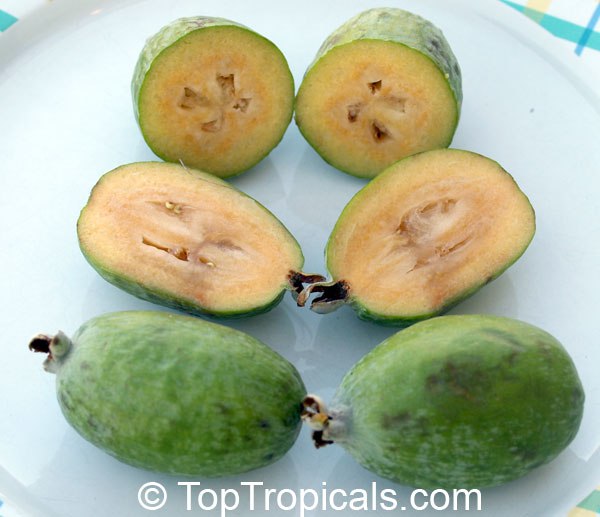
Why is it called Pineapple Guava? It tastes just like strawberries! Feijoa Superfood

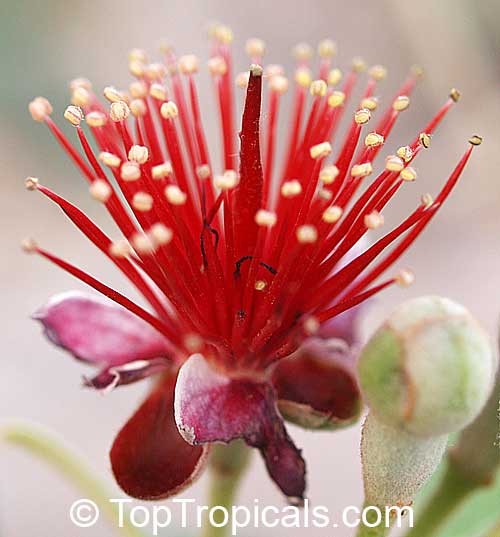
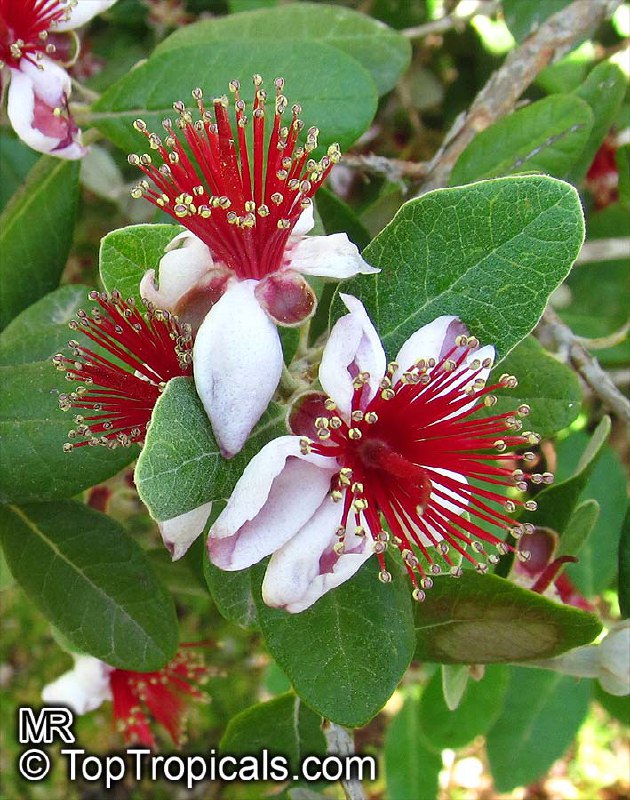
Pineapple Guava, Guavasteen, Feijoa sellowiana

Pineapple Guava, Guavasteen, Feijoa sellowiana

Pineapple Guava, Guavasteen, Feijoa sellowiana

Pineapple Guava, Guavasteen, Feijoa sellowiana

🍓 Why is it called Pineapple Guava? It tastes just like strawberries! Feijoa Superfood.
  • Feijoa is certainly one of the easiest fruit trees to grow as it does not require much care.
  • Feijoa is an attractive, evergreen large shrub that produces lovely edible flowers and fruit.
  • The fruit is eaten fresh, added to smoothies, fruit salads, used to make delicious jam (that tastes like Strawberry Jam on steroids!), and wicked chutneys.

Feijoa fruit go a long way in flavor!

📚 Learn more about Feijoa

🛒Grow your own Feijoa

#Edible_Forest #Guava

TopTropicals.com
We Grow Happiness

Date: 29 Jun 2025

Pineapple Guava: fragrant fruit, beautiful blooms, and real health benefits

Pineapple Guava blooming

Pineapple Guava blooming

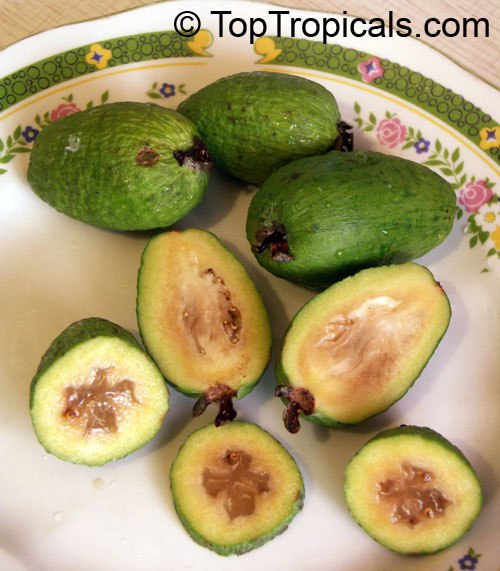
Pineapple guava fruit

Pineapple guava fruit

🍓 Pineapple Guava: fragrant fruit, beautiful blooms, and real health benefits
  • Feijoa sellowiana, also known as Pineapple Guava or Guavasteen, is an evergreen shrub or small tree that brings together beauty, fragrance, and edible rewards.
  • With its soft pink, edible flowers blooming in late spring and strongly scented fruit ripening in late summer to fall, it offers interest across multiple seasons.
  • The fruit is especially unique. When fresh fruit blended with a little sugar, many describe the flavor as forest strawberries with hints of mint or pineapple - some even say it reminds them of Juicy Fruit gum. The texture is smooth and slightly gritty, similar to a pear.
  • Nutritionally, Feijoa fruit is low in calories, high in fiber, and an excellent source of Vitamin C and antioxidants. You don’t need to guess when it's ready - the ripe fruit drops to the ground.
  • Pineapple Guava is easy to grow and adaptable. It tolerates drought, thrives in full sun or partial shade, and withstands heat as well as cold down to 10F. Whether planted in the ground or grown in a large patio container, it needs minimal care - just occasional watering and light feeding.
  • It also serves multiple purposes in the landscape: a dense, evergreen hedge for wind protection, a privacy screen, or a standalone ornamental that attracts birds and butterflies. It can be shaped into a small tree or kept compact depending on your space.
  • A beautiful, edible, and low-maintenance addition to the garden that earns its place year after year.


🛒Taste the fragrant forest-strawberry flavor - grow Pineapple Guava

📚 Learn more:


#Edible_Forest #Guava #Discover

🟢 Join 👉 TopTropicals

Date: 9 Aug 2021

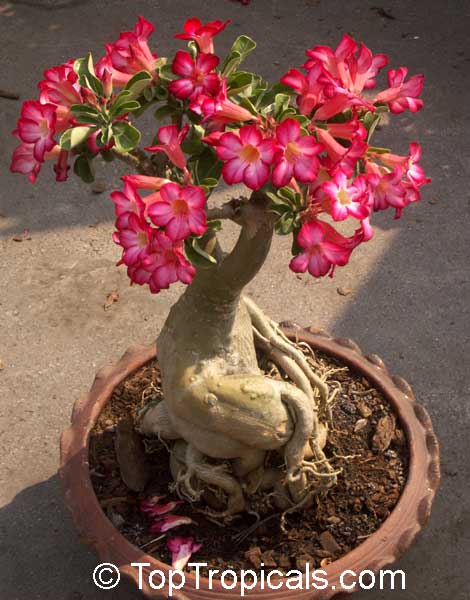
Care of Desert Roses
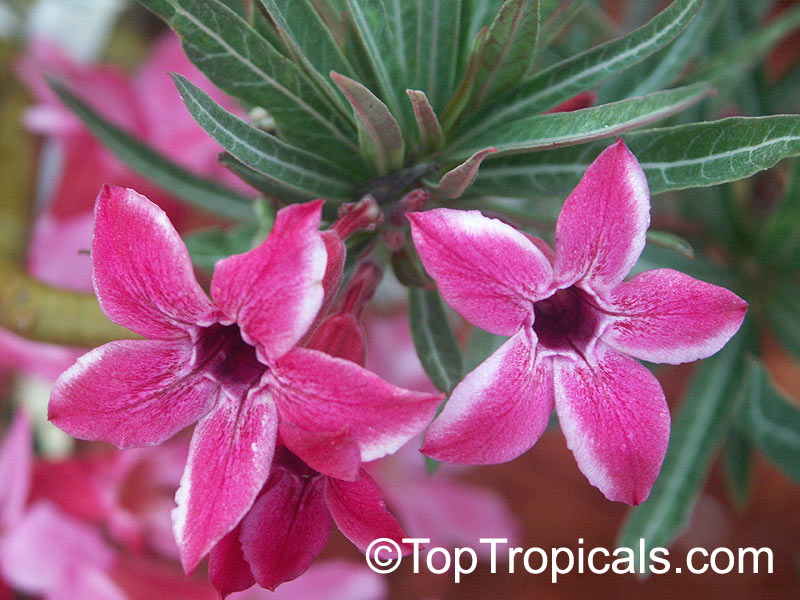
Q: I am looking forward to my three desert roses I just ordered from you and I am wondering how to take care of them, especially during winter time. Should I put the pots in full sun or shade? What kind of soil do they like? How often should I water them? When it gets cooler, should I bring them inside? We do have occasional frost here during winter.

A: Here are a few tips for your desert roses:

1. When received Adenium from mail-order, unpack carefully; branches are fragile. Plant in well-drained potting mix. Cactus mix will do, but we recommend special Adenium mix. If using regular acidic peat-based potting mix, you may add sea-shells on top of soil to neutralize acidity: adeniums prefer alkaline soils. Using clay pots is beneficial. Water once and do not water again until soil gets dry. Place in bright shade until new leaves sprout, then the plant can be moved to full sun.

2. Adenium is a succulent, but not a cactus. It needs watering, however let soil dry before waterings. Reduce watering during cool season and discontinue when plant gets dormant (drops all leaves in winter).

3. Bright light is the best for profuse flowering. However, adeniums look much healthier in slightly filtered light rather than in all-day full sun.

4. Fertilize and spray leaves with liquid fertilizer SUNSHINE Megaflor - Nutrition Bloom Booster. Phosphorous is responsible both for flowering and caudex development. Avoid caudex, spray over foliage only. Dry fertilizer can be used only during hot months.

5. Watch for spider mites during hot and dry season.

6. Give plants a break during winter dormant season. Keep in bright shade and reduce watering to 1-2 per month or stop watering if temperature is below 65F.

More info on growing Desert Roses:
What you need for successful growing Adeniums
Overwintering Adeniums outside of tropics
Growing Exotic Adeniums - Growing Exotic Adeniums