Date: 16 May 2026
🔮 When the World Around Becomes Too Gray: Plant a Tree. Eat a Donut. Keep going.

Smokey: Plant a tree.
Sunshine: And if that does not help?
Smokey: Plant another one.
Sunshine: And eat a donut.
Smokey: Not strictly necessary, but statistically beneficial.

If you have been feeling a little worn down lately, you are not alone.
You already know about the headlines. We do not need to list them. You have probably seen them today before breakfast.
We are not here to pretend that is not happening. It is happening. And it is a lot. But here is the thing we keep coming back to, the thing that has been true for as long as people have had hands and a patch of ground: when the world feels out of control, you can still plant something.
Gardening is not an escape. It is an answer. When you put a tree in the ground, you are making a quiet statement. You are saying that you expect there to be a future. That you intend to be in it. That shade and fruit and flowers still matter, and you are going to make sure they exist in your corner of the world.
That is not naive. That is courageous in the most ordinary and underrated way.
One tree, planted this season, might give you fruit in a few years. It might give butterflies somewhere to stop. It might give a bird a place to nest. It will almost certainly give you something to look at on a hard day that reminds you the world still contains beauty, and that you put some of it there. And if one tree does not quite do it? Plant another one.
Dostoevsky said beauty will save the world. We think a mango fruiting in your backyard counts. So does a Magnolia opening on a quiet morning.
Do not skip the donut.
A donut is a small, simple, completely unnecessary thing. That is exactly the point. It is not productive. It does not solve anything. It is just good, and sometimes that is the whole reason. In a world that constantly demands you be useful and informed and concerned, eating a donut is a quiet act of being human. You are allowed to enjoy a small thing on a hard day. You do not have to earn it.
Rest a little. Then go put something in the ground. Anything that will grow and flower and remind you that beautiful things are still happening whether the headlines mention them or not.
We have the plants. You bring the donuts.
🛒 Plant a sweeter world: grow color and flavor
Date: 21 Sep 2019
Shaping a tree and regrowing branches
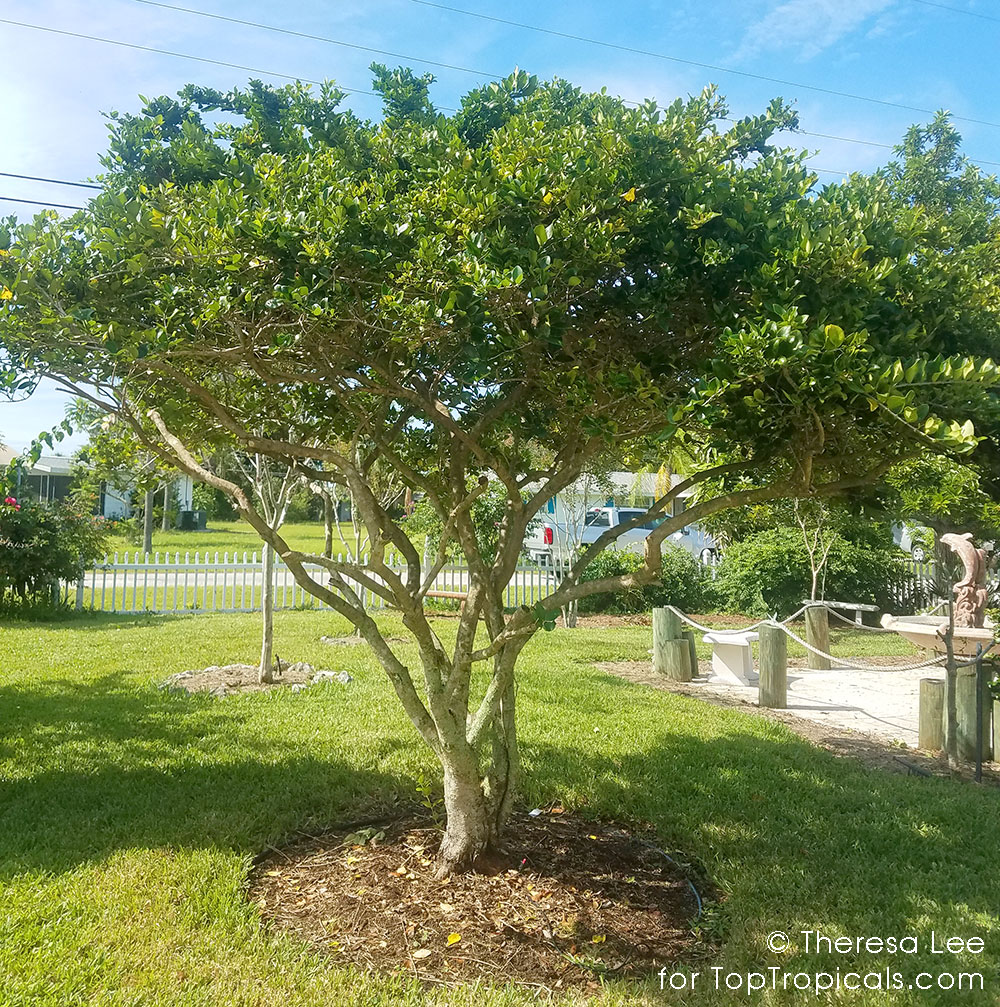
Q: I have been so worried about the beautiful ligustrum on my property since my husband decided to "prune" it 2 days ago. He removed about 20 branches from the tree and completely altered the look of the canopy which was so full and lovely ðŸ˜. Please advise me if there is anything I can do to help this tree. Will any of the branches grow back? Will the canopy return? It looks practically bare to me now.... so heartbroken. Any advice and reassuring would be greatly appreciated.
A: The good news is, the tree will regrow new leaves and will
branch out. The question is, how soon. Ligustrum is pretty slow-growing species
and it may take a while until it gets to the shape that is close to the
original.
On the other hand, pruning is beneficial almost for every plant, it
promotes new growth and bushy shape.
So do not panic, your beautiful tree has good chances to become even
prettier.
To speed up the process of re-leafing and promote healthy new growth,
we recommend the following:
1) Provide extra watering, assuming you have a sprinkler system that covers the yard. Water additionally 1-2 times a week using a garden house, for 1-2 minutes, saturating the soil around the tree and up to a drip line.
2) Apply the following fertilizers:
Tropical Greenhouse Plus - Foliage Booster
Tropical Allure - Smart-Release Booster
3) In addition to fertilizers, we recommend these 2 supplements that
will enhance effect of fertilizers and make re-grow process even faster:
SUNSHINEâ„¢ SuperFood
SUNSHINEâ„¢ HumiHum - a natural humate vitamin for plant
4) Mulch well around the tree, keeping it 2-3"away from the trunk
This should help to get your tree back in shape!

Date: 8 Aug 2019
How to grow Parijat indoors in winter
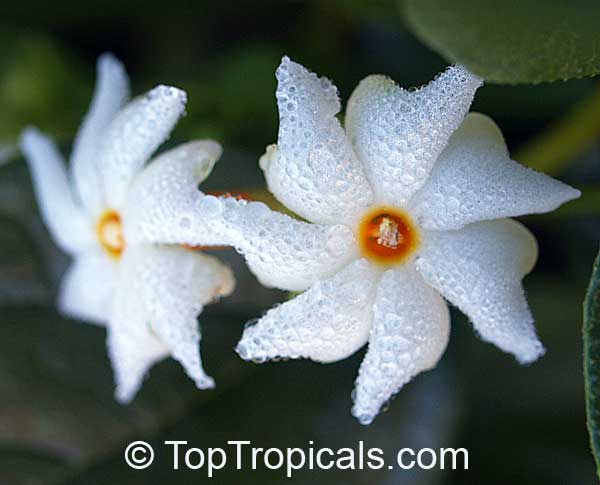
Q: I purchased Parijat plant last year spring. It had good growth in Summer, after that I kept the plant inside the house in winter. A couple of weeks it was ok, after that the plant lost leaves. What is a better idea for growing Parijat plant indoors in Winter?
A: Nyctanthes arbor-tristis, Parijat - is a semi-deciduous plant, which
means, it may lose its leaves during unfavorable conditions such as drought,
cold, low light and/or humidity. In your case, the plant dropped leaves because
of the stress of moving indoors that includes reducing light and humidity
levels. When a tropical plant loses leaves during winter, this means it goes
into a dormant stage. If this happens, you need to reduce watering and keep the
plant on a dry side, water in only when the top level of the soil feels dry
to touch. Do not fertilize.
Try to place the plant in a well-lit spot such as a windowsill. If the
windowsill and the window glass feel too cold for touch during wintertime,
you may place a sheet of a Styrofoam underneath the pot, and a sheet of a
bubble-wrap between the plant and the window glass, to create an extra barrier
from cold. The plant may re-leaf during wintertime; if not, it may wait until
spring, be patient.
Bring it back into outdoor light when minimum temperatures rise above
65F and resume fertilizing.
Recommended fertilizers for fragrant plants:
Pink N Good Daily Plant Food - Flower Booster
Plumeria Top Dress - Smart-Release Booster
SUNSHINE SuperFood - microelement supplement

Date: 30 May 2019
Selecting the right jasmine
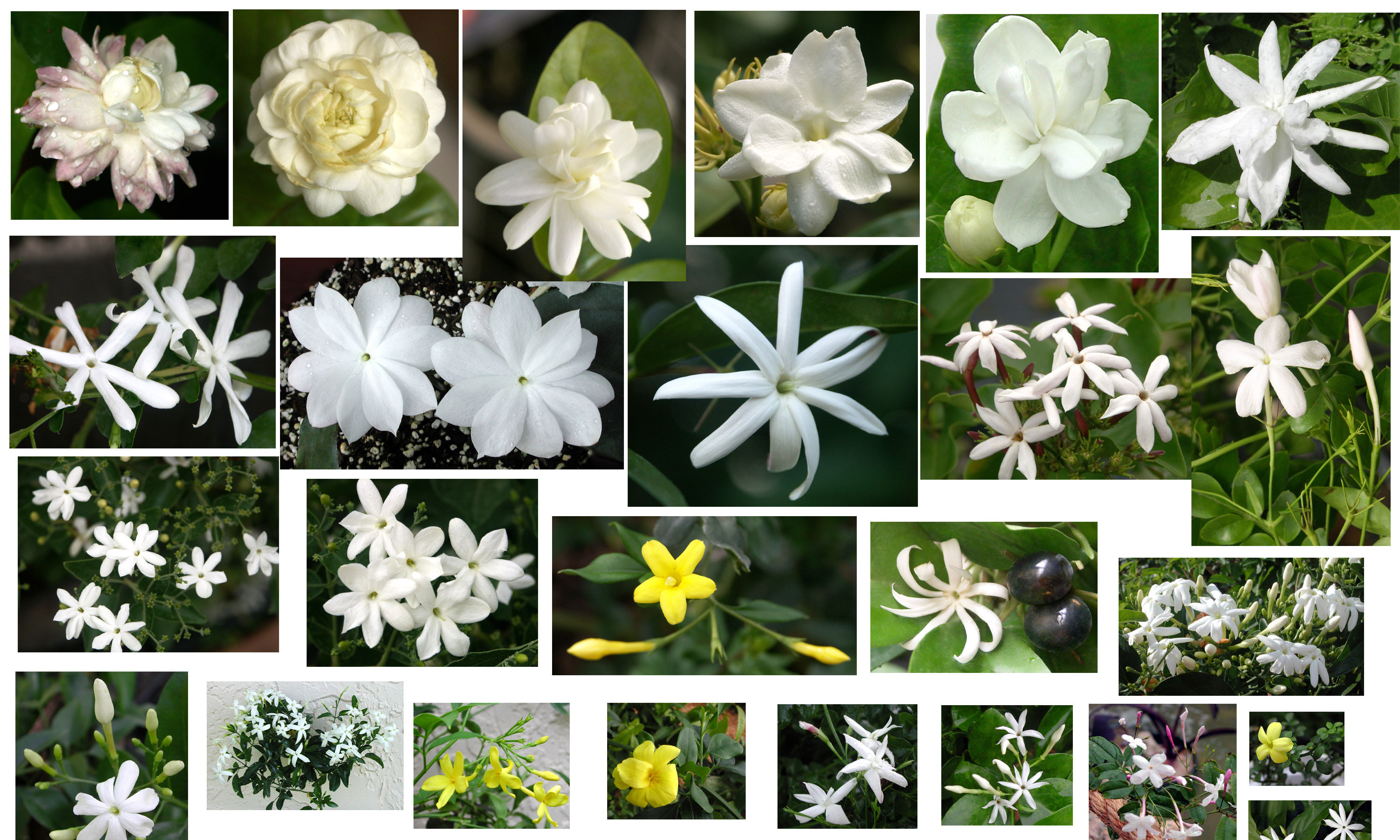
Q: Would you please help me select the right jasmine? I want to find a jasmine that smells like lily of the valley or honeysuckle or roses, not the one that smells like gardenia. I'm in Missouri, zone 6, so I want a jasmine for my deck for the summer, so I want it to bloom this season.
A: There are 3 major types of tropical flower fragrances - Sweet, Fresh, and Fruity (including Lemony). Below are the most interesting fragrant tropical flowers, excluding Gardenias (which are sweet type). These are all same-year bloomers, so you can enjoy the fragrance this year assuming proper care and bloom booster feeding.
* - The fastest growers that can be treated as annuals. Others can be grown in a pot and brought inside for winter, and be enjoyed every year.
Sweet
*
Aloysia virgata - Almond Bush
*
Cestrum diurnum - White Chocolate Jasmine, Day Blooming Jasmine
*
Cestrum nocturnum - Night blooming jasmine
*
Heliotropium peruviana - Turnsole, Cherry Pie
Portlandia Cubanola domingensis - Cubanola (Warm white Chocolate)
Portlandia grandiflora - Glorious Flower of Cuba (Warm white Chocolate)
Fresh
Beaumontia grandiflora - Easter Lily Vine
*
Brugmansia Jean Pasco - Yellow Angels Trumpet
*
Brugmansia Variegated Orange Angel Trumpet
*
Brunfelsia americana - Lady of the night
*
Brunfelsia lactea - Lady of the night
*
Brunfelsia nitida - Lady of the night
Crinum Queen Emma - Spider lily
*
Eucharis grandiflora - Amazon Lily
*
Hedychium coronarium - Butterfly Ginger
Hiptage benghalensis - Helicopter Flower
Hoya odorata - Fragrant Hoya
Ixora hybrid Sea Green
Ixora odorata - Fragrant Ixora
*
Jasminum azoricum - River Jasmine
*
Jasminum Molle - Indian Jui
Jasminum nitidum - Star Jasmine
*
Jasminum officinale Flore Pleno - French Perfume Jasmine
*
Jasminum polyanthum - Pink Winter Jasmine
*
Jasminum sambac Belle of India
*
Jasminum sambac Grand Duke
*
Jasminum sambac Maid of Orleans
*
Polianthes tuberosa - Tuberose
*Sclerochiton harveyanus - Blue Lips, Mazabuka (Lavender-violet-like)
Fruity
Aglaia odorata - Chinese Perfume Plant (Lemony)
Artabotrys siamensis - Climbing Ylang-Ylang (Lemony)
Cananga fruticosa - Dwarf Ylang-Ylang
Carissa grandiflora - Natal Plum
Cerbera x manghas hybrid - Enchanted Incense
*
Jasminum dichotomum - Rose Bud Jasmine
*
Lonicera japonica - Japanese Honeysuckle
Magnolia figo - Banana Magnolia (Banana-like)
Magnolia x Alba grafted (Bubble-gum-like)
*
Mirabilis jalapa - Four oclock plant
Oxyceros horridus, Randia siamensis
*
Quisqualis - Rangoon Creeper
*
Radermachera Kunming - Dwarf Tree Jasmine
*
Stephanotis floribunda - Bridal Bouquet
Strophanthus gratus - Climbing Oleander
Telosoma cordata - Pakalana vine (Lemony)
Fertilizers for profuse flowering:
Pink N Good Daily Plant Food - Flower Booster
Tropical Allure - Smart-Release Booster
SUNSHINE-Superfood micro-elements
Date: 2 Nov 2018
Happy Hobby: growing tropicals from seeds
Q: What is the best time to start tropical plants from seeds? Should I wait till spring?
A: If you
want to feel happier, get into gardening. If you want to feel God, start
plants from seeds and watch New Life grow from a tiny grain. Fall is a perfect
time to start tropicals from seed.
Traditionally, people prefer sowing seeds in Spring, especially
temperate species for a vegetable garden: tomatoes, peppers, cucumbers... My
grandmother up North started them in early Spring in paper cups on a windowsill,
then once the temperatures went just above freezing, she planted them out in the
garden beds, and that early start always helped her to have the best early
crop in the neighborhood.
When we deal with tropical plants, "just above freezing" is not warm
enough. Which means you have to grow small babies indoors for quite a while,
providing additional heating when needed. Heating pads always work best. If you
keep your living space around 75F (ideal for many species), this is a
perfect temperature to get your seeds started. Tropical plants are not like annual
tomatoes that try to grow through the season as fast as possible. They take
time. So the sooner you start, the more chances to get small seedlings just in
time when Spring air outside is "warm enough" for those tropicals - at least
in 70's.
A great advantage of starting tropical seeds indoors is controlled
temperature and moisture. In the plant world, environment extremes are not good
for the germination process. Mild conditions of your home or a greenhouse
create better chances for successful growth. Seeds won't get overheated in the
hot Summer sun, and won't rot because of a sudden heavy rain. Just keep in mind
that some species require light for good germination.
For the best seed germination:
- Use only well-drained mix - we recommend special Seed Germination Mix #3, professional grade. Put seeds not too deep
(1/2 inch deep or less) to allow air circulation
- Soak large seeds for a few hours with Sunshine-S solution
- Keep warm (75-85F) and in bright light
- Keep soil slightly moist but not soggy
- Apply micro-element booster SuperFood to baby seedlings for vigorous growth