Garden Blog - Top Tropicals

Date: 19 Jan 2021

Healthy Plants: Q&A from Mr Booster

Fertilizing in Winter
Q: I have many tropical plants in my garden, both in the ground and in pots. I realize it is wintertime and some of them, the Hydrangea, Hibiscuses, and roses are in bloom but the rest of them seem wilty and droopy. Is it alright to fertilize them now, or should I wait for a few days? I have an all purpose tropical fertilizer and a 20-20-20 also. Please advise what to do.

A: During wintertime, tropicals may suffer from low temperatures and lack of sunshine which causes droopy leaves, and leaf loss.
Regardless of the cause and plant condition, you should NEVER apply traditional dry fertilizers during cool months. When cold, dry fertilizers (EDTA-chelated) may create nutrient lock up in soil and damage the roots. Dry fertilizers (both granulated and water-soluble) can be used only during hot season - when min temperatures stay above 65F for at least a week in a row, and daytime temperatures are over 75-80F. During hot, active growth season plant metabolism increases. This provides less chance for a chemical root burn, as the nutrients are used up quickly.

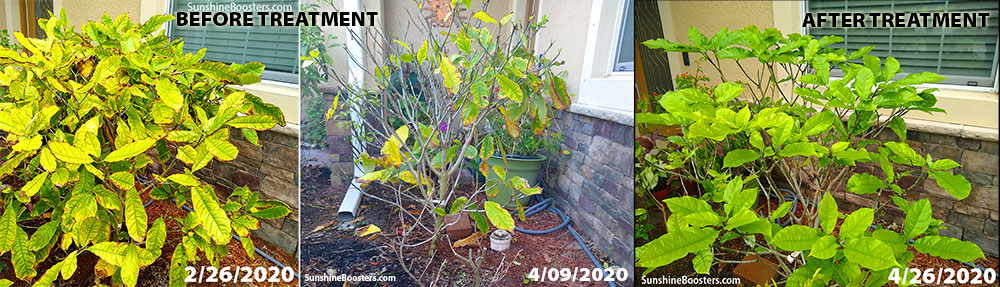
However, liquid fertilizers, as long as they are amino-acid based, can be used year round. From our own experience last winter, we discovered that fertilizing sickly looking plants (with signs of cold damage and root issues) with Sunshine Boosters actually revived those plants. Sunshine Boosters even brought back to life some hopeless specimens. Take a look at this gardenia that grows in our garden (picture above). See full article.
In your case, it would be beneficial to use a mild formula of liquid boosters in combination with Sunshine Epi -a natural plant hormone that boost their growth and helps to cope with cold-, temperature- and low-light-related stress.

These are the products we recommend:
- Sunshine Bombino - add to every watering
- Sunshine Epi - twice a month as foliage spray

Since you grow plants in pots, feeding program is especially essential, because plants are limited with a container size where roots can't reach out to more food in the outer soil. In professional nursery set up with injector irrigation systems, container plants are fed daily (depending on season, more than once a day) with every watering. This is why greenhouse plants are so healthy looking.
So feel free to give your plants Sunshine boosters with every watering, dozing according to the label. During cold period, plants need less frequent watering, so fertilizer input will be balanced accordingly, it will depend on temperature and plant metabolism.
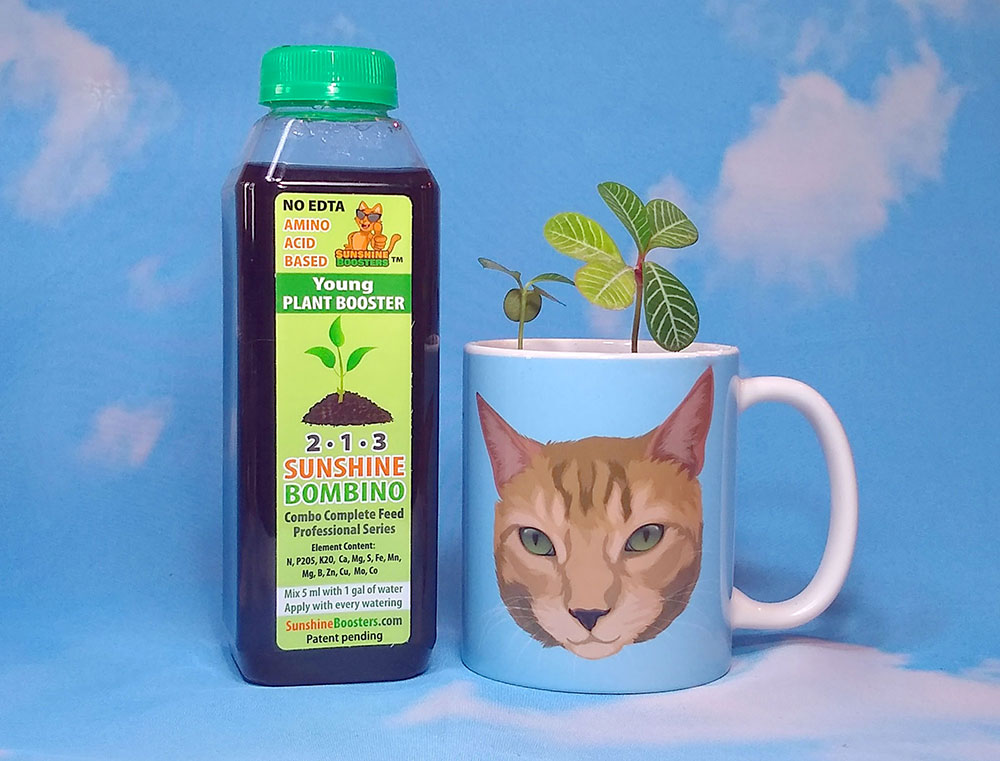
Sunshine Bombino - mild, "pampering" formula for young and tender plants, as well as plants recovering from stress and/or winter damage.

Date: 7 Jul 2016

Growing fruit trees in containers

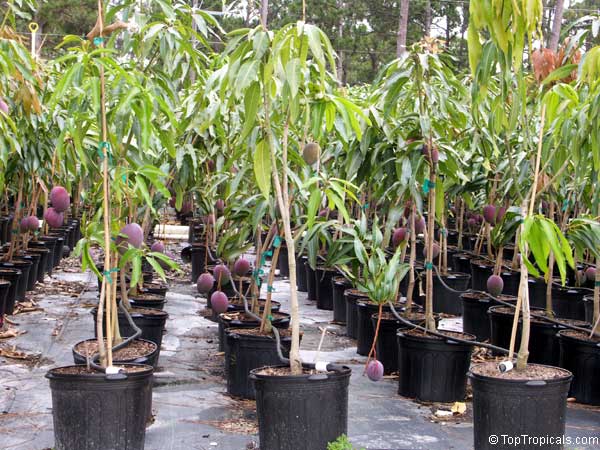
Will it fruit in a pot? YES! Many tropical fruit trees can be grown in a pot. We get many calls from customers in cooler climates asking if our tropical trees can grow and fruit in a pot. The answer is yes!

Several plants fruit well in pots. Blackberries and raspberries, barbados cherries, blueberries and many more start fruiting even in their 1 gallon containers. We are especially excited about our new Pixie grapes, which are heavily laden with grapes even at only a foot long!

While some plants are small and will fruit easily in a container, others are large trees. For the tree type fruits, we recommend growing only non-seedling plants for pot culture. We have cuttings, air layers and grafted plants that are great options. These have the ability to fruit right away, as they are the same age as the parent tree. Some horticulturists recommend removing the first year fruit to allow the plant to focus on growth and establishing. If the plant is being kept in a pot, this is not necessary.

We also have several dwarf varieties of fruit trees that will thrive in a pot. For avocados, we carry the Wurtz variety which is a dwarf tree... read more...

Date: 20 Dec 2019

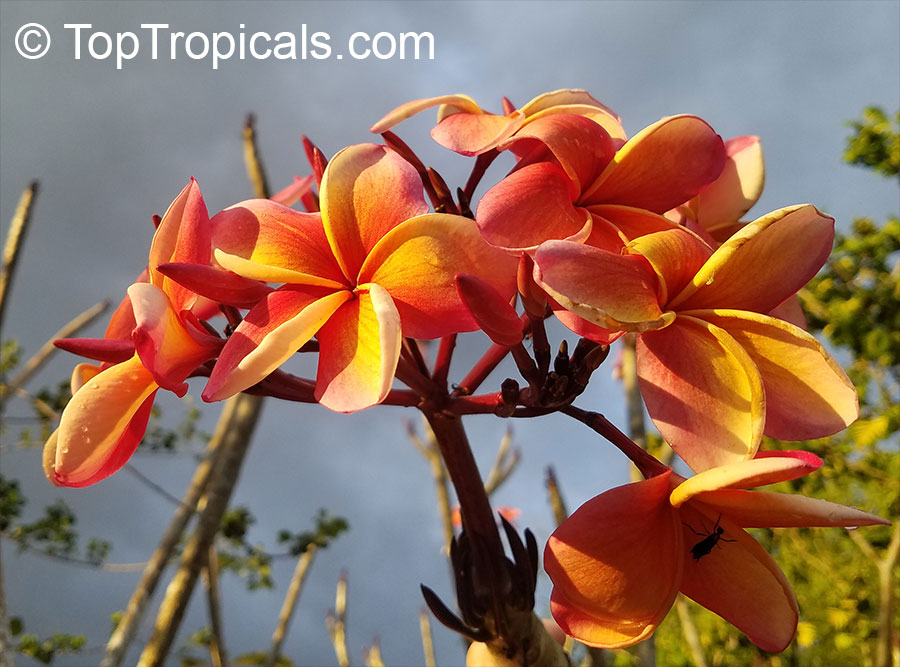
Plumeria cold protection

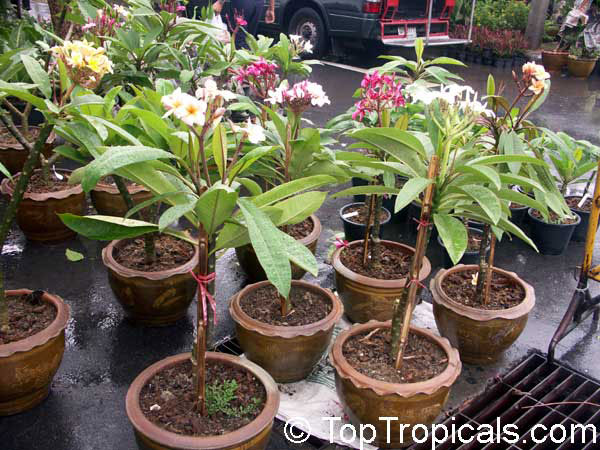
Q: We have a purple-flowering plumeria which resides on our sunny deck during the warm months and then Winter vacations on our back porch where we can close the plastic film windows and where it stays above 50 degrees (overnite) until it can get moved outside again. We live in zone 8+ in South Carolina and I would love to plant it outside. Do you think if we ghost-covered it when alerted that we would have an overnite freeze, that it would survive being planted in the ground and recover to flower when warm? I don't believe the soil in our yard has ever frozen below the top 1/2 inch or so, and never for more than a few hours at a time. What do you think?

A: Plumerias are tropical plants, which means, they need frost-free environment. Even if the ground is frozen only on "the top ½" or so" - this may be enough to kill the plant. From our experience, plumerias can withstand a few hours of windchill frost (not frozen soil), but even if they survive, they may get some branches damage, and recovery may take so long that the plant may not even bloom the next year. So I wouldn't take that risk even with a ghost-cover cold protection. We have customers who grow tropical plants in the ground in colder areas, but they have greenhouse protection: this means, the soil is warm and the air temperature is maintained above 45-50F. For example, this Greenhouse in Virginia.

We recommend to continue growing your rare plumeria in container and move it inside when temperatures drop below 50F (recommended) and for sure when they drop below freezing. Plumeria can take a cold night (a few hours of upper 30's) as long as it is followed by a nice warm sunny afternoon with at least upper 50s. Otherwise, keep it indoors. The good news is, since plumerias are deciduous and have no leaves in winter, low light level won't affect the plant.
Just make sure to minimize watering and keep the plant on a dry side until it starts growing new leaves in Spring. You may continue fertilizing once a week with half-doze of Sunshine boosters - Sunshine TotalFeed. This will maintain the plant healthy and prepare for the blooming season in Spring.

Date: 18 Nov 2018

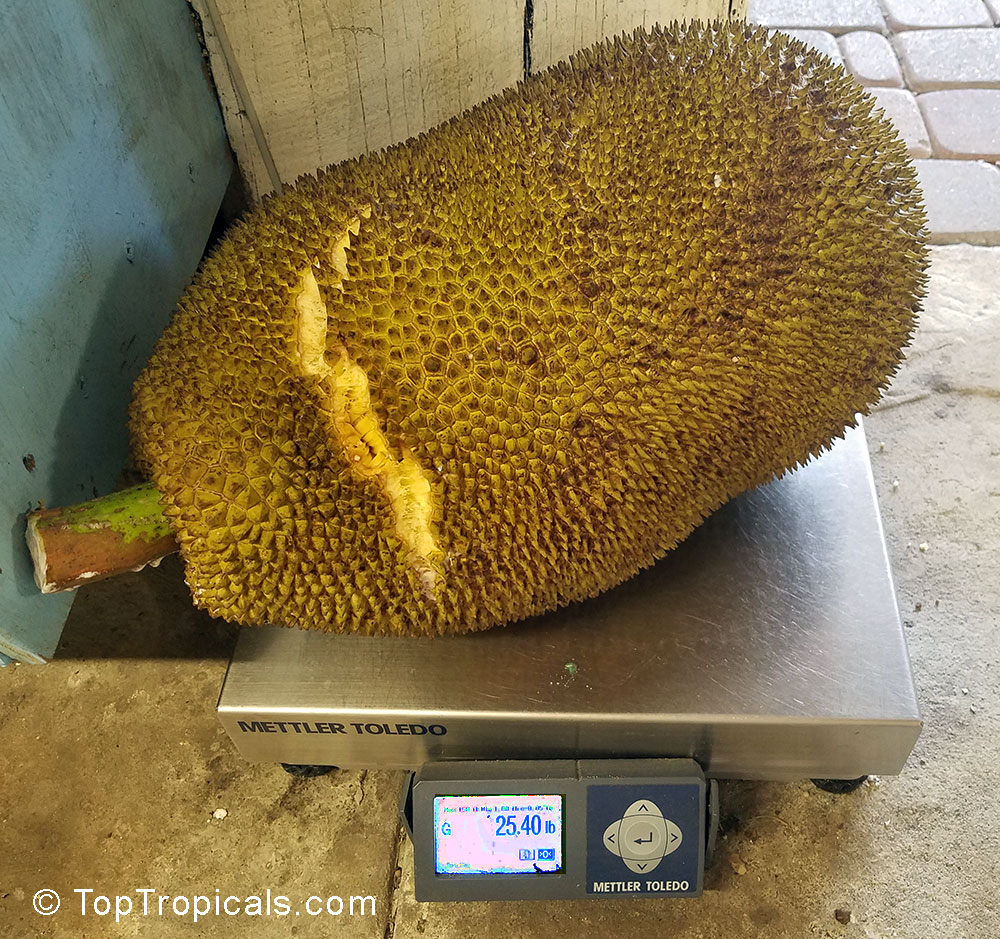
How to grow the biggest fruit on Earth...

TopTropicals.com

Q: When I visited Thailand I bought this huge fruit at the market and the taste was amazing and unique! Now I see you have this Jackfruit tree for sale. I am excited to grow it but not sure if it will survive our winters. I live in Huston, TX. Also are there any special conditions required for successful fruiting?

A: Jackfruit indeed is one of the most fascinating tropical fruit. In spite of reputation being ultra tropical, the tree is not as cold sensitive as everyone believes. Mature trees can withstand light frost for a few hours without significant damage. The only thing, after cold snaps it may be not as profuse producer as in frost-free climates. Keeping Jackfruit in a pot is also an option in colder areas. The tree is quite unique not only about fruit but also about growth habit. The fruit is so large and heavy that the tree has a smart feature to produce only at the base of the trunk. This makes it possible to keep Jackfruit tree at very short height - 6-7 ft tall. We have many varieties of Jackfruit, and all of them can be grown in containers considering regular topping/pruning.

5 secrets of Jackfruit successful production:
1) Frost free temperatures (occasional cold spells are not critical if SUNSHINE-T cold protection booster is used)
2) Soil rich of organic matter (compost, manure, peat moss)
3) Moist soil and regular watering
4) Constant pruning and keeping under 7-10 ft
5) Regular application of fertilizer, microelements and SUNSHINE-Honey for better quality fruit.

Read more about Jackfruit tree
See video of the fruit
See

Date: 22 Apr 2022

Spend time among trees...

"...Time spent among trees is never time wasted..."
- Katrina Mayer -

Ceiba  pentandra

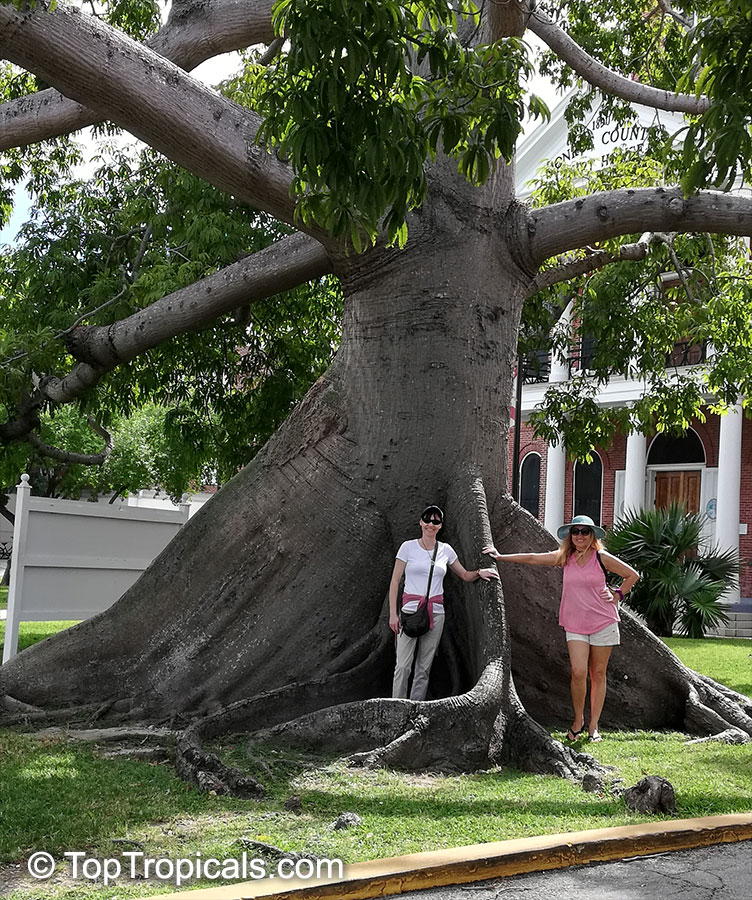
One of the most impressive and massive trees in the world - Ceiba pentandra - Kapok Tree. A majestic tropical tree! The ancient Maya of Central America believed that a great Ceiba tree stood at the center of the earth... Would you like to try growing it in the center of your backyard? Considering it will take decades to grow this big...

Ficus

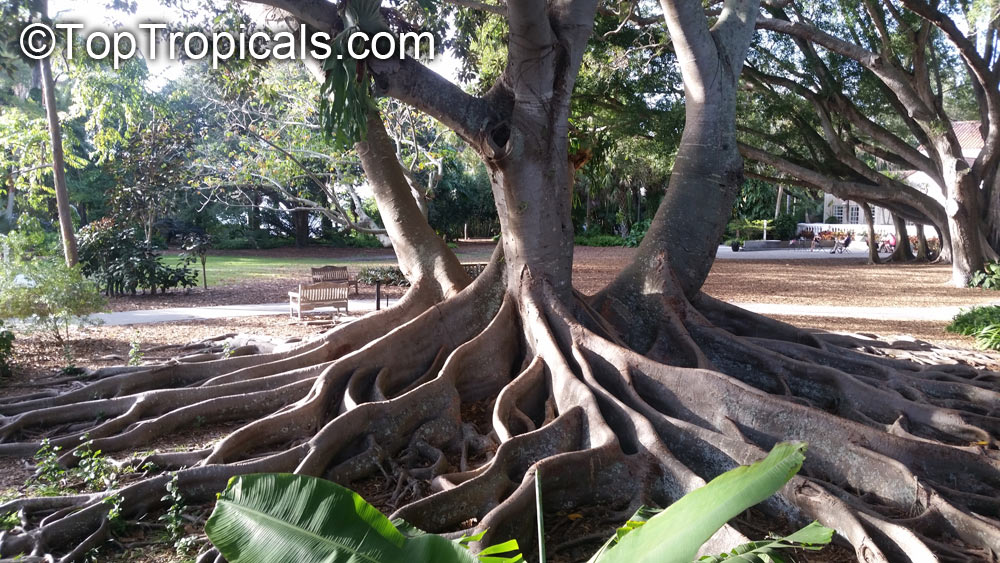
Ficus macrophylla (Banyan). Did you know that exotic Banyan Trees are close related to Fig trees?..