Date: 29 Sep 2020

Healthy Plant Food: Q&A from Mr Booster
Why my Sapodilla is not fruiting?
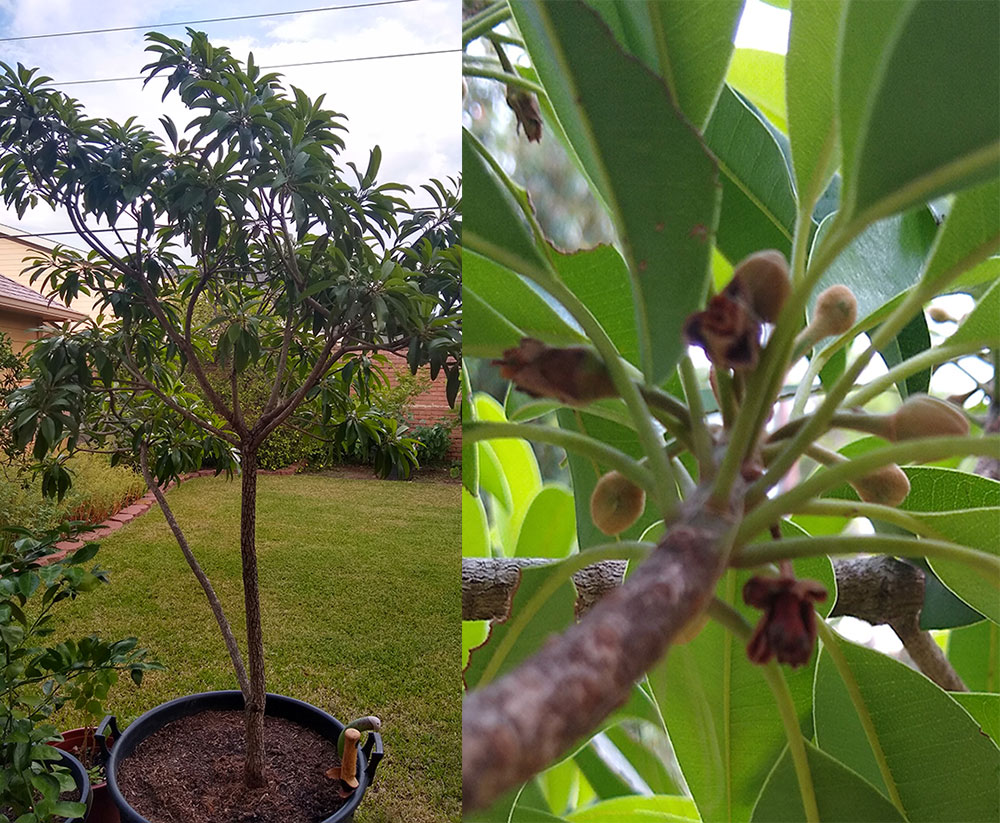
Q: I bought a Sapodilla tree from you several years ago, Silas Woods. I live in Houston area. The tree grows and produces blossoms for fruits, but then they just dry up and fall off. To-date, I have not gotten any fruits off the tree. Is there a reason for this? I really want a fruiting tree because Sapodilla is one of my favorite fruits. I have attached pictures of the tree. Please help.
A: Silas Woods is a free-flowering variety and in favorable conditions it should produce fruit almost year round, considering warm temperatures. The fact that the tree is producing flowers indicates that it is strong, overall healthy and ready for production, but for some reason these flowers don't set fruit. There may be several reasons for such behavior.
1) Too high temperature and too low humidity
In Houston area, humidity should be good in summer. However, if
temperatures stay above 90F for a long time, this may cause flower dry-n-drop.
Solution: try to move the potted tree into filtered light, or in a
spot where it does not get direct burning sun during the hottest hours of the
day (morning sun is the best)
2) Root bound.
Solution: check if the tree needs stepping up into a larger
container.
3) Lack of certain nutrients that are responsible for proper fruit
formation.
In particular, elements B (Boron), Mo (Molybdenum), and a few other
micro-elements (Fe - iron, Cu - Copper, etc.). This is most likely the cause of a
flower drop. This is very common reason for undeveloped fruit or lack of fruit
in container-grown fruit trees. When grown in the ground, plants can reach
out to all necessary elements in surrounding soil (considering soils are not
too poor on necessary elements). In a pot, a supply of nutrients can be
exhausted very quickly, so a quality fertilizer program is very important.
Fertilizer must include all necessary nutrients in easy accessible form, and a plant
must have their constant supply for proper development.
Solution: prescribe to your Sapodilla tree the following combination
of plant food:
- SUNSHINE C-Cibus - Crop Nutrition Booster. It will provide
well-balanced amounts of high absorption Nitrogen, as well as other macro-elements - to
provide enough energy to the tree, plus a combination of all necessary
micro-elements. It is safe to apply this fertilizer as frequent as with every
watering, including winter time.
- SUNSHINE-Honey - sugar booster. This supplement has a high content of
elements Mo and B - once the tree starts getting them on regular basis (a few
times a year, according to the label), it will change its habit dropping
flowers and/or premature fruit drop. As extra bonus, Sunshine Honey makes fruit
sweeter by bringing sugars from all over the plant and concentrating them into
fruit.
4) Lack of pollinating insects.
Solution: For most effective pollination, we always recommend to put
some pieces of fruit under the tree, apple peels, or even banana peel. Those
attract tiny beetles that are responsible for small flower pollination.
With winter time approaching, fruiting season is about to end, however, do not get discouraged and start the fertilizing program right away: this will bring up the plant into a healthy stage within a few months, and by next season it should be covered with fruit you like so much! Remember, Sunshine liquid fertilizers can be used year round, including winter, without a risk to burn roots or overdose, as long as you follow label instructions.
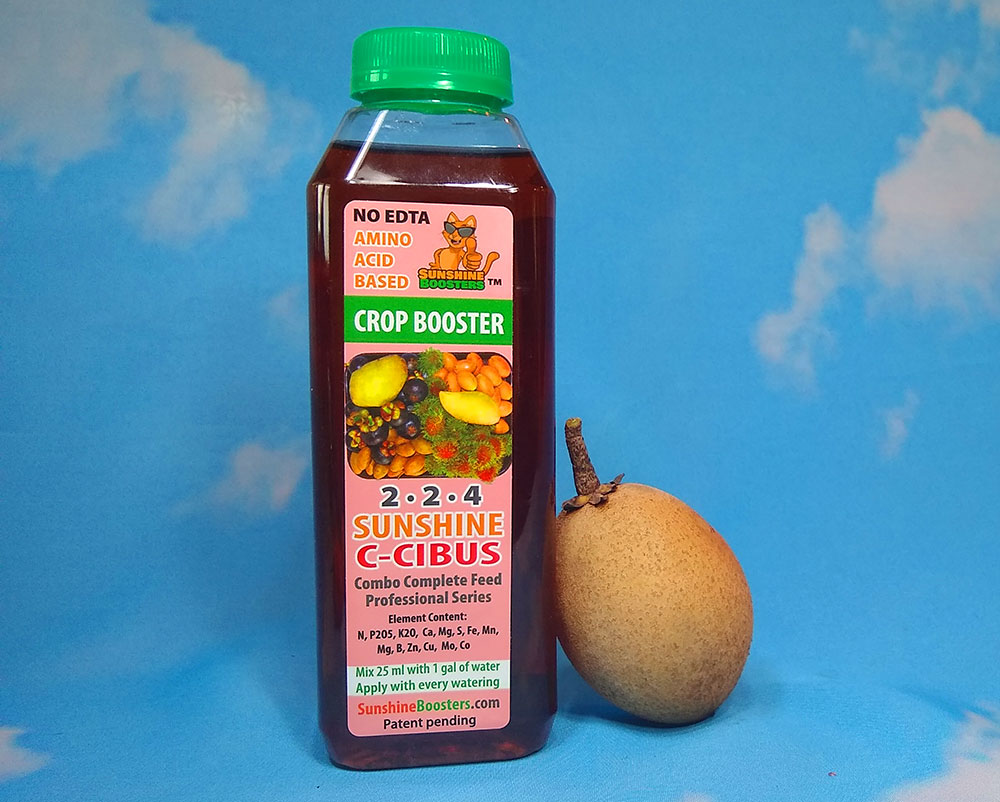
SUNSHINE C-Cibus - Crop Nutrition Booster from Garden Series, or Combo Total Feed Collection - all nutrients in just one bottle, for fruit trees and edibles.

Date: 19 Jul 2019
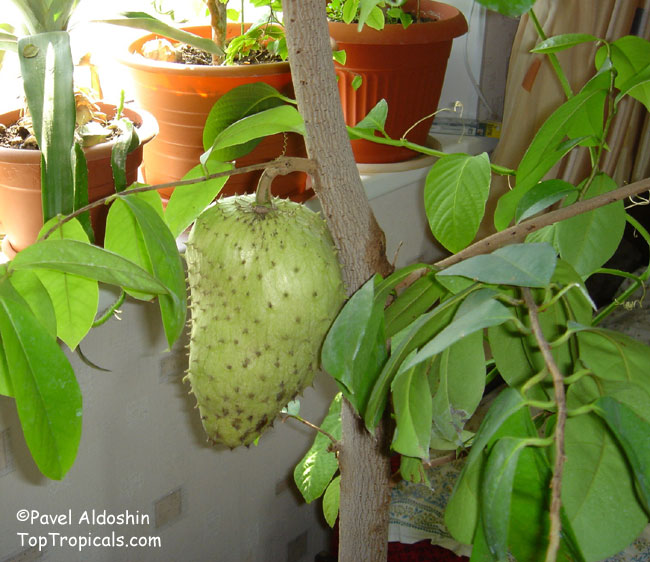
How to grow Soursop in a pot
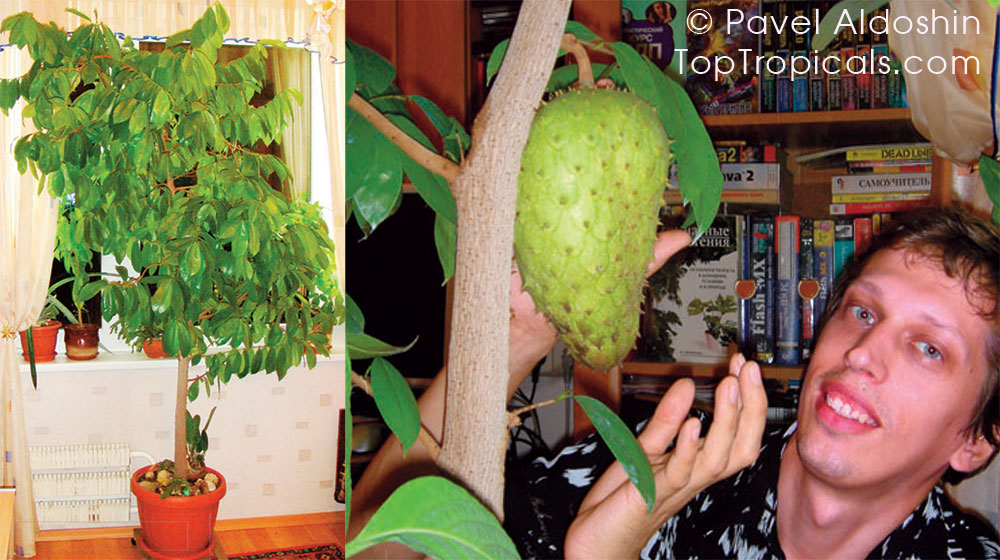
Q: Is it possible to grow soursop in a large pot for life?
A: Soursop, or Guanabana - Annona muricata - is actually one of those tropicals fruit trees that
can be easily cultivated in a container. Most plants of genus Annona have compact nature, and these fruit trees usually start
production at a young age, as early as 3 years from seed. Annona muricata
seedlings take a little longer to fruit, this is why we offer grafted trees, which can start producing right away.
We have a very interesting article about growing Soursop in an
apartment. The article was written by an indoor gardener who lives in a very small
apartment in Moscow, Russia. He grew this tree from seed and after years of
cultivation fun, he finally got several large delicious fruit! It is an amazing
story. We have it published in our Tropical Treasures magazine, download the whole issue #7, get a hard copy, or you may download PDF file of the single article.
Recommended fertilizers and supplements:
Fruit Festival Plant Food - Super Crop Booster
Mango-Food - Smart Release Fruit Tree Booster
SUNSHINE-Honey - sugar booster

Date: 11 Jan 2021
Tropical gardener beginning-of-year checklist

Final pre-Spring check of whatever we had forgotten! For a gardener, the year ahead is a chance to do things you want, as a way to achieve the things you need to do. If your number one New Year's resolution is to garden more (a want-to item), you also will be exercising more (a need-to). Or if you plant a new edible garden (want, want, want), you will end up checking off "eat more leafy vegetables and fruits" from your to-do list!
12 steps to get ready for 2021 season:
1 - Spray fruit trees and houseplants with insecticide and micro-elements
2 - Continue spraying SUNSHINE-Epi to improve plant hardiness
3 - Protect tender plants during cold spells and especially from freeze
4 - Reduce watering during cooler months, keeping the root zone on a dry
side
5 - To give your plants a kick start, fertilize with liquid SUNSHINE Boosters fertilizers - they are safe to be used year round
6 - Plant fruit trees: winter planting is beneficial to avoid heat stress for roots
7 - Plant Butterfly and Hummingbird Attractants
8 - Plant bulbs, vegetables and herbs. Use eco-safe, natural SUNSHINE boosters for all your edibles.
9 - Plan your summer garden and order seeds early
10 - Start tropical plants from seeds (indoors for cooler climates)
11 - Start ordering tropical plants and beneficial soil mix to get them established after shipping in pots
12 - Clean and oil garden tools
Date: 28 Sep 2019
Fragrance of Angel Hair Jasmine
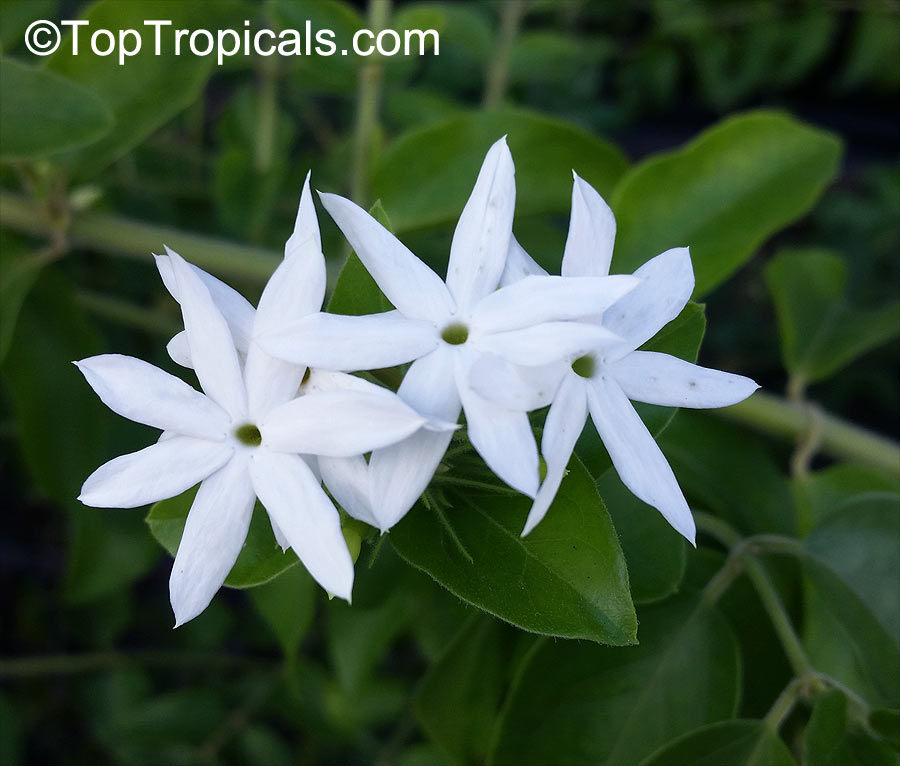
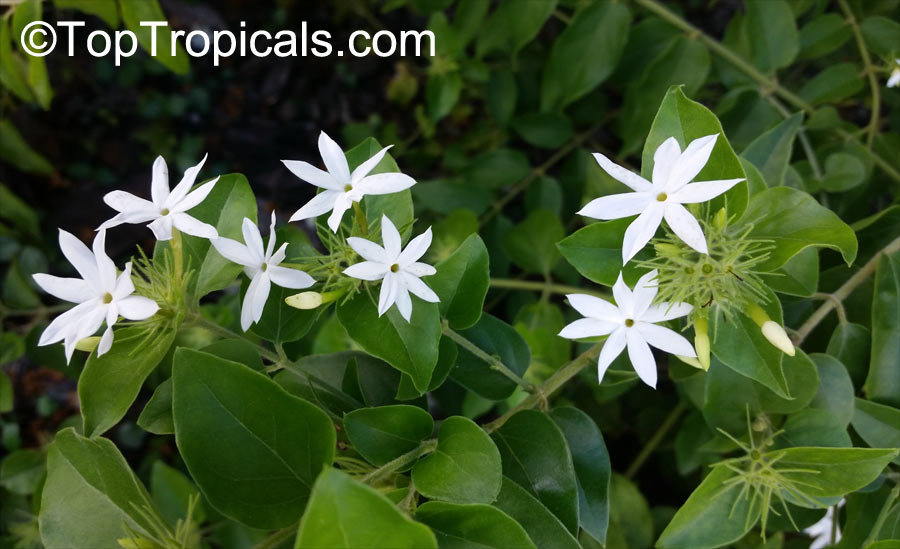
Q: I got angel hair jasmine, it started flowering, but it does not have any smell. What can be done?
A: Jasminum pubescens - Angel Hair Jasmine has very fine fragrance. It is
not as strong as some other jasmines like Sambac for example. However flowers do have a sweet scent especially in
the early morning hours, as long as the plant is well-established, grows in
a warm and humid environment. Keep in mind that flowers on young small plants
that do not have a developed root system, may not be as fragrant as on
mature vigorous specimens. Also, this jasmine needs a full sun location and
regular fertilizer for profuse flowering.
We recommend the following fertilizers to boost flowering energy:
- Pink N Good Daily Plant Food - Flower Booster
- Plumeria Top Dress - Smart-Release Booster
Use microelements at least once a month to improve plant vigor and quality
of flowers
Date: 25 Jun 2019
How soon will Guava tree fruit?
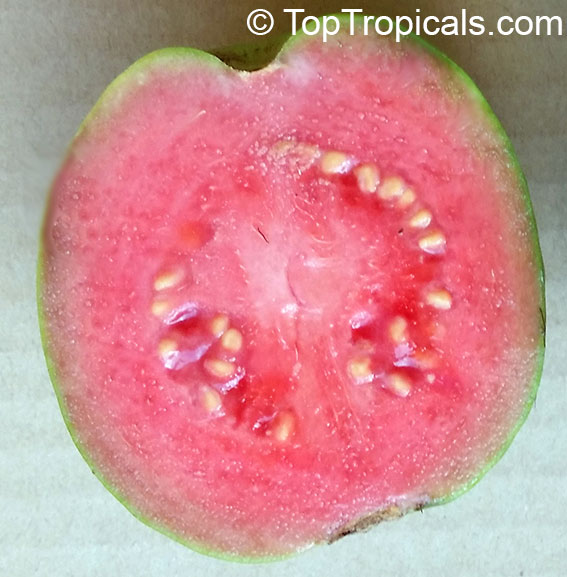
Q: Can you tell me how your Guava trees are propagated? Grown from seed vs. air grafted, etc.? I'm interested especially in the Barbie variety. In particular, I'd like to know how long it takes them to bear fruit - I live in Southern California zone 10b, with good sunlight.
A: Guavas can be propagated by seed, air layers, or grafting.
Propagation method depends on the species.
Cattley guavas - Psidium littorale - are usually grown from seeds and start flowering
and producing as early as in 2-3 years from seed. Tropical guavas, Psidium guajava - especially named varieties, are propagated usually by
air layers, and the rarest varieties like Variegated Honey Moon are often grafted, although they will come true
from seed (it's just takes them longer to fruit). Both air-layered and grafted
plants start producing right away, usually on the same year of planting or
next year, depending on growing conditions.
Barbie Pink is a superior variety, very popular among fruit lovers. It
produces large aromatic fruit with a bright pink pulp and very few seeds. This
variety is air-layered; in our nursery, these plants start flowering and
setting fruit in 3 gal containers.
Plant this tree in full sun and provide regular watering, guavas don't
like to dry out. Use fertile soil, with at least 50% of compost, and add some
soil conditioning components for better drainage: bark, sand, perlite, etc.
Mulch well, just make sure to keep mulch 2-3"away from the trunk. Follow our
detailed planting instructions that come with every plant, and you are good
to go!
Recommended fertilizers:
Fruit Festival Plant Food - Super Crop Booster
Mango-Food - Smart Release Fruit Tree Booster