Garden Blog - Top Tropicals

Date: 16 Jun 2025

Why is my palm tree turning yellow?

Green and yellow palm

Green and yellow palm

🌴 Why is my palm tree turning yellow?


Yellowing leaves are a common concern with palms and can be a sign of several issues, most commonly: nutrient deficiency and pests or disease. Additionally, leaf yellowing may be a sign off overwatering or poor drainage, underwatering, or cold damage.
  • ✔️ Nutrient deficiency


    Nutrient deficiency is the most frequent cause of palm issues. Palms are heavy feeders, and even a slight imbalance can lead to yellowing. Lack of nitrogen, magnesium, iron, or potassium is the leading cause.
  • ✔️ Signs of nutrient deficiencies:


Magnesium and Iron deficiency is one of the top culprits, especially in sandy soils. It causes older fronds to turn yellow with green veins.
  • Potassium deficiency causes yellow or orange spots on older fronds.
  • Nitrogen deficiency leads to overall pale yellowing, especially in new growth.


✔️ How to fix?


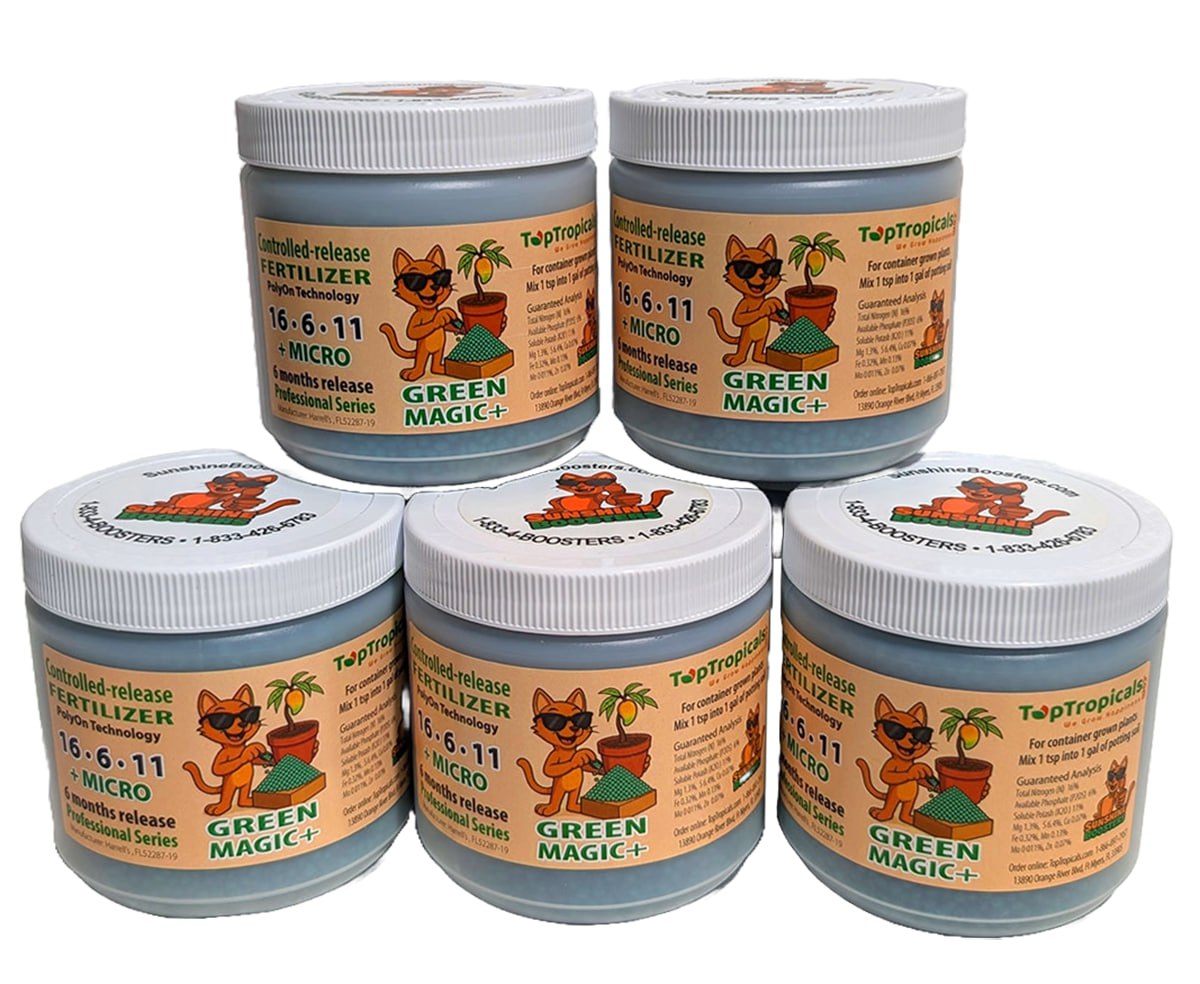
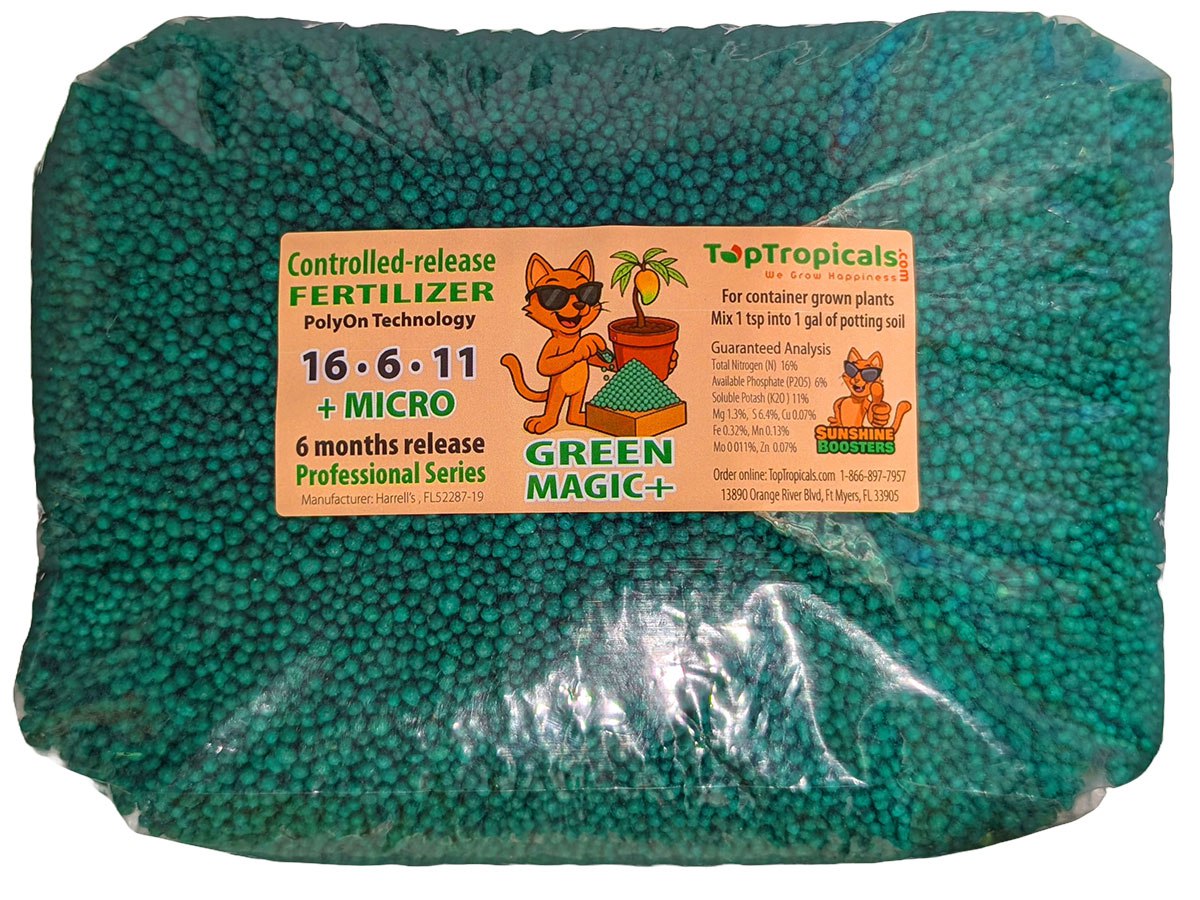
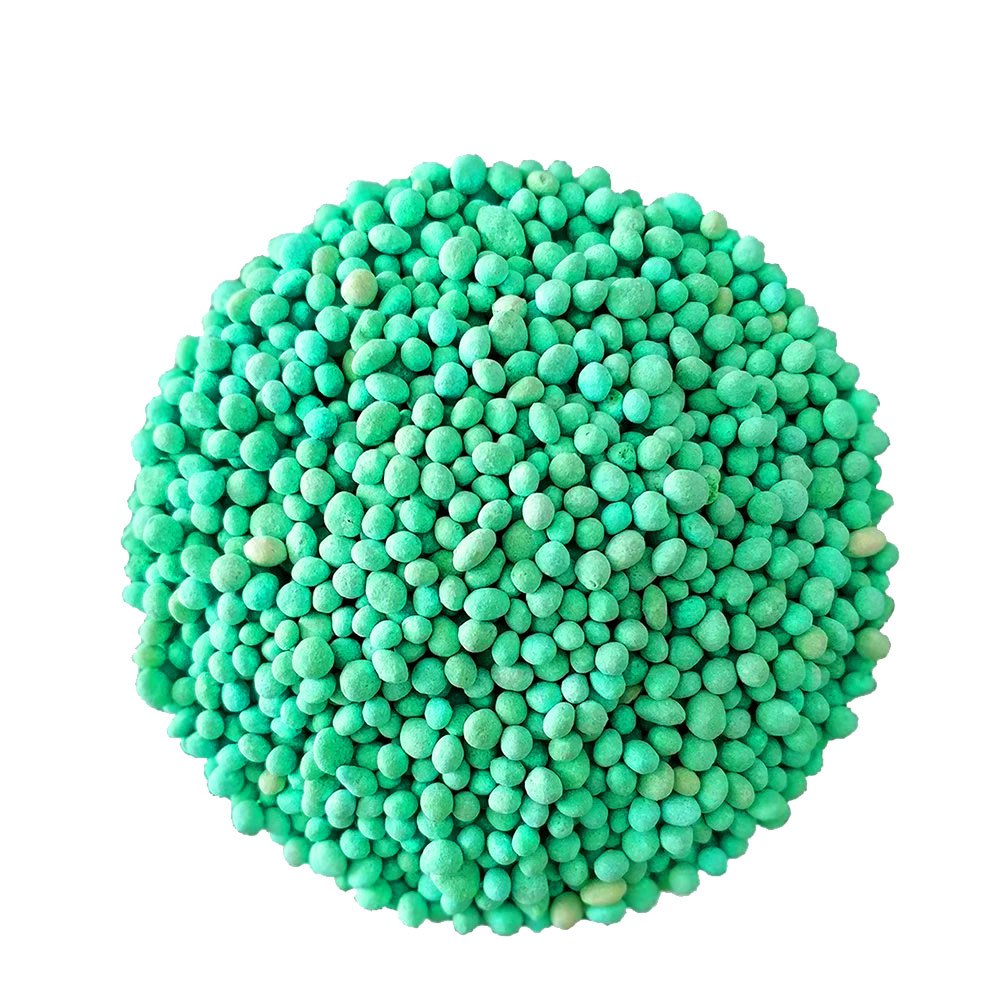
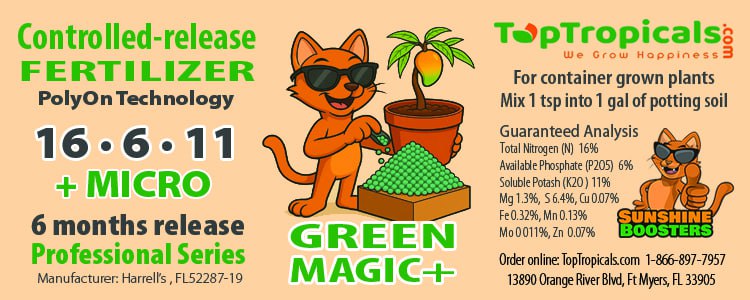
Use a slow-release fertilizer with high Nitrogen content, like Green Magic, that includes all these elements; with 16-6-11 grade and 6 months release, it turns plants green very quickly! You can also use a balanced liquid fertilizer like Sunshine Robusta. Additionally, a supplement of magnesium sulfate (Epsom salt) and micro-element supplement containing chelated Iron can help, like Sunshine Superfood (amino-acid based natural product).
  • ✔️ Pests and Diseases


    Pests and fungal diseases can lead to yellowing. Check for signs of scale, mites, or fungal and bacterial problems, especially if yellowing is uneven or spotted.
  • ✔️ Signs of pests:


Thrips cause silvery-yellow streaks or mottling
  • Spider mites, especially in dry conditions, cause yellow speckling
  • Scale insects can suck sap and weaken fronds
  • Mealybugs often found in leaf bases and crowns


✔️ How to fix?


Inspect your palm regularly and treat pests early with neem oil, insecticidal soap, or horticultural oil.
  • ✔️ Lethal yellowing


    Lethal yellowing is a serious disease caused by a phytoplasma, a type of bacteria-like organism. It affecting mostly Coconut palms and some other species like Phoenix (Date) palms. It causes premature fruit drop, yellowing of fronds starting from the lower ones, and eventual death of the tree.
  • ✔️ How to fix?


    Unfortunately, there's no cure, but early removal of infected trees can slow the spread. Disease-resistant coconut varieties are available.
  • ✔️ Other causes


Overwatering or Poor Drainage: Too much water can suffocate roots and lead to yellowing. Make sure the soil drains well and let it dry slightly between waterings.
  • Underwatering: Dry soil for too long will stress the palm. Water deeply but infrequently.
  • Cold Damage: Exposure to cold temperatures can turn fronds yellow or brown, especially in tropical varieties.


✔️In most cases, leaf yellowing isn't fatal, but it's a sign your palm needs attention. Focus on balanced feeding, proper watering, and pest checks to keep your palm healthy and green. Trim only fully dead fronds - yellow ones still provide nutrients to the palm. With proper care, your palm should green up again.

🛒 Shop garden supplies

#How_to #Fertilizers

🟢 Join 👉 TopTropicals

Date: 10 Sep 2025

The secret to abundant dragon fruit harvests

The secret to abundant dragon fruit harvests

✍️ The secret to abundant dragon fruit harvests


🔴 Dragon fruit (Pitaya) thrives when it's fed regularly. For the best results, use Sunshine C-Cibus, a complete liquid fertilizer made for fruit trees. It is gentle enough to apply with every watering, all year long, and it gives your plants the steady nutrition they need to set more flowers and produce bigger harvests.

🛒 Order Sunshine C-Cibus liquid plant booster

#Food_Forest #How_to #Dragon_Fruit #Fertilizers

🟢 Join 👉 TopTropicals

Date: 18 Feb 2021

Healthy Plants - Q&A from Mr Booster: Feeding Avocado Tree

Q:We bought one of your avocado grafts and it's doing great, lots of buds for fruit. It's still in a pot and fertilizing with the Sunshine Boosters. Should we continue with this product? We'll plant it in the ground in March. Thought you'd enjoy pictures of our wonderful tree. No freezing temperatures in Riverview, but when it got down into the 30s, the plant came in. One good thing about growing in the pot. I'll be buying some more Sunshine Boosters. This stuff is working great on all our plants.

A: Congratulations with a good job on growing avocado over winter. Avocado trees are not easy, we are happy to hear that your plant is ready for production, this is amazing! We've noticed that Sunshine Boosters perform miracles. Here are some suggestions for you:
1) Continue fertilizing with Sunshine Boosters according to the feeding chart
2) When ready to plant, dig a large hole and fill it with good soil full of organic matter (compost mixed with existing sandy soil will be good). Make sure to plant the tree on 3-4" high elevation, like on a little hill. Avocados need perfect drainage and can't tolerate wet feet. See more info on planting and planting instructions (pdf).
3) Water daily with a hose, do not rely on sprinklers. Avocados like water (considering perfect drainage)
4) Continue applications of Sunshine Boosters at least until the tree is established and starts growing new branches with lots of leaves. After that, you can switch to slow-release fertilizers once a month if it makes it easier, but if you can, continue Sunshine Boosters at least on weekly basis - they really boost plant growth!

Date: 24 Jul 2019

Perfect small tree for a pool area

Q: I need a tree for a space that is close to a pool and I don't want a tree that is shedding leaves all year long. I don't want it too big either. The canary tree caught my attention but I need to know if it is a tree that is dropping leaves all year. If it does then can you recommend another tree? I live in Fort Lauderdale.

A: Canary tree is a good choice. It is free-flowering pretty little tree. It is evergreen and doesn't shed leaves too much especially in your area with mild winter. However, keep in mind that every plant sheds leaves. Even evergreen trees replace old leaves with new ones. Some trees more than others. Flowers also have a seasonal drop. You may check the full list of compact flowering trees suitable for small spaces.

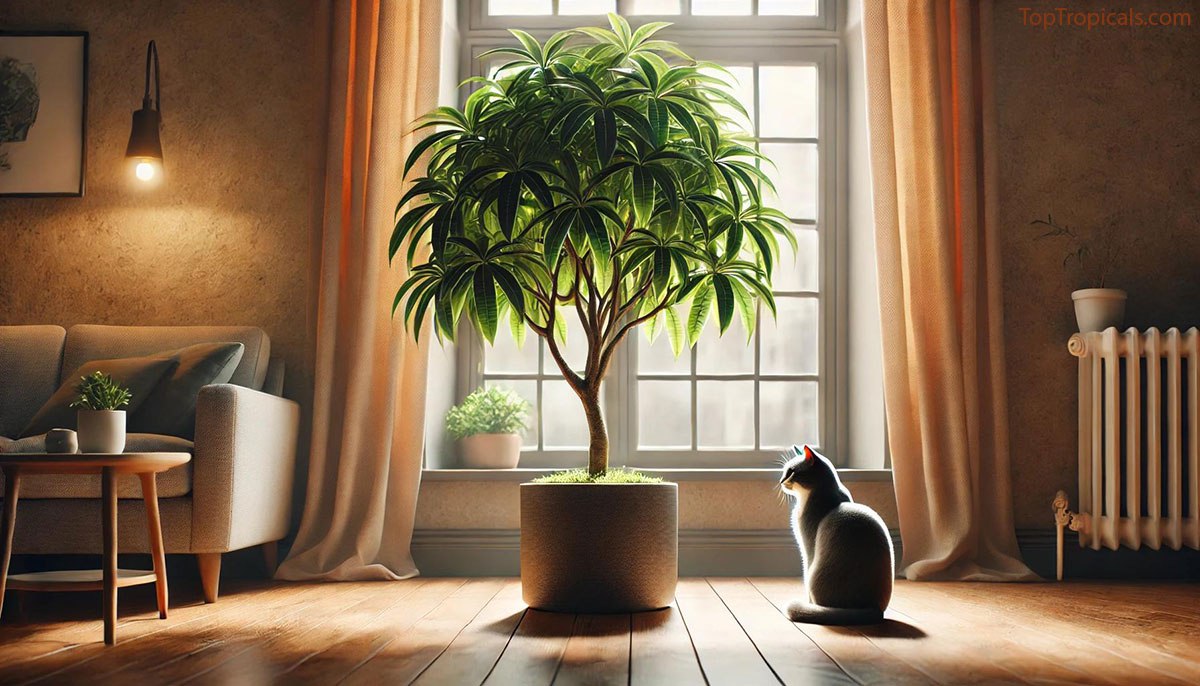
Another great choice is a Dwarf Tree Jasmine, Radermachera - also a free-flowering tree with rose-fragrant flowers and large, architectural leaves that hardly ever drop. It has very dense yet compact columnar shape, and is one of the greatest trees for smaller landscapes.

Recommended fertilizers and supplements:

Pink N Good Daily Plant Food - Flower Booster
Tropical Allure - Smart-Release Booster
SUNSHINE SuperFood - plant booster

Date: 24 May 2019

Heavenly Angel's Trumpet

TopTropicals.com

By Onika Amell, tropical flower specialist

Q: Can you please tell me which zones are the best for growing Angel Trumpets? When do they bloom and is there a specific fertilizer to use on them? Do you sell any variegated varieties?

A: If you are lucky enough to live in an area that doesn't freeze or only has light frosts, you can grow Brugmansia (common name Angel Trumpet) outside all year long. They are only entirely hardy in USDA zones 9-12, but they remain very popular throughout the United States. They do really well in coastal settings in the Southwest. They are simply glorious in the coastal areas of South California. In the southwestern states, as well as in the tropics, they bloom spectacularly throughout the spring, summer, and autumn.

Angel Trumpets are very heavy feeders and they need huge amounts of nitrogen. You can use a standard balanced slow-release fertilizer on Brugmansia, but then you must apply it very generously. We've created a specialized fertilizer just for them. Angel Trumpet Delight is a perfect Brugmansia food for frequent monthly feed. It's a 30-day Smart-Release formula that works wonders for Angel Trumpets. A a well-balanced combination of macro- and micro- nutrients with a slow release action, it provides continuous feed, maintains vigor and disease resistance. It also contains coated nitrogen, early release nutrients and extra iron (water soluble and chelated) for quick green-up.

Angel Trumpets come in a dazzling array of colors: orange, yellow, green, white, pink, red, emerald and even purple (closely related Datura). One of our favorites is the beautiful Variegated Orange Angel Trumpet, a new hybrid with variegated leaves and a large single bloom that starts white and turns orange. Another amazing variety is "Sun Explosion" - with a variegated orange flower.

Most folks are usually in awe of the enormous trumpet flowers when they see it for the very first time. They most definitely need to be planted where they can be admired… near a deck, terrace, lanai or, entryway. The blossoms are short-lived, but numerous, continuous, and truly show-stopping! And they smell so good! This is a must have in any tropical garden. They can be grown either as a bush or a small tree. They are easy peasy to grow and root extremely easily, making them great as pass-along gifts for friends. They are sun-loving and super fast-growing plants. Plenty of water and fertilizers keep them happy and at their best. Did I mention they smell good too? ;)

TopTropicals.com