Garden Blog - Top Tropicals

Date: 22 Jan 2026

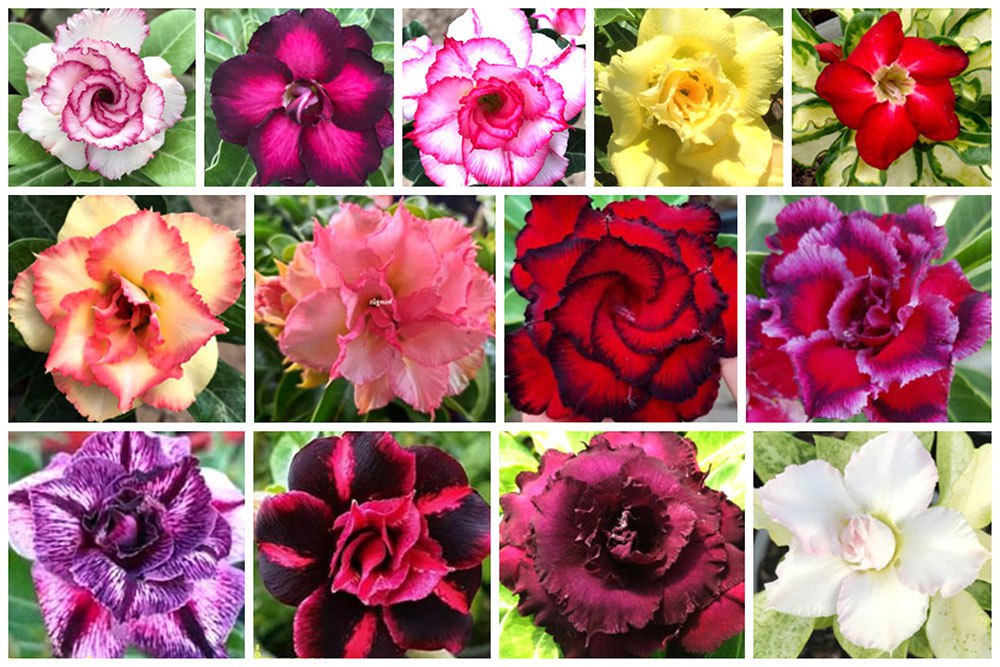
Free shipping on Exotic Adenium Desert Roses - limited time!

Adenium hybrids

Adenium hybrids

🆓 Free shipping on Exotic Adenium Desert Roses - limited time!

🛍 One week only, all adenium desert roses ship FREE!
  • 🌸 Perfect time to grab the varieties you have been eyeing or add a few more to your collection.
  • 🌸 Many selections are limited and selling quickly. Orders are filled first come, first served.
  • 🌸 We will pack all your adeniums together and ship them safely in one big box for you (or many boxes if that's what it takes) - with free shipping on us!
  • 🌸 Don’t wait on this one. When they’re gone, they’re gone. While supply lasts.


🛒 Explore collectible Adeniums

📚 Learn more:


#Container_Garden #Adeniums #Shade_Garden

🟢 Join 👉 TopTropicals

Date: 20 Feb 2026

What tropical plants survived Floridas historic freeze without protection

Florida historic freeze

What tropical plants survived Florida's historic freeze without protection

In the first week of February 2026, arctic air pushed deep into Florida. For many areas, this was the coldest event in over a century.
We received one question over and over: How did your gardens do?
Top Tropicals Farm in Sebring, Florida is up and running - and this freeze became a real-world hardiness test for tropical and subtropical plants. Below is our initial field report after inspecting established plantings.

📊 Weather data - February 1-6, 2026


Sebring, Florida - 132 years of recorded observations
This was not a light frost. It was prolonged, windy, penetrating hard freeze.


🌡 Minimum temperature: 25F
❄️ Wind chill: 14F
⏳ Duration: 3 nights of 8-10 hour hard freeze
☀️ Daytime temperatures: around 50F for 7 days
🌀 Wind: sustained 20 mph, gusts 40-50 mph
  • Cold protection


    In-ground trees: selected plants covered with frost cloth, especially mango and young avocado trees.
    Tender container plants: moved into greenhouses with propane heat above 34F.
    Hardy container plants: frost cloth and wind protection only - no plastic
    Nutrition support: plants fertilized regularly during the growing season with Green Magic and Sunshine Boosters to maintain vigor and hardiness.

    However, the plants listed below had no protection at all.
    All were established trees 2-3 years in the ground.
  • The plants below had NO PROTECTION, established trees 2-3 years old


✅ Survived with no damage
:
  • 🍑 Tropical Fruit Trees and Edibles:


    Citrus
    Loquats
    Mulberries
    Macadamia Nut
    Jaboticabas
    Pomegranates
    Avocado - cold hardy varieties
    Feijoa - Pineapple Guava
    Psidium littorale - Cattley Guavas
    Eugenias (Grumichama, Rio Grande, Surinam and more)
    Olive trees
    Bay Leaf (Laurus nobilis)
    Fig trees (Ficus carica)
    Prunus sp - Peaches, Plums, Nectarines
    Persimmons
    Rubus (Blackberries) including Tropical Mysore Raspberry
    Elderberry (Sambucus)
    Yerba Mate - Ilex paraguariensis
    Opuntia - Nopal Cactus, Prickly Pear


🌸 Flowering Trees and Shrubs:


Beaucarnea recurvata - Pony Tail
Callistemon - Bottlebrush
Yucca
Tabebuias
Magnolia figo and Little Gem
Calliandra tweedii - Red Powderpuff
Sophora tomentosa
Galphimia gracillis - Thriallis
Acacia trees
Osmanthus fragrans
Abutilon trees
Erythrina - several species
Monkey Ear tree - Enterolobium cyclocarpum
Bauhinia Orchid Trees - several species
Pseudobombax ellipticum - Shaving Brush Tree
Bulnesia arborea- Vera Wood
Caesalpinia mexicana, Mexican Bird of Paradise
Sansevieria - Snake Plant
Foxtail fern - Asparagus densiflorus
Lonicera - several varieties
Jacaranda tree
Eucalyptus
Plumbago Imperial Blue
Philodendron bipinnatum
Gardenias
Gingers (dormant rhizomes)

✳️ Minimal leaf damage only:
(These plants showed light cosmetic damage but no structural injury)

🍑 Tropical Fruit Trees and Edibles:


Glycosmis pentaphylla - Gin Berry
Black sapote tree
Tamarind tree
Syzygiums: Rose Apple and Java Plum

🌸 Flowering Trees and Shrubs:


Pandora vine
Jasminum - several species
Stenocarpus sinuatus - Firewheel Tree
Xanthostemon
Quisqualis indica
Schotia tree
Eranthemum pulchellum - Blue Sage
Hiptage benghalensis - Helicopter Flower

🏡 What this means for Florida gardeners


This freeze was a stress test few gardens are prepared for. Yet many species handled 25F, wind, and multi-night freeze conditions without protection.
Choosing proven survivors, planting in smart microclimates, and maintaining strong plant health during the growing season makes a measurable difference.
More updates will follow as full recovery continues - but these early results already help define a stronger plant palette for future winters.

🛒 Explore cold tolerant tropical plants and cold hardy Avocados

📚 Learn more:


🎥 These Avocados survived 3 nights of 25F hard freeze, Florida Record Freeze

#Discover #How_to

🟢 Join 👉 TopTropicals

Date: 2 Mar 2026

😼😺 The Story Behind Smokey and Sunshine 🐾

Smokey  and  Sunshine  in  office  presentation  about  Cherry  of  the  Rio 


Grande  freeze  survival,  with  Sunshine  pointing  at  polar  bear  and  penguin 


marketing  poster,  coffee  and  donuts  on  table,  tropical  plants  on  shelves  in 


background.
Sunshine: You know, February 27 was International Polar Bear Day. I just learned about it and got a brilliant marketing idea. Cherry of the Rio Grande survived 25F. With wind. Real wind. That means we go north. Let them taste this magic. I even have a donut recipe with the fruit. It’s a bomb, Smokey. We expand. Trust me. Finally you can afford that new watering timer.

Smokey: Not so fast, genius. Twenty five degrees is not the North Pole. And polar bears and penguins do not share zip codes.

Sunshine: You always pour cold water on my brilliance. Fine. Where do we start?

Smokey: Well, first you go talk to Tatiana. She graduated from the Geography Department. She can explain climate zones. Cherry of the Rio Grande can grow in North Florida, Texas, and similar climates. Let’s master that before we conquer Arctic.

Sunshine: So… Phase One: Geography?

Smokey: Exactly.

Some stories are easier to tell with a little humor. Smokey and Sunshine were never just mascots. They represent the two forces behind every decision we make here: bold ideas and careful reality. One dreams big. The other checks the climate zone map. Together, they remind us that growing plants is part science, part optimism, and always personal. If you have ever wondered why they keep appearing in our newsletters, you can read their full story on the Smokey and Sunshine page. They have been with us longer than most people realize.

🐾 Learn the Story of Smoky and Sunshine

Freeze Testing of Grumichama and Cherry of Rio Grande 🍒❄️

Grumichama  tree  (Eugenia  brasiliensis)  showing  white  flowers  and  ripe 


red  fruits  in  tropical  garden 


conditions

Eugenia brasiliensis - Grumichama tree flowering and fruiting

When temperatures dropped to 25F, with wind chill near 14F, winter made it clear which tropical trees were truly resilient. Some plants burned back. Tender growth collapsed. But our established Eugenia cherries stood steady. Leaves held. Branches stayed flexible. The canopy remained intact.

Cherry of the Rio Grande (Eugenia aggregata) and Grumichama (Eugenia brasiliensis) are among the most cold-hardy tropical cherries for Southern gardens. Both are native to Brazil and thrive in USDA Zones 9b–11, and even protected 9a sites.

Cherry of the Rio Grande produces dark ruby fruit that ripens almost black, with a rich, full cherry flavor. It flowers early in spring and can fruit well into summer. Mature trees can tolerate brief drops into the low 20s once established. Trees typically grow 8 to 15 feet tall, remain naturally compact, and often begin fruiting within 2 to 3 years.

Grumichama is an evergreen tree known for both beauty and productivity. In spring, it covers itself in white starburst flowers that attract pollinators. Within about four weeks, glossy purple-black fruit develops. Established trees tolerate temperatures into the upper 20s and grow well in the ground or in 5–10 gallon containers. Mature trees can produce hundreds of fruits per season.

Across the Eugenia group, strengths are consistent: early bearing, compact growth, heat tolerance, light freeze endurance, and low pest pressure. They are adaptable to different soils, need modest water once established, and perform in full sun or partial shade. Birds enjoy the fruit, but there is usually plenty to share.

Nutritionally, Eugenia cherries provide Vitamin C, fiber, antioxidants, and notable Vitamin A that supports eye health. They offer sweetness with real dietary value.

In the kitchen, they are simple and rewarding. Cherry of the Rio Grande makes an easy compote. Simmer the fruit with a small amount of water until soft, mash lightly, and spoon over pancakes or warm bread. Grumichama turns into a deep red jam with sugar and lime, or can be blended into a bright spoon drizzle over vanilla ice cream.

Even when not fruiting, both trees remain attractive year-round with glossy evergreen foliage and clean structure. They fit well into edible landscapes, small yards, and container gardens.

Winter will return. The difference lies in planting fruit trees that can handle heat, humidity, and the occasional cold snap. If you are building a food forest for lasting harvests, cold-hardy tropical cherries like Cherry of the Rio Grande and Grumichama deserve a place in your garden.

Ripe  Grumichama  fruits  (Eugenia  brasiliensis)  hanging  on  a  branch  with 


glossy 


leaves

Ripe Grumichama (Eugenia brasiliensis) fruits developing on the tree, turning deep red to nearly black when fully mature.

Cherry  of  the  Rio  Grande  (Eugenia  aggregata  cv.  Calycina)  fruits 


ripening  from  green  to  dark  purple  on  the 


branch

Eugenia aggregata (cv. Calycina), Cherry of the Rio Grande

🛒 Plant hardy Eugenia cherries

Date: 6 Oct 2024

Eight most spectacular gingers

White  ginger  flower

Photo above: Costus arabicus - Spiral Ginger

Q: I grow ginger for cooking, but I know that some varieties have showy flowers. What gingers can you recommend as ornamentals?

A: Ginger is famous for its culinary and medicinal uses, and many species are also strikingly beautiful, making them perfect centerpieces for tropical gardens or potted plant collections, especially in shaded spots. Here are a few of our favorite cultivars.

1. Yellow Butterfly Ginger

Hedychium  flavum  x  coronarium  -  Yellow  Butterfly  Ginger,  Nardo  Ginger 


Lily

Hedychium flavum x coronarium - Yellow Butterfly Ginger, Nardo Ginger Lily - rare hybrid of White Butterfly ginger we mentioned earlier (https://t.me/TopTropicals/710), it is more vigorous and tall than its parent. With attractive long green leaves with a slight fuzziness, this ginger has open long spikes of pastel yellow flowers with a beautiful heady aroma. Exquisitely fragrant!

2. Variegated Spiral Ginger

Costus  arabicus  (amazonicus)  variegata  -  Variegated  Spiral  Ginger

Costus arabicus (amazonicus) variegata - Variegated Spiral Ginger - is a tropical stunner originally from South America but adored in Hawaii and Florida. This ginger's eye-catching, spiraling stems are streaked with striking white variegation, topped with elegant pure white flowers with yellow centers. The pure white blooms are truly a piece of art! Perfect for shade gardens, this plant thrives in moist soil and loves plenty of water. If you're looking to add a bit of drama and elegance to your garden, this beauty is a must-have!

3. Pine Cone (Shampoo) Ginger

Zingiber  Zerumbet  -  Pine  Cone  Ginger,  Shampoo  Ginger

Zingiber Zerumbet - Pine Cone Ginger, Shampoo Ginger - is probably the most popular one. All parts of this ginger are spicy fragrant. The cone shaped flowers are long lasting and useful for cut flower arrangements. It is in fact used as a shampoo in Asia and Hawaii, and as an ingredient in several commercial shampoos! Pinecone ginger is considered a "canoe plant", that is, a plant introduced throughout the Pacific by the ancient Polynesian settlers.

4. Spiral Raspberry Ginger

Costus  vargasii  -  Spiral  Ginger  Raspberry  Yogurt

Costus vargasii - Spiral Ginger Raspberry Yogurt - The name refers to the colorful raspberry colored stem, but that's not the only colorful thing about it: the leaves are dark green, long and glossy with velvety deep purple undersides. The inflorescence is a vivid red with tight bracts and bold yellow flowers. The butterflies love to drink the nectar from the flowers. Large vigorous ginger, growing up to 5-6 ft tall.

5. Cameroon Costus African Princess

Costus  fissiligulatus  -  African  Princess,  Cameroon  Costus

Costus fissiligulatus - African Princess, Cameroon Costus - from Gabon in West Africa. It has a dazzling pink trumpet flower with a yellow throat. It is very floriferous with an inflorescence of numerous flower buds on a shortish plant of 3-4 ft that stands very erect. It is an easy grower.

6. Red Button Ginger (French Kiss)

Costus  spicatus  x  woodsonii  -  Red  Button  Ginger,  French  Kiss

Costus spicatus x woodsonii - Red Button Ginger, French Kiss: this ginger's inflorescence resembles a cluster of bright red buttons, making it a standout in tropical gardens.

7. White Butterfly Ginger

Hedychium  coronarium  -  White  Butterfly  Ginger

Hedychium coronarium - White Butterfly Ginger is a must for every Southern garden. It is famous for its intense, sweet scent. Symbol of Hawaiian Paradise along with Plumeria and Jasmine. It is popular in Hawaii and the Pacific Islands for leis and hair adornments and bears fragrant, butterfly-resembling flowers in summer. It has long lasting cut flowers, ideal for scenting the home. Can survive light freezes, with tops regrowing in the spring. Takes sun or shade.

8. Laos Silver Stripe Peacock Ginger

Kaempferia  angustifolia  -  Laos  Silver  Stripe

Kaempferia angustifolia - Laos Silver Stripe is one of the most beautiful of all the Kaempferia Peacock Ginger cultivars. It is one of the large types. The plant has boldly striped leaves of green and silver. The flowers are orchid shaped white and purple. Small, compact perennial, great for container culture. This hard to find variety is a must for every Ginger collector.

Date: 10 Nov 2025

❄️ How to Prepare Your Tropical Garden for Winter

Two  cats  in  a  tropical  garden  at  sunset.  Smokey,  a  black-and-white 


tuxedo  cat  wearing  a  wool  cap,  holds  a  thermometer  while  Sunshine,  a  fluffy 


orange  tabby,  sits  beside  mulch  and  folded  frost  cloths  surrounded  by  banana
 
 
  and  hibiscus  plants.

Smokey and Sunshine Wrap Up the Garden with Frost Cloth Before the Chill.

Smokey: "Thermometer says 45. Time to wrap the bananas!"
Sunshine: "You wrap the bananas. I’ll guard the mulch… from this sunny spot."
Smokey: "Teamwork, Sunshine. Teamwork."

🌡️ Cold nights are coming - but your tropicals do not need to shiver!

Even in sunny Florida and other warm zones, one cold snap can undo months of growth. Preparation is everything. Tropical plants can handle a lot, but they dislike surprises. Let’s make sure your garden stays safe, strong, and happy all winter long.

Tips from Tatiana Anderson, Top Tropicals Plant Expert

👉 Group and Check Your Plants

You already know which plants are in pots and which are in the ground. What matters now is prioritizing by cold sensitivity. Identify the tender tropicals – papaya, banana, plumeria, adenium, heliconia – and decide which ones get covered first when temperatures drop. Keep frost cloths or old sheets near those areas, ready to grab fast. If your garden is large, label protection zones or mark plants that always need extra care. The goal is to have a plan, not a panic, when the cold alert hits.

Once you know your priorities, you can plan the rest of your protection strategy.

👉 Feed and Mulch

Stop using high-nitrogen fertilizers by late fall. They push soft new growth that freezes easily. Add compost around the base of your plants and top with 3 to 4 inches of mulch. Mulch acts like a blanket: it keeps warmth in, protects the roots, and keeps soil moisture steady. Just make sure the soil drains well; cold and soggy soil leads to root rot. In raised beds, check that water flows away easily.

After you feed and mulch, it is time to look at how your local zone changes the game.

👉 Zone-by-Zone Tips

Woman  sitting  between  two  large  potted  tropical  plants  on  a  wooden  deck
 
 
  in  front  of  a  house,  preparing  to  move  them  indoors  for  the  winter.

Moving Tropical Plants Indoors for Winter Protection

  • Zone 10: You are lucky! This is mostly a maintenance season. Watch for root rot after heavy rain, trim lightly if needed, and protect tender young trees during surprise chills. Keep some frost cloth ready just in case.
  • Zone 9: This is the main action zone. Nights can dip into the 30s. Deep-water your trees once before cold nights to insulate the roots. Apply heavy mulch, and have frost protection ready to go. If you grow tropical fruit like mango or guava, consider wrapping young trunks in burlap or foam pipe insulation.
  • Zone 8: This is where tropical gardening becomes creative. Stick to cold-hardy tropicals such as loquat, guava, or cold-hardy avocado varieties. Use portable greenhouses, wrap trunks, and move smaller plants indoors or to a heated porch when frost threatens.

Now that the garden beds are set, let’s look at your pots and containers – your most mobile plants.

👉 Container and Patio Plants

Potted plants are the easiest to protect but also the quickest to freeze. Start reducing watering now so roots do not stay too wet in cooler weather. Before moving them, check for insects hiding under leaves or in the soil. Group your pots close to a wall for reflected heat and wind protection. If you plan to bring them indoors, do it gradually. Move them closer to the house for a few days before bringing them all the way inside to help them adjust to lower light and humidity.

When the chill starts, many gardeners rush to move everything inside at once – but a smooth transition works much better.

👉 Indoor Plants

When bringing plants inside, give them a good rinse to remove dust and bugs, and flush the soil to wash out salts from summer fertilizing. Keep them separate from your houseplants for a week to make sure no pests come along. Expect some leaf drop – it is normal as they adjust to lower light. Give them bright light near a window, and cut watering by about half until spring. Avoid misting too much; good airflow matters more than humidity during winter.

Many tropicals, like hibiscus, brugmansia, and crotons, may look tired for a while, but they will bounce back quickly once days get longer.

👉 Timing Is Everything

The key is to prepare before the first cold warning. Check your weather app regularly once nights start dropping into the 50s. Keep covers, mulch, and supplies ready so you are not running outside at midnight with a flashlight and a frozen hose. Have your frost cloths labeled by plant group and stored in an easy spot. A little organization now saves a lot of stress later.

Many tropicals, like hibiscus, brugmansia, and crotons, may look tired for a while, but they will bounce back quickly once days get longer.

Remember: the goal is to help your plants rest safely. Many gardeners prune or fertilize too late in the season – we will talk about why that can be risky next week." — says Tatiana Anderson, Top Tropicals Plant Expert

Coming next mail-list: The best gadgets for cold protection (lights, heaters, frost covers) and what NOT to do in winter.

📚 Learn more from Top Tropicals Blog:

Cold protection - winter action for your plant collection

What plants are good to order in Winter?

How to take care of house plants in Winter

How to protect tropical plants in Winter

How to take care of a mango tree in winter

How to protect Avocado from cold

Overwintering Adeniums outside of tropics

Rows  of  tropical  plants  in  black  pots  covered  with  frost  cloth  and 


plastic  sheeting  for  winter  protection  at  Top  Tropicals  nursery.

Protecting Tropical Plants with Frost Covers at Top Tropicals Nursery