Garden Blog - Top Tropicals

Date: 16 Jun 2025

Why is my palm tree turning yellow?
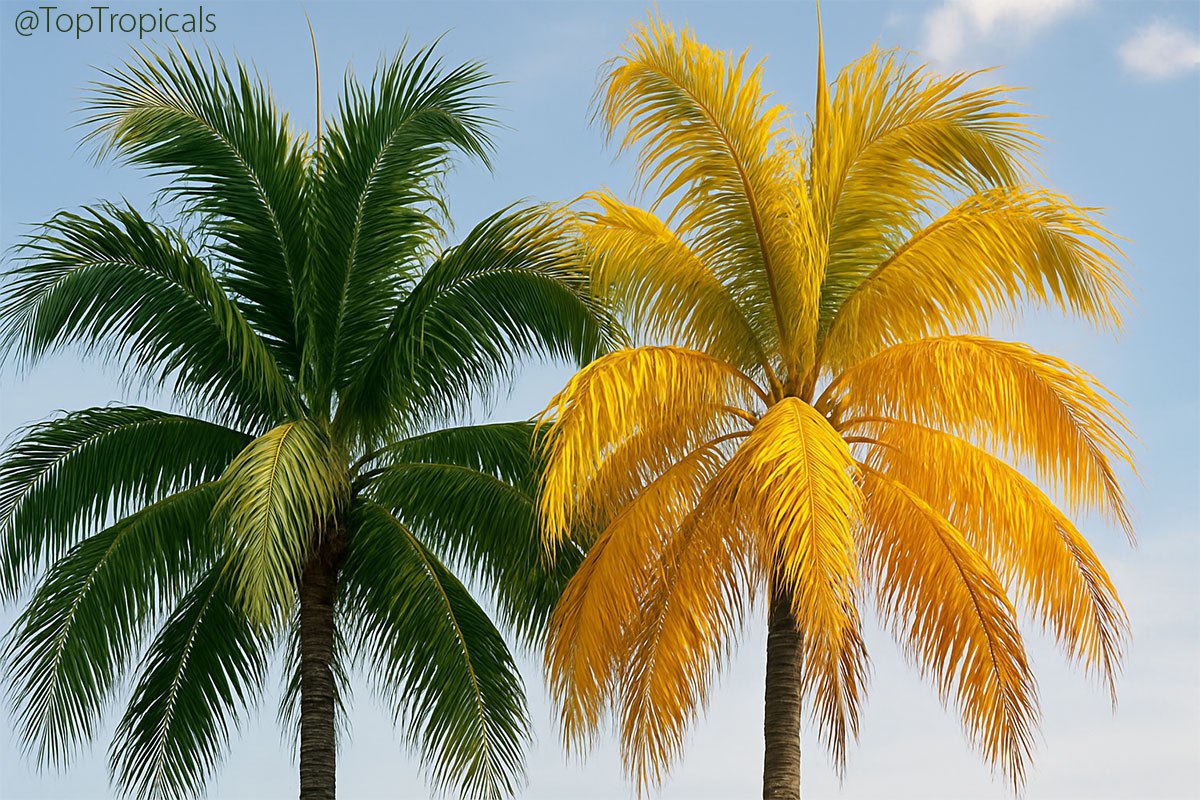
Green and yellow palm

Green and yellow palm

🌴 Why is my palm tree turning yellow?


Yellowing leaves are a common concern with palms and can be a sign of several issues, most commonly: nutrient deficiency and pests or disease. Additionally, leaf yellowing may be a sign off overwatering or poor drainage, underwatering, or cold damage.
  • ✔️ Nutrient deficiency


    Nutrient deficiency is the most frequent cause of palm issues. Palms are heavy feeders, and even a slight imbalance can lead to yellowing. Lack of nitrogen, magnesium, iron, or potassium is the leading cause.
  • ✔️ Signs of nutrient deficiencies:


Magnesium and Iron deficiency is one of the top culprits, especially in sandy soils. It causes older fronds to turn yellow with green veins.
  • Potassium deficiency causes yellow or orange spots on older fronds.
  • Nitrogen deficiency leads to overall pale yellowing, especially in new growth.


✔️ How to fix?


Use a slow-release fertilizer with high Nitrogen content, like Green Magic, that includes all these elements; with 16-6-11 grade and 6 months release, it turns plants green very quickly! You can also use a balanced liquid fertilizer like Sunshine Robusta. Additionally, a supplement of magnesium sulfate (Epsom salt) and micro-element supplement containing chelated Iron can help, like Sunshine Superfood (amino-acid based natural product).
  • ✔️ Pests and Diseases


    Pests and fungal diseases can lead to yellowing. Check for signs of scale, mites, or fungal and bacterial problems, especially if yellowing is uneven or spotted.
  • ✔️ Signs of pests:


Thrips cause silvery-yellow streaks or mottling
  • Spider mites, especially in dry conditions, cause yellow speckling
  • Scale insects can suck sap and weaken fronds
  • Mealybugs often found in leaf bases and crowns


✔️ How to fix?


Inspect your palm regularly and treat pests early with neem oil, insecticidal soap, or horticultural oil.
  • ✔️ Lethal yellowing


    Lethal yellowing is a serious disease caused by a phytoplasma, a type of bacteria-like organism. It affecting mostly Coconut palms and some other species like Phoenix (Date) palms. It causes premature fruit drop, yellowing of fronds starting from the lower ones, and eventual death of the tree.
  • ✔️ How to fix?


    Unfortunately, there's no cure, but early removal of infected trees can slow the spread. Disease-resistant coconut varieties are available.
  • ✔️ Other causes


Overwatering or Poor Drainage: Too much water can suffocate roots and lead to yellowing. Make sure the soil drains well and let it dry slightly between waterings.
  • Underwatering: Dry soil for too long will stress the palm. Water deeply but infrequently.
  • Cold Damage: Exposure to cold temperatures can turn fronds yellow or brown, especially in tropical varieties.


✔️In most cases, leaf yellowing isn't fatal, but it's a sign your palm needs attention. Focus on balanced feeding, proper watering, and pest checks to keep your palm healthy and green. Trim only fully dead fronds - yellow ones still provide nutrients to the palm. With proper care, your palm should green up again.

🛒 Shop garden supplies

#How_to #Fertilizers

🟢 Join 👉 TopTropicals
Date: 20 Jun 2025

Adenium Rainbow, Part 1

Adenium varieties

Adenium Rainbow, Part 1 🌈
  • 🌸 Our Desert roses at Top Tropicals - Adeniums - were planted in March - and the first video posted in April.
  • Now, in June, they have more and more blooms! We are sharing these amazing colors with you.
    To be continued, check back soon!⤵️
  • 🌸 Check out the varieties still in stock and grab yours before they’re gone. Some are already sold out, but you still have a chance to score amazing blooms!
  • 🌸 Why Collect Adeniums?


· Easy to grow indoors or out
  • · Thrive in sun, shade, and low humidity
  • · Drought-tolerant, low maintenance
  • · Not picky about soil
  • · Stunning blooms and unique caudex shapes

  • 🌸 How Many Varieties Exist?

· Over 200 hybrids at Top Tropicals
  • · 100+ varieties in stock now
  • · From doubles to red, purple, yellow, striped, dotted, rainbow, even black flowers - you'll want them all!


🌸 How to Grow a Big, Swollen Caudex - a simple trick with big results:


Each time you repot, raise the plant slightly to expose more of the upper roots. This encourages new root growth downward and helps form a thicker, more dramatic caudex.
  • · Use a well-draining mix
  • · Water only when dry - Adeniums love dry conditions
  • · Feed with Sunshine Megaflor Booster that supports both caudex and blooms
  • · Grow best in filtered bright light


📚 More about Adeniums:


🛒 Shop Adenium colors and hybrids

#Container_Garden #How_to #Shade_Garden #Adenium

🟢 Join 👉 TopTropicals

Date: 2 Jul 2025

How to grow tropical fruit outside the Tropics

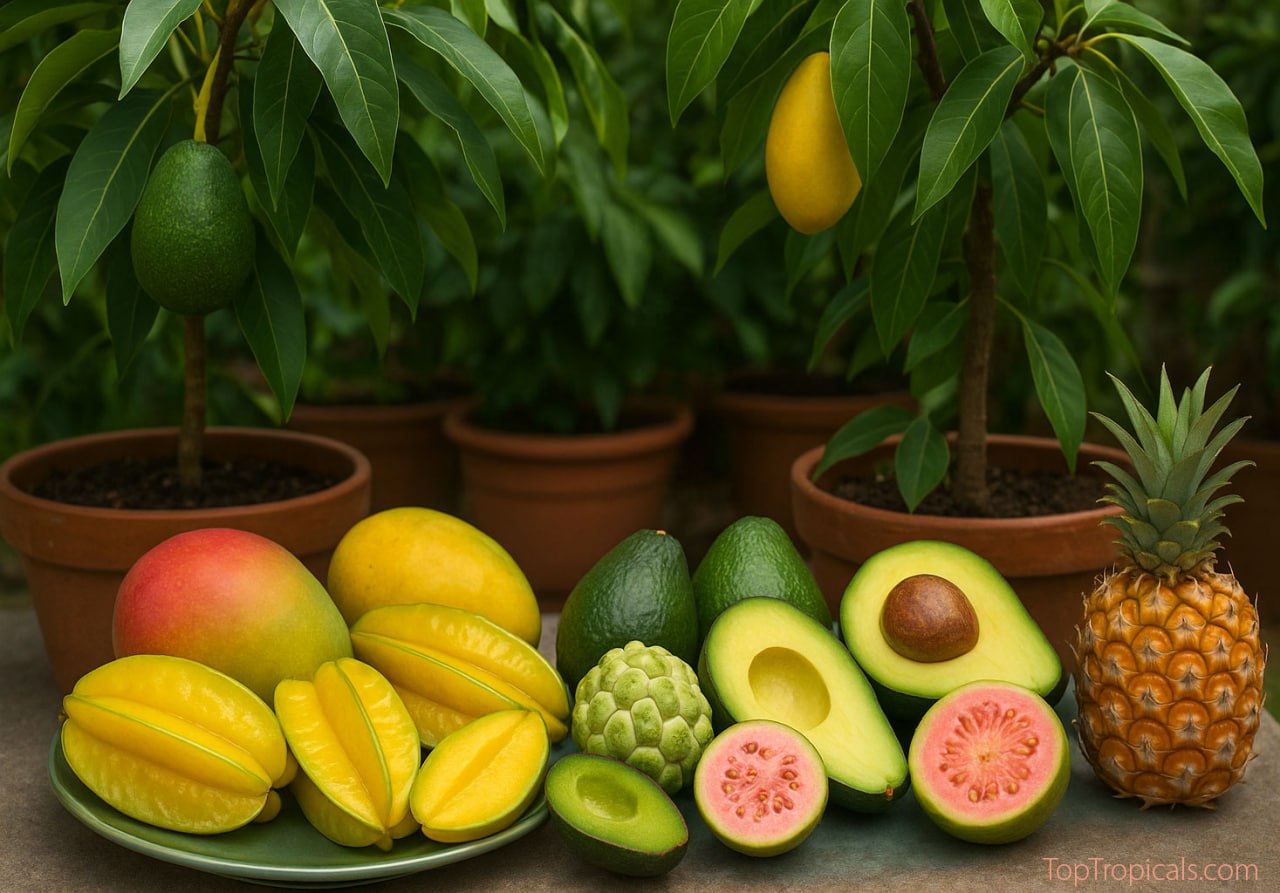
Tropical fruit trees grown in containers

Tropical fruit trees grown in containers

🥭 How to grow tropical fruit outside the Tropics


👨‍ Can you grow tropical fruit in colder climates? Absolutely! The key is growing them in containers so you can move them indoors during cold weather. With the right plant selection, a bit of motivation, good plant food, and a little love, you can enjoy a delicious harvest of exotic fruit - enough to treat your family and even share with friends. Here's everything you need to start your own Tropical Fruit Garden in containers.

🏆 Top tropical fruits and expert tips for growing in containers


🛒 Shop top picks for your container tropical garden:


🥭 Condo Mango
Cold hardy Avocado
🍒 Tropical Cherries - Eugenias
⭐️ Carambola (Start Fruit)
🍉 Guava
🍈 Annona
🍍 Pineapple
🌶 Herbs and spices - tropical edibles right away
🕙 Fast-fruiting trees
🍊 Shop all fruit trees
Supplies and Boosters

#Food_Forest #How_to #Discover

🟢 Join 👉 TopTropicals

Date: 4 Jul 2025

Blooming Lobster Claw Show at TopTropicals

Heliconia rostrata - Lobster Claw

Blooming Lobster Claw Show at TopTropicals

  • 🔻 Heliconia rostrata - Lobster Claw or Parrot's Beak - is one of the most iconic tropical plants, and for good reason. Its vivid, dangling blooms look like parrot feathers or lobster claws and last for weeks, making them perfect for garden displays or cut flower arrangements.
  • 🔻This bold beauty grows up to 7 feet tall, thriving in tropical climates or large pots in cooler zones. Surprisingly cold-tolerant, it can handle temps in the high 20s and still put on a spectacular show.


🛒 Shop Heliconias and Gingers

📚 Learn more:


#Hedges_with_benefits #Shade_Garden #Nature_Wonders

🟢 Join 👉 TopTropicals

Date: 8 Jul 2025

How to grow Dragon Fruit from a cutting - Quick Guide

Dragon fruit, Pitaya - Hylocereus sp.

🌵 How to grow Dragon Fruit from a cutting - Quick Guide

  • 🐉 Get a healthy cutting


    Use a 6-10 inch long stem cutting from a mature dragon fruit plant. Let the cut end dry in the shade for 2-5 days so it forms a callus. This also helps prevent rot and fungus.
  • 🐉 Prepare the soil


    Use well-draining soil - well drained potting mix, Adenium mix, or cactus mix is ideal. Dragon fruit hates wet feet!
  • 🐉 Plant the cutting


    Stick the callused end about 2-3 inches deep into the soil. Make sure it's planted upright (the way it grew on the parent plant).
  • 🐉 Support it


    Add a trellis or post. Dragon fruit is a climbing cactus and needs something to grow on.
  • 🐉 Water lightly


    Water once after planting, then wait until the soil dries before watering again. Overwatering can rot the cutting.
  • 🐉 Give it sun and warmth


    Place in bright, indirect sunlight while it roots. Once established, it can handle full sun.
  • 🐉 Watch it grow!


    Roots usually form in 2-4 weeks. New growth means it's taking off! This is the time to Ferilize it!


🛒Shop Dragon Fruit plants and cuttings

📚 Learn more:


#Food_Forest #How_to #Dragon_Fruit

🟢 Join 👉 TopTropicals