Date: 12 Jan 2025
How to protect tropical plants in Winter
Winter tips and podcast
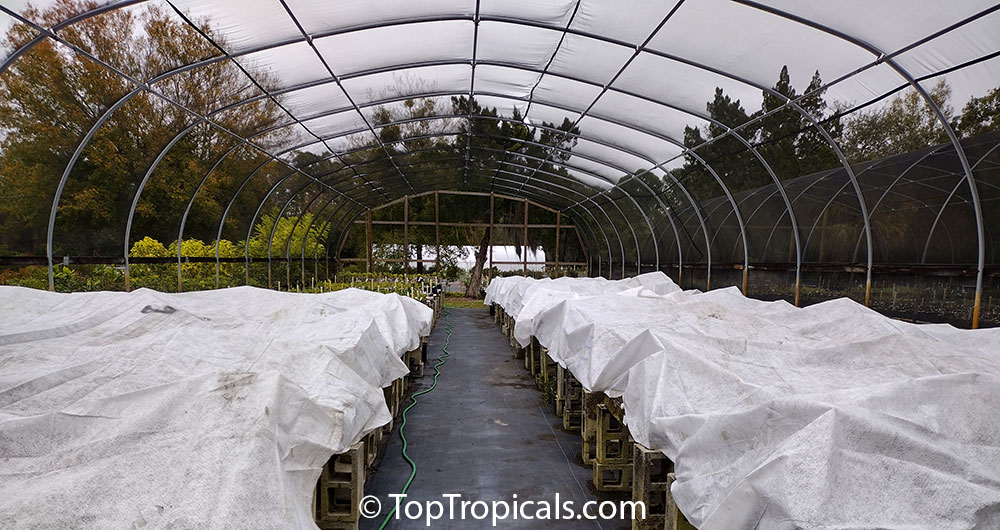
Photo above: wrapping plants with frost cloth
Winter can be tough on plants, especially on tropical varieties. But with a little preparation, you can protect your garden and keep your plants safe from the cold. Here's how:
Winter Care Tips for Tropical Plants
Cut watering: Reduce watering to prevent root rot. Cold + wet = dead roots.
Water before frost: Thirsty plants are more vulnerable. Water them before a cold night to prevent damage.
Wind protection: Wind is more harmful than temperature drops. Plant near structures like houses or trees for shelter.
Prepare for long cold periods: If cold weather lasts for hours, use all available protection, including Christmas lights and propane heaters.
Don't use dry fertilizer in winter: Heavy fertilizing encourages tender growth, which is more susceptible to cold damage. Sunshine Boosters liquid fertilizers are safe to use year around as their intake is controlled by reduced watering.
Use fabric covers, not plastic: Plastic can cook plants in the sun, while fabric allows better ventilation.
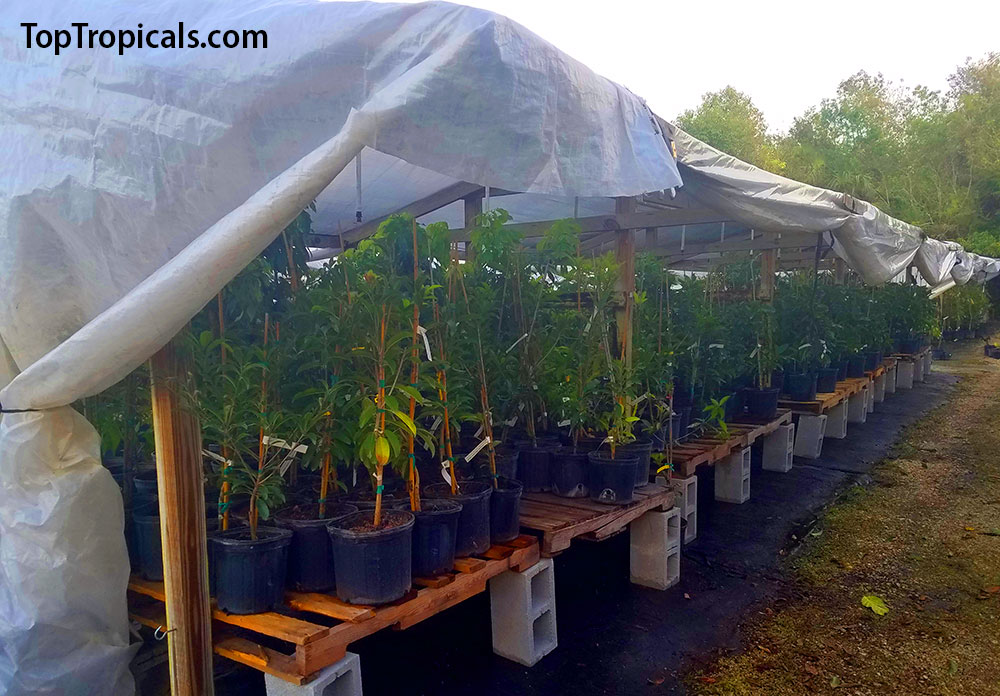
Photo above: we cover our plants in the nursery with a thin synthetic fabric (sintepon) called "frost cloth" or "strawberry cloth". It is light, breathable and allows light and water to go through unlike plastic that creates heavy water pockets.
Prepare for Cold Nights
Wrap plants: On cold nights, cover individual plants or trees with sheets or blankets to shield them from wind chill.
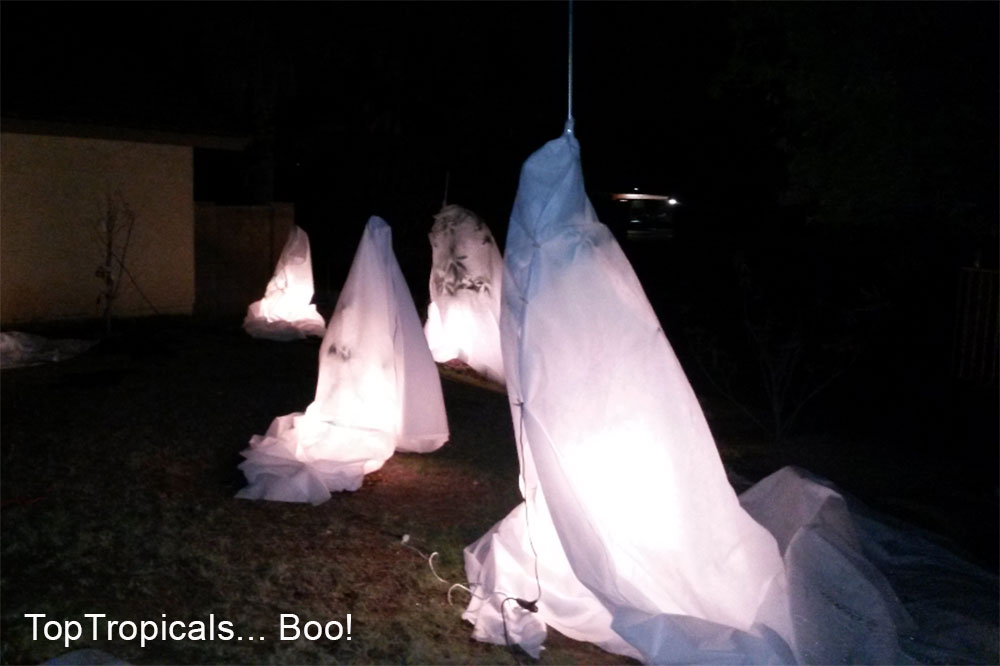
Use Christmas lights: A simple string of lights can add extra warmth, protecting your plants during frosty nights.
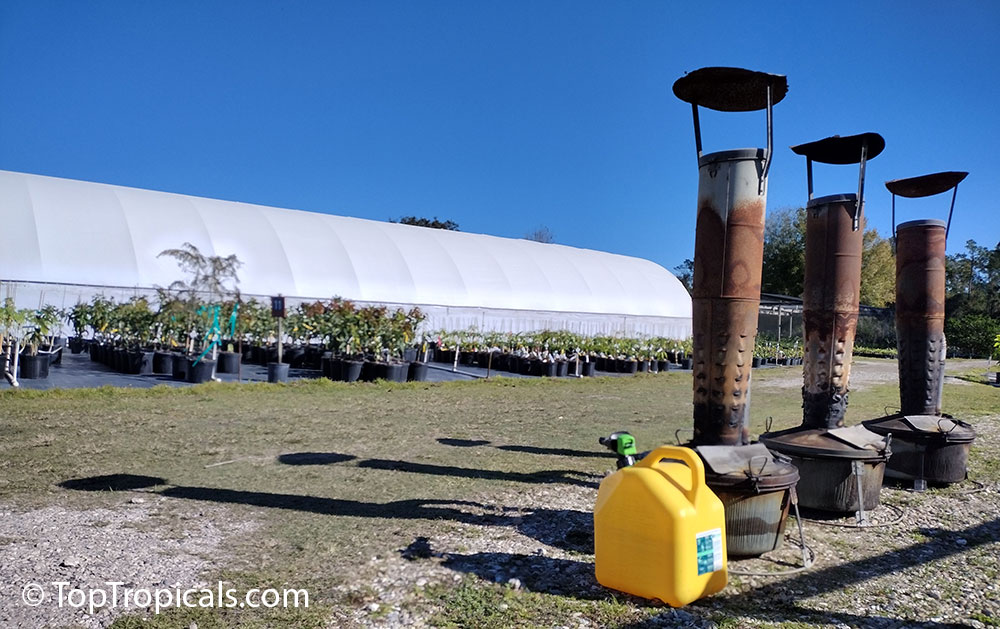
Use propane heaters: For added warmth in a larger area, place a propane heater near your plants. Make sure to follow safety guidelines and keep the heater at a safe distance from flammable materials. This can help maintain a few extra degrees of warmth, especially in more open garden spaces or temporary greenhouses. Always ensure proper ventilation to avoid harmful gas buildup.
Photo above: we use both propane and kerosene heaters at the nursery
Large Collections? Build a Temporary Greenhouse
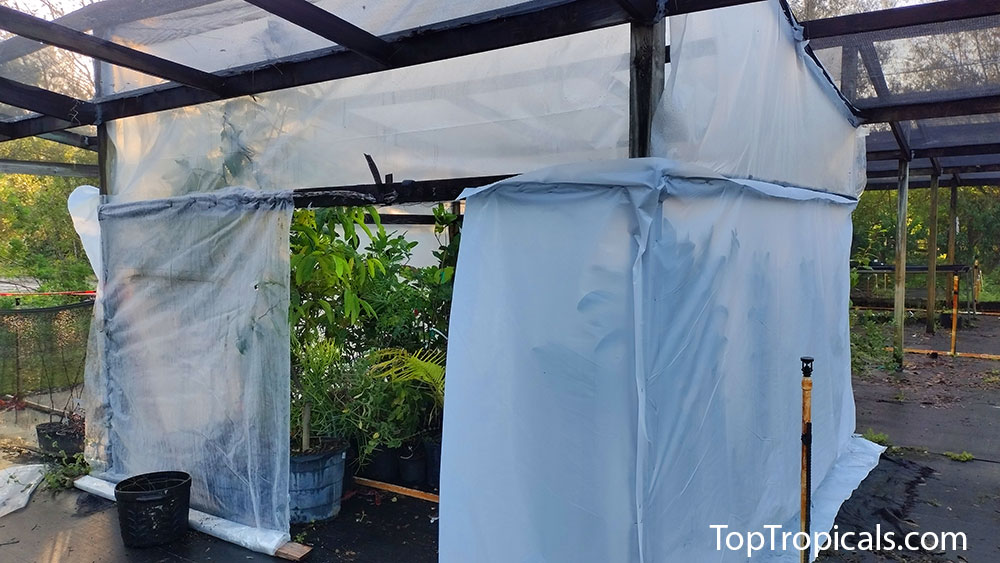
Affordable winter greenhouse: For large plant collections, you don't need an expensive greenhouse. A mobile carport with plastic or fabric covering, costing around $200, can house up to 100 plants!
Photo above: Temporary wrapping around plant collection with a plastic or frost cloth protects from a windchill. It may also win you a few degrees even without a heater. In this particular case, according to our temp sensors, with 30F outside, it was 41F inside this "dome", no heaters used.
Southern Exposure and Garage Storage
Southern windowsills: Compact tropicals can thrive on southern-facing windowsills, getting plenty of sunlight during the day.
Move plants inside: If you have larger collections, move them into a well-lit garage for the colder nights or longer periods.
Photo above: using Christmas lights around plants while wrapping with frost cloth.
Key Factors for Survival
Cold duration: Tropical plants can survive brief cold spells but long durations, even above freezing, can be deadly.
Wind-chill: Wind chill can be harsher than the temperature itself.
Exposure: Southern-facing slopes hold heat longer, making them ideal for your plants.
Humidity: Proximity to lakes or oceans can create a milder micro-climate.
Gradual temperature Drops are safer. Plants adjust better to slow temperature changes than sudden cold blasts. Gradual cooling allows plants to prepare, reducing the risk of damage.
Strengthen Plant Hardiness
Health and maturity: Well-established, healthy plants are more cold-hardy.
Boost plant immunity: Use products like SUNSHINE-Epi to improve cold resistance. Apply it before and during cold snaps to protect your plants.
Healthy plant is hardy. Make sure to fertilize your plants on regular basis - healthier and stronger plants are more cold hardy.
With these steps, you can protect your plants and help them survive the winter months. Stay warm and keep your garden thriving!
Podcast with Horticulturist Mark Hooten:
How to Protect Tropical Plants in Winter
Date: 18 Jan 2025
How to take care of a mango tree in winter
🥭 How to take care of a mango tree in winter
❄️ Watering
❄️ Fertilizing
❄️ Temperature Protection
❄️ Sunlight
❄️ Check for Pests
Winter can bring pests indoors. Regularly inspect the tree for any signs of insect problems around the leaves and stems.
By following these guidelines, your mango tree will be healthier and better prepared for the next growing season.
📚 Learn more: Mango trees and how to deal with cold weather.
🛒 Shop Mango varieties
📝 Earlier posts on #Mango:
- 🔸 What are the Condo Mangos? A Practical Guide
- 🔸 Mango rainbow: What's the taste of that mango variety?
- 🔸 5 most Favorite Mango Varieties
- 🔸 Top 10 Dwarf "Condo" Mango
- 🔸 Top 5 vigorous growers and reliable producers
- 🔸 Top 5 exotic Mango varieties for rare fruit collection
- 🔸 How to grow a mango tree
- 🔸 How to protect mango fruit from rodents
#Food_Forest #Mango
🔴 Join 👉 TopTropicals
Date: 6 Feb 2025
How to get mango trees to bloom and set fruit
Mango trees flowering
How to get mango trees to bloom and set fruit
- 🥭 Our Mango garden in Sebring, FL is in full bloom now! Early spring in Florida started in January this year. Surprisingly, all our mango varieties decided to start blooming: - early, mid- and late- season cultivars. It's a stunning view!
- 🥭 Mango trees flower from late Winter to Spring, with the peak blooming season varying based on variety. During this time, mango trees produce hundreds of small, fragrant flowers in large panicles. A healthy mango tree can produce anywhere from 500 to 2,000 flowers per panicle. However, only a small fraction of the flowers will be successfully pollinated and develop into fruit, depending on the tree's size and health.
- 🥭 To support healthy flowering and fruit set, mango trees need dry weather, as excessive moisture can inhibit pollination and fruit development. During flowering period, it's important not to overwater, as the tree is less active in water uptake.
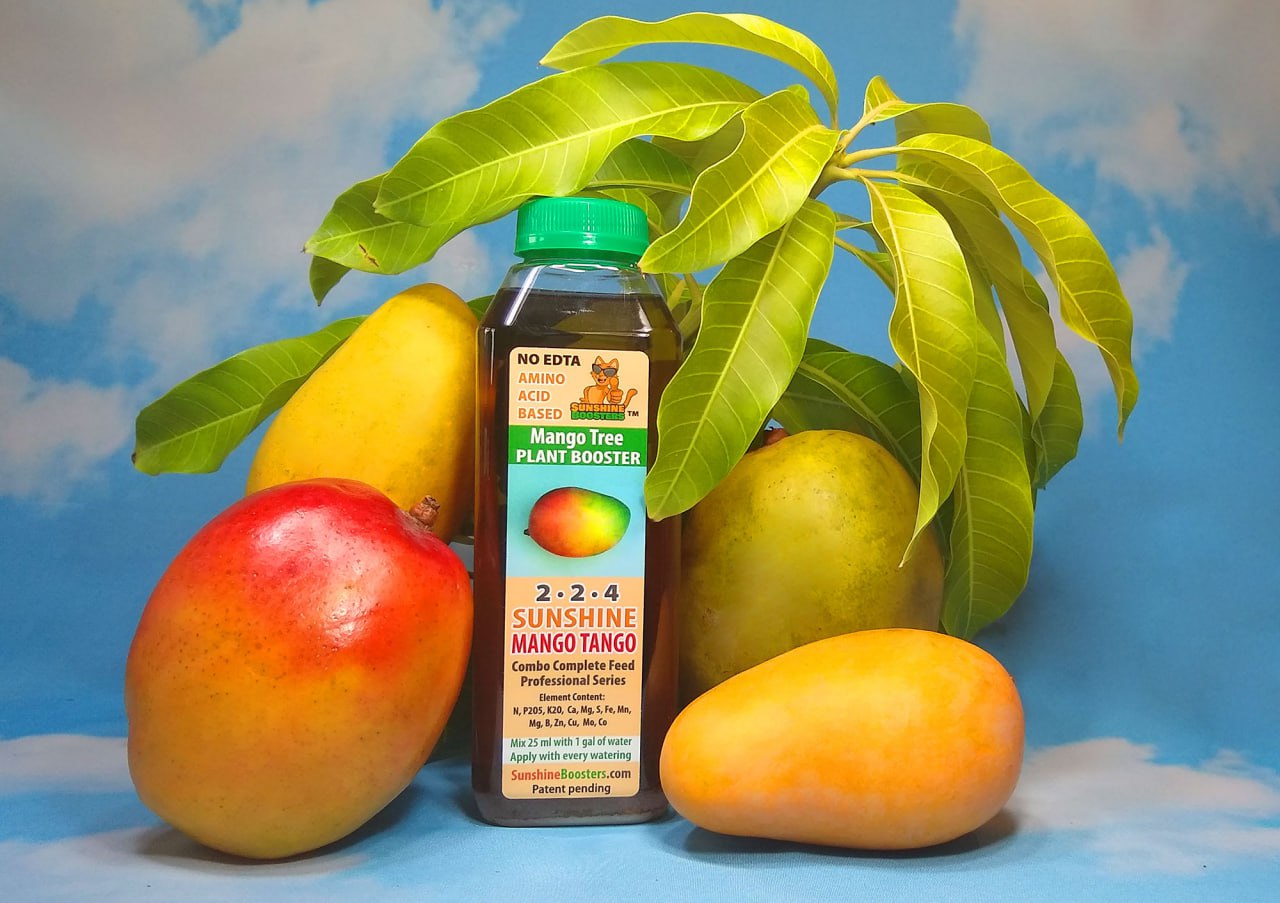
- 🥭 Avoid dry fertilizers during flowering since the tree is focused on reproduction rather than vegetative growth. You may continue applying Sunshine Boosters Mango Tango liquid fertilizer to support the tree's overall health and vigor. Sunshine Boosters deliver essential nutrients in optimum amounts, proportionally to water intake.
- 🥭 Ensuring a dry, sunny environment will help the tree set fruit successfully.
📚 Learn more from previous posts about #Mango varieties
🛒 Check out new Mango varieties - just arrived!
#Food_Forest #Mango
🔴 Join 👉 TopTropicals
Date: 22 Mar 2025
How to to make leaves green
Piper sarmentosum - Vietnamese Pepper, Lalo
🔥 How to to make leaves green
📸 In the photo - Piper sarmentosum - Vietnamese Pepper, Lalot.
on the left: plants have been fertilized by adding Sunshine Boosters (Sunshine Robusta) with every watering,
on the right: without fertilizer.
Lalot that we mentioned earlier, is eaten raw in salads or cooked with other greens or dishes, or wrap meats and cook in oven or on stove or grill. It is used medicinally in India and SE Asia.
📱 Learn more about Sunshine Boosters from the video in the next post ⤵️
🛍 Get Sunshine Boosters to make your plants green
#Fertilizers #How_to
🔴 Join 👉 TopTropicals
Date: 12 Jun 2025
Give your plants their Green Magic treat
Green Magic controlled release fertilizer in jars
Green Magic controlled release fertilizer in a bag
Green Magic controlled release fertilizer
Green Magic controlled release fertilizer label
Bring your plants back to life with Green Magiс Fertilizer (16-6-11) - professional formula for container-grown fruit trees and ornamentals.
📊 What's in it? Guaranteed analysis:
Macro-nutrients:
Total Nitrogen (N) – 16.00%
Available Phosphate (P₂O₅) – 6.00%
Soluble Potash (K₂O) – 11.00%
Micro-nutrients:
Magnesium (Mg) – 1.3% (Water Soluble Magnesium 1.3%)
Sulfur (S) – 6.4% (Combined Sulfur)
Copper (Cu) – 0.07% (Water Soluble Copper)
Iron (Fe) – 0.32% (Chelated Iron)
Manganese (Mn) – 0.13% (Water Soluble Manganese)
Molybdenum (Mo) – 0.011%
Zinc (Zn) – 0.07% (Water Soluble Zinc)
⚙️ How to use:
Apply 1 tea spoon per 1 gal of soil (mix in with soil) every 6 months during active growth period, or with every re-potting.
🛒 Watch the magic begin
#Fertilizers #How_to
🟢 Join 👉 TopTropicals