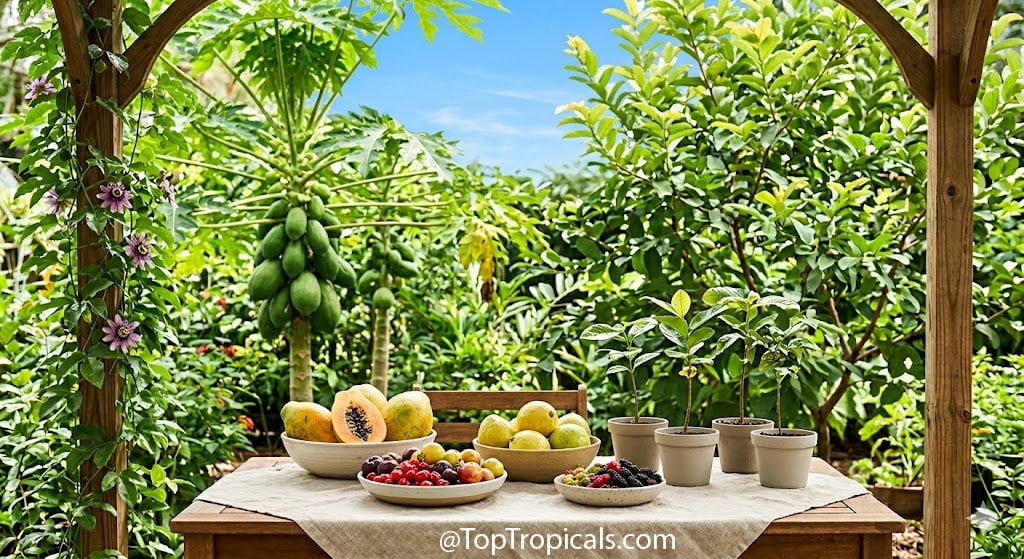
Want fruit without the wait? These tropical powerhouses deliver a "fast-food" garden in record time.
🍓 The Top 3 Speed Demons
1. The Favorite: Papaya🍊
If you want speed, Papaya is king. It can go from a small seedling to heavy fruit in 6-10 months. It behaves more like a giant herb than a tree: it is fast, has shallow roots, and is incredibly responsive to water and fertilizer. In warm climates, it is a plant it and watch it go legend. More details
2. The Reliable: Guava🍉
Guava is the most forgiving fruit tree you can own. It handles heat, poor soil, and the occasional week of neglect without missing a beat. Most varieties begin producing in just 1-2 years, staying compact enough for small yards or large pots. More details
3. The Surprise: Eugenias 🍒
This family (including Surinam Cherry, Grumichama, Cherry of the Rio Grande, and Pitomba) often flies under the radar. They look like ornamental shrubs, but they establish quickly and can fruit within year two. They handle pruning beautifully, making them perfect for edible hedges. More details
🍓 The Fast-Fruit Honor Roll
🍓 Ultra-Fast (Under 1 Year)
Papaya and Banana: The heavyweight champions of speed. Strawberry Tree (Muntingia calabura): Non-stop cotton candy berries. Grafted Favorites: High-quality Mango, Avocado, Peach, Nectarine, and Persimmon.
Mango Plant Facts
Botanical name: Mangifera indica Also known as: Mango
USDA Zone: 9 - 11
Highligths
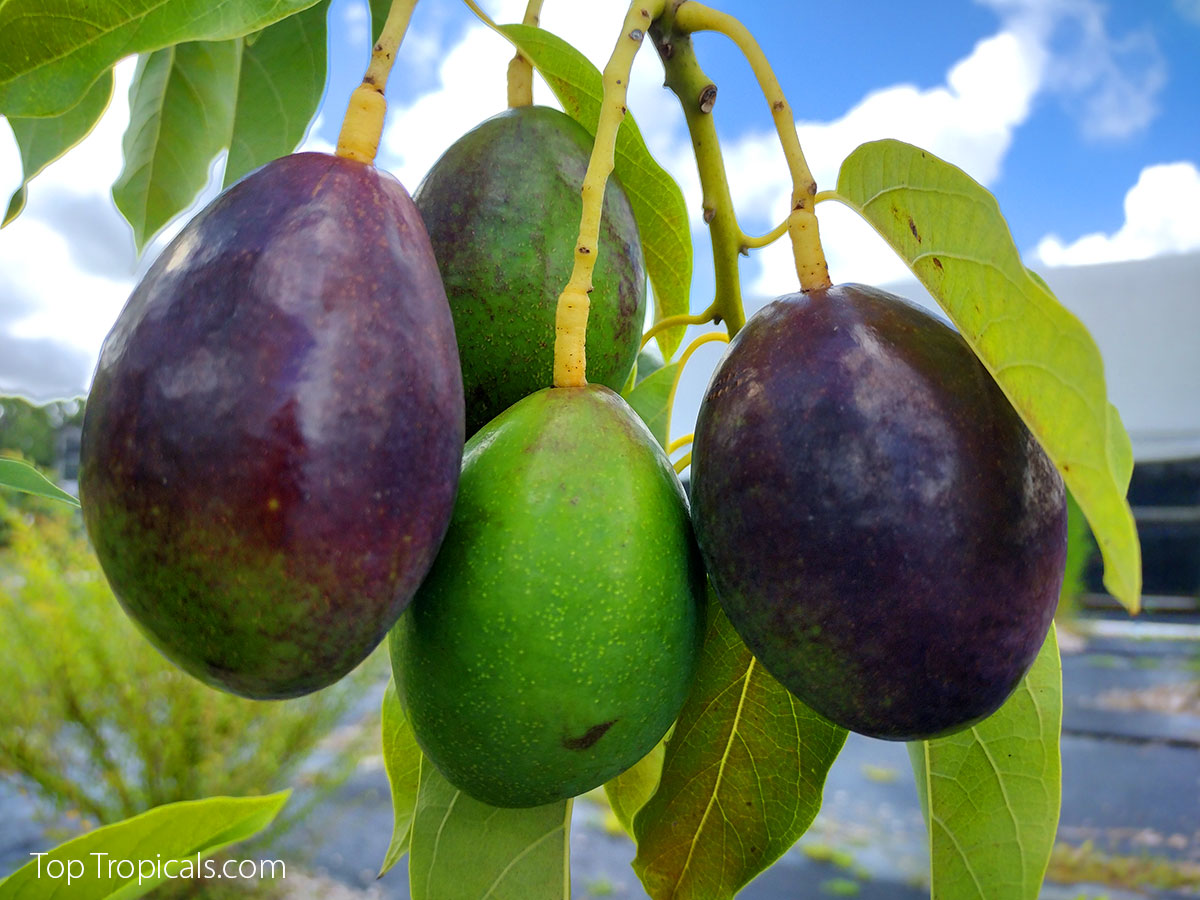
Avocado Plant Facts
Botanical name: Persea americana, Persea gratissima Also known as: Avocado, Alligator Pear, Aguacate, Abacate
USDA Zone: 9 - 11
Highligths
Peach Plant Facts
Botanical name: Prunus persica, Amygdalus persica Also known as: Peach
USDA Zone: 5 - 10
Highligths
🍓 Very Fast (1-2 Years)
The Berries: Mulberry (especially Everbearing), Fig, and Barbados Cherry. The Exotics: Strawberry Guava, Loquat, and the curious Peanut Butter Tree (Bunchosia). The Sweet Treats: Blackberry Jam Fruit (Randia formosa).
🍓 Tropical Staples (2-3 Years)
Starfruit (Carambola): A heavy producer that looks stunning in the garden. Annona Family: Sweet Sugar Apples and creamy Atemoyas. Macadamia Nut: A long-term investment that starts surprisingly early.
🍓 Fast Climbers and Bush Fruit
Passionfruit: Will cover a fence and fruit in a single season. Berries: Mysore Raspberry and classic Blackberries for quick returns.
Sunshine: You know, February 27 was International Polar Bear Day. I
just learned about it and got a brilliant marketing idea. Cherry of the Rio
Grande survived 25F. With wind. Real wind. That means we go north. Let them
taste this magic. I even have a donut recipe with the fruit. It’s a
bomb,
Smokey. We expand. Trust me. Finally you can afford that new watering
timer.
Smokey: Not so fast, genius. Twenty five degrees is not the North
Pole. And polar bears and penguins do not share zip codes.
Sunshine: You always pour cold water on my brilliance. Fine. Where
do we start?
Smokey: Well, first you go talk to Tatiana. She graduated from the
Geography Department. She can explain climate zones. Cherry of the Rio
Grande
can grow in North Florida, Texas, and similar climates. Let’s master
that before we conquer Arctic.
Sunshine: So… Phase One: Geography?
Smokey: Exactly.
Some stories are easier to tell with a little humor. Smokey and Sunshine
were never just mascots. They represent the two forces behind every decision
we make here: bold ideas and careful reality. One dreams big. The other
checks
the climate zone map. Together, they remind us that growing plants is part
science, part optimism, and always personal. If you have ever wondered why
they keep appearing in our newsletters, you can read their full story on the
Smokey and Sunshine page. They have been with us longer than most people
realize.
Freeze Testing of Grumichama and Cherry of Rio Grande
🍒❄️
Eugenia brasiliensis - Grumichama tree flowering and fruiting
When temperatures dropped to 25F, with wind chill near 14F, winter made
it clear which tropical trees were truly resilient. Some plants burned back.
Tender growth collapsed. But our established Eugenia cherries stood
steady. Leaves held. Branches stayed flexible. The canopy remained intact.
Cherry of the Rio Grande (Eugenia aggregata) and Grumichama (Eugenia brasiliensis) are among the most cold-hardy tropical
cherries for Southern gardens. Both are native to Brazil and thrive in USDA
Zones 9b–11, and even protected 9a sites.
Cherry of the Rio Grande Plant Facts
Botanical name: Eugenia involucrata, Eugenia aggregata Also known as: Cherry of the Rio Grande, Cere Jodo Rio Grande
USDA Zone: 9 - 11
Highligths
Grumichama Plant Facts
Botanical name: Eugenia brasiliensis, Eugenia dombeyi Also known as: Grumichama, Brazilian Cherry
USDA Zone: 9 - 11
Highligths
Cherry of the Rio Grande produces dark ruby fruit that ripens
almost black, with a rich, full cherry flavor. It flowers early in spring
and
can fruit well into summer. Mature trees can tolerate brief drops into the
low
20s once established. Trees typically grow 8 to 15 feet tall, remain
naturally compact, and often begin fruiting within 2 to 3 years.
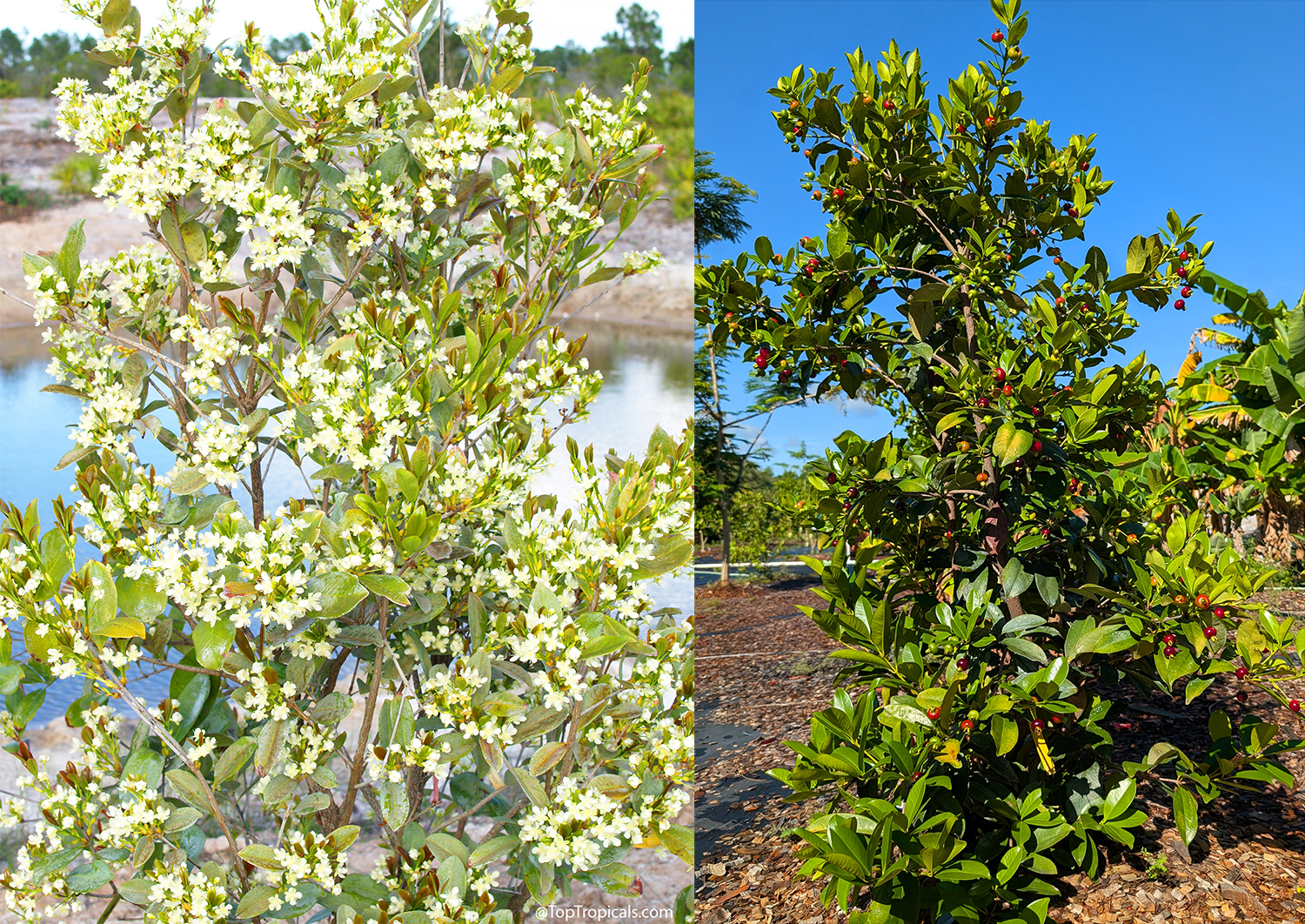
Grumichama is an evergreen tree known for both beauty and
productivity. In spring, it covers itself in white starburst flowers that
attract
pollinators. Within about four weeks, glossy purple-black fruit develops.
Established trees tolerate temperatures into the upper 20s and grow well in
the
ground or in 5–10 gallon containers. Mature trees can produce hundreds
of
fruits per season.
Across the Eugenia group, strengths are consistent: early
bearing, compact growth, heat tolerance, light freeze endurance, and low
pest
pressure. They are adaptable to different soils, need modest water once
established, and perform in full sun or partial shade. Birds enjoy the
fruit, but there
is usually plenty to share.
Nutritionally, Eugenia cherries provide Vitamin C, fiber,
antioxidants, and notable Vitamin A that supports eye health. They offer
sweetness
with real dietary value.
In the kitchen, they are simple and rewarding. Cherry of the Rio Grande
makes an easy
compote. Simmer the fruit with a small amount of water until soft, mash
lightly, and spoon over pancakes or warm bread. Grumichama turns into a deep
red
jam with sugar and lime, or can be blended into a bright spoon drizzle over
vanilla ice cream.
Even when not fruiting, both trees remain attractive year-round with
glossy evergreen foliage and clean structure. They fit well into edible
landscapes, small yards, and container gardens.
Winter will return. The difference lies in planting fruit trees that can
handle heat, humidity, and the occasional cold snap. If you are building a
food forest for lasting harvests, cold-hardy tropical cherries like Cherry
of
the Rio Grande and Grumichama deserve a place in your garden.
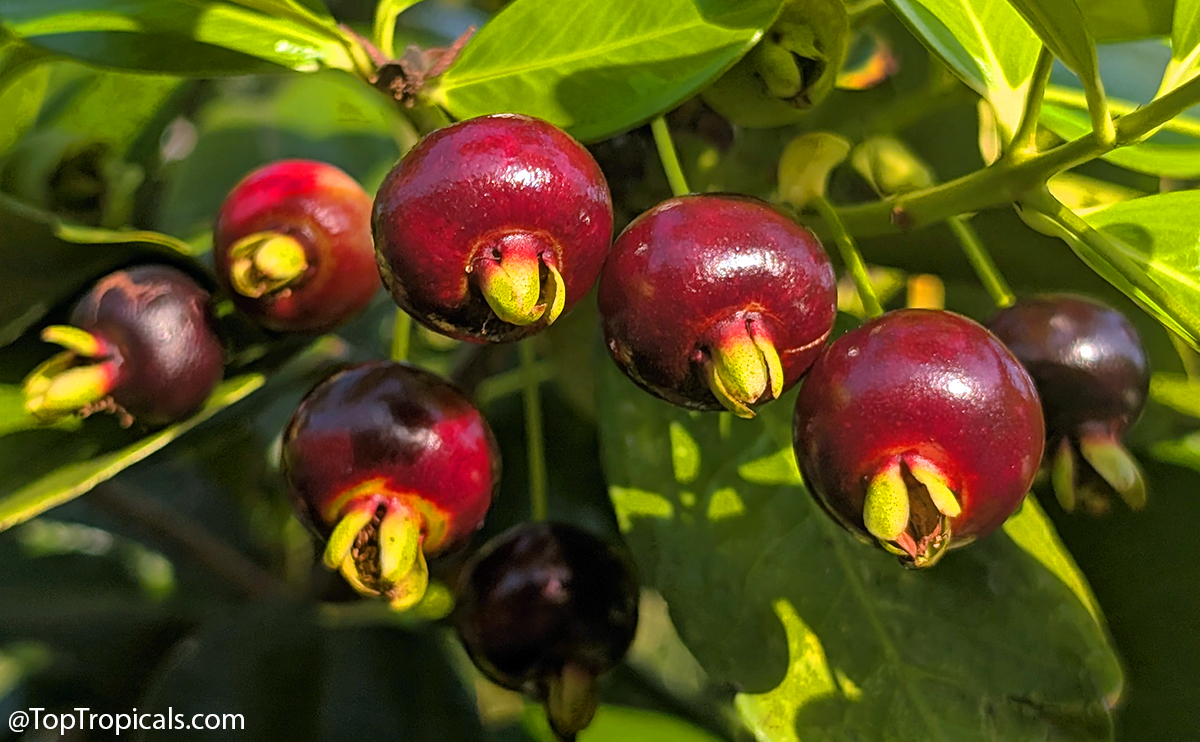
Ripe Grumichama (Eugenia brasiliensis) fruits developing on the
tree, turning deep red to nearly black when fully mature.
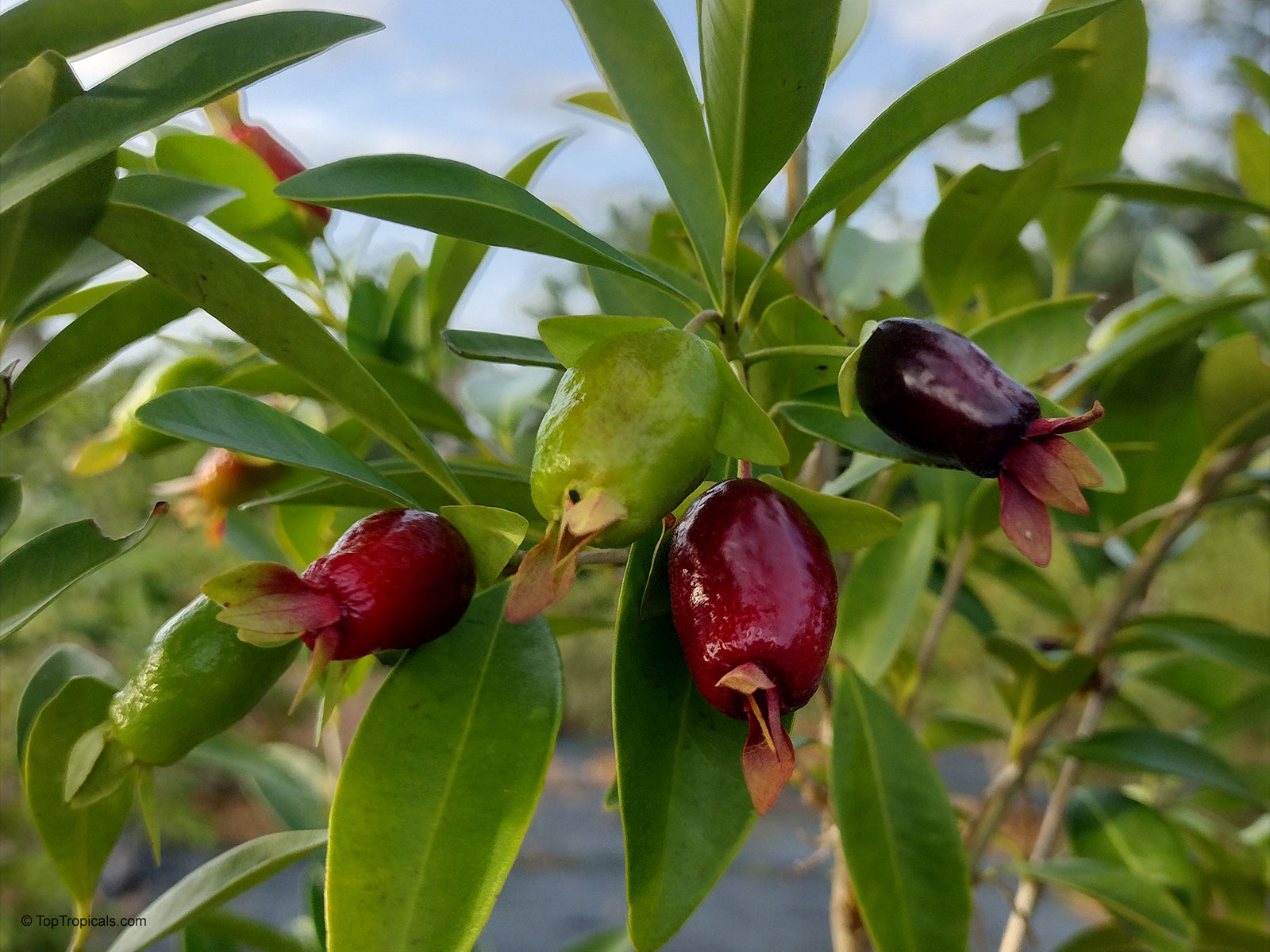
Eugenia aggregata (cv. Calycina), Cherry of the Rio Grande
Q: I bought an anise leaf-scented avocado from
you, and it is finally quite large and doing great. I live in California, the
coldest temperatures we seem to get in some winters is around 25 to 28F, and
it never lasts long. The tree might get a bit of frost nipping on the new
growth, but it has done very well. It has flowered profusely for the last two
years but hasn't set any fruit. What variety you might recommend to help with
pollinating?
A: We are glad your avocado is doing great. Anise is
one of our favorite varieties, with the wonderful smell of leaves and tasty
fruit.
Cold hardiness and flower quality
It is true that cold damage may affect avocado production, especially in
setting fruit. To improve the tree's cold hardiness, make sure to provide
balanced plant food, especially during the season of active growth. For our
avocado trees, we use Sunshine C-Cibus year-round.
If you prefer to use dry (granulated, slow-release) fertilizers, make
sure they contain micronutrients, or apply Sunshine Superfood microelement complex once a month.
To improve flower quality (including the ability to set fruit), we
recommend a special micronutrient supplement called Sunshine Honey. It contains Boron and Molybdenum - elements that are
responsible for setting fruit and for developing fruit (meaning not dropping at
the early stage of development).
Cross-pollination and crop
In general, every avocado tree is self-fertile, meaning it can produce
some fruit with its own pollen and doesn't necessarily require a second tree
for pollination. So even if you don't do anything, sooner or later your tree
will set fruit. However, it is also true that the amount of fruit and crop
reliability depends on pollination factors. One type of avocado classification
is by flowering and pollination behavior - type A or B.
When both types of trees are grown in proximity to each other, their
overlapping flowering patterns significantly enhance the chances of
cross-pollination. This can lead to improved fruit set and higher yield, making it
especially important for commercial production and, to a lesser extent, for home
growers.
Therefore, it's advisable to plant different varieties of avocado in
your garden - the more, the merrier! The greater the diversity of avocado trees
with overlapping flowering periods, the better your crop is likely to be. If
you're growing an avocado tree without other avocados nearby, it becomes
helpful to have more than one tree with different flowering patterns (A and B) to
increase yield in your garden.
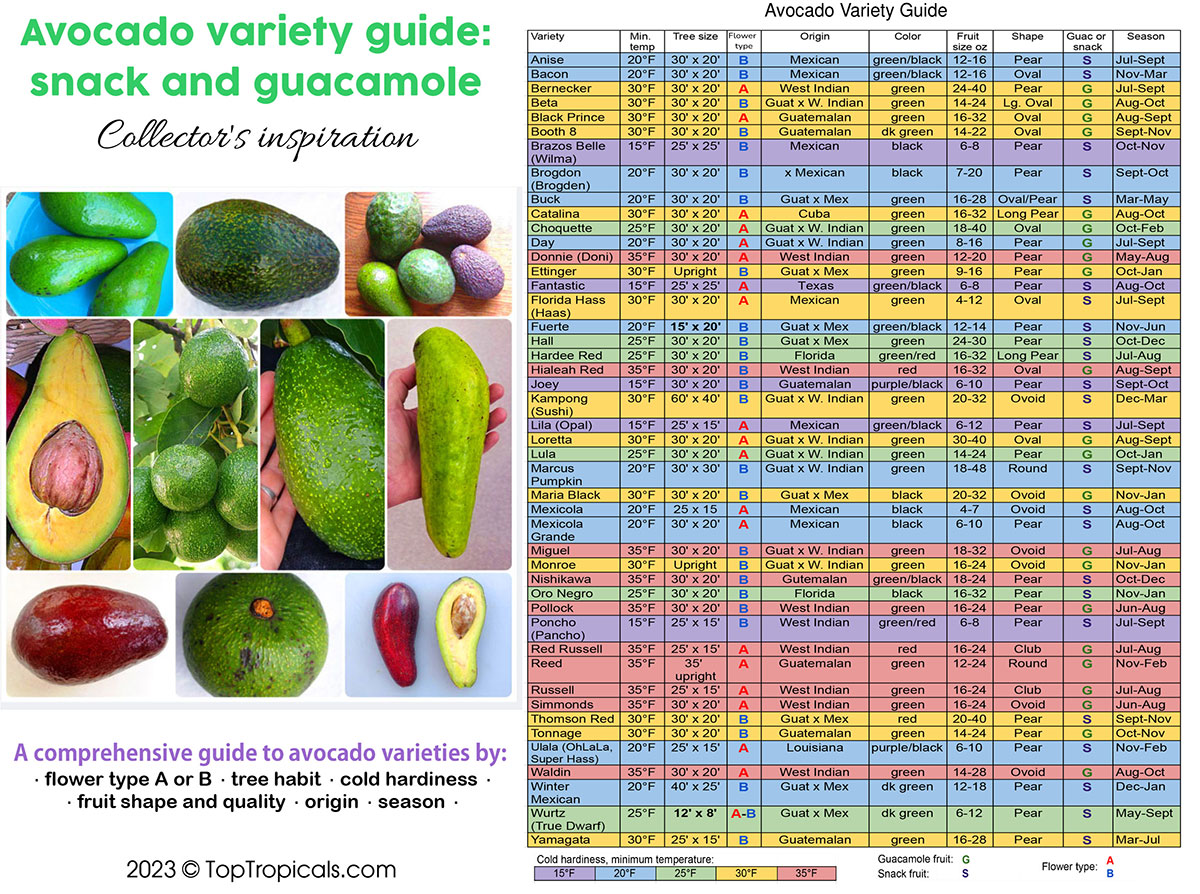
To learn more about avocado types, fruit characteristics, cold hardiness
and much more, refer to our Avocado Variety Guide - a page with very convenient interactive chart
allowing you to quickly sort types of avocado by requirements of your choice
(just click on column header to sort data). You may also buy a Book or download a PDF.
"...Time spent among trees is never time wasted..."
- Katrina Mayer -
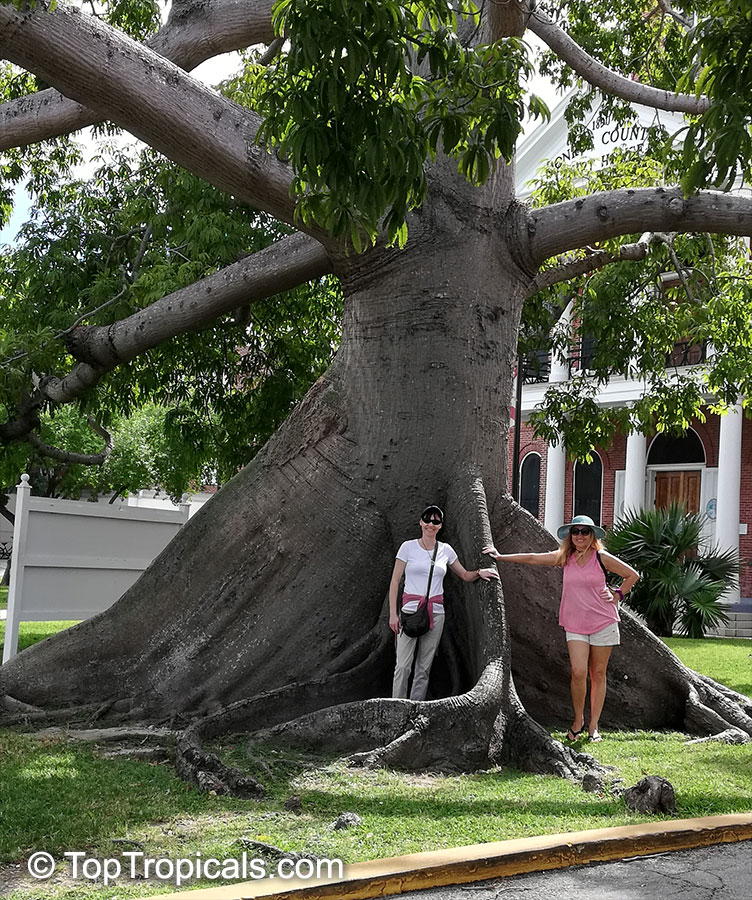
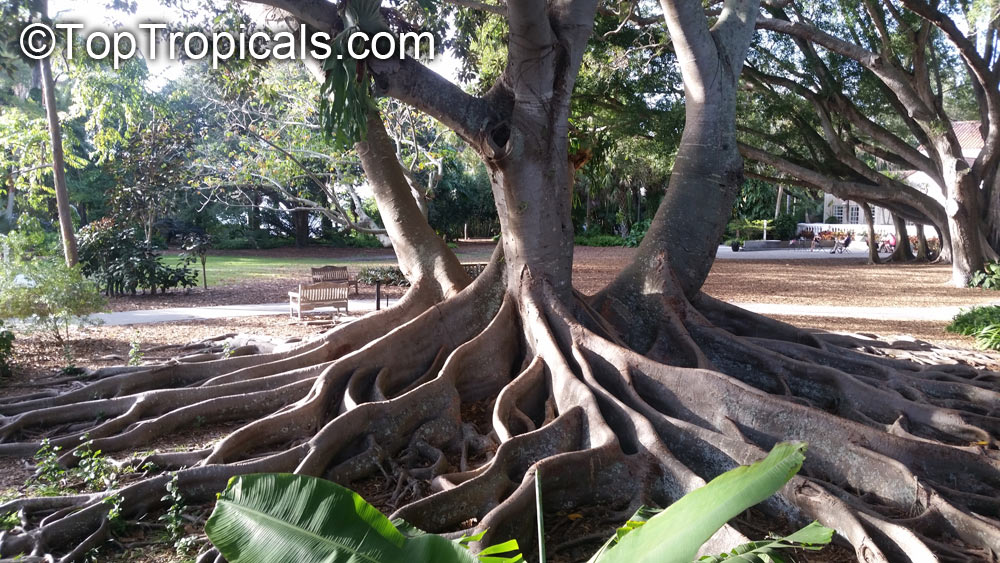
One of the most impressive and massive trees in the world - Ceiba pentandra - Kapok Tree. A majestic tropical tree! The ancient Maya of Central America
believed that a great Ceiba tree stood at the center of the earth... Would you
like to try growing it in the center of your backyard? Considering it will
take decades to grow this big...
Ficus macrophylla (Banyan). Did you know that exotic Banyan Trees are close related to Fig trees?..
Date: 15 Jun 2024
The truth about Papaya:
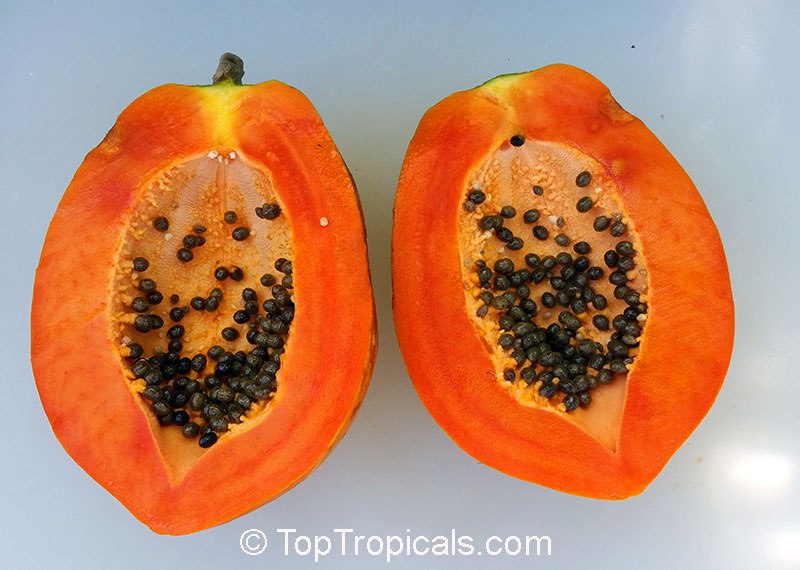
Papaya fruit
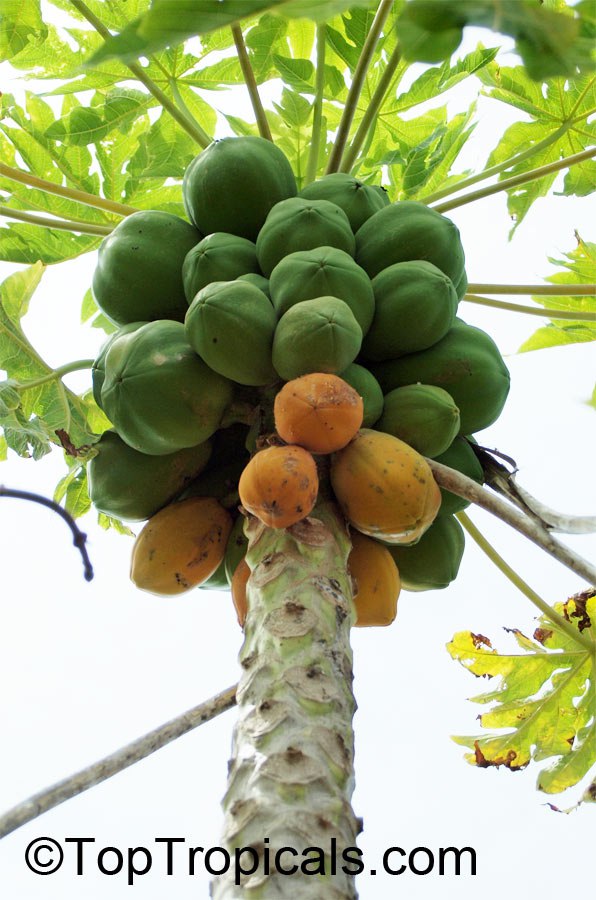
Papaya tree with fruit
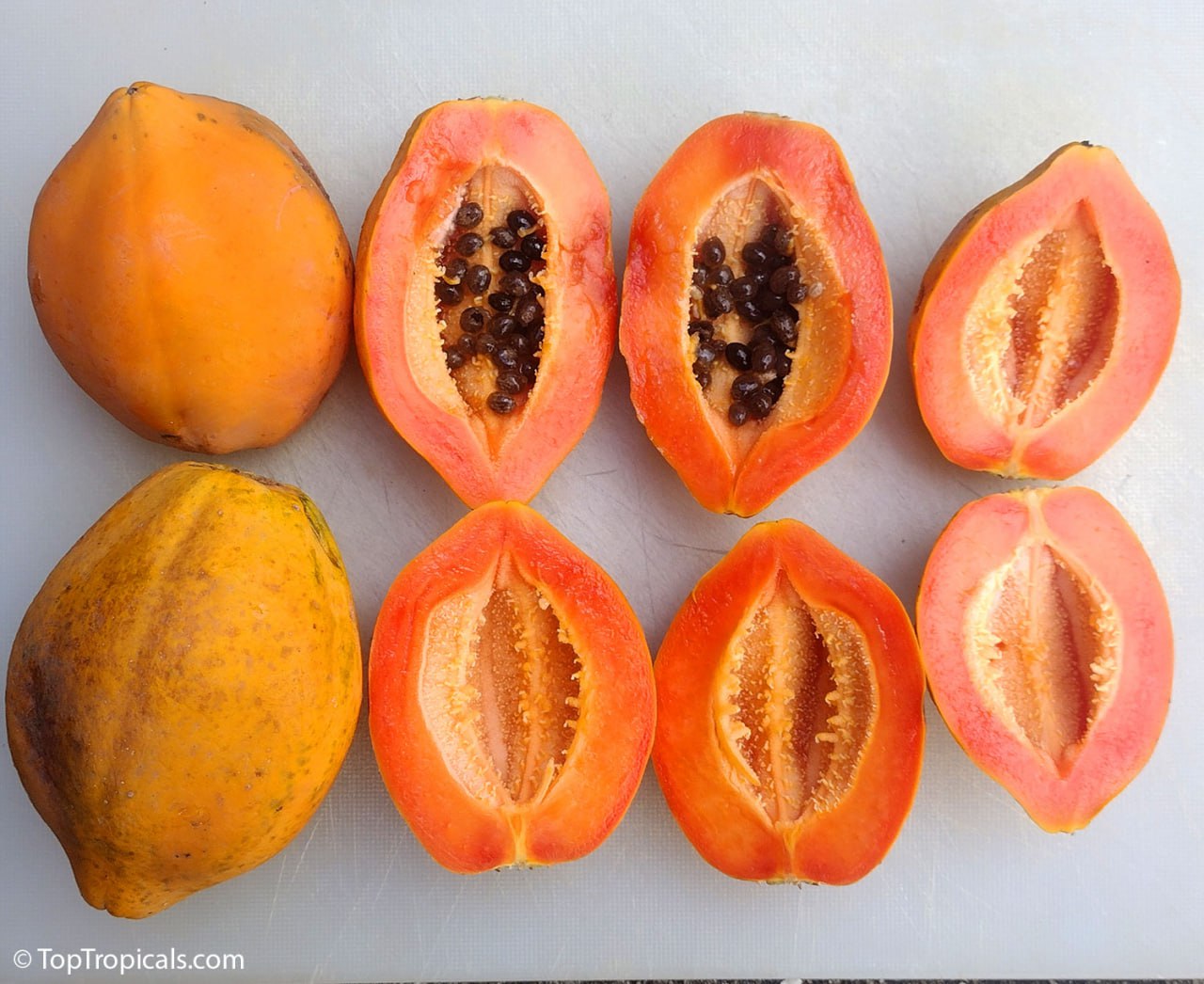
Papaya fruit
Papaya trees
🍊 The truth about Papaya:
1) it is grass, and
2) it can go transgender!
The secret facts of Papaya's private life.
📌 Did you know that Papaya technically is not a tree? It is a large herbaceous plant, usually with a single, straight trunk that can reach 30 feet!
📌 Many dwarf varieties available in selection, reaching only 6-8 ft tall, but producing large crops of full size fruit - they are easy to harvest.
📌 Papaya trees have very complex gender mechanism, but the bottom line is - the tree can chance its sex based on conditions! Many varieties are self-fertile, but it always recommended to plant a few trees for cross-pollination and better yield.
📌 The sweetest Papaya is from so called "Solo" cultivars: the fruit is usually round or oval, on a smaller side, but super sweet.
📌 Fruit from Solo cultivars are not susceptible to fruit flies.
📌 Being officially a tropical plant, Papaya is pretty cold resistant and can withstand light freeze without significant damage.
📌 Surprisingly, Papayas are also hurricane-resistant plants and can take strong winds without damage. They still stand when other trees are down!
📌 Papaya is one of the Super-Foods thanks to papain - a natural enzyme containing in this fruit. Papaya fruit offers the best digestive aid! Eat some papaya after each meal to maintain healthy digestion.
📌 Try papaya leaf wraps for cooking meats - you won't need a meat tenderizer!
📌 Easy to grow trees, Papayas don't take any space in the garden, but bring so much goodness into your life!